How to Cook with Garlic: 30+ Recipes + Complete Guide
Buying, prepping, cooking, and fixing every garlic mistake — plus the best recipes from the AislePrompt catalog
Garlic is the aromatic backbone of more dishes than any other single ingredient — it shows up in 4,638 recipes across every cuisine in the AislePrompt catalog. If you cook, you cook with garlic. Here's exactly how to do it well: buy the right heads, prep without wasting flavor, pick the right cooking method, and avoid the three mistakes that ruin it.
Get a free week of easy dinners
Seven weeknight dinners with the shopping list already totalled, sent Sunday. No account needed, unsubscribe in one click.
No spam, unsubscribe in one click. Recipes, shopping lists and Instacart carts all work without an account either way.
Introduction: Why Garlic Is the Most Versatile Ingredient in the Pantry
No single ingredient crosses as many cuisine boundaries as garlic. Italian soffritto, Spanish/Caribbean sofrito, French persillade, Chinese stir-fry aromatics, Indian tadka — garlic anchors all of them. (Traditional French mirepoix — onion, carrot, celery — is the rare aromatic base that skips garlic.) It contributes flavor in three distinct ways depending on how you treat it:
- Raw: sharp, pungent, sulfurous bite (from allicin forming when cells are crushed)
- Cooked gently: sweet, mellow, nutty (allicin breaks down; sugars caramelize)
- Roasted or confited: deeply sweet, spreadable, almost buttery
Understanding those three states unlocks every garlic technique in this guide. The same clove that bites raw in a vinaigrette becomes candy-sweet after 45 minutes at 375°F. Serious Eats covers the chemistry in depth — the short version: heat and time destroy the harsh sulfur compounds while concentrating the sugars.
How to Buy Fresh Garlic: Heads, Cloves, Sprouting, Storage
What to look for at the store: Firm, tight heads with papery dry skin. Cloves should feel solid when you press the skin — soft or hollow means old or moldy. Avoid heads with green shoots already visible at the top; the sprout diverts sugars away from the clove, leaving a milder, slightly bitter result.
Varieties that matter:
- Softneck (most supermarkets): longer shelf life, milder flavor, 8–20 cloves per head. Best for raw applications.
- Hardneck (farmers markets, specialty stores): 4–12 larger cloves, more complex flavor, shorter shelf life (2–4 months vs. 6+ for softneck). Better for roasting and confit.
- Elephant garlic: technically a leek relative, much milder. Use where you want the garlic impression without the bite.
Storage: Whole heads keep best at 60–65°F with good air circulation — a ceramic garlic keeper or paper bag in the pantry. Bon Appétit's storage guide puts the enemy as moisture and heat, not cold: refrigeration encourages sprouting. Peeled cloves last 1 week in an airtight container in the fridge. Never store raw garlic submerged in oil at room temperature — that's a botulism risk. Oil-packed garlic must stay refrigerated and be used within 4 days.
When to toss it: Sprouts that have grown past 1/4 inch, blue-green mold on any clove, soft/spongy texture when pressed. Partially-sprouted cloves are fine to eat — split them and remove the green center, which tastes slightly bitter.
Prep Methods: Smashing, Mincing, Slicing, Microplaning, Paste
Each prep method releases different amounts of allicin and produces a different texture in the finished dish. The cell damage from crushing releases more allicin than slicing, which releases more than leaving whole.
| Method | Flavor intensity | Best use |
|---|---|---|
| Whole clove | Mildest | Infusing oil, 40-clove braises |
| Smashed | Low-medium | Soups, braises, remove before serving |
| Sliced thin | Medium | Aglio e olio, pasta oils |
| Rough chop | Medium-high | Stir-fries, sauces |
| Fine mince | High | Most sautéed applications |
| Microplane paste | Highest | Aioli, vinaigrettes, marinades |
| Press | High, but metallic | High-volume weeknight cooking |
Smashing: Lay the flat of a chef's knife over the clove. Press firmly — you want to crush it, not liquify it. The skin slips off immediately. For 10+ cloves at once: put them in a metal bowl, invert a second metal bowl over it, and shake hard for 30 seconds. Most skins come off without knife work.
Mincing: After smashing and peeling, make a pile. Rough chop first, then rock the knife tip and work the blade back and forth until you reach the size you want. For truly fine mince, sprinkle a pinch of kosher salt on the pile first — it acts as an abrasive and helps you get to a finer texture faster without losing pieces off the board.
Microplaning: Produces a wet paste with maximum allicin release. Pull the clove firmly across a microplane (the same tool you use for citrus zest and Parmesan). One medium clove on a microplane = about 1 teaspoon paste. Use this for aioli, salad dressings, and any application where you want garlic fully incorporated into a sauce without any textural pieces.
Press: Fast, convenient, works through unpeeled cloves. The downside: the perforations shear cells unevenly, releasing compounds that can taste metallic in delicate applications. Fine for a midweek pasta sauce; skip it for aglio e olio where garlic is the star.
Cooking Techniques: Raw, Sautéed, Roasted, Confit, Fermented
Raw Garlic
Best in: aioli, tzatziki, guacamole, Caesar dressing, bruschetta, chimichurri, ssamjang, most vinaigrettes. Use microplaned or very finely minced. Cut garlic and let it sit 10 minutes before use — the allicin needs time to form after the cells are broken. NYT Cooking's garlic guide notes this is why pre-crushing before adding acid (like lemon juice) gives you sharper flavor.
Sautéed Garlic
The workhorse technique. The critical constraint: garlic burns at 320°F, well below the smoke point of most oils. Burnt garlic turns acrid and bitter — you can't rescue it.
Rules for sautéing:
1. Add garlic after other aromatics (onion, celery) have softened — they take longer and protect the garlic from direct high heat.
2. Over medium-low heat, 60–90 seconds of cooking is enough to mellow the raw bite without browning.
3. If a recipe says "cook until golden," that's ~2 minutes over medium. "Lightly golden" is your target; deep brown means you've crossed into bitter territory.
4. For high-heat stir-fry: smash whole cloves, drop into hot oil for 15–20 seconds to perfume the oil, then remove before they color. The oil carries the flavor; the clove was just the vehicle.
Roasted Garlic
Cut the top 1/4 inch off a whole head to expose the cloves. Drizzle with olive oil, wrap loosely in foil. Roast at 375–400°F for 40–50 minutes until the cloves are completely soft and deep golden. The result is sweet, spreadable, almost nutty — no pungency left. Squeeze from the skins directly onto bread, mash into butter, or stir into mashed potatoes.
Benchmark: One head of garlic (10–12 cloves) takes 45 minutes at 375°F in foil. Unwrapped, closer to 35 minutes but you must watch it. At 425°F you can shave 10 minutes but risk burning the exposed tips.
Garlic Confit
Slow-cook peeled cloves fully submerged in olive oil at 200–225°F for 45–60 minutes. The low temperature prevents frying and keeps the cloves intact while converting the harsh allicin to sweet, mellow compounds. The resulting oil is infused with garlic flavor and is spectacular drizzled on pizza, pasta, or bread. Store confit garlic in the oil in the fridge for up to 2 weeks (the low oxygen environment is safe when refrigerated; botulism requires warm temperatures to produce toxin).
Fermented (Black Garlic)
Black garlic is whole heads fermented at 140–170°F for 3–4 weeks in a controlled-humidity environment. The Maillard reaction turns the cloves black, deeply sweet, and slightly chewy with a balsamic-molasses complexity. You can make it at home in a rice cooker set to "keep warm," though commercial black garlic is widely available. Use it in steak sauces, vinaigrettes, and anywhere you want a umami depth that's hard to pin down.
Curated Garlic-Forward Recipes from the AislePrompt Catalog
The AislePrompt catalog has thousands of garlic-forward recipes. These are the ones worth bookmarking — each puts garlic in a specific role so you can see the techniques above in practice.
Classic weeknight garlic:
- Garlic Butter Shrimp — 3 cloves of minced garlic, butter, and a hot pan. Done in 8 minutes. The butter tempers the heat so the garlic golds without burning.
- Garlic-Parsley Chicken Breasts with Lemon — 4 cloves minced, added to a pan sauce with lemon juice and fresh parsley. Demonstrates how acid + garlic + fat make a complete sauce without any other thickeners.
Garlic as the star:
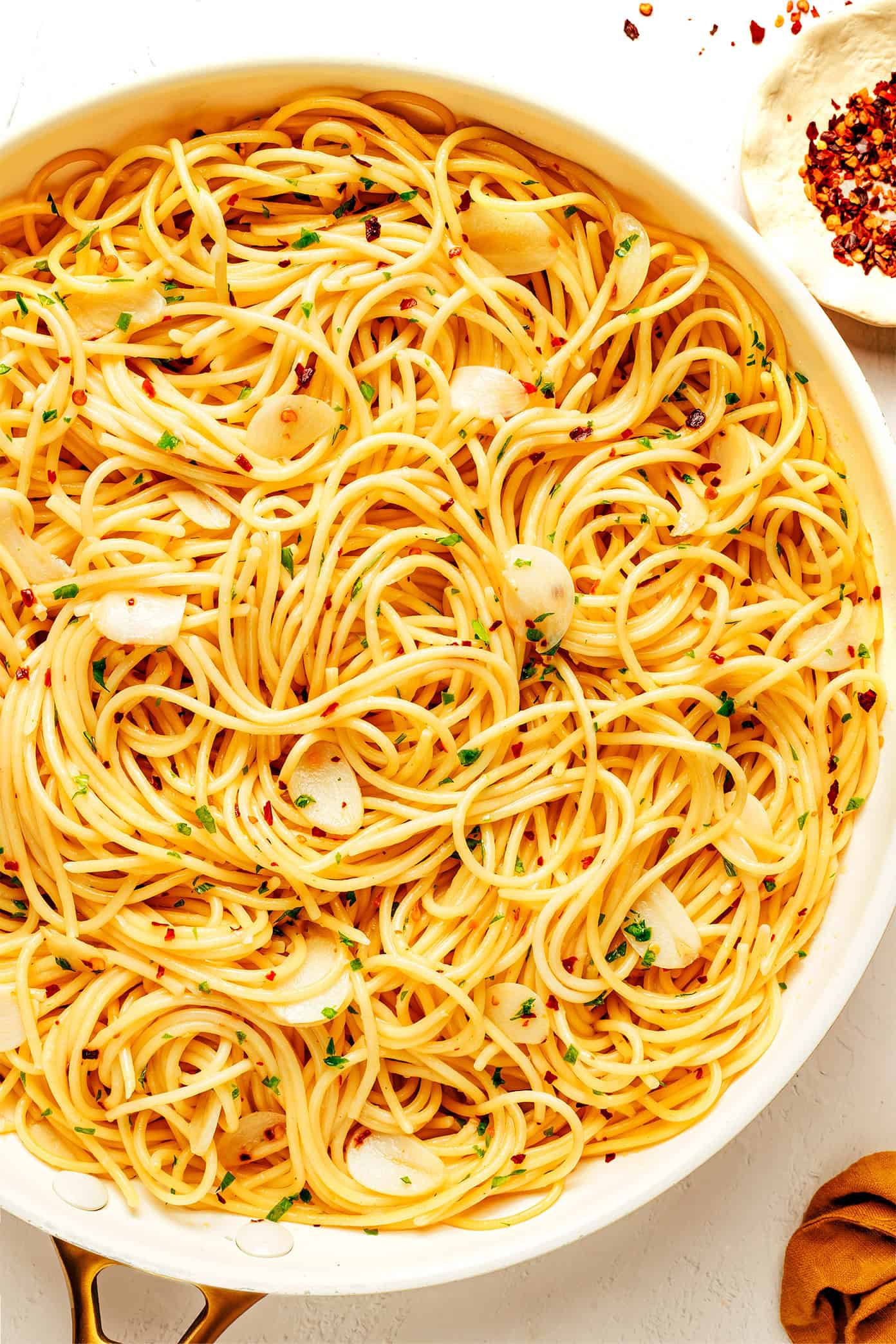
- Authentic Roman Aglio e Olio — The purist's garlic pasta. Sliced (not minced) garlic cooked slowly in olive oil until just golden, emulsified with pasta water. This dish exists to teach you garlic temperature control; burn the slices and there's nowhere to hide.
Garlic in long-cooked applications:
- Herb-Crusted Baked Chicken with Garlic Mashed Potatoes — The mashed potato component calls for roasted garlic folded in at the end: 1 whole head roasted, squeezed, and mashed in alongside the butter. Completely different flavor profile from raw mashed garlic.
Garlic in Asian preparations:
- Keto Cheesy Zucchini Noodles with Garlic Butter — 4 cloves in a butter base, added off heat so they sizzle gently without browning. Good for seeing how residual pan heat handles garlic.
Garlic with roasted vegetables:
- Rosemary-Garlic Roasted Potatoes with Green Beans — Whole smashed cloves roasted alongside the vegetables. At 425°F they mellow and sweeten over 30–35 minutes without burning because they're in contact with the potato pieces which absorb heat.
Garlic in pasta sauce:
- Lemon-Garlic Pasta with Roasted Asparagus — A bright spring pasta where garlic is sautéed briefly, then the heat is cut with lemon juice and olive oil. The balance of fat, acid, and garlic is the lesson.
Quick Garlic Recipes Under 30 Minutes
When you need garlic flavor fast, these techniques deliver without long cook times:
5-minute garlic oil: Heat 1/4 cup olive oil over medium-low. Add 4 thinly sliced garlic cloves. Cook 3–4 minutes until just pale gold. Pour over pasta, grilled fish, roasted vegetables, or bread. Keeps 3 days refrigerated.
10-minute garlic shrimp: Follow the Garlic Butter Shrimp pattern — 3 cloves minced, 2 tablespoons butter, 1 lb shrimp. Hot pan, 2 minutes per side. The entire thing is on the table in under 12 minutes.
15-minute aglio e olio: Cook 400g spaghetti. While it boils, slowly warm 6 sliced cloves in 1/3 cup olive oil — you want pale gold, not brown. Add 1/2 teaspoon red pepper flakes, then immediately add a ladle of pasta water and the drained pasta. Toss vigorously. The starch emulsifies the oil into a glossy sauce. Finish with parsley and Parmesan.
Under 30 minutes — meal-prep garlic vinaigrette: 1 clove microplaned, 2 tablespoons red wine vinegar, 6 tablespoons olive oil, 1 teaspoon Dijon, salt. Shake in a jar. Makes 4 servings. Keeps 1 week refrigerated.
Fresh Garlic vs. Pre-Minced, Powder, Granulated — When Each Wins
This is genuinely not a "fresh is always better" situation. Each form has a specific role.
| Form | Flavor profile | Best use | When to skip |
|---|---|---|---|
| Fresh, raw | Sharp, pungent, sulfurous | Aioli, dressings, bruschetta | Any high-heat fast-cook |
| Fresh, minced | Aromatic, savory | Pasta sauces, stir-fries, braises | Doesn't store |
| Pre-minced in oil | Mellow, slightly fermented | Weeknight soups, braises | Raw applications |
| Garlic powder | Even, clean, no bite | Dry rubs, seasoning blends, breadings | Anywhere texture matters |
| Granulated | Slightly coarser than powder | Rubs where powder would clump | Emulsified sauces |
| Black garlic | Umami, sweet, complex | Sauces, steak, dressings | Anywhere you need brightness |
When fresh always wins: raw or lightly-cooked applications where the pungent bite is the point. Aioli. Caesar dressing. Bruschetta. Kimchi. Aglio e olio.
When powder wins: dry rubs for grilling, any spice blend where the garlic needs to disperse evenly, chicken breading where fresh garlic would burn before the chicken cooks through, anything that goes in a slow cooker and gets 8 hours of heat (powder integrates; fresh chunks can turn bitter).
When pre-minced wins: honest answer — rarely over fresh. The convenience is real for weeknight cooking when a recipe is deeply-sauced and cooked long enough to mask the slight fermented note. Don't use it raw.
How to Fix Common Garlic Mistakes
Burnt, bitter garlic: You can't fix it. The acrid compounds from burnt garlic don't cook out or dilute away. Discard the entire batch and start over with a clean pan. Prevention: lower heat, add garlic later, or use smashed whole cloves (easier to fish out before they burn).
Raw garlic bite in a cooked dish: The dish wasn't cooked long enough, or garlic was added too close to the end. Fix: add a splash of water or stock and continue cooking over medium-low heat for another 3–5 minutes. The water lowers the pan temperature and lets the garlic mellow without burning.
Too much garlic: No amount of additional ingredients will make it better — only dilution works. Double the recipe volume by adding more of every non-garlic ingredient, or make peace with it and serve it to people who like strong garlic flavor. Next time, use 2/3 of the garlic the recipe calls for; you can always add more but can't remove it.
Garlic that's pungent in a raw application: The allicin is doing its job, but you can mellow it. Options:
- Soak minced garlic in cold water for 10 minutes, then drain (removes ~30–40% of the sulfur compounds).
- Add the garlic to an acidic base (lemon juice, vinegar) at least 5 minutes before serving — acid slows allicin formation.
- Use microplaned instead of pressed — less cell damage = slightly less intensity.
Green tinge after cooking: Sulfur compounds reacting with trace copper in the pan. Harmless, but ugly. Fix: use a stainless or carbon steel pan, not copper or reactive pans. The green disappears in strongly acidic environments.
What to Buy: Garlic Press, Microplane, Mortar and Pestle, Knife
You don't need many tools for garlic. You do need the right ones for the job.
Chef's knife (the only essential): A sharp 8-inch chef's knife handles 95% of garlic prep — smashing, slicing, chopping, fine mincing. If your knife is sharp enough to slice a tomato without pressing, it's sharp enough for garlic. Browse vetted options in AislePrompt's knives shop.
Microplane: Creates a paste finer than any press, without the metallic bitterness some presses introduce. The same tool works for lemon zest, ginger, Parmesan, and nutmeg — it earns its drawer space. One pull on a microplane = 1 teaspoon of paste. See the utensils section for current picks.
Garlic press: Fast for high-volume cooking, works through unpeeled cloves (on most good presses). The downside is metallic notes in delicate applications. If you're making 4 servings of pasta sauce, the press is fine. If you're making aglio e olio for a dinner party, use a knife. The Zulay Kitchen Garlic Press Rocker Set ($24 as of 2026) is the easiest to clean of the ones we've tested.
Mortar and pestle: For garlic paste, aioli, and any application where you want maximum emulsification and a smooth texture. Slower than a microplane but gives you more control over texture. Essential for proper pesto and Thai curry pastes where garlic is pounded with other aromatics into a unified paste.
Ceramic garlic keeper: Not a cooking tool, but worth mentioning — the unglazed ceramic interior absorbs excess moisture and provides ventilation. A whole head of garlic in a good keeper in the pantry lasts 3–6 months. A head of garlic in a plastic bag in the pantry lasts 2–3 weeks.
See AislePrompt's cookware shop for pans with the right conductivity for garlic-sensitive cooking.
Related Reading
- How to Cook Shrimp: Buying, Prep, and 10 Recipes — garlic butter shrimp features prominently; this goes deeper on the shrimp side.
- Batch Cooking Basics: Proteins, Sides, and Weeknight Meals — how to use garlic confit and roasted garlic in a weekly meal prep.
- How to Cook Salmon: 10 Recipes + Complete Guide — lemon-garlic pan sauces are the most common salmon preparation.
FAQ
Is fresh garlic always better than pre-minced or powder?
Fresh wins for raw applications, slow-cooked dishes, and high-aromatic recipes like aglio e olio where garlic is the star. Pre-minced in oil works fine for weeknight stir-fries and braises where it gets cooked down. Garlic powder is actually better for dry rubs and spice blends because it disperses evenly and won't burn. Each form has a real role — use this guide's matrix to pick the right one per dish.
Why does my garlic turn bitter or burnt?
Garlic burns at 320°F — well below the smoke point of most oils — and once burnt it turns acrid and bitter, ruining the dish. Add garlic to lower-heat oil, or add it late after onions have already softened. For high-heat stir-fries, smash whole cloves and remove before serving. For roasts, wrap heads in foil so they steam-roast rather than scorch.
How do I store fresh garlic so it lasts?
Store whole heads in a cool, dark, ventilated spot — a ceramic garlic keeper or a paper bag in the pantry. Avoid the fridge (encourages sprouting) and plastic bags (encourages mold). Peeled cloves last 1 week in an airtight container in the fridge; minced garlic in olive oil should be used within 4 days. Whole heads keep 3–6 months in good conditions.
What's the best way to peel garlic quickly?
For 1–2 cloves: smash with the flat of a chef's knife and the skin slips off in one piece. For 10+ cloves: separate the head, drop cloves between two metal bowls, shake vigorously for 30 seconds — most skins fall off. For very large batches: blanch cloves in hot water for 30 seconds, drain, and the skins squeeze off. The right method depends on quantity.
What kitchen tools make garlic prep faster?
A sharp 8-inch chef's knife handles 95% of garlic work — smashing, mincing, slicing. A microplane creates a paste finer than any press without the bitter compounds presses extract. A garlic press is fastest for high-volume cooking but introduces metallic notes some cooks dislike. AislePrompt's kitchen shop carries vetted picks in knives and utensils — see links inline in this guide.
Frequently asked questions
Is fresh garlic always better than pre-minced or powder?
Why does my garlic turn bitter or burnt?
How do I store fresh garlic so it lasts?
What's the best way to peel garlic quickly?
What kitchen tools make garlic prep faster?
Sources
Plan a week of meals in two minutes.
Tell our AI what you have and what you like — it builds your plan, shopping list, and Instacart cart. No account needed.
Try free →