Labor Day Grilling: 20 End-of-Summer BBQ Recipes for the Long Weekend
A 20-recipe menu, scaled from 4 to 16 guests, with a Friday-through-Sunday timeline and the actual math for meat, ice, and drinks.
Affiliate disclosure: AislePrompt may earn a commission on qualifying purchases made through Amazon links in this article, at no additional cost to you. See our affiliate policy →
Labor Day 2026 lands on Monday, September 7 — the last three-day weekend before cool nights, high school football, and the pivot to sheet-pan dinners. If you're grilling, this is the last cookout of the year that people will actually clear their calendar for. Get the menu right and it's the meal your friends remember through October; get it wrong (too much protein, no shade, warm potato salad at 4 PM) and it ends early. This guide is a 20-recipe menu built to scale from 4 people to 16, with a Friday-through-Sunday timeline, a grill prep checklist, and the actual math for how much meat, ice, and drinks to buy.
The Labor Day Menu Framework: 1 hero + 2 sides + 1 salad + 1 dessert
Every cookout that runs smoothly follows the same shape: one hero protein, two hot sides, one cold big-batch salad, one dessert. That's five dishes, not fifteen. The mistake most hosts make is trying to grill five different proteins so no one feels left out. The result is a two-hour grill queue, cold burgers, and a stressed host who never sits down.
Instead, pick your hero and let the sides do the work of variety. A Grilled Baby Back Ribs with Spicy Honey Chipotle Glaze plate reads completely different served next to grilled corn than it does next to potato salad — the hero doesn't need to change.
Scaling by guest count:
| Guests | Hero protein (lbs raw) | Hot sides | Cold salad | Dessert (servings) | Bags of ice |
|---|---|---|---|---|---|
| 4 | 2.5 | Single tray each | Single bowl | 6 | 1 (10 lb) |
| 8 | 5 | Double tray each | Family bowl | 10 | 2 (10 lb) |
| 16 | 10 | Two full trays each | Two family bowls | 20 | 4 (10 lb) |
The rule for the "double tray" jump from 4 to 8 guests: your grill capacity, not your appetite, is the constraint. A standard 3-burner gas grill fits about 20 burger patties or 12 chicken thighs at once. Above 8 guests, you either stagger (batch 1 rests under foil while batch 2 cooks) or add a second cooking surface (a chimney of charcoal on the side burner, a griddle, or a friend's borrowed Weber).
Hero Proteins: 6 grill mains to build the menu around
You only need one of these on the day, but here's the full set of hero-worthy proteins ranked by how forgiving they are on a busy grill. Beginners: start with a protein from the "high floor" tier — you can walk away for 5 minutes without ruining it.
High floor (forgiving, big-crowd-friendly):
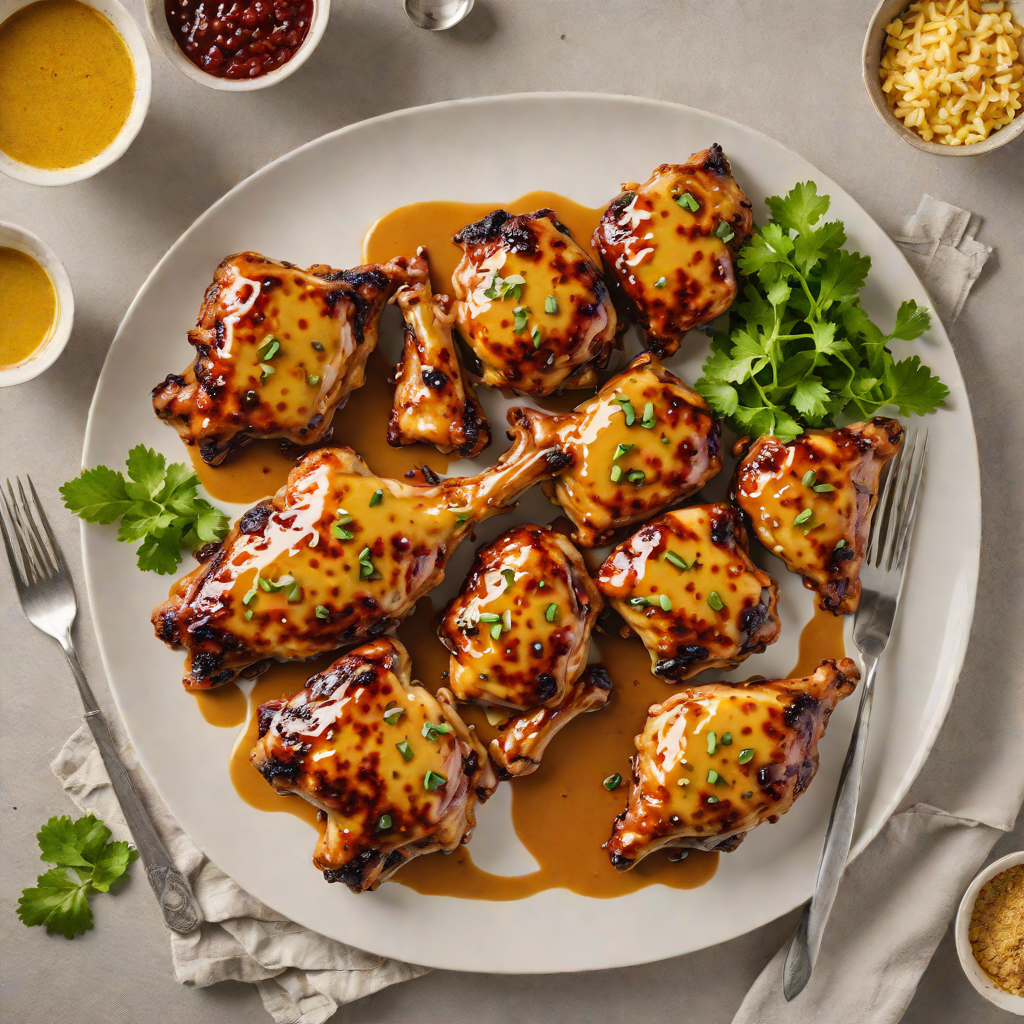
1. Sweet-and-smoky BBQ chicken thighs. Bone-in, skin-on thighs are the single most-forgiving grill protein on this list — the fat renders slowly and the dark meat holds up to 20°F of temperature slop without drying out. Feeds a crowd for $2–3/serving. Recipe: Grilled Sweet and Smoky BBQ Chicken Thighs with Homemade Mustard Sauce.
2. Baby back ribs. Yes, they're an all-afternoon commitment, but almost all of it is passive (indirect heat for 2.5 hours, then a 20-minute glaze on direct heat). Start them at 11 AM for a 3 PM dinner and you have 4 hours to prep everything else while they cook. Recipe: Grilled Baby Back Ribs with Spicy Honey Chipotle Glaze.
3. Grilled sausages. A mixed pack of Italian, bratwurst, and hot Italian takes 12–15 minutes over indirect heat. No trimming, no marinating, no thermometer required (they're pre-cooked in the smoked/parboiled versions). For an 8-guest cookout, buy 16 sausages — most people eat 1.5.
Medium floor (better with a thermometer):
4. Cheeseburgers. Six-ounce patties, one flip, 3 minutes per side over direct heat for medium. The failure mode is overworking the meat during patty formation — mix salt in AFTER portioning, not before, or the myosin will bind and you'll bite into rubber. Recipe: Hand-Pattied Cheeseburger with Garlic Herb Fries.
5. Grilled flank steak. Fifteen minutes total on the grill for a full 2-lb flank steak, sliced against the grain into strips that feed 6 people. The 2-hour marinade window is non-negotiable — flank has almost no intramuscular fat to hide dryness, so the marinade is doing structural work, not flavor work. Recipe: Grilled Citrus-Pepper Flank Steak with Charred Scallions.
Low floor (worth the effort, but pay attention):
6. Cedar-plank salmon. A whole side of salmon on a soaked cedar plank feeds 8 people, takes 20 minutes, and is the visual centerpiece of any menu. But salmon overcooks in the difference between 130°F and 140°F internal — you need an instant-read Alpha Grillers meat thermometer or the equivalent, checked every 3–4 minutes past the 12-minute mark. Recipe: Cedar-Plank Grilled Salmon with Herb and Lemon Glaze.
Real-world numbers (based on the USDA 2-hour hold rule and the Serious Eats grilling notes):
| Protein | Internal temp (pull) | Rest time | Cost per serving (2026) |
|---|---|---|---|
| Chicken thighs (bone-in) | 175°F | 5 min | $2–3 |
| Baby back ribs | 195°F (probe tender) | 15 min | $6–8 |
| Cheeseburgers | 155°F (medium) | 3 min | $3–4 |
| Flank steak | 130°F (medium-rare) | 10 min | $5–7 |
| Cedar-plank salmon | 130°F | 3 min | $6–9 |
| Sausages | 160°F | 2 min | $2–3 |
Corn & Grilled Vegetables: 4 sides using peak-season produce
Late August and early September is the single best two-week window of the year for corn, peaches, zucchini, and cherry tomatoes. Skip the frozen sides. The whole point of Labor Day is eating produce that will be gone by October.
Elote-style Mexican street corn. Grilled corn husked, brushed with mayo-crema, dusted with cotija and Tajín. For an 8-guest cookout, buy 12 ears — some people take two, and half-ears are the perfect side portion. Recipe: Grilled Elote-Style Mexican Street Corn with Cotija and Chili. Prep tip: shuck and coat the corn on Saturday night; grill Sunday afternoon for 8–10 minutes total, turning every 2 minutes.
Grilled peaches. Halve peaches, remove the pit, brush the cut side with olive oil, grill cut-side-down for 3–4 minutes. Serve as a savory side with the flank steak, or hold half of them for the dessert plate with vanilla ice cream. Choose slightly under-ripe peaches — fully ripe ones collapse into mush on the grate.
Zucchini planks. Slice zucchini lengthwise into 1/4-inch planks, toss with olive oil + salt + pepper, grill for 3 minutes per side over medium-high. This is the fastest and lowest-effort grilled vegetable on the menu; a 3-lb bag of zucchini feeds 8 people and costs under $5.
Blistered cherry tomatoes. Thread cherry tomatoes on soaked bamboo skewers (or use a grill basket), brush with olive oil, sprinkle with flaky salt. Grill 4 minutes total, turning halfway. The skins split and the interiors get jammy — best served immediately.
Common pitfalls with grilled vegetables:
- Grate too hot for zucchini/peach. High heat (500°F+) chars the outside while the inside stays raw. Use the cooler side of a two-zone grill (about 400°F) for vegetables; save the high-heat zone for burgers and searing steak.
- Not oiling the grate. Vegetables stick worse than proteins. Oil the grate with a folded paper towel dipped in canola or grapeseed, dragged with tongs, right before the vegetable goes on.
- Salting too early. Salt draws water out of vegetables (osmosis). If you salt zucchini or tomatoes more than 20 minutes before they hit the grill, they'll steam instead of char.
Big-Batch Salads: 4 make-ahead salads that hold up outdoors
The cardinal rule: any salad on a Labor Day table should have been made by 10 AM Sunday morning at the latest. Kitchen-day-of cooking is what turns hosts into stressed hosts. All four of these salads sit in a cooler, transport well, and taste better after 4+ hours of marinating.
1. Rustic picnic potato salad — the mayo-Dijon-chive version, not the sweet one. Recipe: Rustic Picnic Potato Salad with Dijon and Fresh Chives. Make Saturday morning; the potatoes need 12+ hours to fully absorb the vinaigrette. Serves 8 as a side from a single 3-lb bag of Yukon Golds.
2. Watermelon-feta-mint salad. The one salad that requires zero cooking: cube 3 lbs seedless watermelon, crumble in 6 oz feta, tear a bunch of mint over the top, drizzle with olive oil + balsamic + flaky salt. Recipe: Feta and Watermelon Summer Salad with Mint and Kalamata Olives. Assemble Sunday morning (watermelon weeps quickly — no earlier).
3. Orzo salad. Cook 1 lb orzo, cool it, toss with cherry tomatoes, cucumber, feta, kalamatas, red onion, and lemon-oregano vinaigrette. This holds up in the cooler for 6+ hours without wilting. Make Saturday evening.
4. Cabbage slaw. The vinegar-based slaw (not the mayo version) — shredded green cabbage, red cabbage, carrot, apple cider vinegar, olive oil, sugar, salt. Make Sunday morning; the salt needs at least 2 hours to break down the cabbage from crunchy to properly slaw-y. Two heads of cabbage feeds 12.
Food safety note: the USDA grilling guidance is the 2-hour rule at ambient temperatures under 90°F, and 1 hour above 90°F. Any salad with mayo (potato salad, some slaws) that sits in the sun for more than 1 hour on a 90°F+ day should be tossed, not saved for leftovers. Keep the mayo-based salads in a covered container on a bed of ice in the cooler; pull small serving bowls out for 30-minute windows and rotate them back.
Grilled Fruit Desserts: peach cobbler, grilled pineapple, s'mores upgrade
Dessert on Labor Day is peak-season stone fruit. Skip the bakery cake.
Peach cobbler. The classic version — sliced peaches, brown-sugar cinnamon crumble, served warm with vanilla ice cream. Recipe: Cinnamon-Spiced Peach Cobbler with Brown Sugar Crumble. Bake indoors Sunday morning, hold at room temperature, reheat 15 minutes in a 300°F oven right before serving. One 9x13 pan feeds 12.
Grilled pineapple skewers with honey glaze. Cube a whole pineapple, thread on soaked bamboo skewers, brush with honey + rum + lime juice, grill 8 minutes turning every 2. Recipe: Rum-Soaked Pineapple Grilled Skewers with Honey Glaze. Serve with vanilla ice cream and a squeeze of lime.
S'mores upgrade. Skip Hershey's chocolate. Use a good dark bar (70%) broken into squares, and toast the marshmallow to golden — not blackened. Better graham cracker: shortbread cookies or a homemade brown-butter graham. The upgrade takes 15 seconds per s'more and completely changes the perception of the dessert.
The Timeline: what to prep on Friday, Saturday, and Sunday morning
The single biggest predictor of whether the host enjoys their own party is how much of the food is done before the doorbell rings. Here's the schedule that leaves you with only 45 minutes of active work on Sunday afternoon.
Friday evening (1 hour):
- Grocery run. Print the list, hit the store once. Getting a second midday-Sunday store run wastes 90 minutes.
- Confirm the propane tank has fuel. A full 20-lb tank runs about 18–20 hours of high-heat grilling — plenty for one cookout. If in doubt, buy an exchange tank Friday, not Saturday afternoon (the exchange racks are picked clean by 4 PM Saturday of a long weekend).
- Chill drinks. A warm cooler + warm cans = 4 hours to cold. Cold cooler + cold cans = ready when guests arrive.
Saturday morning (1.5 hours):
- Brine the chicken thighs (1 hour salt brine, then dry uncovered in the fridge overnight — the dry brine gets you crispier skin).
- Make the potato salad. Boil, drain, dress warm; the potatoes drink the vinaigrette as they cool.
- Cube the watermelon; store in a colander over a bowl to drain excess water.
- Trim/portion the meat. Any meat that's not being marinated goes into gallon zip-bags with salt + pepper, ready to grill.
Saturday evening (1 hour):
- Make the orzo salad. Refrigerate covered overnight.
- Make the slaw base (cabbage + salt); refrigerate.
- Prep the elote coating: mayo, crema, cotija, Tajín, lime — all in one covered bowl.
- Set out the grill tools. Nothing derails a cookout faster than "where's the spatula" at minute 4 of the burger cook.
Sunday morning (45 minutes):
- Assemble the watermelon salad (mint + feta + oil + salt).
- Finish the slaw (add carrot, apple cider vinegar, oil, sugar).
- Bake the peach cobbler; let it cool on the counter.
- Ice the drinks cooler.
- Marinate the flank steak (2 hours minimum, 4 hours max — longer and the acid starts breaking down protein into mush).
Sunday afternoon (45 minutes of active grill time for 8 guests):
- 2:30 PM — Light the grill (gas: 10 min preheat; charcoal: 20 min to hot coals).
- 2:45 PM — Grill the corn (10 min). Pull; wrap in foil to hold.
- 3:00 PM — Grill the chicken thighs (25 min). Pull; hold under foil.
- 3:30 PM — Grill the flank steak (12 min). Pull; rest.
- 3:45 PM — Grill vegetables (zucchini, peaches, tomatoes). Serve immediately.
- 4:00 PM — Eat.
The Grill Prep Checklist: fuel, grate cleaning, brush, thermometer, tongs
Do this Saturday afternoon, not 20 minutes before the guests arrive:
- Fuel. Gas: swap or exchange the tank if you're under 30%. Charcoal: 2 chimneys' worth per hour of grilling. Buy 15 lbs for a full-menu cookout.
- Grate cleaning. Preheat on high for 10–15 minutes to incinerate residue into ash, then scrape with a stiff wire brush or a wooden grill scraper. Old carbonized food is the #1 cause of stuck proteins.
- Grate oiling. Fold a paper towel, dip in canola or grapeseed, drag across the hot grates with a good pair of OXO Good Grips 12-Inch Stainless-Steel Locking Tongs. Two passes.
- Thermometer. An instant-read meat thermometer is non-negotiable for anything not called "burger." Guessing "done" on chicken or salmon is how you send guests home with warm leftovers they don't trust.
- Tongs, spatula, oil brush, drip pan. Stage everything at arm's reach from the grill. A chef's knife and a maple end-grain cutting board set up outside the kitchen door for slicing flank steak, resting sausages, and dividing ribs.
- Fire extinguisher or box of baking soda. Grease flare-ups on a full grill can flash a foot high. Water makes grease fires worse; baking soda smothers them.
Feeding a Crowd: protein per person, drink counts, ice math
The math for a real cookout, from bulk-shopping experience — inflate every number by ~15% for actual buying:
| Item | Per person | 8-guest total | 16-guest total |
|---|---|---|---|
| Boneless raw protein | 0.5 lb | 4 lb | 8 lb |
| Bone-in raw protein | 0.75 lb | 6 lb | 12 lb |
| Buns / rolls | 1.5 | 12 | 24 |
| Non-alcoholic drinks | 3 cans/bottles | 24 | 48 |
| Beer (drinking adults only) | 4 cans | 24 (assuming 6 adults) | 48 |
| Ice (bags) | 0.25 (10 lb) | 2 | 4 |
| Napkins | 4 | 32 | 64 |
Kids: count as 0.5 of an adult for food, 1 of an adult for non-alcoholic drinks.
Ice math: the biggest under-buy on any cookout. You need ice for the drinks cooler AND for the food-hold cooler. A 10-lb bag lasts 4–6 hours in a 90°F backyard. Two bags for 8 guests is the floor; four bags for a hot day.
Drink counts: three drinks per adult per 3 hours is the realistic pace. Half of that is alcoholic. Buy variety — nobody wants to drink the same lager for four hours. A 24-pack of light lager + a 12-pack of an IPA + a 6-pack of a wheat + 24 cans of sparkling water covers most preferences.
Common Pitfalls (avoid these 5 and everything else is easier)
1. Grilling burgers cold from the fridge. Ambient temperature makes a 30°F difference at the center — a fridge-cold burger cooked to "medium" by touch is actually rare in the middle. Sit patties on the counter for 20 minutes before they hit the grill.
2. Cutting into meat immediately. Every protein needs a rest (see the temperature table above). Cutting a steak or a chicken thigh straight off the grill dumps the juices onto the cutting board instead of into the meat.
3. Serving mayo salads warm. Room-temp mayo + protein/starch is where food poisoning lives. Serve cold, on ice, or don't serve.
4. Running out of charcoal at 3:30. One chimney of charcoal is 60–75 minutes of cooking, not 3 hours. Have a second chimney lit and ready by the time the first one goes to ash.
5. No shade for the food. A pop-up tent or a table umbrella over the food is more important than one over the guests. Direct sun on a bowl of potato salad hits the 2-hour rule 30% faster.
When NOT to grill outside
Some Labor Days you should just move the whole menu indoors. If the forecast shows:
- Sustained wind above 20 mph. Gas grills lose 30–40% of their heat output; charcoal chimneys are hard to light and dangerous to leave.
- Rain that isn't a passing shower. Wet propane fittings and rain-slicked patios don't mix.
- Air quality index above 150 (unhealthy). Especially relevant in Western US Labor Days — wildfire smoke has ruined too many cookouts, and standing over an open grill in AQI 175 is a real health risk.
Move the menu inside: cast-iron burgers on the stove, sheet-pan chicken thighs in a 425°F oven, corn boiled in a stockpot with butter. The recipes still work; only the smoke flavor is lost.
Sources
- USDA Food Safety and Inspection Service — Grilling and Food Safety — the 2-hour rule and safe internal temperatures.
- Serious Eats — Grilling — testing-driven technique guides for every protein on this menu.
- Bon Appétit — Labor Day Recipes — additional recipe inspiration.