Mediterranean Diet for Beginners: A 4-Week Starter Plan with 30 Recipes
Four weeks, ten core recipes, and a stocked pantry that turns the Mediterranean diet from a Pinterest board into your default weekly meal plan.
The Mediterranean diet for beginners is a 4-week eating plan built around extra-virgin olive oil, vegetables, whole grains, legumes, and seafood twice a week, with herbs, garlic, and citrus doing most of the seasoning. You don't count calories, you don't buy a single supplement, and nothing is fully banned. Week 1 is breakfasts and lunches; week 2 stocks the pantry; week 3 adds two seafood nights; week 4 locks in the routine. Cook three nights a week, leftover the other four, and you'll be eating the most-recommended diet of 2026 by Sunday of week 4.
Why the Mediterranean diet is the most-recommended eating pattern in 2026
U.S. News has ranked the Mediterranean diet #1 overall every year since 2018, and the 2026 panel did it again. The reason isn't trend-chasing — it's that the underlying evidence base keeps growing. The PREDIMED trial (the landmark Spanish study following ~7,500 adults at high cardiovascular risk) showed a ~30% reduction in major cardiovascular events for the Mediterranean-with-olive-oil arm vs. a low-fat control. The Harvard T.H. Chan School of Public Health summary walks through why most cardiologists now treat it as the default dietary recommendation for adults over 40, and the Mayo Clinic's clinician-facing overview covers the same ground for primary-care physicians.
What makes it different from keto, Whole30, or the carnivore reboots that come and go: the Mediterranean pattern is the only major eating style that's been studied for 60+ years across hundreds of thousands of people and consistently shows up in longevity data. The Blue Zones research — five regions on three continents with the highest concentration of centenarians — found that two of the five (Ikaria, Sardinia) eat a near-textbook Mediterranean diet. That's not a marketing claim; it's the demographic outcome.
For a beginner, the practical appeal is simpler. You don't have to learn a new vocabulary. You don't have to weigh anything. You don't have to cut out bread, fruit, pasta, or wine. You just shift the proportions on your plate — more plants, more olive oil, more legumes, less red meat, less ultra-processed food. After four weeks, the swaps stop feeling like a diet and start feeling like how you cook.
Who this plan is for (and who should skip it)
This plan is built for someone who currently cooks 0–3 nights a week, eats a lot of takeout or pre-packaged meals, and wants a sustainable change without macro spreadsheets. If that's you, follow the four weeks as written. If you already cook five nights a week from whole ingredients, you're probably 80% Mediterranean already — skip to week 3 and just add the seafood cadence.
You should skip this plan and talk to a registered dietitian if any of these apply:
- You have diagnosed chronic kidney disease (the legume + nut load can be a problem at certain CKD stages).
- You're on warfarin and your INR isn't well-controlled (the leafy-green vitamin-K load matters).
- You have a confirmed shellfish or fish allergy (you can still do a vegetarian Mediterranean diet, but the seafood weeks need a swap plan).
- You're managing an active eating disorder.
- You're pregnant and your OB has specific seafood-mercury guidance — follow your OB's list before this guide's.
For everyone else, including most adults with type 2 diabetes, metabolic syndrome, mild-to-moderate hypertension, or "I just want to eat better," the Mediterranean diet is the lowest-risk starting point in mainstream nutrition.
The 5 Mediterranean pillars: olive oil, produce, whole grains, seafood, legumes
The plan stands or falls on five staples. If you stock these and learn how to use them, you've done 80% of the work.
| Pillar | Weekly target (per adult) | What "good" looks like at the store |
|---|---|---|
| Extra-virgin olive oil | 2–4 tablespoons per day | Dark glass bottle, harvest date within 18 months, country of origin listed (Spain/Italy/Greece/California) |
| Vegetables + fruit | 5–9 servings per day | Buy what's in season; frozen counts; canned tomatoes are a power tool |
| Whole grains | 3–6 servings per day | Whole-wheat bread, farro, brown rice, oats, quinoa, bulgur, whole-wheat pasta |
| Seafood | 2 servings per week (3–4 oz each) | Salmon, sardines, mackerel, anchovies, cod, shrimp; frozen is fine |
| Legumes + nuts | 3–4 legume servings + a daily nut handful | Chickpeas, lentils, white beans, almonds, walnuts, pistachios |
A few quick rules that save beginners hours of forum-reading:
1. Olive oil is the cooking fat, not a finishing oil. You will cook with it, dress with it, drizzle on top, and dip bread in it. Buy a 1L bottle for cooking and a small 500mL bottle of a more expensive single-origin oil for finishing. Storage tip: olive oil hates light and heat — keep it in a closed cupboard, not next to the stove.
2. Frozen seafood is real seafood. A 1-lb bag of frozen wild salmon fillets ($15–20) is nutritionally identical to the fish counter version and often fresher because it was flash-frozen at sea.
3. Canned + jarred is allowed. Canned tomatoes, jarred roasted red peppers, canned chickpeas, jarred olives, and tinned sardines are pantry MVPs in actual Mediterranean home cooking. The "everything must be fresh" rule is a North American invention.
4. Whole grains beat white, but the gap is smaller than wellness culture says. If your household will eat whole-wheat pasta, great. If they'll only eat regular pasta, that's fine — the diet works either way. Don't lose the meal-plan war over one grain.
5. Wine is optional. A small glass of red with dinner is the classic depiction; the FAQ below covers why you don't need it.
A good chef's knife and a heavy pan or dutch oven cover almost every technique in this plan. If you only buy two pieces of equipment this month, make it those.
Week 1: ease in (breakfasts, lunches, dinners with grocery list)
Week 1 is the easiest week of your life. The point is to build momentum, not to overhaul everything. You'll keep your current dinners three nights, cook two new dinners, and rotate three breakfasts + three lunches.
Week 1 swaps (the only rule)
- Swap butter or seed oil for extra-virgin olive oil whenever you'd use it.
- Add a piece of fruit OR a handful of nuts to one snack or meal per day.
- Pick one whole-grain swap: whole-wheat bread, oats for breakfast, or brown rice once.
Week 1 breakfasts (rotate)
1. Greek yogurt bowl. 1 cup plain full-fat Greek yogurt, ½ cup berries, 2 tbsp walnuts, 1 tsp honey.
2. Whole-grain toast. 2 slices whole-grain bread, 2 tsp olive oil, half an avocado mashed on top, salt, pepper, lemon.
3. Egg-and-tomato skillet. Sauté chopped onion + tomato in olive oil, crack 2 eggs in, finish with feta and parsley. (Pre-cursor to Authentic Moroccan Shakshuka in week 3.)
Week 1 lunches (rotate)
1. Bean + grain bowl. Half a can of chickpeas, ½ cup cooked farro or quinoa, chopped cucumber + tomato + red onion, olive oil + lemon + salt. Build at Lemon-Garlic Mediterranean Quinoa Bowl for the deluxe version.
2. Tuna + white bean salad. 1 can oil-packed tuna, ½ can cannellini beans, sliced red onion, parsley, olive oil, lemon, capers.
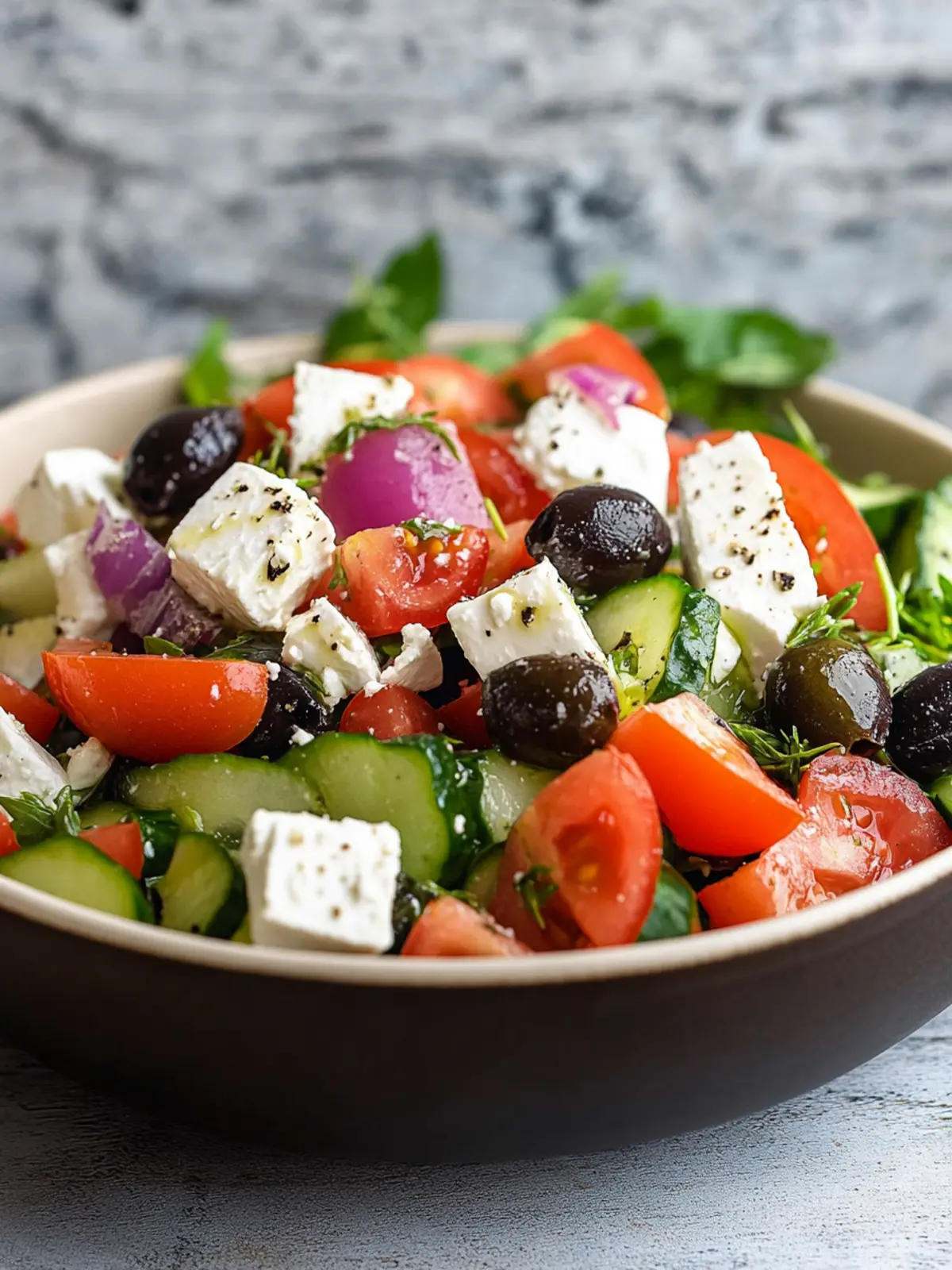
3. Big Greek salad. Tomato, cucumber, red onion, kalamata olives, a slab of feta on top, olive oil + oregano. Recipe: Classic Horiatiki Greek Village Salad.
Week 1 dinners (cook 2, keep 3 of your usuals)
- Tuesday — sheet-pan Mediterranean chicken. Use the Greek Lemon-Oregano Chicken with Potatoes approach: chicken thighs, lemon, garlic, oregano, olive oil, potatoes, roasted at 425°F for 35 minutes.
- Thursday — lentil soup night. Best-Of-Best Hearty Lentil Soup makes 6 servings; eat half tonight, freeze the rest in two 2-cup containers for week 3.
Week 1 grocery list
- Produce: 2 lemons, 1 head garlic, 1 yellow onion, 1 red onion, 1 large tomato or pint of cherry tomatoes, 1 cucumber, 1 bag baby spinach, 1 bag salad mix, 1 bunch parsley, 1 avocado, 1 pint berries
- Pantry: 1L extra-virgin olive oil, jar of kalamata olives, can chickpeas, can cannellini beans, can oil-packed tuna, jar capers, 1 lb dry lentils, whole-grain bread, oats, whole-wheat pasta or farro, dried oregano, salt
- Refrigerated: 1 block feta, 32-oz plain full-fat Greek yogurt, dozen eggs, ½ gallon milk if you take it
- Protein: 1 lb chicken thighs (~$6), 1 jar honey
Total: ~$55–70 depending on store and region. The pantry items will last 3–4 weeks; weeks 2–4 add far less.
Week 2: build the staples pantry
By the end of week 2 you should be able to cook a credible Mediterranean dinner with what's already in the house. That requires stocking the pantry once, then never running out of three or four anchors.
The pantry you're building
| Category | Always-stocked staples |
|---|---|
| Oils + acids | Extra-virgin olive oil (cooking + finishing), red-wine vinegar, balsamic, lemons |
| Grains | Farro, brown rice, whole-wheat pasta, oats, quinoa, bulgur |
| Legumes (canned) | Chickpeas, cannellini, kidney beans, lentils, black-eyed peas |
| Legumes (dry) | Brown lentils, red lentils, dried chickpeas |
| Tinned + jarred | Whole tomatoes, fire-roasted tomatoes, tomato paste, roasted red peppers, kalamata olives, capers, anchovies, sardines, tuna in olive oil |
| Spices + herbs | Dried oregano, sumac, paprika, smoked paprika, cumin, coriander, bay leaves, red-pepper flakes, sea salt |
| Nuts + seeds | Walnuts, almonds, pistachios, sesame seeds, pine nuts (small bag, freezer) |
| Refrigerated | Greek yogurt, feta, parmesan, eggs, lemons, garlic |
Two new dinners this week
- Tuesday — sheet-pan fish. Lemon-Herb Baked Salmon with Roasted Cherry Tomatoes. 25 minutes total, one pan, almost no cleanup. This is your week 2 seafood test run before the cadence picks up in week 3.
- Thursday — peppers + lentils. Budget-Friendly Mediterranean Stuffed Peppers feed 4 for under $12. Freeze leftovers in single servings for week 3 lunches.
A dip night
The Mediterranean diet is at its best as a small-plates social event. One Friday this week, do a mezze board:
- Warm pita
- Olives + a wedge of feta
- Authentic Lebanese Hummus with Pita and Grilled Vegetables — make a big batch
- Greek Yogurt and Honey Tzatziki — 10 minutes including the cucumber-grating
- Sliced cucumber, radishes, baby carrots, sliced bell pepper
- A jar of stuffed grape leaves from the store
- Glass of cold white or red wine if you drink
Total cost: ~$18. Total cooking time: ~30 minutes. This is the meal that converts spouses and roommates.
Week 3: add seafood twice a week
Week 3 is the inflection point. If you can establish a two-seafood-nights-per-week cadence and it sticks, you've cleared the biggest behavioral hurdle of the whole plan. The American Heart Association recommends two 3.5-oz servings of fatty fish per week, and the NHLBI's DASH eating plan (which overlaps heavily with the Mediterranean pattern) leans on the same target.
The two seafood nights
- Sunday — high-effort seafood. This is the night you actually cook a fresh fillet. Options:
- Baked Cod with Tomato-Caper Sauce and Lemon Zest — cod is the cheapest white fish at most US grocery stores
- Wednesday — low-effort seafood. This is the night where pantry tinned fish carries the meal:
- Pasta with tuna, capers, lemon zest, parsley, olive oil = 15-minute dinner
- Spanish-style shrimp + garlic + smoked paprika + sherry vinegar = 12-minute dinner with frozen shrimp
Salmon vs. cod vs. chicken — what you're actually getting
| Protein (4 oz cooked) | Calories | Protein (g) | Omega-3 EPA+DHA (mg) | Approx. US cost/serving |
|---|---|---|---|---|
| Atlantic salmon | 235 | 25 | 2,100 | $4–6 |
| Wild Alaskan cod | 110 | 24 | 200 | $3–5 |
| Sardines (canned, oil) | 200 | 23 | 1,400 | $1–2 |
| Chicken breast (skinless) | 165 | 31 | 30 | $1–2 |
Two salmon dinners per week ≈ 4,200 mg EPA+DHA, which is more than triple the AHA's 1,000 mg/week target. If salmon is over budget every week, alternate: one salmon + one sardine night will still clear the target at under $5 total for the omega-3 load.
Mid-week refresh: a one-pan dinner
Greek Lemon-Oregano Chicken with Potatoes again — repetition is fine, this is the plan's most-loved recipe for a reason. Add roasted broccoli or a Classic Horiatiki Greek Village Salad on the side for vegetables.
Week 4: dialed-in routine + going forward
By week 4 the cooking has become muscle memory. The job here is to stop white-knuckling the meal plan and just settle into a sustainable weekly shape.
Your week-4 default week
| Day | Anchor meal | Effort |
|---|---|---|
| Sunday | Big-cook day: roast a tray of vegetables + a protein, make a pot of grains | 1.5 hr |
| Monday | Leftovers + a salad | 10 min |
| Tuesday | One-pan dinner (Greek Lemon-Oregano Chicken with Potatoes or stuffed peppers) | 45 min |
| Wednesday | Tinned-fish or shrimp night | 15 min |
| Thursday | Soup or stew night (double the lentil soup recipe — eat half, freeze half) | 30 min |
| Friday | Mezze + a glass of wine or sparkling water | 30 min |
| Saturday | Restaurant or takeout (Mediterranean-leaning if possible) | 0 min |
The whole week is 7 meals, three of which take under 20 minutes. The two "real cooking" nights are the only ones that need full attention.
Going forward: what changes after week 4
Nothing. That's the point. The "going forward" plan is the same as week 4, with two adjustments:
1. Rotate the recipes seasonally. Heavy lentil soup in November; cold gazpacho and Authentic Lebanese Hummus with Pita and Grilled Vegetables in July. Use what's in season.
2. Build a personal MVP list. After 6–8 weeks, you'll know which 8 dishes you actually love and which 4 you forced yourself to like. Drop the 4 you forced. Cook the 8 you love on rotation.
Most beginners overestimate how many recipes they need. Eight is plenty for a year.
Top 10 Mediterranean recipes from our catalog
These ten recipes between them cover every flavor profile and technique you need for the diet. If you cooked nothing else for a year, you'd still be eating a textbook Mediterranean diet.
1. Greek Lemon-Oregano Chicken with Potatoes — the sheet-pan dinner you'll make 30 times this year.
2. Lemon-Garlic Mediterranean Quinoa Bowl — the lunch you'll meal-prep on Sundays.
3. Lemon-Herb Baked Salmon with Roasted Cherry Tomatoes — your default Sunday seafood night.
4. Classic Horiatiki Greek Village Salad — the side dish that turns any protein into a Mediterranean dinner.
5. Authentic Lebanese Hummus with Pita and Grilled Vegetables — the appetizer and the fridge staple.
6. Authentic Moroccan Shakshuka — the weekend brunch dish that uses pantry-only ingredients.
7. Budget-Friendly Mediterranean Stuffed Peppers — under $12 for four servings and freezes well.
8. Best-Of-Best Hearty Lentil Soup — the meal-prep workhorse; doubles for two weeks of lunches.
9. Baked Cod with Tomato-Caper Sauce and Lemon Zest — the affordable seafood night when salmon is over budget.
10. Greek Yogurt and Honey Tzatziki — the universal Mediterranean condiment; ten minutes, no cooking.
5-day sample meal plan with shopping list
Use this exact plan for one week and you'll have a clean week-of-eating to compare your old shopping list against. Adjust portions for household size (the recipes are sized for 4 servings unless noted).
| Day | Breakfast | Lunch | Dinner |
|---|---|---|---|
| Monday | Greek yogurt + walnuts + honey + berries | Quinoa bowl with chickpeas, cucumber, feta | Greek Lemon-Oregano Chicken with Potatoes + side salad |
| Tuesday | Whole-grain toast + olive oil + tomato + egg | Leftover chicken + greens | Best-Of-Best Hearty Lentil Soup + crusty bread |
| Wednesday | Overnight oats + almonds + apple | Tinned tuna + white beans + parsley | Shrimp + garlic pasta (15 min) |
| Thursday | Authentic Moroccan Shakshuka | Quinoa bowl leftovers | Budget-Friendly Mediterranean Stuffed Peppers |
| Friday | Greek yogurt + walnuts + honey + berries | Big Greek salad + pita + Greek Yogurt and Honey Tzatziki | Lemon-Herb Baked Salmon with Roasted Cherry Tomatoes |
Shopping list for these 5 days (1 adult)
| Aisle | Items |
|---|---|
| Produce | 2 lemons, 1 head garlic, 1 red onion, 1 yellow onion, 1 pint cherry tomatoes, 2 large tomatoes, 1 cucumber, 1 bell pepper (any color), 2 bell peppers for stuffing, 1 head romaine, 1 bunch parsley, 1 bunch cilantro (or sub more parsley), 1 apple, 1 pint berries, 4 small potatoes |
| Protein | 4 boneless skinless chicken thighs (~1 lb), 1 wild salmon fillet (~6 oz), 1 lb frozen shrimp, 1 can tuna in olive oil, 1 dozen eggs |
| Pantry | 1 box whole-wheat pasta, 1 cup quinoa (bulk or box), 1 cup brown lentils, 1 can chickpeas, 1 can cannellini, 1 can fire-roasted tomatoes, jar kalamata olives, jar capers, jar honey, walnuts, almonds, oats, whole-wheat bread, pita, olive oil (if you don't already have a bottle) |
| Refrigerated | 1 small block feta, 32-oz Greek yogurt, milk (if you take it) |
Total: roughly $50–65 for one adult, lower if your pantry is already partially stocked.
The full ingredient list is also designed to push to Instacart — your closest store will substitute brands and show you the price preview before checkout. You can also rebuild the cart around an allergy or budget cap inside the AI chat at /chat.
What to buy: pantry + kitchen equipment
The Mediterranean diet doesn't require much hardware. Three tools cover 90% of the cooking, and you can do the entire 4-week plan without buying any of them if you already own a pot, a pan, and a sharp knife.
The minimum kit
- A heavy 10–12" pan — cast iron, stainless, or enameled cast iron. This pan handles 80% of weeknight cooking. Browse cookware picks if you're starting from zero.
- A 4–6 qt dutch oven or heavy pot — for soups, stews, big batches of lentils, braised chicken. The most-used pot in any Mediterranean kitchen.
- A sharp 8" chef's knife — the single biggest quality-of-life upgrade you can make. A dull knife is the actual reason most people hate vegetable prep. See knife picks.
Nice-to-have, in priority order
1. A sheet pan (half-sheet, ~13×18"). Sheet-pan chicken + roasted vegetables is the most common Mediterranean weeknight dinner shape.
2. A microplane / fine grater — for lemon zest, garlic, parmesan. Utensils picks.
3. A food processor — only if you make hummus, romesco, or pesto from scratch often. Skip it otherwise.
4. A salad spinner — sounds frivolous; isn't. Wet greens get watery dressing.
5. A 2-cup glass jar with a tight lid — make a week's worth of olive-oil-and-lemon dressing on Sunday and shake before each use.
Buying olive oil without getting fleeced
Three rules cover most of the field. None of them depend on price.
1. Harvest date on the label, within 18 months. Olive oil is a juice; it goes stale. If the bottle has only a "best by" date but no harvest date, it's either old or hiding something.
2. Dark glass or tin. Clear bottles let UV oxidize the oil on the shelf.
3. Country of origin, not "imported from Italy." The latter often means Tunisian/Greek oil bottled in Italy. Single-country oils from Spain, Greece, Italy, or California are the safe defaults at every price tier.
A daily-use cooking oil at $0.50–$0.80 per fl oz is fine. A finishing oil at $1.50–$3.00 per fl oz is worth the upgrade for the bread-dip, the salad dressing, and the post-grill drizzle. Don't cook with the expensive bottle; the heat strips the flavor compounds you paid for.
FAQ
What can I eat on the Mediterranean diet?
The Mediterranean pattern centers on vegetables, fruits, whole grains, legumes, nuts, olive oil, and seafood twice weekly. Moderate amounts of yogurt, cheese, eggs, and poultry are fine; red meat is occasional. Most readers find it less restrictive than keto or Whole30 because nothing is fully banned — you simply shift the proportions on your plate toward plants and unsaturated fats.
How much does a week of Mediterranean groceries cost?
Expect roughly $85–$120 per person per week if you cook every meal, depending on how much fresh seafood you include. Beans, lentils, oats, and frozen vegetables keep the floor low; salmon and good extra-virgin olive oil are where the budget can stretch. The shopping list in this guide groups items so you skip impulse buys at the store.
Can I lose weight on the Mediterranean diet?
Most clinical reviews show modest, sustainable weight loss of 5–10 pounds over 6 months when readers replace ultra-processed foods with the staples here. It is not a rapid-loss diet — the value is metabolic and cardiovascular. If weight loss is the only goal, pair the plan with a modest calorie deficit rather than restricting any food group.
Do I need to drink wine to follow the Mediterranean diet?
No. Wine is optional and the diet still works without it. If you do drink, the traditional pattern is one small glass with dinner, not daily binge sessions. Readers who skip alcohol entirely often see slightly faster weight loss and better sleep; the cardiovascular benefits hold either way as long as the rest of the plate stays Mediterranean.
How do I get an Instacart cart from this meal plan?
Tap the green Instacart icon at the top of any shopping list page on AislePrompt. The plan's full ingredient list ships to your local store with retailer-aware substitutions and a price preview. Delivery typically runs 1–2 hours; pickup is usually free. The AI chat at /chat can also rebuild the plan around any allergy before you check out.
Common pitfalls (the ones that derail beginners)
The four-week plan above is the easy part. The harder part is staying with it past week 6. Here are the failure modes we see most often:
- Buying everything fresh. New Mediterranean cooks blow their grocery budget on fresh fish, fresh herbs, and fresh produce in week 1, get demoralized when half of it rots, and quit by week 4. Use frozen seafood, canned beans, and frozen vegetables freely — they're cheaper, last longer, and the nutritional difference is small.
- Skipping the pantry stock-up. If you don't have olive oil, canned tomatoes, and a can of chickpeas in the cupboard on a Tuesday night, you will order takeout. The two hours spent on a one-time pantry shop in week 2 saves 10+ takeout orders.
- Treating it as a "cleanse." The Mediterranean diet is not detox, not anti-inflammatory marketing, not a juice protocol. The longevity benefit comes from steady-state eating for years, not strict adherence for 30 days. Cheat days don't reset the timer; missing a week doesn't either.
- Over-restricting dairy. The traditional pattern includes Greek yogurt, feta, hard cheeses (parmesan, pecorino), and small amounts of milk. Full-fat versions of these are part of the plan. Cutting them out makes the diet harder to sustain and worsens the satiety profile.
- Forgetting the fish. The single most-skipped pillar. If twice-weekly fresh fish is unrealistic, lean on tinned sardines, tinned salmon, and tinned anchovies — they hit the same omega-3 target at one-third the cost and zero prep time.
When the Mediterranean diet is NOT the right fit
This guide is honest about its limits. The Mediterranean pattern is not the best fit for:
- Strict athletic cuts requiring rapid weight loss in <8 weeks. A higher-protein, lower-carb cutting protocol will outperform it on a strict deadline.
- Type 1 diabetes with brittle blood-sugar control. The pattern is fine, but the carb load needs to be carefully insulin-matched and that's outside this guide's scope.
- Anyone on a strict kosher / halal restriction without a meat substitution. The diet adapts easily, but the recipe set in this guide leans toward fish + chicken and would need swaps for a strictly red-meat-only protein source.
- A household where one cook resists vegetable-heavy meals. Sustainability requires buy-in. Use the recipes as side dishes for 2–3 months before swapping them in as mains.
Outside those edge cases, the Mediterranean diet is the lowest-friction "eat better" plan in mainstream nutrition. Four weeks in, you'll have a stocked pantry, a working recipe rotation, and a default weekly shape you can run for a decade.
Related guides
When you're ready to layer the next thing on top of this plan, these companion guides build directly on the Mediterranean foundation:
- Meal plan builder — generate a custom 7-day Mediterranean meal plan in 30 seconds and push it to Instacart.
- Shopping list helper — auto-aggregate ingredients from any combination of recipes in this article and group them by store aisle.
- Family planner — scale these recipes for 4–6 people and lock kid-friendly versions of each dinner.
- AI cooking chat — ask follow-up questions ("can I swap salmon for trout?", "what if I'm gluten-free?") and get instant ingredient substitutions.
Sources used in this guide: Harvard T.H. Chan / Harvard Health on the Mediterranean diet, the Mayo Clinic Mediterranean diet overview, and the NHLBI DASH eating plan reference, which is the federal companion guideline that overlaps ~80% with the Mediterranean pattern.