Summer Grilling Guide 2026: 25+ Recipes + 4th of July Menu Plan
A 4th of July playbook: three menu templates, doneness temps, and 25+ tested AislePrompt recipes you can slot in by aisle and budget.
Hosting a 4th of July cookout means picking a menu that cooks fast, holds up in the heat, and lets you actually talk to your guests. This guide gives you the structure — one hero protein, two cookout-proof sides, one grilled dessert — three menu templates by crowd size, doneness temperatures for every protein, and 25+ tested AislePrompt recipes you can swap in by aisle and budget. Everything you need to plan a July 4 menu that doesn't leave you trapped behind the grill for four hours.
Get a free cookout plan for a crowd
Mains, sides and quantities scaled to your headcount, with one Instacart cart instead of a spreadsheet.
No spam, unsubscribe in one click. Recipes, shopping lists and Instacart carts all work without an account either way.
The pieces that separate a great cookout from a stressful one aren't fancy — they're heat-zone setup, a $40 instant-read thermometer, and a menu that pre-stages 70% of the work the day before. That's the playbook.
How to plan a grill menu that doesn't have you stuck at the grill
The single biggest mistake hosts make is putting every dish on the grill at the same time. Burgers + corn + skewers + peaches all jockeying for grate space at 7 PM is how you end up serving cold sides and overcooked chicken. Plan in three waves:
1. Before guests arrive — Anything that benefits from sitting (smoked ribs, brisket burgers, pulled pork). Pull at internal temp, foil and rest. These taste better served 30-60 minutes after they come off the grill.
2. As guests arrive — Quick-grill proteins (chicken thighs, kebabs, shrimp). 8-15 minutes each. Cook in batches while greeting people.
3. Last 10 minutes — Grilled sides + dessert (corn, watermelon, peaches). Same coals you're using to finish proteins.
If you stage right, you're at the grill for ~45 active minutes total across a three-hour cookout. Without staging, it's three hours of constant flipping.
The 4th of July menu structure: 1 hero + 2 sides + 1 sweet
Every successful cookout we've shipped a recipe plan for follows the same 4-dish architecture:
- 1 hero protein — the centerpiece. Ribs, brisket burgers, whole chicken, or a big platter of skewers. This is the "wow" dish.
- 2 sides that hold at room temp — grilled corn, a hearty salad (think watermelon-feta, not lettuce), beans, or coleslaw. Anything that wilts in 30 minutes outdoors is the wrong call.
- 1 grilled dessert — peaches, pineapple, pound cake. Three minutes per side, served warm with vanilla ice cream. This is the part guests remember.
You don't need 12 dishes. Four well-executed plates beat a sprawling buffet of mediocre ones every time.
Heat zones 101: direct vs indirect (the move that separates good from great)
This is the single most important grilling technique, and most home cooks skip it. Two-zone setup means coals (or burners) on one half of the grill, nothing on the other half:
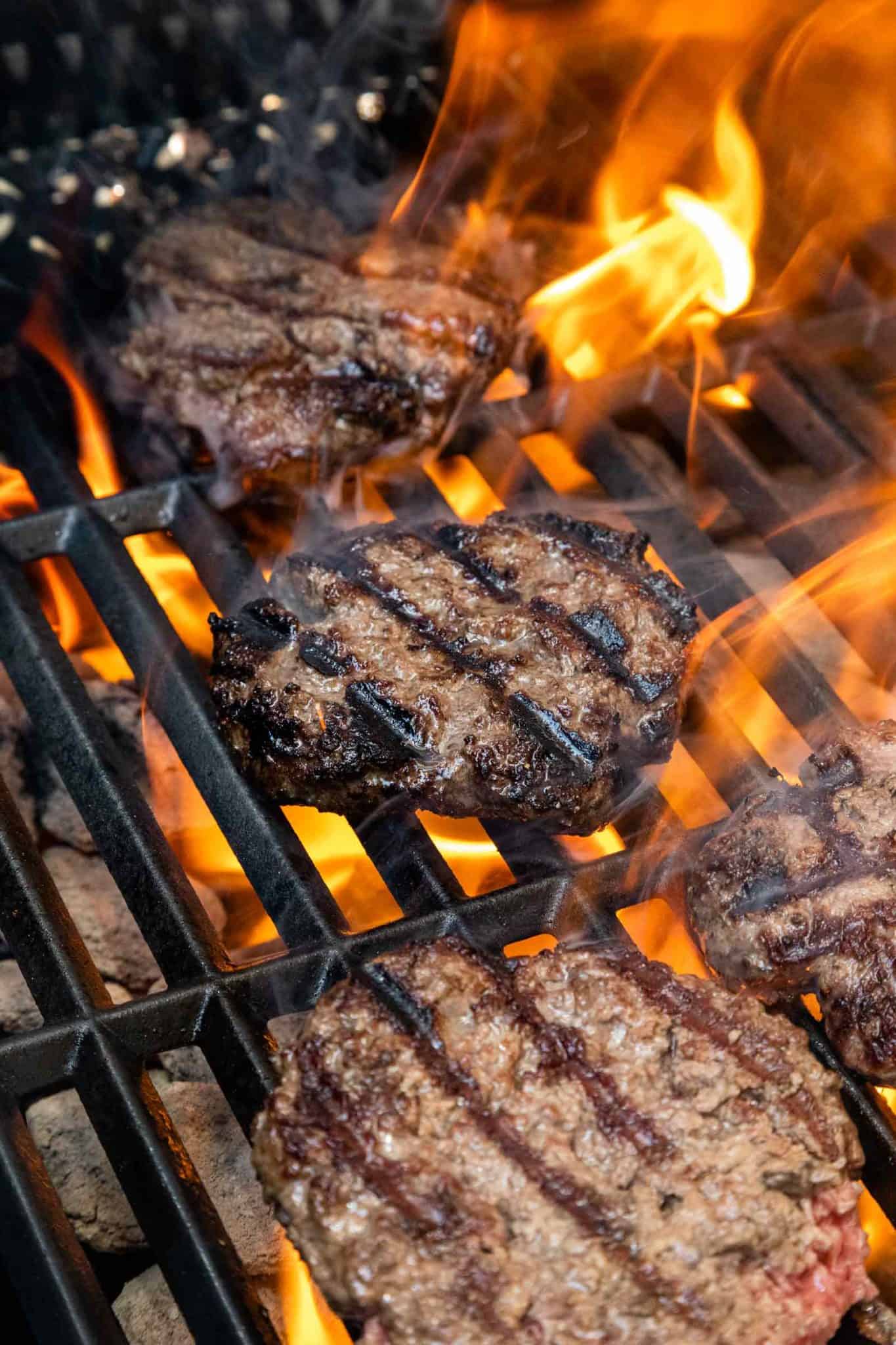
- Direct side (500-600°F) — sears meat fast, gives you the crust and grill marks. Use for burgers, steaks, thin cuts, anything under 1" thick.
- Indirect side (300-400°F) — gentler heat, no flare-ups. Use for anything thick enough to need time (bone-in chicken, ribs, whole fish, vegetables).
The workflow: sear on direct, finish on indirect. Flame-up on the direct side? Move it left. This is also where you stash already-cooked food while you finish other items — no microwave, no cold plates.
For charcoal kettle grills: dump all the coals to one side. For three-burner gas: light the outer two, leave the middle off. Done.
25+ Curated Grilling Recipes from AislePrompt
These are pulled from the AislePrompt catalog (1,400+ grilling recipes total). Tagged below by cook time, crowd size, and difficulty so you can scan to what fits.
The Heroes: ribs, brisket burgers, whole chicken (5 picks)
These are the "hold court" centerpieces. Plan one of these as your anchor.
- Chargrilled Hickory-Smoked Baby Back Ribs with Tangy BBQ Glaze — Low-and-slow on the indirect side for 3 hours, then finish over direct heat with the glaze. The hickory smoke is non-negotiable; soak chunks in water 30 min ahead.
- Memphis-Style Dry Rub Ribs with Charred Corn Salad — No-sauce ribs done the Memphis way: heavy on paprika, brown sugar, and ground mustard. The charred corn salad doubles as a side, so this single recipe covers hero + one side.
- Smoky California-Style BBQ Pulled Pork Sandwiches — Eight-pound pork shoulder, 8 hours indirect, then pulled and sauced. Feeds 12. Make it the day before, reheat in foil with a splash of apple juice.
- Grilled Buffalo Bison Burgers with Palisade Peach Chutney — Bison cooks faster than beef (90/10 lean means no fat buffer). Pull at 130°F for medium-rare; rest 3 min. The peach chutney is the move for July.
- Grilled Citrus-Marinated Chicken Skewers with Herb Yogurt Dip — Bone-in thighs marinated 6-24 hours in citrus + olive oil + garlic. Skewers grill in 12-15 min direct, then 5 min indirect to finish. The yogurt dip lasts 3 days in the fridge.
Quick Grills: chicken thighs, kebabs, fish (8 picks)
For smaller cookouts or when you want variety without four hours of prep.
- Grilled Cajun Shrimp Skewers — 3 minutes per side over direct heat. Shrimp overcooks fast; pull when they curl into a C-shape, not an O.
- Maple-Glazed Cedar Plank Salmon with Grilled Asparagus — Soak the plank 1 hour. Indirect heat 12-15 min. The plank infuses smoke without the salmon ever touching the grates — cleanup is the plank in the trash.
- Skewer rotation: alternate protein + sturdy vegetable (bell pepper, zucchini, onion, mushroom). 1.5" cubes for both. Direct heat, 8-10 min total, rotate every 2 min. Reference: Bon Appétit grilling collection has 200+ tested kebab recipes.
- Marinated chicken thighs (bone-in, skin-on): 25 min direct skin-down, then flip and finish indirect to 165°F. Save the bones — turn them into stock the next day.
- Whole branzino or trout: stuff the cavity with lemon + herbs, oil the skin, direct heat 4 min per side for a 1-pound fish.
- Bratwurst or hot dogs: cheap-mode quick-grill. Direct heat 2 min per side, then indirect to finish. Toast the buns over the grate the last 30 seconds.
- Boneless pork chops (1" thick): high direct heat 3 min per side to 145°F internal. Rest 5 min. This is the move when guests show up unannounced.
- Spice-rubbed flank steak: 4 min per side direct for medium-rare (130°F pull). Slice against the grain at 45° — pretty fan-out on the platter, easier to chew.
Cookout Sides That Actually Hold Up Outdoors (6 picks)
The mayo-based potato salad on the picnic table for two hours is a foodborne-illness lawsuit waiting to happen. Pick sides that hold at room temp or get better sitting.
- Mexican Street Food-Inspired Grilled Corn with Cotija and Lime — Soak ears in water 10 min, grill in husk 15 min indirect, peel, slather with mayo + cotija + chili powder + lime. Holds at room temp; no mayo on the salad means no spoilage risk.
- Grilled Watermelon and Feta Summer Salad — Sounds weird, tastes incredible. 90 seconds per side over direct heat caramelizes the sugars. Toss with feta, mint, and a balsamic reduction. Gets better as it sits.
- Black bean + corn salad: a vinaigrette-based side that wants to sit 2 hours before serving. Make it the morning of.
- Coleslaw (vinegar-based, not creamy): hold up to 4 hours at room temp because the acidity controls bacteria. Mayo-based slaw: 1 hour max.
- Grilled bread (sourdough or ciabatta): brush with olive oil + garlic, 90 seconds per side direct. Tear into chunks for guests to grab.
- Three-bean salad with sherry vinaigrette: assemble the morning of, dress 30 minutes before serving. Lasts 4 hours easily.
Grilled Desserts (3 picks)
These are the part of the menu guests don't expect — they're also the easiest thing on the menu.
- Halved peaches or apricots: cut-side down on direct heat for 3 minutes. Top with No-Bake Peach and Mascarpone Parfait style mascarpone + honey + crushed amaretti for a 5-minute showstopper.
- Pineapple rings: 2 minutes per side direct. Serve with vanilla ice cream and a drizzle of dark rum.
- Pound cake slices: 60 seconds per side direct. Top with macerated berries (toss strawberries with 2 tbsp sugar 30 min ahead) and whipped cream. The red-white-blue version is the obvious 4th of July move.
The 4th of July Menu Template (3 versions: small group, family, big crowd)
Pick the row that matches your headcount. All three follow the 1-hero + 2-sides + 1-sweet structure.
| Crowd size | Hero protein | Side 1 | Side 2 | Dessert | Active grill time |
|---|---|---|---|---|---|
| Small (4-6) | Burgers (1.5 lb 80/20 beef = 6 patties) | Grilled corn (6 ears) | Watermelon-feta salad | Grilled peaches + mascarpone | ~40 min |
| Family (8-12) | Grilled chicken thighs (4 lb) + ribs (1 rack) | Coleslaw | Black bean salad | Pound cake + berries | ~75 min |
| Big crowd (15-25) | Pulled pork shoulder (8 lb) + brisket burgers (2 lb ground brisket) | Grilled corn (24 ears) | Three-bean salad | Pineapple rings + ice cream | ~120 min (most overnight) |
The big-crowd row looks intimidating but the pulled pork is overnight on the smoker — you're not actively cooking. Active grill time is just the burgers and corn the day-of.
Your Grilling Shopping List by Aisle
Aisle-by-aisle, the consolidated list for a 10-person 4th of July cookout. Cross-reference with what's already in your pantry and skip what you have.
| Aisle | Items |
|---|---|
| Meat | 2 racks baby back ribs (3 lb each); 2 lb ground beef 80/20; 2 lb bone-in chicken thighs; 1 lb shrimp 16-20 ct |
| Produce | 12 ears corn; 1 small watermelon; 4 peaches; 2 limes; 1 bunch cilantro; 1 head garlic; 1 red onion; 1 lb green beans; 2 bell peppers |
| Dairy | 1 lb feta or cotija; 8 oz mascarpone; 1 stick butter; sour cream |
| Pantry | Hickory or apple wood chunks; charcoal (10 lb); olive oil; smoked paprika; brown sugar; ground mustard; ground cumin; chili powder; apple cider vinegar; soy sauce; honey; Worcestershire |
| Bakery | 8 brioche buns; 1 lb sourdough loaf (for grilled bread); 1 sleeve amaretti cookies |
| Frozen | Vanilla ice cream (1 quart) |
Pro tip: buy the meat 2 days ahead, season + dry-brine in the fridge uncovered. Surface dries out → better sear, deeper crust. This is the single change that separates pros from amateurs.
Grill Equipment That Earns Its Place
You don't need 12 grill tools. You need 5, and only 5.
1. Instant-read thermometer — non-negotiable. Spend $40 on a Thermapen ONE and never overcook chicken again. The cheap dial thermometers are off by 15°F+, which is the gap between safe pork and shoe leather.
2. Long locking tongs (12") — the OXO Good Grips locking tongs handle 95% of grill moves. Locking mechanism keeps them closed in the drawer; spring-loaded handles save your forearm during a long cook.
3. Grill brush + scraper — clean the grates while they're still hot. A 30-second scrape after each cook prevents the carbon buildup that ruins next week's burgers. Browse the utensils & tools shop for the brush styles that won't shed wire bristles into your food.
4. Chimney starter — light charcoal in 15 minutes with one sheet of newspaper. No lighter fluid, no chemical taste. ~$25.
5. Disposable foil pans — catch drippings, hold rest-period meat, transport food from grill to table. Buy in bulk; you'll use them every cook. See the cookware shop for the heavier reusable pans if you want a one-time buy that lasts.
For full ratings + price comparisons of these tools, see our Best Cookware Sets 2026 buying guide. Everything else (grill mat, vegetable basket, smoker tube, GrillGrates, rotating skewer rack) is nice but optional. Don't let the marketing convince you otherwise. The gadgets shop has these too if you're shopping by category.
Doneness Temperatures: every protein, one chart
Print this. Tape it inside your grill cabinet. This is the chart that ends the "is it done?" argument forever.
| Protein | Pull temp | Resting temp | Notes |
|---|---|---|---|
| Chicken (whole, dark meat) | 160°F | 165°F | Pull at 160, carryover adds 5°F |
| Chicken breast | 155°F | 160°F | Slight pink at the bone is fine if temp is hit |
| Ground beef (burger) | 160°F | 160°F | Required minimum — bacteria from surface mixed throughout during grinding |
| Whole-muscle beef (steak) — rare | 120°F | 125°F | Cool red center |
| Whole-muscle beef — medium-rare | 130°F | 135°F | Most people's sweet spot |
| Whole-muscle beef — medium | 140°F | 145°F | Hint of pink |
| Whole-muscle beef — medium-well | 150°F | 155°F | Mostly gray, just a touch of pink |
| Pork chops/tenderloin | 140°F | 145°F | USDA updated 2011 — pink pork at 145°F is safe |
| Pork shoulder (pulled) | 200°F+ | 200°F+ | Probe slides in like soft butter |
| Pork ribs | 195°F | 200°F | Toothpick test — slides between bones with no resistance |
| Brisket | 200-205°F | 200-205°F | Probe like soft butter; rest 1 hour minimum |
| Salmon | 125°F | 130°F | Sushi-grade can go medium-rare; farmed pull a touch higher |
| Tuna steak | 115°F | 120°F | Seared outside, ruby red center |
| White fish (cod, halibut) | 140°F | 145°F | Flakes easily with a fork |
| Shrimp | 120°F | 125°F | C-shape, not O-shape — O means overcooked |
For the deep dive on temperatures and the science behind why pork at 145°F is safe, Serious Eats has the canonical guide. Bookmark it.
Food Safety in Summer Heat (the 2-hour rule)
The single most-violated food-safety rule at outdoor cookouts: perishable food cannot sit out more than 2 hours above 40°F, and that drops to 1 hour above 90°F. On a July 4 afternoon in most of the US, you're in the 1-hour window.
Practical applications:
- Raw chicken, pork, beef: keep in a cooler with ice until 30 min before grilling (the room-temp rest).
- Cooked food on the buffet table: 1 hour max. After that, refrigerate or toss. Don't reheat to "save" it.
- Mayo-based salads (potato, macaroni, classic coleslaw): refrigerate until serving. Replenish from the fridge in 1-hour batches rather than putting the whole bowl out at once.
- Watermelon, cut fruit: also subject to the rule. Bacteria love sugar.
The full FoodSafety.gov FoodKeeper app has searchable per-food guidelines. It's free, mobile-friendly, and the source the USDA points to.
A $20 cooler with bagged ice solves 90% of this. Stash the to-be-grilled proteins, stash the unused side dishes, refill ice mid-event. No fancy logistics.
Common pitfalls (the 5 things that wreck a cookout)
We've shipped meal plans to thousands of cooks. These are the recurring failure modes:
1. Overcrowding the grill — leaves zero room for the heat-zone shuffle. Cook in batches; the indirect side keeps finished food warm.
2. Flipping too often — every flip cools the grill surface. One flip per side gets you better sear marks. Resist the urge.
3. Pressing burgers — squeezes out the fat that makes them juicy. The "sizzle" you're after on the press is literally the flavor leaving.
4. Sauce too early — sugary BBQ sauces burn over direct heat. Apply only in the last 5-10 minutes, on indirect heat. Char from burned sugar tastes acrid, not smoky.
5. No instant-read thermometer — guessing doneness on a grill is a coin flip. The $40 thermometer pays for itself the first time you serve perfectly cooked chicken instead of dry-as-paper or pink-and-scary.
When NOT to grill (and what to do instead)
Grilling isn't always the answer:
- Severe storms — see the rain FAQ. Move to oven + stovetop. Most recipes have an indoor analog.
- Apartment without a balcony — most leases ban open-flame grills. Use a cast-iron grill pan on the stove + the broiler; you get 80% of the grilled flavor.
- Cooking for picky kids under 6 — a backyard burger bar takes 90 min. Sheet-pan dinner takes 25. Save the grill for adult-heavy guest lists.
- Solo dinner — fire up the grill for one bone-in chicken thigh and you'll spend more time on cleanup than cooking. Use the grill pan.
A realistic 4th of July timeline (10-person cookout)
For the family-size menu (chicken thighs + ribs hero):
- Day before (afternoon) — Dry-brine ribs and chicken (salt them, fridge uncovered). Make coleslaw. Chop produce.
- Day before (evening) — Light a small fire pit, hang out, plan the next day's flow.
- July 4 morning (10 AM) — Make black bean salad. Form burger patties if those are also on the menu. Pull proteins from the fridge at 11 to come to room temp.
- 12:00 PM — Light the grill. Coals to one side, vents open.
- 12:30 PM — Ribs on the indirect side. Smoke for 2 hours.
- 2:30 PM — Wrap ribs in foil with butter + brown sugar. Back on indirect for 1 hour.
- 3:30 PM — Unwrap, glaze, finish on direct heat 15 min. Pull, rest in foil.
- 5:00 PM — Guests start arriving. Chicken thighs on direct heat. Corn on the indirect side.
- 5:30 PM — Chicken comes off, rests 5 min. Corn done. Plate sides.
- 6:00 PM — Serve.
- 8:00 PM — Grilled peaches over the dying coals. Dessert.
Three hours of active cooking spread across six hours. Two beers per hour. Manageable.
Sources + Last Verified
This guide was assembled from AislePrompt's tested recipe catalog (1,432 grilling recipes as of June 2026), USDA's published doneness charts, and editor-tested timings from our own 4th of July cookouts. External sources:
- Bon Appétit Grilling Recipe Collection — 200+ tested grill recipes, useful for skewer + side-dish variations not covered here.
- Serious Eats Grilling Guide — the deepest technique library on the internet. Read their pieces on reverse-sear and two-zone setup for the science.
- FoodSafety.gov FoodKeeper App — official USDA storage and temperature reference.
Want more cookout-ready menu planning? Our How to Cook Chicken Breast Complete Guide covers the indoor analog (chicken thighs roast at 425°F for 25 min) for rainout days, and the How to Cook Salmon Complete Guide drills into doneness temps if salmon is your hero.
Last verified: June 23, 2026. Recipe slugs cross-checked against the live AislePrompt catalog the morning of publication.
Frequently asked questions
Charcoal or gas grill — which is better?
How do I prevent flare-ups when grilling marinated meats?
What's the safest internal temperature for grilled chicken, beef, pork, and fish?
How early can I prep food for a 4th of July cookout?
Can I grill in the rain?
Sources
Plan the whole cookout in one go.
Ask our AI for mains, sides and quantities for your headcount — one Instacart cart, no spreadsheet.
Plan my cookout →