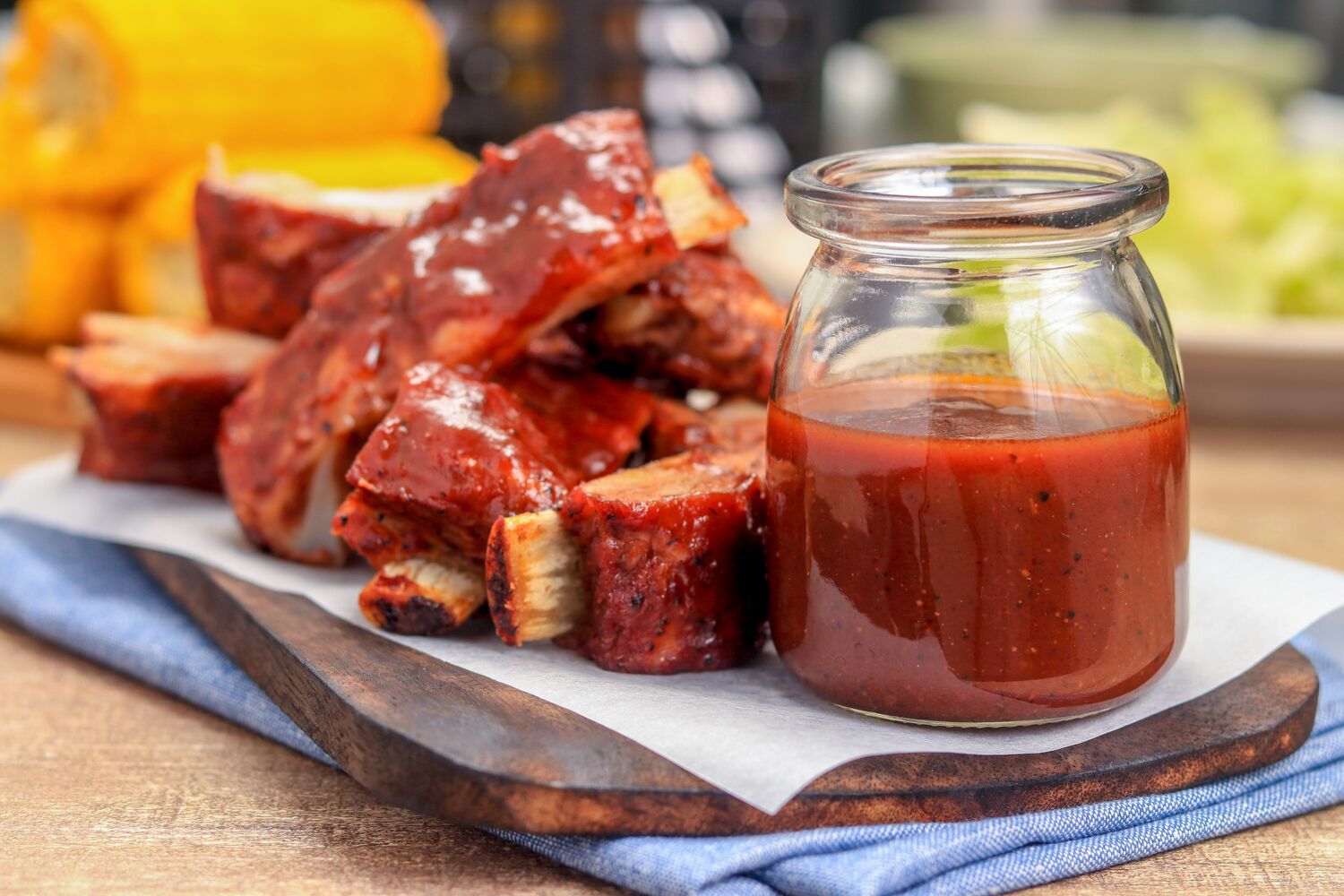
18 Homemade BBQ Sauce Recipes: Kansas City, Carolina & Texas Regional Styles
Eighteen sauces, one pot each — the ratios that separate Kansas City from Carolina, and the rule about when to brush that decides whether they glaze or burn.
Regional BBQ sauces taste different because they were built around different meats and different cooking economics. Kansas City sweet-thick sauce exists because the city's stockyards produced fatty brisket and ribs that wanted sugar and smoke. Carolina vinegar sauce exists because whole hog needs acid to cut fat. Texas barely sauces at all because the beef already carries a pepper bark. Get the region right and the sauce disappears into the meat instead of sitting on top of it.
Get a free cookout plan for a crowd
Mains, sides and quantities scaled to your headcount, with one Instacart cart instead of a spreadsheet.
No spam, unsubscribe in one click. Recipes, shopping lists and Instacart carts all work without an account either way.
Below are 18 sauces you can make in one pot on a weeknight, with real ratios instead of vague "to taste" instructions. Every one is measured for a standard 2-cup yield, which glazes about 4 lb of finished meat with a little left for the table. Each sauce links to a recipe in our catalog that it was built for, so you can go straight from the jar to the cook.
Introduction — why regional BBQ sauces taste so different
A barbecue sauce is a balance of four things: acid, sugar, salt, and heat, suspended in something that clings. Move the ratios and you move regions. Barbecue sauce as a category spans everything from a thin cider-vinegar mop with 2% sugar to a molasses-heavy glaze that is 30% sugar by weight — the same word covering two products that behave nothing alike on a grill.
The variable that matters most in practice is sugar load, because sugar decides when you can apply the sauce. Sucrose begins to caramelize around 320°F and the fructose in honey and molasses browns lower still, near 230°F. A Kansas City sauce at 25–30% sugar burns black in under four minutes over direct coals. An eastern Carolina sauce with almost no sugar can be mopped on hourly for eight hours with no risk. That single number — grams of sugar per cup — explains most of what looks like regional "style."
The second variable is body. Tomato-based sauces get their cling from tomato solids plus reduction. Vinegar sauces do not cling at all and are not meant to; they season and moisten pulled meat from the inside. Mayonnaise-based Alabama white gets body from emulsified fat, which is why it breaks if you boil it.
Here is what those three variables look like across the regions, per 1 cup of finished sauce:
| Style | Sugar (g/cup) | Acid base | Body | Apply when |
|---|---|---|---|---|
| Kansas City | 55–70 | Cider vinegar + tomato | Thick, clings | Last 10 min |
| Memphis (wet) | 35–45 | Cider vinegar + tomato | Medium | Last 15 min |
| Texas | 15–25 | Beef drippings + vinegar | Thin-medium | Last 30 min or at table |
| Western Carolina (Lexington) | 20–30 | Cider vinegar + ketchup | Thin | Toss after pulling |
| Eastern Carolina | 4–8 | Cider vinegar | Watery | Toss after pulling |
| South Carolina mustard | 30–40 | Yellow mustard + vinegar | Medium | Last 10 min or at table |
| Alabama white | 3–6 | Mayo + cider vinegar | Creamy | Off heat only |
The five American BBQ sauce regions explained
The regional map of American barbecue is really a map of what animal was cheap locally, and every sauce follows from that.
Kansas City is the crossroads style and the one most people picture when they hear "BBQ sauce." Thick, sweet, tomato-and-molasses, dark red-brown, and applied at the very end. Kansas City barbecue sauces almost anything — pork, beef, chicken, and famously burnt ends, which the city invented out of brisket point trimmings.
The Carolinas split into three sub-regions, which is why "Carolina sauce" is a useless phrase. Eastern North Carolina uses pure cider vinegar with red pepper flakes and no tomato at all. Western North Carolina, around Lexington, adds a spoon of ketchup — the "dip." North Carolina barbecue fights over that spoon of ketchup with real seriousness. Then South Carolina departs entirely for yellow mustard, a legacy of German settlers in the midlands.
Texas treats sauce as optional. Texas barbecue builds flavor into a salt-and-black-pepper bark on beef, and the sauce that does appear is thin, savory, often cut with rendered brisket fat and onion, and served on the side. Central Texas meat markets will hand you a cup of it and expect you not to use it.
Memphis splits wet and dry. Dry ribs get a rub before and a dusting after and never see sauce. Wet ribs get a medium-bodied, tangy tomato sauce with more vinegar and less sugar than Kansas City. Memphis barbecue also gave us the pulled-pork sandwich with slaw directly on the meat.
Alabama contributed exactly one sauce and it is a strange one: a cold, tart, mayonnaise-and-vinegar white sauce invented at Big Bob Gibson's in Decatur in 1925, built for smoked chicken and nothing else. It is the only major American BBQ sauce that is not red.
If you want the cooks these sauces attach to, our 18 smoker recipes for beginners walks the brisket-ribs-pulled-pork trio start to finish, and the smoked chicken guide covers the birds that Alabama white was invented for. For sauce-testing gear — squeeze bottles, silicone mops, a decent nonreactive saucepan — see our grilling tools and BBQ gadgets guide and the cookware category.
5 Kansas City-style sweet and thick sauces
All five simmer in a nonreactive saucepan — stainless or enameled, never bare aluminum, which reacts with the vinegar and turns the sauce metallic. Twenty minutes at a bare simmer, uncovered, stirring every five minutes. Yield is 2 cups.
1. Classic Kansas City base sauce
1½ cups ketchup, ⅓ cup cider vinegar, ⅓ cup dark brown sugar, 3 Tbsp molasses, 2 Tbsp Worcestershire, 1 Tbsp yellow mustard, 2 tsp smoked paprika, 1 tsp garlic powder, 1 tsp onion powder, ½ tsp black pepper, ½ tsp cayenne, 1 tsp kosher salt.
Simmer 20 minutes to about 1¾ cups. This is the sauce for Kansas City Sweet & Smoky BBQ Ribs and it is the base you modify for the next four. Brush it on in the last 10 minutes over indirect heat, three thin coats, two minutes apart.
2. Burnt-ends glaze (double-strength)
Take the base above, add 2 Tbsp honey and 2 Tbsp of rendered brisket fat, and reduce to 1¼ cups. The extra reduction gives you a lacquer that survives a second trip into the smoker. Toss cubed point meat in it and return to 275°F for 90 minutes — that is exactly what Kansas City Burnt Ends with Smoked Paprika Rub does. It also works on the beef-rib version in Burnt Ends Beef Ribs with Brown Sugar Glaze.
3. Honey-molasses chicken sauce
Base sauce with the brown sugar cut to 2 Tbsp and ¼ cup honey added off the heat, so the honey's aromatics survive. Thinner and lighter in color. This is the coat for Authentic Kansas City-Style BBQ Chicken Thighs and it also glazes pork chops well — see Pan-Seared Pork Chops with Kansas-Style BBQ Glaze.
4. Coffee-brisket sauce
Base sauce plus ½ cup strong brewed coffee and 1 Tbsp instant espresso powder, reduced 25 minutes to compensate for the added liquid. The bitterness balances the sugar and makes the sauce read as savory next to beef. Pair it with Slow-Simmered Kansas City Beef Brisket with Tangy Barbecue Sauce or Kansas City-Style Smoked Brisket with Spicy Dry Rub.
5. Pulled-pork finishing sauce
Base sauce thinned with ¼ cup cider vinegar and ¼ cup of the pork's own reserved cooking liquid, plus 1 tsp red pepper flakes. Thin enough to fold through pulled meat without gluing it together. Use ¾ cup per 3 lb of pulled pork, then serve the rest at the table: that is the treatment in Kansas City Smoked BBQ Pulled Pork Sandwich and in the rib version, Kansas City-Style Smoked Baby Back Ribs.
4 Carolina vinegar and mustard sauces
These are the fastest sauces in barbecue. Three of the four need no cooking at all — just whisk and rest.
6. Eastern North Carolina vinegar sauce
2 cups cider vinegar, 2 Tbsp red pepper flakes, 1 Tbsp sugar, 2 tsp kosher salt, 1 tsp coarse black pepper, 1 tsp hot sauce. No cooking. Whisk in a jar and rest at room temperature at least 4 hours, ideally overnight, so the pepper blooms.
This is barbecue's most misunderstood sauce because it tastes harsh straight from the jar and correct on the meat. Use 1 cup per 4 lb of pulled shoulder, folded in while the meat is hot so it absorbs. It is the sauce behind North Carolina BBQ Spare Ribs and Slow-Cooked North Carolina Pulled Pork with Tangy Vinegar Sauce. For the slow-cooker route, Native Carolina Vinegar BBQ Ribs uses the same ratio.
7. Lexington dip (western North Carolina)
The eastern sauce plus 3 Tbsp ketchup and an extra 1 Tbsp brown sugar. That is the whole difference, and it is enough to start an argument in Davidson County. The ketchup adds just enough body that the sauce coats a chopped-pork sandwich instead of running off. Try it on Spiced North Carolina BBQ Pulled Pork Sandwiches or Hickory-Smoked Pulled Pork with Tangy Vinegar Sauce.
8. South Carolina mustard sauce (Carolina gold)
¾ cup yellow mustard, ⅓ cup cider vinegar, ¼ cup honey, 2 Tbsp brown sugar, 1 Tbsp Worcestershire, 2 tsp hot sauce, 1 tsp black pepper, ½ tsp cayenne. Simmer 10 minutes only — mustard turns bitter if you cook it hard, since the pungent compounds in mustard are volatile and heat-sensitive.
Mustard sauce is the traditional pairing for whole hog and pork ribs. See Slow-Smoked Pulled Pork Shoulder with Tangy Mustard Barbecue Sauce, House-Smoked Prime Pork Ribs with Mustard BBQ Sauce, and the poultry version in Kentucky-Style Pulled Chicken with Mustard BBQ Sauce. It is also excellent on smoked chicken — Smoked Carolina Gold Chicken with Heirloom Tomato Salsa leans on exactly that.
9. Cider-and-apple mop
1½ cups cider vinegar, ½ cup unfiltered apple juice, 2 Tbsp brown sugar, 1 Tbsp kosher salt, 2 tsp red pepper flakes, 1 bay leaf. Warm to dissolve, then cool.
This is a mop, not a finishing sauce — you brush it on hourly during a long cook to keep the bark hydrated and add acid gradually. About ½ cup per hour on a 8 lb shoulder. Slow-Smoked Pulled Pork Shoulder with Tangy Cider Vinegar Sauce and Grilled South Carolina Pulled Pork with Tangy Vinegar Slaw both use the mop-then-toss method. Keep it in a squeeze bottle in the storage drawer rather than a bowl — a bowl of mop sitting next to raw meat for six hours is a cross-contamination problem.
4 Texas-style tomato and chile sauces
Texas sauces are savory first. If your Texas sauce tastes sweet, you have made a Kansas City sauce with chile in it. In Central Texas the flavor lives in the rub — often nothing but coarse pepper and salt, like the Texas brisket rub in our homemade rubs guide — and the sauce is a condiment.
10. Central Texas table sauce
1 cup beef stock, ¾ cup tomato sauce (not ketchup), ¼ cup cider vinegar, 3 Tbsp rendered brisket fat, 2 Tbsp Worcestershire, 1 Tbsp brown sugar, 1 Tbsp coarse black pepper, 2 tsp ancho chile powder, 1 tsp granulated garlic, 1½ tsp kosher salt. Simmer 15 minutes; do not reduce far — you want it pourable.
Served on the side, never brushed on. This is the cup that comes with Slow-Smoked Brisket with Tangy Texas BBQ Sauce and Texas-Style Pepper-Crusted Beef Brisket with Smoky BBQ Sauce. If you would rather skip sauce entirely, Texas-Style Smoked Pork Ribs with La Barbecue Dry Rub is the rub-only path.
11. Texas mop sauce
1 cup beef stock, ½ cup cider vinegar, ¼ cup Worcestershire, ¼ cup neutral oil or beef fat, 1 Tbsp coarse black pepper, 1 Tbsp kosher salt, 2 tsp cayenne, 1 quartered onion, 4 smashed garlic cloves. Simmer 10 minutes, strain, keep warm on the smoker's side shelf.
A mop is a hydration tool. Apply with a cotton mop or silicone brush every 45–60 minutes starting at hour three. Slow-Smoked Texas Brisket with Dry Rub and Mop Sauce is the reference cook; the poultry variant is Texas-Style Smoked Turkey Breast with Spiced Apple Cider Mop Sauce. For beef ribs, see Cozy Corner-Style Smoked Beef Ribs with Spicy Mop Sauce.
12. Charred onion and chile sauce
2 onions halved and charred cut-side down until black in spots, 3 dried guajillo chiles and 1 chipotle rehydrated in 1 cup hot beef stock, ½ cup tomato sauce, ¼ cup cider vinegar, 2 Tbsp brown sugar, 1 tsp cumin, 1½ tsp salt. Blend, then simmer 15 minutes.
The char does the work — you get smoke depth without any added liquid smoke. This is the sauce for Slow-Smoked Texas Brisket with Charred Onion Barbecue Sauce and it holds up on Slow-Smoked Brisket with Texas BBQ Sauce. An immersion blender is the right tool; a countertop blender with hot liquid needs the lid vented.
13. Chipotle-coffee brisket sauce
1 cup tomato sauce, ½ cup strong coffee, ¼ cup cider vinegar, 3 Tbsp brown sugar, 2 chipotles in adobo plus 1 Tbsp of the adobo, 1 Tbsp Worcestershire, 2 tsp smoked paprika, 1½ tsp salt. Blend and simmer 20 minutes.
Heat lands at the back of the palate rather than the front, which is what you want next to a pepper-crusted brisket. See Grilled Texas-Style Smoked Brisket with Spicy Chipotle BBQ Sauce and, for the sweeter burnt-end treatment, Smoky Texas-Style Brisket Burnt Ends with Sweet BBQ Glaze.
3 Alabama white and Memphis-style variations
14. Alabama white sauce
1½ cups mayonnaise, ¼ cup cider vinegar, 2 Tbsp lemon juice, 1 Tbsp prepared horseradish, 2 tsp coarse black pepper, 1 tsp sugar, 1 tsp kosher salt, ½ tsp cayenne. Whisk cold, rest 2 hours, keep refrigerated.
Never heat it. Mayonnaise is an emulsion and it breaks above about 160°F, leaving you with oily curds. Dunk the whole smoked bird in it at the end, or brush it on off the heat. The reference cooks are Grilled Spiced Barbecue Pork Ribs with Tangy Alabama White Sauce, Southern-Style Braised Chicken with Alabama White Sauce, and Hickory-Smoked Pork Shoulder with Alabama White Sauce.
15. Peppered white sauce for ribs and sandwiches
The white sauce above with the black pepper doubled to 4 tsp and 1 Tbsp of Dijon added, which stabilizes the emulsion slightly and stands up to pork. Try it on Hickory-Smoked Baby Back Ribs with Tangy Alabama White Sauce and Slow-Smoked Pulled Pork Sandwich with Alabama White Sauce. It even works on beef if you keep the portion small — Slow-Smoked Brisket with Alabama White Sauce is the test case, and on fish it is genuinely excellent: Pan-Seared Catfish with Spicy South Carolina White Sauce.
16. Memphis wet-rib sauce
1¼ cups tomato sauce, ½ cup cider vinegar, ¼ cup brown sugar, 2 Tbsp molasses, 2 Tbsp yellow mustard, 1 Tbsp Worcestershire, 2 tsp paprika, 1 tsp celery salt, 1 tsp black pepper, ½ tsp allspice. Simmer 20 minutes.
Roughly two-thirds the sugar of a Kansas City sauce and noticeably more vinegar, so it reads tangy rather than candied. Memphis wet ribs get one coat at the 15-minutes-remaining mark and one more at the table: Memphis-Style Sticky Ribs with Spiced Dry Rub and Smoked Memphis BBQ Chicken Thighs with Tangy Mop Sauce both use it. For the dry side of the Memphis argument, Memphis Dry Rub Baby Back Ribs and Grilled Memphis-Style Dry Rub Ribs with Baked Beans and Pickled Red Onions skip sauce entirely.
2 modern crossovers worth a jar
These two are not traditional to any region, but they are the two most requested variations we get and both hold up.
17. Honey-chipotle glaze
1 cup ketchup, ⅓ cup honey, ¼ cup cider vinegar, 3 chipotles in adobo blended smooth, 2 Tbsp lime juice, 1 Tbsp soy sauce, 2 tsp garlic powder, 1 tsp salt. Simmer 12 minutes.
Sweet-hot, and the lime keeps it from tasting like candy. It is the glaze on Honey-Glazed Baby Back Ribs with Smoky Chipotle BBQ Sauce, Smoked Chipotle BBQ Baby Back Ribs, Honey Chipotle BBQ Chicken Thighs with Grilled Pineapple Salsa, and Slow-Cooked Pulled Pork with Smoky Chipotle BBQ Sauce.
18. Molasses-rum sauce
1 cup ketchup, ⅓ cup dark molasses, ¼ cup dark rum, 3 Tbsp cider vinegar, 2 Tbsp brown sugar, 1 Tbsp Dijon, 1 tsp allspice, 1 tsp salt. Simmer 25 minutes so the alcohol cooks off and the molasses loses its raw bite.
This is the darkest and most bitter-edged sauce here, and it is the best of the group on poultry and pork loin. See Molasses Rum BBQ Sauce for Grilled Chicken, plus the fruit-forward cousins Smoked Tri-Tip with Charred Pineapple BBQ Sauce and Smoked Tri-Tip with California BBQ Glaze.
Real numbers — sugar, acid, and shelf life
The two questions people actually ask are "when does it burn?" and "how long does it keep?" Both are answered by the same two numbers.
| Sauce | Sugar (g/cup) | pH (approx) | Fridge life | Burn point on the grill |
|---|---|---|---|---|
| Classic Kansas City | 62 | 3.6 | 3–4 weeks | 4 min over direct heat |
| Burnt-ends glaze | 78 | 3.7 | 3 weeks | 2–3 min over direct heat |
| Memphis wet | 41 | 3.4 | 4 weeks | 6 min over direct heat |
| Central Texas table | 19 | 3.8 | 2 weeks (stock-based) | Not applied to heat |
| Eastern Carolina vinegar | 6 | 2.9 | 6 weeks | No practical limit |
| Lexington dip | 24 | 3.1 | 5 weeks | 10+ min |
| South Carolina mustard | 34 | 3.3 | 5 weeks | 8 min |
| Alabama white | 5 | 3.5 | 10 days | Never heat |
| Honey-chipotle | 68 | 3.5 | 3 weeks | 3 min |
Two things to read off that table. First, the vinegar sauces last longest because acid below about pH 4.2 suppresses most spoilage organisms — the same principle behind pickling and other acid-based food preservation. Second, Alabama white is the outlier at 10 days: mayonnaise-based, low-acid relative to the rest, and it should be treated like any other fresh dairy-adjacent condiment.
Cost, for a 2-cup batch at 2026 US grocery prices: Kansas City base runs about $2.10, eastern Carolina about $1.05, South Carolina mustard about $1.85, Alabama white about $3.40 (the mayo dominates), and the molasses-rum about $4.20 with the rum amortized. An 18 oz bottle of a national-brand sauce is $3.79–$4.99, so homemade wins on cost for every style except the ones with liquor in them — and it wins on sugar content by a wide margin, since most shelf brands lead with high-fructose corn syrup.
Common mistakes that ruin homemade BBQ sauce
Saucing too early. This is the number one failure and it is not close. Sugar burns; you get black, bitter, and acrid instead of glossy. The fix is mechanical: sauce goes on in the last 10 minutes, over indirect heat, in three thin coats rather than one thick one. For tested versions of each regional style side by side, AmazingRibs' barbecue sauce recipes cover Kansas City, the Carolinas and Texas.
Cooking mustard sauce hard. Ten minutes at a bare simmer is the ceiling. Boil a mustard sauce for 25 minutes and the pungency degrades into a flat, faintly bitter paste. Add the mustard in the last five minutes if you need a longer reduction for other reasons.
Boiling Alabama white. The emulsion breaks and you cannot bring it back. If you want warm white sauce, warm the meat, not the sauce.
Using aluminum or cast iron. Vinegar-heavy sauces pick up metallic off-flavors from reactive pans in under 20 minutes, and they will strip seasoning off cast iron. Stainless or enameled only — the cookware category has the nonreactive options, and a long-handled silicone mop or brush beats a spoon for even coats.
Not resting vinegar sauces. An eastern Carolina sauce mixed and used immediately tastes like hot vinegar. Four hours minimum, overnight is better; the pepper flakes need time to bloom and the salt needs to dissolve completely.
Double-dipping the mop. A mop bottle that has touched raw meat and then goes back into the reserve is a real cross-contamination path over a 10-hour cook. Split the batch: one container for mopping, one sealed for the table.
How to match a sauce to your meat and cook style
The pairing rules below are not arbitrary tradition — each one solves a specific problem in the meat.
| Meat | Best sauce | Why | Recipe to try |
|---|---|---|---|
| Pork shoulder (pulled) | Eastern Carolina vinegar | Acid cuts collagen-rich fat; thin sauce penetrates shredded meat | Hickory-Smoked Pulled Pork |
| Pork ribs | Kansas City or Memphis wet | Sugar glazes the exposed surface area | KC Sweet & Smoky Ribs |
| Whole hog / pork ribs (SC) | South Carolina mustard | Mustard's sharpness balances fatty pork | Mustard BBQ Pork Ribs |
| Brisket | Central Texas table sauce | Beef bark already carries the flavor; sauce is a condiment | Texas Brisket with Mop Sauce |
| Burnt ends | Burnt-ends glaze | Needs to lacquer and survive a second cook | KC Burnt Ends |
| Smoked chicken / turkey | Alabama white | Tart, creamy, no sugar to burn on thin skin | Alabama White Ribs |
| Chicken thighs (grilled) | Honey-molasses | Fat content tolerates sugar; short cook time | KC BBQ Chicken Thighs |
| Beef ribs | Texas mop + table sauce | Long cook needs hydration, not glaze | Sweet Mop Beef Ribs |
| Wings | Memphis wet or honey-chipotle | High skin-to-meat ratio wants a clingy sauce | Southern BBQ Wings with Mop Sauce |
| Tri-tip | Charred onion and chile | Lean beef wants savory, not sweet | Smoked Tri-Tip with California BBQ Glaze |
Cook style matters as much as the cut. On a kettle grill over direct coals, you have maybe four minutes of sauce time before sugar chars — use a low-sugar sauce or move the meat to the indirect side first. On a smoker at 225–275°F, sauce goes on in the final hour and sets into a tack rather than a glaze. In a slow cooker or oven, drain the liquid first, then add sauce, because braising liquid dilutes everything you built; Slow-Cooked Memphis Pulled Pork with Tangy Coleslaw and Classic American BBQ Pulled Pork Sandwiches with Tangy Coleslaw both do exactly that. On a gas grill, the sugar burn is faster than charcoal because the flame is closer to the grate — knock the burners under the meat off entirely for the sauce phase, as in Mesquite-Smoked Baby Back Ribs with Sweet and Tangy Glaze and Slow-Smoked St. Louis Ribs with Sweet and Spicy Glaze.
When NOT to sauce at all
Three cases where the right answer is no sauce.
A well-made Central Texas brisket. If the bark is right — salt, coarse pepper, 12 hours of post oak — sauce covers work you already did. Serve it on the side and let people decide, the way Texas-Style Hickory Smoked Brisket with Carolina Mustard Sauce does.
Memphis dry ribs. The dusting of rub after the cook is the finish. Adding sauce is a different dish.
Anything you plan to reheat as leftovers. Sauce applied and then refrigerated goes gummy and dull. Store the meat naked with a splash of its cooking liquid and sauce it fresh on reheat. That also keeps the meat useful for people eating low-sugar — most of these sauces are off-plan for the keto meal plan, and all of them except a modified Alabama white are off-plan for Whole30 dinners. A sugar-free version of the eastern Carolina sauce works for both.
Round out the plate with Smoky Maple Baked Beans, Texas-Style Smoked Gouda Mac and Cheese with Crispy Bacon, Texas Cornbread with Honey Butter, and Red Cabbage and Apple Coleslaw — or work through our 30 best BBQ side dishes and smoked vegetable sides. For rubs and pre-cook seasoning, 20 homemade BBQ rubs, marinades and brines covers the other half of the flavor equation: its salt-and-pepper Texas brisket rub and celery-salt Kansas City rib rub are built to sit under the sauces on this page. The grilling marinades guide handles faster weeknight cooks, and a sharp boning or slicing knife matters more for brisket than any sauce does.
The short version
If you remember three things from this page: match the sugar level to when you plan to apply it, keep vinegar sauces around for weeks, and never put Alabama white on beef.
Once you have picked two or three sauces to make, drop the pairing recipes into an AislePrompt shopping list — it consolidates the cider vinegar, molasses, ketchup, and pantry spices across every batch into one aisle-ordered order, which matters when four sauces each want "⅓ cup cider vinegar" and you need to know whether that is one bottle or three.
Frequently asked questions
How long does homemade BBQ sauce keep in the fridge?
When should I brush BBQ sauce on grilled meat?
What is the difference between BBQ sauce and marinade?
Can I make BBQ sauce without processed sugar or ketchup?
Which BBQ sauce belongs with which meat?
Sources
- amazingribs.com
- en.wikipedia.org
- en.wikipedia.org
- en.wikipedia.org
- en.wikipedia.org
- en.wikipedia.org
- en.wikipedia.org
- en.wikipedia.org
- en.wikipedia.org
- en.wikipedia.org
- en.wikipedia.org
- en.wikipedia.org
Plan the whole cookout in one go.
Ask our AI for mains, sides and quantities for your headcount — one Instacart cart, no spreadsheet.
Plan my cookout →