25 Persian Recipes: Kabobs, Khoresh Stews, Polo & Tahdig for a Feast
A home cook's map of Iranian cooking: what to buy once, what to make on a Tuesday, and what to save for Saturday.
Persian food is far easier to cook on a weeknight than its banquet reputation suggests. Most dishes are one pot of rice plus one braise or one skewer. Start with Pan-Seared Chicken with Pomegranate-Walnut Glaze at about 30 minutes, or One-Pot Persian Beef and Green Bean Rice for a complete dinner in a single pot.
Get a free week of easy dinners
Seven weeknight dinners with the shopping list already totalled, sent Sunday. No account needed, unsubscribe in one click.
No spam, unsubscribe in one click. Recipes, shopping lists and Instacart carts all work without an account either way.
The banquet dishes — the saffron rice towers, the six-hour stews — are weekend projects. The 18 recipes below are sorted so you can tell the two apart. The pantry list at the top is short enough to buy in one trip.
Introduction — a home cook's map of Persian cuisine
Iranian cooking, as of 2026, is still under-represented in American home kitchens relative to how much of it is genuinely weeknight-friendly. The cuisine is built on three pillars, and once you can see them, every recipe on a Persian menu slots into place:
1. Rice (polo and chelow) — long-grain basmati, parboiled then steamed, almost always with a crisp crust at the bottom of the pot.
2. Khoresh — slow stews, herb-forward and sour rather than chile-hot, ladled over that rice.
3. Kabob — skewered grilled meat, served with rice or flatbread rather than in a wrap.
Almost everything else is a supporting player: a herb frittata, a yogurt side, a chopped salad, a bowl of soup. There is no sauce-reduction technique to master and no browning-in-batches discipline the way French braising demands. What Persian food asks for instead is patience with rice and generosity with herbs — a khoresh recipe calling for four packed cups of parsley and cilantro is not a typo.
The flavor axis is worth naming explicitly because it is what separates Persian food from its neighbors. Persian cooking is sour and floral, not smoky-hot. Sourness comes from dried limes, pomegranate molasses, unripe grape juice, and barberries. Floral and aromatic notes come from saffron, rosewater, and cardamom. Heat, in the chile sense, is nearly absent. If you have cooked from our Middle Eastern dinners guide or the Turkish recipes roundup, you will recognize the ingredients but not the balance — Persian food leans much further toward tart.
The recipes below are grouped by technique first, then re-sorted at the end into a weeknight list and a weekend feast menu. Read Iranian cuisine for the regional history; this guide is about getting dinner on the table.
The Persian Pantry: saffron, dried limes, barberries, sumac
Four ingredients do most of the work. All four keep for months, and the total startup cost is roughly $45 — after which every recipe in this guide is a normal-grocery-run affair.
| Ingredient | Typical cost | Shelf life | What it does | Substitute? |
|---|---|---|---|---|
| Saffron (Iranian, 1g tin) | $12–18 | 2 years | Aroma + gold color in rice and kabob marinades | No real substitute |
| Dried limes (limoo omani, 10-pack) | $4–6 | 2+ years | Deep sour-fermented note in khoresh | Lime zest + juice (weaker) |
| Barberries (zereshk, 4 oz) | $7–9 | 1 year refrigerated | Sharp tart pops in rice | Dried cranberries + lemon |
| Sumac (2 oz) | $5–7 | 1 year | Bright citric dusting on kabobs and salad | Lemon zest |
Saffron is the one place not to economize on quality, though you need far less than recipes imply. Ten to fifteen threads, ground and bloomed in two tablespoons of hot water, will color and perfume a full pot of rice. Grind the threads to a powder first — whole threads left in water release maybe half their color. A marble mortar and pestle does this in about fifteen seconds; a pinch of sugar or salt in the mortar gives the pestle something to grind against. See Saffron for how the spice is harvested and why the price holds.
Dried limes (black limes) are whole limes boiled in brine and sun-dried until hollow and dark. They taste sour, slightly fermented, and faintly bitter — nothing like fresh lime. Pierce each one twice with a knife tip before dropping it into a stew so the liquid can get inside. Two limes per four-serving khoresh is standard; three if you like it sharp. Fish them out before serving or warn your guests, because biting into one whole is memorable in the wrong way.
Barberries (Berberis fruit) are tiny, intensely tart red berries scattered over rice. Rinse them, then warm briefly in butter with a spoonful of sugar — thirty seconds, no more, because they scorch fast and turn bitter. Store the bag in the freezer to keep the color red rather than brown.
Sumac is the finishing dust. It goes on kabobs at the table, on rice, and into Shirazi Salad with Cucumber and Tomato. It is purely citric — no heat, no aroma to speak of — and its job is to lift a rich plate.
Two more worth having: pomegranate molasses (what it is) for fesenjan and glazes, and dried fenugreek leaves for ghormeh sabzi, where the flavor is genuinely non-negotiable.
Rice, Two Ways: chelow and tahdig (the crispy crust)
Persian rice is a two-stage technique: parboil, then steam. The parboil washes out surface starch so the grains stay separate; the steam finishes them and builds the crust. Chelow is the plain version, polo is rice cooked with other ingredients mixed in.
The method, condensed:
1. Rinse two cups of basmati in cool water five or six times until the water runs nearly clear. Soak 30 minutes in salted water if you have time — grains elongate rather than break.
2. Parboil in a large pot of aggressively salted boiling water for 5–7 minutes. You want the grain soft outside, still firm at the core. Drain and rinse with lukewarm water.
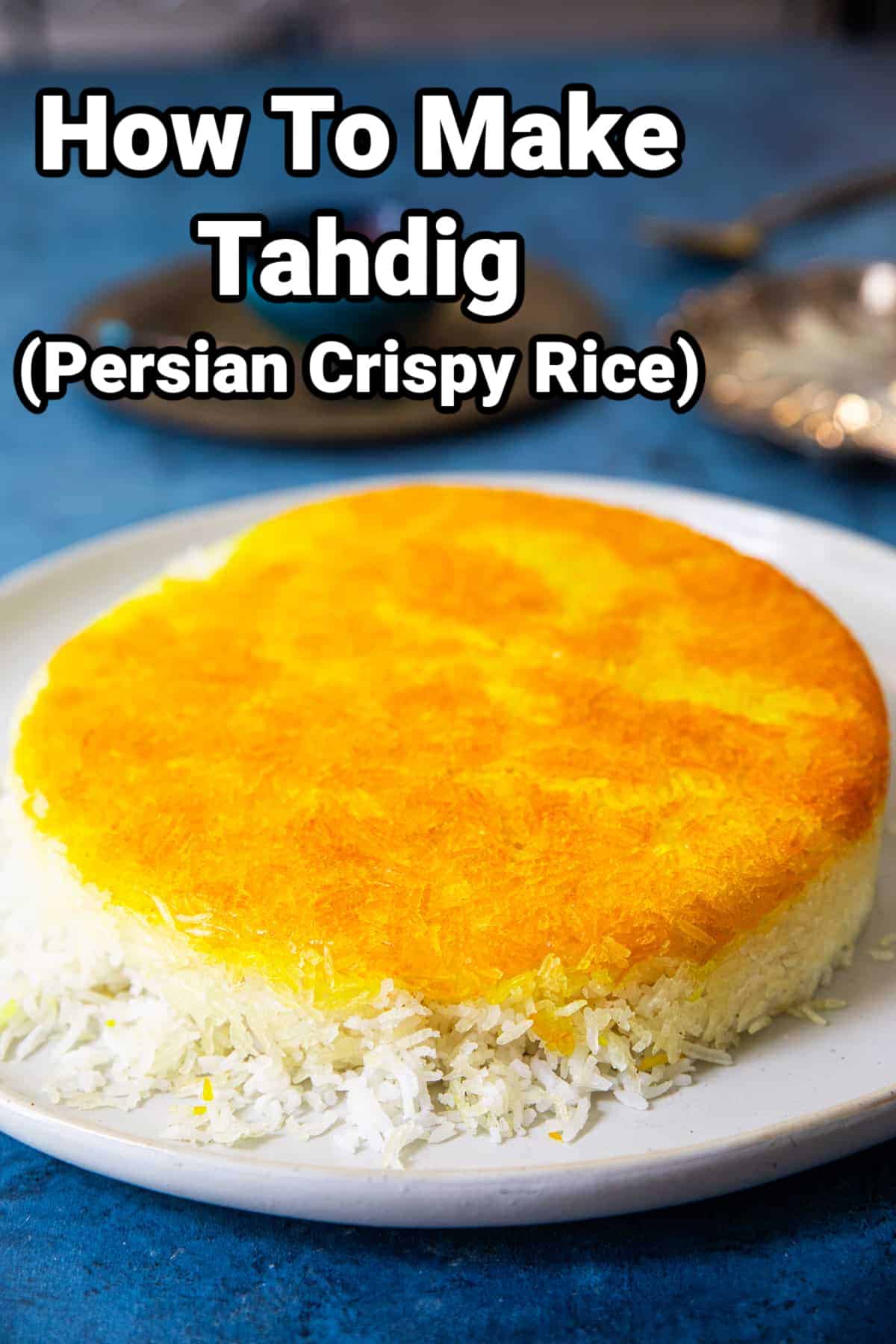
3. Build the crust. Heat three tablespoons of oil or butter with a splash of the bloomed saffron water in the pot. Lay down your tahdig layer — a shallow bed of rice, thin potato rounds, or a sheet of lavash.
4. Mound the remaining rice on top in a pyramid. Poke five or six holes down through it with a spoon handle so steam can escape.
5. Steam on low for 35–45 minutes, lid wrapped in a clean kitchen towel to catch condensation.
6. Invert onto a platter, or scoop the rice off and break the crust into shards.
Tahdig is the crust — golden, brittle, and the piece everybody at the table wants. Herbed Rice with Crispy Tahdig is the recipe to learn first; it folds dill, parsley, and cilantro through the rice and produces a crust with visible green flecks.
Pot choice matters more than skill here. A well-seasoned nonstick pot with a heavy base releases tahdig cleanly on the first try; a thin stainless pot will weld it down no matter how careful you are. An 8-quart hybrid nonstick stock pot handles rice for six with room for the steam mound. Browse the full cookware range if you are outfitting from scratch.
Three more rice recipes worth the rotation:
| Recipe | Style | Best with |
|---|---|---|
| Saffron-Infused Herb and Walnut Rice Pilaf | Herb polo | Grilled chicken, fish |
| Turmeric-Saffron Rice with Lentils and Peas | Adas polo | Vegetarian main, yogurt |
| Dried Fruit Saffron Rice Pilaf | Jeweled-style | Feast centerpiece |
Polo: when the rice is the whole meal
Chelow is plain steamed rice served next to a stew. Polo is rice with something layered into it — lentils, herbs, dried fruit, barberries, sometimes meat — and it is usually dinner by itself with a bowl of yogurt on the side. Same parboil-and-steam technique, same tahdig at the bottom, one pot instead of two. If you only ever learn one Persian dish, learn a polo: it feeds four for about $6 and reheats better than any stew.
The three that live in regular rotation in Iranian households:
| Polo | What is layered in | Cook with | Serve with |
|---|---|---|---|
| Adas polo | Green lentils, raisins, fried onion, cinnamon | Turmeric-Saffron Rice with Lentils and Peas | Yogurt, or ground beef |
| Zereshk polo | Barberries bloomed in butter, saffron | Dried Fruit Saffron Rice Pilaf | Roast or braised chicken |
| Baghali polo | Dill and fava beans, sometimes lamb shank | Saffron-Infused Herb and Walnut Rice Pilaf | Lamb, or on its own |
Caramelized onion is the shortcut that makes any of them taste like a grandmother made it. Slice two large onions thin, cook them in oil over medium-low for 25 minutes until genuinely brown rather than blond, and fold half through the rice at the layering stage with the other half saved for the top. Layered Basmati Rice with Caramelized Onions and Baharat is built on exactly that move and is the easiest way to practice the layering rhythm before you attempt a fruited version.
Tahchin (tahchin) is the polo that turns into a cake. Parboiled rice is bound with yogurt, egg yolk, and bloomed saffron, pressed into an oiled dish with chicken or lamb buried in the middle, and baked at 375°F for 60–75 minutes. The whole bottom becomes tahdig — a solid golden slab you turn out and cut in wedges — which removes the single most stressful moment in Persian cooking, the pot-flip. It is the dish to make when you want the crust without the risk. Oven-Baked Baharat Chicken with Aromatic Basmati Rice uses the same oven-rice logic with a spice blend that sits close to Persian advieh.
Two numbers worth knowing before you start: a polo for four takes 2 cups of dry basmati (not 3 — it doubles), and the steam stage runs 40 minutes at the lowest setting your burner has. Rushing that stage on medium heat scorches the crust before the top rice is cooked, which is the most common polo failure and the least fixable.
Kabobs: koobideh, joojeh, barg
Three kabobs cover the entire Persian grill repertoire.
Koobideh (kabab koobideh) is ground meat — lamb, beef, or a mix — kneaded with grated onion until genuinely sticky, then pressed along flat skewers. The technique is the whole recipe. Grate the onion and squeeze out the liquid, or the meat will not hold. Knead for a full five minutes; you are developing protein structure the way you would with sausage. Chill the mixture 30 minutes before shaping. Flat metal skewers about three-quarters of an inch wide are traditional and functional — round skewers let the meat spin as you turn them. Cumin-Spiced Lamb Kofta with Mint Flatbread uses the same ground-meat method in a form that works on a home grill pan.
Joojeh (jujeh kabab) is the saffron-yogurt chicken kabob, and it is the easiest entry point in this entire guide. Chicken thigh, yogurt, grated onion, lemon, and bloomed saffron; four hours of marinade minimum, overnight ideally. Grilled Saffron Chicken Kebabs with Sumac and Yogurt Marinade is the version to make. The yogurt tenderizes and the saffron turns the exterior deep gold.
Barg (kabab barg) is the premium one: whole fillet of beef or lamb, butterflied thin, marinated in saffron, onion juice, and olive oil. It is expensive and unforgiving — thirty seconds too long and it is dry. Grilled Citrus-Marinated Lamb Skewers is the closest thing in the catalog: same thin-cut, acid-and-oil marinade, far more forgiving on a home grill.
No outdoor grill? A cast iron grill pan run at high heat for a full five minutes before the meat goes on gets you most of the char. Ventilate the kitchen first.
Two skewer-adjacent rice dishes round out the section: Saffron-Scented Lamb and Rice Pilaf with Dried Lime and Saffron Lamb Basmati Rice Pilaf.
Khoresh: the six essential Persian stews (fesenjan, gormeh sabzi, gheimeh)
Khoresh is the heart of the cuisine — a slow, thick stew served over chelow rather than as a standalone bowl. Six carry the repertoire.
Fesenjan (fesenjān) is ground toasted walnuts and pomegranate molasses simmered with chicken or duck until the sauce turns dark brown and splits slightly at the edges. It takes two to three hours and tastes like nothing else in the region — sweet, sour, tannic, rich. Toast the walnuts before grinding; raw walnuts give a chalky sauce. Try Herbed Chicken Fesenjan with Pomegranate Reduction or the slower Slow-Cooked Chicken Stew with Pomegranate and Walnut Sauce.
Ghormeh sabzi (the national dish) is four packed cups of parsley, cilantro, chives, and fenugreek fried down in oil until nearly black, then simmered with lamb, kidney beans, and dried limes. Frying the herbs properly — 20 minutes, until the volume collapses and the smell turns nutty — is the step people rush and regret. Slow-Braised Ghormeh Sabzi with Dried Lime and Fresh Herbs is the full version; Slow-Cooked Herb and Lamb Stew with Dried Limes and Slow-Cooked Lamb and Herb Stew are lighter takes.
Gheimeh (gheimeh) is yellow split peas and lamb in a tomato-turmeric base, topped with matchstick fries. It is the most weeknight-friendly of the classics — about 90 minutes, mostly unattended.
Khoresh bademjan is eggplant, fried or roasted, in tomato and turmeric. Persian Roasted Eggplant and Tomato Stew with Turmeric and Garlic is a solid vegetarian main over rice.
Barberry-and-sumac lamb stews sit slightly outside the canonical six but belong on a weeknight list: Slow-Cooked Lamb Stew with Sumac and Barberries and Slow-Braised Lamb Shoulder with Tart Pomegranate and Herb Sauce.
A 5.5-quart enameled Dutch oven is the correct vessel for all six — enough surface area to fry herbs, enough depth to braise.
| Khoresh | Active time | Total time | Sour agent |
|---|---|---|---|
| Fesenjan | 30 min | 3 hr | Pomegranate molasses |
| Ghormeh sabzi | 40 min | 3 hr | Dried lime |
| Gheimeh | 20 min | 90 min | Dried lime, tomato |
| Bademjan | 30 min | 2 hr | Tomato, verjuice |
| Karafs (celery) | 30 min | 2 hr | Lemon, mint |
| Barberry lamb | 25 min | 2.5 hr | Barberry, sumac |
Herb-Heavy Dishes: kuku sabzi, ash reshteh
Two dishes push the herb ratio further than anything else in the cuisine.
Kuku sabzi (kuku) is a herb frittata that is more herb than egg — roughly four cups of chopped parsley, cilantro, dill, and chives bound with six eggs and a spoonful of flour. Baked or pan-cooked until set and deep green, it is served warm or at room temperature, often with flatbread and yogurt. It is the classic Nowruz dish and an excellent packed lunch.
Ash reshteh (ash reshteh) is a thick noodle-and-legume soup with chickpeas, lentils, beans, and the same mountain of herbs, finished with kashk (fermented whey) and fried mint. Persian Herb and Lentil Soup with Lemon and Turmeric is the accessible version — sour Greek yogurt stands in for kashk perfectly well.
Both dishes live or die on herb prep, which is the least glamorous part of Persian cooking and the part worth buying tools for. You are washing, drying, and finely chopping several large bunches. A salad spinner matters more than it sounds: wet herbs steam instead of frying, and a kuku made with wet herbs weeps water. A sharp 8-inch chef's knife turns twenty minutes of chopping into eight, and bruises the leaves far less than a dull blade. The knife selection is worth a look if yours is overdue for replacement.
Sides, yogurt and the sabzi khordan plate
A Persian table is not stew and rice alone. Three cold dishes come out with almost every meal, they take ten minutes each, and skipping them is why a home-cooked Persian dinner sometimes feels heavier than the restaurant version. The sour, cold, raw plates exist to cut the saffron-and-walnut richness of everything else.
Sabzi khordan (the herb plate) is the simplest thing in this guide and the most characteristically Iranian: a platter of whole raw herbs — mint, tarragon, basil, watercress, scallion — with radishes, walnuts, and a wedge of feta, torn into flatbread by hand throughout the meal. There is no recipe. Buy two or three bunches, wash and dry them thoroughly, and put them on the table stems-on. Cumin-Scented Wheat Flatbreads with Herb Spread covers the bread half if you would rather bake than buy lavash.
Mast-o-khiar (yogurt and cucumber) is thick yogurt, diced cucumber, dried mint, and a little salt, sometimes with walnuts and rose petals for a formal table. Use full-fat Greek yogurt or strain regular yogurt for an hour — thin yogurt turns watery within minutes of the cucumber going in. Salt the diced cucumber and let it drain for ten minutes first if you are making it ahead. Cucumber-Mint Lime Salad with Yogurt Dressing is the catalog version and works as both a salad and a khoresh cooler.
Kashk-e bademjan (eggplant and whey) is the warm one: eggplant fried or roasted until collapsed, mashed with garlic and turmeric, then topped with kashk, fried mint, and crisp onion. Sour Greek yogurt thinned with a little water is a perfectly good kashk substitute for a weeknight. Charred Eggplant and Yogurt Dip with Garlic and Sumac gets you the same sweet-smoky-sour profile in about 35 minutes, most of it oven time.
And the fourth, already in the weeknight list above: Shirazi salad — cucumber, tomato, and onion diced to a uniform quarter-inch, dressed with lime and dried mint at the last second. Shirazi Salad with Cucumber and Tomato is a ten-minute job. Dress it early and you get a bowl of pink water; dress it at the table and it is the sharpest thing on the plate.
| Side | Active time | Make ahead? | Pairs with |
|---|---|---|---|
| Sabzi khordan | 10 min | Wash 1 day ahead, assemble at serving | Everything |
| Mast-o-khiar | 10 min | Yes, up to 24 hr | Kabobs, spicy or rich khoresh |
| Kashk-e bademjan | 35 min | Yes, reheat gently | Bread, as a starter |
| Shirazi salad | 10 min | Chop ahead, dress at the table | Rice-heavy plates |
Common Pitfalls
Five failure modes account for most disappointing first attempts.
1. Under-frying the herbs in ghormeh sabzi. The herbs should cook 20 minutes until the volume drops by two-thirds and the color goes from bright green to dark olive. Stop at five minutes and the stew tastes grassy and thin.
2. Skipping the saffron bloom. Dry threads dropped into a pot release a fraction of their color and aroma. Grind, then steep in 2 tablespoons of hot (not boiling) water for at least 10 minutes.
3. Wrong pot for tahdig. Thin stainless or an under-oiled pot means the crust fuses to the base. Use enough fat to fully coat, medium-low heat, and do not peek for the first 25 minutes.
4. Salting the parboil timidly. The rice parboil water should taste like seawater — most of that salt goes down the drain. Under-salt and the finished rice is flat no matter what you serve on it.
5. Whole dried limes left in the bowl. Pierce them, simmer them, then remove them before plating. A guest who bites into one gets a mouthful of concentrated bitterness.
Weeknight Persian Dinners (8 recipes)
Everything here is on the table in under an hour of active work.
| # | Recipe | Active time | Notes |
|---|---|---|---|
| 1 | Pan-Seared Chicken with Pomegranate-Walnut Glaze | 30 min | Fesenjan flavor, weeknight speed |
| 2 | One-Pot Persian Beef and Green Bean Rice | 40 min | Lubia polo; complete meal in one pot |
| 3 | Grilled Saffron Chicken Kebabs with Sumac and Yogurt Marinade | 20 min | Marinate the night before |
| 4 | Persian Gulf-Style Grilled Fish with Lemon and Herbs | 25 min | Southern-coast style, very fast |
| 5 | Turmeric-Saffron Rice with Lentils and Peas | 35 min | Vegetarian; add yogurt on the side |
| 6 | Persian Roasted Eggplant and Tomato Stew with Turmeric and Garlic | 30 min | Roast the eggplant while rice steams |
| 7 | Cumin-Spiced Lamb Kofta with Mint Flatbread | 30 min | Koobideh method, grill-pan friendly |
| 8 | Shirazi Salad with Cucumber and Tomato | 10 min | Dress at the last minute |
Batch-cooking note: khoresh improves overnight, so a Sunday pot of ghormeh sabzi covers two weeknights. Cook the rice fresh each night — 45 minutes unattended — and reheat the stew. Our meal plan tool will build the shopping list if you want the week mapped out.
A 5-day Persian dinner rotation
The weeknight list above is a menu; this is the actual week. It is built on one Sunday cook — a single khoresh and one batch of caramelized onions — carried across five dinners, with rice made fresh each night because it is 45 minutes of almost entirely unattended time and reheated Persian rice is a genuine disappointment.
Sunday, 90 minutes active: make a full pot of Slow-Braised Ghormeh Sabzi with Dried Lime and Fresh Herbs (it serves 6 and improves for three days), caramelize four onions, and bloom a batch of saffron water to keep in the fridge. Total shopping: one trip, roughly $55 for the week for four people.
| Day | Dinner | Active time | Leaning on |
|---|---|---|---|
| Monday | Ghormeh sabzi over chelow, Shirazi salad | 15 min | Sunday's stew |
| Tuesday | Grilled Saffron Chicken Kebabs with Sumac and Yogurt Marinade | 20 min | Marinated Sunday night |
| Wednesday | Turmeric-Saffron Rice with Lentils and Peas + yogurt | 35 min | Sunday's onions |
| Thursday | Pan-Seared Chicken with Pomegranate-Walnut Glaze | 30 min | Pantry only |
| Friday | One-Pot Persian Beef and Green Bean Rice | 40 min | One pot, no sides needed |
Three rules make this hold together. Marinate on Sunday night, not Tuesday morning — joojeh needs four hours minimum and is meaningfully better at sixteen. Start the rice before anything else on the nights that use it; every other component finishes faster than the 45-minute steam. Cook the herbs once. Washing and chopping four bunches is the real labor in Persian cooking, so do Sunday's ghormeh sabzi and Wednesday's polo herbs in the same session and refrigerate the second batch in a sealed container with a dry paper towel on top.
If you want the week priced and mapped against what is already in your kitchen, the meal plan tool will lay it out and the shopping list will consolidate the pantry items into a single order — saffron, dried limes, and barberries are the three that a normal supermarket run will miss.
Weekend Feast Menu (5 recipes)
A full Persian table for six, sequenced so nothing collides.
Two days ahead: marinate the chicken for Grilled Saffron Chicken Kebabs with Sumac and Yogurt Marinade.
One day ahead: make Herbed Chicken Fesenjan with Pomegranate Reduction. It genuinely tastes better on day two.
Morning of: cook Saffron and Cardamom Rice Pudding with Rose Water and chill it.
90 minutes out: start Herbed Rice with Crispy Tahdig. Parboil, layer, steam.
20 minutes out: chop Shirazi Salad with Cucumber and Tomato and grill the kabobs while the rice finishes.
| Course | Dish | Made |
|---|---|---|
| Salad | Shirazi salad | Last 20 min |
| Rice | Herbed rice with tahdig | Starts 90 min out |
| Stew | Chicken fesenjan | Day before |
| Grill | Saffron chicken kabobs | Last 20 min |
| Dessert | Cardamom rice pudding | Morning of |
Invert the tahdig pot onto a platter at the table if you are feeling confident. If the crust sticks, scoop the rice off and lift the crust out in shards — it tastes identical, and nobody has ever complained about broken tahdig.
For adjacent menus, the Moroccan and North African dinners guide covers tagines built on a similar make-ahead rhythm.
Building a Sofreh: what is always on the table
A Persian meal is not plated in the kitchen. Everything goes out at once on the sofreh — historically a cloth spread on the floor, today usually the table — and each person builds their own plate from the spread. Understanding what belongs on the sofreh matters more than any single recipe, because the same four supporting elements repeat whether you are serving one khoresh on a Tuesday or five dishes on a Saturday.
The herb plate. Sabzi khordan is a platter of whole raw herbs — mint, tarragon, basil, chives, and often watercress — served with feta, walnuts, and bread. It is not a garnish and not a salad. People tear leaves onto their plate throughout the meal the way an Italian table uses bread. Budget one large bunch per two people; a bunch that looks absurdly generous is roughly correct. Wash the herbs in a full sink of cold water, then dry them properly — a salad spinner run twice does in two minutes what paper towels do badly in ten, and wet herbs go slimy in the fridge within a day.
Pickles. Torshi is the sharp counterweight to rich stews. Persian versions run heavily vinegared — far more acidic than a deli pickle — because the job is to cut through fesenjan's walnut fat and reset your palate between bites. A jar from a Middle Eastern grocer costs $5–8 and lasts months. If you want a fresh alternative, the cucumber and yogurt on the table does similar work: Cucumber, Mint and Lime Salad with Yogurt Dressing is the mast-o-khiar slot, and it belongs on the sofreh even when a Shirazi salad is also out.
Bread. Even at a rice meal, flatbread sits on the table — for wrapping kabob, for scooping dip, for the last of a stew. Cumin-Scented Wheat Flatbreads with Herb Spread works if you are baking; otherwise buy lavash or barbari and warm it for 3 minutes in a 350°F oven wrapped in foil.
Something yogurt-based, and something to drink. Doogh — yogurt thinned with cold water, salted, and flavored with dried mint — is the standard drink, and it is genuinely better than it sounds with grilled meat. Whisk 1 cup plain yogurt with 1½ cups cold water, ½ teaspoon salt, and 1 teaspoon dried mint; serve over ice. It takes 90 seconds and costs about $0.40 a glass.
Here is how the pieces map onto a table for six:
| Position | What goes there | Prep timing |
|---|---|---|
| Center | Rice platter, tahdig side up | Last 10 minutes |
| Center | Stew, in its own bowl with a ladle | Day before, reheated |
| Center | Grilled kabob on a platter | Last 20 minutes |
| Edges | Sabzi khordan, feta, walnuts | 30 minutes ahead |
| Edges | Torshi, mast-o-khiar | Jarred / 15 minutes ahead |
| Edges | Warm bread under a cloth | Last 5 minutes |
| Corner | Doogh pitcher, glasses of ice | Last 5 minutes |
The one rule worth following strictly: do not serve courses. Persian meals that get plated in sequence lose the thing that makes them work, which is that every bite is assembled differently by the person eating it.
Sweets and the Tea That Follows
Persian desserts are restrained by American standards — less sugar, more aroma. Saffron, rose water, cardamom, pistachio, and dates do the heavy lifting, and portions are small because dessert arrives alongside tea rather than instead of it.
The canonical three are worth knowing by name even when you cook something adjacent:
- Sholezard — saffron rice pudding, set firm and dusted with cinnamon in patterns. The catalog's closest match is genuinely close: Saffron and Cardamom Infused Rice Pudding with Rose Water, which uses the same saffron-rose-cardamom triangle. Make it the morning of and chill at least 4 hours; it needs the time to set.
- Faloodeh — frozen thin rice noodles in rose and lime syrup, from Shiraz, and one of the oldest recorded frozen desserts anywhere. It needs a noodle press, so it is a buy-it-out dessert for most home cooks. If you want the flavor without the equipment, Honey-Rose Water Poached Pears with Pistachios hits the same rose-and-cold register and takes 25 minutes.
- Gaz) — Isfahani pistachio nougat, sold in tins. Buy it; nobody makes it at home.
For dessert you actually bake, four from the catalog fit a Persian table without pretending to be something they are not:
| Dessert | Active time | Flavor anchor | Serve it with |
|---|---|---|---|
| Rosewater and Cardamom Semolina Cake with Pistachio Syrup | 25 min | Rose + cardamom | Tea, after a stew-heavy meal |
| Honey-Rose Pistachio Baklava Rolls | 40 min | Rose + pistachio | A feast table, cut small |
| Mini Pistachio Rosewater Tartlets | 30 min | Pistachio | Guests; they plate themselves |
| Date and Walnut Ma'amoul Cookies with Rosewater | 45 min | Date + walnut | Keeps a week in a tin |
The semolina cake is the one to start with. It holds for two days without drying out, it improves as the syrup soaks in overnight, and it is the only dessert here you can make entirely a day ahead — which matters when the rest of the feast menu already owns your last 90 minutes. If you want a fifth option that leans nuttier, Cardamom-Spiced Date and Walnut Baklava Rolls trade rose for warm spice and are more forgiving with phyllo than the classic rolls.
Go easy on the rose water. One teaspoon per batch is the ceiling for almost everything on that table. Rose water is measured in drops in Iranian home kitchens for a reason, and the failure mode is not subtle — a cake with a tablespoon in it tastes like potpourri and there is no fixing it after the fact.
Tea, which is not optional
Iranian tea culture runs on strong black tea — Ceylon or a Persian blend — brewed as a concentrate in a small pot that sits on top of a kettle of simmering water, then diluted to strength in the glass. Two things distinguish it from how most Americans make tea:
1. The concentrate steeps 15–20 minutes, not 4. It sits over steam, never over direct heat, so it never scalds or goes bitter.
2. It is drunk through sugar, not with it. A cube of rock sugar (nabat) goes between your teeth and the tea passes over it. The tea itself stays unsweetened.
Serve in clear glasses — estekan — so the color shows, because color is how strength is judged at the table. Practically, the equipment that matters is a kettle you can hold at a low simmer for half an hour without babysitting; a temperature-controlled gooseneck kettle set to 205°F does it and doubles for coffee. A stovetop kettle works fine too, it just needs a burner you can trust at its lowest setting.
Tea comes out with the sweets and stays out for an hour after. That last hour is, for most Persian households, the actual point of the meal — the food was the reason everyone sat down, but nobody gets up when the plates are cleared.
Building your Persian spice rack
Everything above runs off nine ingredients. Buy them once and the marginal cost of a Persian dinner drops to whatever the meat and herbs cost that week.
| Item | Buy | Roughly | Used in |
|---|---|---|---|
| Saffron | 1g Iranian or Spanish tin | $12–18 | Rice, joojeh, tahchin, desserts |
| Dried limes | 10-pack | $4–6 | Ghormeh sabzi, gheimeh |
| Barberries | 4 oz, freeze it | $7–9 | Zereshk polo, garnish |
| Sumac | 2 oz | $5–7 | Kabobs, salads |
| Pomegranate molasses | 10 oz bottle | $5–8 | Fesenjan, glazes |
| Dried fenugreek leaves | 1 oz | $4 | Ghormeh sabzi |
| Turmeric | 2 oz | $3 | Nearly every khoresh |
| Rose water | 10 oz | $5–7 | Desserts, mast-o-khiar |
| Advieh | Blend it yourself | ~$3 | Rice, stews |
Advieh (the Persian house blend) is the one you make rather than buy, because every family's is different and the supermarket versions are mostly cinnamon and filler. A workable all-purpose ratio, by teaspoon: 2 cinnamon, 2 dried rose petals ground fine, 1 cardamom, 1 cumin, 1 coriander, ½ nutmeg, ½ black pepper. Grind, store in a small jar out of the light, and use it for six months. Half a teaspoon per pot of rice or stew is enough — advieh is a background aroma, not a foreground spice.
Rose water (rose water) is easy to overdo. Persian desserts use a teaspoon per batch, not a tablespoon; past that, rice pudding starts tasting like hand soap. Saffron and Cardamom Infused Rice Pudding with Rose Water gets the ratio right and is the dessert to end the feast menu with.
Four tools earn their shelf space beyond the pot and knife already covered above:
- A set of magnetic measuring spoons — advieh is a ratio, and eyeballing cardamom against cinnamon does not work.
- A fine-mesh strainer for draining the parboiled rice fast. A colander with big holes loses grains; the parboil drain needs to happen in under 30 seconds or the rice keeps cooking in its own heat.
- Flour-sack towels — one goes around the lid for every pot of chelow, and they are also the right thing for drying four bunches of herbs.
- Optional but transformative if you cook rice more than twice a week: a rice cooker with a ceramic non-stick pot. Iranian households have used dedicated rice cookers for decades precisely because they make tahdig repeatable — oil the pot, add the parboiled rice, and the crust forms on the keep-warm cycle without any judgment calls.
Store the whole set together in one place. The reason Persian cooking feels like a project the first three times and a Tuesday habit after that is entirely the pantry: once saffron, dried limes, and barberries live in your kitchen, the recipes in this guide are ordinary weeknight cooking.
Frequently asked questions
What is tahdig and how do I get it right the first time?
Do I need saffron for Persian cooking, and is there a substitute?
Can khoresh stews be made ahead or frozen?
How is Persian food different from other Middle Eastern cuisines?
What kitchen equipment do I really need to cook Persian food at home?
What is the difference between polo and chelow?
Is Persian food spicy?
Where can I buy dried limes, barberries, and real saffron?
Sources
- en.wikipedia.org
- en.wikipedia.org
- en.wikipedia.org
- en.wikipedia.org
- en.wikipedia.org
- en.wikipedia.org
- en.wikipedia.org
- en.wikipedia.org
- en.wikipedia.org
- en.wikipedia.org
- en.wikipedia.org
- en.wikipedia.org
- en.wikipedia.org
- en.wikipedia.org
- en.wikipedia.org
- en.wikipedia.org
- en.wikipedia.org
- en.wikipedia.org
- en.wikipedia.org
- en.wikipedia.org
- en.wikipedia.org
- en.wikipedia.org
- en.wikipedia.org
- en.wikipedia.org
- en.wikipedia.org
- en.wikipedia.org
- en.wikipedia.org
- en.wikipedia.org
- en.wikipedia.org
- en.wikipedia.org
- en.wikipedia.org
Plan a week of meals in two minutes.
Tell our AI what you have and what you like — it builds your plan, shopping list, and Instacart cart. No account needed.
Try free →