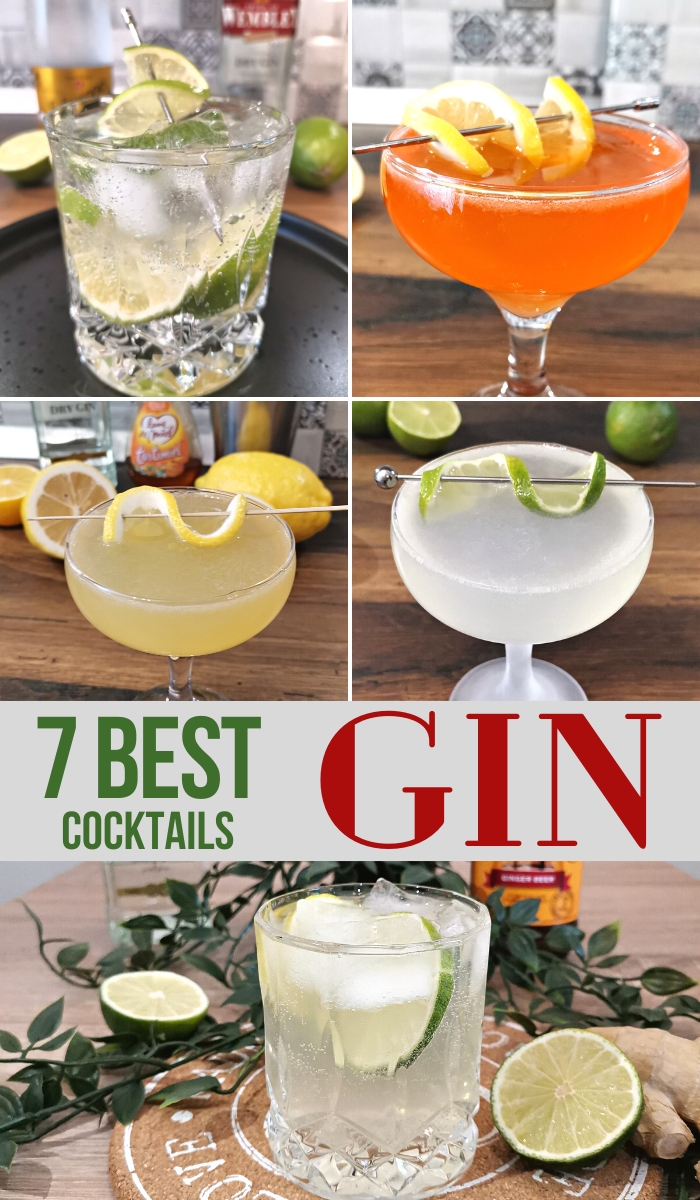
20 Best Gin Cocktails for Home Bartenders: Classic + Modern Recipes
Twenty gin drinks worth actually mastering — from a $6 jigger up to a well-stocked home bar.
Gin is the home bartender's most versatile spirit — one bottle of London dry, a few citrus fruits, a jar of simple syrup, and you can make a Gimlet, a G&T, a Negroni, a Martini, or a Bramble without leaving the kitchen. This guide covers 20 gin cocktails worth actually mastering: five classics you should build muscle memory for, five modern craft-bar drinks, five for brunch, and five for a dinner party — plus the pour ratios, tools, and garnish techniques the pros use. Every recipe below links to a full step-by-step build in our catalog, and the bar-tool picks link straight to our vetted barware shelf.
Get a free bar-cart shopping list
Six drinks that share a bottle list, so one cart covers the whole night. Sent before the weekend.
No spam, unsubscribe in one click. Recipes, shopping lists and Instacart carts all work without an account either way.
Why gin is the home bartender's most versatile spirit
Gin is neutral grain spirit re-distilled with botanicals — juniper always, then some subset of coriander, angelica root, citrus peel, cardamom, orris root, and whatever else the distiller likes. That botanical layer means gin plays two roles most spirits can't: it works as a structural backbone (Martini, Negroni, Gimlet — the botanicals interlock with vermouth or bitters) and as a flavor accent (Aviation, Bramble, Southside — the juniper and citrus notes let you build fruit-forward drinks without them collapsing into juice).
Vodka can't do the first role — it's flavorless, so a vodka Martini is just cold ethanol with a whisper of vermouth. Tequila can't do the second — the agave dominates. Rum lands somewhere in the middle but leans sweet. Gin gives you the widest palette per bottle, which is why every classic bar canon builds on it. As of 2026, the American gin category has never been broader: London dry, Plymouth, Old Tom, Navy strength, and 40+ contemporary craft styles are all on shelf, and any of them will produce drinkable cocktails if you follow the ratios below.
If you're starting from zero, buy one London dry and one contemporary style — Beefeater or Tanqueray for the classics, and something like Hendrick's or Aviation American Gin for the citrus-forward and floral modern builds. Those two bottles cover ~90% of the recipes in this guide.
How to pick a gin: London dry vs Plymouth vs contemporary style
| Style | Signature | Best for | Bottles to try |
|---|---|---|---|
| London dry | Piney, dry, juniper-forward, high proof | Martini, Negroni, G&T, Aviation, Last Word | Beefeater, Tanqueray, Bombay Sapphire, Sipsmith |
| Plymouth | Softer, slightly sweet, earthy | Gimlet, French 75, Vesper, Sidecar variants | Plymouth Gin (only one distillery makes it) |
| Old Tom | Malt-forward, subtly sweet | Tom Collins, Martinez, whiskey-lean builds | Ransom Old Tom, Hayman's Old Tom |
| Navy strength | ~57% ABV London dry | Anything you want to punch harder — Negroni, G&T | Plymouth Navy Strength, Perry's Tot |
| Contemporary | Floral, cucumber, citrus, rose, etc. | Southside, Bramble, Basil Smash, spritz | Hendrick's, Aviation, Roku, Monkey 47 |
A rule that survives contact with most bars: use London dry when the drink is spirit-forward and depends on the botanicals cutting through vermouth or bitters; use Plymouth or a soft contemporary style when the drink leans citrus-forward and you want the gin to blend rather than punch. Never use a heavy-floral gin (Hendrick's, Monkey 47) in a Martini or Negroni — the rose and cucumber notes collide with the vermouth and the drink tastes muddled.
Store bottles standing up in a dark cabinet at room temperature; refrigeration blunts the botanicals. An opened bottle is at full quality for about 12 months, and drinkable for years after that if you can still smell juniper in the pour.
The 5 classics every home bartender should master
These five are the foundation. Learn to make them by feel — pour, stir count, garnish — and every other gin cocktail is a variation on one of them.
1. Gin Gimlet — 2oz gin, 0.75oz fresh lime, 0.5oz simple syrup
The Gimlet is the friendliest classic to start with because it's forgiving on ratios. Shake hard for 12–15 seconds with a full shaker of ice, double-strain into a chilled coupe, and skip the garnish — the drink is about clarity and lime. Use Plymouth or a soft London dry; a heavy-juniper gin fights the lime. Full build: Herb-Infused Gin Gimlet.
2. Gin & Tonic — 1.5oz gin, 4oz tonic, lime wheel
The G&T is deceptively hard to make well. The tonic matters more than the gin — flat tonic or grocery-store cheap tonic will destroy any gin under it. Buy Fever-Tree, Q, or Fentimans, chill both bottles, and build in a highball or a Copa balloon over big ice. Add the tonic first, then pour the gin down a bar spoon so it layers on top without knocking the carbonation out. Full build: Tropical Gin and Tonic with Pineapple.
3. Negroni — 1oz gin, 1oz Campari, 1oz sweet vermouth
Equal parts, stirred over ice, strained onto a big rock in a rocks glass, expressed orange peel garnish. That's the entire recipe. The Negroni is the shortest bar-canon drink and the one that most rewards a good pour of vermouth — buy Cocchi Storico or Carpano Antica and it becomes a different cocktail from what you get at a chain restaurant. Full build: City Lights Espresso Negroni.
4. Gin Martini — 2.5oz gin, 0.5oz dry vermouth (5:1)
The modern Martini standard is 5:1 gin to dry vermouth, stirred with ice for 30 seconds, strained into a chilled coupe, garnished with a lemon twist or three olives on a pick. Wetter (3:1 or 4:1) is closer to how Martinis were made pre-1970 and delivers a more balanced, textured drink. Dryer (10:1 or a vermouth "wash") is what became fashionable in the 1980s vodka-Martini era and mostly tastes like cold gin. Try 4:1 first — most drinkers land there. Full build: Citrus-Cumin Gin Martini.
5. French 75 — 1oz gin, 0.5oz lemon, 0.5oz simple syrup, 3oz Champagne
Shake the gin, lemon, and syrup with ice for 10 seconds, double-strain into a chilled flute, top with cold Champagne. Do NOT shake the Champagne. The name comes from the World War I French field gun; the drink hits about as hard, so make it in a flute, not a coupe. Full build: Velvet Blackberry French 75.
5 modern gin cocktails from craft bars
These are the drinks that took over specialty cocktail bars in the 2010s and are now in the mainstream canon. Every one of them is a good gateway from the classics.
Aviation — 2oz gin, 0.5oz maraschino liqueur, 0.25oz crème de violette, 0.75oz lemon. Shake, double-strain, no garnish. The violette turns it pale purple; go easy on it or the drink tastes like grandma's perfume. Recipe: Sunset Citrus Aviation Sour.
Last Word — Equal parts gin, green Chartreuse, maraschino, and fresh lime (0.75oz each). Shake, double-strain, no garnish. A pre-Prohibition drink that vanished for 80 years and got resurrected by Murray Stenson at Zig Zag in Seattle in 2005 — now a staple. Recipe: Chartreuse and Gin Last Word Stirred Cocktail.
Corpse Reviver No. 2 — 0.75oz each gin, Cointreau, Lillet Blanc, and lemon, with one dash of absinthe. Shake, double-strain, lemon-peel garnish. Reputedly a hangover cure; more reliably, a way to drink a Martini-strength drink without noticing. Recipe: Corpse Reviver No. 2 with Absinthe Twist.
Vesper — 3oz gin, 1oz vodka, 0.5oz Lillet Blanc. Shake (yes, shake — Ian Fleming was wrong about the physics but right about the drink) with ice, strain into a coupe, lemon-peel garnish. James Bond's original order from Casino Royale. The vodka thins the texture; the Lillet adds a subtle apricot note the vermouth can't. Recipe: Shaken Vesper Martini with Lillet Blanc.
Gin Basil Smash — 2oz gin, 1oz lemon, 0.75oz simple syrup, 8–10 basil leaves. Muddle the basil gently in the shaker (bruise, don't shred), add ice and everything else, shake hard, double-strain over fresh ice in a rocks glass. Invented by Joerg Meyer in Hamburg in 2008 and now everywhere. Recipe: Basil Cucumber Gin Smash.
5 gin cocktails for brunch
Brunch cocktails are lower-alcohol, higher-refreshment, and hold up next to eggs and pastries.
Bramble — 1.5oz gin, 0.75oz lemon, 0.5oz simple syrup, 0.5oz crème de mûre (blackberry liqueur) drizzled over crushed ice. Build the gin/lemon/syrup in a rocks glass with crushed ice, then drizzle the crème de mûre over the top so it bleeds down through the ice. Invented by Dick Bradsell at Fred's Club in London in 1984. Recipe: Norwegian Blueberry Bramble.
Gin Fizz — 2oz gin, 1oz lemon, 0.75oz simple syrup, 1 egg white, 2oz soda water. Dry-shake without ice for 15 seconds to whip the egg white, then shake with ice for another 15, strain into a chilled highball, top with soda. The egg white gives you the pillow of foam that defines a fizz. Recipe: Herbed Gin and Cucumber Fizz.
Tom Collins — 2oz Old Tom gin, 1oz lemon, 0.5oz simple syrup, 3oz soda water. Build in a Collins glass over ice, stir once, garnish with a lemon wheel and a cherry. If you don't have Old Tom, a London dry works but the drink turns drier. Recipe: Citrus-Infused Tom Collins.
Gin Sour — 2oz gin, 0.75oz lemon, 0.75oz simple syrup, 1 egg white (optional). Dry-shake, wet-shake, double-strain into a coupe or over a big rock in a rocks glass. A sour is the archetype every citrus-driven drink is a variation of. Recipe: Shaken Citrus-Gin Sour with Lavender Honey.
Gin Rickey — 2oz gin, 0.5oz lime, 3oz soda water. No syrup, no sugar. The Rickey is the driest classic in the canon and the best gin cocktail for anyone cutting sugar. Build in a highball over ice. Recipe: Lavender-Infused Gin Rickey with Lemon Zest.
5 gin cocktails for a dinner party
Dinner-party drinks need to scale — you're making 4–8 of these at once, so the recipe has to be batchable and hold up while guests linger.
Clover Club — 2oz gin, 0.5oz lemon, 0.5oz raspberry syrup, 1 egg white. Dry-shake, wet-shake, double-strain into a chilled coupe. The raspberry syrup lets you pre-batch the drink (minus the egg white) up to 6 hours ahead. Recipe: Cambridge Clover Club Twist.
Gin & Tonic (batched) — For 8: 12oz gin, 32oz cold tonic, sliced lemon and cucumber in a large pitcher over a big ice block. Build 5 minutes before serving so the tonic keeps its bubbles. Pour into Copa balloons.
Southside — 2oz gin, 1oz lemon, 0.75oz simple syrup, 8 mint leaves. Muddle mint in the shaker, add everything else, shake hard, double-strain into a chilled coupe. The Southside is essentially a gin mojito minus the club soda; it's what the Chicago mob drank at Al Capone's Prohibition parties. Recipe: Gin Citrus Southside Fizz.
Gin Mule — 2oz gin, 0.75oz lime, 4oz ginger beer. Build in a copper mug over ice, stir once, garnish with a lime wheel and candied ginger. The copper mug is aesthetic — glass works — but it does keep the drink colder longer at a warm dinner party. Recipe: Ginger-Lime Gin Mule.
Elderflower Gin Spritz — 1.5oz gin, 1oz St-Germain elderflower liqueur, 2oz prosecco, 1oz soda, lemon twist. Build in a wine glass over ice; guests can top up the prosecco themselves. The lowest-alcohol drink on this list and the crowd-pleaser at every wedding shower we've seen. Recipe: Stirred Gin and Elderflower Martini.
Bar tools and glassware you actually need
You don't need $400 of gear to make every cocktail in this guide. Here's the minimum viable kit that will handle every recipe above.
Essential tools
| Tool | What it does | Price ballpark |
|---|---|---|
| Two-sided jigger (1oz / 2oz) | Precise pours; the single most important tool | $6–15 |
| Boston shaker (28oz tin + 18oz tin or pint glass) | Shake cocktails | $12–25 |
| Bar spoon (twisted shaft, ~12in) | Stir cocktails | $8–15 |
| Hawthorne strainer | Strain from the shaker | $5–12 |
| Fine mesh strainer | Double-strain for citrus drinks | $4–10 |
| Muddler (wood or nylon-tipped) | Bruise mint, basil, berries | $6–12 |
| Y-peeler | Cut clean citrus peels | $4–8 |
Every one of these lives in our barware category — that's the fastest way to get a curated shelf. If you want an even shorter list, our general-purpose kitchen utensils shelf has the Y-peeler, muddler alternatives, and mesh strainers you'd also use for cooking, so you're not double-buying.
Glassware
You need three shapes, and everything else is decorative:
- Coupe (5–7oz) — for shaken-and-strained drinks: Aviation, Martini, Corpse Reviver, Clover Club, Gimlet, Vesper.
- Rocks / Old Fashioned (8–10oz) — for stirred-onto-ice drinks: Negroni, Bramble, Gin Sour on the rocks.
- Highball / Collins (10–14oz) — for anything topped with soda or tonic: G&T, Tom Collins, Gin Fizz, Rickey.
A Copa balloon is nice for G&Ts but not required. Champagne flutes are the correct vessel for a French 75 — a coupe deflates the bubbles in about two minutes.
Ice
Ice matters more than most home bartenders realize. Standard freezer cube trays make cloudy, fast-melting cubes that over-dilute drinks. Two upgrades that pay off:
1. Big-format silicone tray (2×2in cubes) — for rocks-glass drinks. A 2in cube in a Negroni lasts 20 minutes before it disappears; a standard cube lasts 4.
2. Clear-ice tray — for the same 2in cubes but crystal clear. Costs $30–50; a Negroni served over clear ice looks like a bar drink instead of a home drink.
Garnish techniques: twist, ribbon, expressed peel
Garnishes aren't decorative — they add aromatic oils that finish the drink at the nose. Skip the twist and a Martini smells like alcohol; add it and it smells like the drink you actually ordered.
Expressed peel — Cut a wide strip of citrus peel with a Y-peeler (thumbnail-width, ~2 inches long), avoiding pith. Hold it colored-side-down over the drink and pinch it in half at the ends to spray a fine mist of citrus oil across the surface. Rub the peel around the rim of the glass, then drop it in (Negroni, Martini) or discard it (some Aviation builds).
Twist — Same peel, but instead of expressing the oils above the drink, twist it into a spiral around a bar spoon so it holds shape when dropped in. Purely visual; it doesn't release meaningfully more oil after the initial twist.
Ribbon — A long, thin strip cut with a channel knife or a very narrow Y-peel. Common on the Gimlet and Southside; drape it inside the rim of the glass. Also visual-only.
Mint slap — For mint-garnished drinks (Southside, Julep). Take one healthy mint sprig, slap it once between your hands (bruising a leaf releases the menthol aroma), and place it directly beside the straw so the drinker's nose gets the mint first, then the drink.
Real-world numbers: pour costs and yields
Home bartending is dramatically cheaper than the bar. Rough math for a $30 bottle of London dry (750ml = 25.4oz), pouring 2oz cocktails:
| Cocktail | Gin per drink | Cost per drink (gin only) | Bar price |
|---|---|---|---|
| Gin Martini | 2.5oz | $2.95 | $16 |
| Negroni | 1oz | $1.18 | $14 |
| Gimlet | 2oz | $2.36 | $14 |
| G&T | 1.5oz | $1.77 + ~$1 tonic | $12 |
| Aviation | 2oz | $2.36 + ~$2 modifiers | $18 |
Add ~$0.50–$2 per drink for citrus, syrup, modifiers, and ice, and your all-in cost is roughly one-tenth of the bar price. A $30 bottle makes 12 Martinis, 25 Negronis, 12 Gimlets, or 17 G&Ts.
Common pitfalls: 5 gin-cocktail failure modes
1. Over-dilution. Shaking a Martini or Negroni (both spirit-forward, no citrus) cracks the ice and cuts the drink with water — it should be stirred for 30 seconds instead. Shake for citrus and cream/egg drinks; stir for anything all-spirit.
2. Warm gin. Room-temp gin in a warm glass = a drink that reaches the ideal 40–45°F only after so much melt that it's diluted 30%. Chill the coupe in the freezer for 10 minutes before pouring, or fill it with ice water while you build the drink and dump it just before straining.
3. Bottled lime/lemon juice. Rose's Lime Cordial and ReaLemon are cooked citrus concentrates and taste it. Squeeze fresh — every drink above assumes fresh citrus juiced within an hour. A cocktail with a day-old lemon is passable; two days is not.
4. Wrong tonic. A G&T with grocery-store cheap tonic tastes bitter and metallic no matter which gin you use. Buy Fever-Tree, Q, or Fentimans (200ml single-serve bottles keep the carbonation) and open one bottle per drink.
5. Vermouth left out at room temperature. Vermouth is fortified wine and oxidizes like wine — 4 weeks at room temp and it tastes like sherry, not vermouth. Refrigerate after opening; use within 6 weeks.
When NOT to use gin
Gin is not a universal spirit. Some cocktails require its neighbors:
- Anything smoky. Mezcal or peated Scotch does that. Gin cannot.
- Anything with big amounts of coconut, pineapple, or dark spices. Rum handles tropical builds; gin gets lost.
- Long, sweet punches. Whiskey or rum are more forgiving in a punch bowl; gin gets muddy after 30 minutes with fruit.
- When you can't get fresh citrus. Almost every gin cocktail needs it. In a pinch, a Negroni is one of the few gin drinks that works without any citrus (just the orange twist).
If you're stuck for a substitute in a classic, our chat at /chat suggests real-time swaps — type "I have gin, orange juice, and Aperol, what can I make" and it returns 3–5 workable cocktails from the catalog.
FAQ
What is the best gin for cocktails?
For classics like Martinis and Negronis, London dry gin (Beefeater, Tanqueray, Bombay Sapphire) is the standard — piney, dry, juniper-forward, works with everything. For softer drinks like a Gimlet or French 75, Plymouth gin is smoother. For modern citrus-forward drinks, contemporary style (Hendrick's, Aviation, Roku) leans floral or cucumber. Buy one London dry and one contemporary style — you can build 90% of the cocktail canon from those two bottles.
Do I need a fancy jigger to make gin cocktails?
You need a two-sided jigger (1oz and 2oz, or 0.75oz and 1.5oz) for consistency — cocktails fail when the pour is off by 0.25oz because the balance between spirit, sugar, and acid is that precise. A $6 stainless jigger is plenty; no need for etched glass. Add a Boston shaker, a bar spoon, a Hawthorne strainer, and a fine mesh strainer. Full kit runs $30–45. Our /k/barware category has vetted picks.
Shaken or stirred — what is the actual rule?
Shake drinks that contain citrus juice, cream, or egg whites (to aerate and integrate); stir drinks that are all spirit (Martini, Negroni, Manhattan) to preserve clarity and silky texture. Shaking an all-spirit drink over-dilutes and clouds it; stirring a citrus drink under-integrates and leaves it flat. Shake hard for 12–15 seconds, stir for 30 seconds — those are the industry standard counts.
How do I make a gin cocktail if I don't have all the ingredients?
Gin, tonic water, and a lemon give you a passable G&T. Gin, lime juice, and simple syrup give you a Gimlet. Gin, Campari, and sweet vermouth give you a Negroni — those three ingredients cover the biggest classic. AislePrompt's chat at /chat suggests substitutions in real time — type "I have gin, orange juice, and Aperol, what can I make" and it returns 3–5 workable cocktails from the catalog.
What ratio should I use for a gin martini?
The modern martini standard is 6 parts gin to 1 part dry vermouth, stirred over ice for 30 seconds, strained into a chilled coupe, and garnished with a lemon twist or olive. Wetter (3:1 to 4:1) gives a more balanced drink and is closer to how martinis were made pre-1970; dryer (10:1 to just a wash) is what became fashionable during the vodka-martini era. Try 4:1 first — most drinkers land there.
Sources
- International Bartenders Association — Official Cocktails List — the IBA-recognized specifications for every classic covered above; useful when a recipe disagrees.
- Serious Eats — Gin Cocktails — well-tested modern recipes with the reasoning behind each ratio choice.
- Liquor.com — Gin Cocktails Guide — deep archive of gin-forward drinks with contemporary variations.
Frequently asked questions
What is the best gin for cocktails?
Do I need a fancy jigger to make gin cocktails?
Shaken or stirred — what is the actual rule?
How do I make a gin cocktail if I don't have all the ingredients?
What ratio should I use for a gin martini?
Sources
Building a bar cart for tonight?
Tell our AI who is coming and what you like — it writes the shopping list and sends the cart to Instacart. No signup.
Build my drinks list →