20 Bright Citrus Dinner Recipes: Lemon, Lime & Orange Mains for 2026
The half-lemon fix: why a flat weeknight dinner almost always needs acid, not salt.
When a dish tastes flat, the problem is almost never salt -- it's acid. Half a lemon squeezed over a finished pan of chicken, rice, beans, or roasted vegetables does in three seconds what another ten minutes of cooking can't. Citrus is the cheapest correction in the kitchen, at roughly $0.50 a lemon.
Get a free week of easy dinners
Seven weeknight dinners with the shopping list already totalled, sent Sunday. No account needed, unsubscribe in one click.
No spam, unsubscribe in one click. Recipes, shopping lists and Instacart carts all work without an account either way.
Below are twenty dinners built around that idea, sorted by fruit, plus the part most roundups skip: when to reach for zest, when for juice, and when to break out a knife and cut supremes.
Introduction -- how citrus rescues a flat weeknight dinner
Your palate registers five basic tastes, and home cooking tends to over-index on two of them -- salt and fat -- while under-using acid. That's why restaurant food often tastes brighter than the same dish made at home from the same recipe. Professional kitchens finish nearly everything with a squeeze of something.
Citrus does three separate jobs, and they're worth keeping straight:
| Job | Use | What it does |
|---|---|---|
| Acid | Juice, added at the end | Cuts fat, lifts flavor, balances sweetness |
| Aroma | Zest, added anywhere | Adds floral top notes from the peel's oils |
| Texture / structure | Juice, added early | "Cooks" protein (ceviche), tenderizes, thickens sauces |
The mistake that ruins the most dinners is adding juice too early. Citrus aromatics are volatile -- boil lemon juice for ten minutes and the bright note is gone, leaving only sourness. As a rule: acid for cooking goes in early, acid for flavor goes in at the end. Many good recipes use both, splitting the juice.
Yield numbers worth memorizing, as of a standard 2026 US supermarket:
| Fruit | Juice yield | Zest yield | Typical price |
|---|---|---|---|
| Lemon (medium) | 3 tbsp | 1 tbsp | $0.50-$0.90 |
| Lime | 2 tbsp | 2 tsp | $0.40-$0.75 |
| Orange (navel) | 1/3 cup | 2 tbsp | $0.80-$1.20 |
| Grapefruit | 2/3 cup | 3 tbsp | $1.20-$1.80 |
| Blood orange (seasonal) | 1/4 cup | 2 tbsp | $1.50-$2.50 |
Room-temperature fruit gives close to 40% more juice than cold fruit, and rolling it hard on the counter for ten seconds first breaks the interior membranes. Cook's Illustrated tested this directly and the difference is large enough that it's worth eight seconds in the microwave for fridge-cold lemons.
The lemon lineup: garlic chicken, risotto, roasted salmon
Lemon is the default because it's the most forgiving -- assertive enough to register, mild enough that an extra squeeze rarely wrecks anything.
1. Lemon-Garlic Chicken Breasts -- the base recipe everyone should own. Sear, remove, deglaze with white wine and lemon, mount with butter off the heat. About 25 minutes.
2. Golden Light Lemon Risotto -- lemon zest goes in with the rice, juice goes in at the very end with the Parmesan. Do it the other way around and the risotto tastes sour instead of bright.
3. Lemon-Garlic Shrimp Pasta -- 20 minutes, and one of the highest-return uses of a good olive oil.
4. Lemon-Asparagus Pasta -- the spring version. Reserve a half cup of pasta water; the starch is what lets lemon juice and oil emulsify into a sauce instead of separating.
5. Lemon-Herb Baked Cod -- 400°F, 12-14 minutes for a 1-inch fillet. Lemon slices under the fish, not on top, so they perfume without steaming the surface.
6. Lemon-Dill Salmon Bowl -- meal-prep friendly; keep the dressing separate until serving.
7. Preserved Lemon Thyme Chicken Thighs -- preserved lemon is a different ingredient from fresh: salty, funky, almost umami. Rinse it, use the rind, discard the pulp.
8. Lemon Rosemary Lamb Chops -- 6 minutes total in a hot pan, and the acid is doing real work against the fat.
9. Lemon Lentil Soup -- the classic proof of the rule. Lentils taste muddy until the lemon goes in; then they taste like soup.
Lime-forward: cilantro rice, ceviche, tacos, shrimp bowls
Lime is sharper and more floral than lemon, with a shorter finish. It's the acid of choice anywhere chile, cilantro, cumin or coconut is involved.
10. Cilantro Lime Rice -- add the lime and cilantro after the rice is cooked and rested, never during. Heat destroys both.
11. Tequila-Lime Shrimp Ceviche -- the acid denatures the protein the same way heat does. Thirty minutes for shrimp; longer and the texture goes chalky.
12. Chipotle Lime Carne Asada Tacos -- lime in the marinade tenderizes; a second squeeze at the table brightens.
13. Mango Chile Lime Shrimp Tacos -- 15 minutes, and the sweet-sour-heat triangle is what makes it work.
14. Coconut-Lime Chicken Stew -- coconut fat plus lime acid is the backbone of most Southeast Asian curry logic.
15. Honey-Lime Chicken Skewers -- marinate no longer than two hours. Lime is aggressive; past that the surface of the chicken goes mealy.
Orange as a savory ingredient: glazes, marinades, dressings
Orange is the underused one. It brings sweetness and aromatic oil rather than sharp acid, which makes it a glaze ingredient rather than a finisher.
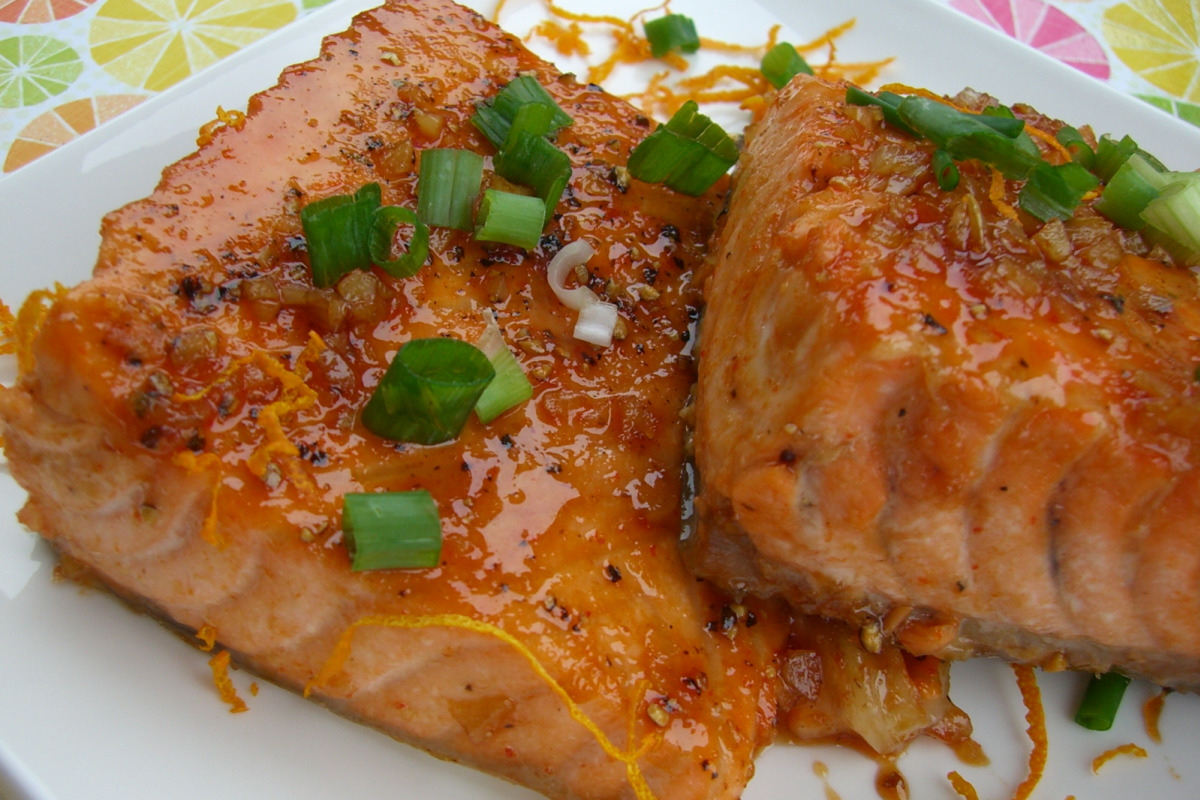
16. Orange and Lime Glazed Salmon -- the two-citrus approach: orange for body and sugar, lime for the finish.
17. Orange-Glazed Chicken Thighs -- reduce the juice by half before glazing, or it never gets past "wet."
A good general savory-orange vinaigrette, worth memorizing: 3 tablespoons orange juice, 1 tablespoon sherry vinegar, 1 teaspoon Dijon, 6 tablespoons olive oil, salt. That's enough for a large salad and it pairs with everything from roasted beets to grilled pork.
Orange peel also holds more essential oil per gram than lemon or lime, which is why so many braises call for a strip of it. Drop a two-inch piece of peel (no pith) into a beef braise or a pot of black beans and it reads as depth rather than as citrus.
Grapefruit + blood orange for winter cooking
Citrus season in the US runs roughly December through April, which is exactly when the produce aisle is otherwise at its worst. This is the real argument for citrus-forward cooking: it's the one thing that's better in February.
18. Luminous Beetroot & Blood Orange Salad -- blood oranges have a raspberry-like note that pairs with earthy roots better than a navel does.
19. Sunlit Citrus Salad -- the assembly of supremes described in the next section.
20. Salted Grapefruit Margarita with Cointreau -- grapefruit's bitterness comes from naringin, and salt suppresses bitter perception, which is why a salted rim isn't just decoration here.
Grapefruit carries a real medical caveat: it interacts with a long list of prescriptions, including several statins and blood-pressure medications, by inhibiting an intestinal enzyme. If anyone at your table takes daily medication, that's a question for their pharmacist, not a recipe decision.
Zest, juice, or supremes -- which technique for which dish
| Technique | Tool | Use it for | Avoid when |
|---|---|---|---|
| Zest | Microplane rasp | Risotto, baked goods, dressings, finishing | You need moisture or acidity |
| Juice | Hand press / elbow juicer | Finishing, marinades, ceviche, sauces | You want aroma without sourness |
| Supremes | Paring knife | Salads, plated fish, garnish | Anything cooked -- they fall apart |
| Peel strips | Vegetable peeler | Braises, stocks, cocktails | Dishes under 20 minutes |
| Wheels / slices | Chef's knife | Roasting under fish, sheet pans | Raw eating (pith is bitter) |
Zesting. Rasp only the colored layer. The white pith underneath is bitter and adds nothing. Always zest before you juice -- zesting a squeezed half is miserable. Serious Eats has a good walkthrough of the grip that keeps your knuckles off the rasp.
Supremes. Cut off both ends, stand the fruit up, slice the peel and pith away following the curve, then cut between the membranes to release each segment. It takes about 90 seconds per orange and turns a salad from home cooking into something that looks plated. Bon Appetit's citrus primer covers the same cuts in photos.
Juicing. Halve pole-to-pole rather than across the equator -- the segments release more freely. Squeeze cut-side up in a hand press so the peel inverts and forces juice out.
Real-world numbers: acid ratios that work
Most vinaigrette and pan-sauce failures are ratio problems, not ingredient problems. These are the proportions worth memorizing:
| Application | Citrus | Fat / liquid | Notes |
|---|---|---|---|
| Vinaigrette | 1 part juice | 3 parts oil | Add 1 tsp Dijon per 1/4 cup to emulsify |
| Pan sauce | 1 tbsp juice | 1/2 cup stock + 2 tbsp butter | Juice off the heat, butter last |
| Ceviche | Juice to cover | -- | 30 min shrimp, 20 min firm white fish |
| Marinade (chicken) | 2 tbsp juice per lb | 3 tbsp oil | 2 hours maximum |
| Finishing squeeze | 1/2 lemon per 4 servings | -- | Always after the pan leaves the burner |
| Risotto | 1 tbsp zest early + 2 tbsp juice late | 4 cups stock | Split the citrus across the cook |
The 1:3 vinaigrette ratio is the one that surprises people -- it feels oil-heavy written down, but citrus juice is roughly 5-6% acid by volume versus 5% for vinegar, so the math is the same as a classic vinaigrette. If your dressing tastes harsh, add oil before you add sugar.
Citrus season: what's actually good when
Supermarket citrus is available year-round, but quality swings hard by month. As of 2026, US-grown supply looks like this:
| Fruit | Peak season | Off-season quality |
|---|---|---|
| Lemon (Eureka) | Year-round, best Nov-Mar | Consistent |
| Meyer lemon | Dec-Mar | Rarely available otherwise |
| Lime (Persian) | May-Oct | Imported, prices spike in winter |
| Navel orange | Nov-Apr | Poor -- switch to Valencia |
| Valencia orange | Mar-Jul | Juicier, thinner skin |
| Blood orange | Dec-Mar | Not available |
| Grapefruit | Nov-May | Watery outside the window |
The practical takeaway: build lime-heavy menus in summer and lemon- or blood-orange-heavy menus in winter, and you'll spend less while cooking with better fruit. Winter is also when Meyer lemons show up -- sweeter, thinner-skinned, and worth reworking a recipe around for the six weeks they're on shelves.
Common pitfalls
- Boiling the juice. Aromatics are volatile. Add finishing acid off the heat.
- Zesting into the pith. Bitter, and no amount of sugar fixes it.
- Bottled juice in a finishing role. Fine in a long braise, obvious in a vinaigrette.
- Over-marinating in lime. Two hours maximum for chicken, thirty minutes for shrimp.
- Skipping the salt. Acid and salt work together; a lemon vinaigrette with no salt just tastes sour.
When not to use citrus
Skip it in dairy-heavy sauces that aren't stabilized -- a cream sauce hit with a tablespoon of lemon juice off the heat is fine, but the same juice added to simmering cream will curdle it. Also skip it in long braises where you want the fat to read as richness (a classic French beef braise, a bolognese); those dishes want vinegar or wine at the start, not citrus at the end.
Equipment: three tools, about $35
A Microplane rasp ($18), a hand-press citrus juicer ($15), and a sharp paring knife are the entire citrus kit. Our kitchen gadget picks cover the rasp and press we recommend; knives & cutting has the paring knives that hold an edge for supremes; and utensils & tools covers the fine-mesh strainer that keeps seeds out of a vinaigrette.
FAQs
What's the difference between zest and juice — can I substitute one for the other?
Zest holds the aromatic oils and adds bright perfume without acid; juice adds acidity and moisture. They're not interchangeable. A dish that calls for one tablespoon of zest can't be rescued by juice — you'll get sourness without the floral top note. Use a Microplane for zest (avoid the bitter white pith) and a Mexican elbow or hand press for juice.
How do I get the most juice out of a lemon or lime?
Room-temperature fruit yields nearly 40% more juice than cold. Roll the whole fruit hard against the counter for ten seconds to break interior membranes, then microwave for eight seconds if it's straight from the fridge. Halve pole-to-pole (not equator) and squeeze cut-side up in a hand press so the peel does the work. One medium lemon should give three tablespoons.
Can I use bottled lemon or lime juice in these recipes?
For long-cooked braises and marinades where citrus is a background note, bottled works fine. For anything where citrus is the featured flavor — vinaigrettes, ceviches, risottos, finishing sauces — use fresh. Bottled juice is pasteurized and loses the volatile top-note aromatics that make citrus taste alive; you'll notice immediately in a lemon pasta or a grapefruit margarita.
How long does citrus zest last, and can I freeze it?
Fresh zest holds one to two days refrigerated in a sealed container before it dulls. Freezing works surprisingly well: zest onto a plate, freeze until firm, transfer to a bag, and use within three months. Frozen zest goes straight into hot pans without thawing. Zest lemons before juicing (never zest a naked peel) and stash extras — you'll always want a spoonful you don't have.
What kitchen tools do I need for citrus-forward cooking?
A Microplane rasp for zest, a hand-press or Mexican elbow juicer for juice, and a small paring knife for supremes cover everything in this roundup. A citrus reamer works if you already own one but yields less. Skip electric juicers unless you cook citrus daily — they're a countertop tax. See kitchen gadgets for the three-tool kit we recommend under $35 total.
What to cook next
Citrus does its best work on fish -- the white fish dinners guide and the complete salmon guide both lean on the techniques above. For a whole cuisine built on lemon, see the Greek weeknight dinners and the Mediterranean weeknight roundup.
Sources
- Serious Eats -- How to Zest and Juice Citrus -- technique reference for rasping and pressing.
- Cook's Illustrated -- Getting the Most Juice From Citrus -- tested yield data on temperature and rolling.
- Bon Appetit -- How to Use Citrus -- supremes, peel strips and savory applications.
Frequently asked questions
What's the difference between zest and juice — can I substitute one for the other?
How do I get the most juice out of a lemon or lime?
Can I use bottled lemon or lime juice in these recipes?
How long does citrus zest last, and can I freeze it?
What kitchen tools do I need for citrus-forward cooking?
Sources
Plan a week of meals in two minutes.
Tell our AI what you have and what you like — it builds your plan, shopping list, and Instacart cart. No account needed.
Try free →