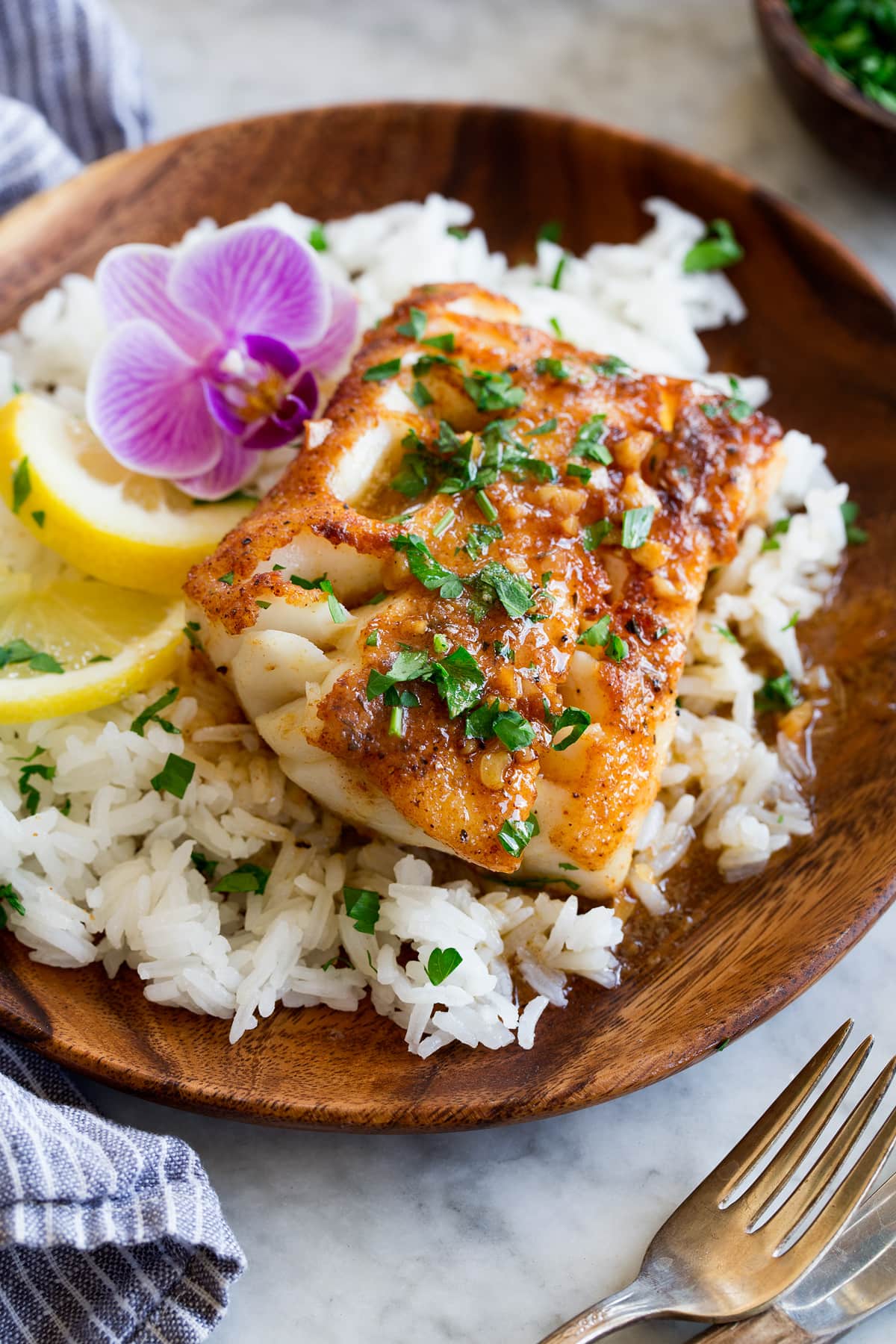
20 White Fish Recipes: Cod, Tilapia & Halibut Under 30 Minutes
Cod, tilapia and halibut need under 15 minutes of heat — here are the four methods, the sauces, and 20 dinners worth cooking.
Affiliate disclosure: AislePrompt may earn a commission on qualifying purchases made through Amazon links in this article, at no additional cost to you. See our affiliate policy →
The easiest white fish dinners are one-pan cooks that finish in under 15 minutes of actual heat: cod pan-seared in lemon butter, fillets roasted on a sheet pan with a vegetable, fish tacos off a hot skillet, or a coconut curry built in the same pan. White fish is done at 130–140°F, so almost every recipe below lands on the table inside 30 minutes.
Introduction — why white fish deserves more weeknight love
Salmon gets the health headlines and shrimp gets the speed credit, but mild white fish — cod, tilapia, halibut, haddock, sea bass, hake — is the protein that actually fits a Tuesday. A 6-ounce fillet carries 30–40 grams of protein for 220–350 calories, costs less than most cuts of beef, goes from freezer to plate in under 30 minutes, and takes on whatever flavor you put next to it. There is no marinating window, no resting period, no low-and-slow phase.
The speed is not a marketing claim, it is physics. Fish muscle is built in short fiber blocks called myotomes, held together by connective tissue that melts at around 120°F rather than the 160°F-plus that beef collagen needs. That is why a pan-seared cod fillet with lemon butter and capers is finished in about four minutes a side, and why pan-seared tilapia with garlic butter and lemon is a 15-minute total cook. The same protein chemistry that makes fish forgiving on time makes it unforgiving on inattention — the window between perfect and chalky is roughly 60 seconds, which is the single skill this guide is built around. If you want the background, the denaturation of muscle proteins is the process you are managing every time you put a fillet in a pan.
There is a health argument too. The joint FDA and EPA advice about eating fish puts cod, tilapia, haddock and pollock in the "Best Choices" tier — 2 to 3 servings a week for adults — with halibut one tier down at about one serving a week, on mercury grounds. Compare that to the once-a-week ceiling on higher-mercury species and white fish becomes the one protein you can genuinely rotate through the week.
If you already have salmon in the rotation, this guide is the companion piece to our complete guide to cooking salmon — same techniques, different fat content, very different timing. And if weeknight speed is the whole point, most of these fillets slot straight into the 25 sheet pan dinners framework: fish on one side of the tray, vegetable on the other, one pan to wash. Start with sheet pan lemon-garlic roasted cod with asparagus or, when even that feels like effort, half-steamed ginger soy cod with scallions at 17 minutes start to finish.
The Three Fish, Compared: cod vs tilapia vs halibut (texture, cost, cook times)
These three cover about 90 percent of what a US supermarket stocks, and they are not interchangeable. Cod is thick and flaky, tilapia is thin and lean, halibut is dense and expensive. Swapping one for another without adjusting the cook time is the most common way a white fish dinner goes wrong.
| Fish | Texture | Typical fillet | Price/lb (US, 2026) | Pan time | Best method |
|---|---|---|---|---|---|
| Cod | Large, moist flakes | 1–1.5 in thick | $9–$14 | 4 min + 3 min | Sear, roast, poach |
| Tilapia | Fine flake, very lean | 0.4–0.6 in thick | $5–$8 | 3 min + 2 min | Sear, blacken, taco |
| Halibut | Dense, steak-like | 1–1.5 in thick | $22–$28 | 4 min + 4 min | Sear, roast |
| Haddock | Softer than cod | 0.7–1 in thick | $10–$15 | 3 min + 3 min | Bake, chowder, fry |
| Sea bass | Buttery, firm | 0.8–1.2 in thick | $16–$24 | 3 min + 3 min | Sear, poach, steam |
| Hake / pollock | Delicate, soft flake | 0.6–1 in thick | $6–$10 | 3 min + 2 min | Stew, bake, batter |
Cod is the default and the best starting point. Thick loin cuts are hard to overcook because the center takes time to catch up with the surface, and it holds together in a sauce — see pan-roasted cod with tomato and olive sofrito or the very plain, very good baked cod with rosemary and olive oil at 23 minutes. Atlantic and Pacific stocks are managed differently; NOAA's Atlantic cod profile and Pacific cod profile are the primary sources for stock status if you care where yours came from, and most US-caught cod is the Pacific one.
Tilapia is the budget option and the one people apologize for. It does not need an apology — it needs a stronger sauce and 90 fewer seconds. At 0.5 inches thick, it goes from translucent to overcooked while you are turning around, so pull it early. It is at its best carrying assertive flavor: pan-seared tilapia with mango-avocado salsa, pan-seared tilapia with Kenyan tomato and onion relish, or injera-crusted tilapia with spiced berbere butter. Farming and sourcing drive most of the quality difference between a good fillet and a muddy one.
Halibut is the special-occasion fish. At $22–$28 a pound as of 2026, it is priced like a steak and should be cooked like one — hot pan, hard sear, pulled at 130°F. Pan-roasted halibut with lemon-caper butter sauce delivers 42 grams of protein per serving, the highest number in this entire guide. Seared half-halibut steak with lemon butter sauce is the 15-minute version, and Alaskan halibut with a lemon-dill crust is the oven route. Stock status and season length are covered in NOAA's Pacific halibut profile.
Two more worth knowing: haddock, cod's softer cousin, which is what British fish shops and Scottish chowders are actually built on — pan-seared haddock with dill and lemon — and hake, the fish that carries Spanish and Cornish cooking, as in pan-seared Cornish hake with lemon-thyme butter. If your store only has Alaska pollock, one of the largest fisheries in the world and the fish inside most frozen fillets and fish sticks, treat it like thin cod.
Buying White Fish: fresh vs frozen, sustainability notes
Buy frozen. Not as a compromise — as the better product. Commercial boats freeze fillets within hours of the catch, often at sea at −20°F or colder, which arrests the enzyme activity that turns fish flabby. The "fresh" fillets in the counter case were, in most inland stores, frozen at sea and thawed in the back that morning. You are buying the same fish with several extra days on it, at a premium.
What to look for, in order:
- Vacuum-sealed, individually frozen (IQF) fillets. Loose-frozen fillets in a bag freeze into a block and thaw unevenly.
- No visible ice crystals or white dry patches. Both mean the package thawed and refroze at some point in the chain.
- A short ingredient list. Sodium tripolyphosphate is a water-retention additive; it inflates weight and hurts browning, since a wet surface steams instead of searing.
- Thickness, stated or visible. A 1.25-inch cod loin and a 0.5-inch cod tail need different recipes, not different confidence.
Thaw overnight in the fridge on a rack over a plate, then pat the fillet bone-dry with paper towels — genuinely dry, both sides, right before it hits heat. Never microwave-thaw: the thin edges start cooking while the center is still frozen. If you forgot, seal the fillet in a bag and submerge it in cold water for 20–30 minutes. The FDA's guidance on selecting and serving seafood safely covers the cold-chain rules if you want the official version.
On sustainability, two labels do most of the work. Seafood Watch from the Monterey Bay Aquarium rates specific fishery-and-gear combinations green, yellow or red — search cod or tilapia before you buy. The blue MSC label certifies wild-capture fisheries against a stock-and-ecosystem standard. For mercury, the EPA's choose fish and shellfish wisely guidance and the FDA's advice for people who may become pregnant are the two documents that matter — the short version is that cod, tilapia, haddock and pollock are all low-mercury weekly fish.
Salt cod is its own tradition rather than a weeknight shortcut — if that is where your interest goes, the Portuguese bacalhau recipes guide covers the soaking and rehydration a dried fillet needs.
One tool note, since it changes what you can buy: an inexpensive flexible fillet knife lets you buy a whole side of fish at a lower per-pound price and portion it yourself, and it is the only knife that will cleanly remove skin without taking half the flesh with it.
The 4 Foundational Cooking Methods: pan-sear, oven-roast, en papillote, poach
Learn these four and you can cook any recipe on this page — and most recipes that are not on it.
1. Pan-sear (best crust, 8–10 minutes)
Heat a heavy skillet over medium-high until a drop of water skitters. Add a tablespoon of neutral oil, lay the dried fillet down away from you, and press it flat for five seconds with a spatula so it does not curl. Then leave it alone. The crust you want is the Maillard reaction working on the fillet's surface proteins, and it only happens on contact with dry metal — moving the fish resets the clock.
Flip once, when the bottom third of the fillet has turned opaque up the side. Finish with butter, garlic and lemon off the heat. Pan-seared cod with garlic and lemon butter sauce and pan-seared sea bass with Ligurian olive tapenade are the archetypes.
Gear that genuinely changes the outcome: a pre-seasoned carbon steel skillet for the sear, a thin flexible fish spatula or a wider stainless fish turner to get under the crust without tearing it, and a 12-inch nonstick pan for delicate sole and tilapia that will stick to anything else.
2. Oven-roast (most forgiving, 12–18 minutes)
400–425°F, fillet on a rimmed sheet pan, 10–12 minutes for a 1-inch cod loin. The oven's dry heat is gentler than a skillet, so the margin for error roughly doubles — this is the method to use when dinner is competing with homework. Add the vegetable to the same tray and it becomes a complete meal: sheet pan lemon-garlic roasted cod with asparagus, baked cod with lemon-caper butter and fresh dill, baked halibut with white wine and herb sauce, or a crunchy top from baked parmesan-crusted cod with lemon herb sauce.
A flat, heavy half sheet pan matters more than the recipe here. Thin pans warp at 425°F, oil pools in the low corner, and half the tray browns while the other half steams.
3. En papillote (zero cleanup, 15–20 minutes)
Cooking in parchment traps steam around the fillet so it poaches in its own juices plus whatever aromatics you seal in. Nothing sticks, nothing dries out, and the packet is the serving vessel. Fold a 15-inch parchment square over fish, lemon, herbs and a splash of wine, crimp the edges tightly, and bake at 400°F for 12–15 minutes.
Whispered citrus herb fish en papillote is the plain-language starting point. Tasmanian pepperberry snapper en papillote and barramundi en papillote with finger lime and macadamia show how far the aromatics can travel. A pair of kitchen shears makes cutting parchment rounds a five-second job.
4. Poach (most forgiving of all, 10–15 minutes)
Poaching holds the fish in liquid at 160–180°F — below a simmer, no visible bubbles. Because the liquid can never exceed 212°F and you are aiming for 135°F inside, it is nearly impossible to blow past done. The trade-off is no browning, so the liquid has to carry the flavor: sole poached in lemon and herb broth at 150 calories a serving, or the richer olive oil poached sea bass with tomato-caper relish.
Steaming is the fifth method worth adding once the first four are automatic — Chinese steamed fish with ginger and scallion soy sauce is 17 minutes and about 40 grams of protein. That hot-oil-over-raw-ginger finish carries well beyond fish; see 20 fresh ginger recipes for the stir-fries, soups and sweets that use the same knob.
Real-world numbers: doneness temperatures and timing
This is the section that fixes most white fish problems. Fish protein sets between 120°F and 140°F; past 145°F it squeezes out moisture and the flakes go from silky to cottony. Carryover cooking adds 3–5°F after the fillet leaves the heat, so the pull temperature is always lower than the target.
| Fish | Thickness | Pull at | Rests to | Sear time (per side) | Oven at 425°F |
|---|---|---|---|---|---|
| Cod loin | 1.25 in | 130°F | 135°F | 4 min / 3 min | 12–14 min |
| Cod tail | 0.75 in | 128°F | 133°F | 3 min / 2 min | 9–10 min |
| Halibut | 1.25 in | 128°F | 133°F | 4 min / 4 min | 12–15 min |
| Tilapia | 0.5 in | 135°F | 140°F | 3 min / 2 min | 8–10 min |
| Haddock | 0.85 in | 130°F | 135°F | 3 min / 3 min | 10–12 min |
| Sea bass | 1 in | 130°F | 135°F | 3 min / 3 min | 10–12 min |
| Sole / thin fillets | 0.4 in | 135°F | 140°F | 2 min / 1 min | 7–8 min |
Two caveats. First, the FDA's public safety guidance is a flat 145°F for all finfish — that is the number to follow if you are cooking for someone pregnant, immunocompromised, very young or elderly. The 130–135°F range in the table is the restaurant standard for texture and assumes healthy diners and good-quality fish. Second, none of these numbers help without a fast thermometer: a Thermapen ONE instant-read reads in about one second, which matters when the difference between pull and ruin is 60 seconds. Probe into the thickest part, horizontally, so the tip sits in the center of the fillet rather than through it.
No thermometer? Slide a paring knife into the thickest point, hold it for three seconds, and touch the blade to your wrist. Warm means done. Cool means keep going. Hot means you already went too far.
Sauces That Work on Any White Fish
Mild fish is a delivery system. A sauce turns the same fillet into a different dinner six nights running, and every one of these is made in the same pan while the fish rests.
| Sauce | Base | Time | Best on | Start here |
|---|---|---|---|---|
| Lemon-butter-caper | Butter, lemon, capers | 3 min | Cod, halibut | Tilapia with lemon caper sauce |
| Beurre blanc | Butter, wine, shallot | 8 min | Sea bass, sole | Sea bass with charred lemon beurre blanc |
| Tomato-olive sofrito | Tomato, olive, garlic | 10 min | Cod, hake | Cod with tomato and olive sofrito |
| Miso glaze | White miso, mirin, sugar | 5 min | Cod, black cod | Miso-glazed black cod |
| Romesco | Pepper, almond, bread | 10 min | Sea bass, halibut | Sea bass with romesco |
| Coconut curry | Coconut milk, aromatics | 12 min | Any flaky fish | Goan coconut curry leaf sauce |
| Ginger-scallion soy | Soy, ginger, hot oil | 4 min | Cod, sea bass | Ginger soy cod with scallions |
| Fresh fruit salsa | Mango, lime, chili | 6 min | Tilapia, snapper | Blackened snapper with mango salsa |
The lemon-butter-caper family is piccata logic borrowed from veal and chicken, and it is the highest-return sauce to learn first: deglaze the fond with lemon juice, swirl in cold butter off the heat, add capers, done in three minutes. Beurre blanc is the same idea with a wine-and-shallot reduction and more discipline — the butter must go in cold, piece by piece, off direct heat, or the emulsion breaks. Romesco and miso both bring savory depth that a squeeze of lemon cannot, which is exactly what lean fish lacks.
One habit is worth more than any recipe here: zest the lemon before you juice it. A Microplane zester over the finished plate adds the aromatic oils that cooking drives off, and it costs eight seconds.
20 Weeknight White Fish Recipes (by cuisine)
Every recipe below is 30 minutes or less, start to plate, with protein and calorie figures per serving.
Mediterranean and Southern European
1. Baked Lemon-Garlic Mediterranean Cod — 25 min, 220 cal, 30g protein. The baseline weeknight cod: olive oil, garlic, lemon, hot oven. Learn this one and you can improvise the other nineteen.
2. Lemon-Dill Baked Cod with Olive Tapenade — 30 min, 280 cal, 38g. Greek treatment; the tapenade is made while the fish bakes and keeps for a week in the fridge.
3. Pan-Seared Cod with Garlic and Lemon Butter Sauce — 25 min, 320 cal, 38g. Spanish-leaning, built on a hard sear and a three-ingredient pan sauce.
4. Pan-Roasted Cod with Tomato and Olive Sofrito — 25 min, 260 cal, 32g. Sear the fish, build the sofrito in the same pan, return the fillets to finish.
5. Pan-Seared Sea Bass with Ligurian Olive Tapenade — 20 min, 280 cal, 35g. The fastest genuinely dinner-party-grade plate on this list.
6. Pan-Seared Sole with Lemon and Dill — 25 min, 290 cal, 26g. French, delicate, and the one recipe here where a nonstick pan is not a compromise.
British and Northern European
7. Baked Scottish Haddock with Mustard and Parsley Crust — 25 min, 280 cal, 35g. The crust is breadcrumbs, mustard and parsley pressed on before baking; no frying, all the crunch.
8. Pan-Seared Cornish Hake with Lemon-Thyme Butter — 22 min, 280 cal, 35g. Hake is softer than cod, so handle it once and only once.
Mexican and Latin American
9. Grilled Fish Tacos with Cilantro Lime Slaw — 20 min, 350 cal, 30g. Tilapia or cod both work; the slaw does the heavy lifting and can be made ahead.
10. Pan-Seared Fish Veracruz Style with Tomato and Olive Sauce — 30 min, 280 cal, 35g. Tomatoes, olives, capers and a little heat — the Gulf Coast's answer to a sofrito.
11. Pan-Seared Tilapia with Mango-Avocado Salsa — 18 min, 280 cal, 30g. No-cook salsa, 18-minute total, the best value-for-effort plate here.
Caribbean and Gulf
12. Blackened Florida Snapper with Spicy Mango Salsa — 20 min, 280 cal, 34g. Blackening is a spice crust in a screaming-hot pan; run the vent hood first.
13. Seared Caribbean Snapper with Coconut-Lime Rice — 30 min, 350 cal, 34g. Rice and fish finish together; start the rice first.
14. Pan-Seared Gulf Red Snapper with Cajun Butter Sauce — 25 min, 320 cal, 38g. Cajun spice plus a butter pan sauce, which is the entire cuisine in one plate.
East and Southeast Asian
15. Miso-Glazed Black Cod with Sesame — 17 min, 380 cal, 32g. The glaze caramelizes under the broiler in three minutes; watch it the whole time. The same miso glaze works on chicken and pork too — see 20 glazed recipes.
16. Sheet Pan Miso-Glazed Cod with Roasted Bok Choy — 25 min, 280 cal, 35g. The same glaze, one tray, a vegetable included.
17. Half-Steamed Ginger Soy Cod with Scallions — 17 min, 180 cal, 30g. Hot oil poured over raw scallion and ginger at the end — the loudest, best 10 seconds in weeknight cooking.
18. Pan-Seared Thai Tilapia with Sweet Chili Glaze — 20 min, 280 cal, 35g. Sweet-hot-sour balance that makes budget tilapia taste deliberate.
19. Pan-Seared Thai Sea Bass with Lemongrass and Chili Sauce — 20 min, 320 cal, 36g. Bruise the lemongrass with the flat of a knife before it goes in the pan.
South Asian and Island
20. Sri Lankan-Style Fish Curry with Curry Leaves — 27 min, 280 cal, 25g. Coconut milk, curry leaves and tamarind; add the fish in the last six minutes so it poaches rather than boils.
Five more worth an extra five minutes
Not everything good fits in 30 minutes. These four run 30–35 and one is a full 35, and each is worth the overrun.
- Pan-Seared Goan Fish in Coconut and Curry Leaf Sauce — 30 min, 280 cal, 32g.
- Pan-Seared Tilapia with Tomato and Onion Escabeche — 30 min, 270 cal, 32g. Escabeche is a vinegar cure that doubles as next-day lunch.
- Sheet Pan Brazilian Moqueca-Inspired Fish with Coconut and Peppers — 33 min, 320 cal, 35g. A tray version of moqueca, the coconut-and-palm-oil stew of Bahia and Espírito Santo.
- Basque-Style Hake Stew with Smoked Paprika — 35 min, 385 cal, 34g. Hake, paprika, potatoes; the most complete one-pot meal on this page.
- Pan-Fried Fish and Chips with Malt Vinegar Aioli — 35 min, 600 cal, 40g. A lighter take on fish and chips that skips the deep fryer.
And five for the rotation
- Pan-Seared Barramundi with Lemon Myrtle and Dill — 20 min, Australian, 35g protein.
- Sesame-Ginger Baked Cod with Snap Peas — 24 min, one tray, 240 cal.
- Tiki-Inspired Coconut Ginger Fish Curry — 25 min, 350 cal, 30g.
- Pan-Seared Tilapia with Kenyan Tomato and Onion Relish — 20 min, 240 cal, 32g.
- Injera-Crusted Tilapia with Spiced Berbere Butter — 20 min, 320 cal, 34g.
Sides That Cook in the Same 30 Minutes
The constraint is that the side has to be finished when the fish is, because fish does not hold. Anything under 20 minutes qualifies; anything you can start before the fish qualifies twice.
| Side | Time | Pairs with |
|---|---|---|
| Sautéed spinach with lemon and garlic | 8 min | Any seared fillet |
| Sautéed kale with lemon and toasted pumpkin seeds | 9 min | Cod, halibut |
| Steamed asparagus with dill | 10 min | Butter-sauce plates |
| Creamy avocado-white bean mash | 10 min | Halibut, sea bass |
| Steamed ginger-soy broccoli with sesame | 12 min | Miso and soy plates |
| Pan-roasted cherry tomato and herb salad | 16 min | Mediterranean cod |
| Chilled lemon-dill orzo salad with cucumber and feta | 19 min | Greek and Italian plates |
| Cardamom-scented golden rice pilaf | 25 min | Curries, escabeche |
| Creamy polenta with parmesan and chive | 30 min | Sofrito and tomato sauces |
| 5-minute cucumber salad with mint and lemon | 5 min | Blackened and spiced fish |
Two more that solve specific plates: a Mediterranean couscous salad with lemon vinaigrette at 10 minutes when you want a grain without turning on a burner, a chickpea and cucumber salad when the fish is rich and the plate needs acid, and red cabbage cole slaw for anything served in a tortilla.
Sequence matters more than technique here. Start the grain first, get the vegetable into its pan second, and cook the fish last — fish is the only component on the plate that degrades in the four minutes it takes to plate everything else. A pair of locking tongs lets you run the vegetable pan one-handed while the fish gets your attention.
Common Pitfalls
1. Cooking a wet fillet. Surface water has to boil off before the pan can exceed 212°F, and browning does not start until roughly 285°F. A fillet that goes in damp steams for 90 seconds, releases its own liquid, and never crusts. Pat both sides bone-dry, then salt right before it hits the pan — salting early pulls moisture back out.
2. Moving the fish. A fillet sticks until the crust releases it, which is a chemical event, not a timing one. If it will not lift cleanly at three minutes, give it 30 more seconds. Prying it up is how fillets end up in four pieces.
3. Cooking to a clock instead of a temperature. A 0.5-inch tilapia fillet and a 1.25-inch cod loin differ by roughly six minutes in the oven. Recipe times assume a thickness the recipe rarely states. Measure the thickest point and use the table above.
4. Thawing on the counter. The outer half sits in the 40–140°F bacterial range for an hour while the center is still frozen, and the thawed edges overcook instantly. Fridge overnight, or a cold-water bath in a sealed bag for 20–30 minutes.
5. Crowding the pan. Two fillets in a 10-inch skillet drop the surface temperature enough that both steam. Cook in batches or move to a half sheet pan in a hot oven, where crowding costs you far less.
6. Treating every white fish as interchangeable. Sole in a cast-iron skillet at high heat disintegrates. Halibut in a delicate broth wastes a $25 ingredient. Match thickness to method: thick fish sears and roasts, thin fish steams, poaches and goes into tacos.
When white fish is the wrong choice
Skip it when the dish needs the protein to hold up to long cooking. Any braise over 20 minutes, any stew where the protein goes in first, any recipe that reheats as leftovers on day three — white fish will shred and turn woolly. Use chicken thighs or beans instead, or add the fish in the final five minutes the way the Sri Lankan curry does.
Skip it on the grill unless the fillet is over an inch thick and you are confident with a well-oiled grate — halibut and swordfish steaks survive that, cod and tilapia mostly leave their skin behind. Skip it for meal-prep lunches you plan to microwave: reheated white fish is the reason office kitchens have rules. If you want fish that reheats gracefully, oily fish holds far better, or build it into something saucy like escabeche, where the acid keeps the texture intact overnight.
And skip halibut entirely when you are cooking for a crowd on a budget. At $22–$28 a pound, four servings is a $50 protein bill for a dish where cod at $11 a pound is 90 percent as good.
Sources
- FDA and EPA — Advice About Eating Fish — the Best Choices / Good Choices tiers and weekly serving guidance.
- FDA — Selecting and Serving Fresh and Frozen Seafood Safely — cold-chain handling and the 145°F public guidance.
- FDA — Food Safety for Pregnant Women — higher-risk-group seafood advice.
- EPA — Choose Fish and Shellfish Wisely — mercury guidance by species.
- Monterey Bay Aquarium Seafood Watch — fishery-and-gear sustainability ratings (cod, tilapia).
- Marine Stewardship Council — what the blue label means — wild-capture certification standard.
- NOAA Fisheries — Atlantic cod, Pacific cod, Pacific halibut, Alaska pollock — stock status and species profiles.
- FishWatch — US seafood facts by species.
- Oregon State University Seafood Research and Education Center — seafood processing and quality research.
- USDA FoodData Central — nutrient composition for finfish.
- America's Test Kitchen — equipment and technique testing.
- ThermoWorks — thermometer specifications and response times.
- Technique and dish background: Maillard reaction, protein denaturation, en papillote, poaching, beurre blanc, piccata, romesco, miso, blackening, escabeche, moqueca, fish and chips, cod, halibut, tilapia, fish as food.