20 Lebanese Recipes: Kibbeh, Tabbouleh & Mezze Weeknight Dinners
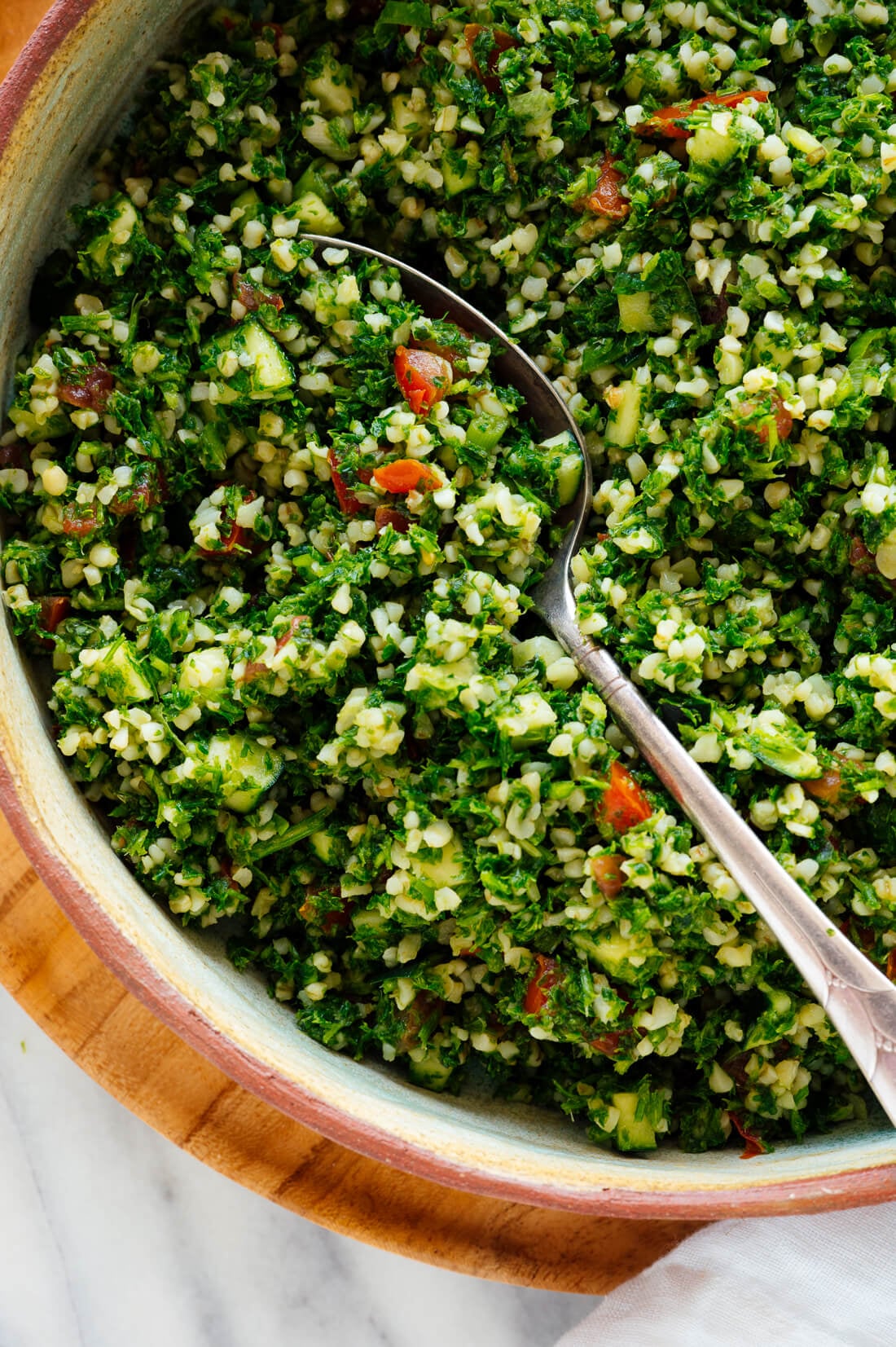
Tabbouleh is a parsley salad, not a grain salad — get that ratio right and the rest of the Lebanese table falls into place in about 30 minutes a night.
Lebanese recipes at home run on five pantry items — tahini, sumac, za'atar, pomegranate molasses, and good olive oil — and a template that almost never changes: one grilled or roasted protein, two or three cold mezze made ahead, warm bread, and a sharp herb salad. Most of the table can be built in 30 minutes because most of it is supposed to be cold.
Get a free week of easy dinners
Seven weeknight dinners with the shopping list already totalled, sent Sunday. No account needed, unsubscribe in one click.
No spam, unsubscribe in one click. Recipes, shopping lists and Instacart carts all work without an account either way.
Introduction: Lebanese food is the world's best template for a fast, healthy dinner
Ask a nutritionist to design a weeknight dinner from scratch and they will land somewhere very close to a Lebanese table: legumes and whole grains as the base, olive oil as the fat, a modest amount of grilled meat, an enormous quantity of raw parsley, mint, tomato, and cucumber, and fermented dairy on the side. Lebanon got there a few thousand years before the food pyramid did.
What makes it practical for American home cooks is the structure. Lebanese meals are not built around a single main course with sides orbiting it. They are built around mezze — a spread of small dishes, most served cold or at room temperature, most of which are better on day two. That means the cooking is front-loaded. Make hummus, baba ganoush, and muhammara on Sunday and you have the backbone of four dinners; each night you add one 15-minute grilled protein and a fresh salad.
The pantry is also genuinely short. Five ingredients cover almost everything, and four of the five keep for a year. As of 2026, tahini, sumac, za'atar, and pomegranate molasses are all stocked at mainstream supermarkets, not just Middle Eastern groceries.
The Lebanese pantry: sumac, za'atar, tahini, pomegranate molasses
Tahini is ground hulled sesame, and quality varies enormously. Good tahini is pourable, pale, and tastes nutty with only a faint bitterness. Bad tahini is stiff, gray, and aggressively bitter — usually because it is old or made from unhulled seed. Lebanese and Palestinian brands (Al Wadi, Al Nakhil, Soom, Seed + Mill) are reliably good at $8–12 per 16 oz jar. Stir the separated oil back in; store upside down between uses.
Sumac is the dark red, coarse powder made from dried, ground sumac berries. It is sour — think lemon with tannic depth — and it is used as a finishing seasoning, not a cooking spice. On onions, on fattoush, on grilled chicken, on labneh. About $6 for 2 oz.
Za'atar is a blend, not a single herb: dried wild thyme or oregano, toasted sesame, sumac, and salt. It goes on flatbread with olive oil (man'oushe), on roasted vegetables, and stirred into yogurt. Quality varies as much as tahini does; a good za'atar smells green and citrusy, a bad one smells like dusty oregano.
Pomegranate molasses is reduced pomegranate juice — thick, dark, sweet-tart, and the ingredient that makes muhammara and fattoush dressings taste like restaurant versions. One $6 bottle lasts a year.
Seven spice (baharat) — allspice, black pepper, cinnamon, nutmeg, cloves, coriander, ginger — is the warm blend that seasons kafta, kibbeh, and rice. Allspice alone gets you 60% of the way.
| Ingredient | Cost | Keeps | Primary uses |
|---|---|---|---|
| Tahini, 16 oz | $8–12 | 6 mo opened, refrigerated | Hummus, baba ganoush, sauces |
| Sumac, 2 oz | $5–7 | 1 year | Fattoush, onions, finishing |
| Za'atar, 4 oz | $6–10 | 6–9 months | Flatbread, roasted veg, labneh |
| Pomegranate molasses | $5–8 | 1 year+ | Muhammara, dressings, glazes |
| Seven spice / baharat | $5–8 | 1 year | Kafta, kibbeh, rice |
| Bulgur #1 fine, 1 lb | $3 | 1 year | Kibbeh, tabbouleh |
Mezze fundamentals: hummus, baba ganoush, muhammara, labneh
Four dips, four techniques. Get these right and every Lebanese meal you make afterward is assembly.
Hummus. The difference between homemade hummus that tastes like the good stuff and homemade hummus that tastes like grainy chickpea paste is three things: overcook the chickpeas (add ¼ tsp baking soda to the cooking water and simmer until they genuinely fall apart — 45 minutes past "done"), use more tahini than feels reasonable (a 2:1 chickpea-to-tahini ratio by volume), and blend with ice water, not chickpea liquid, for two full minutes. It goes pale and fluffy. Start with authentic Lebanese hummus with pita and grilled vegetables.
Baba ganoush. The eggplant must be charred over an open flame — gas burner, grill, or broiler — until the skin is blackened and collapsed and the interior is completely slack. Oven-roasting produces a perfectly nice eggplant dip that is not baba ganoush, because the smoke is the flavor. Then drain the flesh in a colander for 20 minutes; skipping that gives you a watery dip. Roasted eggplant baba ganoush with tahini and pomegranate and charred eggplant baba ghanoush with tahini and pomegranate both get the char step right; oven-roasted eggplant baba ganoush with lemon and tahini is the version for people without a gas burner.
Muhammara. Roasted red pepper, toasted walnuts, breadcrumbs, pomegranate molasses, Aleppo pepper, and olive oil, blended to a coarse — not smooth — paste. It should have texture. This is the mezze most Americans have never had and immediately love. Pan-seared lamb kibbeh with spiced walnut muhammara pairs it directly with kibbeh.
Labneh. Strained yogurt, thick enough to hold a spoon. Line a sieve with cheesecloth, add full-fat yogurt and a big pinch of salt, refrigerate 12–24 hours. That is the entire recipe. Serve in a shallow bowl, thumb a well in the middle, flood it with olive oil and za'atar. Labneh with za'atar and olive oil drizzle is the reference version; za'atar flatbread with labneh and pickled vegetables turns it into a meal.
Round out the spread with Lebanese-inspired chickpea and za'atar salad and spiced dolma-style stuffed grape leaves with lamb and rice.
Kibbeh — baked, fried, and raw — and why it's worth learning
Kibbeh is Lebanon's national dish and the one that intimidates people unnecessarily. At its core it is two things: a shell of fine bulgur and very finely ground lean meat, and a filling of spiced meat, onion, and toasted pine nuts.
Three formats:
- Kibbeh bil sanieh (baked) — the shell pressed into a sheet pan, filling spread in the middle, a second layer of shell on top, scored into diamonds, dotted with butter or olive oil, baked at 375°F for 40 minutes. This is where to start. No frying, no shaping, forgiving.
- Kibbeh kras (fried footballs) — the shell shaped by hand into hollow torpedoes around the filling, then deep-fried. Genuinely a skill; expect your first batch to split.
- Kibbeh nayyeh (raw) — very fresh lean lamb or beef pounded with bulgur and spices, served with olive oil and mint. A Sunday-lunch tradition. Only attempt it with meat you have watched being ground, on the same day.
The technical points that matter:
1. Use #1 fine bulgur. Coarse bulgur will not hydrate into a workable paste. Soak 20 minutes, then squeeze bone dry.
2. The meat must be very lean and very finely ground. Ask the butcher for a double grind on lamb leg or beef top round. Fat in the shell makes it crumble.
3. Keep a bowl of ice water next to you. Wet hands are the only way to shape kibbeh without it sticking.
4. Toast the pine nuts separately and add them at the end of the filling. Cooked in from the start they go soft and taste of nothing.
Start with spiced lamb kibbeh with bulgur and pine nuts, then try pan-seared lamb kibbeh with spiced walnut muhammara for the seared-patty format, which is by far the fastest way in.
Weeknight main dishes: shish taouk, kafta, and moujadara
Shish taouk is the marinated chicken skewer that anchors most Lebanese weeknights. The marinade is yogurt, lemon, garlic, olive oil, tomato paste, and seven spice. The yogurt is not optional — its calcium and lactic acid tenderize the surface in a way citrus alone cannot, and it is why restaurant shish taouk is juicy where a straight lemon marinade goes stringy. Marinate 4–12 hours; past 24 the texture goes mealy. Cook over high heat, 3–4 minutes per side. Chargrilled chicken shawarma with garlic yogurt sauce and pan-sautéed yogurt-marinated chicken shawarma both use the same marinade family; lemon-oregano grilled chicken shawarma skewers is the skewer format.
The garlic sauce that goes with it — toum — is its own small miracle: garlic, salt, lemon juice, and a cup and a half of neutral oil emulsified into a stiff white paste with no eggs at all. Add the oil in a very thin stream with the processor running. If it breaks, start over with a fresh garlic clove and drizzle the broken mixture in as the "oil."
Kafta is ground lamb or beef mixed with grated onion, parsley, and seven spice, shaped onto skewers or into patties and grilled. Grate the onion rather than dicing it and squeeze out the liquid — diced onion makes the kafta fall off the skewer. Lebanese-inspired lamb kofta meatballs with tzatziki dip and char-grilled lamb kebabs with tzatziki are the versions to cook.
Moujadara (mujadara) is the everyday vegetarian dish and, dish for dollar, one of the best meals in world cooking: brown or green lentils and rice cooked together, topped with a genuinely enormous pile of deeply caramelized onions. The onions are the entire dish — slice three large ones, cook them in a half cup of olive oil for 30–40 minutes until they are mahogany and half-crisp, and use both the onions and the onion oil. Mujadara lentils and caramelized onion rice bowl, Lebanese lentil and rice pilaf with caramelized onions, and lentils and rice with caramelized onions are three routes to the same place. Cost per serving: about $1.20.
Also worth knowing: slow-simmered chicken with aromatic Lebanese spices for a one-pot night, and slow-cooked chicken with tahini and pomegranate molasses for a sweet-tart braise.
Salads that hold: tabbouleh, fattoush, and Lebanese slaw
Tabbouleh is a parsley salad, not a grain salad. This is the single most common misunderstanding. Authentic Lebanese tabbouleh is roughly 80% flat-leaf parsley by volume with maybe two tablespoons of fine bulgur per large bunch — the bulgur is a texture accent, not a base. American deli versions invert that ratio and produce something closer to a bulgur pilaf.
The rules:
- Flat-leaf parsley only, washed and completely dried, then chopped with a very sharp knife. A dull knife bruises the leaves and turns the salad black within an hour.
- Fine (#1) bulgur, soaked in lemon juice, not water, for 15 minutes. It plumps and seasons at once.
- Dress at the last possible minute. Salt draws water out of the tomato and the whole thing weeps.
Good starting points: cold tabbouleh salad with parsley, mint, and bulgur, classic tabbouleh with fresh herbs, and toasted pine nut and herb tabbouleh salad with fresh mint.
Fattoush is the other one — a chopped vegetable salad with torn, fried or toasted pita and a sumac-and-pomegranate-molasses dressing. The pita must be crisp and added at the table; added early it turns to paste. Purslane is traditional and rarely available; watercress or arugula substitutes fine. Try fattoush salad with lemon-tahini dressing, sumac-spiced fattoush salad, or roasted cauliflower fattoush with sumac and pomegranate seeds for a warm-weather-to-cold-weather bridge.
20 Lebanese recipes to cook this month
Mezze — make ahead, keeps 3–5 days
1. Authentic Lebanese hummus with pita and grilled vegetables
2. Roasted eggplant baba ganoush with tahini and pomegranate
3. Charred eggplant baba ghanoush with tahini and pomegranate
4. Labneh with za'atar and olive oil drizzle
5. Lebanese-inspired chickpea and za'atar salad
6. Spiced dolma-style stuffed grape leaves with lamb and rice
Salads — 20 minutes, dress at the table
7. Cold tabbouleh salad with parsley, mint, and bulgur
8. Classic tabbouleh with fresh herbs
9. Fattoush salad with lemon-tahini dressing
10. Sumac-spiced fattoush salad
11. Roasted cauliflower fattoush with sumac and pomegranate seeds
Grilled and skewered — 25–35 minutes plus marinade
12. Chargrilled chicken shawarma with garlic yogurt sauce
13. Lemon-oregano grilled chicken shawarma skewers
14. Lebanese-inspired lamb kofta meatballs with tzatziki dip
15. Char-grilled lamb kebabs with tzatziki
16. Grilled za'atar chicken with sumac onions and garlic labneh
Plant-forward mains — under $2 a serving
17. Mujadara lentils and caramelized onion rice bowl
18. Lebanese lentil and rice pilaf with caramelized onions
Weekend projects
19. Spiced lamb kibbeh with bulgur and pine nuts
20. Pan-seared lamb kibbeh with spiced walnut muhammara
For flatbread night, za'atar flatbread with labneh and pickled vegetables and grilled halloumi and za'atar flatbread with sumac onions are both 25-minute dinners.
A 5-day Lebanese home dinner plan (heavy on plants)
Sunday prep is 90 minutes and carries the whole week.
| Day | Main | Mezze from Sunday | New work |
|---|---|---|---|
| Sunday | Kibbeh bil sanieh | Make hummus, baba ganoush, labneh | 90 min total |
| Monday | Shish taouk skewers | Hummus + labneh | 20 min (marinate Sun. night) |
| Tuesday | Mujadara | Baba ganoush | 45 min, mostly onions |
| Wednesday | Kafta patties + fattoush | Hummus | 25 min |
| Thursday | Za'atar flatbread + halloumi | Labneh + leftover mujadara | 25 min |
Sunday's 90 minutes, in order: chickpeas on to boil (45 min unattended) → eggplants over the flame (15 min) → yogurt into cheesecloth for labneh (2 min, then wait overnight) → kibbeh assembled and baked (40 min) → hummus blended once the chickpeas collapse (5 min) → chicken into the shish taouk marinade (5 min).
Shopping list for five dinners for four: 2 lb chicken thighs, 1.5 lb ground lamb, 3 cans chickpeas (or 1 lb dried), 2 large eggplants, 1 lb brown lentils, 2 cups rice, 1 lb fine bulgur, 6 large onions, 4 tomatoes, 3 cucumbers, 4 bunches flat-leaf parsley, 2 bunches mint, 2 lemons per day, 32 oz full-fat yogurt, halloumi, pita. Roughly $70 total.
What holds and what doesn't: hummus, baba ganoush, labneh, and mujadara all hold 4–5 days. Tabbouleh and fattoush hold about four hours dressed and two days undressed. Kibbeh reheats well at 325°F, covered.
Kitchen equipment: a food processor, a chef's knife, and a small grill pan
A food processor. This is the one genuine requirement. Hummus needs a machine that will run for two solid minutes without heating up; toum needs one that will emulsify a cup and a half of oil into garlic; muhammara needs a coarse pulse. A blender makes acceptable hummus and terrible toum. A 7–11 cup processor from small appliances in the $80–150 range is the right buy — the cheap 3-cup choppers stall.
A very sharp chef's knife. Tabbouleh is four bunches of parsley chopped fine, and a dull blade bruises the leaves so the salad goes dark and bitter within the hour. This is the clearest case in home cooking where sharpness changes the dish, not just the speed. See knives — an 8-inch chef's knife plus a honing rod, kept genuinely sharp, is all you need.
A ridged grill pan or a small charcoal grill. Shish taouk, kafta, and halloumi all want direct contact with something 450°F+. A cast-iron grill pan on a hot burner gets close enough indoors; run the exhaust fan. Browse cookware for a cast-iron grill pan in the 10–12 inch range.
Cheap but essential: cheesecloth or a nut-milk bag for labneh, flat metal skewers (round ones let the meat spin), and a fine-mesh sieve for draining eggplant and bulgur. Check utensils. And you will want more small bowls than you own — mezze is served in six to ten of them at once, so raid dining.
Common pitfalls
- Making tabbouleh grain-first. If you can see more bulgur than parsley, it is not tabbouleh. Four bunches of parsley to two tablespoons of bulgur.
- Oven-roasting the eggplant for baba ganoush. No char, no smoke, no dish. Use the burner, the broiler, or the grill.
- Under-blending the hummus. Two full minutes with ice water. Stop at thirty seconds and it is grainy.
- Adding oil too fast when making toum. A thin stream, over three to four minutes. Rushing breaks it every time.
- Dicing the onion for kafta. Grate it and squeeze it dry, or the meat will not bind.
- Buying coarse bulgur for kibbeh. #1 fine, always. Coarse will not form a shell.
- Dressing the fattoush before serving. The pita chips go soggy in under ten minutes.
FAQ
What is the difference between tabbouleh and a bulgur salad?
Tabbouleh is a parsley salad with a small amount of fine bulgur for texture — roughly 80% herbs by volume. Most American supermarket and deli versions invert this and serve a bulgur pilaf with a little parsley stirred in, which is a different dish entirely. If you use four bunches of flat-leaf parsley, a bunch of mint, two tomatoes, and only two tablespoons of soaked #1 bulgur, you will immediately taste why the ratio matters.
Do I need a food processor for hummus and toum?
For hummus, a high-powered blender works though a processor is easier. For toum — the whipped garlic sauce — a processor is effectively required, because the emulsion needs the wide bowl and steady blade speed to accept a cup and a half of oil without breaking. If you only have a blender, make hummus at home and buy toum from a Lebanese restaurant; most will sell you a container for a few dollars.
Can I make kibbeh without a meat grinder?
Yes. Ask your butcher to run lean lamb leg or beef top round through the grinder twice — most will do it free. The double grind is what gives the shell its smooth, paste-like texture. If you are stuck with standard ground meat, pulse it in a food processor with a few ice cubes for 30 seconds; the ice keeps the fat from smearing while the blade refines the texture. Do not attempt raw kibbeh nayyeh with pre-ground supermarket meat.
Is Lebanese food vegetarian-friendly?
Extremely. The mezze table is almost entirely plant-based — hummus, baba ganoush, muhammara, tabbouleh, fattoush, moujadara, falafel, stuffed grape leaves, and za'atar flatbread contain no meat at all. Lebanon's Christian fasting traditions and the general economics of the region produced a deep vegetarian repertoire that was never framed as a substitute. Mujadara alone is a complete protein at roughly $1.20 per serving.
What is the shelf life of tahini and how do I stop it going bitter?
Unopened tahini keeps a year in the pantry. Once opened, refrigerate it and use it within six months — the sesame oil oxidizes and turns sharply bitter past that. Buy Lebanese or Palestinian brands made from hulled seed; unhulled tahini is bitter from day one. Always stir the separated oil back in rather than pouring it off, and store the jar upside down between uses so the solids and oil stay married.
Sources
- Serious Eats — Lebanese Tabbouleh on the parsley-to-bulgur ratio and knife technique.
- Saveur — Lebanese Baked Kibbeh on fine bulgur, double-ground meat, and sheet-pan assembly.
- Bon Appétit — Shish Taouk on yogurt-based marinade timing.
Related reading: 20 Israeli and Levantine recipes, 18 Turkish recipes, and 18 Egyptian recipes.
Frequently asked questions
What is the difference between tabbouleh and a bulgur salad?
Do I need a food processor for hummus and toum?
Can I make kibbeh without a meat grinder?
Is Lebanese food vegetarian-friendly?
What is the shelf life of tahini and how do I stop it going bitter?
Sources
Plan a week of meals in two minutes.
Tell our AI what you have and what you like — it builds your plan, shopping list, and Instacart cart. No account needed.
Try free →