18 Turkish Recipes: Kebabs, Meze & Home-Style Weeknight Dinners
Turkey's grill-and-yogurt kitchen, scaled to a home stove — 18 recipes, the six-spice pantry, and a meze spread for four that costs under $30.
Turkish cooking runs on three things a home kitchen already has: a hot grill surface, full-fat yogurt, and a spice drawer that leans sour rather than hot. Below are 18 recipes from the AislePrompt catalog organized the way a Turkish table is actually built — meze first, grilled meat in the middle, a soup or a bean pot for the nights nobody wants to light a fire.
Get a free week of easy dinners
Seven weeknight dinners with the shopping list already totalled, sent Sunday. No account needed, unsubscribe in one click.
No spam, unsubscribe in one click. Recipes, shopping lists and Instacart carts all work without an account either way.
What makes this cuisine distinct from its neighbors is worth stating plainly, because "Mediterranean" flattens it. Turkish food uses far less olive oil than Greek cooking and far more butter and lamb fat. It's sourer than Lebanese food — sumac and pomegranate molasses do the work lemon does elsewhere. And unlike Persian cooking, the spicing is restrained: four or five spices per dish, never a masala.
Introduction: Turkey's grill culture and mezze table
A Turkish dinner is structurally a Spanish dinner run backwards. You start with six to ten small cold plates — the meze — eaten slowly with bread over an hour. Then one hot grilled thing arrives, and it's usually just meat, salt, and char. Dessert is fruit, or something honeyed if it's a holiday.
That structure is a gift to home cooks because seven-eighths of the meal is made ahead and served cold. On the night, you cook one thing. Meze culture stretches from the Balkans to the Levant, but the Turkish version is the most yogurt-forward: at least two of the plates on any real table are yogurt-based.
The grill matters and it's the part Americans over-engineer. Turkish kebab is cooked over charcoal on flat skewers, close to the coals, fast. If you don't have a grill, a ridged cast-iron pan on a hot burner is a genuinely acceptable substitute for everything in this article except the whole-lamb dishes. Do not use a gas grill on low and "cook it through" — the texture goes to sawdust.
Turkish pantry basics
Six items, and four of them are cheap.
Aleppo pepper (pul biber). Coarse, dark red, mildly hot with a raisin-like fruitiness and a slow build. This is the default chile of Turkish cooking and it's not interchangeable with cayenne or crushed red pepper — those are hotter and flatter. About $6 for a jar that lasts a year.
Sumac. Dried ground berries, tart and astringent, roughly the acidity of lemon zest without the moisture. Goes on raw onions, grilled meat, and yogurt. If you buy one new spice this month, buy this.
Pomegranate molasses (nar ekşisi). Reduced pomegranate juice, thick and sour-sweet. Used in salad dressings, on eggplant, and in muhammara. A bottle is about $7 and lasts six months.
Urfa biber. Optional but transformative — smoky, dark, almost coffee-like, and much less hot than it looks. If Aleppo is the everyday pepper, Urfa is the one that makes people ask what's in it.
Full-fat plain yogurt. Not Greek-style strained, not low-fat. Turkish cooking uses yogurt as a sauce base, and strained yogurt is too thick while low-fat breaks when warmed. Buy the plainest, fattiest tub in the case.
Fine bulgur and coarse bulgur. Fine for kısır and köfte binding, coarse for pilaf. About $4 a bag, cooks in 12 minutes, and holds in the fridge for five days without turning to paste the way rice does.
Add tomato paste, red pepper paste (biber salçası) if you can find it, dried mint, cumin, flat-leaf parsley, and lemons. That's the whole pantry.
Equipment
The grill surface is the one thing worth spending on. A heavy ridged grill pan or a plain cast-iron skillet holds heat through a batch of kebabs where thin nonstick drops 80°F the moment cold meat lands — browse cookware for something with real mass. A sheet pan and a pizza-style steel or stone from bakeware handle the lahmacun and pide, which want the hottest surface your oven can produce.
Beyond that: a sharp knife from knives for the volume of onion and parsley this cuisine demands, flat metal skewers from utensils (round skewers let the meat spin and cook unevenly — flat ones are the actual technical requirement for adana), and a food processor from gadgets for muhammara and the eggplant dips, which are processor jobs unless you enjoy chopping walnuts by hand.
The kebab canon
Turkish kebab splits into two families: ground-meat kebabs pressed onto skewers, and cubed-meat kebabs marinated and threaded. They cook differently and fail differently.
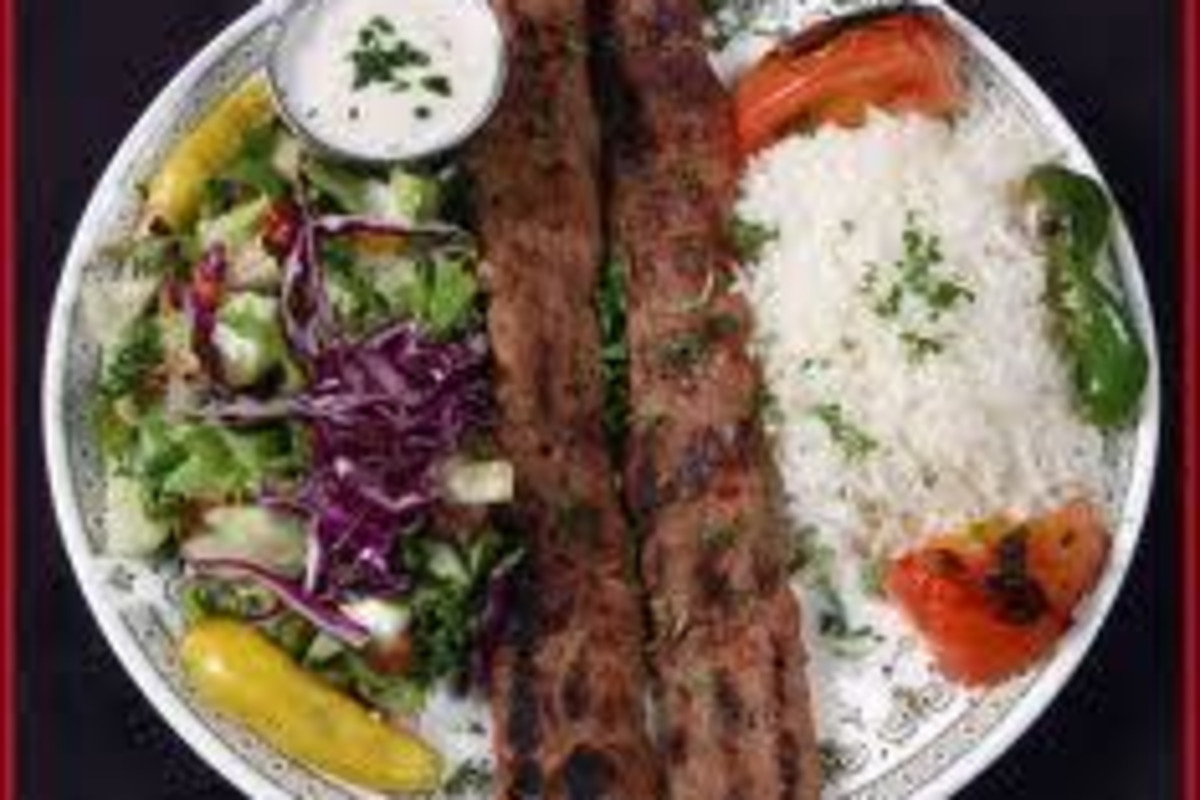
1. Spicy Adana Kebab with Sumac — the benchmark. Hand-chopped lamb with tail fat, Aleppo pepper, and almost nothing else, pressed onto flat skewers and grilled fast. Adana kebabı is protected by name in Turkey and legally has to hit a minimum fat ratio, which tells you the important thing: this dish fails when the meat is too lean. Ask for 80/20 lamb shoulder, or add 15% ground beef fat. Chill the mix 30 minutes before shaping or it won't stick to the skewer.
2. Adana Kabab with Sumac and Cumin — a cumin-forward variation. Serve both the same way: on flatbread, with grilled tomato and a fistful of sliced onion tossed in sumac and parsley.
3. Grilled Lamb Shish Kebabs with Smoky Spice Rub — cubed lamb shoulder, not leg. Leg is leaner and turns to rubber over high heat; shoulder has enough intramuscular fat to survive char. Marinate at least 4 hours in yogurt, grated onion, and oil — the onion enzyme is doing real tenderizing work.
4. Grilled Saffron Chicken Kebabs with Sumac and Yogurt Marinade — the chicken version. Thighs only. Breast on a skewer over high heat is a losing proposition no matter how long you marinate it.
5. Turkish-Spiced Lamb Meatballs with Yogurt Sauce — köfte, the everyday version people actually cook on a weeknight. Pan-fried, 20 minutes total, and the leftovers go into flatbread the next day.
6. Grilled Lamb Koftas with Sumac Yogurt and Pickled Red Onions — the grilled version with the two accompaniments that make it a full plate. If you want to approximate İskender — köfte over torn pide with tomato sauce and browned butter poured on at the table — this is the recipe to start from; add a tomato sauce, a pool of yogurt, and 3 tablespoons of butter cooked until it smells nutty.
7. Slow-Roasted Lamb Shoulder with Turkish Spiced Yogurt Sauce — the Sunday version. Four hours at 300°F, unattended, feeds eight.
Grill timings that actually work
Turkish kebab is a fast, hot cook. These are internal temperatures and times over a properly hot surface — charcoal at a hand-count of 2-3 seconds, or a cast-iron grill pan that's been on medium-high for a full 6 minutes before anything touches it.
| Kebab | Thickness | Per side | Pull temp | Rest |
|---|---|---|---|---|
| Adana (ground lamb) | 3/4 in on skewer | 3-4 min | 160°F | 3 min |
| Lamb shish (cubed shoulder) | 1 1/4 in cubes | 2-3 min, 4 turns | 130°F medium-rare | 5 min |
| Chicken thigh shish | 1 1/2 in pieces | 4 min | 175°F | 3 min |
| Köfte (pan-fried) | 3/4 in patties | 4 min | 160°F | 2 min |
| Sucuk slices | 1/4 in | 90 sec | n/a | none |
Two notes that matter more than the numbers. Lamb shoulder is best pulled at 130°F and rested — carryover takes it to about 137°F, which is where the intramuscular fat has rendered but the muscle hasn't seized. And ground-lamb kebabs must go on a dry skewer surface: wet hands help you shape them, but a wet skewer means the meat slides off into the coals on the first turn.
Flatbreads: lahmacun and pide
These are the two dishes that make people think Turkish food is hard. They aren't; they just want a very hot oven.
8. Baked Lahmacun with Ground Lamb and Sumac-Spiced Tomato Sauce — paper-thin dough with a thin smear of spiced minced lamb, baked in 4-6 minutes at the highest heat your oven produces. Lahmacun is not "Turkish pizza" — there's no cheese, the topping layer is under 1/8 inch, and you roll it around parsley and lemon to eat it. Preheat a steel for 45 minutes at 550°F. Anything less and the dough dries into a cracker.
9. Wood-Fired Pide with Spiced Turkish Sausage and Roasted Peppers — the boat-shaped one, with a thicker crust and a real filling. Sucuk is the sausage; it's beef, heavily cumin'd and garlicked, and worth seeking out.
10. Vegan Pide-Inspired Flatbread with Smoky Eggplant and Bell Peppers — the meatless version, and genuinely one of the best things in this list.
11. Wood-Fired Turkish-Style Flatbread Pizza with Sucuk and Roasted Peppers — the crossover if you already do pizza night and want to use the same dough.
Weeknight one-pan dinners and stews
The nights nobody lights a grill.
12. Turkish-Style Slow Braised Lamb with Tomato and Eggplant — the güveç idea: meat and vegetables in one pot, long and low. Salt and drain the eggplant for 30 minutes first or it will drink a cup of oil and stay bitter.
13. Turkish Spiced Chickpea and Eggplant Stew — vegetarian, about $1.20 a serving, freezes well. This is the closest thing here to a weeknight default.
14. Spiced Turkish Lentil Soup with Toasted Paprika and Lemon — mercimek çorbası, the soup served at every restaurant in Turkey before anything else arrives. Red lentils, onion, carrot, and a finish of butter bloomed with paprika and dried mint poured over the top. Forty minutes, under $4 for six servings, and it's the single most-cooked recipe in this article for a reason. The lemon at the table isn't optional.
15. Mushroom Manti with Tahini Yogurt Sauce — tiny dumplings under garlicky yogurt and paprika butter. Traditional manti are lamb and are famously fiddly (the joke is that a good bride makes them small enough that 40 fit on a spoon); this mushroom version is a realistic weeknight scale.
Meze plates for casual dinners
Make three or four of these on Sunday, eat them all week.
16. Charred Eggplant and Yogurt Dip with Garlic and Sumac — burn the eggplant directly on a gas burner or under a broiler until the skin is completely black and collapsed. Undercharred eggplant tastes like nothing. Fifteen minutes of real blackening, then peel.
17. Roasted Eggplant Muhammara with Pomegranate Molasses — walnut and red pepper, sour and slightly sweet. Keeps a week and gets better on day two.
18. Minty Cucumber and Yogurt Salad with Toasted Cumin — this is cacık, the cooling plate that belongs on the table any night there's chile on the meat. Salt and drain the cucumber for 15 minutes or it waters down within the hour.
Two more worth adding to a spread: Roasted Eggplant and Bulgur Salad with Pomegranate Molasses as a stand-in for kısır, Spiced Bulgur Wheat Pilaf with Pine Nuts and Toasted Almonds as the starch, and for something sweet, Phyllo-Wrapped Cheese Triangles with Honey and Sesame or Honey-Rose Pistachio Baklava Rolls.
How to build a Turkish dinner spread for four
The practical version, with real numbers. Total food cost as of August 2026: about $28.
| Course | Dish | Make ahead | Cost |
|---|---|---|---|
| Meze | Charred eggplant yogurt dip | 2 days | $3.50 |
| Meze | Muhammara | 3 days | $5.00 |
| Meze | Cacık | Same day, 4 hrs | $2.50 |
| Bread | Flatbread or pide | Bought | $3.00 |
| Main | Adana kebab, 1.5 lb lamb | Mix 1 day ahead | $12.00 |
| Side | Sumac onion salad | 30 min ahead | $1.00 |
| Sweet | Fruit + baklava rolls | 2 days | $1.00 |
Timing on the night: pull the meze out of the fridge 45 minutes before people arrive so they aren't fridge-cold. Shape kebabs while the grill heats. Everything on the table is cold except the six minutes of grilling.
For eight people, double the meze and add a second protein — the slow-roasted lamb shoulder is the right choice because it needs zero attention once it's in.
Common pitfalls
Lean ground meat in kebabs. The most common failure by a wide margin. 80/20 minimum for adana; leaner meat won't bind to a skewer and tastes dry regardless of technique.
Round skewers. The meat rotates and one side never sees the fire. Flat metal skewers, at least 1/2 inch wide.
Not salting eggplant. Thirty minutes with salt, then squeezed dry, changes both the oil absorption and the bitterness. Every eggplant dish here assumes it.
Greek yogurt as a substitute. Too thick, too tangy, and it splits when heated. Plain full-fat is not a stylistic preference here.
A merely hot oven for lahmacun. 550°F with a preheated steel, or the dough dehydrates before it can puff. If your oven maxes at 450°F, cook it in a dry cast-iron skillet on the stovetop instead.
Cayenne standing in for Aleppo pepper. Roughly four times the heat and none of the fruit. Use half the amount if you have no choice, and expect a different dish.
When NOT to cook this
If nobody at your table eats lamb, this article shrinks by half. The chicken and vegetarian recipes are good, but the cuisine's center of gravity is lamb fat and there's no substitute that gets you there.
If you want a single-pot dinner on the table in 30 minutes with no advance work, look at the lentil soup and stop there — the rest of this list assumes either a grill session or a make-ahead day. Serious Eats' Turkish archive and Bon Appétit's Turkish recipes are useful cross-references, and the Turkish cuisine overview is a decent regional map if you want to understand why the Black Sea coast cooks nothing like Gaziantep.
How AislePrompt plans a Turkish week
Add four or five of these to your shopping list and AislePrompt consolidates the overlap — the parsley, the yogurt, and the onion appear once instead of on six lines, which matters in a cuisine where three dishes share the same five aromatics. The meal plan tool schedules the make-ahead meze on a Sunday and the grill night on a Friday, and the AI chat will convert any recipe here to beef instead of lamb, or dairy-free, without losing the spice structure. Sucuk, pomegranate molasses, and Aleppo pepper route to your store's international aisle, with substitutions shown before you check out.
FAQ
See the questions below on pantry, kebab technique, meze planning, and substitutions.
Sources
- Serious Eats — Turkish recipes
- Bon Appétit — Turkish recipes
- Wikipedia — Turkish cuisine
- Wikipedia — Adana kebabı
- Wikipedia — Lahmacun
- Wikipedia — Meze
Frequently asked questions
What is the difference between adana and shish kebab?
Can I make Turkish kebabs without a grill?
What Turkish sides pair with kebabs on a weeknight?
Is Turkish food generally healthy?
Where do I find Turkish ingredients like Aleppo pepper and pomegranate molasses?
Sources
Plan a week of meals in two minutes.
Tell our AI what you have and what you like — it builds your plan, shopping list, and Instacart cart. No account needed.
Try free →