22 Asian Fusion Recipes: Korean Tacos, Ramen Burgers & Modern Mash-Up Dinners
Fusion works when two cuisines share a form, not when you pour soy sauce on something European — 22 recipes organized by the bridge that makes each one hold.
Asian fusion works when two cuisines share a technique or a flavor axis, not when you pour soy sauce on something European. Korean tacos work because bulgogi and carne asada are both thin-sliced, marinated, fast-grilled beef eaten in a folded starch. That is the test: find the structural overlap first, then swap ingredients across it.
Get a free week of easy dinners
Seven weeknight dinners with the shopping list already totalled, sent Sunday. No account needed, unsubscribe in one click.
No spam, unsubscribe in one click. Recipes, shopping lists and Instacart carts all work without an account either way.
The 22 recipes below are organized by which two traditions they bridge, with the shared element named in each section. Most are 25 to 45 minutes. None require an ingredient you can't get at a mid-size supermarket or one Asian grocery run.
Introduction: What 'Asian fusion' means for the modern home cook
Fusion has a bad reputation earned in the 1990s, when it mostly meant wasabi mashed potatoes. The version that stuck — Roy Choi's Kogi trucks in Los Angeles in 2008, and everything downstream of them — worked for a specific reason: it fused forms, not just flavors. A taco is a delivery format. Bulgogi is a filling. Neither had to compromise.
For a home cook, that translates into three questions before you improvise:
1. Do the two dishes share a cooking method? Grilled-and-sliced, deep-fried-and-sauced, simmered-in-fat. If yes, the swap usually holds.
2. Do they share an acid? Rice vinegar, lime, and pickled vegetables all play the same role. Kimchi and Salvadoran curtido, a lightly fermented cabbage slaw, do the same job.
3. Does the fat carry? Butter carries miso as well as it carries anchovy. Sesame oil does not carry tomato.
Everything below passes at least two of those three. For the broader cultural context on how these dishes evolved, Wikipedia's history of fusion cuisine traces the movement from 1970s California kitchens back through centuries of trade-route cooking.
The flavor bridge: shared ingredients across cuisines (soy, ginger, chili, sesame)
Four ingredients do most of the crossing. Learn what each one substitutes for and you can build your own fusions.
| Bridge ingredient | Asian role | Western analogue it replaces | Works with |
|---|---|---|---|
| Soy sauce | Salt + glutamate | Anchovy, Worcestershire, Parmesan rind | Tomato, beef, mushroom, butter |
| Miso | Fermented savory depth | Anchovy paste, aged cheese | Butter, pasta, corn, root vegetables |
| Gochujang | Sweet-hot fermented chili | Harissa, chipotle in adobo | Beef, pork, mayo, tomato |
| Fresh ginger | Aromatic heat | Horseradish, black pepper | Citrus, pork, carrot, cream |
| Toasted sesame oil | Finishing aroma | Truffle oil, nut oils | Noodles, greens, cucumber |
| Fish sauce | Salt + funk | Anchovy, cured pork | Lime, chili, sugar, herbs |
The two failure modes: using sesame oil as a cooking fat (it smokes at about 350°F and turns bitter — it is a finishing oil, added off the heat), and treating gochujang like sriracha (it is a paste with sugar and fermented soybean in it, so it browns and burns; add it to a sauce, not to a dry hot pan).
5 Korean-Mexican Fusion (Korean tacos, kimchi quesadillas, bulgogi burritos)
The most successful fusion lineage of the last twenty years. Shared axis: marinated thin-sliced meat, a folded starch, a pickled-cabbage crunch, a chili sauce.
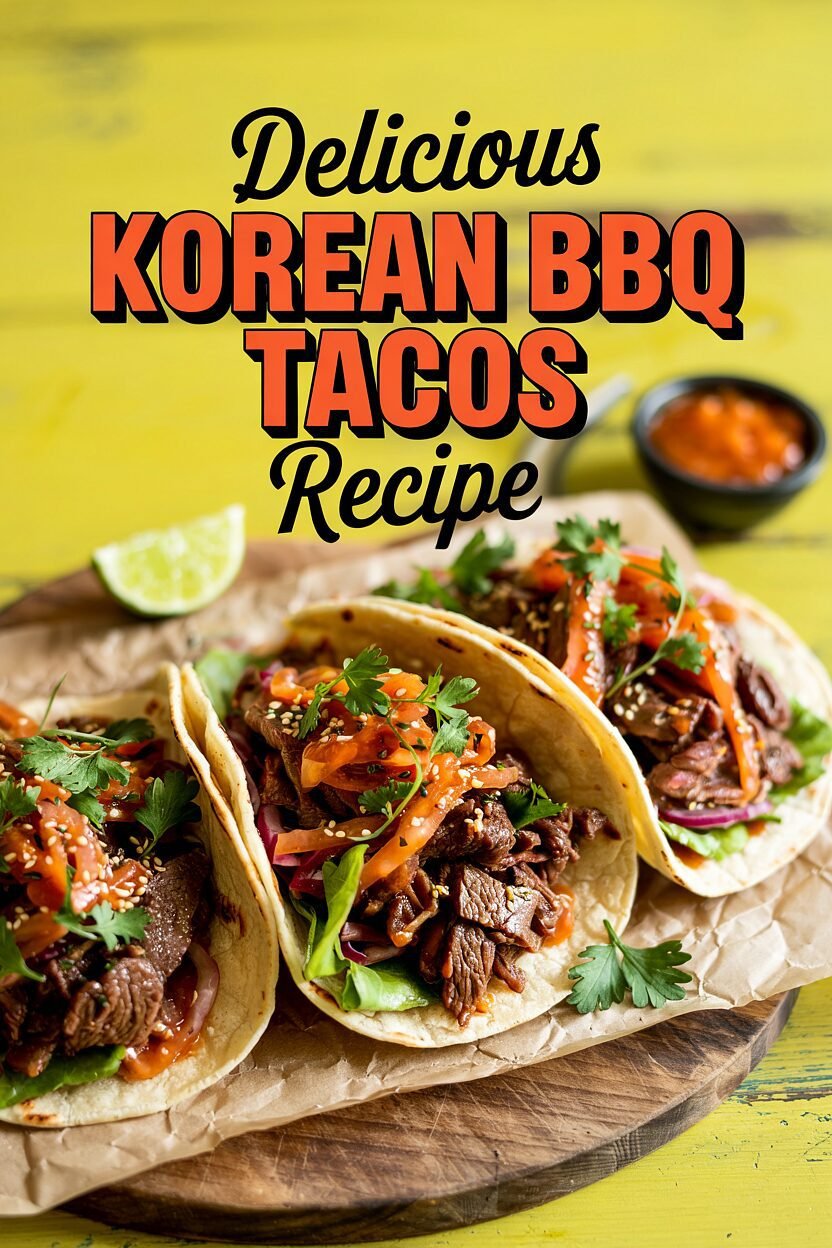
1. The Best Ever Korean BBQ Tacos — 30 minutes, serves 8, 320 calories and 20 g protein per serving. The reference build. Slice the beef against the grain at 1/8 inch — freeze it 20 minutes first and it slices like paper.
2. Spicy Korean-Style Beef Tacos with Kimchi Slaw — 25 minutes, serves 4, 320 calories, 22 g protein, 25 g carbs. The fastest one here; the kimchi does the job of both the salsa and the pickled onion.
3. Korean-Style Beef Tacos with Gochujang Slaw — 45 minutes, serves 4, 650 calories, 35 g protein. The heaviest and the best for a crowd — gochujang mayo on the slaw instead of straight gochujang keeps the heat in range.
4. Korean-Mexican Spiced Tofu Tacos — 50 minutes, serves 4, 420 calories, 18 g protein, 50 g carbs. Press extra-firm tofu for 20 minutes and it takes marinade like meat.
5. DC Fusion Tacos with Korean-Style Marinade — 60 minutes, serves 4, 450 calories, 38 g protein. Highest protein in the section; the longer marinade is where the difference comes from.
4 Japanese-American Mash-Ups (ramen burger, teriyaki meatloaf, sushi burritos)
Shared axis: the Japanese yōshoku tradition already did this in the 1870s — Western dishes rebuilt with Japanese seasoning. These are its descendants.
6. Crispy Katsu Chicken Sandwich with Tangy Slaw — 30 minutes, serves 2, 700 calories, 45 g protein, 55 g carbs. Panko instead of standard breadcrumbs is not optional; the shard structure is what makes katsu crunch differently from a fried chicken sandwich.
7. Spiced Katsu Chicken Sandwich with Pickled Cabbage Slaw — 35 minutes, 650 calories, 45 g protein. Same form, with the cabbage quick-pickled in rice vinegar for 15 minutes.
8. Yoshoku-Style Spaghetti with Miso Butter and Shiitake Mushrooms — 25 minutes, serves 4, 450 calories, 60 g carbs. Strictly, this is wafū pasta, the pasta branch of yōshoku: Italian noodles with Japanese seasoning, a style that developed in Japan.
9. Wood-Fired Oyster Roast with Asian-Style Miso Butter — 30 minutes, serves 6, 180 calories, 2 g carbs. A Gulf Coast oyster roast with the compound butter swapped. The leanest recipe in this guide.
4 Thai-Italian & Vietnamese-French Bridges
Vietnamese-French is not fusion so much as history — bánh mì is a colonial-era artifact that outlived the colony. The Italian bridges are newer and rest entirely on miso standing in for aged cheese.
10. Pork Meatball Bánh Mì — 35 minutes, serves 4, 520 calories, 28 g protein, 45 g carbs. Baguette, pâté-adjacent richness, pickled daikon and carrot, cilantro. The pickle is the whole dish; give it at least 30 minutes.
11. Pan-Fried Tofu Bánh Mì with Pickled Vegetables — 40 minutes, serves 2, 420 calories, 22 g protein. The vegetarian version loses nothing because the pickle and the herbs were always doing the work.
12. Miso Bolognese Pasta Sauce — 35 minutes, serves 4, 320 calories, 50 g carbs. Two tablespoons of white miso and 8 ounces of finely chopped cremini do the savory work meat usually does, so the sauce is vegetarian and still tastes deep after 20 minutes on the stove.
13. Miso-Caramelized Onion and Mushroom Pasta — 50 minutes, serves 2, 580 calories, 95 g carbs. Onions caramelized with miso stirred in at the end; the fermented sugars accelerate browning.
4 Chinese-American Comfort (orange chicken, sesame noodles, general tso)
Chinese-American food is already a fusion cuisine — invented in the US, largely unrecognizable in China, and delicious on its own terms. Shared axis: cornstarch-velveted protein, a sweet-savory-acidic glaze, a fry-then-sauce sequence.
14. Pan-Fried General Tso's Chicken with Sweet-Spicy Glaze — 35 minutes, serves 4, 450 calories, 35 g protein, 25 g carbs. Pan-fried rather than deep-fried; you give up a little crunch and all of the oil disposal.
15. General Tso's Chicken with Toasted Sesame and Scallions — 35 minutes, 420 calories, 38 g protein, 30 g carbs. Sauce the chicken off the heat in the last 30 seconds or the coating goes soggy.
16. Asian-Inspired Sesame Noodles with Tofu — 30 minutes, serves 4, 450 calories, 20 g protein, 55 g carbs. The sauce is soy, toasted sesame oil, honey, garlic and ginger with toasted sesame seeds on top. There's no sesame paste, so it stays light and comes together while the noodles boil.
17. Crisp Light Sesame Noodles with Soy-Ginger Sauce — 15 minutes, serves 4, 220 calories. The fastest recipe in this guide and the best cold lunch on the list.
3 Pan-Asian Bowl Dinners
The bowl is the most portable fusion format: a starch base, a protein, three or four garnishes with contrasting textures, one sauce.
18. Bulgogi Beef Bibimbap — 65 minutes, serves 2, 540 calories, 36 g protein, 50 g carbs. The archetype. Use a stainless or stone bowl and let the rice crisp on the bottom for two minutes.
19. Hawaiian Tuna Poke Bowl with Mango Salsa — 20 minutes, serves 2, 450 calories, 35 g protein. Hawaiian-Mexican; buy sushi-grade tuna the day you eat it, not the day before.
20. Speedy Teriyaki Beef & Veggie Bowls — 22 minutes, serves 4, 480 calories, 32 g protein, 52 g carbs. The weeknight default.
2 Fusion Sauces to Master
Learn these two and you can fuse without a recipe.
21. Gochujang glaze — gochujang, soy, rice vinegar, honey, garlic, sesame oil, roughly 3:2:2:2:1:1. See it working in Korean-Inspired Beef and Vegetable Stir-Fry with Gochujang Glaze — 35 minutes, serves 4, 400 calories, 32 g protein. It goes on beef, pork, wings, roasted cauliflower, and into mayonnaise.
22. Miso butter — 4 parts softened butter to 1 part white miso, mashed together and refrigerated. Pan-Seared Salmon with Miso Butter Glaze — 22 minutes, serves 4, 350 calories, 34 g protein, 3 g carbs — is the demonstration. The same compound goes on corn, steak, toast, and into pasta water.
Equipment and pantry
A carbon-steel wok or a 12-inch skillet, a cutting board you can dedicate to raw meat, and a sharp slicing knife cover every recipe here. Shop the wok and skillet in cookware, the slicing and prep knives in knives and cutting, and the spider strainer, bench scraper and mixing bowls in utensils and tools. Deli containers for pickles and pre-made sauces are in storage and containers.
Pantry order of operations, roughly $40 total: soy sauce, toasted sesame oil, rice vinegar, gochujang, white miso, fish sauce, mirin, and one bag of panko. That covers all 22.
Real-world numbers: what the pantry investment buys
The objection to fusion cooking is usually the shopping list. Here is what each bridge ingredient actually costs, how long it keeps, and how many of the 22 recipes it unlocks.
| Ingredient | Typical cost | Shelf life once opened | Recipes here that use it |
|---|---|---|---|
| Soy sauce, 15 oz | $4 | 1 year, pantry | 16 |
| Toasted sesame oil, 5 oz | $5 | 6 months, refrigerated | 8 |
| Gochujang, 17 oz tub | $7 | 1 year, refrigerated | 7 |
| White miso, 14 oz | $6 | 1 year, refrigerated | 5 |
| Rice vinegar, 12 oz | $3 | 2 years, pantry | 9 |
| Fish sauce, 8 oz | $5 | 2 years, pantry | 1 |
| Panko, 8 oz | $3 | 6 months, pantry | 2 |
| Mirin, 10 oz | $5 | 3 months, refrigerated | 2 |
Total: about $38 for eight items, and five of the eight keep for a year or more. Amortized across the 22 recipes that is under $2 of pantry per dish — less than the delivery fee on a single takeout order, which is the actual comparison most people are making. Soy sauce, rice vinegar, sesame oil and gochujang do most of the work; fish sauce, panko and mirin each show up in only one or two recipes here, so buy those last.
Two storage notes that save money. Refrigerate sesame oil — it goes rancid at room temperature in about four months and the difference is obvious. And buy gochujang paste in the tub, not bottled "gochujang sauce"; the sauce is a thinned, pre-seasoned product, so you get less chili per ounce and less control over the finished dish.
Common pitfalls
1. Slicing beef with the grain. Bulgogi and taco beef both need against-the-grain, 1/8-inch slices. With the grain, you get chew no marinade fixes.
2. Cooking gochujang over direct high heat. The sugar burns in under a minute. Dilute it into a sauce first.
3. Using sesame oil to stir-fry. Smoke point around 350°F. Neutral oil to cook, sesame to finish.
4. Crowding the pan. Katsu, General Tso's and bulgogi all depend on a hot pan. Cook in batches so the meat sears instead of steaming in its own liquid.
5. Skipping the pickle. Every dish in the Korean-Mexican and Vietnamese-French sections depends on an acidic crunch. Without it the plate reads flat and heavy.
When NOT to fuse
If a dish's identity is its restraint, leave it alone. A clear dashi, a Neapolitan margherita, a properly made pho — these are subtractive dishes, and adding a bridge ingredient just muddies them. Fusion works on maximalist, sauce-forward, format-driven food. It rarely improves anything whose whole point is that only four things are in it.
FAQ
See the frequently asked questions below on pantry substitutions, heat levels, and which fusions are worth the ingredient investment.
Related global cuisine guides
- 22 Korean Dinner Recipes — the source tradition for half this list.
- 25 Easy Japanese Dinners — ramen, teriyaki and donburi without the mash-up.
- 25 Better-Than-Takeout Chinese Recipes — the Chinese-American canon in full.
- 22 Vietnamese Recipes — bánh mì in its own context.
- 25 Thai Recipes — the balance of sweet, sour, salty and hot that fusion borrows from.
Further reading: Wikipedia — Korean taco for how the Korean-Mexican bridge became a national format, Wikipedia — Kogi Korean BBQ for Roy Choi's 2008 truck and the origin story behind it, and Bon Appétit — Asian for the current restaurant-driven end of the genre.
Frequently asked questions
What is Asian fusion cuisine?
What pantry staples make fusion cooking easier?
Is fusion cooking authentic?
What's the easiest Asian fusion recipe for beginners?
Where can I buy specialty ingredients like gochujang or fish sauce?
Sources
Cook Asian at home this week.
Ask our AI for a week of Asian dinners — it writes the recipes, builds the shopping list, and sends the cart to Instacart. No account needed.
Plan my Asian week →