25 Thai Recipes: Pad Thai, Green Curry & Satay Weeknight Cooks Love
The six-ingredient pantry, the 25 dishes worth cooking, and the one balancing trick that fixes almost every home-cooked Thai meal.
Affiliate disclosure: AislePrompt may earn a commission on qualifying purchases made through Amazon and Instacart links in this article, at no additional cost to you. See our affiliate policy →
Thai food is faster on a weeknight than most people expect: a green curry is 25 minutes from cold pan to bowl, pad thai is 15, and a satay platter needs nothing more exotic than peanut butter, fish sauce, and a hot grill. This guide collects 25 Thai recipes worth cooking at home, plus the six-ingredient pantry that unlocks all of them.
Thailand's flavor formula: sweet, sour, salty, spicy, bitter
Thai cooking is not a list of recipes so much as a balancing act. Nearly every dish is tuned across five axes at once — palm sugar for sweet, lime and tamarind for sour, fish sauce for salty, fresh and dried chilies for heat, and herbs like Thai basil, cilantro root, and kaffir lime for the bitter, aromatic edge. Wikipedia's overview of Thai cuisine traces the regional split that explains most of the variation you'll taste: the north leans herbal and mild, the northeast (Isan) leans sour and funky, the center is sweet-savory, and the south is coconut-rich and blistering.
The practical takeaway for a home cook is that you taste and adjust at the end, every time. If a curry tastes flat, it usually needs fish sauce, not salt. If it tastes harsh, it needs a half-teaspoon of palm sugar. If it tastes dull, it needs lime. That three-way correction fixes about 90% of home-cooked Thai food, and it takes 30 seconds.
Timing matters as much as seasoning. Most Thai dishes are cooked in under 20 minutes over high heat, which means every ingredient has to be prepped and lined up before the pan gets hot. Thai cooks call it having your mise on the rail; skip it and the garlic burns while you're still slicing peppers.
The six-ingredient Thai pantry starter kit
You do not need 30 jars. Six ingredients cover the 25 recipes below, and all six keep for months.
| Ingredient | What it does | Shelf life | Budget swap |
|---|---|---|---|
| Fish sauce (Red Boat, Squid) | Salt + umami backbone | 2-3 years, pantry | Light soy + 1/4 tsp anchovy paste |
| Coconut milk (full-fat, canned) | Body and sweetness in curries | 2 years unopened | None — light coconut milk breaks |
| Curry paste (Maesri, Mae Ploy) | 12 aromatics in one spoon | 2 years; 1 month opened, fridge | Homemade, 20 min in a mortar |
| Palm sugar | Round, caramel sweetness | Indefinite | Light brown sugar, 1:1 |
| Tamarind concentrate | The sour spine of pad thai | 1 year, fridge | 2 parts lime + 1 part brown sugar |
| Thai jasmine rice | The plate everything sits on | 1 year | Basmati (drier, still fine) |
Fish sauce is the one item with no honest substitute. Buy a bottle whose ingredient list reads anchovy, salt, sugar and nothing else. A 24-ounce bottle costs about $6 and lasts a year of weekly Thai cooking.
Fresh aromatics — lemongrass, galangal, kaffir lime leaves, Thai basil — are the "nice to have" tier. All four freeze well. Buy them once at an Asian grocer, portion them into a freezer bag, and you're stocked for two months. A good chef's knife makes short work of bruising lemongrass and slicing galangal into coins; both are too fibrous for a dull blade.
Thai curries: green, red, massaman, and panang
Curry is where most home cooks start, and it's the most forgiving category on this list. The technique is identical across all four colors: fry the paste in the thick cream off the top of an unshaken can of coconut milk for 60-90 seconds until the oil separates and the kitchen smells loud, then add the rest of the liquid and the protein. That single step is the difference between a curry that tastes like a restaurant's and one that tastes like soup with paste stirred in.
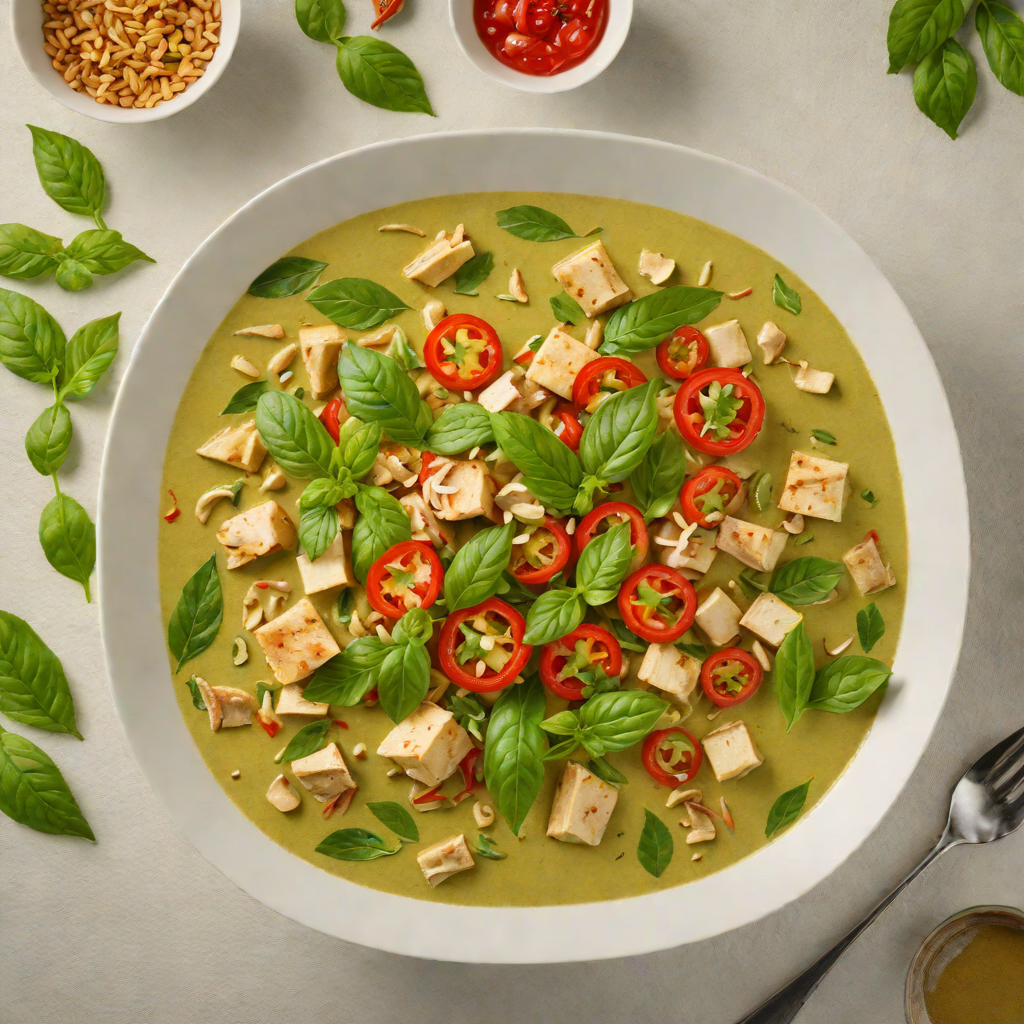
- Fiery Thai green curry with coconut and fresh basil — the benchmark green curry, 30 minutes, adjustable heat.
- Homestyle green curry with chicken and bamboo shoots — milder, bamboo shoots add crunch and stretch the protein.
- Slow-cooked Thai red curry with pork and bamboo shoots — red paste is fruitier than green; pork shoulder rewards the extra time.
- Panang curry stir-fry with ground chicken and Thai basil — panang is the thickest, sweetest, peanut-forward curry; weeknight-fast with ground meat.
- Panang curry shrimp with coconut rice — shrimp cook in 3 minutes, so this is the fastest curry here.
- Khao soi-inspired curry noodle soup with crispy egg noodles — northern Thailand's coconut curry noodle bowl, the one dish worth deep-frying a handful of noodles for.
Thai curry categories are defined by their paste, not their heat, which is why a green curry (fresh green chilies) is often hotter than a red one (dried red chilies) despite looking gentler.
Curry ratios that always work: 1 can (13.5 oz) coconut milk : 2-3 tablespoons paste : 1 pound protein : 2 cups vegetables. Finish with 1 tablespoon fish sauce, 1 teaspoon palm sugar, and a squeeze of lime. Serves four over rice.
Stir-fries and noodles: pad thai, pad see ew, drunken noodles, basil chicken
This is the weeknight core of the list. Every dish here is under 25 minutes, and four of the six are one-pan. If you want these turned into a five-day plan with a $30 pantry list, 25 easy Thai dinners lays one out night by night.
- Stir-fried pad thai noodles with tamarind-peanut sauce — the tamarind-forward version, closest to a Bangkok street cart.
- Pad thai-style rice noodles with chicken and vegetables — a gentler, kid-friendly take on the same technique.
- Pad see ew with Chinese broccoli and beef — wide rice noodles, dark soy, high heat; the char is the point.
- Drunken noodles with chicken and Thai basil — pad kee mao, the spicy sibling of pad see ew.
- Pad kee mao with shrimp and Thai basil — same dish, shrimp, 15 minutes flat.
- Thai basil pork stir-fry with jasmine rice — pad krapow, arguably Thailand's true national weeknight dinner.
- Stir-fried chicken with cashews and Thai basil — gai pad med mamuang, the mildest dish on this page.
Two mechanical notes that fix most home pad thai. First, soak dried rice noodles in warm water for 30-45 minutes rather than boiling them; boiled noodles turn to paste in the wok. Second, cook in batches no larger than two portions. A home burner puts out 7,000-12,000 BTU against a Thai street wok's 100,000+, so crowding the pan drops the temperature below the searing threshold and you steam instead of fry. Pad thai itself is a 1940s invention — a government-promoted national dish — which is why it's more standardized than almost anything else in the repertoire.
A flat-bottomed carbon steel wok or a wide 12-inch skillet beats a nonstick pan here; you want the pan to hold heat when a pound of cold noodles hits it. Browse tested pans in cookware and long-handled turners in utensils — a wok spatula moves noodles without tearing them.
Soups and salads: tom yum, tom kha, larb, som tam
Thai soups are broth-first and fast. Neither tom yum nor tom kha involves a long simmer — the aromatics steep for 10 minutes, the protein cooks for 3, and you season off the heat so the lime stays bright.
- Authentic Thai tom yum goong — the classic hot-and-sour shrimp soup, no coconut milk.
- Spicy shrimp tom yum with lemongrass and galangal — a slightly richer version with a chili-jam base.
- Thai-inspired lemongrass coconut soup with shrimp — the coconut route, essentially tom kha technique.
- Quick Thai coconut curry soup with tofu and vegetables — a 20-minute vegetarian bowl.
- Minced chicken larb with roasted rice and fresh herbs — Isan-style, and the toasted rice powder is non-negotiable for texture.
- Larb-style chicken salad with roasted rice powder — a lighter, salad-forward variation.
- Thai green papaya salad with spicy lime dressing — som tam, pounded rather than tossed.
Larb and som tam are the two dishes that convert people who think they don't like salad. Both are seasoned like a curry — fish sauce, lime, sugar, chili — not like a vinaigrette, and both eat as a main with sticky rice rather than as a side.
Satay and the grill: skewers with real peanut sauce
Satay is the best entry point for a first Thai cookout. The marinade is turmeric, coconut milk, and curry powder; the sauce is peanut butter loosened with coconut milk and curry paste. Both keep three days in the fridge, so it's a genuine make-ahead.
- Grilled Thai-inspired beef satay with spicy peanut sauce — thin-sliced beef, 3 minutes a side.
- Pan-seared chicken satay with spiced peanut dipping sauce — no grill required; a cast-iron pan works.
- Coconut chicken satay — the coconut-heavy marinade, closest to a Bangkok food court.
- Crispy tofu satay with mango-peanut sauce — the vegetarian version that doesn't feel like a compromise.
Peanut sauce, memorized: 1/2 cup peanut butter, 1/2 cup coconut milk, 1 tablespoon red curry paste, 1 tablespoon fish sauce, 1 tablespoon palm sugar, juice of half a lime. Warm and whisk. It thickens as it cools — thin with water, not more coconut milk.
Soak bamboo skewers 30 minutes so they don't ignite, and slice the protein across the grain into quarter-inch ribbons. Thicker slices dry out before they char.
Rice bowls and one-pan Thai basil dinners
When you want Thai flavor with fewer than five ingredients, this is the section.
- Sweet corn and Thai basil fried rice — day-old rice, 12 minutes.
- Spicy Thai peanut noodles with tofu — pantry-only; nothing fresh required beyond scallions.
- Quick vegan Thai peanut noodle stir fry — the 20-minute version for a crowded weeknight.
- Vegetarian Thai peanut noodle stir fry — a milder take that kids will eat.
- Thai basil beef stir fry — ground beef instead of pork, ready in the time rice takes.
- Thai-inspired coconut curry beef stir fry — curry paste as a stir-fry seasoning rather than a sauce base.
Fried rice deserves one rule: the rice must be cold and dry, ideally refrigerated overnight and spread on a sheet pan for 10 minutes before it hits the pan. Fresh rice steams and clumps. If you cook Thai food more than once a week, make a double batch of jasmine rice on Sunday and store it flat in the fridge — see our Sunday meal prep guide for the container setup.
Sweets: mango sticky rice and Thai iced tea
Two desserts carry the entire category, and both are easier than they look.
- Glazed mango sticky rice with toasted coconut — the canonical version; soak the glutinous rice at least 4 hours.
- Gluten-free vegan Thai mango sticky rice — coconut cream only, no dairy.
- Honey-lime mango sticky rice parfaits — a layered, make-ahead format for parties.
- Spicy Thai iced tea with sweetened condensed milk — brew strong, chill hard, pour over a full glass of ice.
Sticky rice must be steamed, not boiled — glutinous rice cooked in water turns to porridge. A mesh steamer basket over a saucepan does the job in 25 minutes. Thai iced tea's orange color comes from the tea blend, not food coloring in most brands, and it's sweeter than almost any American iced tea; cut the condensed milk by a third if that's not your thing.
Substitutions when you can't find the real thing
Nobody should abandon a recipe because the grocery store lacks galangal. These swaps are honest about what you lose.
| Missing | Use instead | What changes |
|---|---|---|
| Galangal | Fresh ginger, 1:1 | Warmer, less piney; acceptable in curries |
| Kaffir lime leaves | Zest of 1 lime per 2 leaves | Loses the floral top note |
| Thai basil | Italian basil + 1/4 tsp anise seed | Close enough in cooked dishes |
| Palm sugar | Light brown sugar, 1:1 | Slightly more molasses; fine |
| Tamarind concentrate | 2 parts lime juice, 1 part brown sugar | Brighter, less earthy |
| Thai bird chilies | Serrano (2:1) or jalapeño (3:1) | Less heat, more vegetal |
| Fish sauce | Soy sauce + anchovy paste | Noticeably flatter — last resort |
The two swaps not worth making: light coconut milk in place of full-fat (it breaks and tastes watery), and dried lemongrass in place of fresh (it tastes like hay). Both are cheap enough to buy properly.
Common pitfalls that ruin home Thai food
1. Adding paste to thin coconut milk. Shake the can and the cream never separates, so the paste never fries. Don't shake it; spoon the thick top layer into a hot pan first.
2. Salting with salt. Fish sauce is the salt. Adding table salt on top makes the dish flat and over-salted at once.
3. Boiling after the lime goes in. Lime juice turns bitter over sustained heat. It goes in off the burner, always.
4. Overloading the wok. Two portions maximum on a home burner. Cook in rounds and combine at the end.
5. Skipping the sugar. A half-teaspoon of palm sugar in a savory curry is a balancing agent, not a dessert step — leave it out and the dish tastes sharp.
Build a week of Thai dinners
A realistic four-night rotation from this list, sharing one shopping trip: green curry on Monday (leftover coconut milk goes into Thursday's soup), pad krapow basil pork on Tuesday, pad thai on Wednesday, and tom yum on Thursday. One bunch of Thai basil, one bottle of fish sauce, and two cans of coconut milk cover all four.
AislePrompt turns any of the linked recipes into a consolidated shopping list — pick the four you want, and the app merges the overlapping aromatics so you buy one bunch of cilantro instead of four. If you're building a broader Asian rotation, the 25 better-than-takeout Chinese recipes and 25 easy Japanese dinners collections use the same pantry logic, and a fair number of the aromatics overlap.
For storage, decanting fish sauce, tamarind, and curry paste into labeled containers saves a lot of fridge archaeology — the storage category has the small sealed jars that actually fit a door shelf.
Sources
- Thai cuisine — regional traditions and flavor principles (Wikipedia)
- Thai curry — paste types and classification (Wikipedia)
- Pad thai — origin and standardization (Wikipedia)
- Fish sauce — production and regional varieties (Wikipedia)
Recipe pages, ingredient quantities, and one-tap shopping lists for every dish above live on AislePrompt. Last reviewed August 2026.
Frequently asked questions
Do I really need fish sauce for Thai cooking?
Can I make Thai curries without a mortar and pestle?
How spicy is Thai food, and can I dial it down for kids?
What equipment actually matters for Thai cooking?
Where do I buy hard-to-find Thai ingredients?
Recipes to start your week with
Save any of these to My Recipes — no account needed — and send the ingredients to Instacart in one tap.