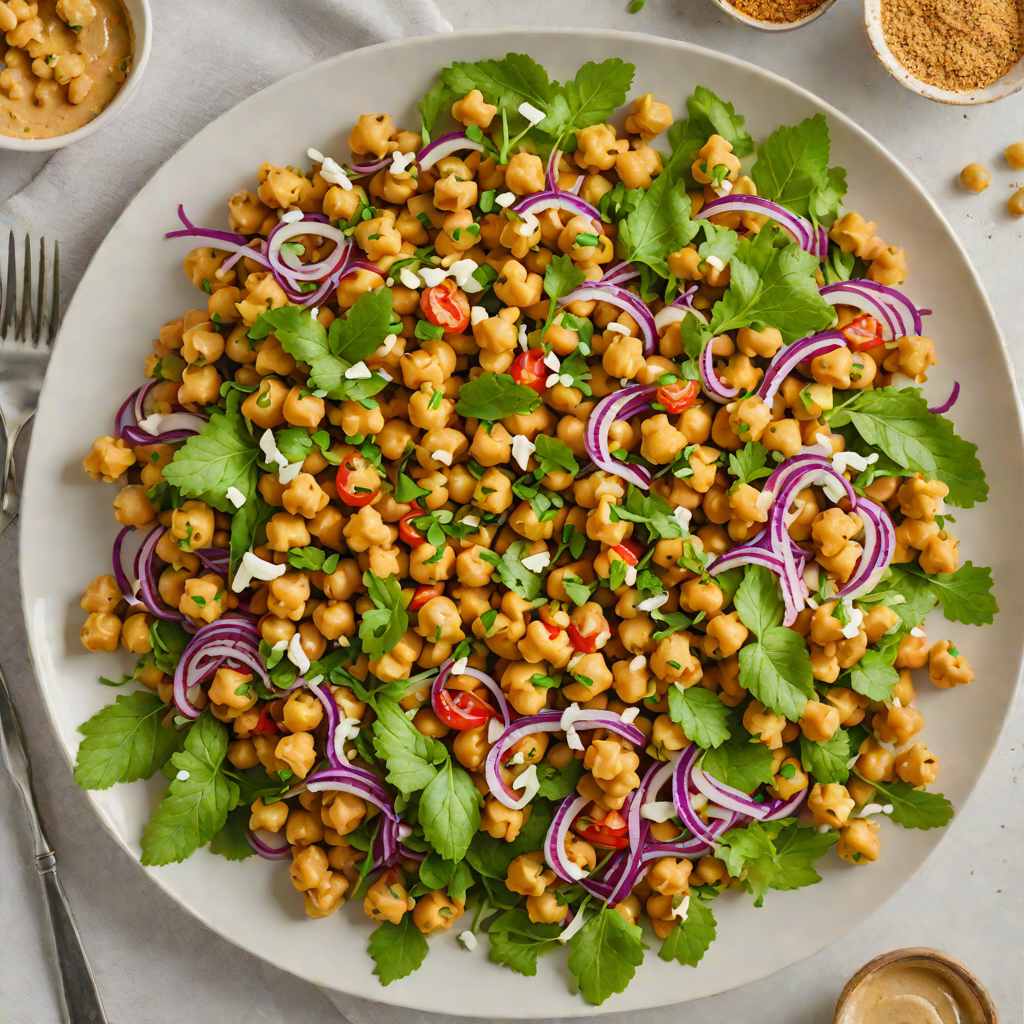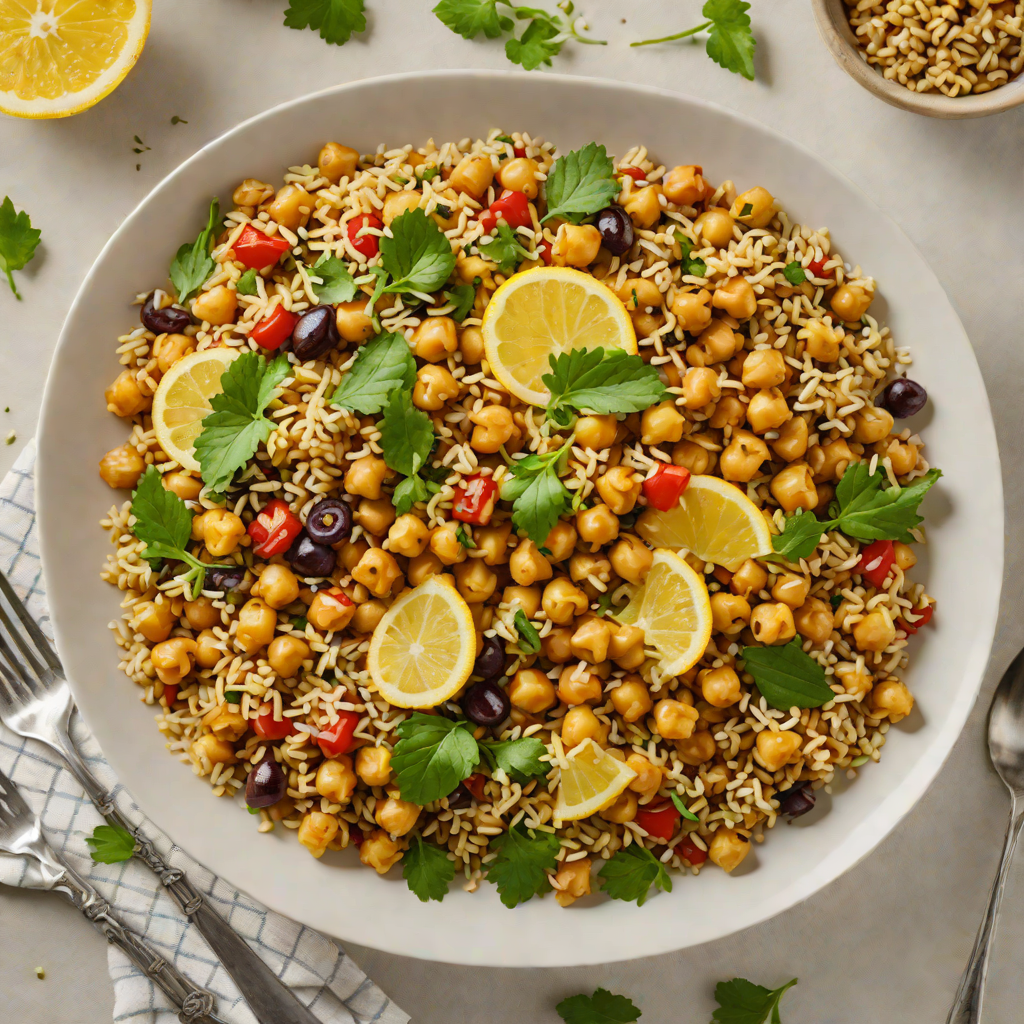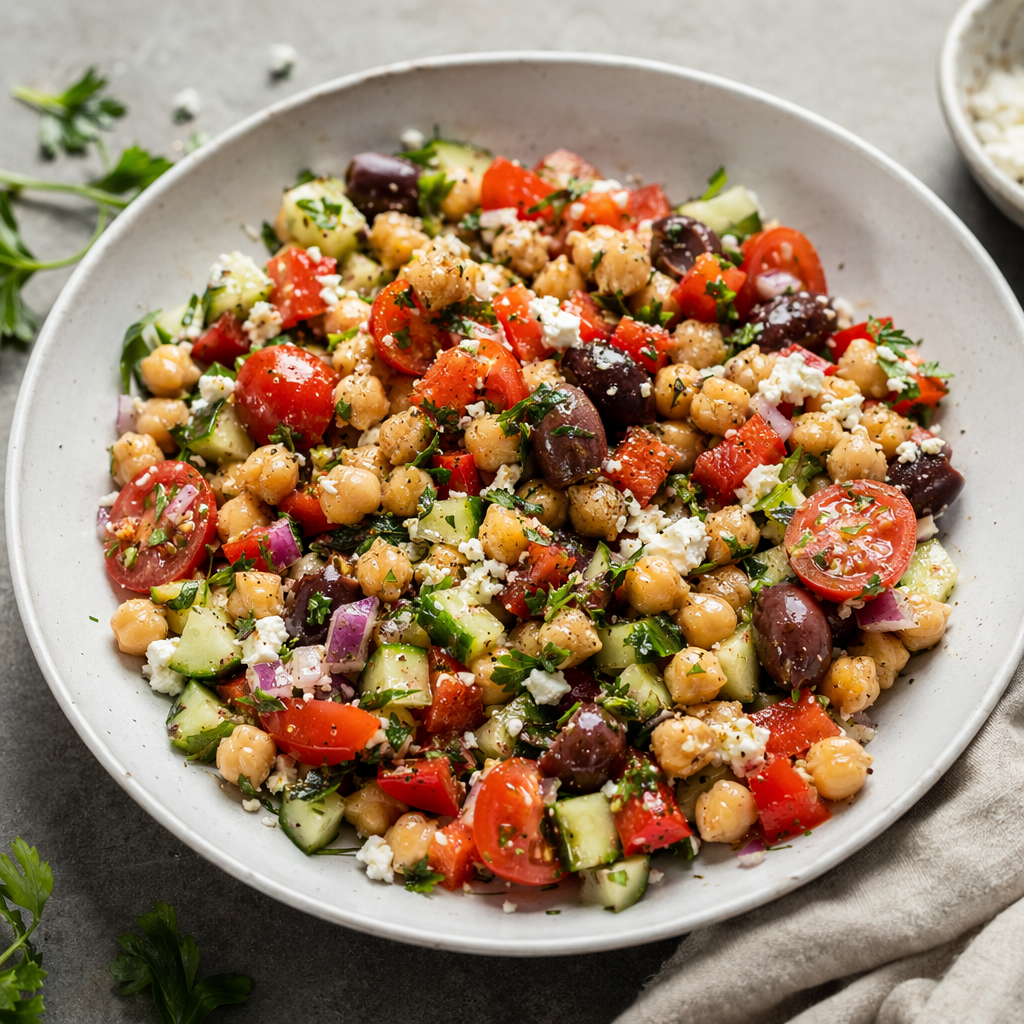
22 Chickpea Recipes: Plant-Based Weeknight Dinners, Salads, Curries & Snacks
Twenty-two ways to cook the cheapest high-protein staple in the store, plus the baking-soda trick that fixes texture.
Affiliate disclosure: AislePrompt may earn a commission on qualifying purchases made through Amazon and Instacart links in this article, at no additional cost to you. See our affiliate policy →
A cup of cooked chickpeas delivers about 14.5 grams of protein and 12.5 grams of fiber for roughly 35 cents when you start from dried. That combination — cheap, shelf-stable, high-protein, high-fiber — is why chickpeas anchor more weeknight dinners in this collection than any other single ingredient.
Introduction: why chickpeas are the highest-protein, lowest-cost pantry staple in the store
Run the numbers against everything else in the dry-goods aisle and chickpeas win on the two axes that matter for weeknight cooking.
| Staple | Protein per cooked cup | Fiber | Cost per cup (dried) | Cost per cup (canned) |
|---|---|---|---|---|
| Chickpeas | 14.5 g | 12.5 g | $0.35 | $0.90 |
| Black beans | 15.2 g | 15.0 g | $0.32 | $0.85 |
| Lentils | 17.9 g | 15.6 g | $0.30 | n/a |
| Quinoa | 8.1 g | 5.2 g | $1.10 | n/a |
| Brown rice | 5.0 g | 3.5 g | $0.30 | n/a |
Lentils edge chickpeas on raw protein, but they collapse into a puree, which limits what you can do with them. Chickpeas hold their shape through roasting, frying, simmering, and smashing, which is why they show up as a crispy snack, a creamy dip, a curry base, a salad component, and a pasta binder — often within the same week.
Their second advantage is that the cooking liquid is also useful. Aquafaba, the starchy water from a can or a pot, whips like egg white and works as a binder in vegan baking. Nothing else in the pantry gives you a free second ingredient.
If you want the technique-first version of this material — soaking times, doneness tests, and troubleshooting — our complete guide to cooking chickpeas goes deeper on method. This page is the recipe roundup: 22 dinners, salads, snacks, and two chickpea-flour projects.
Canned vs dried chickpeas: when to use each (and the baking-soda trick for silky texture)
Use canned when the chickpeas keep their shape and the dish takes under 30 minutes: salads, sheet-pan roasts, quick curries, pasta. Drain and rinse unless the recipe wants the starch. One 15-ounce can yields about 1.5 cups drained.
Use dried when texture is the point: hummus, stews with long simmers, anything where you want the beans to melt slightly into the sauce. Dried chickpeas also cost about a third as much and let you control the salt entirely. Almost everything on a US shelf is the large, pale kabuli type; the smaller, darker desi chickpeas that dominate Indian cooking — and that get milled into besan — cook faster and taste nuttier, as the botanical background on chickpeas sets out.
The baking-soda trick works in both directions and is worth committing to memory. Adding a half teaspoon of baking soda per cup of dried chickpeas to the soaking water and the cooking water raises the pH, which breaks down pectin in the cell walls and lets the skins slip off. The result is a chickpea that crushes with almost no pressure — the texture that separates restaurant hummus from grainy homemade hummus.
For canned chickpeas, the shortcut version is to simmer the drained beans for 20 minutes in fresh water with a half teaspoon of baking soda. The skins float, you skim them off, and you gain most of the benefit for the cost of one extra pot.
Two cautions. Too much baking soda — more than about a teaspoon per cup — gives a faintly soapy, metallic edge. And it degrades some B vitamins, including thiamine, so use it when texture matters and skip it when it does not.
Salt is the other lever. The old advice that salting early keeps beans tough is wrong; salting the soak water actually helps, because sodium ions displace magnesium and calcium in the cell walls and produce softer skins. Salt the soak at about a tablespoon per quart.
How to cook dried chickpeas in Instant Pot, stovetop, and slow cooker
| Method | Soaked | Unsoaked | Yield from 1 cup dried | Notes |
|---|---|---|---|---|
| Electric pressure cooker | 12–15 min high | 45–50 min high | ~3 cups | Natural release 15 min or skins split |
| Stovetop | 60–90 min | 2–2.5 hr | ~3 cups | Skim foam in the first 10 minutes |
| Slow cooker (low) | 4 hr | 8 hr | ~3 cups | Add 1 tsp salt at the 2-hour mark |
| Slow cooker (high) | 2.5 hr | 4–5 hr | ~3 cups | Check at the earliest time |
An electric multicooker is the single best appliance for this ingredient — anything in the small appliances aisle with a pressure function turns a 90-minute pot into a 15-minute one, and the unsoaked setting means you can decide at 5 pm to make chickpeas for dinner.
Batch and freeze. Cook two pounds at once, cool them in their liquid, and freeze in 1.5-cup portions — one can-equivalent each — with a few tablespoons of the cooking liquid to prevent freezer burn. They thaw in a bowl of warm water in ten minutes. Flat freezer bags or stackable containers from the storage and containers section make this a five-minute Sunday task that replaces every can you would otherwise buy.
Doneness test: take three chickpeas from the pot and crush each between your thumb and forefinger. All three should give way with light pressure. If one resists, they all need another 10 minutes. Chickpeas that are individually inconsistent usually mean old stock — dried beans more than two years old sometimes never soften completely, regardless of method.
5 chickpea curry and stew recipes
1. Authentic Indian Chana Masala — the North Indian benchmark: onion, tomato, ginger, garlic, and garam masala, done in 25 minutes with canned chickpeas.
2. Authentic Mediterranean Chickpea Tagine — Moroccan-leaning, with warm spice, dried fruit sweetness, and preserved-lemon brightness.
3. Creamy Coconut Chickpea Curry with Spinach — coconut milk and spinach, the mildest and most kid-friendly option here.
4. Harissa-Spiced Chickpea Stew — harissa does the heavy lifting; ready in about 30 minutes.
5. Best-Ever Vegan Chickpea Curry — fully vegan, freezer-stable, and roughly 1.60 dollars a serving.
Two more worth knowing: Spiced Chickpea and Spinach Curry with Rice for a spinach-forward version served over rice, and Fenugreek and Chickpea Curry with Rice, which uses fenugreek for a slightly bitter, deeply savory finish that most chickpea curries lack.
Curries are also where chickpeas earn their keep in a meal-prep rotation. All five reheat without texture loss, they freeze for three months, and the flavor improves overnight as the spices bloom into the liquid.
5 salad and grain bowl recipes
6. Best Ever Mediterranean Chickpea Salad — cucumber, tomato, red onion, feta, and lemon; 15 minutes, no cooking.
7. Sheet Pan Chickpea Bowls with Lemon-Herb Dressing — roast the chickpeas and vegetables on one tray, dress at the end.
8. Harissa-Spiced Sweet Potato & Chickpea Bowl — sweet potato and harissa, the best cold-weather bowl on this list.
9. Smoky Roasted Chickpea & Sweet Potato Bowl — smoked paprika and maple, roasted until the chickpeas crackle.
10. Sun-Kissed Lemon Herb Chickpea Bowls — lemon, herbs, and a tahini drizzle, built for a lunch container.
Middle Eastern Lentil and Chickpea Salad with Tahini Dressing adds lentils for a double-legume salad at about 24 grams of protein per serving, and Sun-Roasted Chickpea & Herb Salad with Lemon Vinaigrette is the summer version built on herbs and a lemon vinaigrette.
The assembly rule for a chickpea grain bowl that survives until lunch: keep the dressing separate, put the grain on the bottom, the chickpeas in the middle, and anything with water content — cucumber, tomato — on top. Dressed chickpeas go soft in about four hours; undressed, they hold for three days.
5 pasta and one-pot chickpea dinners
11. Creamy Tomato Chickpea Pasta with Lemon Zest — the chickpeas partly break down and thicken the sauce, which is the whole trick.
12. Chickpea and Spinach Pasta with Lemon and Olives — lemon, olives, and spinach; 20 minutes start to finish.
13. Harissa Chickpea and Spinach Pasta with Lemon Zest — the harissa version, hotter and smokier.
14. One-Pan Spicy Tomato and Chickpea Shakshuka — chickpea shakshuka, eggs poached directly in the tomato base.
15. Lemon-Dill Chickpea Soup — lemon-dill chickpea soup, closer to a Greek avgolemono in spirit.
The technique that makes chickpea pasta work is smashing about a third of the beans against the side of the pan before the liquid goes in. The broken beans release starch and emulsify the sauce, which is how these dishes get creamy without cream. It is the same principle as pasta water, using a cheaper ingredient.
A wide, heavy skillet is the right pan for all five — enough surface area to reduce the sauce quickly without the pasta stacking. Anything 12 inches or larger from the cookware category does the job.
5 crispy chickpea snacks and roasted chickpea recipes
16. Bitter Herbed Roasted Chickpeas — the plain herbed baseline, 40 minutes at 400°F.
17. Crispy Chickpea and Spinach Salad — crispy chickpeas over spinach, warm and cold on the same plate.
18. Pasta Salad with Crispy Chickpeas — a pasta salad where the chickpeas supply all the crunch.
19. Harissa-Spiced Chickpea Sheet Pan Roast — harissa sheet-pan roast, doubles as a topping or a side.
20. Harissa-Spiced Chickpea Tacos with Avocado — chickpea tacos with avocado; the crispiest use of the ingredient here.
Getting chickpeas genuinely crispy comes down to three things. Dry them completely — spread on a towel and blot, and give them 10 minutes of air; surface moisture steams instead of roasting. Roast naked first, oil and spices after: 25 minutes plain at 400°F, then toss with oil and seasoning and return for 10 to 15 minutes. Spices added at the start burn. Do not crowd the pan — a half sheet pan holds two cans' worth in a single layer, no more. A rimmed half-sheet from the bakeware aisle is the correct pan; a glass dish will not get them crisp.
They stay crunchy about four hours at room temperature, uncovered. Sealed in a container while still warm they go soft in twenty minutes. This is the single most common complaint about roasted chickpeas and it is almost always a storage problem, not a roasting problem.
Common pitfalls
- Skipping the rinse on canned chickpeas. The packing liquid is salty and metallic. Rinse unless you are deliberately using the aquafaba.
- Roasting with the oil on from the start. The oil insulates the surface and produces chewy, leathery beans instead of crisp ones.
- Old dried stock. Beans over two years old may never fully soften. Buy from a store with turnover and write the purchase date on the bag.
- Under-salting. Chickpeas are bland by default and absorb salt slowly. Salt the cooking water, then season again at the end.
- Storing crisp chickpeas warm and covered. Trapped steam undoes 40 minutes of roasting in under half an hour.
2 chickpea-flour recipes (socca and farinata)
21. Socca (Nice) and farinata (Liguria) are the same dish under two regional names: chickpea flour, water, olive oil, and salt, rested for at least 30 minutes and baked screaming hot in a cast iron pan until the edges blister. The ratio is 1 cup chickpea flour to 1 1/4 cups water, 3 tablespoons olive oil, and 3/4 teaspoon salt, poured into a preheated 12-inch skillet and baked at 500°F for 12 to 15 minutes. Naturally gluten-free, roughly 6 grams of protein a slice, and about 60 cents for the whole pan. Baked Chickpea Flour Pancakes with Green Chilies is the pancake-format cousin with green chilies.
22. Spiced Steamed Chickpea Flour Dhokla with Cumin and Coriander — dhokla, the steamed, fermented chickpea-flour cake from Gujarat, tempered with mustard seed and curry leaf. It is a different use of the same flour: light, spongy, and slightly sour. Crispy Chickpea Flour Chicken Pakoras rounds out the category with pakoras, where chickpea flour becomes the batter rather than the body.
Chickpea flour, sold as besan or gram flour, is worth having in the pantry independent of these recipes. It thickens soups without gluten, makes a workable egg substitute (3 tablespoons flour plus 3 tablespoons water per egg) in savory applications, and produces a crisper fried coating than wheat flour.
When NOT to reach for chickpeas
Chickpeas do not belong in every plant-based swap. They will not stand in for a meat texture in a burger without significant binder work, they do not brown or caramelize the way mushrooms or eggplant do, and their fiber load — 12.5 grams a cup — is a real problem for anyone with IBS or on a low-FODMAP protocol. If your household is new to legumes, start with a half-cup serving rather than a full cup and increase over a couple of weeks. And skip the dried-bean route entirely if you are cooking for a hard 30-minute weeknight deadline; canned exists for exactly that reason.
Nutrition profile: protein, fiber, iron, folate per cup
Per 1 cup (164 g) of cooked chickpeas, using USDA reference values as summarized in the Harvard T.H. Chan Nutrition Source profile of chickpeas:
| Nutrient | Amount | % Daily Value |
|---|---|---|
| Calories | 269 | 13% |
| Protein | 14.5 g | 29% |
| Fiber | 12.5 g | 45% |
| Carbohydrates | 45 g | 16% |
| Fat | 4.2 g | 5% |
| Iron | 4.7 mg | 26% |
| Folate | 282 mcg | 71% |
| Magnesium | 79 mg | 19% |
| Potassium | 477 mg | 10% |
| Zinc | 2.5 mg | 23% |
Three things stand out. Folate at 71 percent of a day's requirement in one cup is exceptional and the reason chickpeas are routinely recommended in prenatal nutrition guidance. Iron at 26 percent is non-heme iron, which absorbs better with vitamin C — which is why the lemon in nearly every recipe above is doing more than flavoring. And the fiber-to-calorie ratio is what drives the satiety effect: 12.5 grams of fiber for 269 calories is roughly triple the density of most whole grains. The Harvard T.H. Chan Nutrition Source review of legumes and pulses makes the same point — beans and pulses earn a place in both the vegetable and the protein group, which is why dietary guidance keeps counting them twice.
For a broader look at hitting protein targets without meat, our high-protein vegetarian collection covers dishes at 25 grams and up, and the budget meal prep guide shows where legumes fit in a sub-5-dollar-per-portion plan.
Sources
- Harvard T.H. Chan Nutrition Source — chickpeas (garbanzo beans) for the per-cup nutrition values in the table above.
- Harvard T.H. Chan Nutrition Source — legumes and pulses for the dietary-group framing and the fiber-satiety evidence.
- Wikipedia — chickpea for the kabuli/desi varietal split and the pectin chemistry behind the baking-soda trick.
- Wikipedia — aquafaba for the egg-replacement ratios quoted in the FAQ.
- Wikipedia — socca for the socca/farinata batter ratio and regional history.
Frequently asked questions
Should I use canned or dried chickpeas — is there a real difference?
Why should I add baking soda when cooking chickpeas?
How do I make crispy roasted chickpeas that stay crunchy?
Are chickpeas actually high-protein or is that a myth?
What can I make with just a can of chickpeas and pantry staples?
Are canned chickpeas as nutritious as dried ones?
How do I make chickpeas less gas-producing?
Can I use chickpea flour instead of regular flour in baking?
How long do cooked chickpeas keep?
What is aquafaba and how do I use it?
Meal-prep recipes from the catalog
Save any of these to My Recipes — no account needed — and send the ingredients to Instacart in one tap.