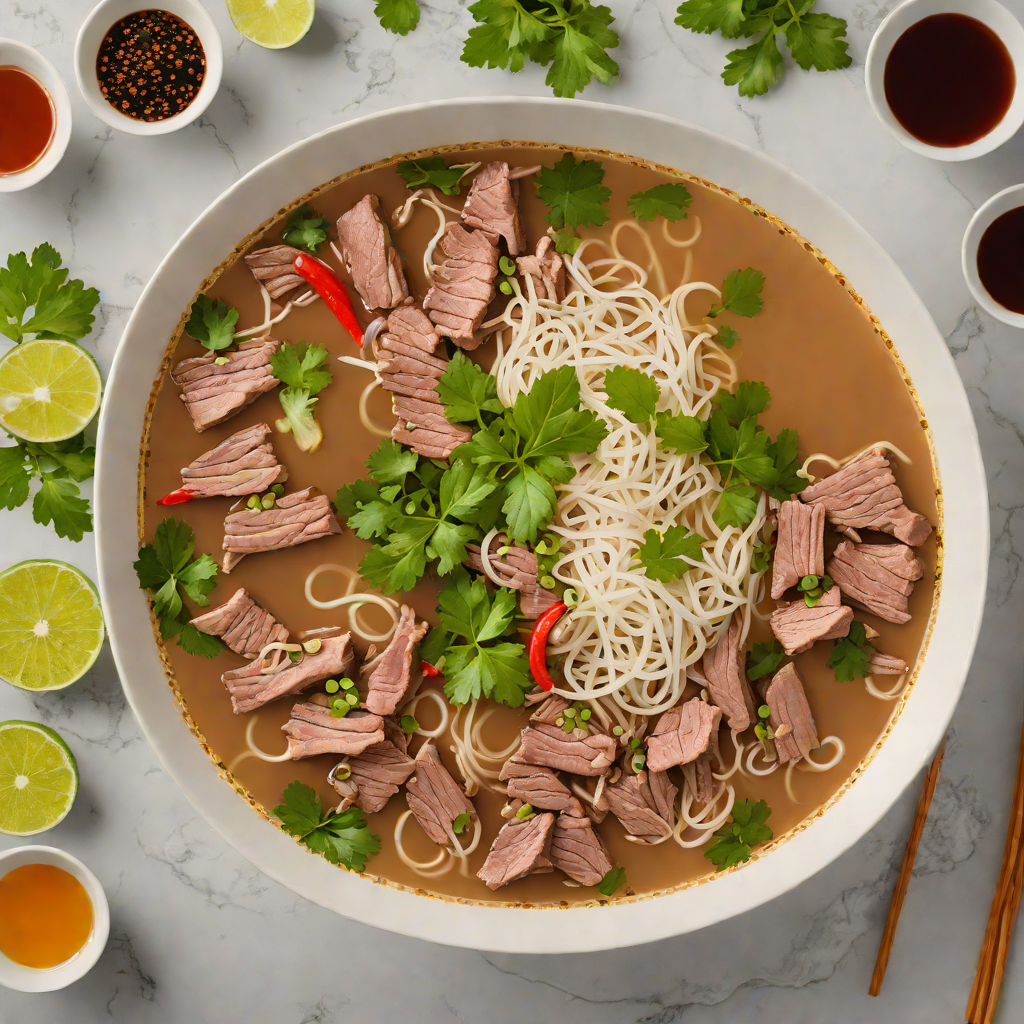
22 Vietnamese Recipes: Pho, Banh Mi & Fresh Spring Rolls Home Cooks Love
Pho broth in 90 minutes, banh mi in 10, and one fish-sauce dressing that carries two dozen dishes - the Vietnamese repertoire worth building at home.
Vietnamese cooking at home comes down to five moves: cook rice or rice noodles, build a clean aromatic broth, keep a plate of raw herbs on the table, season with fish sauce instead of salt, and put char on the protein. Master those and roughly two dozen dishes — pho, banh mi, fresh rolls, vermicelli bowls, clay-pot braises — open up with one shopping trip.
Get a free week of easy dinners
Seven weeknight dinners with the shopping list already totalled, sent Sunday. No account needed, unsubscribe in one click.
No spam, unsubscribe in one click. Recipes, shopping lists and Instacart carts all work without an account either way.
That is the honest version of "Vietnamese recipes to make at home." It is not a cuisine of long ingredient lists. A bowl of pho ga has maybe nine ingredients in the broth and four in the bowl. What it is is a cuisine of ratios and contrast: sweet against sour, funk against fresh, hot broth against raw herbs, soft noodle against fried shallot. Get the ratios right and the technique is almost trivial.
This roundup is the weekend-and-repertoire companion to our 18 Vietnamese weeknight dinners, which optimizes for 30-minute speed. Here we go the other direction: real broth, actual clay pots, the nuoc cham ratio written down, and the salads and rolls that make a Vietnamese table feel like a table instead of a plate. Twenty-two core recipes, organized the way a Vietnamese kitchen actually organizes them.
The five Vietnamese pillars: rice, noodles, herbs, fish sauce, char
Every dish below is built from some combination of five things. Learn what each one does and you can improvise instead of following.
Rice. Long-grain jasmine, cooked slightly drier than you would for a curry, because it is a vehicle for sauce. Broken rice (com tam) is the same grain fractured during milling — it drinks up caramel braising liquid faster and costs less, which is exactly why it became Saigon's default lunch plate.
Noodles. Two families, and they are not interchangeable. Flat rice noodles (banh pho, 3–5 mm) go in soup and soften in hot broth. Round rice vermicelli (bun, ~1 mm) is boiled, rinsed cold, and served at room temperature under grilled meat. Using bun in pho gives you a bowl of mush in four minutes. Rice vermicelli is the single most useful dry good in a Vietnamese pantry — a 1 lb bag is about $2.50 and feeds six.
Herbs. Not a garnish. A Vietnamese herb plate is a serving of vegetables you assemble bite by bite: Thai basil, mint, cilantro, sawtooth coriander, perilla (tia to), bean sprouts, lime. Budget a packed cup of mixed herbs per person. This is the step American home cooks skip and it is the step that makes the food taste Vietnamese.
Fish sauce. Fermented anchovy extract, and the backbone of the entire seasoning system. Read the label: you want two ingredients (anchovy, salt) and a nitrogen rating of 30–40°N for table-quality sauce. Red Boat 40°N runs about $12 for 17 oz and lasts a year. Fish sauce is used two ways — as salt during cooking, and diluted into nuoc cham as a table condiment. Do not substitute soy sauce; you lose the glutamate depth and gain a flavor that reads Chinese.
Char. Grilled, broiled, or seared until parts are genuinely black. Vietnamese grilling is not gentle. The onion and ginger for pho go under a broiler until half the surface is carbonized. Pork for bun cha is cooked over aggressive heat so the sugar in the marinade burns at the edges. Char is the bitter note that keeps the sweetness in check.
Those five pillars are the load-bearing structure of Vietnamese cuisine north to south — the southern dishes just push sweeter and use more sugar, and the central-Vietnam dishes push spicier.
Pantry starter kit: fish sauce, rice paper, rice noodles, hoisin, sriracha, herbs
One trip to a Vietnamese or pan-Asian grocer sets you up for months. Here is the working list with realistic 2026 US prices:
| Item | Typical size | Price | Keeps | Used in |
|---|---|---|---|---|
| Fish sauce (40°N) | 17 oz | $10–13 | 12 mo opened | Everything |
| Dried rice vermicelli (bun) | 1 lb | $2–3 | 2 yr | Bowls, rolls |
| Flat rice noodles (banh pho) | 1 lb | $2–3 | 2 yr | Pho |
| Rice paper, 22 cm | 12 oz (~30 sheets) | $3–4 | 1 yr | Fresh + fried rolls |
| Hoisin sauce | 9 oz | $3–4 | 6 mo fridge | Pho table, banh mi |
| Sriracha or sambal | 17 oz | $4–6 | 12 mo | Table heat |
| Palm or rock sugar | 1 lb | $4–5 | Indefinite | Caramel, broth |
| Star anise, whole | 1 oz | $3–4 | 2 yr | Pho, braises |
| Cinnamon stick (cassia) | 2 oz | $3 | 2 yr | Pho |
| Maggi seasoning | 6.7 oz | $4 | 12 mo | Banh mi, rice plates |
That is roughly $40–50 and covers every recipe in this article except the fresh protein and herbs. Add a fresh run each week for lemongrass (~$2 for 3 stalks), limes, a bunch each of mint and cilantro, and a head of Thai basil.
Two shelf-stable ingredients punch above their weight. Fried shallots in a tub cost about $4 and turn any bowl into a finished dish — see them at work in stir-fried vermicelli with shrimp and crispy shallots. And rice paper is the cheapest way to serve a crowd: 30 sheets for under $4, no cooking required.
On gear, you need less than you think. A sharp knife does 80% of the prep — our knives category covers the 8-inch chef's knife that handles lemongrass, pork belly, and julienned daikon equally well. For broth, any 6–8 quart pot in the cookware lineup works, and a fine-mesh strainer set is what separates a clear pho from a cloudy one. If you own one specialty tool, make it a peeler with a julienne blade — do chua (pickled carrot and daikon) shows up in half these recipes and hand-cutting matchsticks is the one genuinely tedious job in the cuisine.
Pho: chicken pho, quick beef pho, and a vegetarian bowl
Pho is a broth dish. The noodles and meat are assembly; the broth is the whole argument. Three rules govern it: parboil and rinse the bones before the real simmer (this is what makes it clear), char the onion and ginger under a broiler until blackened in patches, and toast the spices dry before they go in.
1. Pho Ga with Ginger-Scented Chicken Broth — 25 min prep, 75 min simmer, serves 4 at 380 calories and 35 g protein per bowl. Chicken pho is the better entry point than beef: the broth is done in about 90 minutes total instead of six hours, and a whole chicken gives you both the stock and the sliced meat. Pull the bird at 165°F, shred, and let the carcass keep simmering.
2. Saigon-Style Beef Pho with Aromatic Broth — 20 min prep, 4 hr simmer, serves 6 at 410 calories and 38 g protein. Southern-style, which means noticeably sweeter (rock sugar in the pot) and served with a bigger herb plate plus hoisin and sriracha on the side. Four hours is the shortest simmer that still extracts real body from marrow bones.
3. Pho-Inspired Vegetarian Rice Noodle Soup with Tofu and Herbs — 20 min prep, 35 min cook, 320 calories and 20 g protein. The fastest bowl here by a wide margin. Charred onion and ginger plus toasted spices in a mushroom-and-daikon stock gets you 80% of the way there in 55 minutes total. Season with a vegan fish-sauce substitute or extra soy plus a pinch of sugar.
Want to go deeper? Chicken pho with star anise and fresh herbs runs a longer 110-minute simmer for a more concentrated broth, and slow-simmered beef pho with brisket and tendon is the full seven-hour weekend project at 450 calories and 45 g protein per bowl. If you want beef flavor on a Tuesday, pho-inspired beef noodle soup with star anise and ginger broth splits the difference.
Broth math worth knowing: 4 lb of bones to 5 quarts of water yields roughly 3.5 quarts of finished broth after evaporation and skimming — six generous bowls. Season the finished broth to about 1.5% salinity by weight, which for 3.5 quarts is roughly 1/2 cup of 40°N fish sauce plus 2 tablespoons of rock sugar. Taste against a noodle, not off a spoon; noodles dilute.
Sandwiches and rolls: banh mi, fresh summer rolls, fried spring rolls
The banh mi is a colonial artifact turned national sandwich — French baguette technique, Vietnamese fillings, and a structure that is 40% pickled vegetable by volume. Get the bread right and everything else is assembly.
4. Bánh Mì Sandwich with Charbroiled Pork and Pickled Vegetables — 45 min prep, 10 min cook, serves 4 at 550 calories and 40 g protein. The canonical version: lemongrass-marinated pork shoulder over high heat, do chua, cucumber spears, cilantro, jalapeño, a swipe of mayo and Maggi. Most of that 45 minutes is the marinade sitting.
5. Pan-Seared Pork Belly Bánh Mì with Pickled Carrots and Daikon — 80 min prep, 15 min cook, 650 calories and 35 g fat. The richest sandwich in this article, and worth it once a month. The 80-minute prep is largely the belly curing and the pickles setting.
6. Pan-Fried Tofu Bánh with Pickled Carrot and Daikon Slaw — 30 min prep, 15 min cook, 420 calories, rated easy. Press the tofu 20 minutes, sear it hard, and lean on Maggi and pate-substitute for the savory backbone. Vegetarians usually rate this above the meat versions.
7. Vietnamese-Style Fresh Spring Rolls with Shrimp and Herbs — 25 min, no cooking, 180 calories per serving across 6 servings. Goi cuon is the lowest-effort impressive food in existence. Dip each rice paper sheet in warm water for 3–4 seconds only — it should still feel stiff when you lay it down and will finish softening as you fill it.
8. Crisped Vietnamese Egg Rolls with Pork and Glass Noodles — 30 min prep, 15 min fry, 320 calories each across 6 servings. Cha gio, the fried counterpart. Fry at 340°F, not 375°F — rice paper browns faster than wheat wrappers and burns before the pork cooks through.
Two more worth the click: vegetarian summer rolls with peanut dipping sauce at 230 calories, and shrimp and vermicelli fresh rice paper rolls with nuoc cham, which at 2 g of fat per serving is the leanest recipe in this roundup.
Vermicelli and noodle bowls: bun cha, bun thit nuong, and shrimp bowls
The bun bowl is the format that best rewards a home cook: room-temperature noodles, a pile of raw herbs and lettuce, something grilled and hot on top, and nuoc cham poured over the whole thing. It travels, it reheats badly and therefore is eaten fresh, and it scales to a crowd.
9. Vietnamese-Inspired Lemongrass Pork Meatballs with Nuoc Cham — 15 min prep, 15 min cook, 280 calories and 22 g protein. This is the meatball half of bun cha, Hanoi's signature lunch. Traditionally the meatballs sit in a bowl of warm sweet-sour broth that you dunk noodles into rather than pour over.
10. Cold Vietnamese Vermicelli Salad with Grilled Pork — 20 min prep, 10 min cook, 400 calories and 30 g protein. Bun thit nuong. Marinate thin-sliced pork shoulder in lemongrass, fish sauce, and sugar, then cook it hot enough that the sugar chars.
11. Vegetarian Vietnamese Vermicelli Bowl with Grilled Tofu and Nuoc Cham — 30 min prep, 15 min cook, 350 calories and 18 g protein. Freeze the tofu overnight and thaw it before marinating; the ice crystals open the structure so it drinks up four times the marinade.
12. Vietnamese-Style Rice Noodle Salad with Grilled Shrimp — 15 min prep, 10 min cook, 350 calories and 28 g protein. The fastest bowl in this section and the best weeknight candidate. Shrimp go from raw to overcooked in about 90 seconds a side, so stay at the pan.
13. Stir-Fried Vermicelli with Shrimp and Crispy Shallots — 25 min prep, 15 min cook, 350 calories, rated easy. The one hot-noodle bowl here. A wok helps — the 14-inch carbon-steel pow wok holds heat well enough to keep rice noodles from steaming into paste.
For skewers rather than a bowl, lemongrass-grilled pork skewers with nuoc cham at 320 calories and 28 g protein hit the same flavors in 27 minutes total. A ridged cast-iron grill pan gets you real char indoors year-round.
Noodle timing, which people get wrong: dried bun goes into boiling water for 4–6 minutes, then straight into a cold-water rinse, then drained hard for 5 full minutes in a colander. Wet noodles dilute the dressing and the whole bowl tastes flat. This single step is the difference between a restaurant bowl and a sad one.
Rice plates and clay-pot dinners: com tam, thit kho, ga kho
The `kho` technique — braising in caramelized sugar and fish sauce until the liquid reduces to a glaze — is the most underrated thing in Vietnamese cooking. You make a dark caramel, deglaze with fish sauce and coconut water, add protein, and walk away. What comes out is salty-sweet, deeply savory, and tastes like it took skill.
14. Street-Style Vietnamese Lemongrass Chicken Rice Bowl — 40 min prep, 10 min cook, 450 calories and 35 g protein, rated easy. The rice-plate format that com tam made famous: a grilled protein, rice, do chua, sliced cucumber, and nuoc cham poured over everything.
15. Slow-Cooked Caramelized Pork Belly with Five-Spice and Coconut Caramel Sauce — 20 min prep, 3 hr braise, serves 6 at 520 calories and 38 g protein. Thit kho is the Tet holiday dish and the best make-ahead braise in this article — it is genuinely better on day two.
16. Caramelized Claypot Chicken with Ginger and Scallions — 15 min prep, 40 min cook, 550 calories and 45 g protein. Ga kho gung. The highest-protein plate here, and the fastest route into the kho technique because chicken thighs forgive an imperfect caramel.
17. Caramelized Ginger Fish Claypot with Scallions and Black Pepper — 10 min prep, 15 min cook, 280 calories and 35 g protein. Ca kho to, and at 25 minutes start to finish it is the single best weeknight-to-effort ratio in this roundup. Use a firm fish — catfish, cod, or salmon belly.
18. Seared Shaking Beef with Caramelized Onions and Jasmine Rice — 20 min prep, 25 min cook, 520 calories and 42 g protein. Bo luc lac. Cube sirloin, get the pan ripping hot, and shake rather than stir so every face sears. Serve with a lime-salt-pepper dipping saucer.
Also worth cooking: slow-simmered pork belly caramelized in fish sauce and palm sugar at 480 calories, and claypot braised catfish with tamarind and dill, which brings northern-Vietnamese dill into the picture. For rice, a dedicated rice cooker frees the stovetop entirely, which matters when a braise and a grill pan are both running.
Caramel, without the anxiety: 1/4 cup sugar plus 1 tablespoon water over medium heat, undisturbed, until it turns the color of iced tea — about 5–7 minutes. Pull it one shade lighter than you think, because it keeps darkening off heat. Then add liquid at arm's length; it will erupt. If it seizes, add 2 tablespoons of water and let it re-melt. Burnt caramel is bitter and unrecoverable; slightly-underdone caramel is fine.
Salads and sides: goi, papaya salad, pickled carrots and daikon
Vietnamese salads (goi) are dressed in nuoc cham, not oil. That means they are bright, low-fat, and best assembled within 20 minutes of eating.
19. Banana Flower Salad with Roasted Peanuts and Lime Dressing — 20 min, no cooking, 150 calories. The most authentically Vietnamese salad in the catalog. Banana blossom oxidizes fast, so slice it into acidulated water immediately. Substitute shredded green cabbage if you cannot find it.
20. No-Cook Summer Mango and Green Papaya Salad — 15 min, 180 calories, rated easy. Green papaya is firm and nearly flavorless — it is a texture delivery system for the dressing. Underripe mango works as a direct substitute.
21. Vietnamese-Inspired Shrimp Salad with Lime and Fresh Herbs — 10 min prep, 6 min cook, 220 calories and 30 g protein. The best protein-to-calorie ratio in this entire article at 0.14 g of protein per calorie.
22. Vietnamese-Style Grilled Pork with Pickled Carrots and Daikon — 15 min prep, 10 min cook, 350 calories and 30 g protein. This is really a do chua delivery vehicle, and do chua is the pickle you should always have in the fridge.
Do chua, the recipe you memorize: equal weights julienned carrot and daikon, salted 15 minutes and squeezed dry, then covered in a brine of 1 cup warm water, 1/2 cup rice vinegar, 1/3 cup sugar, 1 teaspoon salt. Usable in 1 hour, best at 24 hours, keeps 3 weeks refrigerated. It goes in every banh mi, every bun bowl, and every rice plate above.
Two things outside the main 22 that round out a table: banh xeo with shrimp and bean sprouts, the turmeric crepe you tear and wrap in lettuce (banh xeo is a whole meal at 280 calories a serving), and Vietnamese iced coffee with sweetened condensed milk at 190 calories to finish.
How to make nuoc cham (the everything-sauce)
If you learn one thing from this article, learn this ratio. Nuoc cham dresses bun bowls, dips fresh rolls and fried rolls, sauces rice plates, and doubles as a salad dressing.
The base ratio (by volume):
| Component | Parts | For 1 cup |
|---|---|---|
| Warm water | 4 | 1/2 cup |
| Fish sauce (40°N) | 1 | 2 tbsp |
| Sugar | 1 | 2 tbsp |
| Fresh lime juice | 1 | 2 tbsp |
| Minced garlic | — | 2 cloves |
| Sliced bird's eye chili | — | 1–2 |
Dissolve the sugar in the warm water first, then add fish sauce and lime, then the aromatics last so they float. Adjust in this order: too salty, add water; too flat, add lime; too sharp, add sugar. Northern versions run thinner and less sweet; southern versions push the sugar up to 1.5 parts and sometimes add a splash of coconut water.
Made fresh it keeps 5 days refrigerated, though the garlic gets aggressive after day 3. Make a doubled batch on Sunday and you have dressed four dinners by Thursday.
Common pitfalls, and how to avoid them
Five failure modes account for nearly every disappointing homemade Vietnamese dish.
- Cloudy pho broth. You skipped the parboil. Cover bones with cold water, bring to a hard boil for 8–10 minutes, dump everything, scrub the pot and the bones, then start the real simmer. Also: never let the finished broth boil — hold it at 195–205°F, where bubbles barely break the surface.
- Rice paper that tears or turns gummy. Over-soaking. Three to four seconds in warm — not hot — water, then straight onto a damp towel. It should still be firm. It softens as you roll.
- Flat bun bowls. Wet noodles, as covered above, and not enough dressing. Budget 1/4 cup of nuoc cham per bowl, and pour it at the table, not in the kitchen.
- Bitter caramel. Pulled too dark, or stirred while it cooked. Swirl the pan, do not stir, and pull it at iced-tea brown.
- Herbs treated as garnish. Three mint leaves on top is not an herb plate. A packed cup per person, torn at the table, is the whole point of the cuisine.
When Vietnamese cooking is the wrong call
Two honest limits. First, this is not a make-ahead cuisine for the fresh half. Rolls, bun bowls, and salads degrade within hours — the rice paper hardens, the herbs wilt, the noodles clump. If you need Wednesday's lunch prepped on Sunday, cook the braises (thit kho and the clay-pot dishes hold beautifully for 4 days) and skip the rolls.
Second, if you cannot source fresh Thai basil, mint, and cilantro, the results will be noticeably worse in a way that no technique fixes. Dried herbs do not substitute here. If your grocery access is limited to a standard supermarket, the grilled pork rice bowl and the clay-pot braises are the recipes that survive best on cilantro and scallion alone.
Finally, bun bo Hue — central Vietnam's spicy lemongrass beef noodle soup — deserves a mention as the dish we most want in the catalog and do not yet have. It needs pork blood cake, shrimp paste, and annatto oil to be right, and a half-hearted version is worse than no version.
Where to go next
The neighboring cuisines share most of this pantry — fish sauce, rice noodles, lime, and rice paper carry straight over. See our 22 Korean dinner recipes, 25 Thai recipes, and 24 Chinese takeout recipes.
Sources
- Vietnamese cuisine — Wikipedia
- Phở — Wikipedia
- Bánh mì — Wikipedia
- Gỏi cuốn (fresh spring rolls) — Wikipedia
- Nước chấm — Wikipedia
- Fish sauce — Wikipedia
- Bún chả — Wikipedia
- Bánh xèo — Wikipedia
- Thịt kho tàu — Wikipedia
- Cơm tấm — Wikipedia
- Bún bò Huế — Wikipedia
- Rice paper — Wikipedia
- Rice vermicelli — Wikipedia
- Perilla (tía tô) — Wikipedia
- USDA FoodData Central
- FDA — Safe Food Handling
Nutrition figures are per-serving values from the AislePrompt recipe catalog as of August 2026. Prices are typical US retail as of August 2026 and vary by region and grocer.
Frequently asked questions
How can I make pho broth in under an hour?
What bread do I actually need for a real banh mi?
Are Vietnamese recipes gluten-free?
Where do I find fresh herbs like Thai basil and rice paddy?
Can I make banh mi without pate?
Sources
- en.wikipedia.org
- en.wikipedia.org
- en.wikipedia.org
- en.wikipedia.org
- en.wikipedia.org
- en.wikipedia.org
- en.wikipedia.org
- en.wikipedia.org
- en.wikipedia.org
- en.wikipedia.org
- en.wikipedia.org
- en.wikipedia.org
- en.wikipedia.org
- en.wikipedia.org
- fdc.nal.usda.gov
- fda.gov
Plan a week of meals in two minutes.
Tell our AI what you have and what you like — it builds your plan, shopping list, and Instacart cart. No account needed.
Try free →