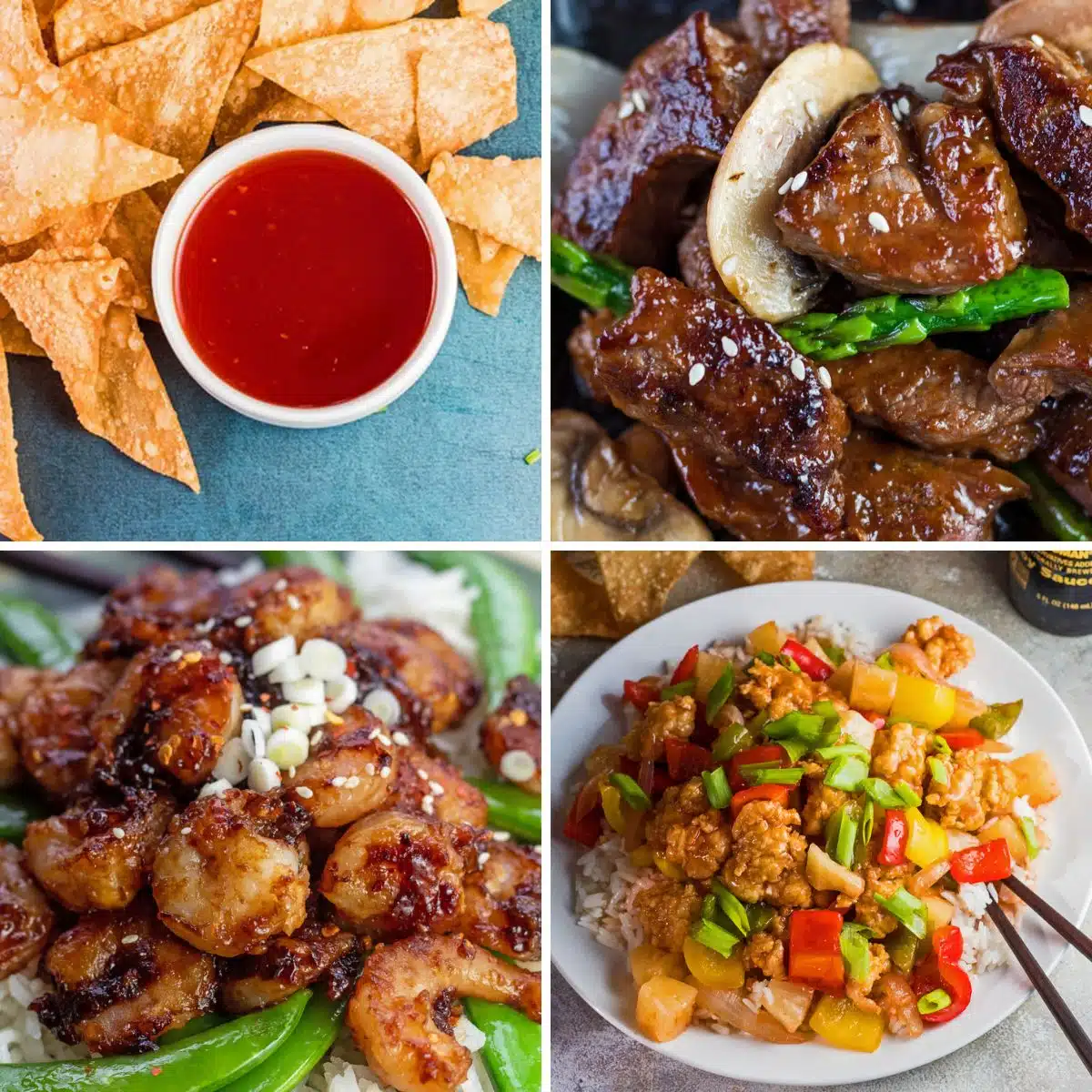
24 Chinese Takeout Recipes You Can Make Better at Home in 30 Minutes
Kung pao in 25 minutes, real orange chicken with real orange, dumplings you can freeze — a Chinese pantry, three tools, and ten recipes that beat delivery.
The best way to make Chinese takeout at home in 30 minutes is to stock a small pantry (soy, oyster sauce, Shaoxing wine, cornstarch, ginger, garlic), preheat a carbon-steel wok until it smokes, and cook proteins in small batches so they sear instead of steam. Do that and homemade kung pao, orange chicken, or beef and broccoli beats delivery on flavor, temperature, and cost — typically $6 a serving at home vs $18 delivered.
Get a free week of easy dinners
Seven weeknight dinners with the shopping list already totalled, sent Sunday. No account needed, unsubscribe in one click.
No spam, unsubscribe in one click. Recipes, shopping lists and Instacart carts all work without an account either way.
The math on making takeout at home
A single order of General Tso's chicken, an egg roll, fried rice, and a soda from a neighborhood spot in 2026 runs $22–$28 delivered once you add the delivery-app fee (usually 15% of subtotal), the service fee (another 10–15%), the driver tip, and inflation on the base menu that most independents pushed through in the last eighteen months. Feed a family of four and you're at $90 for a weeknight meal that arrives lukewarm in a soggy clamshell.
The pantry version of that same meal — protein, aromatics, vegetables, sauce, rice — costs $6 to $8 per serving including the amortized cost of your once-a-year bottle of Shaoxing wine. It hits the table hotter (real wok heat, not a 40-minute delivery cool-down), portions are honest (not 40% starch to hit a price point), and you control the sodium, the oil, and the sugar. The one-time investment is a $40 carbon-steel wok, a $12 spider strainer, and one $28 pantry-stocking trip to an Asian grocer that lasts three months.
Break-even after four family meals. Every meal after that, you're pocketing $60–$80 vs delivery. Over a year, cooking Chinese at home two nights a week is worth $6,000+ back in your budget compared to takeout, and — this is the part nobody mentions — the food is genuinely better because you're cooking it hotter, fresher, and to your own taste. That's the pitch. The rest of this guide is the how.
The Chinese pantry: 7 ingredients that unlock everything
Every recipe below is built from the same short list. Buy these once and you can improvise 80% of the American-Chinese canon without another shopping trip.
| Ingredient | Brand to look for | Cost | Shelf life |
|---|---|---|---|
| Light soy sauce | Pearl River Bridge Superior | $4 | 2 years |
| Dark soy sauce | Pearl River Bridge Mushroom Flavored | $4 | 2 years |
| Oyster sauce | Lee Kum Kee Premium (green label) | $6 | 6 months open |
| Shaoxing wine | Pagoda Brand Cooking Wine | $4 | 1 year open |
| Toasted sesame oil | Kadoya | $8 | 6 months open |
| Cornstarch | Any brand | $2 | Indefinite |
| Aromatics | Fresh ginger, garlic, scallions | $5 | 2 weeks |
Light soy is the salt-and-umami base for stir-fry sauces. Dark soy is thicker, richer, less salty, and does the caramel-glaze work in fried rice, lo mein, and hoisin-style glazes. Oyster sauce is the umami cheat code — a tablespoon adds three days of stock reduction in one stir. Shaoxing wine is Chinese cooking wine (fermented rice, mildly sweet, deeply savory) and is completely non-substitutable except with dry sherry in a pinch. Toasted sesame oil is a finisher, never a cooking oil — it burns at low temps and its whole reason to exist is that toasted aromatic hit at the end.
Cornstarch does three jobs: it velvets meat (see next section), it thickens sauces to that glossy takeout finish, and it makes proteins crispy in pan-frying without deep frying. Grab a big canister — a Chinese kitchen goes through the stuff.
Skip these hardware store versions: La Choy soy sauce (too dilute), "cooking wine" from the American vinegar aisle (loaded with salt, tastes chemical), any sesame oil that isn't dark and toasty. If you can't get to an Asian grocer, Serious Eats has a solid Chinese pantry guide and The Woks of Life is the single best online resource for Chinese home cooking — Bill and Judy Leung's ingredient index will settle any brand question you have.
Stir-fry technique: velveting, wok hei, mise en place
Three techniques separate a home stir-fry from restaurant food. All three take under five minutes to learn.
Velveting
Toss raw chicken, beef, pork, or shrimp with a slurry of cornstarch, a splash of soy sauce, a tablespoon of Shaoxing wine, and (for chicken/pork) an egg white. Let it sit 15 minutes at room temperature or up to overnight in the fridge. The cornstarch forms a protective jacket that keeps the protein juicy and silky in the wok's brutal heat. Some cooks add 1/4 teaspoon of baking soda per pound to tenderize beef further; skip it for chicken. This one technique is the biggest single upgrade home cooks can make — it's why Chinese Kung Pao Chicken and Cantonese Ginger-Sesame Chicken Stir-Fry taste like takeout and not like sad grilled chicken.
Wok hei
"Wok hei" — literally "breath of the wok" — is the smoky, seared, faintly charred flavor of restaurant stir-fry. It comes from very high heat, a well-seasoned carbon-steel wok, and aggressive tossing that flings food into the flames. Home gas ranges max out around 15,000 BTU vs a restaurant wok burner's 100,000, so you'll never fully match it — but you can get 80% of the way there with a smoking-hot carbon-steel wok and cooking in batches so the pan stays hot. Never crowd. Never stir gently. High heat, fast movement, quick out.
Mise en place
Chinese cooking runs at 900°F for 90 seconds. There is no time to chop mid-stir. Before you turn on the burner, have every ingredient prepped, measured, and lined up in bowls in the order they'll go into the pan: aromatics first, protein second, hard vegetables (carrots, broccoli stems) third, soft vegetables (leafy greens, scallions) fourth, sauce mix fifth, cornstarch slurry last. A good chef's knife and a stack of small prep bowls (Chinese cooks call them "mise" bowls; you can use ramekins) turn this from panic into rhythm. If you're missing the knife side of your kitchen, our knives category has picks by budget and use case.
Classic takeout dishes — 8 recipes that beat delivery
These are the greatest hits, the dishes most Americans think of as "Chinese food." Every one is a 25–30 minute cook once your mise is set.
Chinese Kung Pao Chicken — Sichuan classic: velveted chicken thigh, dry-roasted peanuts, dried chiles, Sichuan peppercorns, scallions, and a sweet-sour-savory sauce built on black vinegar and Shaoxing. The peppercorns produce that tingling, almost-numbing effect ("ma la") that separates real Sichuan from the Americanized sweet-only version. 25 minutes.
Crispy Orange Chicken with Ginger-Soy Glaze — The Panda Express staple, but with real orange (zest and juice) instead of orange-flavored syrup. Cornstarch-coated chicken thighs pan-fried in a shallow slick of oil, then tossed with a glaze reduction. 30 minutes; kids love it; sugar is dialed way back from the mall version.
General Tso's Chicken with Crispy Battered Bites — Hunan-inspired, invented in 1970s New York. Deeply savory sweet-and-sour glaze with dried chiles, garlic, ginger. Battered bites (not just cornstarch-dusted) give the shattering crunch that survives the sauce toss. 30 minutes.
Best Sizzling Beef and Broccoli Stir-Fry — Flank steak sliced against the grain, velveted with baking soda, oyster-sauce-forward glaze, broccoli florets par-blanched so they stay crisp. The one everyone's mother makes; still the one that pays back on ingredient cost per serving. 25 minutes.
Stir-Fried Mongolian Beef with Scallions and Garlic — P.F. Chang's-style: crispy edges on velveted flank, dark soy and brown sugar glaze, mountains of scallions. Fast, showy, kid-friendly. 25 minutes.
Cantonese Ginger-Sesame Chicken Stir-Fry — The Cantonese answer to sesame chicken: less sugar, more fresh ginger, a proper finish of toasted sesame oil. 25 minutes.
Moo shu pork — Not linked to a specific recipe here (we're building the catalog), but moo shu is really just stir-fried pork with cabbage, scallions, and mushrooms, served with thin pancakes and hoisin. Cook the pork in your wok, warm store-bought Chinese pancakes (Mandarin brand, in the freezer aisle) 30 seconds each side, and assemble at the table. 20 minutes.
Cashew chicken — Substitute cashews for peanuts in your kung pao, drop the dried chiles, and add a splash more oyster sauce. That's it. Same technique, mild-friendly variant for spice-averse eaters. 25 minutes.
Rice and noodle dishes — 5 that pull their weight
The starch course is where takeout menus quietly upcharge and downgrade. Fried rice at your local spot is often day-old white rice tossed with a scoop of frozen veg and a splash of soy. Yours can be much better in the same time.
Ginger Vegetable Fried Rice — The rule of great fried rice: cold, day-old rice (fresh rice steams and clumps), and the wok must be smoking before the rice goes in. Egg first, then aromatics, then rice, then vegetables, then a two-tablespoon glaze of dark soy + sesame oil at the end. If you didn't plan ahead: spread hot rice on a sheet pan and refrigerate 45 minutes; grains dry out enough to behave. 20 minutes with day-old rice.
Stir-Fried Egg Lo Mein with Chicken and Mixed Vegetables — Lo mein noodles are pre-boiled, tossed with sauce, and warmed in the pan — they're not stir-fried hard. Use fresh Chinese egg noodles (freezer section) or lo mein bricks (dry). If you can't find either, spaghetti works in a hunger emergency. 25 minutes.
Chow mein — Same noodles as lo mein but stir-fried hard until crispy on the edges. Restaurants use a wide flat pan and press the noodles into a cake for two minutes before flipping. At home, do it in two batches if your wok can't hold a full portion in one layer.
Dan dan noodles — Sichuan street food: chewy wheat noodles under a pile of spiced ground pork, blanched greens, and a chili-sesame paste of tahini, black vinegar, chili oil, and Sichuan peppercorns. Assemble in the bowl, stir at the table. 20 minutes.
Singapore noodles — Vermicelli rice noodles tossed with curry powder, egg, shrimp, and char siu. The curry powder is the twist — Madras-style yellow, not garam masala. 25 minutes.
Dumplings and bao — 4 skills worth learning
Dumplings are the slow part of a Chinese Sunday, but freezer stashes turn them into a weeknight card you can play any time. Fold once, freeze in single layers on a sheet pan, transfer to bags — they cook straight from frozen in eight minutes.
Crisp-Fried Pork and Cabbage Pot Stickers with Soy-Vinegar Dipping Sauce — The classic potsticker: pork, napa cabbage (salted and squeezed to purge water), ginger, scallions, sesame oil, a little Shaoxing. Fold into pleated crescents (there's a technique; ten minutes on YouTube and you have it). Pan-steam method: fry flat-side down in a splash of oil for 90 seconds, add 1/3 cup water, cover 4 minutes, uncover and let evaporate for the crispy bottom. 40 minutes for a batch; freeze the extras.
Wontons — Same fillings as potstickers usually, wrapped in thinner square wrappers, boiled in broth. Serve floating in a light chicken broth with wilted greens and a drop of chili oil. 25 minutes.
Scallion pancakes — Not really pancakes: a laminated flatbread. Dough is rolled thin, brushed with oil and scallions, rolled into a coil, flattened, pan-fried until shatter-crisp. The multi-fold lamination creates dozens of flaky layers. 45 minutes with a rest; freeze the raw pancakes between parchment.
Bao (steamed buns) — Longer project. Pillowy leavened dough steamed with a filling (char siu, mushroom, red bean). Weekend cook; not weeknight material unless you find a good frozen brand (Wei-Chuan and Kian-Fah are both credible).
Chinese soups — 3 that clear a sinus
Sichuan Hot and Sour Soup with Tofu and Mushrooms — The complete version: dried wood-ear mushrooms, silken tofu batons, bamboo shoots, lily buds, black vinegar for the sour, white pepper (heaps of it) for the heat. Egg drop finish, sesame-oil drizzle. Restaurants often skip the wood ear and lily; the difference is night and day. 30 minutes.
Egg drop soup — Chicken broth, cornstarch slurry for body, a stream of beaten egg poured through the tines of a fork to make ribbons. Ginger, white pepper, scallion. 10 minutes. The one everyone can make on a Tuesday.
Wonton soup — Frozen wontons (yours, from the dumpling batch above) into simmering chicken stock with a splash of soy, a piece of ginger, and a handful of baby bok choy. Ready in 8 minutes. The freezer-to-table gold medal of Chinese cooking.
The 30-minute weeknight menu: pick a protein + carb + veggie
Chinese home cooking is a Lego kit, not a curriculum. Once your mise-en-place instincts are trained, weeknight assembly looks like this:
| Column | Options |
|---|---|
| Protein (10 min) | Velveted chicken thigh, flank steak, shrimp, tofu cubes |
| Carb (10 min) | Steamed jasmine rice, fried rice, lo mein noodles |
| Veggie (5 min) | Broccoli, baby bok choy, snow peas, Napa cabbage |
| Sauce | Kung pao, oyster-sauce brown, garlic-black-bean, sweet-sour |
Cook the rice first (rice cooker is fine). While it steams, prep everything else. Stir-fry the protein — remove. Stir-fry the aromatics + hard vegetables. Add the protein back, add the sauce, toss to gloss. Plate over rice. That's it — 30 minutes end to end, most of which is passive.
For a 4-week rotation, try our 5-day family dinner rotation plan alongside this Chinese week. Or if you want to run a full "Asia tour" month, alternate this with our 22 Thai weeknight dinners, 25 easy Japanese dinners, 22 Korean weeknight dinners, and 20 Vietnamese recipes guides. If you want more Chinese-specific weeknight rotations, we also cover 20 better-than-takeout Chinese dinners from a stir-fry-first angle.
What to buy: the three-tool kit
You don't need Chinese-specific cookware to make this food work, but three pieces are worth the shelf space if you want to cook this way regularly.
14-inch carbon-steel wok (~$40)
A carbon-steel wok holds heat, seasons like cast iron, and weighs a third as much. A round-bottom traditional pow wok on a wok ring is the platonic form; a flat-bottom carbon-steel wok is what actually works on American home ranges (gas, induction, electric coil). Season it once per the manufacturer instructions and it lasts a lifetime. Skip nonstick "stir-fry pans" — they can't take the heat this cooking requires. Our full cookware category has budget-to-pro picks and covers how to season and maintain carbon steel.
5-inch spider strainer (~$12)
A shallow mesh basket on a long bamboo handle. You'll use it every session — pulling protein out of the wok after searing, blanching noodles or vegetables, lifting dumplings from boiling water. Once you have one, you'll use it for pasta, deep-fried anything, and pulling eggs out of poaching water. See the utensils category for the models we've tested.
7-inch Chinese cleaver (~$35)
The Chinese chef's knife: rectangular blade, thin, sharp, does 95% of prep work in a Chinese kitchen (chopping vegetables, slicing meat thin, smashing garlic with the flat side, scooping mise from board to bowl). If you already have a great chef's knife, you can skip this — but if you get bit by the Chinese cooking bug, the cleaver is the tool. Our knives category has Chinese-cleaver picks by budget.
Optional add-ons: bamboo steamer basket ($20, for dumplings and bao), a 10-inch fine-mesh strainer for rinsing rice, a small rice cooker ($40, if you cook rice more than once a week).
Common pitfalls (and the 5-second fixes)
- Stir-fry tastes flat. You're missing an umami booster. Add half a teaspoon of oyster sauce, or a pinch of MSG (yes, MSG — it's just glutamate, the same molecule in parmesan and tomatoes). Flavor difference is immediate.
- Meat is chewy. You didn't velvet, or you overcooked. Velvet next time; pull the meat at 80% done and finish it in the sauce toss.
- Sauce is soupy. Your cornstarch slurry was too thin, or you added it before the pan was hot enough to reactivate the starch. Cook the slurry into the sauce over high heat until glossy and coating.
- Fried rice clumps. Rice was too fresh. Next time, spread it on a sheet pan and refrigerate 45 minutes minimum. Ideally use rice that's been in the fridge overnight.
- Wok smokes constantly. That's the point — but if it's black-smoke-and-alarms level, your oil isn't high-enough smoke-point. Use peanut, avocado, or grapeseed, never olive oil.
- Dumplings stick to the pan. Your oil layer was too thin or the pan wasn't hot enough. Preheat, use a generous 2 tablespoons of neutral oil, and don't move the dumplings for the first 90 seconds — they release themselves when the crust forms.
When to just order takeout
Homemade is better for stir-fries, fried rice, noodles, and soup. Order out (or stop kidding yourself) for: Peking duck (it's a two-day project involving a bicycle pump and an actual duck oven), soup dumplings/xiaolongbao (the wrapper technique takes a month to learn), true BBQ pork/char siu (needs a purpose-built oven or good specialty shop), most fried appetizers where the volume of oil isn't worth it for two egg rolls. There's zero shame in a hybrid Sunday: main course from your wok, appetizers from the neighborhood spot. You'll still save 60% on the bill and eat food that's twice as good. For more inspiration on the "cook the mains, buy the sides" strategy, our meal-plan tool lets you build a Chinese-themed week and auto-generates the Instacart shopping list.
Where to go deeper
Three online resources are worth bookmarking today:
- The Woks of Life — the Leung family's site is the single best English-language resource for Chinese home cooking. Their pantry index alone is worth an afternoon.
- Serious Eats — Chinese recipes — Kenji López-Alt's technique-forward pieces on wok hei, velveting, and fried rice will give you the science behind everything above.
- Bon Appétit — Chinese recipes — for chef-driven modern takes when you've mastered the classics and want to riff.
Start with one dish this week. Kung pao is the friendliest entry point: forgiving, fast, universally loved. Two weekends in you'll have a rotation. A month in you'll wonder why you were paying $22 for lukewarm delivery.
Frequently asked questions
What is 'velveting' and do I have to do it?
Why doesn't my stir-fry taste like takeout?
Is there a Chinese cooking wine substitute?
How do I make crispy takeout-style chicken without deep frying?
Can these recipes be made gluten-free?
Sources
Cook Chinese at home this week.
Ask our AI for a week of Chinese dinners — it writes the recipes, builds the shopping list, and sends the cart to Instacart. No account needed.
Plan my Chinese week →