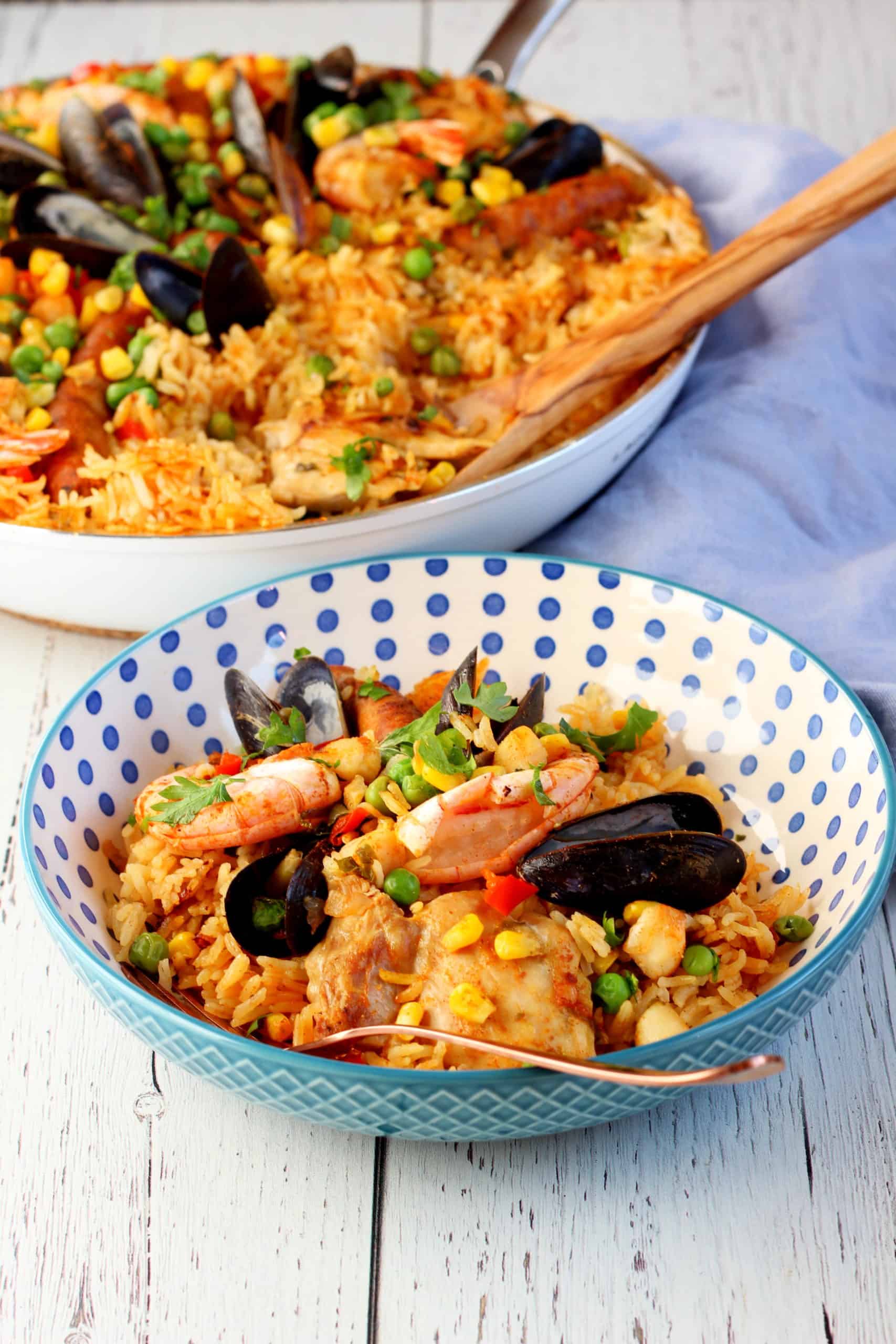
25 Regional Spanish Recipes Beyond Paella and Tapas
Spain has six regional kitchens, and the tapas menu shows you almost none of them.
Affiliate disclosure: AislePrompt may earn a commission on qualifying purchases made through Amazon and Instacart links in this article, at no additional cost to you. See our affiliate policy →
The most-cooked Spanish dishes at home — paella, patatas bravas, gazpacho — all come from three coastal regions. Spain has fifteen more. The dishes below are what people actually eat in Asturias, the Basque Country, Galicia, Castile and inland Andalusia: bean stews, emulsified cod, garlic soup, three-hour oxtail. Almost none of them appear on a tapas menu.
Spain's regional kitchens developed in near-isolation from each other, separated by mountain ranges and, until the 1960s, terrible roads. The result is not one national cuisine with local accents — it is five or six genuinely different cooking traditions that happen to share a border, a language, and a jar of pimentón. The Spanish cuisine that gets exported is overwhelmingly Mediterranean and coastal, because that is where the tourists went.
This guide covers the other Spain. If you have already worked through the paella-and-tapas canon, start here.
The regional map: five kitchens, one country
Before the recipes, the geography — because in Spain the region tells you the fat, the starch and the protein before you read a single ingredient list.
| Region | Cooking fat | Signature starch | Defining protein | Flavor signature |
|---|---|---|---|---|
| Asturias & Cantabria | Pork fat, butter | White beans (fabes) | Pork, chorizo, morcilla | Smoke, cider, long simmering |
| Basque Country | Olive oil | Bread, potatoes | Salt cod, hake, anchovies | Garlic, emulsion, restraint |
| Galicia | Olive oil, lard | Potatoes | Octopus, pork, shellfish | Pimentón, coarse salt, simplicity |
| Castile & interior | Olive oil, lard | Stale bread, legumes | Lamb, pork, egg | Garlic, paprika, thrift |
| Catalonia & Valencia | Olive oil | Rice, pasta, bread | Seafood, poultry, lamb | Nuts, tomato, sofrito |
| Andalusia | Olive oil | Bread, potatoes | Beef, pork, fried fish | Sherry, cumin, frying |
The north is wet, green and Atlantic — it eats like northern Europe, with beans and pork and dairy. The south is hot and dry and eats like North Africa, with fried fish, cold soups and cumin. The east coast eats rice. Treating all of it as "Mediterranean food" is the single most common mistake in Spanish home cooking, and it is why so many home-cooked Spanish dishes taste vaguely the same.
The regional pantry: what actually changes
You need fewer specialty ingredients than you think. Four items cover almost every recipe in this guide.
Pimentón (Spanish smoked paprika). Oak-smoked before grinding, which regular Hungarian or supermarket paprika is not. Sold as dulce (sweet), agridulce (bittersweet) and picante (hot). A 75 g tin runs $6–9 and lasts about eight months before the aroma flattens. This is the one ingredient with no real substitute — the smoke is the point.
Saffron. $8–15 per gram, and a gram is roughly 30 servings. Buy threads, never powder. Bloom them in warm liquid for 10 minutes before use; dropping dry threads into a pot wastes about half the color and most of the aroma.
Dry-cured Spanish chorizo. Not the fresh Mexican chorizo sold in most US supermarkets — that is a different product with a different fat structure and it will turn a bean stew greasy and orange. Look for firm, sliceable, dry-cured links, usually $12–18 per pound.
Sherry vinegar. Sharper and more complex than red wine vinegar, and it is what makes southern Spanish food taste southern Spanish. Around $8 for a bottle that lasts a year.
Bomba rice matters for paella specifically, and paella is not what this guide is about. Skip it for now.
Asturias: bean stews and cider country
Asturias sits on the wet Atlantic coast behind a mountain wall, and its food is closer to Alsace than to Andalusia. The regional dish is fabada asturiana — enormous white beans slow-simmered with chorizo, morcilla and cured pork until the broth turns orange and thick enough to coat a spoon.
Slow-Cooked Fabada Asturiana with Chorizo and Beans is the full three-hour version: 15 minutes of prep, 180 minutes of unattended simmering, six servings at roughly 450 calories and 35 g protein each. The long cook is not optional — the beans need to release enough starch to thicken the broth without any flour, and rushing it gives you beans in soup instead of fabada.
For a weeknight, Chickpea and Spinach Fabada Asturiana Stew compresses the idea into 95 minutes using chickpeas and spinach at 320 calories per serving. It is not traditional, but it keeps the smoked-paprika-and-pork-fat backbone that makes the original work.
The same northern logic runs through Spain's legume cooking generally. Slow-Simmered Spanish Lentil and Chorizo Stew (50 minutes, 350 calories, 20 g protein) and the easier Slow-Cooked Spanish Lentil and Chorizo Stew both build on softened onion, pimentón and sliced dry chorizo. Spiced Lentil and Chorizo Stew with Smoked Paprika pushes the paprika harder and lands at 380 calories with 25 g protein — the best of the three if you want the stew to carry a meal on its own.
Pork and beans is the other northern staple. Slow-Cooked Pork with Spanish Chorizo and White Beans runs two hours for six servings at 480 calories, and Slow-Cooked Pork Shoulder with Spanish Chorizo and White Beans is effectively the same dish tuned slightly leaner at 450. If you would rather set it and leave, Spanish-Style Slow Cooker Pork with Smoked Paprika and Olives takes 20 minutes of prep and seven hours of slow-cooker time.
The Basque Country: pil-pil and the emulsion nobody explains
Basque cuisine is the most technically demanding regional cooking in Spain and the least reliant on spice. The canonical dish is bacalao al pil-pil: salt cod, olive oil, garlic, chili — four ingredients, no thickener, and a sauce that emerges from nowhere.
Here is the part most recipes skip. The gelatin in the cod skin leaches into warm olive oil, and swirling the pan off the heat emulsifies the two into a pale, glossy sauce. It is mayonnaise made from fish. Three rules decide whether it works:
1. The oil must be warm, not hot. Above roughly 60 °C the emulsion breaks and you get oily cod. Pull the pan off the burner entirely before you start swirling.
2. Skin side down, always. The gelatin is in the skin. Cook it any other way and there is nothing to emulsify.
3. Swirl the pan, do not stir. A spoon shears the emulsion apart. Move the whole pan in slow circles for three to five minutes.
Bacalao al Pil-Pil with Lemon and Garlic is rated hard for exactly these reasons — 10 minutes of prep, 15 of cooking, two servings at 420 calories and 28 g protein. Budget one failed attempt. Everyone does.
If you want the Basque flavor profile without the technique, Basque-Style Hake Stew with Smoked Paprika gets you there in 35 minutes total: white fish, smoked paprika, garlic, 385 calories and 34 g of protein for two. It is the highest protein-per-calorie dish in this entire guide.
Galicia: potatoes, garlic and the Atlantic
Galician cuisine in the far northwest is built on three things: extraordinary shellfish, potatoes, and a refusal to complicate anything. The regional seasoning is coarse salt, olive oil and pimentón, applied to something that was recently alive.
Galician Potato and Garlic Fritters is the everyday version — 25 minutes of prep, 15 of frying, four servings at 320 calories. Galician Mushroom and Potato Galette is the Sunday one: 55 minutes in the oven, six servings, 350 calories, and the best vegetarian centerpiece on this list.
Neither needs a specialty ingredient. Both live or die on the potato — waxy varieties hold shape, russets fall apart. For fritters you want the russets; for the galette you want waxy.
Castile: garlic soup, stale bread and peasant economics
Interior Spain was poor for a very long time, and its cooking is a masterclass in making something from bread that has gone hard. Two dishes carry the tradition.
Sopa de ajo — Castilian garlic soup — is stale bread, garlic, pimentón, stock and an egg. Castilian Garlic Soup with Poached Egg takes 30 minutes start to finish and lands at 220 calories per serving for four. It costs roughly $1.20 a bowl and is genuinely one of the best cold-weather dinners in the Spanish repertoire, which is a strange thing to say about bread soup until you have eaten it.
Migas is the other half of the stale-bread economy: torn bread fried in olive oil with garlic and paprika until crisp at the edges and chewy in the middle. Migas with Smoked Paprika and Tomato Sauce adds a tomato sauce and runs 35 minutes, four servings, 280 calories. Shepherd food, originally, and it still eats like something meant to keep you working until dark.
Both dishes require bread that is actually stale — two or three days out, dried on the counter, not in a bag. Fresh bread turns to paste.
Andalusia beyond gazpacho: the three-hour oxtail
Southern Spain is famous for cold soups because the summers are brutal. In winter it cooks like anywhere else with cheap cuts and time.
Rabo de toro — braised oxtail — is Seville's and Córdoba's great winter dish. Slow-Cooked Beef Rabo de Toro with Red Wine runs 20 minutes of prep and three hours of braising for six servings at 550 calories and 45 g protein. Oxtail is roughly $8–12 per pound and about 40% bone, so budget 12 oz per person raw. The collagen needs the full three hours to convert; at two hours it is still tough, and at 2.5 it is nearly there. There is no shortcut, and the reheated leftovers are better than the first night.
For something lighter from the same region, Andalusian-Style Potato Tortilla is the Andalusian take on the potato omelette — 55 minutes total, six servings, 280 calories, and it is served at room temperature, which makes it the single best make-ahead dish here.
Catalonia and Valencia beyond paella
Catalonia's contribution is romesco — a sauce of roasted peppers, tomato, almonds and bread, blended into something between a pesto and a purée. It goes on everything.
Pan-Seared Sea Bream with Catalan-Style Romesco Sauce puts it on white fish: 30 minutes, four servings, 320 calories, 34 g protein. Catalan-Inspired Grilled Lamb Chops with Rosemary and Garlic is the 20-minute option at 350 calories. Both are weeknight-fast in a way that no paella ever is.
Fideuà is Valencia's answer to its own most famous dish: the same technique, the same socarrat, short toasted noodles instead of rice. Seafood Fideuá with Saffron Vermicelli and Garlic Broth takes 40 minutes for four at 380 calories and 35 g protein. It is more forgiving than paella because pasta does not go gluey the way overcooked rice does, which makes it the better first attempt if you have never built a socarrat.
Pisto is the Spanish ratatouille and the most useful vegetable dish in this guide. Authentic Spanish Pisto with Sun-Dried Tomatoes makes six servings at 190 calories; Slow-Simmered Pisto with Local Peppers is the faster 40-minute version. Both keep five days refrigerated and improve on day two.
Navarra and La Rioja: the piquillo pepper
Piquillo peppers are fire-roasted, hand-peeled and jarred in Navarra, and they are the most useful Spanish pantry item after pimentón. A jar runs $6–10 and turns four dishes into dinner.
Piquillo Peppers Stuffed with Manchego and Garlic is 20 minutes flat for four at 180 calories. Chorizo and Manchego-Stuffed Piquillo Peppers with Tomato Sauce makes it a meal at 380 calories and 22 g protein. Sautéed Chicken with Roasted Piquillo Peppers and Paprika is a 30-minute weeknight main at 320 calories with 35 g protein. Grilled Spanish Chorizo with Roasted Piquillo Peppers is the simplest of all: char the chorizo, warm the peppers, done in 25 minutes.
Real-world numbers: what a regional Spanish week costs
Cost per serving assumes US supermarket pricing as of 2026, excluding the one-time pantry spend on pimentón, saffron and sherry vinegar.
| Dish | Total time | Servings | Calories | Protein (g) | Cost/serving |
|---|---|---|---|---|---|
| Castilian garlic soup | 30 min | 4 | 220 | 10 | $1.20 |
| Migas | 35 min | 4 | 280 | 5 | $1.40 |
| Pisto | 65 min | 6 | 190 | 4 | $1.60 |
| Andalusian potato tortilla | 55 min | 6 | 280 | 8 | $1.10 |
| Galician potato fritters | 40 min | 4 | 320 | 6 | $1.50 |
| Spanish lentil & chorizo stew | 65 min | 4 | 350 | 20 | $2.40 |
| Fabada asturiana | 195 min | 6 | 450 | 35 | $3.20 |
| Piquillo peppers with chicken | 30 min | 4 | 320 | 35 | $3.60 |
| Seafood fideuà | 40 min | 4 | 380 | 35 | $5.80 |
| Basque hake stew | 35 min | 2 | 385 | 34 | $6.50 |
| Bacalao al pil-pil | 25 min | 2 | 420 | 28 | $7.20 |
| Rabo de toro | 200 min | 6 | 550 | 45 | $4.90 |
The pattern is worth noticing: the interior dishes are the cheapest and the fastest, and the coastal fish dishes cost three to six times as much. That is not a coincidence — it is the actual economic history of the country showing up on a spreadsheet.
Common pitfalls
Using fresh Mexican chorizo in a northern bean stew. It has a different fat structure and no dry cure. It renders out and slicks the surface with orange grease instead of seasoning the broth. Buy dry-cured Spanish chorizo or leave it out.
Boiling a bean stew. Fabada needs a bare tremble — surface barely moving. A rolling boil breaks the bean skins, clouds the broth and gives you mush in 90 minutes.
Stirring pil-pil with a spoon. Shears the emulsion every time. Swirl the pan, off the heat, for three to five minutes.
Treating pimentón as heat-stable. It scorches in about 20 seconds over direct heat and turns bitter permanently. Add it off the burner, stir it into the fat, then return the pan to the flame.
Using fresh bread for sopa de ajo or migas. Both dishes exist to use bread that has dried out. Fresh bread dissolves.
Under-braising oxtail. Three hours is the number. At 150 minutes the collagen has not converted and no amount of extra salt fixes the texture.
When NOT to cook these
If you need dinner in under 30 minutes on a weeknight, most of this guide is the wrong list — the northern stews assume you have an afternoon. Cook Sautéed Chicken with Roasted Piquillo Peppers and Paprika, Basque-Style Hake Stew with Smoked Paprika or Catalan-Inspired Grilled Lamb Chops with Rosemary and Garlic instead, or go back to the tapas-and-paella canon in our 22 Spanish Recipes hub.
If you are cooking for a crowd that wants finger food, this is also the wrong list. Regional Spanish home cooking is bowl food, eaten sitting down. For a party, use the 22 Spanish Tapas Dinner Recipes guide instead.
And if you cannot source dry-cured chorizo or pimentón, cook something else this week. Substituting sweet Hungarian paprika and Mexican chorizo produces a dish that is not bad, exactly, but is no longer Spanish in any recognizable way.
A 5-day regional Spanish dinner plan
- Monday — Castilian Garlic Soup with Poached Egg with a green salad. 30 minutes, ~$1.20 a head.
- Tuesday — Sautéed Chicken with Roasted Piquillo Peppers and Paprika over rice. 30 minutes, high protein.
- Wednesday — Authentic Spanish Pisto with Sun-Dried Tomatoes with a fried egg. Make the full six servings; you will eat the leftovers Friday.
- Thursday — Basque-Style Hake Stew with Smoked Paprika. The one splurge night.
- Friday — Migas with Smoked Paprika and Tomato Sauce with Wednesday's pisto spooned over.
- Sunday — Slow-Cooked Fabada Asturiana with Chorizo and Beans or Slow-Cooked Beef Rabo de Toro with Red Wine. Start at 2pm, eat at 6pm, eat better leftovers Monday.
Total shopping is one pork shoulder or oxtail, two links of dry chorizo, a bag of white beans, a jar of piquillos, potatoes, onions, peppers and a fish fillet. Around $48 for six dinners across four to six servings each.
Kitchen gear that actually matters
Three items, and only three.
A heavy pot with a tight lid does 80% of this list — fabada, rabo de toro, every lentil stew. Enameled cast iron is ideal; any thick-bottomed Dutch oven works. Browse cookware for the 5–7 quart range, which fits a six-serving stew without boiling over.
A sharp chef's knife matters more than usual here, because so much of this cooking is slow-cooked onion and pepper that has to be cut evenly to soften evenly. See knives.
A fine-mesh skimmer for the bean stews and the fried Galician potatoes. Grab one in utensils.
You do not need a paella pan for anything in this guide. You do not need a mortar and pestle either, though it makes better romesco than a food processor.
Sources
- Spanish cuisine — regional overview
- Fabada asturiana
- Bacalao al pil-pil
- Pimentón
- Basque cuisine
- Galician cuisine
- Sopa de ajo
- Romesco
Related reading
- 22 Spanish Recipes: Paella, Tapas, Gazpacho & Tortilla Española
- 22 Spanish Tapas Dinner Recipes
- 25 Mediterranean Weeknight Dinners