22 Spanish Recipes: Paella, Tapas, Gazpacho & Tortilla Española
Twenty-two Spanish dishes built from one $60 pantry — paella that actually makes socarrat, six tapas timed for a weeknight, and cold soups for tomato season.
Affiliate disclosure: AislePrompt may earn a commission on qualifying purchases made through Amazon and Instacart links in this article, at no additional cost to you. See our affiliate policy →
Authentic Spanish dinner recipes come down to five things done well: a sofrito of onion, garlic and tomato cooked slowly in olive oil; good smoked paprika; a splash of sherry vinegar; short-grain rice you never stir; and enough salt. Master those and paella, tortilla, gazpacho and a table of tapas all fall out of the same small pantry.
Introduction — the Spanish table: shared, unhurried, olive-oil forward
Spanish cooking is not fussy. Most of the canon is four to seven ingredients, one pan, and a technique that rewards patience over precision — you are not building layers of sauce the way French cooking does, you are extracting flavor from olive oil, garlic and pork fat and then getting out of the way.
The structural difference from Italian or Greek weeknight cooking is the serving format. A Spanish dinner is rarely one plate per person. It is three or four dishes in the middle of the table that arrive when they are ready, eaten over an hour and a half. That changes how you cook: you want dishes with staggered timing, not five things that all need the stove at 6:45.
It also changes the shopping. Spain runs on shelf-stable pantry staples — tinned seafood, chorizo, jarred piquillo peppers, olives, a bottle of decent oil — plus whatever is cheap and ripe. In late August, that means tomatoes, peppers and stone fruit, which is exactly why gazpacho is a summer dish and not a year-round one.
The 22 recipes below are organized the way you would actually cook them: rice dishes first (the anchor), then small plates, then one-pan mains, then the cold soups. Every one links to a full recipe with an ingredient list you can push straight to a shopping list.
The Spanish pantry: sherry vinegar, smoked paprika (dulce & picante), saffron, chorizo, Manzanilla olives
Buy these five things once and roughly 80% of Spanish home cooking opens up. As of 2026, the whole kit runs about $55–$70 at a US supermarket, and four of the five keep for a year or more.
| Pantry item | What to buy | Typical US price (2026) | Keeps |
|---|---|---|---|
| Sherry vinegar | Vinagre de Jerez, aged 3+ years | $9–$14 / 375 ml | 3+ years |
| Smoked paprika | Pimentón de la Vera, dulce + picante tins | $6–$9 per tin | 12 months |
| Saffron | La Mancha threads, 1 g tin | $10–$16 / gram | 2 years in a dark tin |
| Dry-cured chorizo | Spanish (not Mexican) semi-cured sarta | $9–$13 / 8 oz | 4–6 weeks opened |
| Manzanilla olives | Whole, in brine, with pit | $4–$7 / jar | 12 months |
Sherry vinegar is the single highest-leverage bottle. It is sharper and rounder than red wine vinegar and it is what makes a gazpacho taste Spanish instead of just taste like cold tomato soup. Use a scant tablespoon per quart. The roasted tomato and almond gazpacho leans on it hard — roasting concentrates sugar, the vinegar cuts it back.
Get both paprikas. Dulce (sweet) is the workhorse for rice, stews and chorizo-and-potato tapas. Picante (hot) is what makes brava sauce brava. They are not interchangeable and neither is Hungarian paprika, which is not smoked.
Spanish chorizo is a cured sausage, not raw. It slices like salami and renders orange, paprika-stained fat that becomes the cooking medium for everything else in the pan. Mexican chorizo is raw ground pork and will not work in these recipes. If your store only carries the raw kind, chorizo and chickpea stew is the one dish that tolerates the swap.
Buy saffron small. One gram is roughly 200 threads and covers 8–10 paella batches. Real threads are deep red with no yellow, cost $10–$16 per gram, and should be steeped in warm stock for 10 minutes before they hit the rice. Anything under $5 a gram or uniformly orange is cut with safflower.
The Big Paella Section — seafood, mixta, valenciana, quick weeknight variations
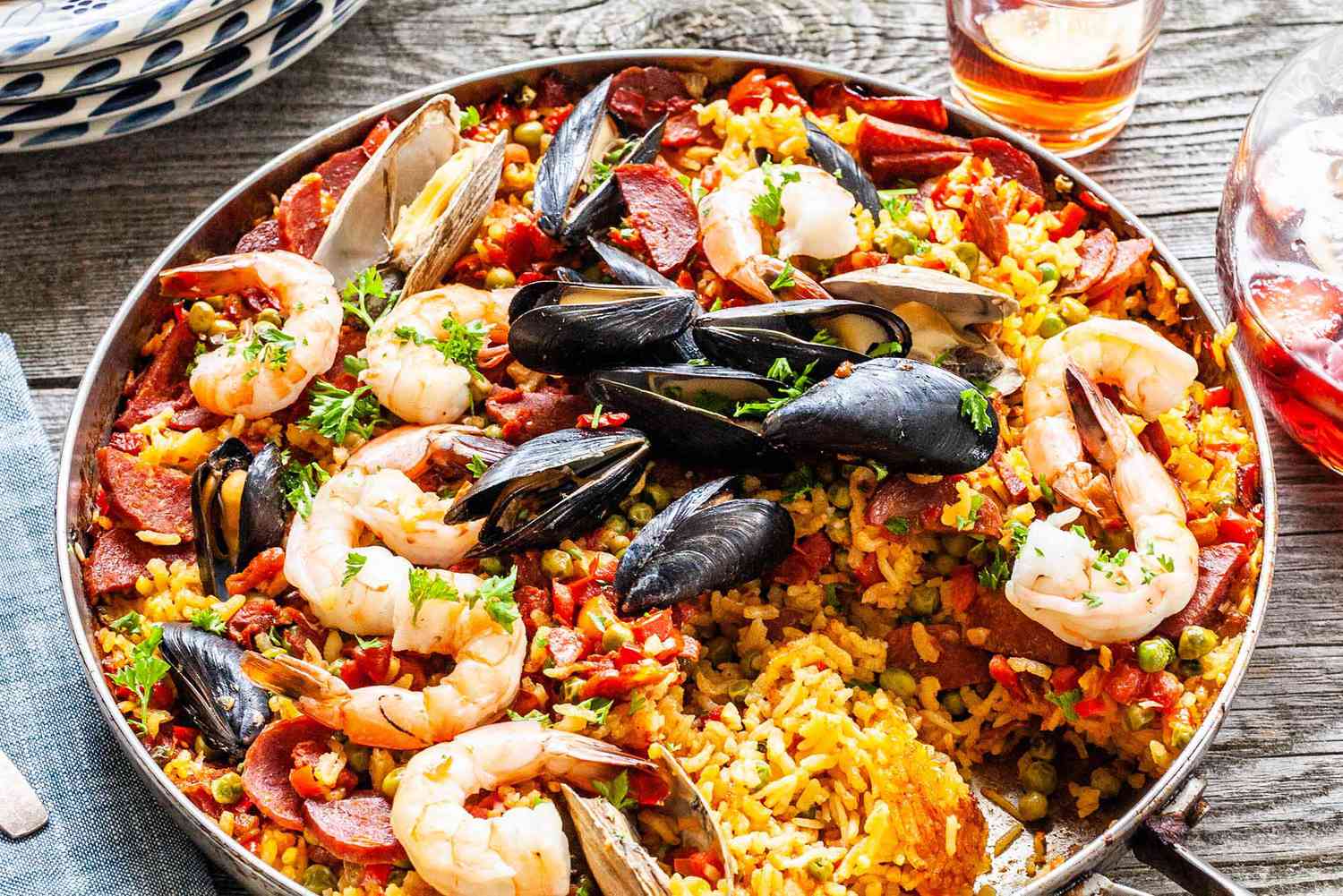
Paella is a rice technique, not a seafood dish. The rules are short: use short-grain bomba or Calasparra rice, spread it in a thin even layer, add hot liquid at a 1:2.5 rice-to-stock ratio, and never stir after the liquid goes in. Stirring releases starch and gives you risotto. Not stirring is what lets the bottom layer toast into socarrat, the caramelized crust that Spaniards fight over. Bon Appétit's seafood paella walks the same sequence.
| Paella | Prep | Cook | Serves | Calories / serving | Best for |
|---|---|---|---|---|---|
| Slow-Cooked Spanish Seafood Paella with Saffron | 20 min | 40 min | 4 | 450 | The full Sunday version |
| Best-Seasoned Seafood Paella with Saffron | 25 min | 25 min | 4 | 550 | Highest-seasoning payoff |
| Stovetop Shrimp and Chorizo Paella with Saffron Rice | 15 min | 30 min | 4 | 480 | Weeknight mixta |
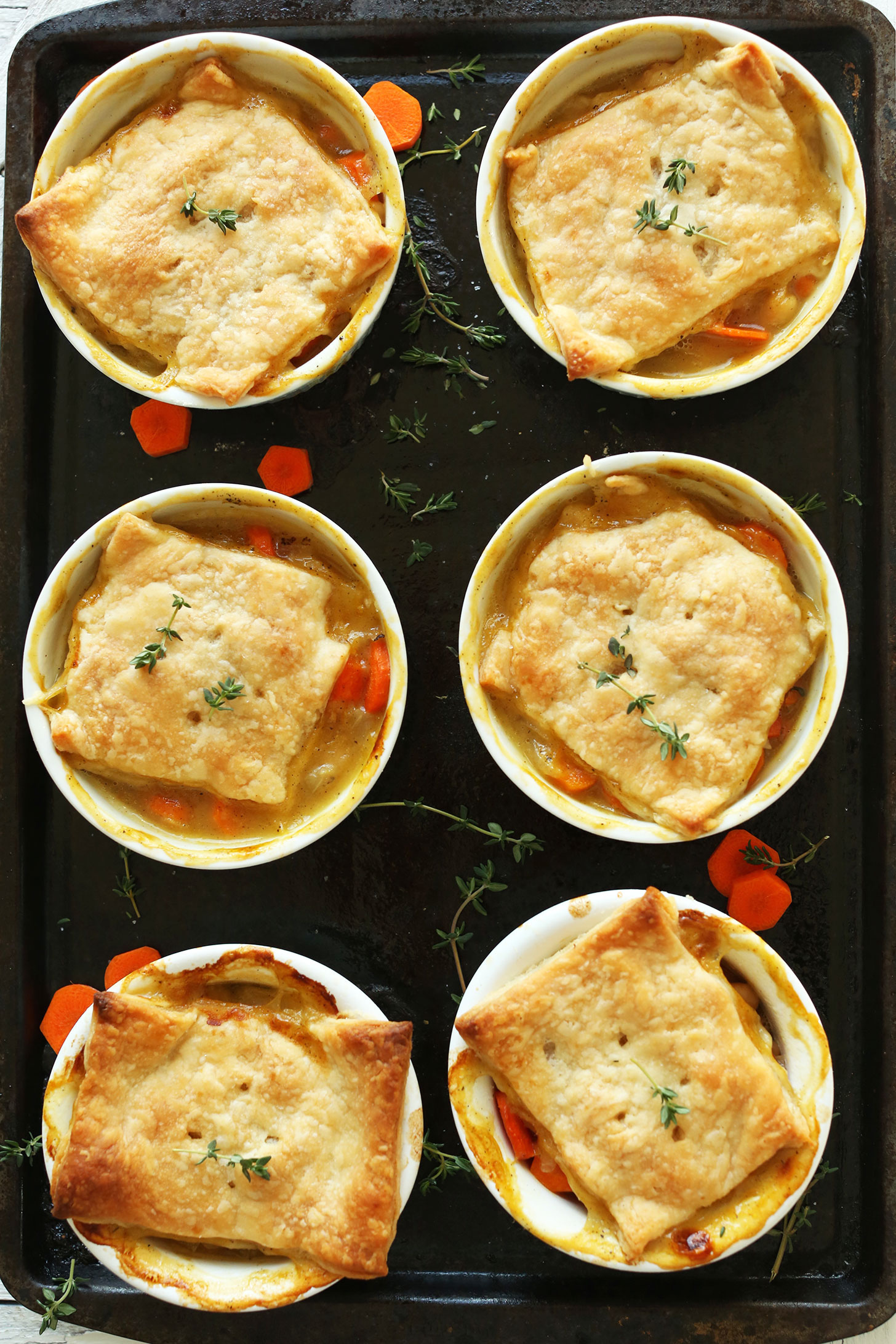
| Spanish-Style Chickpea and Spinach Paella | 20 min | 25 min | 6 | 360 | Vegetarian, cheapest per serving |
| Cauliflower Rice Paella with Chorizo and Shrimp | 15 min | 20 min | 4 | 380 | Low-carb, 35 min door to table |
The socarrat move. In the last 90 seconds, turn the heat to high and listen. You want a crackle, not a hiss, and you should smell toast — not smoke. Pull it the instant the smell turns nutty. If you are nervous, run a spoon down the side and look: golden is done, brown is done, black is a redo.
Rest it. Five to ten minutes off the heat under a clean towel finishes the grains and lets the crust release. Cutting into it straight off the burner is the most common home mistake.
The weeknight compromise. A full paella is a 60-minute project. The stovetop shrimp-and-chorizo version above is 45 minutes total and delivers about 85% of the experience because the chorizo fat does the work saffron and shellfish stock do in the long version. On a Tuesday, that trade is worth making — and the seared chorizo and Manchego Spanish rice skillet collapses it further to 40 minutes with pantry ingredients only.
Tapas & Small Plates — patatas bravas, gambas al ajillo, pan con tomate, croquetas, boquerones
Tapas are engineered for staggered cooking, which is the only reason a six-dish table is possible on a weeknight. Sort them by where they demand attention: oven (unattended), stovetop (2 minutes of violence), or no-cook.
| Tapa | Prep | Cook | Serves | Station |
|---|---|---|---|---|
| Garlic and Anchovy Gambas al Ajillo | 10 min | 8 min | 4 | Stovetop, last |
| Pan-Fried Patatas Bravas with Spicy Tomato Sauce | 15 min | 20 min | 4 | Stovetop, first |
| Pan-Fried Spanish Chorizo and Potato Tapa | 10 min | 25 min | 4 | Stovetop, mid |
| Baked Manchego and Serrano Ham Stuffed Peppers | 15 min | 30 min | 4 | Oven, unattended |
| Pan-Seared Spanish Chorizo with Bell Peppers and Onions | 10 min | 15 min | 3 | Stovetop, mid |
| Pan-Grilled Manchego and Quince Jam Sandwich | 5 min | 8 min | 2 | Griddle, any time |
Gambas al ajillo is a 90-second dish that people ruin by starting too hot. Warm sliced garlic in olive oil over medium-low until it just turns pale gold — three to four minutes — then raise the heat and add the shrimp. Garlic that browns before the shrimp go in is bitter, and there is no recovering it. A smoked-paprika variation swaps a pinch of pimentón for the usual dried chile, and the four-serving version scales it for a table.
Bravas need two sauces or one great one. The bar standard is a paprika-tomato sauce plus a garlic aioli, but a well-made brava sauce alone is enough. The smoky tomato version is the one to make if you are only making one sauce. Par-cook the potatoes first — raw-to-crisp in a single fry gives you a hard shell and a chalky center.
Pan con tomate takes five minutes and no recipe. Grill or toast good bread, rub the cut side with a halved garlic clove, then with the cut face of a very ripe tomato until the bread is pink and wet. Salt, then a heavy pour of olive oil. That is the entire dish, and in a six-plate menu it is the one that gets eaten first.
Croquetas and boquerones are the buy-don't-make picks. Croquetas are a two-day project (make béchamel, chill overnight, bread, fry) and frozen Spanish-brand croquetas from a specialty grocer are genuinely good. Boquerones — white anchovies in vinegar — are a jar you open. Neither is worth your weeknight.
One-Pan Mains — tortilla española, pollo al ajillo, fideuà, arroz al horno
These are the dishes that feed a family from a single pan, most of them under $12 for four servings as of 2026.
| Main | Total time | Serves | Protein / serving | Notes |
|---|---|---|---|---|
| Pan-Fried Potato and Onion Tortilla Española | 45 min | 4 | 14 g | The canonical version |
| Baked Tortilla Española with Caramelized Onions | 45 min | 4 | 12 g | No flip required |
| Pan-Seared Cod with Saffron and Tomato Sofrito | 35 min | 4 | 36 g | Best fish-night option |
| Chorizo and Chickpea Spanish Stew | 45 min | 4 | 22 g | Cheapest per serving |
| Slow-Cooked Spanish Beef Stew with Paprika and Red Wine | 3 h 25 min | 6 | 38 g | Sunday, freezes well |
| Seared Chorizo and Manchego Spanish Rice Skillet | 40 min | 4 | 18 g | Pantry-only weeknight |
The tortilla flip is the only real skill here. Cook the potato-and-onion-bound egg over medium-low until the edges set and the center still wobbles — about 8 minutes. Slide it onto a plate, invert the skillet over the plate, and flip in one committed motion over the sink. Hesitation is what breaks it. If that sounds like a bad time, the baked version is genuinely close and skips the maneuver entirely; Wikipedia's tortilla de patatas entry covers the regional onion-or-no-onion argument if you want to take a side.
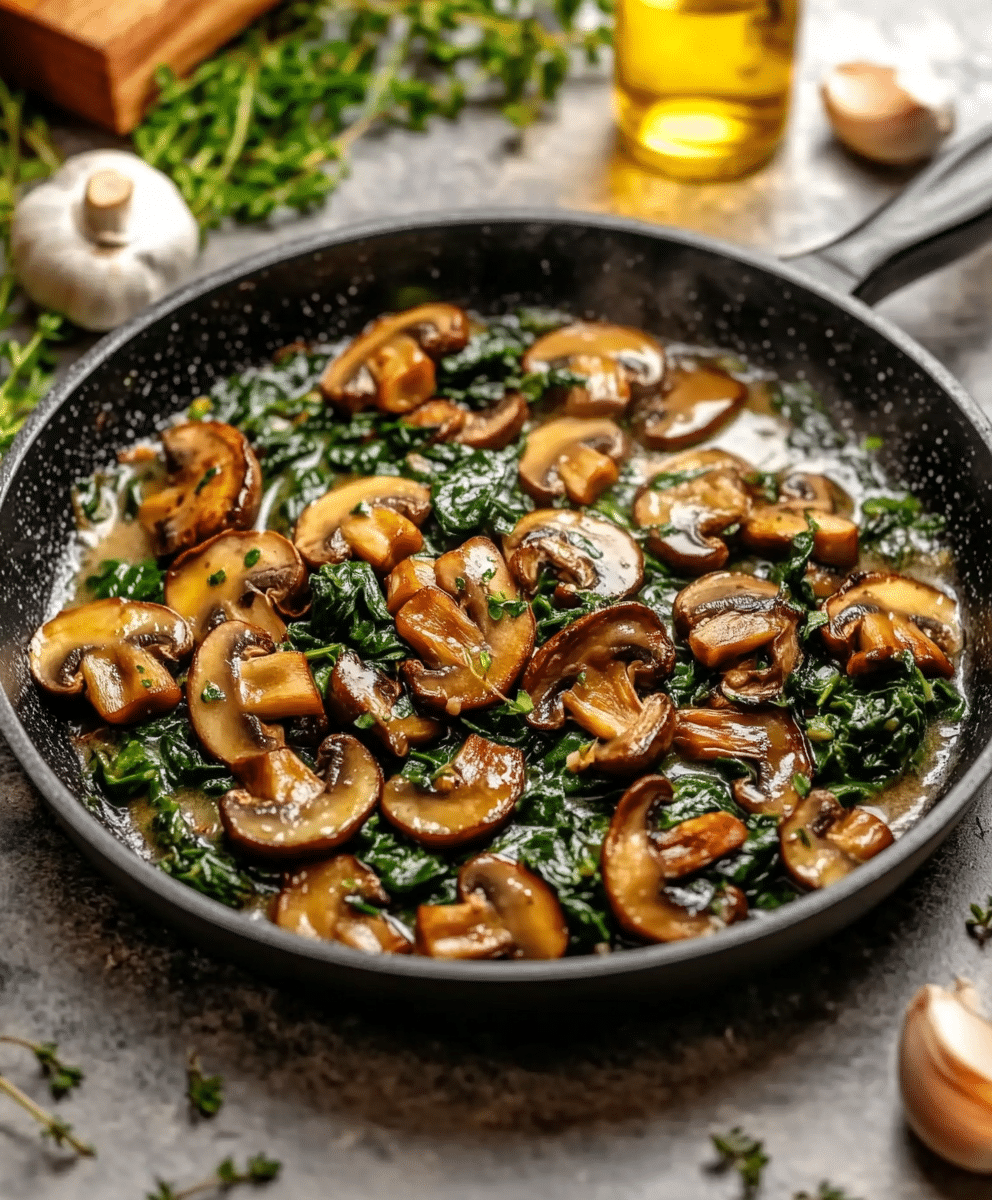
Pollo al ajillo is chicken thighs, a head of garlic, and a splash of sherry. Brown skin-on thighs hard, pull them, soften a whole head of sliced garlic in the rendered fat, deglaze with dry sherry, return the chicken and finish covered. Spanish-style garlic and paprika chicken thighs is the 25-minute weeknight expression; pan-roasted thighs with saffron and tomato is the version to make when you have company.
Fideuà is paella with toasted noodles instead of rice. Same pan, same sofrito, same no-stir rule; short thin pasta replaces the bomba and toasts in oil first. Arroz al horno is the baked cousin — rice, chickpeas, pork and potato go in one dish and into a 400°F oven for 40 minutes with no attention at all. For a similar hands-off rice, the one-pot Spanish rice with chorizo and peppers gets there on the stovetop, and the charred piquillo pepper and Manchego tortilla turns the leftovers into a second dinner.
Cold Soups & Salads — gazpacho, salmorejo, ensalada de pimientos asados
Cold soup is a load-bearing part of the Spanish summer table, not a starter garnish. A quart of gazpacho in the fridge is lunch for two days.
| Cold dish | Prep | Cook | Serves | Calories / serving |
|---|---|---|---|---|
| No-Cook Gazpacho with Tomato, Bell Pepper, and Cucumber | 15 min | 0 min | 4 | 90 |
| Roasted Tomato and Almond Gazpacho with Sherry Vinegar | 15 min | 25 min | 4 | 180 |
| Orange and Almond Cold Soup (Ajo Blanco) | 15 min | 0 min | 4 | 180 |
Gazpacho is a tomato-quality problem, not a recipe problem. In August with peak tomatoes, the no-cook version wins. In April with hard supermarket tomatoes, roast them first — the roasted-tomato-and-almond version above exists for exactly that reason. Wikipedia's gazpacho entry traces it back to a bread-and-oil peasant soup that predates tomatoes in Europe entirely, which is why the bread is not optional in the traditional formula.
Salmorejo is gazpacho's thicker cousin — tomato, bread, garlic and a lot of olive oil emulsified into something closer to a dip, served with chopped egg and jamón on top. It uses about a third of the liquid and twice the oil. If you like gazpacho but find it thin, this is the fix.
Ajo blanco is the sleeper. Almonds, bread, garlic, oil and vinegar blended into a white soup, traditionally garnished with grapes or melon. The orange and almond version at 180 calories a serving is the best thing on this list to serve people who think they do not like cold soup.
For a room-temperature salad, roasted red peppers with sherry vinegar and oil is the default; a chickpea and roasted red pepper salad turns it into a meal. And a chili-infused gazpacho is the version to make if the table likes heat.
The Sherry & Olive-Oil Rules — how to pick both, and why they matter more than the recipe
These two bottles decide more about how your food tastes than any technique in this article, and both are routinely bought wrong.
Olive oil: buy two, not one. A large tin of everyday Spanish extra-virgin ($18–$26 for 3 L as of 2026) for cooking, and a small bottle of a single-varietal Picual or Arbequina ($16–$24 for 500 ml) for finishing. Cooking with the expensive one wastes the aromatics that made it expensive; finishing with the cheap one wastes the dish.
| Varietal | Flavor | Use |
|---|---|---|
| Picual | Peppery, high polyphenol, very stable | Frying, finishing stews |
| Arbequina | Mild, buttery, low bitterness | Gazpacho, ajo blanco, raw drizzling |
| Hojiblanca | Balanced, grassy | General purpose |
| Cornicabra | Fruity, medium pepper | Bread, salads |
Check the harvest date, not the best-by date — good oil is at its best within 12–18 months of harvest and degrades fast in clear bottles under store lights. Buy in tins or dark glass. The International Olive Council publishes the grading standards behind the "extra virgin" label; the short version is that the term is a chemical spec, not a marketing word, but it says nothing about freshness.
Sherry: three styles cover everything. Fino and Manzanilla are bone dry, pale, and drink like a bracing white wine — this is what goes with the seafood tapas. Amontillado is oxidized, nutty, and the correct deglazing liquid for pollo al ajillo and pork. Oloroso is richer and darker, good in beef stew. All three are $12–$20 a bottle and dramatically undervalued relative to what they do.
The one rule people get wrong: fino and manzanilla are perishable. Once opened they are a white wine, not a fortified wine — refrigerate and finish within a week. Amontillado and oloroso keep a month.
If you would rather drink something long and cold with a tapas table, a pitcher of spiced sangria does the job and can be built two hours ahead.
Kitchen gear that pays for itself (a real paella pan, a Microplane, a mortar and pestle)
Four purchases, roughly $110 total, and only one of them is single-purpose.
A carbon-steel paella pan ($35–$55). Wide and thin-bottomed, which is exactly why it makes socarrat and a Dutch oven never will. A 15-inch pan serves 4; an 18-inch serves 6–8 but will not fit a standard home burner without moving it around. If you are not ready to commit, a 12-inch cast-iron skillet is the best substitute and a nonstick pan is the worst — it cannot build a crust. Browse cookware for both.
A mortar and pestle ($25–$40). Spanish sauces — romesco, picada, allioli — are emulsions built by crushing, and a blender shears them differently. A heavy granite one is worth the counter space. See kitchen gadgets for options.
A Microplane ($15). Garlic, Manchego, citrus zest. It is the single most-used tool in this entire article. Pair it with a sharp chef's knife from knives and cutting tools — most of Spanish prep is slicing garlic thin and dicing onion small, and a dull knife makes both miserable.
A fish spatula and a good wooden spoon ($20 the pair). For cod, sea bass and tortilla flips. Stocked under utensils and tools.
Skip: a dedicated saffron grinder, a paella burner ring (unless you are cooking for 8+ outdoors), and anything sold as a "tapas set."
Real-world numbers: what a Spanish week actually costs
Running the six-dish tapas menu and three weeknight mains from this article, for a family of four, using 2026 US supermarket pricing:
| Meal | Serves | Ingredient cost | Cost / serving | Active time |
|---|---|---|---|---|
| Chorizo and chickpea stew | 4 | $11.40 | $2.85 | 10 min |
| Tortilla española + salad | 4 | $6.80 | $1.70 | 15 min |
| Stovetop shrimp and chorizo paella | 4 | $22.60 | $5.65 | 15 min |
| Gazpacho (batch quart) | 4 | $7.20 | $1.80 | 15 min |
| Six-dish tapas table | 6 | $48.00 | $8.00 | 35 min |
The pantry investment ($55–$70) amortizes across roughly 20 meals, adding about $3 per dinner in the first month and near zero after. The expensive variable is shellfish: swapping shrimp for chicken thighs in the paella drops that meal from $5.65 to $3.10 a serving without changing the technique.
Common pitfalls
Stirring the paella. The most common and least recoverable error. Once the stock is in, the spoon goes down.
Using Mexican chorizo. Raw ground pork will not slice, will not render the same fat, and will turn a rice dish into a crumble. Read the label for "cured" or "curado."
Cooking gazpacho ingredients. Except in the deliberate roasted version, gazpacho is raw. Blanching or sautéing the peppers makes it taste like canned soup.
Browning the garlic in gambas al ajillo. Medium-low until pale gold, then raise the heat. Bitter garlic ruins the dish and there is no fix.
Buying powdered saffron. Almost always adulterated. Threads only, and steep them in warm liquid before use.
Under-salting the rice liquid. Paella rice absorbs everything and seasons only from the stock. Taste the stock before it goes in — it should be slightly saltier than you would drink.
When NOT to cook Spanish
When you have 20 minutes and no pantry. Spanish cooking is cheap and fast after the $60 pantry buy. Before it, substituting Hungarian paprika and red wine vinegar produces something that is not bad but is also not Spanish. Cook something else this week and buy the pantry this weekend.
When you need one plate per person on a schedule. The tapas format wants a leisurely table. If dinner has to be on plates at 6:15 because of practice, make a one-pan main from the list above and save the small plates for a Friday.
When the tomatoes are bad. Out of season, skip raw gazpacho entirely — roast, or make ajo blanco, which does not depend on tomatoes at all.
For a deeper library of tapas-first menus, Serious Eats' Spanish recipe collection and Food & Wine's Spanish recipes are the two most reliable English-language references.
Related reading
- 22 Spanish Tapas Dinner Recipes: Patatas Bravas, Gambas & Sheet-Pan Paella — the deeper tapas-menu build, with per-guest math
- 18 Portuguese Recipes: Bacalhau, Piri-Piri & Pastel de Nata — the Iberian neighbor, same pantry, different accent
- 25 Mediterranean Weeknight Dinners — where the olive-oil-forward habit goes next
- 20 Late-Summer Tomato Dinner Recipes — for the gazpacho season overflow
- How to Cook Shrimp: 18 Recipes + Complete Guide — technique behind gambas al ajillo
Two more to round out the table when you want dessert and a showpiece: pan-fried Spanish churros with cinnamon sugar and pan-seared octopus with garlic, olive oil and paprika. For a lighter fish main, pan-seared sea bass with saffron-infused Spanish rice and pan-seared pork tenderloin with romesco both land under 45 minutes.
Frequently asked questions
Do I need a real paella pan to make paella, or will a regular skillet work?
What's the difference between paella and other rice dishes like risotto or biryani?
Can I make Spanish food gluten-free?
How do I choose Spanish saffron without getting ripped off?
Can I make a Spanish-style tapas dinner party for 6 people on a weeknight?
Sources
- en.wikipedia.org: Gazpacho
- en.wikipedia.org: Tortilla de patatas
- bonappetit.com
- foodandwine.com
- internationaloliveoil.org
- seriouseats.com
Mediterranean recipes from the catalog
Save any of these to My Recipes — no account needed — and send the ingredients to Instacart in one tap.