The 5-Day Family Dinner Rotation: Plan Once, Cook All Week
Stop planning weeks. Build a five-slot template — pasta, sheet-pan, tacos, soup, grill — and rotate the recipes forever.
A family dinner rotation is what happens when you stop planning individual weeks and start running a template. Five slots, five recipes, five weeks of variations — one 10-minute pass on Sunday and you're done. The rotation is the difference between "what should I cook tonight" and "it's Wednesday, so it's tacos." This guide walks you through the 5-slot family rotation we've built inside the AislePrompt planner, gives you 40+ swap-in recipes across the slots, and shows you how to turn any of them into a one-shopping-list week.
Get a free 7-day kid-approved dinner plan
Seven school-night dinners picky eaters actually finish, delivered Sunday, with one shopping list for the week.
No spam, unsubscribe in one click. Recipes, shopping lists and Instacart carts all work without an account either way.
Why a rotation beats a one-off meal plan
Most meal-planning content on the internet is disposable. You get a "week of dinners," you cook them, and next Monday you're back at zero staring into the fridge. A rotation is a template — five recurring slots you fill with different recipes each week. The framework never changes; the recipes rotate.
Three things happen when you switch from ad-hoc weeks to a rotation. First, planning time collapses from about 45 minutes on Sunday to 10 — you're not designing a week, you're picking five variations. Second, your pantry rhythm stabilizes: you always know you'll want olive oil, canned tomatoes, rice, and eggs, because those show up every week. Third, and most important for families, kids stop asking "what's for dinner" and start asking "which tacos tonight." Predictability with variety is the sweet spot for kid-friendly weeknight cooking.
The 5-slot template (Pasta Monday, Sheet-Pan Tuesday, Taco Wednesday, Soup Thursday, Grill Friday)
The template we teach in the AislePrompt planner has five slots, each optimized for a different weeknight constraint:
| Night | Slot | Why this slot on this night |
|---|---|---|
| Monday | Pasta | Everyone's tired; 15-minute pasta wins |
| Tuesday | Sheet-pan | Kids want protein + veg; one pan, low cleanup |
| Wednesday | Tacos / bowls | Midweek fun; build-your-own = fewer complaints |
| Thursday | Soup / skillet | Reheat friendly; often becomes leftovers night |
| Friday | Grill / pizza | Reward-food night; kids invited to help |
The specific pairings aren't sacred — some families run "Pasta Sunday, Grill Wednesday, Slow-cooker Friday." What matters is that you assign a slot to each night and stick to it. Every week you swap in a fresh recipe from the same slot's library. This is the exact structure good school cafeterias use to feed 400 kids without a single kid noticing they're eating in a pattern.
10 pasta recipes that all use the same 3 base ingredients
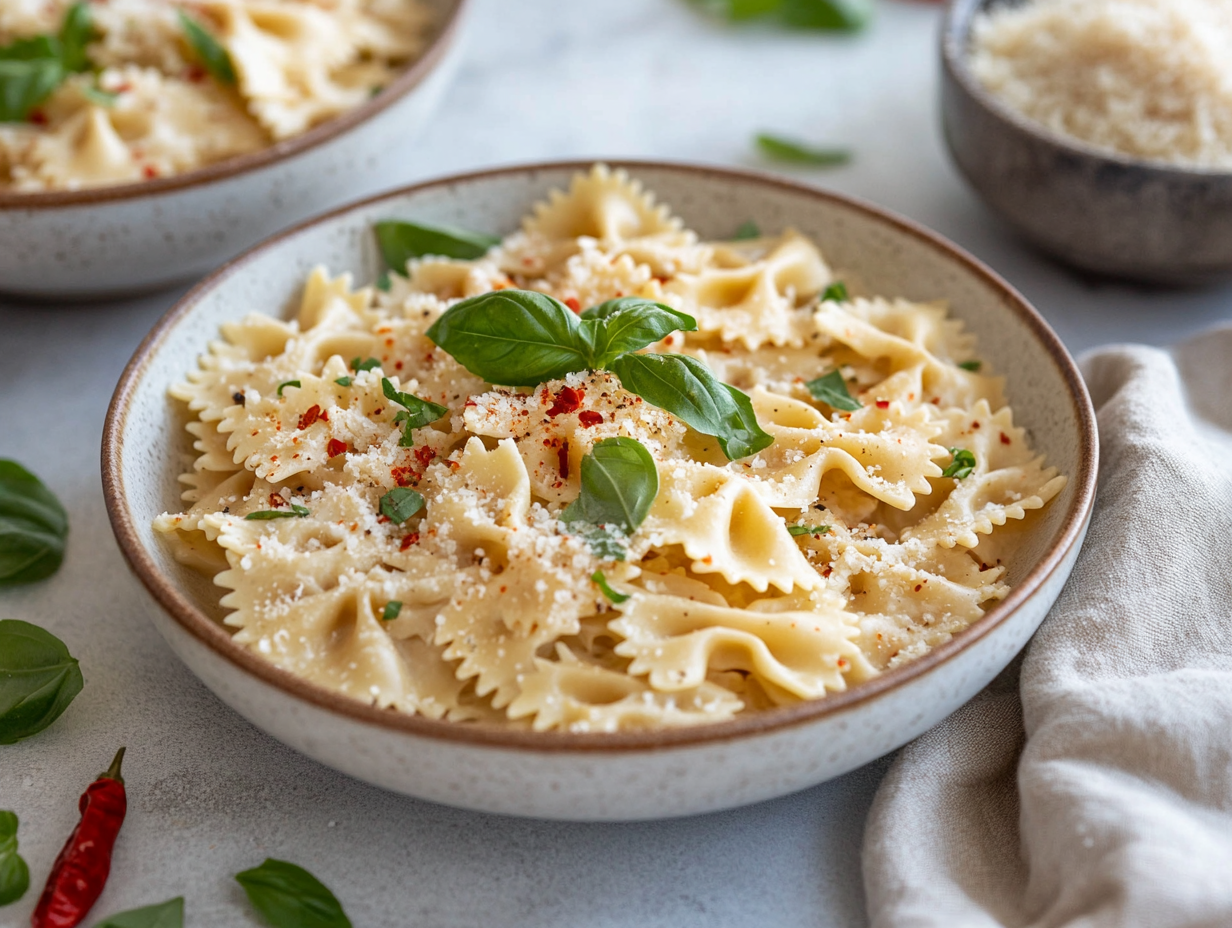
Every pasta night runs on three staples: a dry pasta (any long shape), a jar or can of tomatoes, and a fat (olive oil, butter, or bacon). Vary the fourth thing — the protein, the vegetable, or the finishing cheese — and you have a year of Monday dinners.
Start the rotation with One-Pot Pasta Primavera — pasta, spring vegetables, and stock cooked together in one pot for a total of 22 minutes. When the family wants richer, swap to Pasta alla Carbonara with Guanciale and Black Pepper; it's a 5-ingredient dish that eats like restaurant food and needs nothing but eggs, cheese, and cured pork you already have. For a hearty stew-adjacent night, Herb-Infused 16-Bean Pasta e Fagioli turns a bag of dry beans and a box of ditalini into a one-bowl dinner that feeds six for under $8.
Rotate through the rest of the pasta library — meat sauces, vegetable primavera, cacio e pepe, brown-butter sage — and never repeat within a month. The trick to a good pasta rotation is owning a decent Dutch oven or 5-quart stockpot; the Le Creuset Signature 7.25-quart Dutch Oven is the one pan that cooks pasta, sauce, and one-pots in the same vessel with even heat and easy cleanup.
10 sheet-pan dinners the kids won't reject
Sheet-pan Tuesday is the highest-leverage slot in the rotation. One pan, one oven step, 30 minutes total, dishes = 1. The trick is picking a good pan — a heavy-gauge aluminum half-sheet like the Nordic Ware Brilliant 18x13 Half Sheet Pan doesn't warp at 425°F and gives you real browning instead of a flat, steamed dinner.
Anchor Tuesday nights around three easy wins. Sheet Pan Honey-Garlic Glazed Chicken Thighs is the crowd-pleaser: bone-in thighs, a honey-soy glaze, and any vegetable you have (broccoli, sweet potato, green beans) all on one pan at 425°F for 28 minutes. Kids eat it. Adults get seconds.
For a fish night that even skeptical kids will try, Sheet Pan Miso-Glazed Salmon with Sesame-Scallion Veggies uses a sweet miso glaze that mellows the fish flavor and delivers protein plus vegetables in 18 minutes. And for the classic weeknight bailout, Sheet Pan Cajun-Spiced Sausage and Peppers needs nothing more than a package of smoked sausage, three bell peppers, and a red onion.
The sheet-pan playbook is simple: protein in the middle, dense vegetables (potatoes, sweet potatoes, root veg) around the edges, quick vegetables (broccoli, asparagus, snap peas) added in the last 12 minutes. Toss everything in olive oil and salt. If it takes longer than 3 minutes to prep, you're overthinking it.
10 taco-and-bowl variations
Taco Wednesday works because everyone builds their own plate. Nobody has to eat the same combination, nobody negotiates, and the framework — protein + shell + toppings — is stable. Swap the protein each week and the family feels like they're eating a different dinner.
Rotate through Mexican-Style Beef and Black Bean Tacos with Cilantro Lime Slaw for the classic ground-beef version; Quick Chicken Tinga Tacos with Avocado Crema for smoky chipotle chicken; and mix in fish tacos (blackened white fish + slaw), shrimp tacos (garlic-lime shrimp), or black-bean-and-sweet-potato tacos for a Meatless Wednesday variation.
The build-your-own bar is the whole game. Set out: warm tortillas (both flour and corn), the protein in a bowl, shredded lettuce, diced tomato, shredded cheese, sour cream, salsa, hot sauce for the adults, avocado slices, and a lime wedge. Every family member picks their own combination. Even the picky 7-year-old who "hates tacos" will eat cheese-and-meat inside a tortilla when you don't call it a taco.
Rice bowls are the Wednesday alternative for the low-carb crowd — same protein, same toppings, over cilantro-lime rice instead of a tortilla. Same shopping list. Same prep. Different dinner.
The salsa bar is worth planning around. A jar of good salsa is fine, but three small bowls — mild pico de gallo for kids, a smoky chipotle salsa for adults, and a squeeze-bottle of avocado crema — turn a $12 grocery haul into something that reads like a Wednesday-night restaurant. All three keep in the fridge for four days, so Wednesday's leftovers become Thursday-lunch tacos with zero additional prep.
8 soup and skillet dinners
Soup Thursday is the reheat-friendly slot — cook a big pot Wednesday, eat again Thursday, and you've bought back an evening. The rotation library:
Start with Slow-Simmered Bone-In Chicken Noodle Soup with Lemon — the everyone's-happy classic; the lemon at the end is what takes it from grandma-good to restaurant-good. For a vegetarian Thursday, One-Pot Root Vegetable and Lentil Soup uses whatever is in the crisper drawer and delivers 18 grams of plant protein per bowl for about $2 a serving.
Round out the soup library with chili (double the recipe, freeze half), tomato soup with grilled cheese (kids' unbeatable Thursday combo), minestrone, and a chicken tortilla soup. Skillet dinners fill the same slot on a Thursday when nobody wants soup — a one-pan chicken and rice, a beef stroganoff, or a shakshuka works.
The batch move for Thursday: whatever soup you cook, double the recipe. Refrigerate half for Sunday lunch, or freeze in 2-cup portions for a rescue dinner three weeks from now when the rotation blows up.
How to build your rotation in the AislePrompt planner
Open /meal-plan on any AislePrompt page. You'll see a five-slot week grid (Monday through Friday). For each slot:
1. Type the slot theme in the search box ("pasta," "sheet-pan," "tacos," etc.).
2. Drag any recipe result into the day's slot. The recipe card shows time, protein, and difficulty so you can filter.
3. Hit "Save as template" once all five slots are filled. Give it a name like "Family Rotation Week A."
4. Next Monday, hit "New week from template" and the planner re-fills each slot with a fresh recipe from that slot's library. You never repeat a recipe within a month unless you explicitly favorite it.
If you want the whole rotation built in one shot, open /chat and paste: "Build me a 5-day family rotation with one pasta, one sheet-pan, one tacos, one soup, one grill — save it as 'Family Rotation.'" The AI planner will pick five appropriate recipes, respect any dietary tags you've set on your family profile, and drop them into the slots. It takes about 12 seconds. Refine by dragging swaps — one child hates tomato, so swap Monday's marinara for a pesto pasta, save.
One shopping list, five dinners: how the aisle grouping works
Once your five slots are filled, hit "Generate shopping list" and AislePrompt merges the ingredient lists across all five recipes, deduplicates, and groups by store aisle (produce, dairy, meat, pantry, freezer, spices). If two recipes both call for garlic, you get one line for garlic with the summed quantity. If one recipe calls for chicken thighs and another calls for chicken breast, you see both — because they aren't substitutable without changing cook time.
Print the list, or open /shoppinglist on your phone at the store to check off items as you shop. The Instacart-ready button on the same page sends the exact list to a shopper — one tap, one delivery, five dinners.
The shopping-list feature is the reason the rotation format saves families 40+ minutes a week. You're not opening five recipes on Sunday, writing five ingredient lists, and merging them manually — the planner does the merge, and it does it correctly (ounces to ounces, pounds to pounds, not "some chicken" plus "1 lb chicken").
Real-world numbers: hours reclaimed by the rotation
Here's what changes for the average family that switches from ad-hoc weeknights to a rotation, measured over a month:
| Activity | Ad-hoc weeks | Rotation |
|---|---|---|
| Sunday planning time | 45 min | 10 min |
| Shopping list assembly | 20 min | 2 min (auto) |
| Mid-week grocery run | 2 per week | 0-1 |
| Kids asking "what's for dinner" | 5x per week | 1x per week |
| "What do I cook tonight" panic | 3x per week | 0 |
| Total time saved / month | — | ~4 hours |
Four hours is a Saturday afternoon back. It's also 60% less "decision fatigue" because 5 slots × 4 weeks = 20 recipe picks per month, but from a curated slot library of ~10 candidates each, not the full 100,000-recipe internet.
Common pitfalls (and how to skip them)
- Building the rotation with 5 ambitious recipes. The rotation only works if all five slots stay under 40 minutes. Save the risotto and the braised short ribs for weekends.
- Not building a flex slot. Assume one night per week will blow up. Structure Thursday so it can be leftovers, takeout, or a 10-minute pasta.
- Repeating the same recipe within a month. Kids notice. Even good recipes get boring. Rotate.
- Not shopping for the whole rotation on Sunday. The rotation only saves time if you buy for all five nights in one trip. If you're re-shopping mid-week you've lost the gains.
- Ignoring dietary flex. If one kid stops eating meat, the rotation needs a vegetarian option in every slot — otherwise you're cooking two dinners.
When NOT to use a rotation
Some weeks the rotation isn't the right tool. Skip it during: the week you're hosting for a holiday (menu is set), the week you're moving or renovating (delivery week), the first week of a new diet or elimination (the plan needs to be tighter than a template), and vacation weeks (obviously). Pick the rotation back up the following Monday.
FAQ
How is a dinner rotation different from a weekly meal plan?
A weekly plan is disposable — you use it once, shop for it, and start fresh next Monday. A rotation is a template: five recurring "slots" (Pasta Monday, Sheet-Pan Tuesday, etc.) where you swap in different recipes each week. The rotation cuts planning time from 45 minutes to 10 because the framework is stable and you're just picking this week's variation. It also builds pantry rhythm: you always know you'll want olive oil, canned tomatoes, and rice.
How do I get my kids to eat the same rotation without revolting?
Vary the toppings and sauces, not the framework. Taco Wednesday can be beef, chicken, shrimp, black bean, or fish tacos — the shell and sides stay the same but nobody feels like they're eating the same thing. Sheet-Pan Tuesday rotates between chicken thighs, salmon, sausage, and turkey meatballs. Kids find comfort in the pattern (they know Wednesday is tacos); the sauce roulette handles novelty. This is exactly how good school cafeterias structure menus.
What if we have a busy night and can't cook?
Build one "flex slot" into the rotation for takeout or leftovers — Thursday is often the natural night for it. The rotation still works because the other 4 nights are locked. If leftovers happen more often, structure the rotation so 3 recipes double-portion easily (soups, chili, pasta, sheet-pan proteins) and Thursday becomes "best-of" from Mon/Tue/Wed. Never plan 5 from-scratch dinners for a week you know is chaotic.
Can I do this if I have picky eaters with conflicting preferences?
Yes with the "deconstructed dinner" pattern. Taco Wednesday works because everyone builds their own plate. Sheet-pan dinners work because kids can pick which protein and veg to eat. Soup Thursday is harder — solve it with a soup + grilled cheese combo where the cheese is the fallback. Avoid casseroles and mixed dishes on rotation nights; save them for weekends when you have time to negotiate.
How does AislePrompt help me build a rotation?
Open /meal-plan and use the weekly planner. Drag five recipes into the slots (or ask /chat: "build me a 5-day family rotation with one pasta, one sheet-pan, one tacos, one soup, one grill"). Hit "Save as template" and next Monday you can regenerate with fresh recipes in the same slots. The shopping list auto-generates and groups by store aisle. Any recipe in the AislePrompt catalog fits the template — that's the point of the framework.
Related content
If you like the rotation framework, run it through the AislePrompt Meal Plan builder with your family's dietary tags applied, and open /chat any time you want to swap a slot for a different theme (grill night → pizza night, tacos → bowls). The shopping list auto-generates from your five recipes and groups by aisle — one Sunday pass, five dinners, and the rest of the week is unremarkable in the best possible way.
Sources: The Kitchn — How to plan a week of family dinners, NYT Cooking — Weeknight recipes, Bon Appétit — How to meal plan.
Frequently asked questions
How is a dinner rotation different from a weekly meal plan?
How do I get my kids to eat the same rotation without revolting?
What if we have a busy night and can't cook?
Can I do this if I have picky eaters with conflicting preferences?
How does AislePrompt help me build a rotation?
Sources
Recipes to start your week with
Save any of these to My Recipes — no account needed — and send the ingredients to Instacart in one tap.


Dinners the kids will actually eat.
Ask our AI to plan the week around your picky eater — one shopping list, one Instacart cart.
Plan the kids’ week →