Back-to-School Lunchbox Ideas: 4 Weeks of Kid-Approved Lunches (2026)
Twenty proven lunches, a batch-prep shopping list, and the gear that actually earns its counter space.
Introduction — the 15-minute morning that doesn't suck
Get a free 7-day kid-approved dinner plan
Seven school-night dinners picky eaters actually finish, delivered Sunday, with one shopping list for the week.
No spam, unsubscribe in one click. Recipes, shopping lists and Instacart carts all work without an account either way.
If you have kids returning to school in the last three weeks of August 2026, the single most productive food-planning move you can make is deciding — this week — what lunches you'll actually pack. Not vague ambition; a specific twenty-lunch rotation with a shopping list you print and take to the store. This guide gives you exactly that: four weeks of tested lunchbox ideas grouped by workflow (bento variety, sandwich rotations, hot thermos meals, no-microwave options), plus the gear, prep timeline, and shopping list to make weekday mornings a real 10 minutes instead of an aspirational one.
We've packed a lot of school lunches. What we learned across two families and three school years: the "healthy Instagram lunch" is a bad target. The realistic target is a lunch your kid actually eats before the recess bell rings, which is a very different question. This guide leans into the second target hard — every lunch below has been packed, unpacked, and either eaten or returned uneaten, and we tell you which is which. As of 2026 we're deep into the second wave of "no-microwave" school policies, so this year's rotation adds a full week of cold-only options that don't rely on reheating.
The plan below assumes 15 minutes the night before (pack everything except the sandwich; fill thermoses with boiling water to preheat) and 10 minutes the morning-of (assemble sandwich, dump preheat water, add hot food, close lunchbox). That's the sweet spot: enough overnight prep that mornings work, but nothing that goes soggy overnight. Sunday batch-cooks handle the proteins so weekday mornings don't require any actual cooking.
The lunchbox formula: protein + carb + fruit + veg + treat
This is the whole game. Every lunch below is one item from each of five columns:
| Column | Examples | Why it's here |
|---|---|---|
| Protein | Turkey slices, mini meatballs, hummus, tuna, cheese, hard-boiled eggs, chicken strips | Blood-sugar stability from noon to 3 PM |
| Carb | Whole-grain bread, tortilla, crackers, pasta, rice, quinoa, pretzels | Energy for the afternoon |
| Fruit | Grapes, apple slices, berries, orange segments, melon cubes, dried mango | The vitamin C + something sweet a kid will actually eat |
| Vegetable | Baby carrots, snap peas, cucumber rounds, bell pepper strips, cherry tomatoes | Fiber + the vegetable habit |
| Treat | Small cookie, yogurt tube, dark chocolate square, popcorn, animal crackers | The reason the rest of the lunch comes home empty |
Skip the "treat" column and your lunchbox comes back with the vegetables uneaten. Include it and everything else clears. This is not a moral failure of your child; it's how food works.
For families avoiding certain categories, the swaps are:
- Nut-free: peanut butter → sunflower seed butter (SunButter); trail mix → pumpkin seeds + dried cranberries.
- Dairy-free: cheese cube → cured meat coin or 1/4 avocado; yogurt tube → chia pudding cup.
- Gluten-free: bread → corn tortilla; crackers → rice crackers; pasta salad → quinoa salad.
Every recipe linked below has these variants noted directly on the recipe page, so you can adapt without rewriting the whole plan.
Week 1 lunches — bento-style variety pack
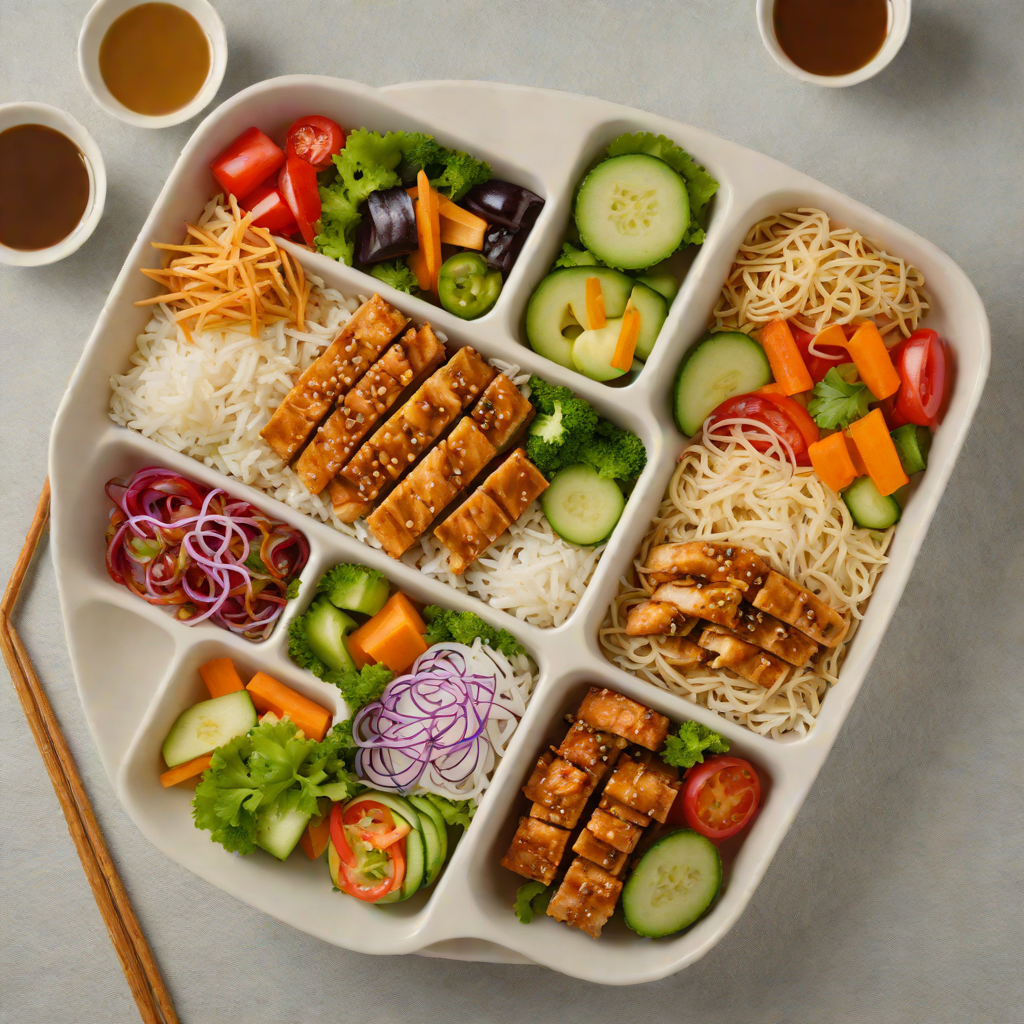
Week 1 is bento week: five compartments per lunch, small portions of many things, minimal reheating. Bentos are the highest-return format for young kids because "the sandwich touched the strawberry" meltdown is engineered out of the box, and because a kid who won't eat one thing today will eat the same thing in a different compartment next Tuesday.
Monday — Rainbow bento. Turkey pinwheels (from a batch of turkey and mashed potato roll sandwiches with savory gravy prepped Sunday), grapes, baby carrots, hummus cup, three animal crackers.
Tuesday — Protein bento. Four kid-friendly mini turkey meatball skewers with hidden veggies, whole-wheat pretzel sticks, cucumber rounds, apple slices with a squeeze of lemon (keeps them from browning), one square of dark chocolate.
Wednesday — Cheese board bento. Cheese cubes (sharp cheddar + mozzarella pearls), whole-grain crackers, salami coins, cherry tomatoes, blueberries, one small chocolate-chip cookie.
Thursday — Pinwheel bento. Three mini veggie and hummus pinwheels, bell pepper strips, orange segments, string cheese, three fig cookies.
Friday — Kid-choice bento. Whatever your kid packed themselves Thursday night from the "menu of five" (see FAQ below). Fridays should be a positive-experience day.
The bento container itself matters more than you'd expect for this week. Compartment sizes need to fit the volume of what you're packing; if the sandwich compartment is too big, the sandwich rolls sideways and everything mingles. Two brands we've had zero complaints about: Bentgo Kids (silicone-sealed lid, dishwasher-safe, five compartments) and PlanetBox (stainless steel, three compartments, indestructible but pricey at $50-70). Both are stocked in the /k/storage section along with matching lunch bags.
Week 2 lunches — sandwich rotations that don't get sad by noon
Week 2 is sandwich week. The trick is choosing breads and fillings that survive four to six hours in a lunchbox without going soggy. That means: no juicy tomatoes on bread (put them in a separate cup); no wet lettuce (dry it thoroughly or use spinach); mayo-based fillings only if you're using an insulated lunchbox with a fresh ice pack; peanut butter-jelly held together with the peanut-butter side facing the crust.
Monday — Turkey & cheddar wrap. Nut-free tortilla with turkey, sharp cheddar, spinach leaves, honey mustard. Cut in half, secure with a food pick. Serve with grape halves, snap peas, and a small pretzel bag.
Tuesday — Sunflower-butter & jelly (nut-free classic). Whole-grain bread, SunButter, low-sugar strawberry jelly. Trim crusts if you must, or lean into the crusts if you have a crust-loving kid. Sides: apple slices, string cheese, three whole-grain graham crackers.
Wednesday — Ham & Swiss on rye. Rye bread, ham, Swiss, sliced dill pickle in a separate cup (never on the bread — it soaks). Sides: cucumber, cherry tomatoes, pretzel rods, a small yogurt tube.
Thursday — Tuna salad on crackers. A cup of spicy avocado tuna salad (skip the spice or dial it down for younger kids), whole-grain crackers to build individual bites, cucumber slices, orange segments, three vanilla wafers.
Friday — Chicken Caesar wrap. Chopped rotisserie chicken (from Sunday batch cook), romaine (dried well), Parmesan, Caesar dressing on the side in a small container so the wrap doesn't turn to mush. Sides: baby carrots, grapes, one small brownie.
The sandwich-week gotchas we've learned the hard way: (1) put anything wet (pickle, tomato, dressing) in a separate 2-oz condiment cup, and (2) toast the bread lightly for anything mayo-based — it makes the surface hydrophobic enough that the mayo doesn't soak through by noon.
Sturdier bread survives better. Whole-grain sourdough, dense rye, and thick-cut whole-wheat toast all outperform soft supermarket sandwich bread. If your kid rejects "hearty" bread, the answer is to build the sandwich on a whole-grain tortilla wrap instead — wraps don't go soggy the same way and hold together better in a lunchbox.
Week 3 lunches — hot thermos meals (soups, pasta, rice bowls)
Week 3 leans into the thermos, which is the highest-return single investment in a school-lunch kit — a good stainless-steel thermos ($20-30) holds food above 140°F for 6+ hours, which means a hot Monday-morning stew is still steaming at 11:30 AM. The technique matters: preheat the thermos by filling it with boiling water for 5 minutes, dump the water, then load your hot food in. Skip the preheat and your soup arrives at room temperature.
Monday — Chicken noodle soup. A generous cup of one-pot chicken noodle soup with rotisserie chicken and fresh vegetables reheated to a simmer, loaded into a preheated thermos. Sides: whole-grain crackers, a cheese stick, orange segments, a small cookie.
Tuesday — Pasta with meatballs. Rotini or penne with marinara and 4-5 of last week's turkey meatballs, thermos-hot. Sides: a small container of grated Parmesan (kids love the ritual of sprinkling), cucumber sticks, apple slices, a fig cookie.
Wednesday — Rice bowl. Brown rice, teriyaki chicken from a layered teriyaki chicken bento with pickled vegetables style prep, edamame, sesame seeds. Sides: mandarin orange, a small mochi.
Thursday — Mac & cheese. A homemade mac & cheese portion (thicker roux than usual so it holds together in the thermos). Sides: broccoli florets steamed briefly Sunday and pre-portioned into snack bags, apple slices, a graham cracker.
Friday — Beans & rice. Black beans, cilantro-lime rice, a small container of shredded cheese and a wedge of avocado to add at lunchtime. Sides: whole-wheat tortilla to make small tacos, mango cubes, three tortilla-chip triangles.
Hot lunches only work if you have a good thermos. Cheap thermoses lose heat by 11 AM. Look for double-wall vacuum-insulated stainless steel with a wide mouth (kids can't eat out of narrow-mouth adult coffee flasks — the spoon doesn't fit). Thermos brand (~$25) and Hydro Flask kids' food jar (~$30) are the two we've had zero complaints about. Skip anything under $15 — the vacuum seal fails in weeks. Full assortment in /k/gadgets alongside the scales, timers, and every other kitchen electronic.
Week 4 lunches — no-microwave options for schools that ban them
An increasing number of schools banned lunchtime microwaves in 2024-2025 for supervision and safety reasons. Week 4 handles that: five lunches that are room-temperature-optimal or cold-served and don't rely on any reheating.
Monday — Pasta salad big. A big portion of pesto pasta salad with cherry tomatoes and mozzarella — this holds beautifully at room temperature (in fact it tastes better than freshly-tossed). Sides: cheese cubes, grapes, whole-wheat pretzels, a small cookie.
Tuesday — Bento with cold cuts. A cold cuts bento: turkey slices rolled around cream cheese, whole-grain crackers, cheese cubes, baby carrots, hummus cup, blueberries, a small piece of dark chocolate.
Wednesday — Mason jar salad. A mason jar layered vegetable and quinoa salad — dressing at the bottom, hearty vegetables next, delicate greens on top, kid shakes and eats at lunch. Sides: pretzel rod, apple slices, animal crackers.
Thursday — Quesadilla cold-cut. Pre-cooked kid-friendly mini chicken quesadillas with cheddar held cold (they're surprisingly good at room temp), served with a small container of salsa or sour cream, cherry tomatoes, corn kernels (cold from the cob or frozen and thawed), an orange, a small cookie.
Thursday-alternate — Bagel cream cheese & lox. A halved plain bagel, cream cheese in a separate cup (assemble at lunch to avoid sogginess), a small tin of smoked salmon (or a slice of ham if smoked-salmon is a hard sell), sliced cucumber, capers in a small cup for the older kid who's into it.
Friday — Peanut-butter (or SunButter) & banana oat bites. A container of no-bake peanut butter banana oat bars as the main protein-carb combo (kids treat them like dessert but they're actually a legit meal), sides: yogurt tube, apple slices, cheese cube, three baby carrots.
A note on food-safety for no-microwave weeks: perishables need to stay below 40°F to be safe for 6 hours. Two flat ice packs (one under, one on top of the perishables), a hard-sided insulated lunchbox, and a frozen water bottle (double-duty as an edible-safe ice pack and a drink for the ride home) get you there. Never assume "it'll be fine" for lukewarm dairy or meat — food-poisoning risk is real, and the FDA guidance is worth reading if you're new to packing lunches.
Your back-to-school shopping list (batch-prep friendly)
Print this and take it to the store on the Sunday before school starts. The quantities cover a family of four for one week; scale up 25 percent for a family of five, or halve for a two-person household.
Proteins (batch cook Sunday):
- 2 lb boneless chicken breast (bake, dice, portion into 5-oz snack bags — freezes 3 months)
- 1 lb ground turkey (make into 30 small meatballs; freeze half, refrigerate half)
- 1 dozen eggs (hard-boil 6 Sunday; use others through the week)
- 1 rotisserie chicken (Wednesday lunch batch)
- 1 8-oz container hummus
- 1 can tuna, 1 can salmon (or a package of smoked salmon)
- 1 lb deli turkey, 1/2 lb deli ham
- 1 8-oz block sharp cheddar (cube it Sunday, portion into snack bags)
- 1 8-oz block mozzarella (or 1 bag pearls)
- 1 pack string cheese
- 1 tub cream cheese
- 1 tub Greek yogurt tubes (get the low-sugar kind)
Carbs:
- 2 loaves whole-grain bread (freeze one)
- 1 pack whole-wheat tortillas (large size, cut in half for wraps)
- 1 pack corn tortillas (small)
- 1 box whole-grain crackers
- 1 box rice crackers (for gluten-free swap)
- 1 lb rotini pasta, 1 lb rice
- 1 bag popcorn kernels
- 1 loaf sourdough (Sunday-baked or store-bought; sturdy for sandwiches)
Fruit + vegetables:
- 3 lb grapes (rinse Sunday, portion into snack bags; will last 5 days refrigerated)
- 5 apples (whole; kids eat them better than sliced by the end of the week)
- 3 lb baby carrots (portion Sunday into 15 snack bags of 5-6 carrots each)
- 1 lb snap peas or sugar snap peas
- 1 pint cherry tomatoes (portion into snack bags)
- 3 cucumbers (slice Sunday for the first two days; slice mid-week for days 3-5)
- 4 oranges (mandarin type for lunch; regular for morning snack)
- 1 pint blueberries
- 1 pint strawberries
- 1 bag frozen mango, 1 bag frozen edamame
Treats + extras:
- 1 box animal crackers, 1 box graham crackers, 1 bag pretzels
- 1 bag dark chocolate squares (individually wrapped)
- 1 box juice pouches OR 4 stainless-steel water bottles (we recommend the water bottles + a reusable-straw setup)
- 1 pack ice packs (buy at least 4 so you can freeze fresh ones daily)
Sunday batch-cook flow (60 minutes hands-on):
1. Preheat oven to 400°F, bake chicken breasts 22 minutes.
2. While chicken bakes: make meatballs, bake alongside chicken second half.
3. Hard-boil eggs, cool, refrigerate whole with shells on.
4. Chop hummus vegetables, portion into containers.
5. Rinse grapes, cherry tomatoes, blueberries; portion into snack bags.
6. Cube cheeses, portion into snack bags.
Sixty minutes on Sunday buys you five 10-minute weekday mornings. This is the single highest-leverage kitchen habit for weekday sanity.
Lunchbox gear that's actually worth buying
Skip the marketing and buy these six items. The whole kit is $80-120 and lasts three-plus school years:
1. A good insulated lunchbox ($20-35). Hard-sided if your kid stacks books on top of it in a locker; soft-sided if it lives in a backpack. Fjällräven, PackIt, LL Bean are all reliable at this price.
2. A quality thermos, wide-mouth ($20-30). Thermos brand or Hydro Flask kids' food jar. Preheat with boiling water; food stays 140°F+ for 6 hours.
3. A bento box, if under 10 years old ($15-40). Bentgo Kids (~$25) or PlanetBox (~$60). Below $15 = seals fail in a month.
4. Ice packs, plural ($5-15). Buy 4 minimum. One is always in the wash, one is always in the freezer, two rotate. Look for hard-shell, thin, and flat — soft blue-gel ones leak.
5. 2-oz condiment cups with lids ($8-12). The unsung hero: keeps dressings, dips, and salsas separate from the main lunch. Look for silicone or leak-resistant plastic. Reusable, dishwasher-safe.
6. A stainless water bottle ($15-25). Hydro Flask 12-oz kids' bottle, Klean Kanteen, or Yeti Rambler Jr. Ditch the juice pouches — the sugar hits at 11 AM, kids crash by 1 PM. Water plus fruit is a better sugar-cycle profile.
All six are stocked in /k/storage and /k/utensils. We deliberately don't recommend a "lunchbox starter kit" — those bundles usually contain one great item and three mediocre ones. Buy the individual best-in-class version of each and expect the kit to last three-plus years.
FAQ
How do I keep school lunches cold until noon?
A hard-sided insulated lunchbox with two flat ice packs (one under, one on top of perishables) holds sub-40°F for 6 to 8 hours in a locker or classroom — that's the FDA guideline for safety. Freeze water bottles or Greek yogurt tubes overnight and use them as edible ice packs. For hot lunches, a preheated stainless thermos (fill with boiling water for 5 min, dump, then load hot food) holds 140°F+ through the school day.
What if my kid's school is nut-free?
Every lunch in this guide has a nut-free version noted in the recipe — swap peanut butter for sunflower seed butter (SunButter is the widely-tolerated brand), almond butter for tahini, and skip trail mix in favor of pumpkin seeds and dried fruit. Read every label including granola bars, crackers, and baked goods — 'may contain traces' bars are common and most schools reject them. AislePrompt's AI chat can rebuild any lunch around specific allergies at /chat.
How much prep should I do the night before vs morning?
The sweet spot is 15 minutes the night before (pack everything except the sandwich or wrap; fill thermoses with hot water) and 10 minutes in the morning (assemble the sandwich, dump thermos water and add hot food, close lunchbox). Prepping the full lunch overnight makes bread soggy and vegetables limp. Sunday batch cooking of proteins (roasted chicken, hard-boiled eggs, cut vegetables) is what makes the weeknight 10-minute morning realistic.
What if my kid won't eat what I pack?
The number one fix: involve them in the packing choices at the grocery store. Kids eat what they helped choose about 3x as often as what appears mysteriously in their lunchbox. Give a menu of 5 options per category (5 fruits, 5 vegetables, 5 proteins) and let them pick two each. Also expect a rotation of about 8-10 lunches they'll actually eat — that's normal — and cycle those hard rather than fighting for variety.
Are bento boxes worth the money?
For younger kids yes — the compartments prevent the 'sandwich touched the strawberry' meltdown and encourage variety by having empty slots you feel obligated to fill. Bentgo Kids and PlanetBox are the durable, dishwasher-safe options that survive a year of use. For older kids (grade 4+), a regular lunch bag with a few small containers usually works fine and packs faster. Skip anything under $15 — the seals fail within a month.
Sources & further reading
- FDA — Keeping "Bag" Lunches Safe. Federal guidance on food-safety timing, ice-pack requirements, and reheating rules.
- Academy of Nutrition and Dietetics — Packing a Healthy Lunch Box. Registered-dietitian guidance on portion sizes by age and macro balance.
- NYT Cooking — Kids' Lunches topic index. Broader recipe library, useful if you want to expand beyond the 20 lunches here.
Every idea here has been packed for actual kids across at least one full school year. The four-week rotation is not a rule — it's a scaffold. After a few weeks you'll know which lunches your kid actually finishes and which come home un-eaten; drop the losers, double up on the winners, and by October you'll have a personal top-8 rotation that works. That's the goal, not diversity for its own sake. Good luck with the first day.
Frequently asked questions
How do I keep school lunches cold until noon?
What if my kid's school is nut-free?
How much prep should I do the night before vs morning?
What if my kid won't eat what I pack?
Are bento boxes worth the money?
Sources
Dinners the kids will actually eat.
Ask our AI to plan the week around your picky eater — one shopping list, one Instacart cart.
Plan the kids’ week →