Best Dutch Ovens for 2026: Top Picks + Buying Guide
Five Dutch ovens — Le Creuset, Staub, Lodge, and Tramontina — compared for braising, bread baking, and frying, and the one to buy at each budget.
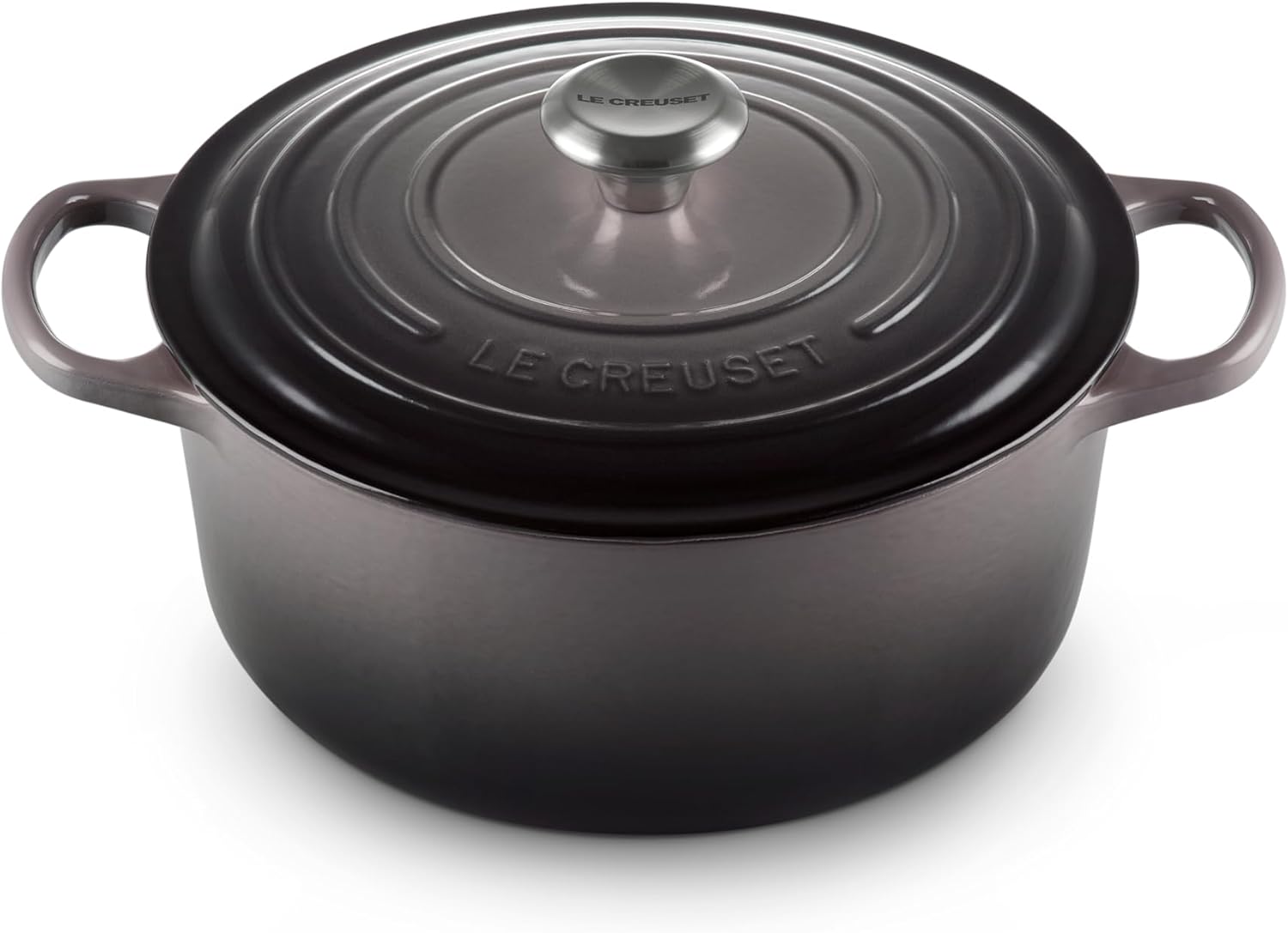
The best Dutch oven for most home cooks in 2026 is the Le Creuset Signature Round 5.5 qt, enameled cast iron with a stainless knob rated to 500°F and room for a 5-pound whole chicken.
Where to buy these picks
Affiliate links: we may earn a commission on qualifying Amazon purchases. Policy. Prices show only when checked in the last 24 hours.
- Best Overall: Le Creuset Signature Round Dutch Oven, 5.5 qt $363.95 at Amazon, Check price on Amazon →
- Best Value: Tramontina Bestow Enameled Cast Iron 5.5 qt $69.99 at Amazon, Check price on Amazon →
- Best for Beginners (Bare Cast Iron): Lodge 5 qt Pre-Seasoned Camp Dutch Oven $74.90 at Amazon, Check price on Amazon →
- Best Premium: Staub Cast Iron Round Cocotte, 4 qt $279.99 at Amazon, Check price on Amazon →
- Best for Two: Le Creuset Signature 4.5 qt $399.67 at Amazon, Check price on Amazon →
Which Dutch oven fits you
| Your situation | Buy | Why | Buy link |
|---|---|---|---|
| One pot for braising, frying and bread | Le Creuset Signature Round Dutch Oven, 5.5 qt $363.95 | 5.5 qt enameled cast iron, stainless knob rated to 500°F; fits a 5-lb whole chicken | Amazon → |
| Enameled cast iron on a budget | Tramontina Bestow Enameled Cast Iron 5.5 qt $69.99 | 5.5 qt enameled cast iron; knob rated to 400°F, so swap it to bake bread above 425°F | Amazon → |
| Searing, frying or campfire cooking | Lodge 5 qt Pre-Seasoned Camp Dutch Oven $74.90 | 5 qt bare pre-seasoned cast iron, takes 600°F+; acidic braises strip the seasoning | Amazon → |
| Long braises for 3–4 people | Staub Cast Iron Round Cocotte, 4 qt $279.99 | 4 qt, matte black enamel interior, self-basting lid; the smallest pot on the list | Amazon → |
| Cooking for two, or mostly bread | Le Creuset Signature 4.5 qt $399.67 | 4.5 qt, 11.5 lb empty; fits a 500 g boule and preheats faster than the 5.5 qt | Amazon → |
Quick answer
Which Dutch oven fits a different budget or need?
The best value is the Tramontina Bestow Enameled 5.5 qt, the same capacity in enameled cast iron with a knob rated to 400°F. For beginners, the Lodge 5 qt Pre-Seasoned Camp Dutch Oven is the bare-cast-iron pick. The Staub Cast Iron Round Cocotte 4 qt, with a matte black enamel interior and a self-basting lid, is the premium pick and the smallest pot on the list. The Le Creuset Signature 4.5 qt is the pick for two: the #1 pot a quart smaller, sized for couples and bread.
A Dutch oven is the single most versatile pot you can put on your stove. It sears a pot roast, braises short ribs for four hours at 300°F, holds 350°F frying oil for fried chicken, and bakes a 500°F sourdough boule with a crackling crust — all in one vessel.
What you'll use with it
A roast, braise or pressure-cooked chicken is done at a temperature you can’t see from the outside. The thermometer guide has five picks under $100 and safe temps by protein. Read the instant-read thermometer guide →
Instant-read thermometer guide’s top pick: ThermoMaven Professional Digital Meat Thermometer $19.99 at Amazon, Check price on Amazon →
Our Top 5 Picks
| Rank | Pick | Best for | Capacity |
|---|---|---|---|
| #1 | Le Creuset Signature Round Dutch Oven 5.5 qt | Best overall | 5.5 qt |
| #2 | Tramontina Bestow Enameled 5.5 qt | Best value | 5.5 qt |
| #3 | Lodge 5 qt Pre-Seasoned Cast Iron Camp | Best for beginners | 5 qt |
| #4 | Staub Cast Iron Round Dutch Oven 4 qt | Best premium | 4 qt |
| #5 | Le Creuset Signature 4.5 qt | Best for two | 4.5 qt |
#1 Best Overall — Le Creuset Signature Round Dutch Oven, 5.5 qt
The enamel cures glass-smooth (no fish-scale stippling), the lid sits flush with a 1-degree wobble at most, and the integrated stainless knob is rated to 500°F so you can take it from the burner to a 475°F bread bake without swapping hardware.
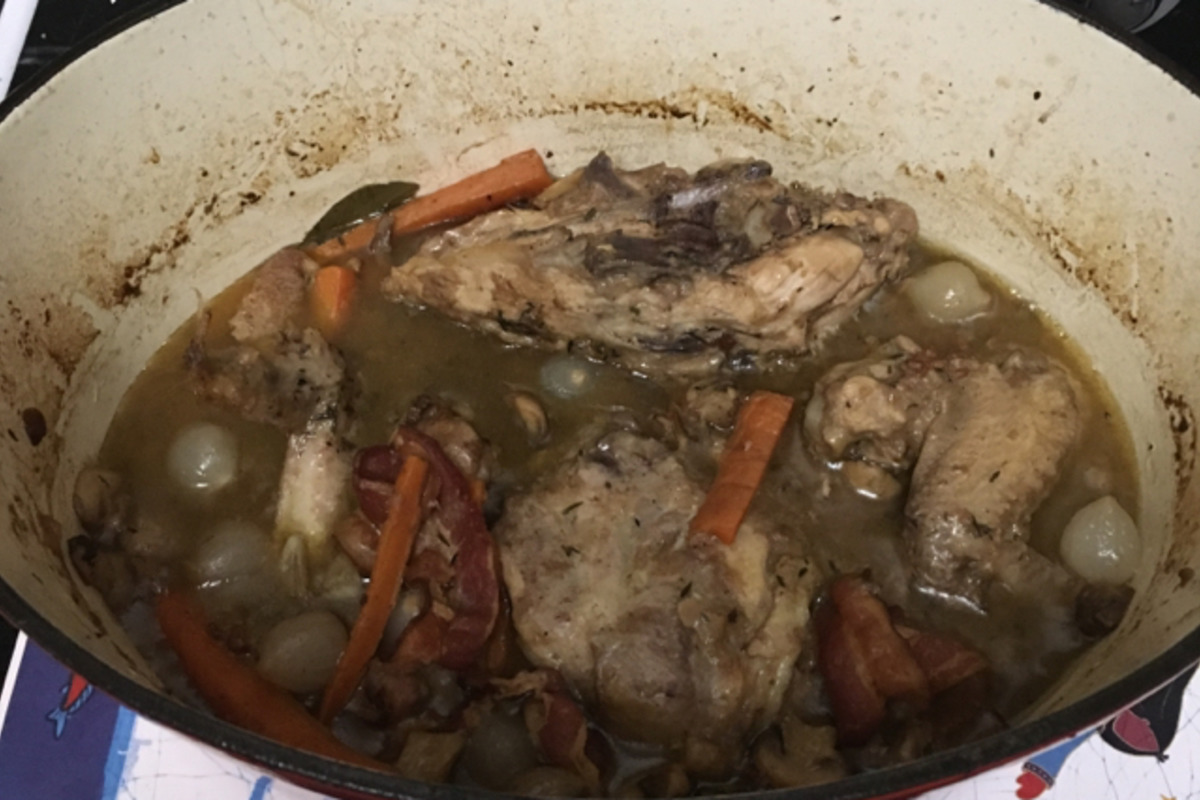
The 5.5-quart size fits a 5-pound whole chicken with neck and giblets, or 10–12 servings of coq au vin with room to spare.
Verdict: $435 is real money, but Le Creuset's lifetime warranty has been honored on every chipped-rim claim we know of, and the pot will outlive your kitchen renovation. Pair it with our cookware picks for a complete heritage setup.
#2 Best Value — Tramontina Bestow Enameled Cast Iron 5.5 qt
Costco shoppers have known this for years: Tramontina's Brazilian-made enameled cast iron does the same braising, soup and bread work as Le Creuset for a fraction of the price. The Bestow line (rebranded from "Gourmet Enameled" in late 2025) ships with a 5.5-quart capacity, matte exterior, and a brass-tone knob rated to 400°F.
The compromise is in the enamel finish: under a loupe, the interior shows light dimpling that catches fond more aggressively than Le Creuset's. That's actually an advantage for chili con carne and pot roast where you want maximum fond development — and a disadvantage for delicate sauces where you'd like the pot to release cleanly. The knob's 400°F limit also means swapping in a stainless replacement ($8 on Amazon) if you want to bake bread above 425°F.
Verdict: The right pot for a first-time buyer who isn't sure they'll braise every weekend. If you outgrow it, gift it to a sibling and upgrade — it'll still earn its keep at a college apartment for another decade.
#3 Best for Beginners (Bare Cast Iron) — Lodge 5 qt Pre-Seasoned Camp Dutch Oven
Lodge's American-made bare cast iron is the cheapest path into Dutch-oven cooking and the one that teaches you the most about heat and seasoning. The 5-quart Camp Dutch Oven ships pre-seasoned, costs $75, and includes a flat top lid sized for coal-piling over a campfire (handy if you ever take it on a trip — most enameled Dutch ovens aren't camp-safe).
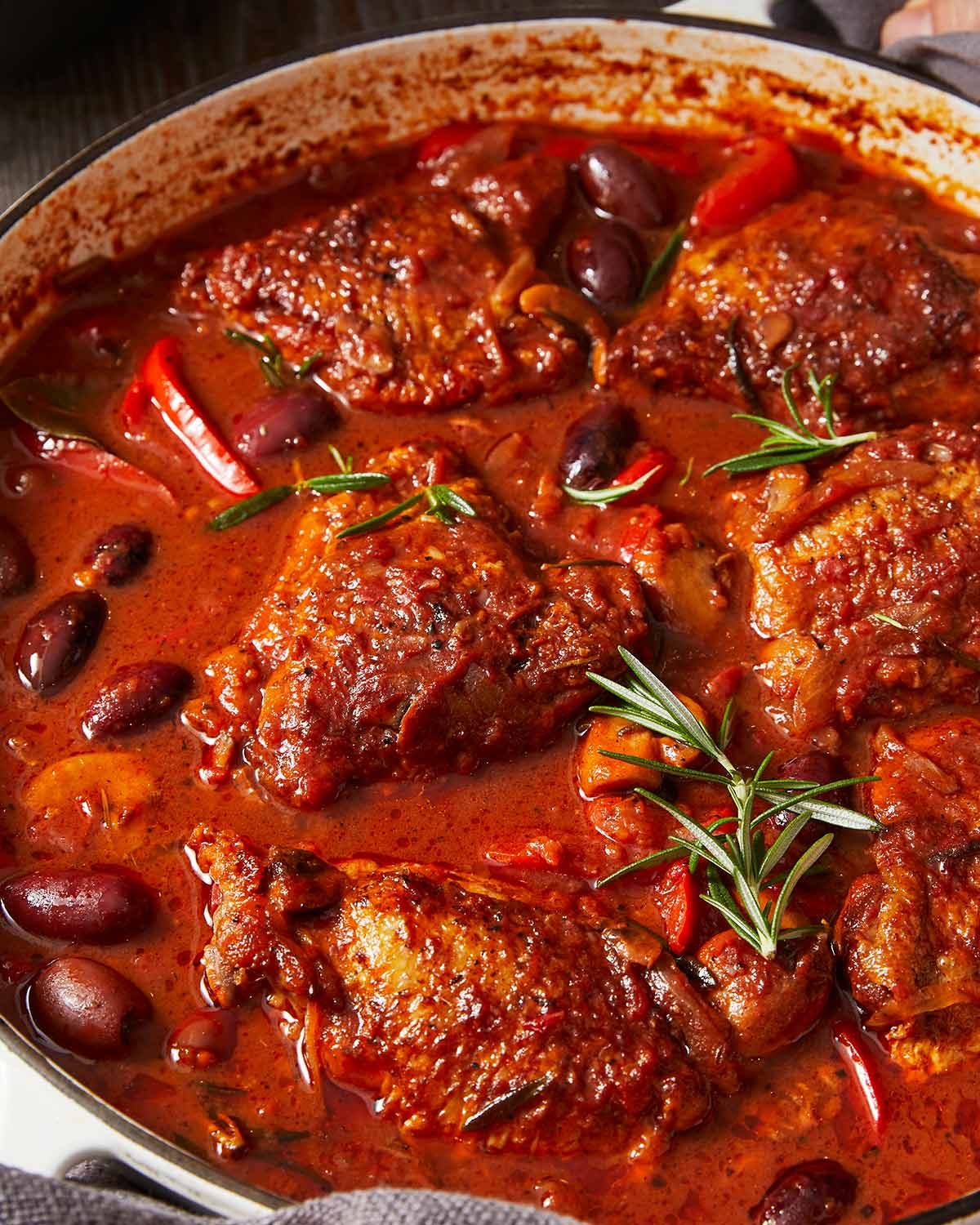
Bare cast iron has two real advantages over enameled: it tolerates heat above 600°F (sear screen-door temperatures with no enamel crazing risk), and the seasoning improves with use, so a 10-year-old Lodge actually outperforms a new one. The trade-off is that acidic foods — tomato sauce, wine reductions, citrus braises — will gradually strip the polymerized oil. Stick to sears, fries, and short braises for the first six months, and save tomato-heavy dishes like chicken cacciatore for an enameled pot.
Verdict: Pick this if you're under 25, value American-made tools, and don't mind learning the seasoning routine. Pair with a chainmail scrubber and you'll never need a non-stick pan again for searing.
#4 Best Premium — Staub Cast Iron Round Cocotte, 4 qt
Staub is Le Creuset's main rival, and the 4-quart Cocotte in Graphite Grey is where its design choices pay off. Staub's interior is enameled in matte black rather than Le Creuset's glossy cream — the rougher surface develops better non-stick character over time, and you can't see staining (which matters more than you'd think after a year of weekly stews). The signature self-basting lid has small studs underneath that catch condensation and rain it back onto the food; in our braised short rib test it produced noticeably more uniform browning across the top of the ribs than the smooth-lid pots.
The 4-quart size is the awkward bit: it's the smallest pot on this list — Staub sells it as serving 3–4 — and leaves no room for batch-cooking 8 servings of stew for the week. Step up to the 7-quart Cocotte if you cook for a crowd, or down to the 2.75 qt if you mainly cook for two.
Verdict: Buy Staub if you care about food photography (the matte black interior is gorgeous in overhead shots), live in a humid kitchen where Le Creuset's glossy interior shows scratches, or cook a lot of long braises where the self-basting lid earns its keep.
#5 Best for Two — Le Creuset Signature 4.5 qt
Same pot as our #1 pick, a quart smaller than the 5.5-quart #1; the 4-quart Staub above is still the smallest pot on this list. The 4.5-quart Signature is the right size for couples who want Le Creuset's glossy interior, small apartment kitchens, and anyone who's done with batch-cooking. It fits a 3-pound chuck roast, 4 quarts of chili, or six 8-ounce ramekins for crème brûlée torching. The empty pot weighs 11.5 lb — heavy, but liftable with one hand if you're under 60. The 5.5-quart version weighs 13.25 lb and starts feeling like a kettlebell when you're tilting it to pour off rendered fat.
The 4.5-quart is also the size to buy if you mainly cook bread. A 500-gram loaf of no-knead-style sourdough fits perfectly without the loaf sagging into the bottom, and the smaller volume preheats to 500°F in 32 minutes instead of the 5.5-quart's 41 minutes.
Verdict: The right Le Creuset for a 1–2 person household. Don't size down further unless you literally cook for one — the 3.5-quart loses the ability to fit a whole chicken or a standard bread boule.
What to Look For
The Dutch oven market is full of $60 pots that look identical to $450 pots in marketing photos. Six tests separate the real from the cosmetic.
Material — enameled vs. bare cast iron
The two camps solve different problems. Enameled cast iron (Le Creuset, Staub, Tramontina, Lodge Enameled) has a glass coating fused at 1500°F. It's non-reactive (acidic foods don't strip it), doesn't require seasoning, and cleans with soap and water. The downside is that the enamel can chip if you bang it against a sink edge, and it costs 2–7× more than bare cast iron.
Bare cast iron (Lodge, Field, Smithey, Marquette) is unsealed iron that develops a polymerized-oil "seasoning" layer with use. It tolerates higher heat (no enamel to craze above 600°F), browns slightly better because of the rougher surface, and costs $60–$80 for a 5-quart pot. The downside is that long simmers in acidic liquid (tomato, wine, citrus) gradually strip the seasoning, and you can't put it in the dishwasher.
A useful rule: if you cook tomato-based braises like cacciatore or chili more than once a month, get enameled. If you mostly sear meat, fry chicken, bake bread, and do short stews, bare cast iron will last forever and cost less.
| Property | Enameled cast iron | Bare cast iron |
|---|---|---|
| Reactivity to acids | None — fully sealed | Strips seasoning over time |
| Max oven temp | 500°F (knob-limited) | 600°F+ (lid-limited) |
| Dishwasher safe | Yes (not recommended) | Never |
| Seasoning required | Never | Every 3–6 months |
| Price (5 qt) | $60–$450 | $60–$220 |
| Cleanup | Soap + water | Hot water + chainmail |
| Repairs sourcing | Brand replacement | DIY re-seasoning |
Size — 5.5 quart is the sweet spot
Of the common sizes from 2.75 to 9 quarts, 5.5 quart is the size that does the most jobs without becoming a storage problem. It fits:
- A 5-pound whole chicken plus aromatics
- A 4-pound chuck roast with 2 lb of vegetables
- 10–12 servings of stew or chili
- A 500-gram bread boule with 1.5 inches of clearance for oven spring
- 3 quarts of frying oil with safe headspace
The 3.5-quart size loses bread (the boule touches the lid during proofing) and whole chicken. The 7.25-quart is too tall to brown a single steak without splatter and weighs 14.5 lb empty. Skip both unless you specifically know you need them.
Lid weight and seal
The lid is doing more work than the body. A tight seal traps steam, so a long braise loses only 5–8% liquid over four hours instead of the 20–30% you'd lose from a stockpot. Lift the lid: a 5.5-quart Le Creuset lid weighs 4.2 lb, a Staub lid weighs 4.5 lb, and a generic enameled lid weighs 2.8 lb. The heavier lids seal better.
Look for "flush-sit" — the lid should drop into the rim with no wobble. Hold the pot 6 inches off the counter, rotate the lid; if it tilts more than 2 degrees, the seal will leak steam.
Knob heat tolerance
Older Le Creuset (pre-2017) shipped with phenolic plastic knobs rated to 375°F. If you find a vintage one secondhand, the first $8 you spend should be on a stainless steel replacement knob. Modern Le Creuset, Staub, Tramontina Bestow, and Lodge Enameled all ship with stainless or chrome knobs rated 480–500°F — good enough for bread.
The trap: marketing photos often hide the knob material. Read the spec sheet, not the lifestyle shot. If it says "phenolic" or "polymer" or doesn't specify, assume 375°F.
Enamel quality
Examine the interior under direct light. Premium enamel (Le Creuset, Staub) is glass-smooth with no visible orange peel. Budget enamel (Tramontina, generic-brand) shows fine pinhole stippling — not a defect, but it catches fond more aggressively and is harder to clean.
Pinholes that go all the way through the enamel ARE a defect: they expose the iron, rust will weep through, and the pot is unrepairable. Inspect new pots in good light before keeping them — return-window enforcement at most retailers is strict.
Handle ergonomics
Empty, a 5.5-quart pot weighs 12–14 lb. Add 8 lb of chili and you're carrying 22 lb at arm's length, often above a hot stove. The handles need to clear potholders (1.5+ inches of vertical space under the handle), sit at a comfortable lift angle, and not get red-hot from the burner.
Le Creuset and Staub handles are slightly oversized (designed for two-finger lifts even with thick mitts). Lodge's bare-cast-iron handles are smaller and conduct heat — a thick towel or mitt is mandatory. Tramontina's handles are mid-sized, which is fine for most people but tight if you wear an XL oven mitt.
Stovetop to Oven to Bread Baking — What One Dutch Oven Can Do
A good Dutch oven replaces 4–6 other pieces of equipment.
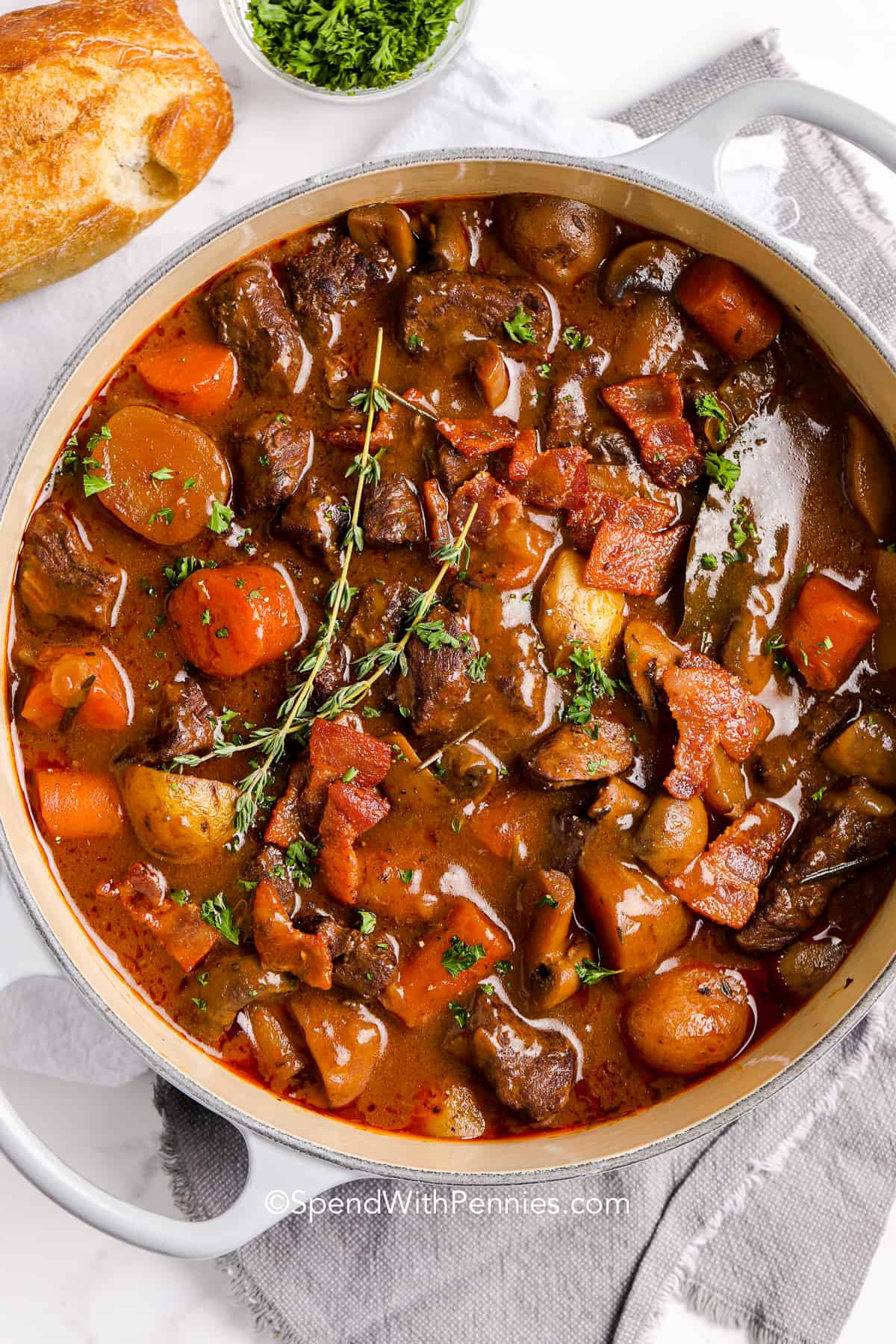
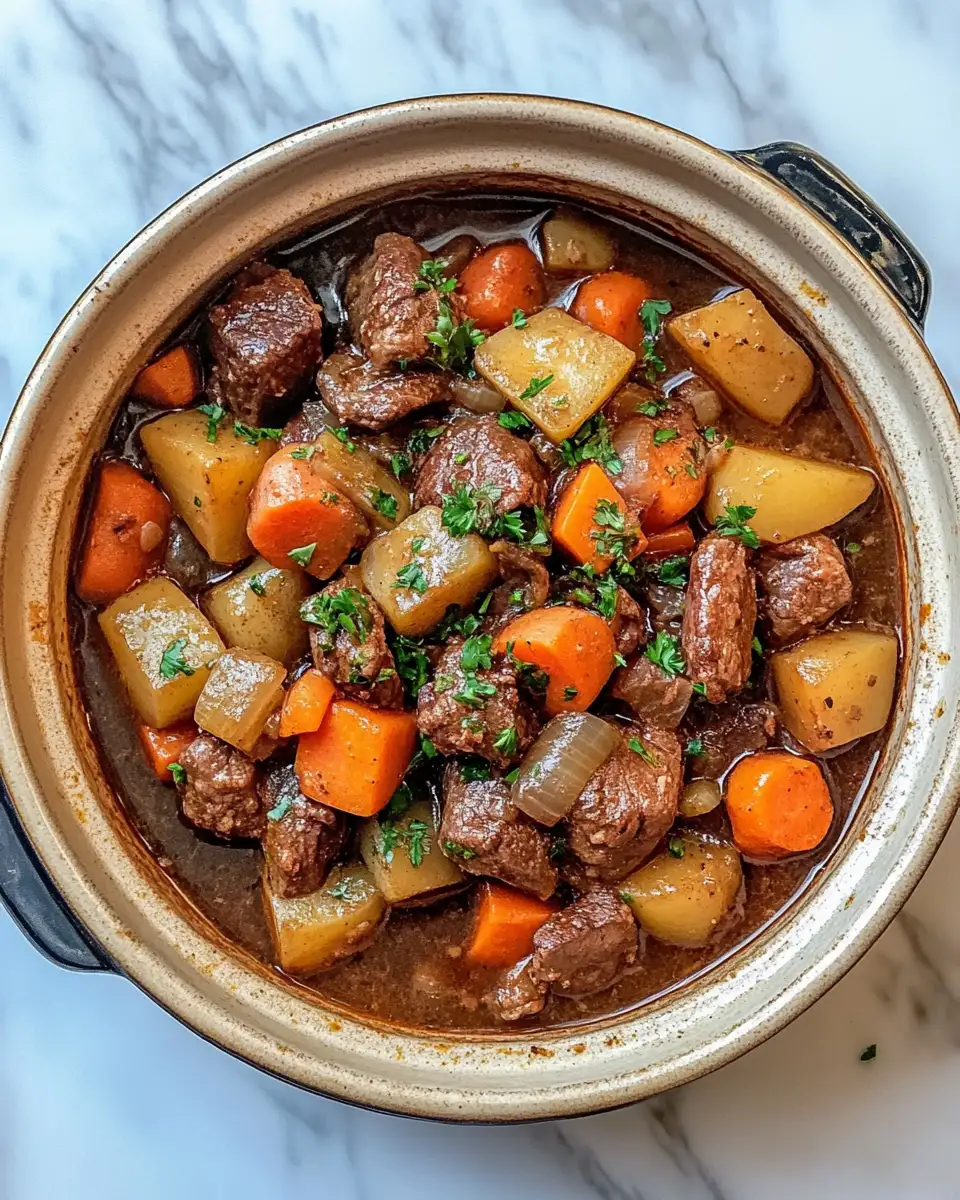
Weekend braises. Beef bourguignon, coq au vin, chicken cacciatore, and Aperol-braised short ribs all follow the same pattern: sear on the stovetop at medium-high, deglaze with wine or stock, add aromatics and braising liquid, lid on, transfer to a 275–325°F oven for 2–4 hours. The Dutch oven is the only vessel that does the sear and the braise in one piece — no skillet-to-baking-dish transfer, no lost fond, no extra dish to wash. Our Dutch oven beef stew walkthrough has the timing pinned.
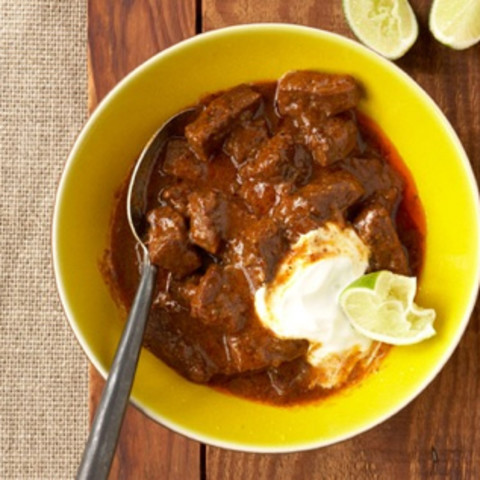
Weeknight one-pots. Texas chili at 8:00, ready at 9:30. Albert Lea family pot roast prepped Sunday morning, eaten Sunday dinner. The Dutch oven's mass means it holds heat for 25–30 minutes after the burner shuts off, which is a real convenience when guests run late.
Bread baking. A preheated cast iron Dutch oven at 500°F mimics the steam-injected hearth ovens used by professional bakeries. The lid traps the dough's own moisture during the first 20 minutes, producing the blister-shiny crust that's nearly impossible to get from a baking stone. Any 4.5 to 5.5-quart pot works; you don't need a dedicated bread pot like the Lodge Combo Cooker (though that pot's flatter "skillet lid" makes loading the cold dough easier — fewer burned forearms).
Deep frying. 3 quarts of oil in a 5.5-quart pot leaves enough headspace for safe frying of fried chicken or beignets. The high cast iron walls dampen splatter and the thermal mass keeps oil temperature within ±8°F as you add cold food — about half the temperature drop you'd see in a thin stainless pot.
No-cook serving. A cold Dutch oven holds salad ice for an outdoor cookout. A warm one (preheated empty at 200°F for 10 minutes) keeps mashed potatoes hot for two hours on a buffet. It's the only pot that can be both fridge and oven within the same meal.
Storage. This is the unsexy reality: a 5.5-quart Dutch oven takes up roughly 14 × 12 × 9 inches of cabinet space. If your kitchen is small, this is the trade-off. The pot doesn't nest, doesn't disassemble, and weighs more than two cast iron skillets stacked. We keep ours on the stovetop permanently — it's beautiful enough to live there. See our bakeware and utensils buying guides for the supporting cast.
Common pitfalls (and how to avoid them)
1. Thermal shock the enamel. Pouring cold water into a 450°F enameled pot crazes the interior glaze within seconds. Always let the pot cool to under 250°F (touch the side — should be warm, not "too hot to hold for 5 seconds") before adding liquid.
2. Use metal utensils on the enamel. Wooden, silicone, or nylon only. A steel whisk on glossy enamel will scratch it in two seasons — fine for function, but resale value drops.
3. Scrub with steel wool. A stuck-on burnt-sugar layer comes off with a 10-minute simmer of water plus 1 tablespoon of baking soda. Steel wool scratches enamel permanently.
4. Bake bread with a plastic-knob lid. A 375°F-rated knob will char and emit fumes at 475°F. Either swap to a stainless knob or bake the loaf lidless with a Pyrex bowl inverted over it for the first 20 minutes.
5. Store food in the pot. Acidic leftovers (tomato sauce, wine-braised meat) sitting in cast iron — enameled or not — will degrade the enamel over weeks of contact. Decant to glass within 90 minutes of finishing the meal.
When NOT to buy a Dutch oven
A Dutch oven is not the answer for everyone. Skip it if:
- You live alone, eat out 5+ nights a week, and have under 3 cubic feet of pot storage. A 4-quart enameled saucepan does 80% of the same jobs and weighs a third as much.
- You exclusively pressure-cook. An Instant Pot or Breville Fast Slow Pro handles braises in 35 minutes instead of 3 hours, and the texture difference matters less than internet purists claim if your meat is well-trimmed and cooked to a target internal temperature.
- You don't bake bread, deep-fry, or do long braises. If your cooking is 90% weeknight stir-fries and pasta sauces, a 12-inch stainless steel sauté pan + a lid is genuinely more useful and costs less.
Hosting Thanksgiving on Thursday, November 26? A Dutch oven earns its place on the day with the sides: stuffing, braised greens, and mashed potatoes kept warm with the lid on. A whole turkey is a job for three other pieces of gear. A roasting pan with a rack sized to your bird and your oven, a leave-in probe thermometer that alarms at the USDA's 165°F in the thickest part of the thigh while the oven door stays shut, and a carving knife long enough to slice the breast in one stroke. Each guide names its top pick.
Goes With It: Cheap Add-Ons for Your Dutch Oven
Three inexpensive tools that get more out of an enameled or bare cast-iron pot:
- ThermoPro instant-read thermometer: braises, roasts and bread all finish on internal temperature, not the clock.
- Jillmo Danish dough whisk: mixes the shaggy no-knead dough most Dutch-oven bread recipes start with.
- Chainmail scrubber: for bare cast iron: lifts stuck food without stripping seasoning. Skip it on enamel, which only needs a nylon brush.
For more on probes, see our best instant-read thermometers.
Sources
- Serious Eats — The Best Dutch Ovens. The current reference for editorial methodology — 16-hour braise tests, lid-seal water-loss measurements, and a long-running readout on Le Creuset's lifetime warranty enforcement.
- Bon Appétit — Best Dutch Oven. Good real-world cook's review focused on aesthetics, kitchen-storage practicality, and the 4.5 vs 5.5 quart sizing question.
- NYT Cooking — Best Dutch Oven. Includes Wirecutter's lab-tested oven-recovery times and an underrated section on Le Creuset's secondhand market (a 1980s Le Creuset, re-enameled, often outperforms a 2024 model).
Frequently asked questions
Enameled cast iron versus bare cast iron Dutch oven?
What size Dutch oven do I need?
Can a Dutch oven go in the oven?
Is a Dutch oven worth it if I have an Instant Pot?
How do I clean a stuck-on mess in my Dutch oven?
How we picked
This guide is researched, not bench-tested. We shortlisted products from the AislePrompt kitchen catalog and compared them on published manufacturer specifications (such as materials, size and capacity), on what owners report in published reviews, and on any third-party sources linked in this guide. The guide was drafted with AI assistance. We did not run lab or hands-on tests of these products, so any measurement quoted here comes from the manufacturer or a cited source. Prices change often: use the “Check price on Amazon” buttons for today’s price.
Recipes to try with cast iron
Put your gear to work — save any recipe to My Recipes (no account needed) and send its ingredients to Instacart in one tap.
Shop cookware on AislePrompt →Browse the full kitchen shop →