Best Instant-Read Thermometers for 2026: Fast, Accurate Picks Under $100
One-second reads, NIST-traceable accuracy, and the temperatures that actually matter for every protein you cook.
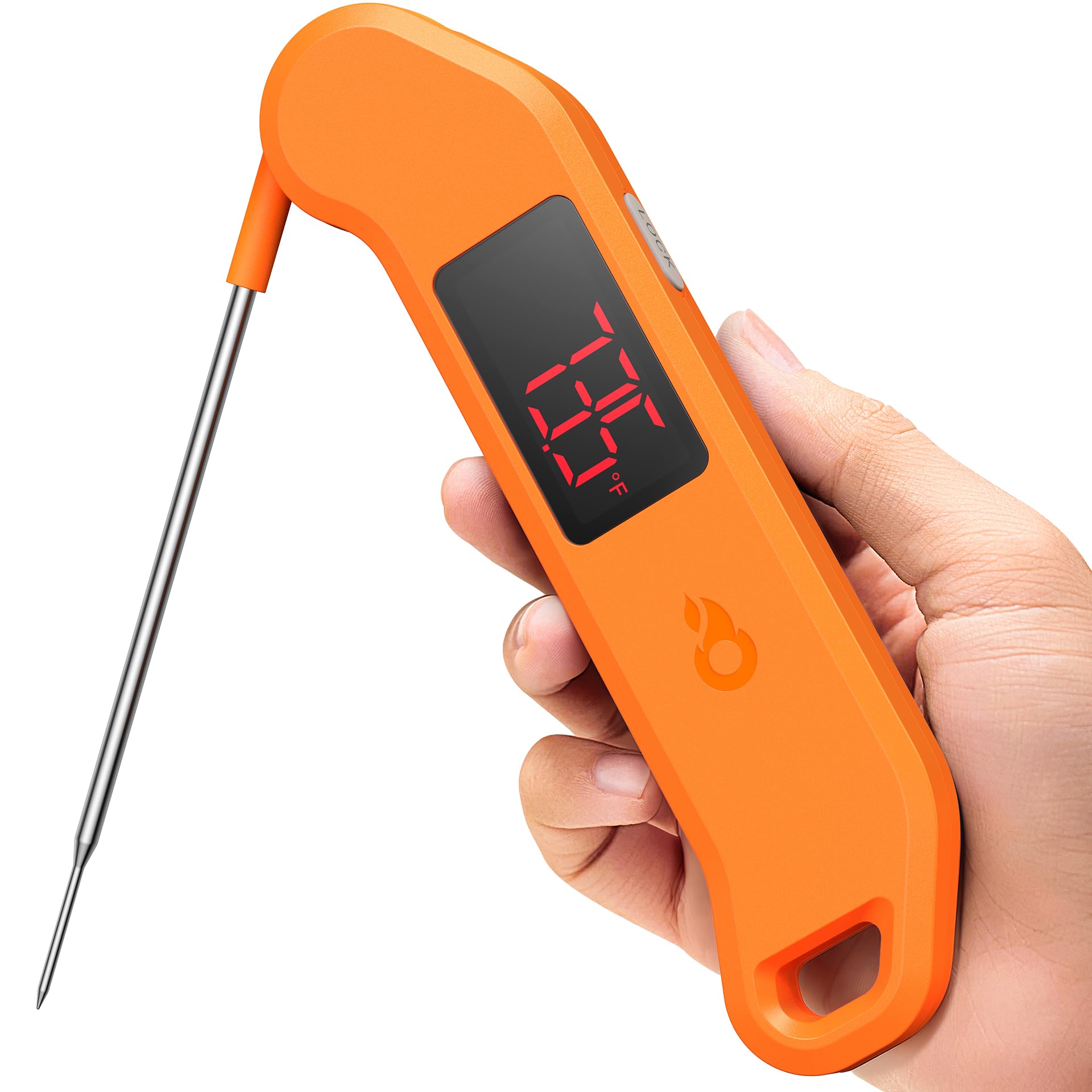
The best instant-read thermometer for most cooks in 2026 is the ThermoMaven Professional Digital Meat Thermometer: a one-second, NIST-traceable probe with ±0.5°F accuracy and an auto-rotating screen.
Where to buy these picks
Affiliate links: we may earn a commission on qualifying Amazon purchases. Policy. Prices show only when checked in the last 24 hours.
- Best Overall: ThermoMaven Professional Digital Meat Thermometer $19.99 at Amazon, Check price on Amazon →
- Best Value: Alpha Grillers Digital Instant Read $13.97 at Amazon, Check price on Amazon →
- Best for Beginners: TempPro TP19 Waterproof Thermocouple $24.99 at Amazon, Check price on Amazon →
- Best Premium: Lavatools Javelin PRO Classic $43.99 at Amazon, Check price on Amazon →
- Best Compact: Rubbermaid Commercial Pocket Thermometer $12.19 at Amazon, Check price on Amazon →
Which thermometer fits you
| Your situation | Buy | Why | Buy link |
|---|---|---|---|
| One thermometer for everything | ThermoMaven Professional Digital Meat Thermometer $19.99 | 1-second read, ±0.5°F, NIST-traceable calibration, NSF certified; auto-rotating screen, waterproof | Amazon → |
| Tight budget, or a second unit for raw protein | Alpha Grillers Digital Instant Read $13.97 | Slower than the ThermoMaven and no NIST paperwork, but cheap enough to own two | Amazon → |
| First thermometer | TempPro TP19 Waterproof Thermocouple $24.99 | Thermocouple sensor; backlit display auto-orients; fully waterproof, so it survives a rinse under the tap | Amazon → |
| Cooking protein several times a week or running a smoker | Lavatools Javelin PRO Classic $43.99 | About a 2-second read, IP65 (splash-resistant, not submersible), NSF certified, large backlit display | Amazon → |
| Apron pocket or knife roll | Rubbermaid Commercial Pocket Thermometer $12.19 | Pocket size and dishwasher safe; slower 5–8 second read, best as a second thermometer | Amazon → |
Quick answer
Which instant-read thermometer fits a different budget or need?
The best value is the Alpha Grillers Digital Instant Read, slower and without the NIST paperwork but cheap enough to own two. For beginners, the TempPro TP19 (the former ThermoPro TP19, renamed on Amazon) pairs a fast thermocouple sensor with a waterproof body and a backlit display that auto-orients. The Lavatools Javelin PRO Classic is the premium pick, with a two-second read, IP65 water resistance and NSF certification, and the dishwasher-safe Rubbermaid Commercial Pocket Thermometer is the compact pick for an apron or knife roll. Any of the five can check a Thanksgiving turkey; where to probe it is the first thing below.
Thanksgiving turkey, in one answer: a turkey is done when the innermost part of the thigh, the innermost part of the wing and the thickest part of the breast all read 165°F, the USDA poultry minimum (USDA FSIS). Check all three with an instant-read such as our Best Overall, the ThermoMaven Professional, keep the tip off the bone, and ignore the pop-up timer. To keep the oven shut until an alarm sounds instead, leave a probe in the thigh: our leave-in probe thermometer guide picks them, and its two-probe TempPro TP17 watches the thigh and breast at once. The full three-spot method is below the picks.
What you'll use with it
Pan-seared steaks and chicken breasts are where an instant-read earns its keep. The cast iron skillet guide picks the pan to sear them in. Read the cast iron skillet guide →
Cast iron skillet guide’s top pick: Lodge 10.25" Seasoned Cast Iron Skillet $29.90 at Amazon, Check price on Amazon →Burgers and thin chops are where a one-second read matters most. The griddle guide picks flat-tops that smash four burgers at once, from a Lodge cast-iron round to electric models. Read the griddle guide →
Griddle guide’s top pick: Presto 07072 Slimline Griddle, 22 x 13 inches $76.83 at Amazon, Check price on Amazon →
Why an instant-read thermometer is the one tool that prevents ruined meat
Every other doneness method is a proxy. The finger-poke test measures muscle tension, which changes with cut, age, and fat content. Timing charts assume a starting temperature, an oven that holds its setpoint, and a piece of meat with the exact thickness the chart author used. Color is worse still — cured meat stays pink even when fully cooked, and ground beef can brown well before it reaches the 160°F the USDA asks for (USDA FSIS, The Color of Meat and Poultry; USDA FSIS, Safe Minimum Internal Temperature Chart).
A thermometer measures the only variable that actually determines whether protein has denatured and whether pathogens have died: the temperature at the center of the food. That is why a budget tool prevents more ruined dinners than a $400 pan.
The stakes run in both directions. Undercook poultry and you are gambling with Salmonella and Campylobacter. Overcook a $90 prime rib by 10°F and you have converted medium-rare to medium — an irreversible change, because myosin and actin denature permanently. There is no rescue. The window between "perfect" and "wasted" on a beef roast is roughly 10°F wide, and you cannot see it from the outside.
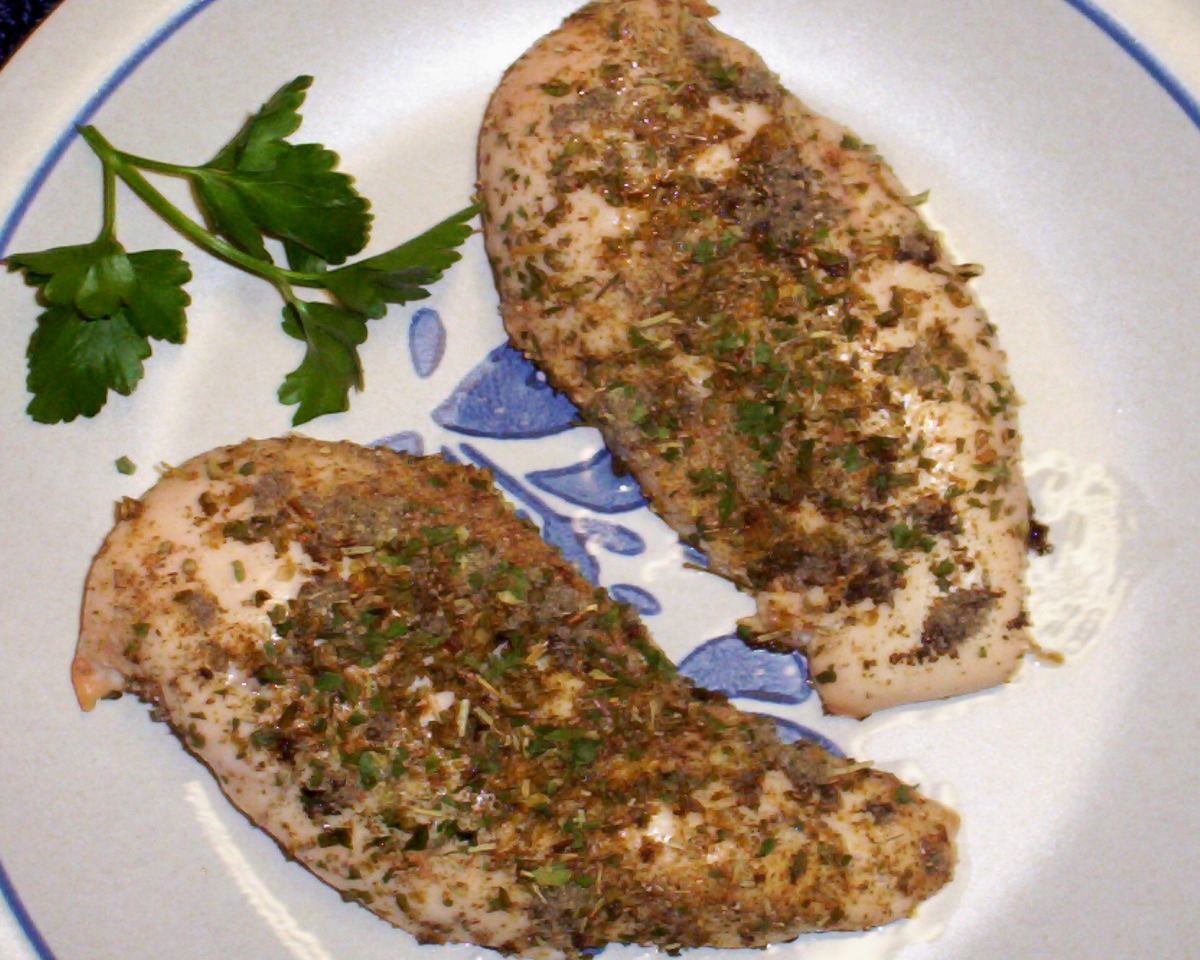
Instant-reads matter most on thin, fast-cooking cuts where that window is measured in seconds rather than minutes. A ribeye moves through medium-rare in about 90 seconds on a hot pan. A pan-seared ribeye or a herb-crusted chicken breast gives you no second chance; by the time you have cut into it to look, you have already lost the juices and the answer.
Speed is therefore not a luxury spec. A thermometer that takes eight seconds to settle means eight seconds of the oven door open, or eight seconds of your hand over a 600°F grill. A one-second reading means you check three spots in the time a slow unit checks one — and checking three spots is how you find the cold center you would otherwise have missed.
Our Top 5 Picks (Best Overall / Best Value / Best for Beginners / Best Premium / Best Compact)
Every pick below is a current listing in our catalog, and every one is a spot-check instant-read — not a leave-in probe or a wireless roast monitor (for those, see our leave-in probe thermometer guide). Specifications cited are manufacturer claims from the current listing.
#1: ThermoMaven Professional Digital Meat Thermometer — Best Overall
Verdict: Best all-round accuracy per dollar, 1-second read, ±0.5°F, NIST-traceable calibration, NSF certified
This is the pick that gets the spec sheet of a premium thermometer at a budget price. The listing claims a one-second read and ±0.5°F accuracy with both NIST traceability and NSF certification — NIST traceability is the meaningful one, because it means the calibration chain is documented rather than asserted. It also has an auto-rotating LED screen (readable whichever hand you hold it in) and a waterproof body.
It wins Best Overall because nothing else at its price combines one-second speed with a documented calibration claim. If you buy one thermometer and never think about it again, buy this one. Check the current price
#2: Alpha Grillers Digital Instant Read — Best Value
Verdict: The budget pick — slower than the ThermoMaven and without NIST paperwork, but cheap enough to own two
This is the cheapest tool on this list that we would still trust on a holiday roast.
You give up the one-second read speed and the NIST paperwork. In exchange you get a thermometer cheap enough to own two of, which is genuinely useful: one for raw protein, one for finished food, no cross-contamination question. Check the current price
#3: TempPro TP19 Waterproof Thermocouple — Best for Beginners
Verdict: Thermocouple sensing and a foolproof display
TempPro is the name ThermoPro now sells under on Amazon (the listing reads "Previously ThermoPro"), so this is the same TP19 that older reviews file under ThermoPro. It is the beginner pick because it removes the two things new cooks get wrong. First, it uses a thermocouple sensor rather than a thermistor — thermocouples respond faster and hold accuracy across a wider range, which matters when you are moving between a 32°F ice bath and 375°F frying oil. Second, the ambidextrous backlit display auto-orients, so there is no wrong way to hold it and no squinting at an upside-down number in a dark backyard.
It is fully waterproof, so it survives the thing beginners actually do: rinsing the probe under the tap after checking raw chicken. Check the current price
#4: Lavatools Javelin PRO Classic — Best Premium
Verdict: The enthusiast's pick, 2-second read, IP65 water resistance, NSF certified
The Javelin PRO Classic is the closest thing on this list to the professional standard. It reads in about two seconds, carries an IP65 rating (dust-tight, protected against water jets), is NSF certified for commercial kitchens, and has a large auto-rotating backlit display.
Buy it if you cook protein several times a week, run a smoker, or want a thermometer with the build quality to survive a decade of grill-side abuse. Note that IP65 is splash-and-jet resistant, not submersible — see the waterproofing section below for why that distinction matters. Check the current price
#5: Rubbermaid Commercial Pocket Thermometer — Best Compact
Verdict: Pocket-size and dishwasher safe
This is the cheapest and smallest pick, built for the commercial line-cook use case: clip it to an apron, pull it out fifty times a shift, run it through the dishwasher at close. It is dishwasher safe, which none of the electronics-heavy picks above can claim.
It is an excellent second thermometer, and the right choice if you need something that lives in a pocket or a knife roll. Check the current price
Picks at a glance
| Pick | Model | Claimed read speed |
|---|---|---|
| Best Overall | ThermoMaven Professional | 1 sec |
| Best Value | Alpha Grillers Digital | 2-4 sec |
| Best for Beginners | TempPro TP19 | 2-3 sec |
| Best Premium | Lavatools Javelin PRO | 2 sec |
| Best Compact | Rubbermaid Commercial | 5-8 sec |
Browse the full range in Kitchen Gadgets, or see what else earns drawer space in our best kitchen gadgets guide.
What to Look For (read speed under 3 seconds, accuracy ±0.5°F, waterproof rating IP67+, probe length, backlight, auto-rotate display)
Read speed under 3 seconds. This is the spec that changes how you cook. Under three seconds, you check multiple spots per piece of meat. Over five seconds, you check once and hope. The fastest units — the Thermapen ONE, which ThermoWorks specifies at one second, and ThermoMaven's one-second claim — are fast enough that the probe becomes an extension of your hand. Treat any listing claiming "instant" without a number as a 5-to-8-second unit.
Accuracy ±0.5°F to ±1.0°F. For beef doneness, ±1°F is the practical floor: the difference between rare and medium-rare is about 5°F. Anything claiming ±2°F or worse is not precise enough to hit a target reliably. Look for NIST traceability, which means the claim is backed by a documented calibration chain rather than marketing copy.
Waterproofing — and read the number. The IP code is specific. IPX4 is splash-resistant only. IP65 is dust-tight and resistant to water jets — fine for a rinse, not for a soak. IP67 means submersible to one meter for thirty minutes, which is the rating you want if the thermometer will ever go in a sink of soapy water. This matters for food safety, not convenience: a probe that touched raw chicken needs real cleaning, and a non-waterproof unit can only be wiped.
Probe length. A 4-to-5-inch probe reaches the center of a whole chicken or a leg of lamb while keeping your knuckles out of the oven. Shorter pocket probes are fine for steaks and burgers but come up short on roasts.
Backlight and auto-rotate. Both are grill features. You cook outdoors after dark in November; you hold the thermometer in whichever hand is not holding tongs. A display that auto-orients and lights itself removes two small failures that happen exactly when you are least able to deal with them.
What to skip. Dial (analog) thermometers drift and take 15-30 seconds. Infrared guns read surface temperature only — useful for a pan or a pizza stone, useless for doneness. And a wireless leave-in probe is a different tool, not a faster instant-read; see the FAQ below.
Safe cooking temperatures: USDA chart + the higher restaurant-target range for each protein
Two numbers matter for every protein: the USDA safe minimum, and the temperature a cook actually aims for. They are frequently not the same, and understanding the gap is the whole point of owning a thermometer. The FDA's Safe Food Handling guidance is the authority for the safe-minimum column.
| Protein | USDA safe minimum | Common target | Notes |
|---|---|---|---|
| Chicken & turkey (all cuts) | 165°F | 157-165°F | 157°F held 45 sec is equivalent lethality |
| Ground beef, pork, lamb | 160°F | 160°F | No pull-early exception; grind spreads bacteria |
| Whole-cut beef (steak, roast) | 145°F + 3 min rest | 130-135°F medium-rare | Surface-sear kills surface bacteria |
| Pork chops & tenderloin | 145°F + 3 min rest | 145°F | Lowered from 160°F in 2011; pink is correct |
| Lamb (whole cuts) | 145°F + 3 min rest | 130-140°F | Treated like beef by most cooks |
| Fish | 145°F | 125-130°F for salmon | Chef preference; USDA number is conservative |
| Brisket & pork shoulder | 145°F | 195-205°F | Cooked past "safe" to render collagen |
Three things the chart cannot show you.
Carryover cooking. A roast keeps climbing 5-10°F after it leaves the oven — more for a thick prime rib or beef tenderloin, less for a thin chop. Pull a beef roast at 125-130°F to land at medium-rare after resting. Pulling at your target temperature means overshooting it.
Time-and-temperature, not just temperature. The 165°F poultry number is the instant-kill threshold. Pathogen reduction is a function of temperature and time held, which is why 157°F held for 45 seconds achieves the same result — the principle behind pasteurization. A turkey breast pulled at 157°F and rested is both safe and dramatically juicier than one taken to 165°F. This only works if your thermometer is actually accurate — which is why the calibration section below is not optional.
Barbecue ignores the chart entirely. A Texas brisket is safe at 145°F and inedible until about 203°F, because the goal is dissolving collagen into gelatin, not killing bacteria. Here you are probing for feel — the probe should slide in like room-temperature butter. More low-and-slow targets are in our smoker recipes for beginners.
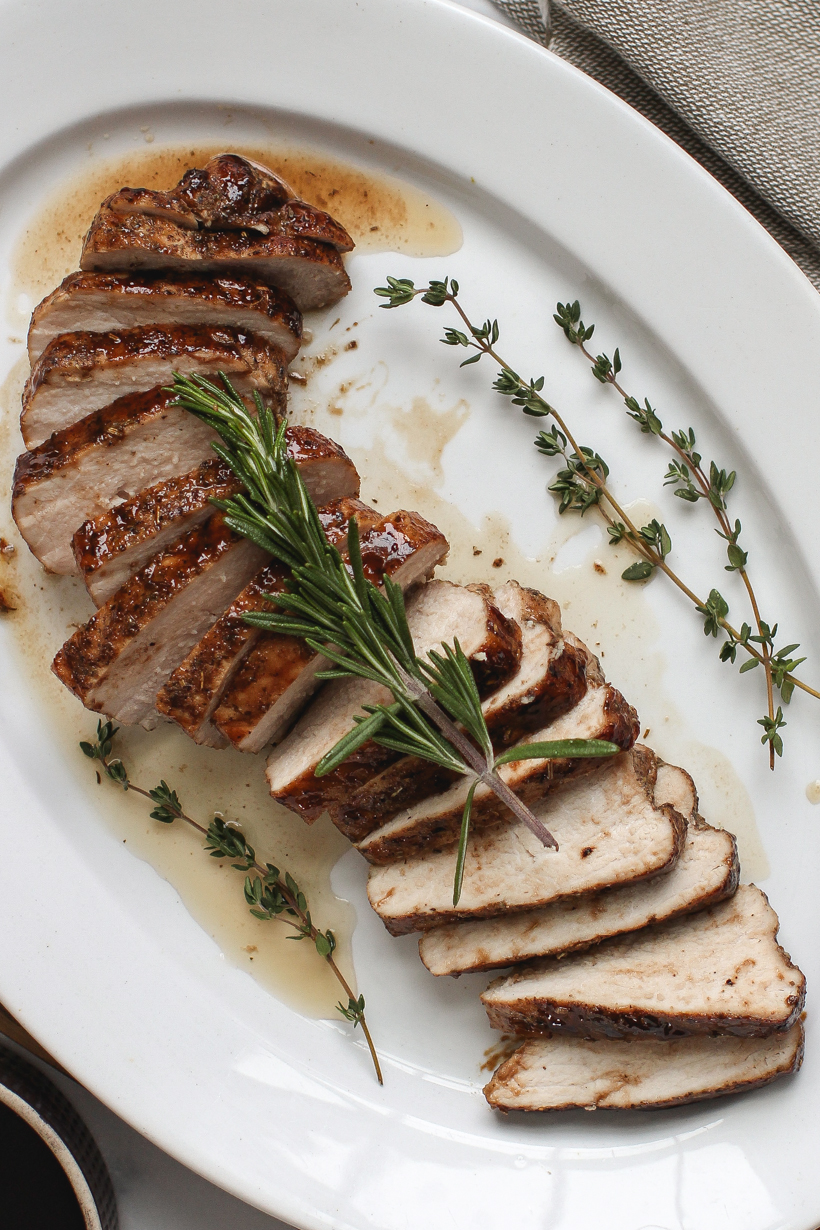
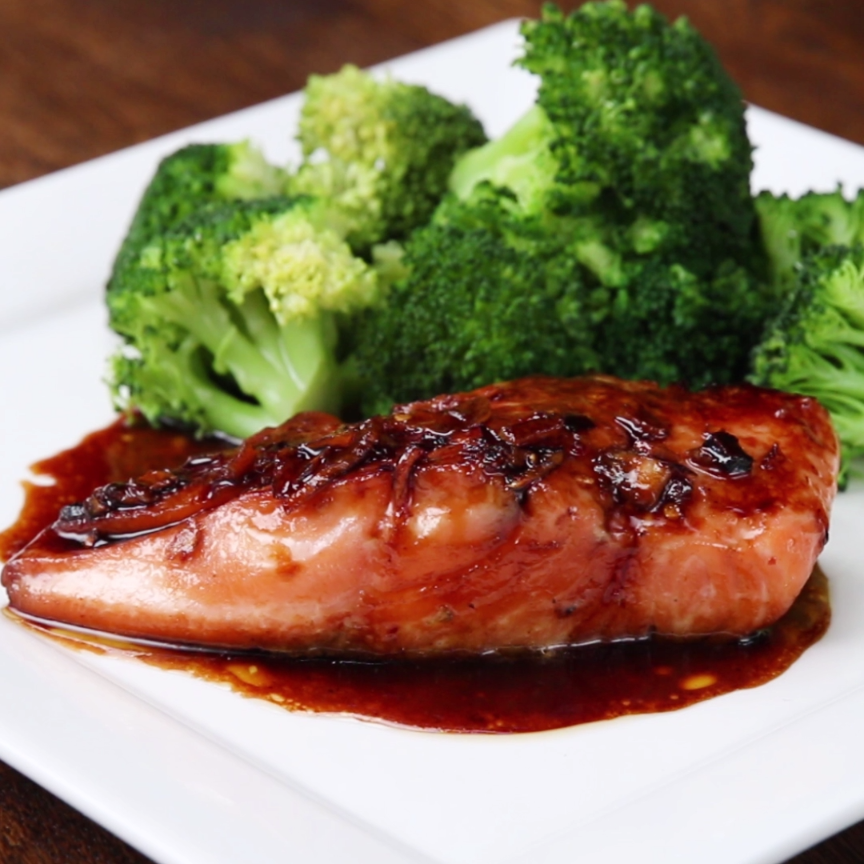
For everything else, the rule is simple: measure the thickest part, avoid bone, and take a second reading somewhere else. On a pork tenderloin the taper means the thin end can run 15°F hotter than the middle. For fish, glazed salmon at 125-130°F is still translucent at the center — the 145°F USDA figure produces firm, dry fish. Doneness conventions for each cut are catalogued in detail on Wikipedia's doneness reference.
Checking a Thanksgiving turkey: three spots, 165°F, and no pop-up timer
A whole turkey is the one roast where a single reading can mislead you. The breast finishes before the thighs, so check three places: the innermost part of the thigh, the innermost part of the wing, and the thickest part of the breast. Each should reach 165°F (the poultry line in the USDA safe temperature chart). Keep the tip off the bone, which reads hot.
Don't trust the factory pop-up timer. As the pitfalls list below explains, it pops around 180°F, well after the breast has dried out. If you would rather not open the oven every 20 minutes, roast with a leave-in probe thermometer in the thigh. Then use any instant-read above to confirm the breast and the other thigh before the bird comes out. A roasting pan with a rack lifts the turkey out of its drippings so the underside roasts instead of steaming.
How to test your thermometer for accuracy (ice-water and boiling-water calibration)
A thermometer you have never tested is an opinion, not a measurement. Both tests take under five minutes and need no equipment.
The ice-water test (32°F / 0°C). Fill a glass to the top with crushed ice, then add cold water until it just covers the ice. Stir and wait one minute — the slurry needs to equilibrate, and this is the step people skip. Insert the probe into the center, not touching the sides or bottom, and stir gently. It should read 32°F ±1°F. This is the more important of the two tests, because it is the end of the scale nearest your refrigerator and your cold-holding temperatures.
The boiling-water test (212°F / 100°C at sea level). Bring water to a rolling boil and insert the probe without touching the pot. Subtract about 1°F for every 500 feet of elevation: 210°F is correct in Denver, not a fault. Because the boiling point moves with altitude and barometric pressure, treat this as the confirming test, not the primary one.
Reading the result. Within ±1°F, you are fine. Between 1°F and 2°F off, use the offset-calibration menu if your model has one. More than 2°F off with no offset function, replace it — a thermometer 3°F low will have you serving chicken at 162°F while it reads 165°F.
How often. Test when new (before you trust it on anything expensive), after any drop, and every few months in normal use. Test before a holiday cook, not during one.
Common pitfalls
- Probing to the wrong depth. The sensor is not at the tip — on most probes it sits 1/8 to 1/4 inch back. Push slightly past where you think center is, then draw back slowly and watch for the lowest reading.
- Hitting bone or the pan. Bone conducts heat differently and a pan surface can read 100°F above the food. Both produce a false "done."
- Measuring one spot on an irregular cut. A whole chicken has at least three different temperatures. Check the thickest part of the breast and the inner thigh.
- Trusting a pop-up timer. Factory pop-ups in turkeys typically trigger around 180°F — far past the point the breast dries out.
- Not resting the meat. Carryover is real. Cutting immediately after pulling loses both the temperature climb and the juices.
- Leaving an instant-read in the oven. Spot-check units are not rated for sustained oven heat; the electronics in the handle will cook.
When NOT to use an instant-read
If you are cooking something low-and-slow for six hours, an instant-read is the wrong tool — you would be opening the smoker every twenty minutes, and each opening costs you heat and time. Use a leave-in probe or a wireless unit for that, and keep the instant-read for the final confirmation. Likewise, if you need the surface temperature of a skillet or a pizza stone, that is an infrared thermometer's job. And for a large-batch fry or candy work where you need a continuous reading in hot oil, a clip-on probe thermometer beats holding an instant-read over the pot.
Buying for someone else? Our kitchen gifts under $50 guide is a short list of small tools a home cook will use every week. Its Best Overall is a different ThermoMaven model, the Professional Ultra-Fast 0.5 Sec, rated at 0.5 seconds rather than the one second of our #1 Professional Digital Meat Thermometer.
Sources
- FDA — Safe Food Handling — safe minimum internal temperatures for poultry, ground meat, and whole cuts.
- Doneness — Wikipedia — the standard doneness ranges for beef, lamb, and pork, in both °F and °C.
- IP code — Wikipedia — what IPX4, IP65, and IP67 actually certify.
- ThermoWorks — Thermapen ONE — manufacturer specification for the one-second reference standard.
- Thermocouple — Wikipedia — why thermocouple probes respond faster than thermistors.
- Pasteurization — Wikipedia — the time-and-temperature basis for the 157°F poultry equivalence.
More kitchen gear guides: best roasting pans for the holiday bird, best sous vide machines, and the tools in Utensils & Tools. For dinners worth measuring, see our pan-seared dinners and lamb recipes collections, or a weeknight pork chop with mojo.
Frequently asked questions
Is a $30 thermometer really as good as a $99 Thermapen?
What's the difference between an instant-read and a leave-in probe thermometer?
How do I calibrate my instant-read thermometer at home?
What internal temperatures are actually safe for poultry, beef, and pork?
Do I need a waterproof thermometer?
How we picked
This guide is researched, not bench-tested. We shortlisted products from the AislePrompt kitchen catalog and compared them on published manufacturer specifications (such as materials, size and capacity), on what owners report in published reviews, and on any third-party sources linked in this guide. The guide was drafted with AI assistance. We did not run lab or hands-on tests of these products, so any measurement quoted here comes from the manufacturer or a cited source. Prices change often: use the “Check price on Amazon” buttons for today’s price.
Recipes to try with a meat thermometer
Put your gear to work — save any recipe to My Recipes (no account needed) and send its ingredients to Instacart in one tap.
Shop kitchen gadgets on AislePrompt →Browse the full kitchen shop →