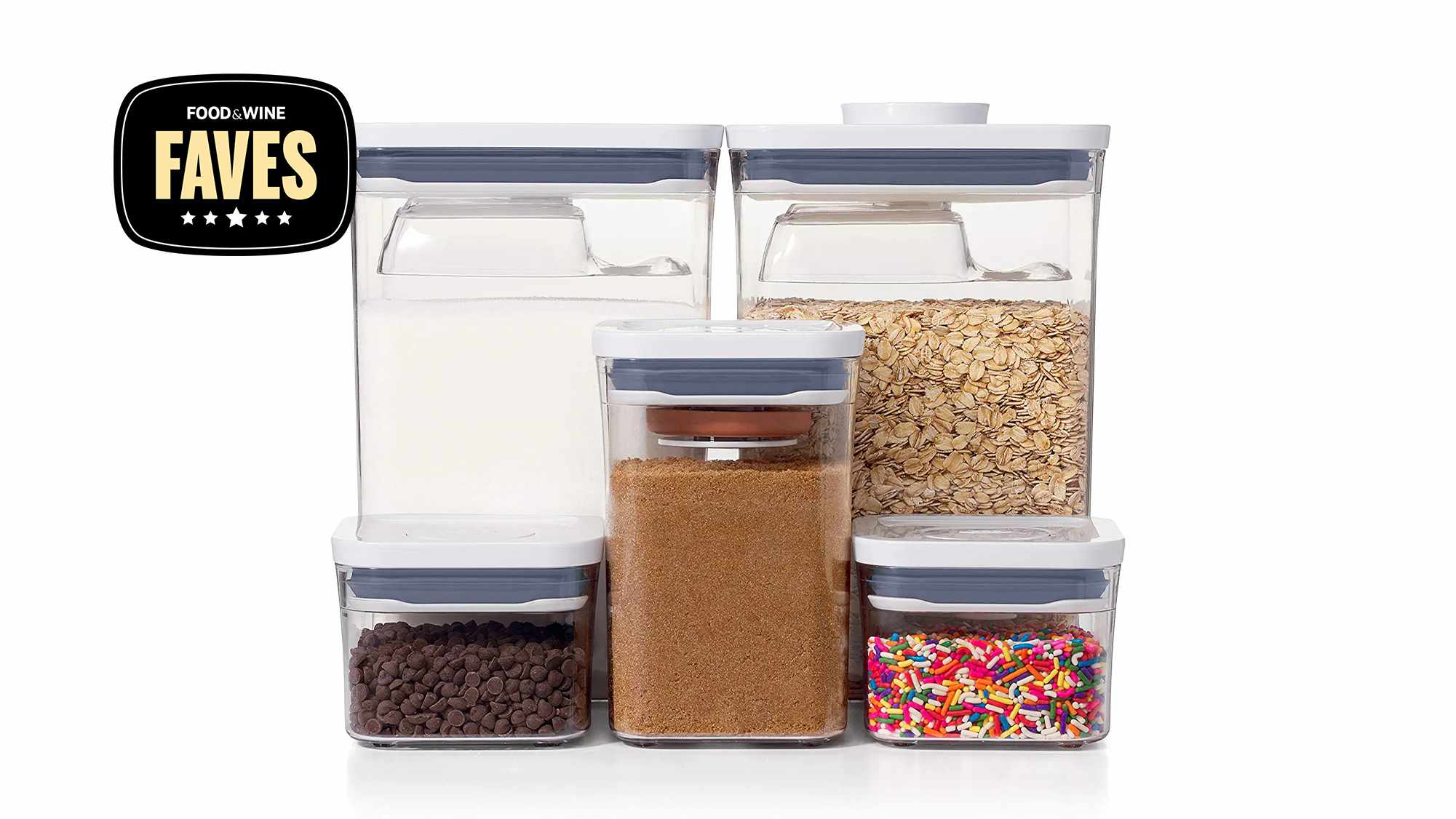
Best Food Storage Containers for 2026: Top Picks + Buying Guide
Glass, plastic, stainless, and silicone — the picks, sizes, and seal types that survive a real meal-prep week.
The best food storage containers for most home cooks in 2026 are the Rubbermaid Brilliance 10-piece set for everyday meal prep, because its four-way locking lids with a silicone gasket actually seal, and the Progressive ProKeeper+ modular set for pantry staples.
Where to buy these picks
Affiliate links: we may earn a commission on qualifying Amazon purchases. Policy. Prices show only when checked in the last 24 hours.
- Best Overall: Rubbermaid Brilliance 10-Piece Set $22.99 at Amazon, Check price on Amazon →
- Best Value: Ziploc Gallon Freezer Bags $7.09 at Amazon, Check price on Amazon →
- Best for the Pantry: Progressive ProKeeper+ Modular Set $54.99 at Amazon, Check price on Amazon →
- Best for the Countertop: Cooks Standard Stainless Canister Set $59.99 at Amazon, Check price on Amazon →
- Best for Single-Serve Breakfasts: Gemice Overnight Oats Jars $19.99 at Amazon, Check price on Amazon →
Which food storage containers fit you
| Your situation | Buy | Why | Buy link |
|---|---|---|---|
| Packing lunches, lids that must not leak | Rubbermaid Brilliance 10-Piece Set $22.99 | Four-way locking lids with a silicone gasket; 1.3 / 3.2 / 9.6 cup; microwave (vents open), freezer, top-rack dishwasher; plastic, so not for tomato or oily reheats | Amazon → |
| Freezing soup, chili or sauce | Ziploc Gallon Freezer Bags $7.09 | 1-gallon bags; squeezed flat, a portion freezes flat and thaws in about 20 minutes | Amazon → |
| Organizing pantry staples (flour, sugar, cereal) | Progressive ProKeeper+ Modular Set $54.99 | 0.5 / 1.5 / 2 / 4.5 qt sharing one footprint, one press-button lid and a silicone gasket | Amazon → |
| Pantry staples kept on the counter | Cooks Standard Stainless Canister Set $59.99 | 18/10 stainless with glass lids, 0.95 to 3.5 qt; sized for tea, coffee, sugar, flour, oats and rice | Amazon → |
| The same breakfast every weekday | Gemice Overnight Oats Jars $19.99 | Six 16 oz wide-mouth glass jars with airtight lids and silicone sleeves; cold or room-temp only | Amazon → |
Quick answer
Which food storage containers fit a different budget or need?
The best value is Ziploc Gallon Freezer Bags for freezer batch storage. The ProKeeper+ holds dry staples like flour and cereal under silicone-gasket lids in 0.5- to 4.5-quart sizes. The Cooks Standard Stainless Canister Set (18/10 stainless with glass lids) is the pick for dry storage on the countertop, and Gemice Overnight Oats Jars (16-ounce wide-mouth glass with a silicone sleeve) are the pick for single-serve breakfasts and desk lunches.
A great meal-prep week falls apart in the fridge if your containers leak, stain, warp, or refuse to stack. The right set turns Sunday's two-hour cook into five quiet weekday lunches; the wrong set turns it into a Tuesday morning emergency at the dry cleaner. Comparing storage systems across glass, plastic, stainless, and silicone, this guide picks the best food storage containers for 2026 by use case — everyday meal prep, freezer batching, pantry organization, countertop dry storage, and single-serve breakfasts and desk lunches — with the specific sizes, materials, and seal types that actually hold up to a real kitchen.
What you'll use with it
Portioning a batch into equal containers is faster by weight: tare the container, fill to 300 grams, move on. The scale guide picks 1-gram scales with platforms big enough for a dinner plate. Read the kitchen scale guide →
Kitchen scale guide’s top pick: OXO Good Grips 11-Pound Stainless Steel Kitchen Scale with Pull-Out Display $62.95 at Amazon, Check price on Amazon →
Why your containers make or break meal prep
Meal prep is mostly two things: the cook itself and the storage of what you cooked. Everyone focuses on the cook. Almost nobody plans the storage, which is why so many meal-prep efforts die in week three. Three failure modes cause most fridge-side regret:
1. Lids that don't seal. A friction-fit lid is fine for tonight's leftovers but loses pressure overnight. By Wednesday your refrigerator smells like Sunday's garlic chicken. Locking lids with silicone gaskets — Rubbermaid Brilliance, OXO Pop, Snapware Total Solution — are the only seals that survive a real week.
2. Mixed-brand chaos. Three brands × two shapes × four sizes = a cabinet where no lid fits any base. The fix is brutally simple: pick one modular system and buy multiples of every size you actually use. We'll get there in our top picks.
3. Material mismatch. Plastic for cold lunches, dry snacks, and a quick vents-open reheat of plain rice or grains; glass for long reheats, anything tomato-based, anything oily, or anything you want to keep clear-flavored. For those glass jobs, this guide's picks are the Rubbermaid Brilliance Glass set of 9 and the Pyrex Simply Store 12-pack (sold as microwave- and dishwasher-safe), both covered under pick #1 below. Trying to do everything with one material is how stains, warping, and weird off-flavors enter the rotation.
This guide is built around solving those three problems with one modular system instead of a cabinet of mismatched sets.
Our Top 5 Picks
Quick reference before the detail:
| Pick | Best for | Material | Sizes |
|---|---|---|---|
| Rubbermaid Brilliance | Best overall meal-prep (glass version for reheats) | BPA-free Tritan + locking lid; Brilliance Glass for tomato/oily reheats | 1.3c / 3.2c / 9.6c |
| Ziploc Gallon Freezer Bags | Freezer batch storage | LDPE, single-use friendly | 1-gallon |
| Progressive ProKeeper+ | Pantry cupboard organization | Modular plastic w/ silicone gasket | 0.5qt / 1.5qt / 2qt / 4.5qt |
| Cooks Standard Stainless Canister Set | Countertop dry storage | 18/10 stainless + glass lid | 0.95qt / 1.6qt / 2.5qt / 3.5qt |
| Gemice Overnight Oats Jars | Single-serve breakfast & desk lunches | Wide-mouth glass + silicone sleeve | 16oz each |
Now the detail behind each — what they're good at, where they fail, and the recipe slots they fill.
#1: Best Overall — Rubbermaid Brilliance 10-Piece Set
The Rubbermaid Brilliance line is the closest thing the meal-prep world has to a default answer, and the set to buy is the Rubbermaid Brilliance 10-piece set: 5 BPA-free plastic bases with lids in mixed sizes (1.3, 3.2 and 9.6 cup). Four-way locking lids with a silicone gasket actually seal — you can flip a container of chicken broth upside down in your lunch bag without a paper-towel disaster. The Tritan-based plastic is crystal-clear (not the cloudy-white look that old polypropylene goes after a year), microwave-safe with the vents open, freezer-safe, and dishwasher-safe on the top rack. The same lid family works across the entire size range so you can build a kit of 1-cup snack containers, 3-cup lunches, and 9-cup family batches without a lid-matching puzzle.
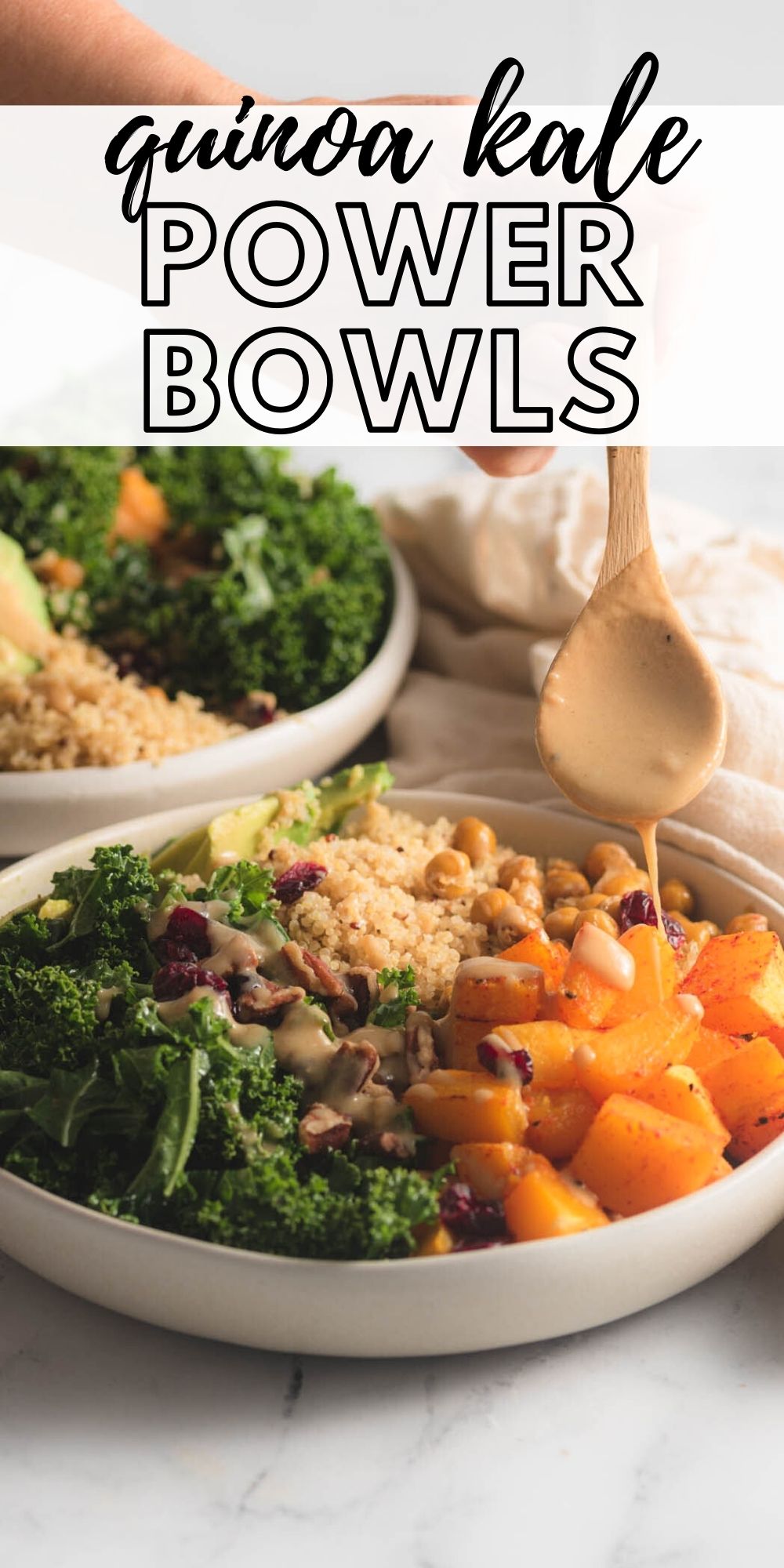
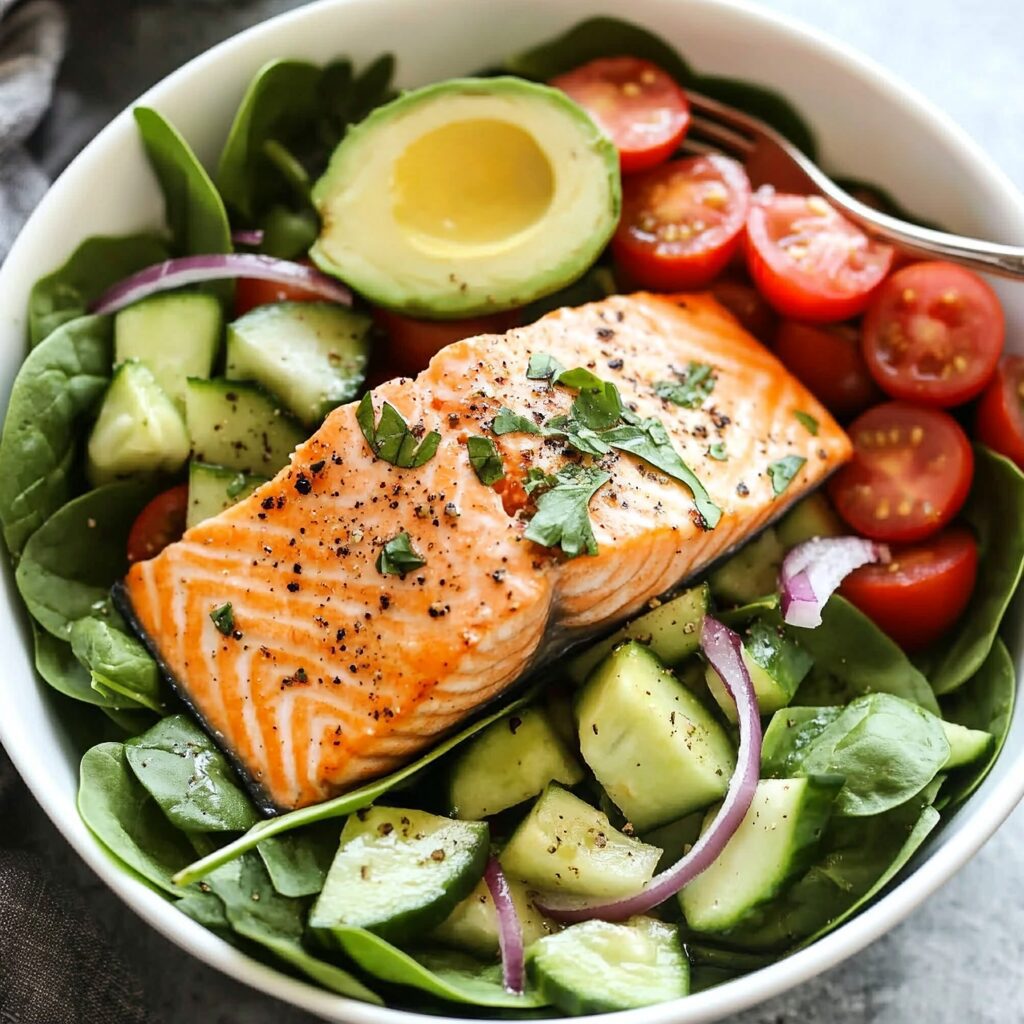
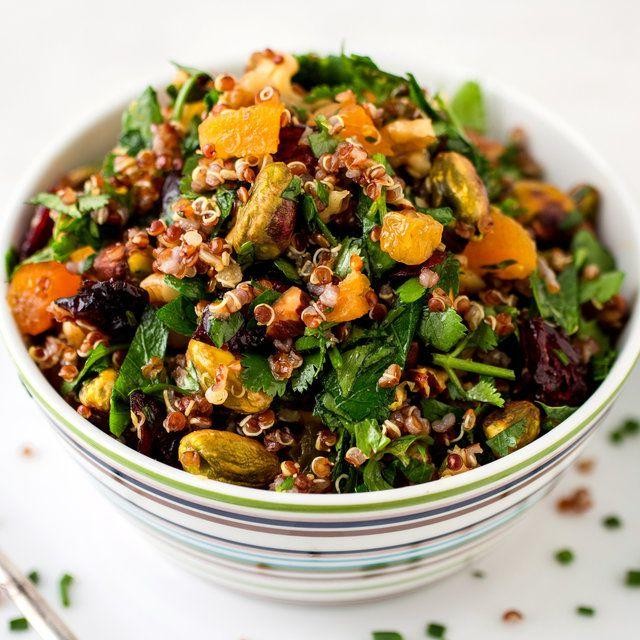
Use it for: cooked rice and grains, cold weekday lunches, chopped vegetables, and a quick vents-open reheat of plain grains. Tomato sauces, curries and anything oily go in glass, per the material rule above. The glass partner to this set is the same line in glass: the Rubbermaid Brilliance Glass set of 9 (assorted sizes, leak-proof BPA-free lids). If you would rather stack uniform 1-, 2- and 3-cup sizes, the Pyrex Simply Store 12-pack is the glass alternative. The big 9.6-cup container takes a full batch of Mason Jar Mediterranean Quinoa Power Bowls for four people, and the 3.2-cup is the right size for single-portion lunches like a Meal-Prep Salmon Avocado Salad with Lemon Vinaigrette.
What it isn't great for: high-fat or oily foods at long microwave times (transfer to glass for those — see the FAQ below on plastic + heat), or anything tomato-based that you'll reheat repeatedly (it can pick up a faint orange tint over time even with the cooking-spray trick).
Browse the Storage & Containers category for current Brilliance pricing, and check that the set you pick is the meal-prep containers (the 1.3- to 9.6-cup sizes in the table), not the Brilliance pantry canisters that come with scoops.
#2: Best Value — Ziploc Gallon Freezer Bags
A box of 66 gallon-size Ziploc freezer bags costs little and solves problems hard containers don't: portioning soup or chili into single-meal blobs that freeze flat and thaw in 20 minutes, marinating in a tight bag with no air pockets, and storing irregularly-shaped leftovers (half a sheet-pan dinner, the bones from a roast chicken for stock).
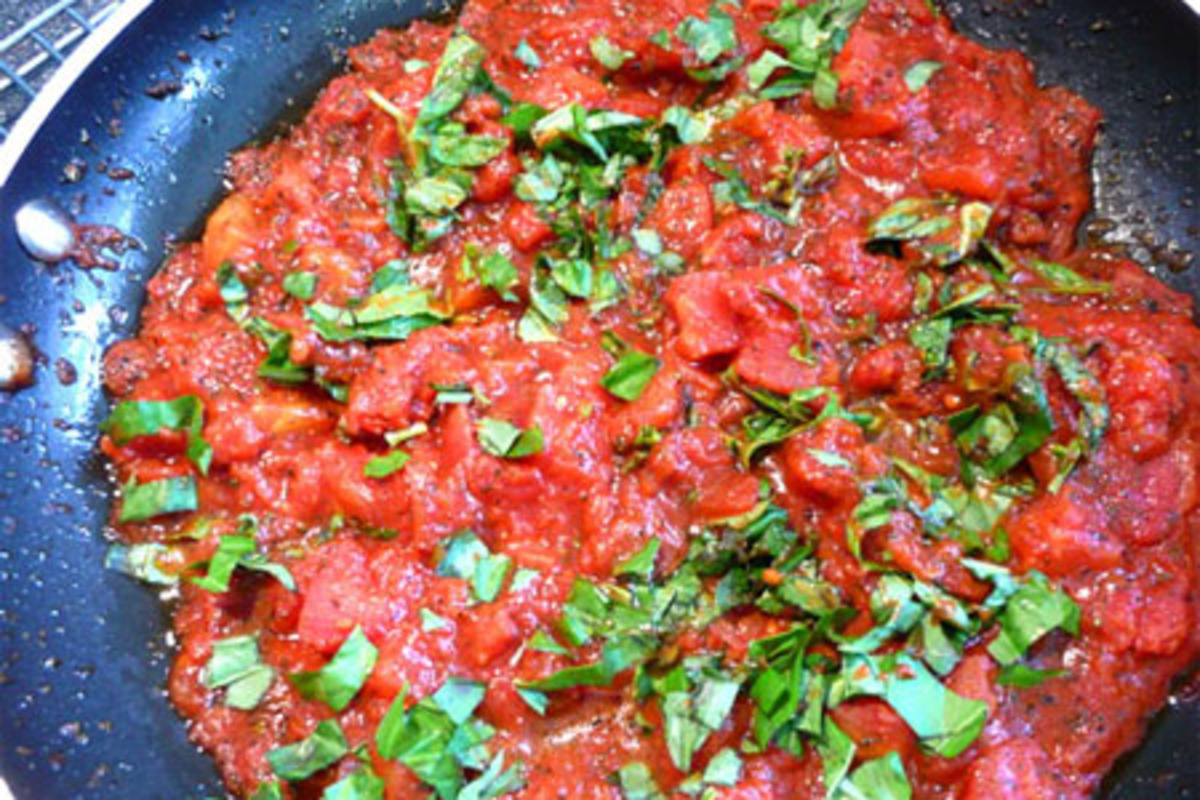
Trick: when freezing soup or sauce, fill the bag, squeeze flat to about ½" thick, and stack flat on a sheet pan in the freezer. Once solid (~4 hours), the flat slabs stack like books in your freezer drawer and thaw in a fraction of the time a brick-shaped container takes. A Mega Batch Tomato Basil Sauce for Pasta recipe makes about six flat freezer slabs out of one Sunday cook.
What it isn't great for: anything you'll reheat in the bag — the seam stresses and the seal isn't engineered for repeated thermal cycling. Cut a corner, dump into a pan or microwave-safe dish, and reheat there. Also not great for sustainability if you're trying to cut single-use plastic; if that's a goal, swap to silicone reusable bags (Stasher, Bumkins, RuBee) and accept the ~$15-25-per-bag price tag. See the FAQ for whether they're worth it.
#3: Best for the Pantry — Progressive ProKeeper+ Modular Set
Most pantry container sets are 20-piece bargains where only 6 pieces get used and the rest sit in a drawer. The Progressive ProKeeper+ 4-piece modular set flips that math. Four sizes (0.5qt, 1.5qt, 2qt, 4.5qt) all share the same footprint, the same lid mechanism (one-handed press-button seal), and the same silicone gasket — so you actually use every piece, every week.
The 4.5qt holds a 5-lb bag of flour with room for the included scoop. The 2qt swallows a full box of cereal or a Quinoa and Seed Power Salad with Dried Fruit batch. The 1.5qt is the right size for brown sugar, pasta, or rice. The 0.5qt holds dressings, dips, or overnight oats. They stack on each other in a column on the pantry shelf, which is the actual win — 14" of vertical pantry space holds 8.5 quarts of dry storage.
Caveat: this is dry-storage modular, not a meal-prep lunchbox system. Pair it with the Brilliance set above for cooked food, and the ProKeeper+ for pantry. The two systems don't share lids, but they don't need to — they live in different places.
#4: Best for the Countertop — Cooks Standard Stainless Canister Set
If you want a countertop set that doesn't scream "plastic bin," the Cooks Standard 4-piece stainless steel canister set is the buy. 18/10 stainless body, tempered-glass lid with a silicone-rimmed gasket, sizes from 0.95qt to 3.5qt — enough for tea, coffee, sugar, flour, oats, and rice without the visual chaos of mismatched packaging on the counter.
Stainless doesn't stain, doesn't pick up odors, doesn't warp, and doesn't UV-degrade — so coffee beans and flour stay flavor-true for months. The glass lid means you can see what's inside without lifting it, which is the only legitimate reason countertop canisters earn their square footage. It is a fair price for hardware that will outlive any plastic competitor; expect this to be the last canister set you buy.
Trade-offs: it's heavier than plastic (kids and arthritic hands struggle with the larger sizes), and the silicone gasket eventually needs replacement after ~5 years of daily use. Both are minor.
#5: Best for Single-Serve Breakfasts — Gemice Overnight Oats Jars
The Gemice 6-pack 16oz wide-mouth glass overnight oats jars is the right answer when you have a specific repeated breakfast pattern: overnight oats, chia pudding, yogurt-and-berry parfaits, or single-serve smoothie bases. Six jars with silicone sleeves and airtight lids come in one set, so the per-jar cost is competitive with cheap plastic and dramatically better at not retaining yogurt smell.
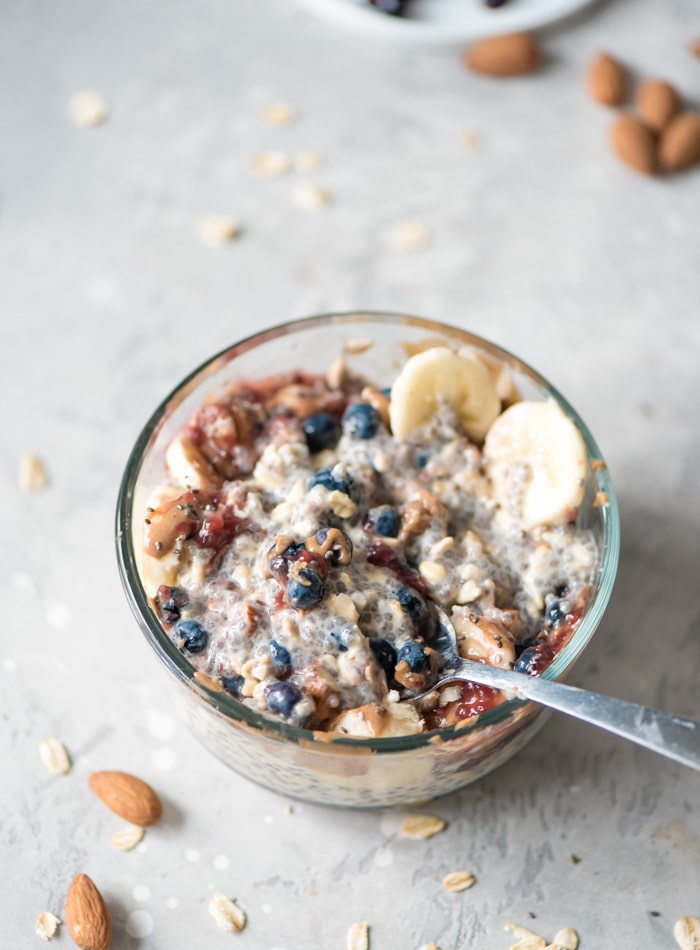
These work because the 16oz capacity is exactly right for a single serving — small enough to fit on a desk corner, large enough to hold a recipe like Vanilla Chia Overnight Oats with Fresh Berries with room for the berries on top. The silicone sleeve gives you grip when your hands are cold (winter morning kitchen) and protects against the one inevitable drop from the fridge to the counter.
Don't use these for: hot soup or reheating. Mason-jar glass is not tempered like Pyrex; pouring boiling liquid in can crack it. Cold or room-temp meal prep only.
Which One Should You Buy If…
Containers are the wrong buy when they don't match how you store food. One pick per habit:
- If you pack lunches and need lids that don't leak: Rubbermaid Brilliance meal-prep containers. Four-way locking lids with a silicone gasket, safe in the microwave (vents open), the freezer and the top rack of the dishwasher.
- If you freeze soup, chili or sauce: Ziploc gallon freezer bags. Filled and squeezed flat, a portion freezes flat and thaws in about 20 minutes.
- If you are organizing pantry staples like flour, sugar and cereal: Progressive ProKeeper+ 4-piece. Four sizes that share one footprint and one press-button lid.
- If you keep pantry staples on the counter: Cooks Standard stainless canister set. 18/10 stainless with glass lids, sized for tea, coffee, sugar, flour, oats and rice.
- If you eat the same breakfast every weekday: Gemice 16 oz overnight oats jars. Six wide-mouth glass jars with airtight lids and silicone sleeves.
What to Look For: material, seal, microwave/freezer safety, stackability
Beyond brand names, four properties separate sets that survive a year of daily use from sets that don't:
Material decision tree
- Glass (Pyrex, Anchor Hocking, Snapware Pyrex glass line): heavy, breakable, stainless-resistant, microwave/oven safe. Best for hot reheating, tomato/oily food, long-term storage. The trade-off is weight (a 3-cup glass container is roughly 2x the weight of plastic) and price (~2-3x).
- BPA-free Tritan plastic (Rubbermaid Brilliance, OXO Pop): lightweight, crystal-clear, microwave-safe with vented lids, freezer-safe, dishwasher-top-rack. Best for daily lunches and dry storage. Avoid prolonged high-fat microwave reheats — transfer to glass or ceramic. Per Cook's Illustrated equipment reviews, the Brilliance line was a top performer for seal integrity across the test panel.
- Stainless steel (Cooks Standard, U-Konserve, Onyx): durable forever, stain-proof, odor-proof, not microwave-safe. Best for dry-pantry canisters and on-the-go lunches (assuming you eat cold or reheat elsewhere).
- Silicone (Stasher bags, silicone pouches): heat-safe to 425°F, microwave/dishwasher/freezer safe, washable. Best as Ziploc replacement and for sous vide. Trade-off is price and that the seal isn't as tight as a hard-locking container for liquid storage.
Seal types and what they actually do
| Seal type | Real-world performance | Examples |
|---|---|---|
| Friction-fit lid | Holds for a meal, leaks if tipped | Most takeout containers, basic Tupperware |
| Snap-lid (no gasket) | Holds dry storage, leaks liquid | Old Rubbermaid TakeAlongs |
| Locking lid + silicone gasket | Airtight, microwave-safe vents | Rubbermaid Brilliance, OXO Pop, Snapware |
| Vacuum lid (manual pump) | Best for long-term freshness | Lock & Lock, FoodSaver containers |
| Mason-jar threaded lid | Airtight if torqued, leaks at angles | Ball, Kerr, Weck |
If you're going to remember one thing: buy locking lids for liquids and reheating, snap-lids for dry storage, mason-jar threaded for chilled liquids that won't tip in transit.
Microwave / freezer safety, in plain English
Microwave-safe means the plastic doesn't melt or leach at sub-boiling temps for short heat windows. It doesn't mean "fine to nuke a giant lasagna for 6 minutes at high power." The FDA warns that some plastic containers can be melted by the heat of the food inside, so heat only in containers labeled for microwave use, and USDA says cold-storage tubs such as margarine and cottage-cheese containers are not heat-stable and should never go in the microwave. The FDA warns that some plastic containers can be melted by the heat of the food inside, so heat only in containers labeled for microwave use, and USDA says cold-storage tubs such as margarine and cottage-cheese containers are not heat-stable and should never go in the microwave. Wirecutter's review panel found that even microwave-safe Tritan plastic shows minor leaching with high-fat or oily foods at long cook times. The practical rule: transfer fatty or oily food (think red curry, lasagna, mac & cheese) to a glass or ceramic vessel before reheating. Plain rice, vegetables, lean proteins, soups — fine in plastic.
Freezer-safe means the plastic stays flexible enough to not crack at sub-zero temps and the gasket maintains its seal. Most quality plastic and glass containers are rated for freezer, but check the bottom of the container for the snowflake symbol. Glass containers should have a gradual freeze-to-microwave step (let them sit at room temp for 10 minutes after the freezer before microwaving) or the thermal shock can crack the glass. Airtight matters in the freezer too: per USDA, freezer burn comes from air reaching the surface of the food. It is a quality problem, not a safety one, and it is why a squeezed-flat bag or a gasketed lid beats a loose-lidded tub. Airtight matters in the freezer too: per USDA, freezer burn comes from air reaching the surface of the food. It is a quality problem, not a safety one, and it is why a squeezed-flat bag or a gasketed lid beats a loose-lidded tub.
Stackability and lid storage — the silent productivity killer
A set you can't stack wastes 40% of the cabinet space it occupies. A set whose lids don't store with the bases turns every reach-in into a 30-second hunt. When evaluating any set:
1. Do the containers stack into a single column when nested empty?
2. Do they stack when full (flat tops, not tapered)?
3. Do the lids snap to the bottom of the base for storage?
4. Does ONE lid design fit multiple base sizes?
A "yes" to all four is the Rubbermaid Brilliance footprint. A "no" to any of them is why 20-piece bargain sets get returned to Target in week three.
Care: cleaning, odor removal, when to replace
Daily cleaning. Top-rack dishwasher is fine for Tritan plastic, BPA-free polypropylene, silicone, and tempered glass. Stainless can go in either rack. Mason-jar glass is dishwasher-safe but the lids often aren't (the threading and the silicone gasket are best hand-washed to avoid degradation). Per Serious Eats' equipment-review team, the failure mode on lids is almost always the gasket — they crack and leak years before the container itself fails.
Stain removal. Tomato sauce on plastic is the classic. Three approaches that actually work, from cheapest to most effort:
1. Sunlight. Wash the stained container, then leave it open in direct sun for a full day. UV bleaches the carotenoids out of the plastic for free. This is the lazy person's answer and it works.
2. Baking soda + dish soap soak. Fill the container with hot water, add 1 tbsp baking soda + a few drops of dish soap, soak overnight, scrub. Removes most stains.
3. Hydrogen peroxide + sun. For stubborn stains: fill with 3% hydrogen peroxide, set in direct sun for 2-3 hours, rinse. Works on the deepest tomato discoloration.
The real fix is prevention: spray the container with cooking spray before adding tomato-based food and the oil prevents the staining from setting in the first place.
Odor removal. Garlic and curry are the worst offenders. Baking-soda paste (1 tbsp baking soda + a few drops of water) scrubbed into the inside of the container, then air-dried for 4-6 hours, removes most odors. Stubborn cases: stuff with crumpled newspaper for 24 hours; the cellulose absorbs the volatile compounds.
When to replace. Plastic containers should be retired when (a) they crack on the rim, (b) the lid gasket cracks or no longer compresses, (c) they warp out of round so they no longer stack, or (d) they stain so badly that even sunlight doesn't help and the discoloration bothers you. A daily-use container typically lasts 3-5 years. Glass containers basically last forever — replace if the glass chips or the gasket fails. Mason-jar lids should be replaced every 12-18 months if used heavily; the silicone seal is the wear point.
Real-world numbers: a 5-meal Sunday cook, by container count
For readers planning an actual Sunday session, here's the container math for the most common meal-prep weeks. Numbers assume one cook feeding two people for five lunches:
| Cook plan | Glass/plastic 3-cup | 1-cup snack | Gallon freezer bag | Mason jar 16oz |
|---|---|---|---|---|
| Grain bowls (rice + protein + veg) | 5 | 5 (dressing) | 0 | 0 |
| Soup batch (1 gallon) | 0 | 0 | 4 (1-meal slabs) | 0 |
| Salad jars (layered) | 0 | 0 | 0 | 5 |
| Breakfast (overnight oats) | 0 | 0 | 0 | 5 |
| Snack prep (cut veg, hummus) | 0 | 10 (5 veg + 5 dip) | 0 | 0 |
A two-person, five-day plan that hits all of the above wants roughly 5x 3-cup containers, 15x 1-cup containers, 4 gallon freezer bags, and 10 mason jars. Buying the kits above gets you to 80% of that in one shopping trip; the remaining gaps fill in over a month or two as you learn your actual rotation.
Common pitfalls
Five mistakes that cost real meal-prep weeks, with specific fixes:
1. Buying a 60-piece bargain set. You'll use ten pieces. The other fifty live in a cabinet purgatory until you finally throw them out. Buy small, modular, single-brand sets and add pieces as your patterns reveal themselves.
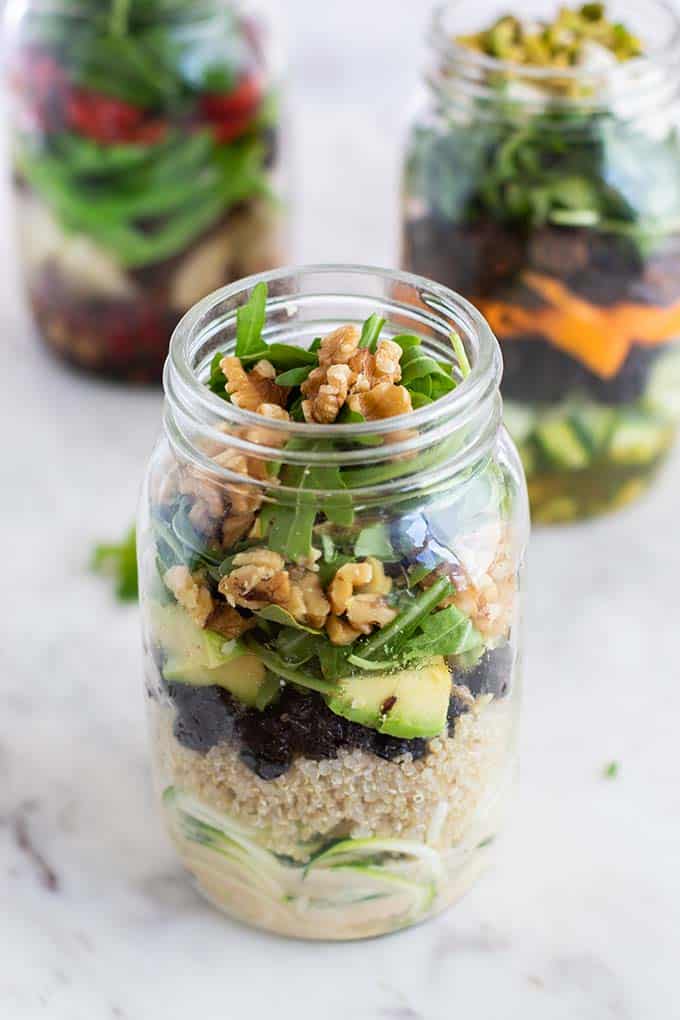
2. Storing wet food in mason jars layered "bottom up." Salad dressing goes on the bottom, then hard vegetables, then grains, then greens on top. Reverse that and your spinach is mush by Wednesday.
3. Microwaving fatty food in plastic. Even microwave-safe plastic isn't designed for 6 minutes of bubbling cheese. Transfer to a plate or glass bowl.
4. Mixing brands. Lid A doesn't fit base B; the cabinet collapses into a sorting game; you give up on meal prep. One brand, multiple sizes.
5. Freezing in tall containers. Freezing soup in a 3-cup vertical container means a 4-hour freeze and a 90-minute thaw. Freeze flat in gallon bags. The slab thaws in 20 minutes under cold water.
When NOT to invest in a big container set
A few specific scenarios where buying any of these sets is the wrong move:
- You're cooking for one and you eat each meal within 24 hours of making it. Two glass storage bowls with snap-lids handle the entire problem; you're paying for capacity you'll never use.
- Your fridge is full of takeout. Containers don't fix that; commitment to home-cooking does. Solve the input before optimizing the output.
- You travel four days a week. Buy soft-sided coolers and silicone bags for the road, skip the rigid container investment.
- You're allergic to dishwasher cleanup. Honest answer: meal prep means more dishes, period. Either accept it or scale to one-meal-at-a-time cooking.
Related Buying Guides
- Best meal prep containers: glass and plastic picks compared on seal design, microwave safety and cost per meal.
- Best instant-read thermometers: five picks under $100 compared on speed and accuracy, with target temps for every protein.
Sources
- Cook's Illustrated — Best Food Storage Containers equipment review
- Serious Eats — The Best Food Storage Containers
- Wirecutter (NY Times) — The Best Food Storage Containers
- FDA — Microwave Ovens
- USDA FSIS — Cooking with Microwave Ovens
- USDA FSIS — Freezing and Food Safety
- FDA — Microwave Ovens
- USDA FSIS — Cooking with Microwave Ovens
- USDA FSIS — Freezing and Food Safety
You'll also find storage tips embedded in our most-prepped recipes — Mason Jar Layered Vegetable and Quinoa Salad is the canonical layered-jar method, and Sunday Meal Prep: 20 Make-Ahead Recipes covers the weekly cadence in detail.
Frequently asked questions
Glass or plastic containers — which is better?
Are plastic containers safe in the microwave?
How do I get tomato sauce stains out of plastic containers?
What sizes do I need for meal prep?
Are silicone storage bags worth it?
How we picked
This guide is researched, not bench-tested. We shortlisted products from the AislePrompt kitchen catalog and compared them on published manufacturer specifications (such as materials, size and capacity), on what owners report in published reviews, and on any third-party sources linked in this guide. The guide was drafted with AI assistance. We did not run lab or hands-on tests of these products, so any measurement quoted here comes from the manufacturer or a cited source. Prices change often: use the “Check price on Amazon” buttons for today’s price.
Recipes to try with meal-prep containers
Put your gear to work — save any recipe to My Recipes (no account needed) and send its ingredients to Instacart in one tap.
Shop storage & containers on AislePrompt →Browse the full kitchen shop →