The Complete Diabetic Slow Cooker Meal Plan: 25 Low-Carb Crockpot Recipes + Shopping List for 2026
Half the pot non-starchy vegetables, a quarter lean protein, a quarter measured starch -- the plate model, translated to a 6-quart cooker.
Affiliate disclosure: AislePrompt may earn a commission on qualifying purchases made through Amazon and Instacart links in this article, at no additional cost to you. See our affiliate policy →
A diabetes-friendly slow cooker meal is built the same way a diabetes-friendly plate is: half the pot non-starchy vegetables, a quarter lean protein, a quarter measured starch, with the added sugar and the sodium bombs left out. The American Diabetes Association's common starting target is 45-60 grams of carbohydrate per meal for many adults with type 2 diabetes; lower-carb approaches run 20-30 grams. Every recipe below is built to fit inside those ranges.
What follows is 25 recipes grouped by protein, a five-day plan with carb counts, one consolidated shopping list, and the equipment that actually matters.
This is general nutrition information, not medical advice. Carb targets are individual -- confirm yours with your doctor, certified diabetes care and education specialist, or registered dietitian before changing how you eat.
Introduction -- what "diabetes-friendly" actually means in a slow cooker (carbs, sodium, fiber)
Slow cooking is genuinely well-suited to diabetes management, for three reasons that have nothing to do with marketing.
It defaults to whole ingredients. A slow cooker recipe is usually protein plus vegetables plus liquid plus seasoning. There's no breading, no batter, and no reduction step that concentrates sugar.
Long, moist cooking makes cheap lean cuts work. Chuck roast, chicken thighs, pork shoulder and dried beans all become tender over 6-8 hours. That matters because the leanest cuts are usually the most expensive, and slow cooking removes the cost penalty.
It produces portioned leftovers by default. Post-meal glucose response is driven heavily by portion size, and a pot that yields six labeled containers is much easier to eat from consistently than a dish you serve family-style.
The three things that quietly wreck an otherwise good slow-cooker recipe:
| Trap | Typical hidden load | Fix |
|---|---|---|
| Bottled BBQ / teriyaki / sweet-and-sour sauce | 12-18g sugar per 2 tbsp | Tomato paste + vinegar + smoked paprika |
| Canned condensed soup as a base | 700-900mg sodium per 1/2 cup | Low-sodium broth + 2 tbsp Greek yogurt at the end |
| Cornstarch slurry thickeners | 7g carb per tbsp | Puree 1 cup of the cooked vegetables and stir back in |
| Canned baked beans | 20-24g carb per 1/2 cup | Low-sodium black or kidney beans, rinsed |
| Bouillon cubes | 900-1100mg sodium each | Unsalted broth, season at the end |
Sodium deserves specific attention. The CDC's guidance for eating well with diabetes treats sodium alongside carbohydrate because cardiovascular risk and diabetes travel together. Slow cookers concentrate liquid over 8 hours, so anything salty at hour zero is much saltier at hour eight. Season at the end, not the start.
Fiber is the other lever, and it's the pleasant one: it slows gastric emptying and blunts the post-meal glucose rise, and slow cookers are excellent at cooking high-fiber ingredients -- beans, lentils, cabbage, greens -- that are annoying on the stovetop.
Nutrition frame: the plate model + carb targets per meal
The plate model is the simplest framework that actually survives contact with real cooking. On a 9-inch plate:
- Half non-starchy vegetables: leafy greens, broccoli, cauliflower, peppers, zucchini, green beans, cabbage, tomatoes, mushrooms, onions.
- A quarter lean protein: chicken, turkey, fish, lean beef, pork tenderloin, tofu, eggs, beans (which count in both columns).
- A quarter carbohydrate foods: whole grains, starchy vegetables, legumes, fruit, dairy.
Translated into a slow cooker, that means the pot should be visually dominated by vegetables before the lid goes on. The Mayo Clinic's diabetes diet overview covers the same structure with portion illustrations.
Carb targets, as commonly used starting points:
| Approach | Carbs per meal | Carbs per snack | Typical daily total |
|---|---|---|---|
| ADA standard starting point | 45-60g | 15-20g | 150-225g |
| Moderate-carb | 30-45g | 10-15g | 100-150g |
| Lower-carb | 20-30g | 5-10g | 75-110g |
Net carbs (total carbohydrate minus fiber) is the number many people track for high-fiber meals, because fiber isn't absorbed as glucose. A bowl of lentil stew at 34g total carb and 13g fiber lands at 21g net -- a very different meal from 34g of white rice.
Portion reference points worth memorizing, each roughly 15g of carbohydrate (one "carb choice"):
| Food | 15g carb portion |
|---|---|
| Cooked brown rice | 1/3 cup |
| Cooked quinoa | 1/3 cup |
| Small red potato | 1 (about 2.5 inches) |
| Cooked black beans | 1/3 cup |
| Cooked lentils | 1/2 cup |
| Winter squash, cubed | 1 cup |
| Corn tortilla | 1 (6-inch) |
| Whole-grain bread | 1 slice |
25 low-carb slow-cooker recipes grouped by protein
Chicken and turkey (9)
1. Slow Cooker Herb-Roasted Chicken -- a whole bird, about 4 hours on high. Roughly 3g carb per serving.
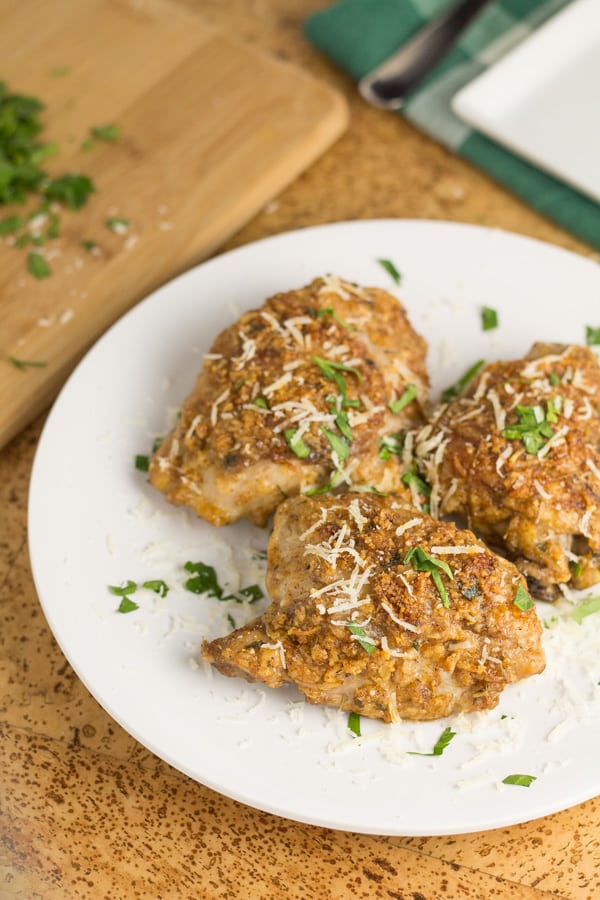
2. Slow-Cooker Lemon-Herb Chicken Thighs -- thighs stay moist over long cooks in a way breasts don't.
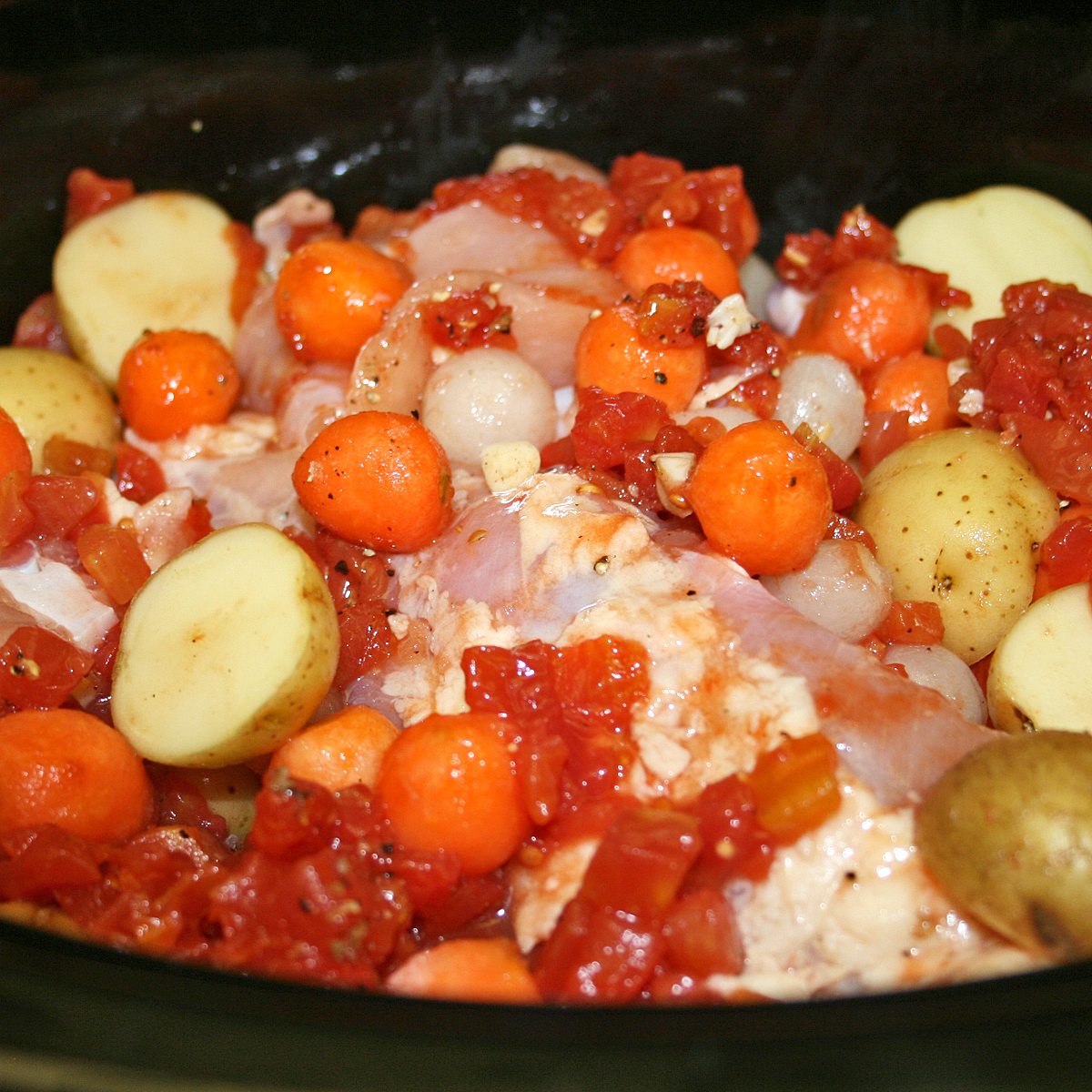
3. Slow-Cooker Chicken and Vegetable Stew -- the plate model in one pot.
4. Slow Cooker Tex-Mex Chicken Chili -- rinse the canned beans; rinsing removes roughly 40% of the sodium.
5. Slow Cooker Salsa Chicken with Roasted Sweet Potatoes -- check the salsa label; some jarred salsas carry added sugar.
6. Lemon-Ginger Slow Cooker Chicken Thighs -- acid and aromatics instead of sugar for flavor.
7. Crockpot Chicken and Herb Soup -- under 10g carb per bowl without noodles.
8. Crockpot Chicken Fajita Bowls with Avocado -- serve over cauliflower rice to drop the carb count by about 30g.
9. Turkey Corn Chili -- adapts directly to a 6-quart cooker on low for 6 hours.
Beef (6)
10. Slow Cooker Herb Beef Stew -- swap half the potato for turnip or celery root and the carb count drops by roughly a third with almost no textural difference.
11. Low-Temperature Slow Cooker Beef Stew with Root Vegetables -- 8 hours on low, the most hands-off recipe here.
12. Slow Cooker Tex-Mex Beef Chili -- beans are the fiber engine; keep them.
13. Slow Cooker Texas-Style Beef Chili -- no beans, so it's the lowest-carb chili on the list.
14. Slow Cooker Mississippi Pot Roast -- use a low-sodium ranch seasoning or make your own; the packet version is the sodium risk.
15. Slow Cooker Cumin-Roasted Beef Short Ribs -- chill overnight and lift the solidified fat cap off before reheating.
Pork (3)
16. Slow Cooker Herb-Roasted Pork Tenderloin -- tenderloin is one of the leanest cuts in the case, comparable to skinless chicken breast.
17. Carnitas-Style Pork Shoulder -- serve in lettuce cups or on one corn tortilla instead of two flour.
18. Slow Cooker Kimchi Pork and Tofu Stew -- around 9g carb per bowl and very high satiety.
Plant-based and fish (7)
19. Slow Cooker Cardiac-Friendly Vegetable Lentil Soup -- high fiber, low sodium by design.
20. Slow Cooker Mediterranean Chickpea and Vegetable Stew -- chickpeas run about 13g net carb per half cup with 6g fiber.
21. Slow Cooker Moroccan-Spiced Lentil and Vegetable Stew -- spice-forward rather than sugar-forward.
22. Slow Cooker Indian-Spiced Lentil and Tomato Curry -- freezes better than almost anything else here.
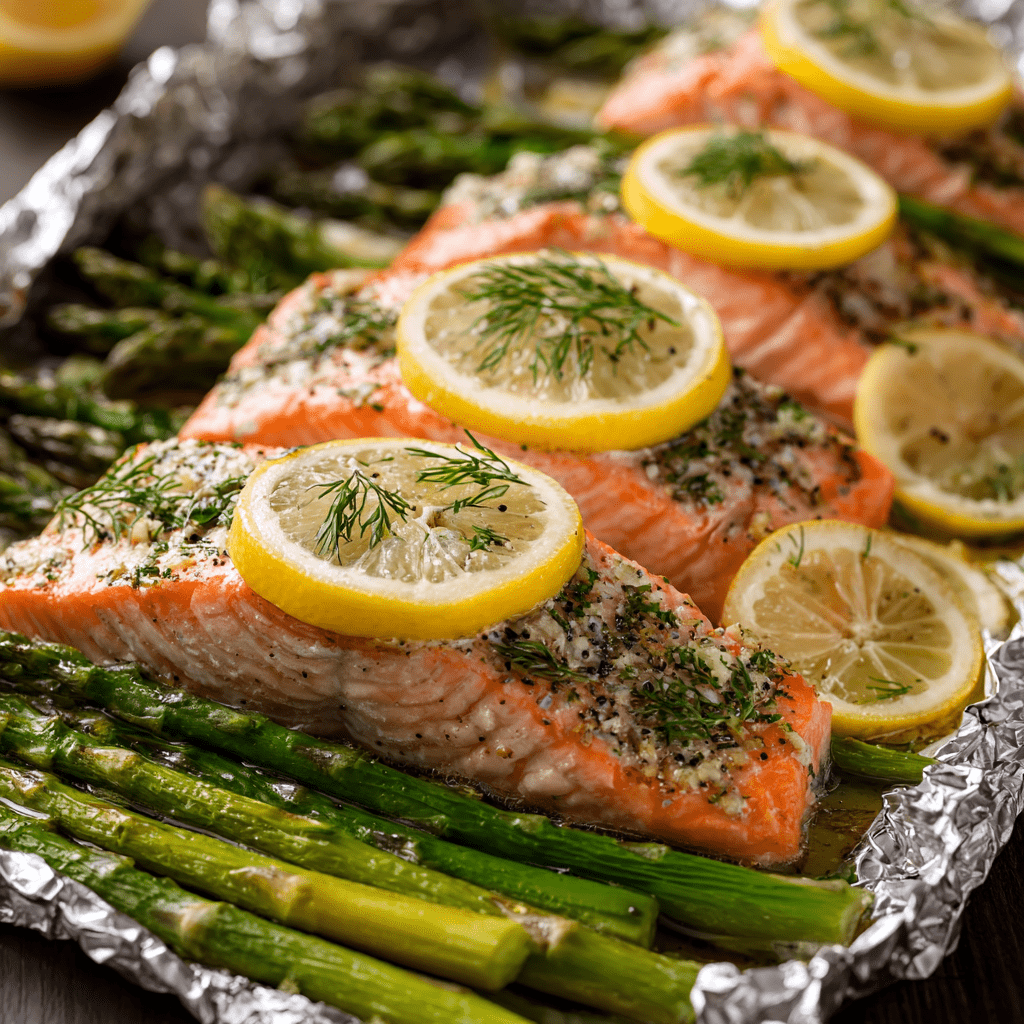
23. Crockpot Salmon and Vegetable Medley -- fish needs 1-2 hours on low, not 8. Add it near the end.
24. Crockpot Herb-Roasted Root Vegetables -- a side, with the starch measured into the quarter-plate.
25. Pho-Inspired Slow Cooker Chicken Noodle Soup -- build the broth in the cooker, add measured noodles to the bowl rather than the pot.
5-day sample meal plan with macros
Dinner-focused, with lunch built from the previous night's leftovers. Values are estimates per serving calculated from standard ingredient databases -- your own portions and brands will shift them, so weigh and check labels rather than trusting a chart.
| Day | Dinner | Carbs | Net carbs | Protein | Serve with |
|---|---|---|---|---|---|
| Mon | Tex-Mex chicken chili | 32g | 21g | 34g | Greek yogurt, cilantro |
| Tue | Herb beef stew (turnip swap) | 24g | 19g | 38g | Green salad, vinaigrette |
| Wed | Mediterranean chickpea stew | 38g | 27g | 18g | 2 tbsp feta, olives |
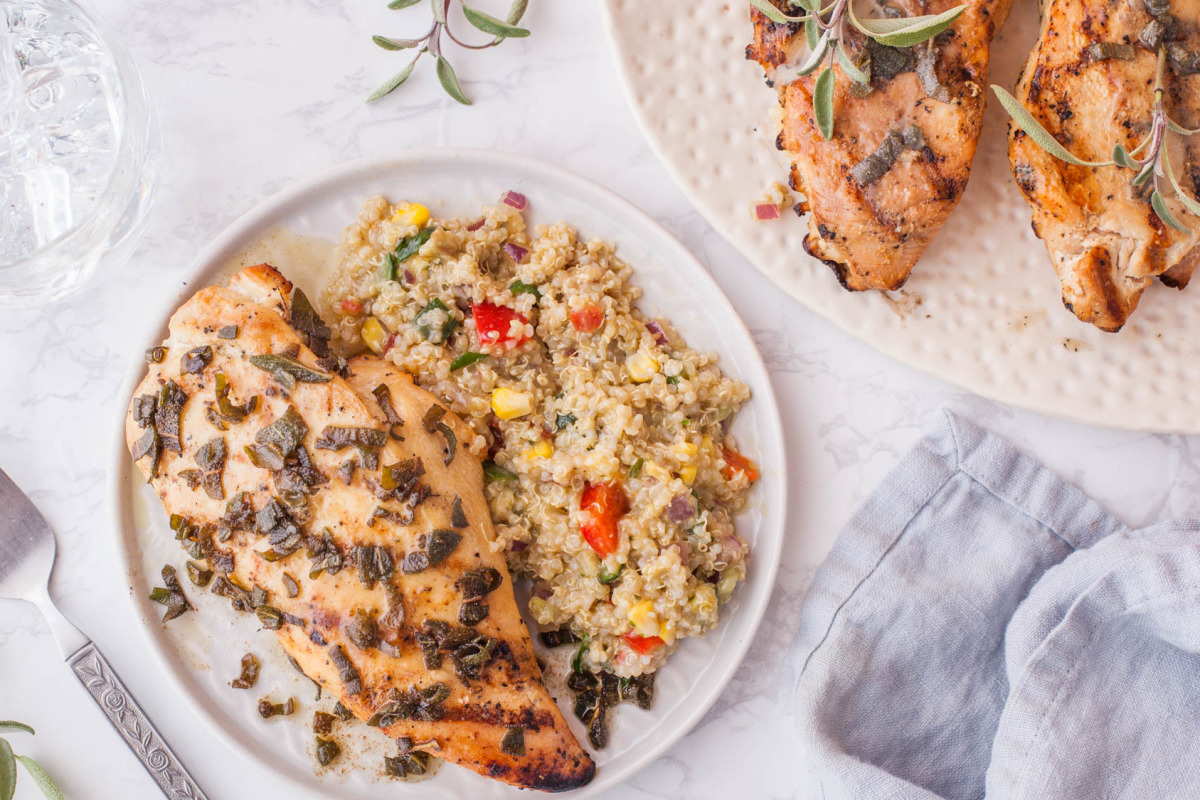
| Thu | Lemon-herb chicken thighs | 9g | 7g | 36g | 1/3 cup quinoa, broccoli |
| Fri | Kimchi pork and tofu stew | 12g | 9g | 32g | 1/3 cup brown rice |
Weekly totals from two cooking sessions: 10 dinners and 5 lunches from three pots. Sunday cooks the chili and the stew; Wednesday cooks the chickpea stew and the chicken thighs. Total hands-on time is about 70 minutes across the week.
Two structural notes. First, pair every measured starch with protein and fiber in the same meal -- the same 30g of carbohydrate produces a meaningfully different response alongside 35g of protein than it does alone. Second, spread carbohydrate across the day rather than concentrating it in one meal; three 40g meals are generally easier to manage than one 20g meal and one 80g meal.
Consolidated shopping list + pantry checklist
For all five dinners above, feeding two people with leftovers, at roughly $92 in 2026 US supermarket prices:
Proteins
- Boneless skinless chicken thighs, 3 lb
- Ground chicken or turkey, 1 lb
- Beef chuck roast, 2.5 lb
- Pork shoulder, 2 lb
- Firm tofu, 14 oz
Non-starchy vegetables
- Yellow onions (4), garlic (2 heads), celery (1 bunch)
- Carrots, 2 lb
- Turnips or celery root, 1.5 lb
- Bell peppers (4), zucchini (2)
- Broccoli, 2 crowns
- Cabbage, 1 small head
- Baby spinach, 10 oz
- Mushrooms, 8 oz
Canned and dry
- Low-sodium chicken broth, 64 oz
- No-salt-added diced tomatoes, 2 cans
- Tomato paste, 1 small can
- Low-sodium black beans and kidney beans, 2 cans each
- Chickpeas, 2 cans
- Brown or green lentils, 1 lb
- Brown rice and quinoa, 1 lb each
Dairy and finishing
- Plain full-fat Greek yogurt, 32 oz
- Feta, 4 oz
- Lemons (3), limes (2)
Pantry checklist (buy once, lasts months): smoked paprika, cumin, chili powder, dried oregano, bay leaves, cinnamon, black pepper, red wine vinegar, apple cider vinegar, olive oil, low-sodium soy sauce or tamari, unsalted tomato paste.
The pantry list is what replaces the sugar-and-sodium shortcuts. Smoked paprika plus vinegar plus tomato paste does the job a bottled barbecue sauce was doing, at about 2g of carbohydrate instead of 16g.
What to buy: slow cooker sizing + tools
| Household | Cooker size | Why |
|---|---|---|
| 1-2 people | 4-quart round | Single batches, minimal leftovers |
| 2-4 people | 6-quart oval | Fits a whole chicken or a chuck roast |
| 5+ or heavy batch cooking | 7-8 quart oval | Double batches, freezer stocking |
The 6-quart oval is the right default. Oval matters more than people expect -- a round 6-quart won't fit a 4-pound chicken or a full roast lying flat.
Features worth paying for: a programmable timer with an automatic switch to warm (holding at a safe temperature avoids the reheat-and-spike cycle), a removable stoneware insert that goes in the dishwasher, and a locking lid if you transport food. Features that don't matter: browning functions on most models run too cool to sear properly, and built-in temperature probes are rarely accurate enough to trust.
Our small appliance picks cover tested 6-quart models under $80. You'll also want a set of glass storage containers sized to a single portion -- portioning immediately after cooking is the single highest-leverage habit in this whole plan -- plus a digital kitchen scale and a ladle from utensils & tools, and a heavy skillet from cookware for browning meat before it goes in the pot.
Two prep sessions, ten dinners: the weekly rhythm
The plan only works if the cooking fits into gaps you actually have. Two sessions per week is the pattern that survives a real schedule.
Sunday, 45 minutes hands-on. Brown the chuck roast and the chicken thighs in a skillet while you chop (browning is worth the extra pan -- it adds the roasted flavor a slow cooker can't produce on its own). Load pot one with the beef stew, set it to low for 8 hours. Rinse and chop everything for the chili, bag it, and refrigerate; it goes into the cooker Monday morning in ninety seconds. Portion Sunday's stew into single containers the moment it's cool enough to handle.
Wednesday, 25 minutes hands-on. The chickpea stew is a dump-and-go: rinse the cans, add the aromatics, set it and leave. While it's running, season the chicken thighs and set the second cooker if you have one, or run them Thursday morning.
Portioning is the step that does the work. Divide each pot into single-serving containers within two hours of finishing, label with the date, refrigerate what you'll eat in four days and freeze the rest. A pot served family-style out of the insert is very hard to keep to a consistent portion; six labeled containers in the fridge are nearly automatic.
| Storage | Refrigerated | Frozen | Reheat method |
|---|---|---|---|
| Bean and lentil stews | 4 days | 3 months | Saucepan, splash of broth |
| Beef and pork braises | 4 days | 3 months | Saucepan, covered, low |
| Chicken thigh dishes | 4 days | 2 months | Saucepan or 325°F oven |
| Anything with dairy stirred in | 3 days | Not recommended | Low heat, don't boil |
| Cooked grains (separate) | 4 days | 1 month | Microwave with 1 tbsp water |
Reheat in a covered saucepan with a splash of broth rather than the microwave where you can -- microwaving slow-cooked protein tends to toughen the outer edge before the center is warm.
Three worked plates
Numbers below are estimates and will move with your brands and portion sizes. The point is the structure, not the decimal places.
Plate 1 -- chili night, about 32g carb. One and a half cups of Tex-Mex chicken chili (beans included, so most of the carbohydrate is here) with 11g of fiber, topped with two tablespoons of plain Greek yogurt for protein and fat, plus a side of raw cabbage slaw dressed with lime and olive oil. Net carbohydrate lands near 21g and the plate carries about 34g of protein, which is the combination that keeps the post-meal curve flat.
Plate 2 -- braise night, about 24g carb. Beef stew with half the potato swapped for turnip, served in a wide bowl so it reads generous, with a large green salad. The turnip swap alone removes roughly 12g of carbohydrate per serving and most people can't identify it in a stew. If you want the potato, keep it and drop the bread.
Plate 3 -- vegetarian night, about 38g carb. Chickpea and vegetable stew is the highest-carb meal in the plan, and it earns it: 11g of fiber brings net carbohydrate to about 27g, and the legumes deliver a slower glucose curve than an equivalent amount of refined starch. Two tablespoons of feta and a handful of olives add the fat that improves satiety.
The pattern across all three: the carbohydrate is never naked. It arrives with protein, fat and fiber in the same bowl, which is the single most reliable structural lever available in home cooking.
Common pitfalls
- Lifting the lid. Each peek costs 15-20 minutes of cooking time. Trust the recipe.
- Filling above two-thirds. Overfilled cookers heat unevenly and can leave food in the temperature danger zone too long.
- Adding dairy early. Milk, cream and yogurt split over long cooks. Stir them in during the last 15 minutes, off heat if possible.
- Frozen meat straight into the pot. It spends too long between 40°F and 140°F. Thaw first.
- Salting at hour zero. Eight hours of reduction concentrates it. Season at the end.
- Trusting "low-carb" on a label. Read the actual grams. Marketing terms are not regulated the way the nutrition panel is.
When a slow cooker is the wrong tool
Skip it for fish (except in the last hour), for anything you want crisp, and for quick lean cuts like pork chops or chicken breast, which dry out over long cooks. Also skip it if you can't portion and refrigerate within about two hours of finishing -- food held on "warm" for a whole evening loses texture and drifts on food safety. In those cases a sheet-pan dinner or a pressure cooker is the better tool.
What to read next
For the non-diabetic-specific version of the same technique, see the slow cooker dinners roundup. For the non-slow-cooker version of the same plan, see the complete diabetic meal plan and the 5-day family dinner rotation. To stock a freezer from the same pots, see the freezer-friendly meal prep guide.
Sources
- American Diabetes Association -- Meal Planning -- carb targets and the diabetes plate method.
- Mayo Clinic -- Diabetes Diet -- portion structure and food-group guidance.
- CDC -- Eat Well With Diabetes -- sodium, fiber and carbohydrate-counting basics.
Frequently asked questions
How many carbs can I eat per meal on a diabetes-friendly plan?
Can I use rice, potatoes, or beans in diabetic slow cooker recipes?
What size slow cooker do I need for these recipes?
Can I meal-prep these ahead for the week?
What ingredients should I avoid or limit in slow cooker recipes for diabetes?
Keto and low-carb recipes from the catalog
Save any of these to My Recipes — no account needed — and send the ingredients to Instacart in one tap.