The Complete Keto Meal Plan: 50+ Recipes + Shopping List for 2026
63 keto recipes with per-serving macros, a 7-day plan that averages 20g of carbs a day, an aisle-ordered $175 grocery list, and the six mistakes that end most keto attempts.
A complete keto meal plan means three things: a daily carb ceiling of 20–30g, a 7-day
Get a free 7-day keto meal plan
Seven dinners under 10g net carbs, delivered Sunday, with the macros already done and the shopping list totalled.
No spam, unsubscribe in one click. Recipes, shopping lists and Instacart carts all work without an account either way.
schedule you can actually shop for in one trip, and a recipe roster deep enough that
week three doesn't taste like week one. This guide gives you all three — 63 keto
recipes pulled from the AislePrompt catalog with per-serving macros, a costed grocery
list, and the mistakes that end most keto attempts by day ten.
Everything below is current as of 2026. Every recipe link goes to a live recipe page
with its own ingredient list and shopping-list button, and every carb figure in the
tables is the per-serving number recorded in our catalog — not an estimate.
What keto actually is — and who should skip it
The ketogenic diet restricts carbohydrate hard enough that your
liver stops running on glucose and starts converting fatty acids into
ketone bodies — mostly
beta-hydroxybutyrate — which the brain and muscles burn instead.
That metabolic state is nutritional ketosis, and it is not the
same thing as diabetic ketoacidosis. Nutritional ketosis runs blood ketones around
0.5–3.0 mmol/L. Ketoacidosis runs above 15 mmol/L with a collapsing blood pH, and it is
a medical emergency that a healthy pancreas will not let you walk into by eating steak.
The practical target for most adults:
| Macro | Share of calories | On a 2,000 kcal day |
|---|---|---|
| Fat | 65–75% | 145–165 g |
| Protein | 20–30% | 100–150 g |
| Carbohydrate | 5–10% | 20–30 g net |
Two clarifications people get wrong. First, protein is moderate, not low —
the old "protein kicks you out of ketosis" line overstates
gluconeogenesis, which is demand-driven, not supply-driven. You
are far more likely to under-eat protein and lose muscle than to over-eat it and lose
ketosis. Second, "net carbs" means total carbohydrate minus
fiber (and, in most protocols, minus sugar alcohols like
erythritol). Fiber passes through undigested, so 10g of
total carbs in a bowl of spinach with 6g of fiber is 4g of net carbs.
The evidence, honestly stated. Harvard T.H. Chan Nutrition Source — Diet Review: Ketogenic Diet rates keto as effective for
short-term weight loss with thin long-term data. A British Journal of Nutrition — ketogenic v. low-fat diet meta-analysis found very-low-carb
ketogenic diets beat low-fat diets for long-term weight loss, but by a margin measured
in a couple of kilograms — most of the advantage comes from appetite suppression and
adherence, not metabolic magic. Harvard Health — Should you try the keto diet? and Mayo Clinic — Low-carb diet: Can it help you lose weight? both land in
the same place: it works if you stick to it, and sticking to it is the hard part.
Skip keto, or get medical clearance first, if you: are pregnant or breastfeeding;
have type 1 diabetes, or type 2 on insulin or SGLT2 inhibitors (dose adjustments are
mandatory — this is a hypoglycemia and euglycemic-ketoacidosis risk, not a nutrition
question); have had your gallbladder removed or have a history of pancreatitis; have
chronic kidney disease; or have any history of disordered eating. A review in the
Indian Journal of Medical Research — Ketogenic diets: Boon or bane? lays out the contraindication list in more detail. The
Academy of Nutrition and Dietetics — What Is the Ketogenic Diet? position is worth reading before you start.
Is keto right for you? A five-question decision framework
Keto is a tool with a narrow fit, not a default. Answer these five honestly before you
spend $180 on a first grocery run.
1. What are you actually optimizing for? Weight loss and blood-glucose control are
where keto has the strongest case — it reliably drops appetite and can improve
insulin resistance markers. Endurance performance is where it
has the weakest case; if you race above threshold, you need glycogen. General "eating
healthier" is not a keto goal — the NHS — Eat well guidance gets you there with less
friction.
2. How much do you train, and at what intensity? Under ~4 hours a week of moderate
work, standard keto at 20g net carbs is fine. Above that, or if you lift heavy three
times a week, plan on targeted keto: 15–30g of carbs in the hour around training. CrossFit,
sprint intervals, and team sports do badly on strict keto for the first two months.
3. Do you cook for other people? This is the question that actually kills keto
attempts, and it has a clean answer: pick meals with a swappable starch. The keto eater
gets Cauliflower Rice Stir-Fry with Garlic Butter and Mushrooms; everyone else gets jasmine rice from the same skillet. Our
meal-plan builder splits a household by dietary tag and merges the
shopping list, so you make one grocery run instead of two. The
vegetarian family meal plan uses the
same split-the-side pattern for a different constraint.
4. What's your relationship with restriction? If food rules have historically
escalated for you, keto's binary framing ("in ketosis / kicked out") is a bad match. A
low-carb plan at 50–100g
gets most of the glycemic benefit without the all-or-nothing cliff.
5. Can you commit six weeks? Two to four days gets you into ketosis. Full
fat-adaptation — where energy, sleep, and training recover — takes four to six weeks.
Quitting at day twelve because you feel flat means you paid the entire cost of the
transition and collected none of the benefit.
If four of five answers point your way, keep reading. If two do, the
high-protein meal prep will serve you better.
Keto foods: what to eat freely, what to limit, what to avoid
Eat freely
Fatty cuts of meat and poultry with the skin on, eggs, fatty fish (salmon, mackerel,
sardines), full-fat dairy (butter, heavy cream, hard cheese, cream cheese),
olive oil, avocado oil, coconut oil, and
avocado itself. Leafy greens, cruciferous vegetables
(broccoli, cauliflower, cabbage, Brussels sprouts), zucchini, asparagus, mushrooms,
peppers, cucumber, olives. Nuts and seeds in measured portions — macadamias and pecans
are lowest in carbs, cashews are highest.
Eat in limited quantities
Berries (strawberries, raspberries, blackberries — about 1/2 cup), tomatoes and onions
(they add up fast in sauces), Greek yogurt and cottage cheese (5–8g carbs per serving),
cashews and pistachios, dark chocolate at 85% cacao or higher (about 5g net carbs per
ounce), and alcohol — dry wine and spirits are near-zero carb but slow fat oxidation
while your liver processes them.
Avoid completely
| Category | Examples | Why |
|---|---|---|
| Grains | Rice, wheat, oats, corn, quinoa | 30–45g carbs per cooked cup |
| Sugar | Table sugar, honey, maple syrup, agave | Pure carbohydrate, no ceiling |
| Most fruit | Banana (24g), apple (21g), grapes (16g/half-cup) | One banana is a full day's budget |
| Starchy vegetables | Potato, sweet potato, corn, peas, winter squash | 15–35g per serving |
| Legumes | Chickpeas, black beans, lentils | 20–30g net carbs per cup |
| "Sugar-free" candy | Anything sweetened with maltitol | Glycemic index ~35 — it spikes glucose and wrecks GI |
| Hidden-sugar condiments | Ketchup, BBQ sauce, teriyaki, most salad dressing | 4–15g per two-tablespoon serving |
The sugar alcohol trap deserves its own line. Erythritol and
allulose are close to metabolically inert. Maltitol is not — it is roughly two-thirds as
glycemic as sugar, and a "2g net carb" maltitol candy bar behaves like a 20g one. Read
the ingredient panel, not the front of the box. Use the
AislePrompt chat to check any packaged product against a keto filter before you
put it in the cart.
The keto pantry: 30 items to stock before day one
Stock these once and you can cook 80% of the recipes below without a mid-week grocery
run. Prices are US national averages as of mid-2026; your metro will vary ±25%.
| # | Item | Why it earns shelf space | Typical price |
|---|---|---|---|
| 1 | Extra-virgin olive oil (1L) | Default cooking + dressing fat | $14 |
| 2 | Avocado oil | High smoke point for searing | $10 |
| 3 | Butter (unsalted, 1 lb) | Pan sauces, finishing fat | $5 |
| 4 | Ghee | Butter flavor above 400°F | $9 |
| 5 | Coconut oil | Fat bombs, curries | $8 |
| 6 | Heavy cream (quart) | Sauces, coffee, 0.4g carbs/tbsp | $5 |
| 7 | Cream cheese (2 blocks) | Fat bombs, stuffed everything | $5 |
| 8 | Sharp cheddar (block) | Grate it yourself — pre-shredded has starch | $6 |
| 9 | Parmesan (wedge) | Crisps, crusts, finishing | $8 |
| 10 | Mozzarella (low-moisture) | Cauliflower crusts, chaffles | $5 |
| 11 | Eggs (2 dozen) | The cheapest keto protein there is | $7 |
| 12 | Bacon (2 lb) | Protein plus rendered cooking fat | $12 |
| 13 | Chicken thighs, bone-in skin-on (5 lb) | Best fat-to-price ratio in the case | $10 |
| 14 | Ground beef, 80/20 (2 lb) | Do not buy 93/7 — you need the fat | $12 |
| 15 | Salmon fillets (4) | Omega-3s, 15-minute dinner | $22 |
| 16 | Shrimp (1 lb frozen) | 10-minute protein from the freezer | $11 |
| 17 | Almond flour (3 lb) | Breading, crusts, baking | $16 |
| 18 | Coconut flour (1 lb) | Absorbs 4x its weight — use sparingly | $6 |
| 19 | Psyllium husk | Structure in keto bread | $9 |
| 20 | Erythritol or allulose | Non-glycemic sweetener | $10 |
| 21 | Macadamia nuts | Lowest-carb nut, ~1.5g net/oz | $14 |
| 22 | Pecans / almonds | Snacks, crusts, granola | $9 |
| 23 | Pork rinds | Zero-carb breading and chip substitute | $4 |
| 24 | Canned coconut milk (full-fat) | Curries, dairy-free sauces | $3 |
| 25 | Olives + capers | Salt, fat, acid — zero carbs | $7 |
| 26 | Dijon mustard | Emulsifies dressings, ~0g carbs | $4 |
| 27 | Coconut aminos | Soy-sauce swap with less sodium | $6 |
| 28 | Apple cider vinegar | Dressings, marinades | $4 |
| 29 | Bouillon / bone broth | Sodium delivery during week one | $6 |
| 30 | Lite salt (potassium chloride) | The cheapest electrolyte fix | $4 |
Produce is a weekly buy, not a pantry buy: spinach, romaine, broccoli, cauliflower,
zucchini, asparagus, mushrooms, bell peppers, cucumber, avocados, lemons, fresh herbs.
Budget $35–45 a week for one adult.
That list runs about $250 for the one-time pantry build. If that number stings, the
budget meal-prep guide has the general
cost-per-portion math, and you can defer items 17–20 until you actually want to bake.
Macros 101: hitting 70/25/5 without a food scale
You do not need to weigh food to run keto successfully. You need to control three
things, and a scale only helps with the third.
1. Set the carb ceiling first, then stop thinking about it. Twenty grams of net
carbs a day, all of it from vegetables, nuts, and dairy. That is the whole rule. If every
carb you eat comes from something that grew above ground and you keep it to about six
cups of vegetables a day, you will land between 15 and 25g without counting anything.
The recipes below average 4.8g of carbs per serving — three of them plus a snack still
clears the ceiling.
2. Anchor protein by hand size. One palm-sized portion of meat or fish per meal is
roughly 30g of protein. Two meals plus eggs at breakfast puts you at 100–130g, which is
where a moderately active adult should sit. Under-eating protein is the single most
common macro error on keto and it costs you muscle during a calorie deficit.
3. Let fat be the variable. This is the part people invert. Fat is not a target to
hit — it is the dial you turn to control hunger and energy. Hungry at 3pm? Add fat.
Losing weight faster than you want? Add fat. Stalled with no appetite? Pull fat back.
Cooking fat, dressing, and the fat already in fatty cuts will carry you to 65–75% of
calories without ever adding a spoon of butter to your coffee.
Portion anchors that replace a scale
| Food | Visual portion | Approx. carbs | Approx. fat |
|---|---|---|---|
| Cooked meat / fish | Palm (no fingers) | 0 g | 8–25 g |
| Hard cheese | Two dice | 0.5 g | 9 g |
| Nuts | Cupped hand (~1 oz) | 2–4 g | 15–21 g |
| Avocado | Half a medium | 2 g net | 15 g |
| Olive oil | Thumb tip (~1 tbsp) | 0 g | 14 g |
| Leafy greens | Two fists raw | 1 g net | 0 g |
| Broccoli / cauliflower | One fist cooked | 3–4 g net | 0 g |
| Berries | Cupped hand | 6–8 g net | 0 g |
| Heavy cream | Two thumbs (~2 tbsp) | 0.8 g | 11 g |
When a scale does earn its counter space: nuts, cheese, and nut butters. These three
are calorie-dense, easy to eyeball wrong by 100%, and the most common reason a keto
weight-loss stall is actually a calorie stall. A $12 flat scale from
kitchen gadgets fixes that in a week of use, after which you can eyeball it
again. Cross-check any per-serving figure against USDA FoodData Central if a label looks off.
A note on MCT oil: medium-chain triglycerides do raise blood
ketones faster than long-chain fats. They do not accelerate fat loss, and a full
tablespoon on an unadapted gut will keep you near a bathroom for an afternoon. Start at
a teaspoon if you use it at all. It is optional; nothing in this plan requires it.
The 7-day keto meal plan (days 1–5 are the quick-start)
This plan is calibrated for one adult holding 20–30g of carbs a day at roughly
1,700–2,100 kcal. If you only want a five-day work-week plan, stop at Day 5 —
days 6 and 7 are the weekend extension with the social meal and the batch-prep
session.
Carb figures for linked recipes are the per-serving totals recorded in our
catalog. Rows marked with an asterisk are hand-portioned items estimated from
USDA FoodData Central. Because the catalog stores total carbohydrate rather than fiber,
every recipe number below is a ceiling — your net carbs will land 1–4g lower per
vegetable-heavy serving.
Day 1 — Monday | 18g carbs
| Meal | What you'll eat | Carbs |
|---|---|---|
| Breakfast | Baked Bacon and Egg Cups with Cheddar — two egg cups plus sautéed spinach | 1 g |
| Snack | String cheese + 10 macadamia nuts | 2 g |
| Lunch | Keto Chicken Avocado Salad with Lemon Dijon Dressing — over extra romaine | 8 g |
| Snack | Cucumber slices with cream cheese | 3 g |
| Dinner | Keto Herb-Crusted Chicken Thighs with Garlic Cream Sauce — with roasted broccoli in butter | 4 g |
Monday is the day the plan either starts or dies, so it is built to need almost no cooking: the egg cups were baked yesterday, the chicken salad takes 20 minutes, and dinner is one sheet pan. Bake twelve egg cups on Sunday and you have covered three breakfasts.
Day 2 — Tuesday | 15g carbs
| Meal | What you'll eat | Carbs |
|---|---|---|
| Breakfast | Bacon and Egg Skillet with Chives — with an extra egg | 1 g |
| Snack | Almonds, 1 oz | 3 g |
| Lunch | Cumin-Spiced Ground Beef Taco Bowl — cauliflower-rice base, no tortilla | 6 g |
| Snack | Half an avocado with sea salt | 2 g |
| Dinner | Crisp-Crust Keto Salmon with Lemon-Dill Butter — with roasted asparagus | 3 g |
The taco bowl is the recipe that convinces skeptics — 35g of protein, 6g of carbs, and it reads as a real lunch rather than a diet lunch. Build it on cauliflower rice, skip the tortilla entirely rather than buying a low-carb one.
Day 3 — Wednesday | 21g carbs
| Meal | What you'll eat | Carbs |
|---|---|---|
| Breakfast | Baked Bacon and Egg Cups with Cheddar — leftovers + coffee with heavy cream | 1 g |
| Snack | Celery with almond butter | 4 g |
| Lunch | Keto Chicken Avocado Salad with Lemon Dijon Dressing — leftovers, in lettuce wraps | 8 g |
| Snack | 1 oz hard cheese + pepperoni | 1 g |
| Dinner | Cauliflower Rice Stir-Fry with Ground Beef and Sesame — double batch — half goes to Friday | 7 g |
Wednesday is the leftover day by design. Cook the cauliflower-rice dish in a double batch tonight; half of it is Friday's base if you decide to skip the pizza.
Day 4 — Thursday | 16g carbs
| Meal | What you'll eat | Carbs |
|---|---|---|
| Breakfast | Sautéed Eggs with Crispy Bacon and Avocado | 4 g |
| Snack | Brazil nuts, 4–5 | 1 g |
| Lunch | Bunless Bacon Cheeseburger Lettuce Wraps — with pickles and mustard | 2 g |
| Snack | Pork rinds with guacamole | 4 g |
| Dinner | One-Pot Keto Beef and Broccoli Stir-Fry — coconut aminos instead of soy sauce | 5 g |
Thursday handles the fast-food craving that usually shows up around day four. Bunless lettuce wraps at 2g of carbs beat any drive-through low-carb option, and beef and broccoli covers the takeout craving on the same day.
Day 5 — Friday | 28g carbs
| Meal | What you'll eat | Carbs |
|---|---|---|
| Breakfast | Bacon-Wrapped Asparagus with Fried Eggs | 4 g |
| Snack | Whipped cream cheese with cucumber | 3 g |
| Lunch | Crispy Bacon & Garlic Parmesan Zucchini Noodles — pasta night, at lunch | 4 g |
| Snack | 1 oz dark chocolate, 85%+ | 5 g |
| Dinner | Cauliflower Crust Vegetable Pizza with Spinach and Feta — Friday pizza night, kept | 12 g |
Two swaps carry Friday: zucchini noodles for pasta and a cauliflower crust for pizza dough. Note the pizza is the highest-carb item in the week at 12g per serving — it is why Friday is the highest-carb day. Plan around it rather than pretending it is free.
Day 6 — Saturday | 25g carbs
| Meal | What you'll eat | Carbs |
|---|---|---|
| Breakfast | Spinach and Cheese Chaffle | 6 g |
| Snack | Strawberries + raspberries with heavy cream | 7 g |
| Lunch | One-Pot Keto Beef and Broccoli Stir-Fry — leftovers | 5 g |
| Snack | Cheese board: cheddar, brie, salami, olives | 3 g |
| Dinner | Sautéed Lemon-Dill Salmon with Asparagus | 4 g |
Saturday is the social day. The cheese board is the most normal-looking keto food there is, and berries with cream is the closest thing to dessert that fits under the ceiling without a sweetener.
Day 7 — Sunday | 17g carbs
| Meal | What you'll eat | Carbs |
|---|---|---|
| Breakfast | Baked Bacon and Egg Cups with Cheddar — fresh batch of 6 for the week ahead | 1 g |
| Snack | Macadamias + string cheese | 2 g* |
| Lunch | Bunless Bacon Cheeseburger Lettuce Wraps — with bacon and blue cheese | 2 g |
| Snack | Almond Butter Vanilla Keto Fat Bombs — one fat bomb | 2 g |
| Dinner | Almond Parmesan Crusted Chicken Thighs — with Baked Broccoli and Cauliflower with Cheddar and Parmesan | 10 g |
Sunday is batch-prep day: six egg cups, a large tray of the broccoli-cauliflower bake, and a week of guacamole. Forty-five minutes here removes almost all weekday morning cooking. Push the whole week into a shopping list with the shopping list tool.
Week at a glance
| Day | Total carbs |
|---|---|
| Day 1 — Monday | 18 g |
| Day 2 — Tuesday | 15 g |
| Day 3 — Wednesday | 21 g |
| Day 4 — Thursday | 16 g |
| Day 5 — Friday | 28 g |
| Day 6 — Saturday | 25 g |
| Day 7 — Sunday | 17 g |
| Weekly average | 20.0 g/day |
The week runs 15–28g of carbs a day and averages 20.0g — comfortably inside a
20–30g net-carb target once fiber is subtracted, with Friday's pizza as the one day
you should not add anything else to. Repeat the week with the protein rotated
(chicken → pork, salmon → shrimp) and you have a month.
63 keto recipes from the AislePrompt catalog
Every recipe below is live on the site with its own ingredient list and one-click
shopping list. The Carbs column is total carbohydrate per serving as recorded in
the catalog — net carbs run lower once you subtract fiber. Nothing here is an
estimate; if a figure is missing from our data, the recipe is not in this table.
Breakfast (8 recipes, avg 3.5g carbs)
Eggs do most of the work here. Chaffles — the cheese-and-egg waffle — are the closest thing keto has to bread, and they freeze well.
| Recipe | Carbs | Protein | Fat | Calories | Prep | Cook | Serves |
|---|---|---|---|---|---|---|---|
| Baked Bacon and Egg Cups with Cheddar | 1 g | 20 g | 25 g | 300 | 10 min | 20 min | 6 |
| Bacon and Egg Skillet with Chives | 1 g | 18 g | 26 g | 315 | 5 min | 10 min | 2 |
| Savory Herb Chaffle with Smoked Salmon | 2 g | 22 g | 22 g | 290 | 5 min | 5 min | 2 |
| Bacon-Wrapped Asparagus with Fried Eggs | 4 g | 18 g | 25 g | 320 | 10 min | 15 min | 2 |
| Spinach and Cheese Chaffle | 6 g | 18 g | 24 g | 249 | 10 min | 10 min | 2 |
| Avocado-Creamed Scrambled Eggs with Chives | 5 g | 12 g | 18 g | 220 | 5 min | 4 min | 1 |
| Sausage and Avocado with Rosemary | 5 g | 18 g | 38 g | 450 | 5 min | 10 min | 1 |
| Sautéed Eggs with Crispy Bacon and Avocado | 4 g | 12 g | 16 g | 205 | 5 min | 10 min | 2 |
Lunch & salads (8 recipes, avg 5.5g carbs)
Lunch is where keto fails at an office desk, so every one of these travels: dress on the side, assemble at noon. See the keto lunch ideas guide for the four patterns these fall into.
| Recipe | Carbs | Protein | Fat | Calories | Prep | Cook | Serves |
|---|---|---|---|---|---|---|---|
| Keto Chicken Avocado Salad with Lemon Dijon Dressing | 8 g | 35 g | 22 g | 320 | 20 min | 25 min | 2 |
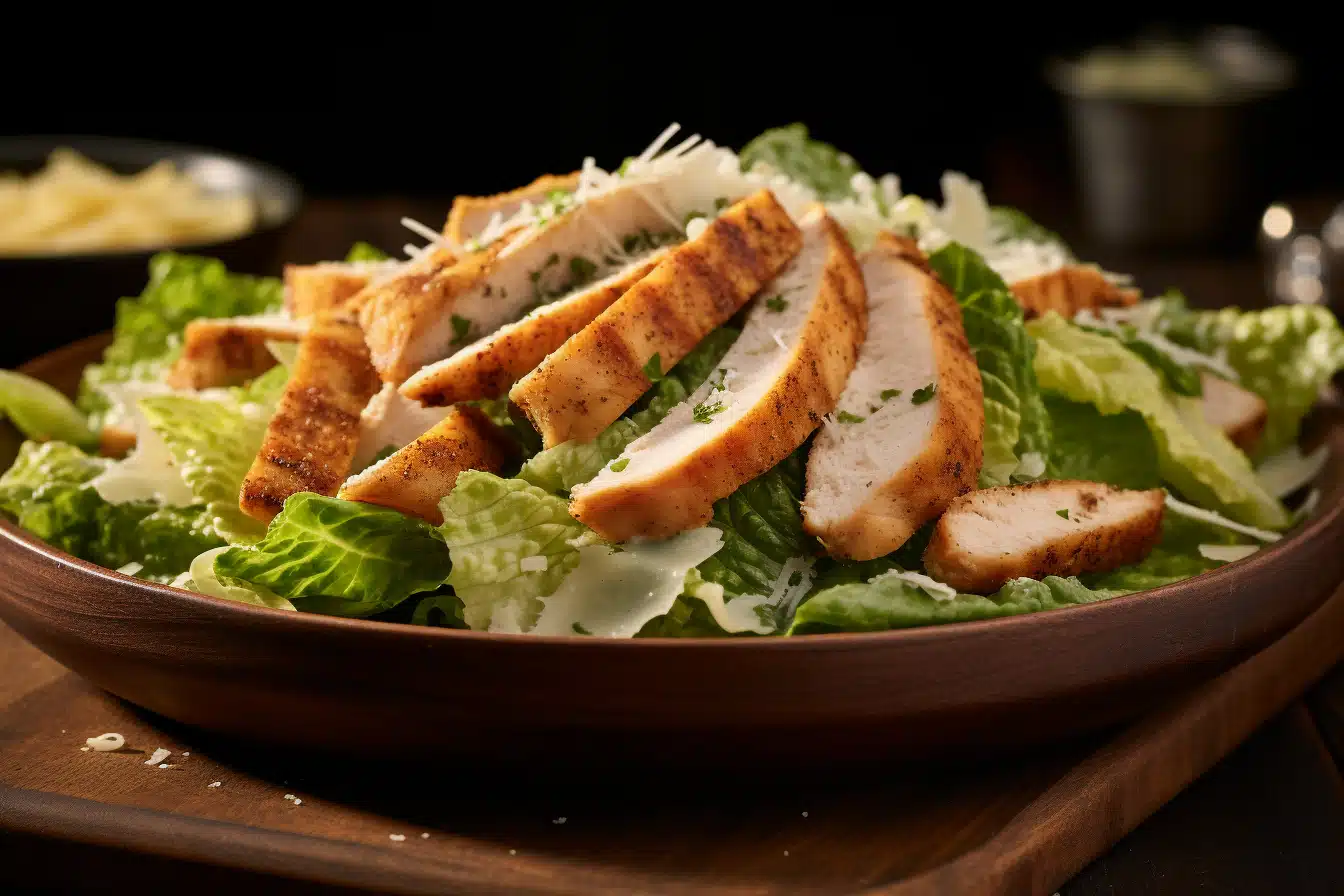
| Keto Caesar Salad with Grilled Chicken and Parmesan Crisps | 5 g | 25 g | 25 g | 350 | 15 min | 10 min | 1 |
| Crispy Garlic-Infused Chicken & Avocado Salad | 6 g | 34 g | 24 g | 368 | 15 min | 10 min | 2 |
| Creamy Keto Caesar Salad with Crispy Almonds | 5 g | 13 g | 21 g | 255 | 10 min | 5 min | 2 |
| Avocado-Cucumber Salad with Feta and Olives | 3 g | 4 g | 25 g | 253 | 15 min | 0 min | 2 |
| Tossed Avocado and Feta Salad with Lemon Vinaigrette | 5 g | 9 g | 33 g | 360 | 10 min | 0 min | 2 |
| Massaged Kale and Radish Salad with Lemon Vinaigrette | 8 g | 4 g | 16 g | 180 | 10 min | 0 min | 2 |
| Buffalo Chicken Lettuce Wraps with Blue Cheese Drizzle | 4 g | 30 g | 18 g | 290 | 15 min | 0 min | 4 |
Chicken dinners (8 recipes, avg 3.0g carbs)
Bone-in, skin-on thighs are the keto default: more fat than breast, cheaper per pound, and far harder to overcook.
| Recipe | Carbs | Protein | Fat | Calories | Prep | Cook | Serves |
|---|---|---|---|---|---|---|---|
| Keto Herb-Crusted Chicken Thighs with Garlic Cream Sauce | 4 g | 38 g | 35 g | 480 | 15 min | 25 min | 2 |
| Almond Parmesan Crusted Chicken Thighs | 3 g | 36 g | 32 g | 430 | 15 min | 35 min | 4 |
| Crispy Keto Herb Chicken Thighs with Lemon Butter | 1 g | 43 g | 70 g | 680 | 15 min | 15 min | 2 |
| Crispy Herb-Crusted Chicken Thighs with Creamy Avocado Sauce | 6 g | 38 g | 42 g | 550 | 15 min | 25 min | 4 |
| Lemon-Herb Pan-Seared Chicken with Creamy Garlic Sauce | 2 g | 38 g | 35 g | 450 | 10 min | 15 min | 2 |
| Herb-Crusted Parmesan Chicken Breasts with Garlic Herb Butter | 3 g | 38 g | 25 g | 380 | 15 min | 22 min | 4 |
| Herb-Crusted Keto Chicken Breasts with Lemon Zest | 3 g | 35 g | 25 g | 380 | 10 min | 22 min | 4 |
| Herb-Roasted Crispy Chicken Thighs with Garlic | 2 g | 28 g | 24 g | 330 | 10 min | 28 min | 4 |
Beef & pork dinners (10 recipes, avg 3.9g carbs)
Buy 80/20 ground beef, not 93/7. The fat is the point, and the leaner grind costs more for less.
| Recipe | Carbs | Protein | Fat | Calories | Prep | Cook | Serves |
|---|---|---|---|---|---|---|---|
| Bunless Bacon Cheeseburger Lettuce Wraps | 2 g | 38 g | 36 g | 480 | 10 min | 15 min | 4 |
| Cumin-Spiced Ground Beef Taco Bowl | 6 g | 35 g | 32 g | 450 | 10 min | 15 min | 4 |
| Keto Seared Beef Steak with Herb Butter | 2 g | 38 g | 42 g | 542 | 15 min | 8 min | 1 |
| One-Pot Keto Beef and Broccoli Stir-Fry | 5 g | 26 g | 22 g | 335 | 15 min | 15 min | 4 |
| Crisp-Caramelized Beef & Veggie Stir-Fry | 4 g | 34 g | 28 g | 420 | 10 min | 12 min | 2 |
| Crisp-Seared Flank Steak with Keto Stir-Fry | 4 g | 38 g | 42 g | 542 | 10 min | 15 min | 2 |
| Herb-Crusted Beef Tenderloin with Garlic Butter | 2 g | 45 g | 38 g | 520 | 25 min | 20 min | 4 |
| Crispy Beef & Blue Cheese Stuffed Portobellos | 6 g | 38 g | 28 g | 420 | 15 min | 20 min | 4 |
| Pan-Seared Pork Chops with Creamy Mushroom Sauce | 5 g | 45 g | 30 g | 480 | 10 min | 20 min | 2 |
| Baked Cheddar-Stuffed Pork Chops with Garlic Butter | 3 g | 48 g | 32 g | 480 | 15 min | 25 min | 4 |
Seafood dinners (8 recipes, avg 3.4g carbs)
Fatty fish is the fastest keto dinner there is — 15 minutes, and the omega-3s are the one nutrient a heavy-dairy keto pattern tends to under-deliver.
| Recipe | Carbs | Protein | Fat | Calories | Prep | Cook | Serves |
|---|---|---|---|---|---|---|---|
| Crisp-Crust Keto Salmon with Lemon-Dill Butter | 3 g | 32 g | 28 g | 380 | 15 min | 14 min | 4 |
| Sautéed Lemon-Dill Salmon with Asparagus | 4 g | 28 g | 22 g | 320 | 10 min | 10 min | 1 |
| Baked Lemon-Dill Salmon with Roasted Broccoli | 8 g | 35 g | 22 g | 350 | 10 min | 20 min | 2 |
| Keto Lemon-Dill Salmon with Crispy Capers | 2 g | 32 g | 24 g | 345 | 10 min | 15 min | 4 |
| Lemon-Dill Crusted Shrimp with Capers | 3 g | 32 g | 20 g | 320 | 15 min | 10 min | 2 |
| Citrus-Glazed Keto Salmon with Lemon-Herb Butter | 4 g | 38 g | 28 g | 420 | 10 min | 15 min | 4 |
| Crispy Pan-Seared Salmon with Lemon-Dill Cream Sauce | 2 g | 35 g | 45 g | 550 | 10 min | 15 min | 4 |
| Lemon-Garlic Butter Shrimp with Parmesan Crust | 1 g | 30 g | 22 g | 320 | 5 min | 10 min | 4 |
Rice, pasta & pizza swaps (7 recipes, avg 6.4g carbs)
These are the four substitutions that keep keto liveable: cauliflower for rice, zucchini for pasta, cauliflower crust for dough, and roasted cruciferous for potatoes.
| Recipe | Carbs | Protein | Fat | Calories | Prep | Cook | Serves |
|---|---|---|---|---|---|---|---|
| Cauliflower Rice Stir-Fry with Garlic Butter and Mushrooms | 6 g | 3 g | 9 g | 110 | 10 min | 15 min | 4 |
| Cauliflower Rice Stir-Fry with Ground Beef and Sesame | 7 g | 38 g | 24 g | 390 | 10 min | 15 min | 3 |
| Crispy Bacon & Garlic Parmesan Zucchini Noodles | 4 g | 22 g | 38 g | 450 | 15 min | 15 min | 2 |
| Sautéed Zucchini Noodles with Basil Pesto | 4 g | 5 g | 18 g | 220 | 10 min | 7 min | 2 |
| Crispy Herb-Crusted Cauliflower Steaks with Lemon-Dijon Glaze | 5 g | 8 g | 18 g | 220 | 20 min | 35 min | 4 |
| Cauliflower Crust Vegetable Pizza with Spinach and Feta | 12 g | 15 g | 28 g | 380 | 25 min | 23 min | 2 |
| Baked Broccoli and Cauliflower with Cheddar and Parmesan | 7 g | 4 g | 10 g | 120 | 10 min | 25 min | 4 |
Soups, chilis & slow cooker (6 recipes, avg 7.0g carbs)
Cook once on Sunday, eat four times. Slow-cooker cuts (shoulder, chuck, cube steak) are also the cheapest fatty cuts in the store.
| Recipe | Carbs | Protein | Fat | Calories | Prep | Cook | Serves |
|---|---|---|---|---|---|---|---|
| Keto Beef & Chile Pepper Slow Cooker Chili | 8 g | 28 g | 18 g | 320 | 15 min | 360 min | 4 |
| Tangy Apple Cider Pulled Pork | 3 g | 35 g | 22 g | 380 | 15 min | 480 min | 4 |
| Keto Herb-Roasted Beef & Vegetable Stew | 9 g | 32 g | 20 g | 350 | 15 min | 480 min | 4 |
| Smoky Keto Turkey Chili | 8 g | 28 g | 18 g | 320 | 15 min | 360 min | 6 |
| Slow-Simmered Cube Steak with Caramelized Onion Gravy | 10 g | 32 g | 26 g | 410 | 15 min | 45 min | 4 |
| Crispy-Knuckle Pork Shoulder with Herb Crust | 4 g | 35 g | 42 g | 550 | 15 min | 480 min | 6 |
Snacks & fat bombs (8 recipes, avg 2.9g carbs)
Fat bombs are portion-control devices, not desserts. One is a snack; four is a meal you did not plan for.
| Recipe | Carbs | Protein | Fat | Calories | Prep | Cook | Serves |
|---|---|---|---|---|---|---|---|
| Cheesy Keto Breadsticks with Garlic Herb Butter | 3 g | 8 g | 15 g | 180 | 10 min | 12 min | 8 |
| Almond-Crusted Chicken Bites with Herbed Yogurt | 3 g | 26 g | 21 g | 315 | 15 min | 5 min | 1 |
| Avocado and Bacon Cheese Crisps | 6 g | 11 g | 22 g | 270 | 10 min | 10 min | 2 |
| Air-Fried Zucchini Chips with Parmesan | 4 g | 5 g | 10 g | 120 | 10 min | 8 min | 2 |
| Almond Butter Vanilla Keto Fat Bombs | 2 g | 3 g | 12 g | 120 | 5 min | 5 min | 10 |
| Maple Cinnamon Fat Bombs | 2 g | 1 g | 10 g | 100 | 10 min | 0 min | 12 |
| No-Bake Keto Chocolate Chip Cookie Dough Bites | 2 g | 3 g | 8 g | 90 | 5 min | 0 min | 12 |
| No-Bake Keto Cheesecake Fat Bombs with Cocoa and Vanilla | 1 g | 2 g | 11 g | 110 | 10 min | 0 min | 12 |
Across all 63 recipes: 4.3g carbs, 25.0g protein and 343 kcal per serving, and 44 of them are on the table in 30 minutes or less. Browse the rest of the catalog at /recipes.
The keto grocery list + what it costs
One adult, one week, built from the plan above. Aisle-ordered so it is one lap of the
store. Prices are 2026 US national averages.
| Aisle | Items | Approx. cost |
|---|---|---|
| Meat & poultry | 5 lb bone-in chicken thighs, 2 lb ground beef 80/20, 1 lb bacon, 2 chicken breasts | $38 |
| Seafood | 4 salmon fillets, 1 lb frozen shrimp | $33 |
| Dairy & eggs | 2 dozen eggs, 1 lb butter, 1 qt heavy cream, cheddar block, parmesan wedge, cream cheese, string cheese | $34 |
| Produce | Romaine, spinach, broccoli, cauliflower (2 heads), zucchini (4), asparagus, mushrooms, cucumbers, 4 avocados, lemons, herbs | $42 |
| Pantry top-ups | Olives, macadamias, almonds, pork rinds, coconut aminos, 85% dark chocolate | $28 |
| Total | ||
| $175 |
That is about $8.30 per meal across 21 meals. Keto is genuinely more expensive than a
grain-based week — protein and fat cost more per calorie than rice and pasta do. Three
levers bring it down:
- Buy thighs, not breasts. Bone-in thighs run about a third of the price of breast per
- Eggs are the cheapest keto protein on the shelf. Two dozen covers a week of
- Frozen is fine for fish and vegetables. Frozen salmon and frozen broccoli are
Push any week of this plan into a checkable list with the
shopping list tool, or let the meal-plan builder scale
servings to your household first. If you are cost-sensitive, run the same math against
What to buy: the six tools that actually matter
Keto does not need special equipment. It needs six things that make fat-forward cooking
faster, and you probably own four of them.
1. A 12-inch cast-iron or carbon-steel skillet. Keto is a searing diet — thighs,
steaks, salmon skin, chaffles. A pan that holds heat is the difference between crisp
skin and grey skin. Browse cookware.
2. A flat digital scale. Not for meat — for nuts, cheese, and nut butter, the three
foods that silently double their portion. See kitchen gadgets.
3. A sharp 8-inch chef's knife. You are now breaking down whole cauliflower and
spatchcocking chickens weekly. See knives and cutting.
4. A box grater or food processor. Cauliflower rice from a whole head costs a
quarter of what the bagged version does. See small appliances.
5. Glass meal-prep containers, 8–10 of them. Every plan above assumes leftovers.
Glass does not stain from turmeric or hold bacon smell. See
storage and containers and our
6. Wide-mouth mason jars. Dressings, overnight chia, and fat bombs stored in
single portions. See utensils and tools.
Skip: keto-branded snack bars, exogenous ketone powders (they raise blood ketones
without touching body fat), and $60 blood-ketone meters unless you are running keto
therapeutically under a clinician.
Six keto mistakes that end most attempts
1. The electrolyte crash, misdiagnosed as "keto flu." Days three through seven bring
headache, fatigue, cramps and brain fog. That is not detox and it is not your body
"adjusting" — dropping carbs drops insulin, and low insulin makes the kidneys dump
sodium, taking potassium and magnesium with it. The fix is salt, not time: 3–5g of extra
sodium a day (broth, generous salting, lite salt), plus magnesium and potassium to the
levels described by NIH Office of Dietary Supplements — Magnesium and NIH Office of Dietary Supplements — Potassium. Most people who quit keto in week one
quit because of an electrolyte problem they treated as a
willpower problem.
2. Dirty keto. Processed meat, seed-oil-fried everything, and zero vegetables will
technically hold you in ketosis and will also give you the worst bloodwork of your life.
The Harvard T.H. Chan Nutrition Source — Diet Review: Ketogenic Diet critique of keto is mostly a critique of this version of it. Six cups
of above-ground vegetables a day is the floor.
3. Under-eating protein. Chasing 75% fat by cutting protein costs you lean mass
during a deficit. Protein is protective. One palm per meal, minimum.
4. Hidden carbs in sauces and "sugar-free" products. Two tablespoons of BBQ sauce is
14g. A maltitol-sweetened bar labelled "2g net carbs" behaves
closer to 15g. Read panels; check anything questionable in the chat.
5. Treating fat as a target instead of a dial. Butter in coffee on top of an
already-fatty breakfast is 200 calories you did not need. Fat should ride along with the
food, not get added to hit a percentage.
6. Quitting at day twelve. Fat-adaptation takes four to six weeks. Weeks two and
three feel flat by design. If you stop there you paid the full transition cost and
collected none of the return.
When keto is the wrong call
Keto has a real fit and a real edge, and pretending otherwise is how people end up
miserable on a diet that was never going to suit them.
Don't run keto if you race or train at high intensity. Anything above lactate
threshold runs on glycogen. Cyclists, runners doing intervals, CrossFit athletes and
team-sport players lose measurable top-end power on strict keto and stay there for
months. Targeted keto (15–30g of carbs around training) mitigates it; a
high-protein plan at moderate carbs
sidesteps it entirely.
Don't run keto if you cook for a household that isn't. Not because it is
impossible — the swap-the-side pattern works — but because if you are not willing to
run two sides most nights, the plan collapses in week two. The
30-minute weeknight dinner plan
is a better fit for a single-pot household.
Don't run keto for general health if you are already eating well. The
Mediterranean pattern has decades more
outcome data behind it, is easier to sustain, and the NHS — Eat well guidance is built on it.
Keto's edge is specifically appetite control and glycemic management.
Don't run keto forever without checking in. Cycle out every three to six months, get
lipids and metabolic panels read, and decide again with data. The
low-carb plan at 50–100g
of carbs is where most long-term low-carb eaters actually settle, and a
low-carbohydrate diet at that level keeps most of the benefit
with a fraction of the social cost.
Frequently asked questions
What can I eat on a keto diet?
Fatty meats (beef, pork, lamb), poultry with the skin on, fish and seafood, eggs, and full-fat dairy — butter, heavy cream, hard cheese, cream cheese. Add low-carb vegetables freely: leafy greens, broccoli, cauliflower, zucchini, asparagus, mushrooms, peppers and cucumber. Round it out with olive oil, avocado oil, avocados, olives, and nuts in measured portions — macadamias and pecans are the lowest-carb, cashews the highest. Berries are the one fruit that fits, at about half a cup a day.
How many carbs can I eat and stay in ketosis?
The standard target is 20–30 grams of net carbs per day, where net carbs are total carbohydrate minus fiber and sugar alcohols. Some people hold ketosis at 50 grams; athletes training at high intensity may need 75–100 grams on a targeted protocol. Start at 20g for the first two to three weeks to force adaptation, then experiment upward until you find your ceiling. For scale, a single medium banana is about 24g of carbohydrate — nearly a full day's allowance in one piece of fruit, which is why a 'low carb' claim on a package rarely means keto-compatible.
How long does it take to get into ketosis, and what is keto flu?
For most healthy adults, two to four days under 20g of net carbs puts the body into nutritional ketosis. Full fat-adaptation — where energy, mental clarity and training capacity recover — takes four to six weeks. The 'keto flu' of days three through seven (headache, fatigue, cramps, brain fog) is largely electrolyte loss rather than detox: low insulin makes the kidneys excrete sodium, and potassium and magnesium follow. Drink about three liters of water and add 3–5g of sodium, 300mg of magnesium and 1,000mg of potassium daily through the transition. Urine strips or a blood ketone meter will confirm ketosis if you want proof.
What can I NOT eat on keto?
The categorical exclusions are grains (rice, wheat, oats, corn, quinoa), sugar in every form including honey, maple syrup and agave, most fruit (berries and small portions of avocado are the exceptions), starchy vegetables such as potato, sweet potato, corn and peas, and legumes including chickpeas, black beans and lentils. Watch the hidden carbs too: ketchup, BBQ sauce, teriyaki and most bottled dressings run 4–15g per two-tablespoon serving, beer is effectively liquid bread, and 'sugar-free' desserts sweetened with maltitol spike blood glucose almost as hard as sugar does. The AislePrompt chat at /chat will filter the catalog down to keto-compatible recipes if you would rather not read every panel.
Is the keto diet safe for the long term?
Short-term keto of three to six months is well studied and generally safe for healthy adults, with solid evidence for weight loss and blood-glucose management. Evidence beyond a year is thinner, and Harvard Health and Mayo Clinic both note that long-term adherence, not safety, is the usual failure point. Keto is contraindicated in pregnancy, in type 1 diabetes without medical supervision, after gallbladder removal or with a pancreatitis history, in chronic kidney disease, and with any history of disordered eating. If you take insulin or an SGLT2 inhibitor, dosing must be adjusted by your clinician before you start. Cycling out every three to six months and re-checking lipids is the sustainable pattern.
How do I meal-plan for a keto family when others aren't keto?
Pick meals with a swappable starch. The keto eater takes cauliflower rice while everyone else gets jasmine rice, both from the same skillet stir-fry; the protein and sauce are shared. Batch-cook the common element — roast chicken, taco meat, grilled salmon — then diverge only on the side, which is the pattern that survives past week two. AislePrompt's meal-plan builder at /meal-plan splits a household by dietary tag automatically and merges the shopping list so shared ingredients are bought once, which means one grocery run rather than two parallel ones.
How does AislePrompt support keto meal planning?
AislePrompt filters a catalog of roughly 100,000 recipes down to keto with one tap, then builds a weekly plan at /meal-plan that respects your carb ceiling and serving count. The generated shopping list groups keto staples by aisle — meats, cheeses, low-carb produce, pantry fats — so the store trip is one lap rather than four. Every recipe page carries per-serving macros, so you can check a dish against your daily budget before you commit to cooking it, and the chat at /chat answers substitution questions against the actual catalog rather than a generic model.
Sources and further reading
Every claim above that is not drawn from our own recipe data traces to one of
these. They are listed in the order they appear in the article.
- Harvard Health — Should you try the keto diet? — Harvard Health's plain-language verdict on who keto suits.
- Harvard T.H. Chan Nutrition Source — Diet Review: Ketogenic Diet — The Harvard T.H. Chan School review — the most balanced summary of the evidence.
- Academy of Nutrition and Dietetics — What Is the Ketogenic Diet? — The Academy of Nutrition and Dietetics position, written by registered dietitians.
- Mayo Clinic — Low-carb diet: Can it help you lose weight? — Mayo Clinic on low-carb eating generally, including the risks.
- Indian Journal of Medical Research — Ketogenic diets: Boon or bane? — Peer-reviewed review covering mechanisms and the contraindication list.
- British Journal of Nutrition — ketogenic v. low-fat diet meta-analysis — The meta-analysis of randomised trials comparing ketogenic and low-fat diets.
- NIH Office of Dietary Supplements — Magnesium — NIH reference intakes for magnesium — the electrolyte most often short on keto.
- NIH Office of Dietary Supplements — Potassium — NIH reference intakes for potassium.
- NHS — Eat well — The NHS baseline for general healthy eating, for comparison.
- USDA FoodData Central — USDA FoodData Central — check any per-serving figure yourself.
- Wikipedia — Ketogenic diet — Background on the ketogenic diet, including its therapeutic origins in epilepsy.
- Wikipedia — Ketosis — What nutritional ketosis is, and how it differs from ketoacidosis.
- Wikipedia — Ketone bodies — The three ketone bodies and how the body uses them.
- Wikipedia — β-Hydroxybutyric acid — Beta-hydroxybutyrate, the ketone a blood meter actually measures.
- Wikipedia — Low-carbohydrate diet — Low-carbohydrate eating at 50–100g, the usual long-term landing point.
- Wikipedia — Dietary fiber — Dietary fiber — the term that makes 'net carbs' mean anything.
- Wikipedia — Sugar alcohol — Sugar alcohols, and why they are not interchangeable.
- Wikipedia — Maltitol — Maltitol specifically, the sweetener that breaks 'sugar-free' labels.
- Wikipedia — Erythritol — Erythritol, the sweetener that mostly behaves as advertised.
- Wikipedia — Medium-chain triglyceride — Medium-chain triglycerides and what they do and do not do.
- Wikipedia — Gluconeogenesis — Gluconeogenesis — why moderate protein does not break ketosis.
- Wikipedia — Electrolyte — Electrolytes, the actual cause of most week-one keto misery.
- Wikipedia — Insulin resistance — Insulin resistance, the marker keto most reliably moves.
- Wikipedia — Olive oil — Olive oil, the default keto cooking fat.
- Wikipedia — Avocado — Avocado nutrition, including its fiber-to-carb ratio.
Medical disclaimer: this guide is nutrition information, not medical advice. If you
take medication for diabetes, blood pressure, or a kidney or liver condition, talk to
your clinician before cutting carbohydrate — several of those drugs need their dose
changed on day one, not week three.
Related reading
- Keto lunch ideas: 20 easy low-carb recipes — the work-lunch problem, solved four ways
- The complete low-carb meal plan — the 50–100g version most people settle into
- High-protein meal prep: 5-day plan — if muscle, not ketosis, is the goal
- Sunday meal prep: 20 make-ahead recipes — the batch-cook session this plan assumes
- The complete Mediterranean meal plan — the best-evidenced alternative
- The complete Whole30 meal plan — a different 30-day elimination structure
- Best meal-prep containers for 2026 — what to store all of this in
Frequently asked questions
What can I eat on a keto diet?
How many carbs can I eat and stay in ketosis?
How long does it take to get into ketosis, and what is keto flu?
What can I NOT eat on keto?
Is the keto diet safe for the long term?
How do I meal-plan for a keto family when others aren't keto?
How does AislePrompt support keto meal planning?
Sources
- health.harvard.edu
- hsph.harvard.edu
- eatright.org
- mayoclinic.org
- pmc.ncbi.nlm.nih.gov
- cambridge.org
- ods.od.nih.gov
- ods.od.nih.gov
- nhs.uk
- fdc.nal.usda.gov
- en.wikipedia.org
- en.wikipedia.org
- en.wikipedia.org
- en.wikipedia.org
- en.wikipedia.org
- en.wikipedia.org
- en.wikipedia.org
- en.wikipedia.org
- en.wikipedia.org
- en.wikipedia.org
- en.wikipedia.org
- en.wikipedia.org
- en.wikipedia.org
- en.wikipedia.org
- en.wikipedia.org
A keto week without the macro maths.
Ask our AI for low-carb dinners that fit your week — it totals the ingredients and sends the cart to Instacart.
Plan my keto week →