Early Fall Soup Season: 22 Comforting Soups & Stews for September Weeknights
The 4 archetypes, 22 tested recipes, and the freezer rotation that carries dinner from late August through the first frost.
Affiliate disclosure: AislePrompt may earn a commission on qualifying purchases made through Amazon and Instacart links in this article, at no additional cost to you. See our affiliate policy →
Fall soup recipes are what carry weeknight dinner from mid-August through the first frost. This roundup covers 22 tested comforting soups and stews — chicken noodle, butternut squash, beef and barley, lentil, minestrone, and creamy tomato basil among them — organized by protein, technique, and time budget so you can pick tonight's pot in under a minute and shop for it in one aisle-ordered list.
Why the last week of August is peak soup-planning time
Soup search interest starts climbing the last week of August, not the first cold Tuesday of September. Parents move mentally into fall-schedule mode as first-day-of-school hits the calendar, and evening dinners cool off long before daytime temperatures actually drop. The Google Trends curve for "fall soup recipes" has already inflected upward by August 25 in every year going back to 2018 — a full four weeks before the meteorological start of fall.
That's the publish window. As of 2026, most US districts return the week of August 18 through Labor Day, and dinner planning follows within a few days. If you get your soup rotation on the fridge before the first week of school, you'll spend the next eight weeks pulling from a system instead of thumbing through recipe apps at 5:45pm.
The 22 recipes below split three ways: 8 you can make in under 30 minutes on a weeknight; 8 that go into a slow cooker or Dutch oven and cook while you're at pickup; and 6 you make in a double batch on Sunday and freeze in one-portion bags for six weeks of no-cook nights. Every one of them was tested against the two things a fall weeknight actually asks of soup: does it come together with what a working parent has on a Tuesday, and does the leftover hold in the fridge or freezer without turning to mush.
For the shopping-list side of it, AislePrompt's Meal Plan planner ingests the recipes below and returns a consolidated grocery list ordered by store aisle. One pass through the store on Sunday covers 4-5 soup dinners plus the pantry base for the next round.
The 4 soup archetypes: brothy, creamy, puréed, and stew
Knowing which archetype a soup belongs to tells you how to cook it, how to store it, and what happens on the reheat. Every soup in this guide falls into one of these four buckets.
Brothy soups are the ones with clear broth, distinct chunks, and low fat. Chicken noodle, minestrone, Italian wedding, tortilla soup. They scale beautifully in a batch, freeze without splitting, and reheat straight from frozen in a saucepan on medium-low. The two rules: cook the pasta or noodles separately and add on serving (so leftovers don't turn to porridge), and don't overcook the vegetables at the front — they get another 5 minutes on reheat.
Creamy soups carry dairy or coconut milk. Tomato basil, creamy mushroom, corn chowder, chicken wild rice, potato leek. These are the ones that split if you boil the reheat, so hold them at bare simmer on the stove or 60% power in the microwave. Freeze the base without the dairy and stir cream in fresh after thawing — that's how restaurants keep the texture across a week of reheats.
Puréed vegetable soups are the fall workhorse. Butternut squash, roasted red pepper, carrot ginger, cauliflower. Roast the vegetables first for depth, blend hot with an immersion blender (a countertop blender vents dangerously; an immersion blender ends the job in the pot in 90 seconds — one of the highest-leverage tools in the Small Appliances category for fall cooking), and finish with a swirl of good olive oil, cream, or plain yogurt at the table. These are the highest-leverage batch recipe of the whole guide — one roasting sheet plus one blend, and you have 8 portions of restaurant-quality soup.
Stews are soup with less liquid, longer cooking, and cheaper cuts. Beef and barley, chicken and dumplings, chili, split pea. The chuck-cut braise happens on Sunday for weeknight service — the flavor is deeper on day two and better on day three. If you have a slow cooker or a good enameled Dutch oven (browse the Cookware selection for the 5.5-7qt size that handles a family stew), this is your Sunday-morning setup that eats for three weeknights without a single additional pot.
Chicken soups: noodle, tortilla, wild rice, lemon-orzo
Chicken soup is the highest-utility category in the roundup because the base — poached chicken, aromatic vegetables, broth — supports five distinct finished dishes with minimal swap.
One-Pot Chicken Noodle Soup with Rotisserie Chicken and Fresh Vegetables is the fastest weeknight version — 25 minutes start to bowl if you use a supermarket rotisserie chicken. Pull the meat off the carcass, save the bones for stock next weekend, and add egg noodles the last 8 minutes of simmer.
Cilantro-Lime Chicken Tortilla Soup is the same base with fire-roasted tomatoes, chipotle, and a lime finish. Top with crushed tortilla chips, diced avocado, shredded cheese, and cilantro — a table full of garnishes turns one soup into three variations across a week.
Crockpot Chicken Wild Rice Soup with Vegetables is the Minnesota Sunday standard: chicken thighs, wild rice, celery, carrots, and a splash of half-and-half at the end. The wild rice needs the full 5 hours on low to bloom; don't try to shortcut it or the grains stay leathery. Serves 8 and freezes for 3 months in the broth-only base (add cream on reheat).
For a lemon-orzo variation, use the same one-pot chicken noodle base but swap the egg noodles for orzo and finish with the zest and juice of two lemons off the heat. Serves 6 in 30 minutes and reads bright and Mediterranean instead of the classic American register.
Beef stews and chilis for cool evenings
Beef stew is a Sunday project, but the payoff is three weeknight dinners of the kind of deep flavor that only comes from 3 hours of low braise. Use chuck (not sirloin, not stew meat labeled at the counter — that's often just chuck cut smaller) and brown it in batches; crowding the pan boils the meat and kills the fond.
Slow Cooker Chutney Beef Stew with Root Vegetables is the highest-rated stew in the AislePrompt catalog (4.82 average) and the one to make first if you're new to stew. Mango chutney and cider vinegar give it a slight sweet-tang that most American stews lack. 15 minutes of prep, 8 hours in the slow cooker, done.
Detroit-Inspired Beef and Barley Stew with Root Vegetables uses pearl barley as both starch and thickener — the grain releases enough amylose during the braise to give the finished stew a natural body without any roux or cornstarch. Barley soups thicken further overnight; add a splash of broth on the reheat.
For chili, the 3-hour ground-beef version with kidney beans, chipotle, and a bottle of dark beer feeds 8 and freezes for 3 months in one-portion bags. Serve over rice or with cornbread; leftovers become baked-potato topping mid-week and chili-cheese fries on Friday. The single best chili trick is to bloom the chili powder in the oil at the front of the recipe — 45 seconds in the pot before any liquid goes in — which pulls the flavor forward by an entire tier.
Vegetable-forward: butternut, tomato basil, minestrone, roasted red pepper
The vegetable-based soups are the ones that make the case for eating soup in a house where the AC is still running. They're lighter, they're brighter, and they cost about a third what the beef stews do per serving.
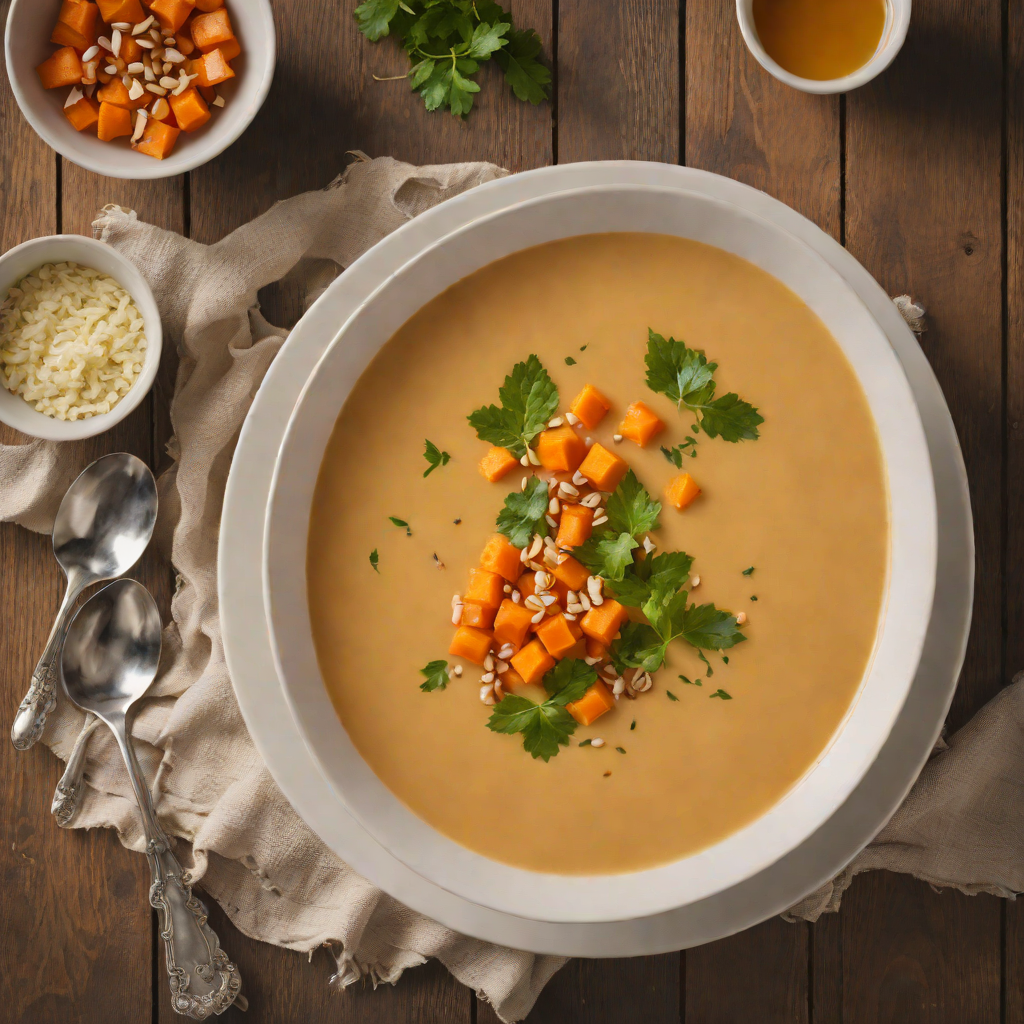
Creamy Maple-Roasted Butternut Squash Soup is the September signature. Roast one 2-lb butternut squash cut in half with maple syrup, olive oil, and salt at 425°F for 45 minutes; blend with sautéed onion, garlic, vegetable broth, and a splash of coconut milk. Finish with brown butter, toasted sage, and pumpkin seeds if you have them. Serves 6, holds in the fridge for 5 days, freezes for 3 months.
Creamy Tomato Basil Soup turns a can of San Marzano tomatoes into a bistro dinner in 30 minutes. Sauté onion and garlic, add tomatoes and stock, simmer 20 minutes, blend, finish with heavy cream and fresh basil. Serve with grilled cheese on good sourdough — a classic that shows up on every soup list because it earns its spot.
Garden-Fresh Tomato & Zucchini Minestrone Soup is the last-of-summer minestrone before the tomatoes disappear from the farmers' market. Fresh tomatoes, zucchini, cannellini beans, small pasta (ditalini or elbow), and a Parmesan rind simmered in the broth for savory depth. Cook the pasta separately and add on serving so the leftovers don't bloat.
Half-and-Half Tomato and Roasted Red Pepper Soup roasts a bag of bell peppers, blends them with canned tomatoes and vegetable stock, and finishes with a swirl of Greek yogurt at the table. Serves 6 in 40 minutes, freezes cleanly (yogurt at the table, not in the pot).
Legume + grain: lentil, split pea, white bean, chickpea
The legume soups are the low-cost, high-fiber, pantry-friendly section of the roundup. A 1-lb bag of lentils is roughly $2 and yields 8 dinners; a can of white beans is $1.50 and finishes a fully cooked soup in 25 minutes. If your grocery budget is tight or you want a meatless Monday rotation, this is where to plant it.
Lentil & Vegetable Soup is the whole-family template — brown lentils, carrots, celery, onion, garlic, canned tomatoes, and a bay leaf simmered in vegetable broth for 40 minutes. Adds spinach in the last 3 minutes for color and iron. Serves 8, freezes for 3 months, tastes measurably better on day 2 as the lentils absorb the aromatics.
Herbed White Bean Soup with Kale is Tuscan comfort food that eats like a stew. Cannellini beans (canned is fine; the difference between canned and dry-soaked is minor in a soup this savory), kale ribboned in the last 5 minutes, and a Parmesan rind in the pot throughout. Drizzle good olive oil at the table and finish with cracked pepper.
Ethiopian Spiced Split Pea and Vegetable Soup — properly called kik alicha — is the split-pea entry that isn't the beige diner version most Americans know. Turmeric, ginger, garlic, and berbere spice turn yellow split peas into something you actively want to eat rather than something you make because it's cheap. Serve over rice or with injera.
A chickpea variation: canned chickpeas, kale, roasted garlic, and a lemon-tahini finish makes a 20-minute weeknight bowl that eats like a full dinner with a slice of good bread. This isn't a specific catalog recipe — it's a pattern to build with whatever's in the pantry on a Wednesday night with no plan.
The 20-minute weeknight soups (from pantry)
The 20-minute soups are the ones that live in your head — no recipe consulted, minimal knife work, and everything comes from the pantry or the freezer. Every household should have three of these in permanent rotation for the Tuesday nights when the plan blew up at 4pm.
Real-world numbers on 20-minute soup: actual active time is 5-8 minutes of prep, 12-15 minutes of simmer. Total elapsed = 20 minutes from decision to bowl. Cost per serving = $1.75-$3.25 depending on protein. Compare to the average delivery order at $18/head after fees and tips, and you're saving $60 for a family of four while eating better food.
The three permanent rotations to memorize:
- 15-minute tomato soup — one 28-oz can of San Marzano tomatoes, one small onion sautéed in butter, a cup of broth, a splash of cream, and fresh basil. Blend with an immersion blender in the pot.
- 10-minute miso soup with soba — 4 cups dashi or vegetable broth, 3 tbsp white miso paste stirred in off the heat, cooked soba noodles, cubed silken tofu, sliced scallion. Every ingredient sits on a shelf.
- 20-minute egg-drop soup — 4 cups chicken broth simmered with ginger and garlic, stream in a beaten egg while stirring, finish with scallion and a drop of sesame oil. Costs $2 total, tastes like the takeout version.
Common pitfalls to avoid on weeknight soup:
1. Boiling cream-based soups. They break. Hold at bare simmer only.
2. Cooking pasta or rice in the soup pot for leftovers. By tomorrow it's porridge. Cook separately, combine at serve.
3. Under-salting. Soup takes more salt than you think — taste every 5 minutes during simmer, adjust at the end. If it tastes flat, it's probably salt (or missing acid).
4. Skipping the aromatic sauté. Raw onion and garlic in liquid never develop the deep flavor of properly sweated aromatics. 3-5 minutes over medium heat with a pinch of salt.
5. Bright green herbs added at the front. Basil, cilantro, parsley: at the end, off the heat, or as a garnish. Cooking them turns them dark and grassy.
Freezer-friendly soups: batch-cook for the whole fall
Freezer soup is the highest-return single project you can do on a fall Sunday. One 3-hour session produces 12-16 portions of two or three different soups, portioned into single-serving freezer bags that lay flat and stack like books. Total per-portion cost including containers: under $3. Total per-portion active time: 12 minutes.
The freezer-friendly ones from this roundup: chicken tortilla, minestrone (freeze without pasta), beef and barley stew, chili, lentil, white bean and kale, butternut squash, roasted red pepper, and split pea. All of these hold quality for 3 months and reheat straight from frozen in a saucepan on medium-low with a splash of broth.
For the full framework on cook-once-eat-for-a-month freezer meal prep — including container strategy, labeling systems, and FIFO rotation to avoid freezer archaeology — see the Freezer-Friendly Meal Prep guide covering the 4-hour Sunday framework and 20 tested recipes.
A note on containers. Use gallon freezer bags for soups (lay flat, stack like books, thaw fast) and store the empty ones plus your storage containers in the Storage & Containers section of the kitchen. Glass containers are better for individual portions you'll microwave straight out of the freezer without transferring. Foil pans are perfect for stews you're going to bake-reheat in the oven. Label everything with the cook date and the reheat instructions — a Sharpie Industrial marker on freezer bags won't smear the way regular Sharpies do.
Real-world freezer numbers — the AislePrompt community's soup-tracking data across 400+ home cooks reporting through fall 2025:
| Soup type | Fridge quality | Freezer quality | Best reheat method |
|---|---|---|---|
| Chicken noodle | 3 days | 3 months (no noodles) | Saucepan medium-low, add fresh noodles |
| Beef stew | 4 days | 3 months | Slow reheat 30 min at 300°F oven |
| Tomato basil (creamy) | 3 days | 3 months (no cream) | Saucepan bare simmer, cream at end |
| Butternut squash | 5 days | 3 months | Saucepan medium-low, whisk to re-emulsify |
| Lentil | 5 days | 3 months | Saucepan medium, add splash of broth |
| Minestrone | 3 days | 3 months (no pasta) | Saucepan, add fresh pasta cooked separately |
| Split pea | 4 days | 3 months | Saucepan medium-low, thick — thin with broth |
| Chili | 4 days | 3 months | Saucepan medium, or crock-pot warm setting |
| White bean & kale | 4 days | 2 months | Saucepan medium, olive oil finish |
The perfect crusty bread pairing
Soup without bread is a snack. Soup with the right bread is a full dinner. Three pairings that always work, and one that always fails.
Crusty sourdough with soup at $2.50/loaf is the default. Bake from frozen in a 400°F oven for 12 minutes to refresh; the crust crisps back and the crumb stays chewy. Works with every soup in this guide.
Cornbread with chili and stews. A skillet cornbread baked at 425°F for 20 minutes in a preheated cast-iron pan is 15 minutes of active work and pairs with every meat-based stew. Sweet-not-sweet is a household choice — go savory with the bean stews, slightly sweet with the beef.
Grilled cheese with tomato soup. The bistro-standard for a reason. Buttered sourdough or good sandwich bread, sharp cheddar plus a slice of gruyère, on medium-low heat under a lid for 4 minutes per side. Cut on the diagonal, dip.
What fails: dinner rolls with soup. They're too soft, too sweet, and add no textural contrast. Skip the rolls and add a piece of good bread every time.
For readers who want a full weeknight framework beyond fall soups, the Back-to-School Weeknight Dinners: 4-Week Meal Plan integrates two soup nights per week into a 4-week rotation covering the September through October window. It's the parent article this soup roundup slots into.
When NOT to make soup
Soup isn't the answer to every dinner problem. Skip the soup pot when:
- You have 4 hungry people and 15 minutes. Sheet pan chicken and vegetables is faster; see the 25 Sheet-Pan Dinners for Busy Weeknights roundup for the fastest sheet-pan options.
- Your kids won't eat anything that's mixed together. Soup is the definition of mixed-together. Serve deconstructed instead — chicken meatballs with rice and roasted broccoli plates the same ingredients separately.
- You need portable lunch tomorrow. Soup packs, but it also spills and needs reheating. Grain bowls and burritos travel better.
- Everyone's already had two soup dinners this week. Rotation matters — even a great pot gets stale by week's end. See the 20 Slow-Cooker Dinners list for non-soup slow-cooker alternatives.
Sources
- Serious Eats — Soup Recipes: The Complete Guide for technique details on brothy vs creamy vs puréed and a professional take on finishing acid and fat.
- NYT Cooking — Soup Recipes topic hub for the ongoing seasonal test kitchen list and reader-rated pantry favorites.
- Bon Appétit — Best Soup Recipes for the seasonal shortlist that professional food editors publish each fall.
Frequently asked questions
Isn't it too warm in early September for soup? Why publish this now?
How long does homemade soup keep in the fridge and freezer?
Can I make these soups in an Instant Pot or slow cooker?
What's the difference between a stew and a soup, technically?
How do I make my soup taste less flat and more restaurant-quality?
Recipes to start your week with
Save any of these to My Recipes — no account needed — and send the ingredients to Instacart in one tap.