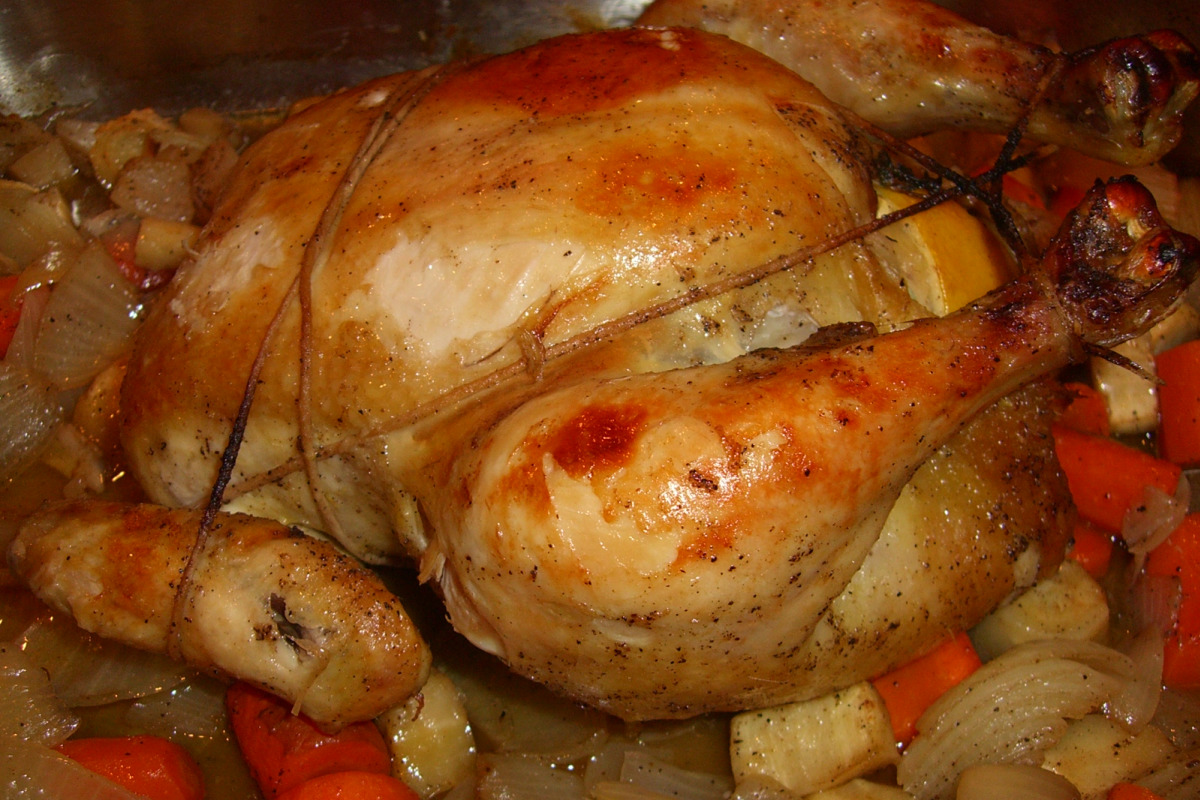
How to Cook Chicken: 30+ Recipes + Complete Guide for Every Cut
Cut-by-cut cooking temperatures, technique walkthroughs, label decoder, and 30+ catalog-tested recipes spanning every cut and cuisine.
Affiliate disclosure: AislePrompt may earn a commission on qualifying purchases made through Amazon and Instacart links in this article, at no additional cost to you. See our affiliate policy →
How to cook chicken correctly comes down to four things: matching the cut to the technique, pulling at the right internal temperature (165°F for safety, 155-160°F for breasts if you trust your thermometer and rest the meat), salting at least 30 minutes ahead, and resting the meat 5 minutes off heat. Get those four right and any of the 8,544 chicken recipes in the AislePrompt catalog will work — get them wrong and even the best recipe produces dry breast or rubbery thighs.
Introduction: Chicken is the most-cooked protein for a reason
Chicken makes up roughly 28% of US protein consumption (USDA 2025 data) for a stack of practical reasons: $3-$5/lb for boneless skinless breast, neutral flavor that takes any cuisine, sub-30-minute cook time for most cuts, and broad family appeal. The AislePrompt catalog has 8,544 chicken recipes — by far the largest single category — and chicken-tagged dishes account for 2,532 entries even after dedup.
The problem is that "chicken" isn't one thing. A boneless breast and a bone-in thigh need different temperatures, different times, and different techniques. The most common failure modes — dry breast, rubbery thigh, undercooked center, leathery skin — come from treating cuts as interchangeable. This guide fixes that by going cut-by-cut, then technique-by-technique, then giving you 30+ catalog-tested recipes already sorted by cut and cuisine so you don't have to.
Year-stamped detail: 2026 USDA poultry-handling guidance is unchanged from the 2024 revision — 165°F at the thickest part remains the published safe minimum internal temperature for all chicken. The cook-low-and-slow techniques in the braise section take thighs well past 165°F (180-195°F internal) for a reason — collagen breakdown happens between 160°F and 180°F and that's what turns connective tissue into the moist shred a good braise gives you.
Cuts Explained: Breasts, Thighs, Drumsticks, Wings, Whole
The five cuts you'll see in any US grocery store, by texture, cook profile, and best-use:
| Cut | Fat | Cook time (typical) | Pulls dry at | Best techniques |
|---|---|---|---|---|
| Boneless skinless breast | Low (~2g per 4oz) | 8-12 min sear or 18-22 min bake | >165°F internal | Pan-sear, poach, grill, sous vide |
| Bone-in skin-on breast | Low–moderate | 30-40 min roast at 400°F | >165°F internal | Roast, smoke |
| Boneless skinless thigh | Moderate (~7g per 4oz) | 12-18 min sear or 25-30 min bake | Very forgiving up to 195°F | Braise, sear, grill, stir-fry |
| Bone-in skin-on thigh | Higher | 35-45 min roast at 400°F | 195°F is ideal | Roast, braise, fry |
| Drumstick | Moderate–high | 35-45 min roast | Forgiving | Roast, braise, grill |
| Whole wing (drum + flat + tip) | High in skin | 40-50 min roast at 425°F | Forgiving | Roast, fry, smoke |
| Whole bird (~4-5 lb) | Mixed | 60-90 min at 425°F | Breast at 160°F, thigh at 175°F | Roast, spatchcock-roast |
The crucial line is "pulls dry at." Breasts have almost no intramuscular fat. The moment they cross ~165°F internal, water is squeezed out of the muscle fibers and you can't get it back. Thighs run roughly 30% higher in fat and have collagen that turns to gelatin between 160°F and 180°F — they only get juicier as they cook past the safe minimum, up to about 195°F where they start to fall apart.
The single most useful corollary: if you can't track temperature accurately yet, cook thighs. They forgive every minute of overcooking and taste better for it. Save breasts for once you own and trust an instant-read thermometer.
How to Buy: Pasture-raised vs. organic vs. conventional, label decoder
US chicken labels use a set of overlapping terms that don't all mean what they sound like.
- Conventional / no claim — raised indoors, fed grain, no antibiotics in the last days before slaughter (FDA mandated). $1.99-$3.99/lb. The 80% case.
- Antibiotic-free / "raised without antibiotics" — true claim, USDA-verified. Adds $0.50-$1.50/lb.
- Organic — USDA Organic seal: organic feed, no antibiotics ever, outdoor access required (which is often a small concrete porch, not pasture). $4.99-$8.99/lb.
- Cage-free — meaningless for broiler chickens. Broilers are essentially never caged regardless of label. Pay no premium for this on a chicken (it's meaningful for eggs).
- Free-range — USDA-defined as "access to outdoors." Access can be a small door open during the day; doesn't guarantee the bird ever went outside. $3.49-$5.99/lb.
- Pasture-raised — no USDA legal definition. The credible third-party seals are Animal Welfare Approved, Certified Humane Pasture Raised, and the Global Animal Partnership Step 5/5+. $7.99-$14.99/lb. Texture is meaningfully different — denser, more flavorful, less water release in the pan.
- Air-chilled — water-bath chilling absorbs 4-12% water by weight, which then weeps in your pan and prevents browning. Air-chilled birds brown better and have noticeably better crisped skin. Worth $0.50-$1/lb if skin matters to the dish.
- Halal / Kosher — religious-method processed; salted (kosher) which seasons the meat and reduces salting time. Quality varies by processor.
What to actually buy: for weeknight breasts and stir-fries, conventional or antibiotic-free at $2.99-$3.99/lb. For roast chicken night, spend up to air-chilled organic or pasture-raised — the skin renders cleaner and the meat is denser. For braises and curries, conventional thighs hide every shortcut of the cheaper bird.
The USDA Chicken from Farm to Table guide is the authoritative reference on label definitions; print a copy for the kitchen if you cook chicken multiple times per week.
How to Store: Fridge timing, freezer timing, thaw safely
- Fridge, raw: 1-2 days at 40°F or below. Buy chicken last, refrigerate within 30 minutes, and freeze any portion you can't cook within 48 hours. The "buy 2 days ago and trust the smell" school is how cheap chicken becomes a $400 ER visit.
- Fridge, cooked: 3-4 days. Cool to room temperature within 2 hours of cooking before refrigerating; full pans of hot food in the fridge raise the ambient temperature and put everything else at risk.
- Freezer, raw: indefinite for safety, 9-12 months for quality. Freezer burn (white-gray patches) is dehydration, not a safety issue, but it ruins texture. Vacuum-seal if you stock up — a $50 vacuum sealer pays back in 2-3 months on bulk chicken buys.
- Freezer, cooked: 2-4 months. Portion before freezing — shredded chicken in 1-cup quart bags reheats from frozen in 5 minutes for weeknight tortilla soup or quesadillas.
- Thawing: fridge thaw (24 hours per 5 lb) is the safest; cold-water thaw (change water every 30 min, ~30 min per pound) is acceptable; microwave thaw cooks the edges and ruins texture but is fine in a pinch. Never thaw on the counter — the USDA guide explicitly warns against it because the surface enters the 40-140°F bacterial growth zone while the core is still frozen.
Smell test, even when the package date hasn't expired: fresh chicken smells faintly meaty, mostly neutral. Sour, sulfurous, or ammonia notes are spoilage — discard. A faint vinegary tang on otherwise-fresh-looking chicken often means the packaging was washed with food-grade acid for shelf life and is fine after a 30-second rinse, but if you're not sure, throw it out. Chicken is too cheap and too dangerous to gamble.
Core Techniques: Pan-sear, Roast, Braise, Grill, Poach, Shred
The six techniques that handle 95% of chicken recipes.
Pan-sear (best for breasts and boneless thighs)
Pat very dry — water is the enemy of browning. Salt at least 40 minutes ahead (or 5 minutes if rushed; never salt directly in the pan). Pound breasts to even ½-inch thickness — uneven cuts give you raw-and-rubber simultaneously. Heat a heavy stainless or cast-iron skillet over medium-high until water beads and dances. Add a high-smoke-point oil (avocado, refined sunflower, vegetable). Lay the chicken away from you, don't move it for 3-4 minutes per side for breasts, 4-5 minutes for thighs. Pull at 160-162°F internal for breasts (carryover takes them to 165°F), 175°F for thighs.
Roast (whole birds, bone-in pieces)
Dry-brine 12-24 hours before — uncovered in the fridge, kosher salt rubbed under the skin. The skin desiccates and crisps dramatically better than wet skin. Roast at 425°F until thigh hits 175°F and breast hits 160°F (use the thigh as your stop signal; breast meat finishes via carryover). A 4 lb bird takes 60-75 minutes; spatchcocked it drops to 45-50 minutes and the skin crisps more evenly.
Braise (best for thighs)
Sear the skin side first to render fat and brown. Pour off all but a tablespoon. Build a flavor base (mirepoix or sofrito), add liquid to come halfway up the thighs, cover, and cook at 325°F for 60-75 minutes until the meat shreds with a fork at 195°F internal. Bone-in thighs braise better than boneless because the bone collagen enriches the sauce.
Grill (high heat, fast)
Two-zone setup — direct heat side for sear, indirect side to finish. Boneless breast on direct for 2-3 minutes per side, then indirect for 5-7 minutes to 160°F. Bone-in thighs or drumsticks reverse: indirect for 25-30 minutes to 165°F, then direct for 2 minutes per side to crisp.
Poach (lunch prep, salads, sandwiches)
Submerge in cold water with aromatics (onion, peppercorns, bay leaf, lemon). Bring to a bare simmer (180-190°F surface) — never a boil. Hold 15-20 minutes until 160°F internal, then off the heat, cover, and rest 10 minutes. Result: silken-textured chicken with zero browning, perfect for chicken salad and lettuce wraps.
Shred (rotisserie repurpose)
While the bird is still warm (it shreds 3× easier than cold), pull meat off the bone with two forks or your fingers. Portion into 1-cup containers. Use the carcass for stock — simmer 4-6 hours with vegetable scraps. The shredded chicken keeps 3-4 days in the fridge or 2 months in the freezer.
Internal Temps and Resting (with thermometer recommendations)
The 165°F rule (USDA-mandated as safe for all chicken) accounts for time at temperature. A breast pulled at 155°F and held 5 minutes is microbiologically equivalent to 165°F instantaneous — but only if you trust your thermometer, your timing, and your rest. The Serious Eats Food Lab roast chicken guide has the temperature/time pasteurization tables if you want the underlying data.
For the home cook without a calibrated probe, pull at 165°F flat. Carryover heat adds 2-5°F during the 5-minute rest, so 165°F at pull becomes 167-170°F final. That's safe and only mildly drier than the 162°F-and-rest approach. For ground chicken — including ground turkey — the 165°F minimum is non-negotiable and must hit the full mass, not just the surface; bacteria mix throughout in grinding.
Thermometer notes (2026): the ThermoWorks Thermapen ONE remains the gold standard at $89 (1-second readout, ±0.5°F accuracy). The $25 ThermoPro TP19 is acceptable for $25 and reads in 3 seconds. Avoid analog dial thermometers — they lag 30-60 seconds, which is enough to overshoot on a breast. Calibrate any new thermometer in an ice bath (should read 32°F ± 1°F) before you trust it.
Rest the meat. Always. Five minutes for cut pieces, 15 for a whole bird. Resting redistributes juices toward the center — slice immediately and you spill them onto the cutting board instead of keeping them in the meat. That single habit improves home-cooked chicken more than any technique change.
30+ Curated Chicken Recipes by Cut and Cuisine
Sorted by cut so you can match the recipe to what's in your fridge.
Whole-bird roasts (Sunday dinner)
- Roasted Chicken with Root Vegetables — the weeknight starter.
- Whole30 Herb-Roasted Chicken with Vegetables — paleo/Whole30 compliant, dairy-free.
Boneless skinless breast
- The Best Pan-Seared Chicken Breast with Lemon-Herb Butter — the 20-minute weeknight default.
- Pan-Seared Chicken Piccata with Lemon and Capers — Italian-American classic.
- Garlic-Parsley Chicken Breasts with Lemon — bright, weeknight-fast.
Boneless thigh
- Mushroom and Thyme Braised Chicken Thighs — fall-comfort dinner.
- Honey-Soy Glazed Chicken Thighs with Broccoli — sheet-pan, kid-friendly.
- Grilled Latin American Chicken with Cilantro-Lime Marinade — bright summer cookout staple.
Indian / South Asian
- Chicken Tikka Masala — the GOAT one-pot curry, makes a 4-portion batch and reheats beautifully.
Wings
- Easterns Spicy Buffalo Chicken Wings — proper game-day wings, oven-baked.
Soup
- Quick Chicken Tortilla Soup with Roasted Corn and Avocado — the leftover-rotisserie hero.
For a deeper roster, the chicken category on AislePrompt holds the full 8,544. The NYT Cooking chicken hub is another well-curated external resource if you want classical-French and global versions of the techniques above.
Quick Chicken Recipes Under 30 Minutes
Five weeknight wins, each under 30 minutes total including prep:
1. Pan-seared breast with lemon-herb butter — 20 minutes, 4 servings, 380 cal per serving.
2. Honey-soy glazed thighs sheet-pan — 28 minutes, 4 servings, includes broccoli.
3. Chicken lettuce wraps from leftover poached chicken — 12 minutes assembly.
4. Quick chicken tortilla soup using rotisserie meat — 22 minutes simmer.
5. Stir-fry: cubed thigh, broccoli, garlic, ginger, tamari — 18 minutes, plate-to-plate.
The trick across all five is having raw chicken pre-portioned in the fridge (or thawing 24 hours ahead) and a calibrated thermometer at the stove so you stop cooking at the right beat instead of guessing.
Leftover Chicken: 8 Ways to Reinvent Rotisserie
A $5.99 rotisserie chicken yields roughly 3 cups shredded white-and-dark meat and a carcass worth two quarts of stock. Eight ways to spend that meat across a week:
1. Tortilla soup (Tuesday) — the Quick Chicken Tortilla Soup with Roasted Corn and Avocado takes 22 minutes from cold meat to bowl.
2. Chicken salad on a bed of greens or in a wrap — mayo, celery, grapes, walnuts, lemon juice; 10 minutes.
3. Quesadillas — corn or flour tortilla, shredded chicken, shredded cheese, salsa, 8 minutes on the griddle.
4. Chicken pot pie filling — sauté onion + carrot, add cream, frozen peas, shredded chicken; top with biscuits or a pie crust.
5. Asian-style cold noodle bowl — soba (or GF rice noodles), sesame dressing, shredded chicken, scallions.
6. Chicken-and-rice porridge (congee) — long simmer of rice in stock with shredded chicken; soothing weeknight one-pot.
7. Pizza topper — pre-baked crust, BBQ sauce, mozzarella, shredded chicken, red onion.
8. Chicken-bone broth — simmer the carcass with vegetable scraps for 4-6 hours; freezes in quart bags for soups all month.
The catalog has 2,500+ entries filtered as cooked-chicken or rotisserie-friendly; any of them will work as a Tuesday-night repurpose once you have the meat shredded.
Kitchen Tools That Improve Every Chicken Recipe
Five tools that have outsized impact on chicken outcomes:
- An instant-read thermometer — the single highest-ROI kitchen tool for cooking chicken. $25-$89.
- A 12-inch cast-iron or heavy stainless skillet in cookware — even, hot, fond-friendly. The pan determines how well the sear goes; thin nonstick pans give you steamed-grey chicken instead.
- A sharp 8-inch chef's knife from knives — for spatchcocking, breaking down a whole bird, or trimming silver skin off thighs.
- A half-sheet pan from bakeware — sheet-pan dinners are the easiest chicken format for a weeknight.
- A microplane and meat shredder claw in utensils — the microplane for citrus zest and ginger, the claws for fast warm-meat shredding.
Skip: butter brushes (your hand works fine), single-use poultry shears (kitchen scissors do the same job), and meat tenderizing mallets if you have a clean cast-iron skillet — flip the skillet upside-down and use its weight to pound breasts to even thickness in 30 seconds.
Common pitfalls (and the fix for each)
1. Cooking from cold straight out of the fridge. Chilled meat seizes when it hits a hot pan. Pull breasts out 20 minutes ahead, thighs and whole birds 30-45 minutes ahead.
2. Crowding the pan. Adding too much chicken at once drops the surface temperature, the meat steams instead of sears, and you get pale gray instead of golden. Sear in two batches if needed.
3. Skipping the salt-ahead step. Salt 30+ minutes before cooking lets the meat dry-brine — moisture is drawn out, reabsorbed with salt, and the surface dries enough to brown. Salting in the pan does almost nothing.
4. Flipping every 30 seconds. Once the chicken is in the pan, don't touch it for 3-4 minutes. Premature flipping pulls the developing crust off and prevents browning.
5. Carving immediately. Five minutes of rest, every time. Without the rest, half the juices end up on the cutting board.
When NOT to cook chicken
Two cases where reaching for chicken is the wrong call: any time you want a strong primary flavor (a great steak, a real burger, or lamb gives you something chicken's mildness can't), and any dish where the protein needs to be raw or rare (chicken must hit 165°F or 155°F-held-5-min — there's no "rare chicken" version that's safe at home). For both, switch protein and don't try to retrofit chicken to fit the recipe.
Related guides
Looking for the tools above? Browse cookware, knives, bakeware, utensils, and storage — each category page is curated for chicken-cooking use cases. For a 30-minute weeknight rotation built around the techniques in this guide, the AislePrompt meal-plan tool generates a week of dinners customized to your family size, and the chat assistant at /chat can answer cut-specific questions (e.g., "what's the right time to braise bone-in thighs at 325°F?").