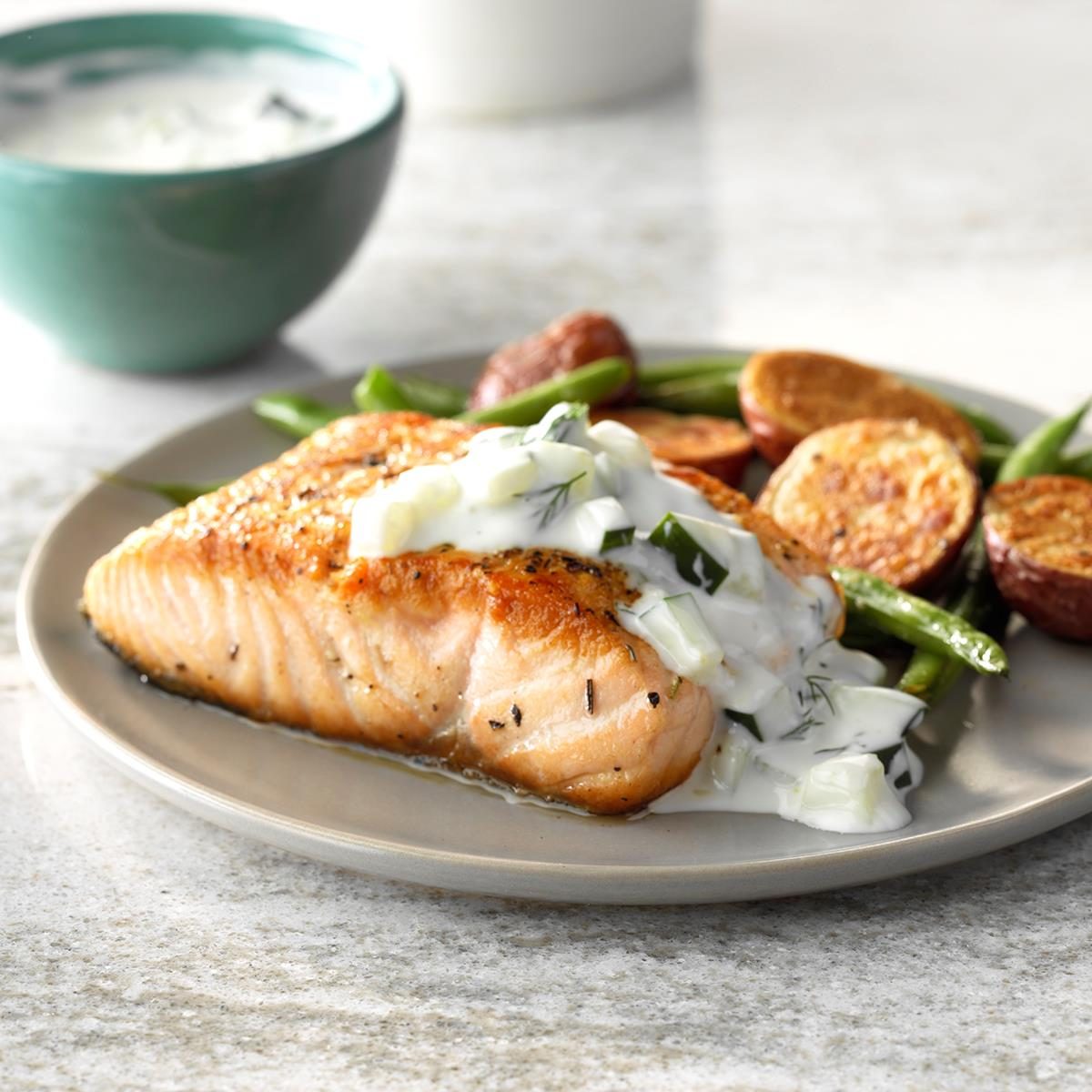
How to Cook Salmon: 25 Recipes + Complete Buying, Storage, and Technique Guide
The 90% pan-sear method, frozen-to-plate weeknight tactics, and 20 catalog recipes from quick to anniversary-dinner.
Salmon is the easiest "restaurant fish" you can cook at home — it forgives small mistakes, it's the same six muscles whether you bought it at Costco or a Tokyo fishmonger, and you can take it from fridge to plate in under 20 minutes. This guide gives you the four cooking techniques you actually need, the buying rules that matter (and the labels that don't), storage timelines, and 20 catalog recipes spanning Tuesday-night quick to anniversary-dinner special. Last verified June 2026.
Get a free week of easy dinners
Seven weeknight dinners with the shopping list already totalled, sent Sunday. No account needed, unsubscribe in one click.
No spam, unsubscribe in one click. Recipes, shopping lists and Instacart carts all work without an account either way.
Why salmon is the easiest "restaurant fish" for home cooks
Salmon has three things going for it that white fish doesn't: high fat content (10-13g per 4 oz farmed Atlantic, 6-9g wild sockeye), thick, even fillets, and skin that crisps into a separate eating experience. The fat buffer means you can overshoot internal temperature by 5°F before texture collapses — try that with cod and you've got rubber. The thickness means heat travels predictably; a 1-inch fillet cooks in 4 minutes per side, every time. And the skin, when handled right, becomes a textural counterpoint that no one expects from home cooking.
The result: salmon is the fish where "perfect" is a 90% solution. Get the pan hot, dry the skin, set a timer. We'll show you how, and pair it with 20 salmon recipes from our catalog so you can rotate through ideas for the next 5 weeks without repeating.
How to buy: wild vs farmed, fillet vs steak, fresh vs frozen — what each label actually means
Walk up to the seafood counter and you'll see at least four salmon varieties at three price points. Here's what each label means and when each is the right pick.
Wild vs farmed
| Variety | Source | Fat (g/4oz) | Omega-3 (mg) | Peak season | Typical price/lb |
|---|---|---|---|---|---|
| Wild Atlantic | (none — extinct in US) | — | — | — | — |
| Wild King (Chinook) | AK/Pacific NW | 11-14 | 1,800 | May-Sept | $30-45 |
| Wild Sockeye | AK/British Columbia | 7-10 | 1,300 | June-Sept | $18-28 |
| Wild Coho | AK/Pacific NW | 6-8 | 1,200 | July-Oct | $16-22 |
| Farmed Atlantic | Norway/Chile/Scotland | 13 | 2,200 | Year-round | $10-16 |
| Farmed steelhead | US (mostly) | 9 | 1,600 | Year-round | $9-14 |
Per the FDA's advice on eating fish, salmon is in the "best choices" tier for mercury — you can eat 2-3 servings a week without worry. The omega-3 story is real and material: farmed Atlantic actually wins on absolute omega-3 milligrams per serving (because of the higher overall fat), but wild king and sockeye win on the omega-3-to-saturated-fat ratio. For everyday weeknight cooking, farmed Atlantic is excellent and consistent. For a special meal during summer when wild salmon is in season, the wild king/sockeye is worth the splurge.
Fillet vs steak
A fillet is the long, flat cut taken from the side of the fish — what you'll see 95% of the time. A steak is a cross-cut through the whole fish (including bone), about 1 inch thick, with a kidney-bean shape. Steaks are slightly harder to find but cook beautifully on the grill — the bone protects the center while the edges char. For pan-searing and oven-baking, fillets are the move; for grilling, steaks have a small edge but fillets work fine.
Skin-on vs skinless
Buy skin-on, always. Two reasons: the skin protects the flesh during cooking (the heat travels through skin and fat before it hits the meat, keeping it moist), and crisped salmon skin is one of the best textures in home cooking. If you don't want to eat it, you slide a spatula between skin and flesh after cooking and lift the fillet off. Five seconds.
Fresh vs frozen
This is the most counterintuitive section of any salmon guide: frozen salmon is usually better than "fresh" salmon at supermarkets. Almost all "fresh" salmon at a US supermarket was previously frozen at sea (flash-frozen on the boat within hours of catch), thawed at the distributor, and put on ice in the case. By the time you buy it, it's been thawed for 1-3 days. The frozen-at-sea fillet in the freezer aisle was frozen once at peak quality and has been at -10°F ever since. Cooks better, costs less, lasts longer.
The exceptions: a fishmonger you trust who sells day-boat wild during peak summer season, or fish counters at specialty stores (Whole Foods Premium, Wegmans) that turn inventory daily. For everywhere else, the freezer case wins.
What "previously frozen" means on the label
If you see "previously frozen" or "thawed for your convenience" on the label, that fillet was frozen once and thawed at the store. Treat it exactly like fresh fish: cook within 1-2 days. Never refreeze — the cells have ruptured once already, and a second freeze guarantees mush. If you bought "previously frozen" salmon you can't use tonight, cook it tonight anyway and refrigerate the cooked portion for up to 3 days.
How to store salmon
| State | Refrigerator (38°F) | Freezer (0°F) |
|---|---|---|
| Raw, vacuum-sealed | 2 days | 3 months |
| Raw, loose in paper | 1 day | — |
| Cooked | 3 days | 2 months |
| Smoked (cold) | 2 weeks unopened, 5 days open | 3 months |
Thawing protocol
The right way: move frozen salmon from freezer to fridge the night before you want to cook it. A 1-inch fillet thaws in 12 hours; a 2-inch portion needs 24. Cold thawing keeps the cells intact and the texture firm.
The fast way: seal the fillet in a zip-top bag (squeeze the air out), submerge in cold water, change the water every 20 minutes. A 1-inch fillet thaws in 45 minutes. Do not thaw at room temperature — bacterial growth rate doubles above 40°F. Do not thaw in the microwave unless you're cooking immediately after; microwave thawing par-cooks the edges.
The "I forgot" way: cook from frozen. We'll cover this below — it's a legitimate technique, not a workaround.
The 4 core techniques — with internal-temp targets
Salmon should hit 125-130°F at the thickest point, then rest for 3 minutes off heat. The USDA recommends 145°F, but salmon is a different animal from chicken: the parasites that justify high temperatures in pork and chicken aren't a concern in commercially-sold farmed or properly-handled wild salmon (those are flash-frozen at -31°F for at least 15 hours per the FDA's sushi-grade requirement, which kills any parasites). Past 140°F internal, the fat starts to render out as white "albumin" on the surface and the flesh turns from glossy ruby to chalky pink.
Pull at 125°F for translucent center (medium), 130°F for opaque-throughout (medium-well), 140°F if you genuinely prefer it well-done. Wild salmon cooks 20% faster than farmed because it has less fat as a heat buffer — pull wild 5°F before your target and rest longer.
| Technique | Heat | Time (1-inch fillet) | Best for | Notes |
|---|---|---|---|---|
| Pan-sear | Medium-high | 4 min skin / 2 min flesh | Crispy skin, weeknight | The 90% method — see below |
| Oven-bake | 400°F | 12-15 min | Hands-off, multiples | Add a baking sheet of vegetables |
| Air fry | 380°F | 8-11 min | Tiny portions, no smoke | Great for one fillet |
| Grill | Medium-direct | 4 min skin / 2 min flesh | Smoky flavor, summer | Use cedar plank or steaks |
A fast-read thermometer is the difference between "I think it's done" and "it's done." ThermoWorks' Thermapen ONE reads in under a second and is worth the price tag for serious home cooks. A $15 instant-read also works — the point is to use one at all.
Pan-seared salmon, step by step (the 90% method)
This is the technique that covers 90% of weeknights. It produces crispy skin, glossy center, and ready-to-eat in 10 minutes from cold fillet. Internalize this and you have a default salmon mode forever.
What you need
- 1 skin-on salmon fillet, 6-8 oz, 1 inch thick at thickest point
- 1 tablespoon high-smoke-point oil (avocado or refined olive)
- Kosher salt and freshly cracked black pepper
- A dry, well-seasoned cast iron or carbon steel pan (stainless steel works if fully preheated; nonstick will not get the skin crispy)
- A thin metal fish turner — the angled, slotted blade slides under the skin without tearing
- Paper towels
The Lodge 10.25-inch cast iron skillet is the canonical pick — $20-30, lasts forever, holds heat better than any stainless pan twice the price. If you don't own one, a 10-inch carbon steel pan works identically.
The steps
1. Dry the skin completely. Pat the fillet — both sides, but especially the skin — with paper towels for 30 seconds. Moisture is the enemy: wet skin steams instead of sears, and steamed skin sticks to the pan.
2. Salt the skin and let it sit 5 minutes. Kosher salt draws out residual surface moisture and pre-seasons the crust. Don't salt the flesh side yet (salt on the flesh side draws moisture out and you'll end up with a wet pan).
3. Heat the empty pan over medium-high. Wait 90 seconds, then flick a drop of water in — if it skitters and evaporates instantly, you're at 400°F (the sweet spot). If it just sits and steams, the pan isn't ready.
4. Add the oil and swirl. It should shimmer immediately, not just sit there.
5. Lay the fillet skin-side down, away from you. Press gently with the spatula for 10 seconds to ensure full skin-to-pan contact (skin contracts when it hits heat, which can leave bubbles).
6. Don't move it for 4 minutes. The skin needs to release on its own; if you try to flip it early, you'll tear the skin off the flesh. After 4 minutes the skin is crisp and the fillet slides freely when you nudge it with the spatula. If it sticks, give it another 60 seconds.
7. Flip once, cook flesh-side 2 minutes. For a 1-inch fillet, this gets you to 125°F internal — translucent center, medium doneness. Check with a thermometer; pull at 125°F (or 130°F if you prefer opaque).
8. Rest 3 minutes off heat, skin-side up. The fillet continues cooking from residual heat and rises another 4-5°F. Cutting in immediately releases the juices; resting holds them.
You'll get a fillet with audibly crisp skin, glossy translucent center, and a clean buttery flavor. That's the baseline you build everything on.
Common pitfalls
- Cold pan. The single biggest failure mode. If the pan isn't at 400°F before the fillet hits it, the skin steams instead of sears and sticks. Preheat longer than you think.
- Wet skin. Pat it dry, then pat it dry again. Then maybe again.
- Cold fillet straight from fridge. Let it sit on the counter for 10 minutes before cooking. Cold center cooks unevenly — you'll either overshoot the outside or undercook the inside.
- Moving it. Every nudge before the 4-minute mark tears skin. Set a timer and walk away.
- Crowding the pan. Two fillets in a 10-inch pan is fine. Three is too many — they steam each other. Use a 12-inch pan or cook in two rounds.
- Skipping the rest. Salmon overshoots fast. The 3-minute rest is non-negotiable for the doneness curve to land where you want.
When NOT to pan-sear
Cooking 4+ fillets for a family meal? Oven-bake on a sheet pan instead — pan-searing in batches takes 40 minutes for 4 fillets. Cooking from frozen? Pan-searing dumps too much moisture into the pan; bake instead. Cooking thin (under ½ inch) fillets like wild sockeye? Pan-sear works but use lower heat (medium, not medium-high) and 2-3 minutes per side.
10 quick salmon recipes from the catalog (under 25 min)
These are the Tuesday-night recipes. All under 25 minutes total time, all skill level beginner-to-intermediate. Several are pan-seared variations on the 90% method; others use sheet-pan and air-fryer approaches for hands-off cooking.
1. Pan-Seared Salmon with Herb-Infused Lemon Butter Sauce — 22 min. The classic upgrade: after the fillet rests, deglaze the pan with white wine, mount with butter and fresh herbs. Restaurant-grade with no extra technique.
2. Crispy Honey-Glazed Salmon with Lemon-Dill Sauce — 20 min, 4.7★ (203 reviews). Honey + soy on the skin side caramelizes during the sear; the dill sauce is whisked together in 90 seconds while the fish rests.
3. Honey-Soy Glazed Salmon with Sesame Seeds — 20 min, 4.4★ (410 reviews). Our most-reviewed quick salmon recipe — a clean teriyaki-adjacent glaze that works for picky eaters.
4. Miso-Glazed Salmon with Sesame-Ginger Scallions — 18 min, 4.5★ (94 reviews). White miso, mirin, sesame oil — broiled for 5 minutes so the glaze caramelizes. Serve over rice.
5. Air Fryer Bang Bang Salmon with Sesame Green Beans — 20 min. Air-fryer salmon at 380°F for 9 minutes — minimal smoke, fully crisp top.
6. Lemon-Dill Salmon Bowl — 24 min. Quinoa, roasted veggies, flaked pan-seared salmon, lemon-dill yogurt drizzle. The blueprint for any salmon grain-bowl variation.
7. Pan-Seared Salmon with Avocado Lime Salsa — 20 min. The salsa goes together while the salmon rests.
8. Pan-Seared Salmon with Caper-Lemon Sauce — 18 min. The fastest "Italian" salmon you can make — capers, lemon, butter, parsley.
9. Sautéed Lemon-Dill Salmon with Asparagus — 20 min, 4.71★. One pan, two ingredients (plus seasoning), full dinner.
10. Pan-Seared Salmon with Avocado Dill Sauce — 20 min. A no-mayo creamy sauce that goes on everything; make extra and use as a sandwich spread the next day.
10 special-occasion salmon recipes from the catalog
These take 30-60 minutes and are worth the time for a date night, a holiday meal, or a meal-prep Sunday where you want one stellar main + leftovers.
1. Baked Lemon-Honey Glazed Salmon with Garlic and Thyme — 35 min. Whole-side oven-bake for entertaining; one pan, serves 4-6.
2. Japanese-Style Teriyaki Salmon Bowls — 35 min. Homemade teriyaki (not bottled — the difference is enormous), rice, sesame slaw.
3. Miso-Glazed Salmon and Quinoa Bowl with Steamed Broccoli — 45 min, 4.7★ (180 reviews). Marinate, broil, build the bowl. Meal-preps for 4 lunches.
4. Miso-Glazed Salmon Rice Bowls with Sesame-Ginger Veggies — 40 min. A sister to #3 with a different vegetable approach — pick based on what's in the crisper.
5. One-Pan Greek Lemon Garlic Salmon with Roasted Vegetables — 45 min. Lemon-oregano marinade, sheet pan, vegetables roast under the fillet. Serve with a side of tzatziki and rice.
6. Scottish Salmon and Leek Fishcake with Mustard Dill Sauce — 40 min. The right way to use leftover cooked salmon, or make from raw and poach gently.
7. Creamy Spinach and Salmon Piccata Skillet — 35 min. Capers, lemon, white wine, cream — Italian piccata principles applied to a salmon fillet.
8. Chipotle-Glazed Grilled Salmon with Avocado-Mango Salsa — 40 min. Smoky-sweet glaze, tropical salsa — a summer grill standout.
9. Pan-Seared Salmon with Lemon-Dill Sauce and Roasted Fingerling Potatoes — 40 min, 4.6★ (287 reviews). Start the potatoes, then the salmon — both finish together.
10. Oven-Roasted Salmon with Maple-Dijon Glaze and Roasted Asparagus — 30 min. Maple-dijon glazes brilliantly under the broiler; pair with thin asparagus on the same sheet pan.
Real-world numbers: nutrition + cost per serving
A 4 oz cooked portion of salmon delivers numbers that justify its place at the top of the protein chart:
| Protein source | Calories | Protein (g) | Total fat (g) | Omega-3 (mg) | Mercury risk |
|---|---|---|---|---|---|
| Atlantic salmon (farmed) | 206 | 22 | 13 | 2,200 | Low |
| Sockeye salmon (wild) | 168 | 23 | 8 | 1,300 | Low |
| Chicken breast (skinless) | 165 | 31 | 4 | 30 | None |
| Sirloin steak (90% lean) | 200 | 23 | 12 | 80 | None |
| Tuna (light, canned) | 116 | 26 | 1 | 230 | Medium |
| Cod (Atlantic) | 89 | 19 | 1 | 130 | Low |
Cost per serving (mid-2026 US grocery prices):
| Cut | Price/lb | Servings per lb | Cost per 4 oz serving |
|---|---|---|---|
| Farmed Atlantic, fresh fillet | $12 | 4 | $3.00 |
| Farmed Atlantic, frozen fillet | $9 | 4 | $2.25 |
| Wild sockeye, frozen | $22 | 4 | $5.50 |
| Wild king (Chinook), fresh seasonal | $38 | 4 | $9.50 |
| Smoked salmon, sliced | $32 | 6 | $5.30 |
For weeknight cooking, frozen farmed Atlantic at ~$2.25 per serving is genuinely competitive with chicken thighs ($1.80) and beats sirloin ($4.50) — and you're getting 73x the omega-3.
Pairings: what to serve with salmon
Salmon has a fat content and assertive flavor that pairs well with three categories: bright/acidic sides, starchy bowls, and crunchy textures. Pick one from each column and you have dinner.
| Bright/acidic | Starchy bowl base | Crunchy texture |
|---|---|---|
| Lemon wedges | Jasmine rice | Toasted sesame seeds |
| Capers + dill | Coconut rice | Quick-pickled cucumbers |
| Pickled red onion | Quinoa | Crispy shallots |
| Cucumber tzatziki | Wild rice pilaf | Toasted slivered almonds |
| Mango salsa | Mashed potatoes | Sourdough croutons |
| Avocado-lime | Soba noodles | Crispy chickpeas |
| Salsa verde | Roasted fingerlings | Furikake |
For wine pairing: dry Riesling, Sancerre, Albariño, or a lighter Pinot Noir if you've grilled. For non-alcoholic: lemon-cucumber sparkling water, or genmaicha tea with miso-glazed preparations.
If you need plate-and-go ideas for a dinner party, our meal plan tool builds a 1-week salmon-anchored plan with shopping list in 10 seconds. For a complete category overview of fish-cooking gear, our cookware guide covers cast iron, carbon steel, and sheet-pan options at every price.
FAQ
What internal temperature should salmon be cooked to?
USDA recommends 145°F at the thickest point; most chefs pull at 125 to 130°F for medium (translucent center) and let it rest, since the fish keeps cooking off heat and overshoots quickly. Wild salmon is leaner and cooks 20% faster than farmed — go 5°F under your target and rest 3 minutes. The texture cue: salmon flakes cleanly with a fork but the center is still glossy, not pale and dry. Past 140°F the natural fats render out and texture turns chalky.
Is wild salmon really better than farmed?
Wild salmon has 20 to 30% more omega-3s, less saturated fat, more lean protein per ounce, and a firmer texture; it also costs 2 to 3x as much and is only fresh from May to September. Farmed Atlantic salmon is consistent, affordable, fattier (which means harder to overcook), and certified by ASC or BAP if responsibly sourced. For weeknight cooking, farmed is great. For a special meal, wild king or sockeye in season is worth the splurge. Don't pay 'wild' prices for thawed-and-refrozen frozen wild fish — buy frozen if frozen.
How do I keep salmon skin from sticking?
Three things: pat the skin bone-dry with a paper towel (moisture causes sticking), heat the pan empty until water dances on it (about 400°F), then add oil with a high smoke point (avocado or refined olive). Place the fillet skin-down and don't move it for 4 minutes — the skin releases on its own when crisp. If you try to flip it early you tear the skin off. Cast iron and carbon steel hold heat best; stainless steel works if you preheat fully.
Can I cook salmon from frozen?
Yes — frozen salmon goes straight into a 400°F oven on parchment for 18 to 22 minutes (vs 12 for thawed) with no thawing. It is actually harder to overcook from frozen because the outside doesn't dry out while the center catches up. Don't pan-sear from frozen — too much moisture releases into the pan and you steam instead of sear. Frozen-from-frozen is the secret weapon for weeknight cooking when you forgot to thaw dinner.
How often is it safe to eat salmon?
Most public-health guidance supports 2 to 3 servings of fatty fish per week for adults, with salmon among the safest because it is low in mercury and high in omega-3 EPA and DHA. Pregnant women and young children should follow FDA guidance on 8 to 12 oz per week from low-mercury species. Wild salmon, sardines, mackerel, and anchovies are all in the safest mercury tier. Daily salmon is unnecessary and wasteful; 2 servings a week covers the omega-3 benefit.
Sources and last verified
Last verified June 2026 against current USDA, FDA, and seafood-industry guidance.
- FDA — Advice About Eating Fish — mercury tier classifications and weekly intake guidance for salmon and other fatty fish
- Serious Eats — How to Cook Salmon — comprehensive technique reference for pan-searing, baking, and grilling
- NYT Cooking — Salmon Topic Hub — recipe-development depth across cuts and techniques
For more on weeknight cooking with one protein, see our chicken breast technique guide and the Sunday meal prep playbook.
Frequently asked questions
What internal temperature should salmon be cooked to?
Is wild salmon really better than farmed?
How do I keep salmon skin from sticking?
Can I cook salmon from frozen?
How often is it safe to eat salmon?
Sources
Plan a week of meals in two minutes.
Tell our AI what you have and what you like — it builds your plan, shopping list, and Instacart cart. No account needed.
Try free →