The Ultimate Summer Grilling Guide: 25 Recipes + Meal Plan for July & August
Four core techniques, a printable timing chart, and three menu builds for parties of 8, 12, and 20 — for the full 2026 grilling season.
Summer grilling recipes earn their place at every backyard table from late May through Labor Day, and the difference between a guide that ranks and a guide that gets shared is specificity — exact internal temps, exact timing, exact builds for the size party you're feeding. This guide hands you 25 recipes from our catalog, four core technique playbooks, a printable timing chart, and three menu builds for 8, 12, and 20 guests. Use it as your reference for the rest of the 2026 season.
Get a free cookout plan for a crowd
Mains, sides and quantities scaled to your headcount, with one Instacart cart instead of a spreadsheet.
No spam, unsubscribe in one click. Recipes, shopping lists and Instacart carts all work without an account either way.
Introduction: summer grilling 2026 — gas, charcoal, or pellet?
Picking a grill matters less than learning to drive whichever one is already on your patio. That said, the three families behave differently enough that the choice shapes the recipes you'll cook most.
Gas grills are the daily-driver of American backyards because they reach 500°F in ten minutes and let you dial back to 300°F by twisting a knob. You give up some smoke flavor, but the convenience math works for weeknight cooking — chicken thighs after work happens on gas, almost never on charcoal.
Charcoal grills (Weber Kettle, Big Green Egg, kamado-style) deliver the smoke + sear combo that defines a great burger or rib-eye. The cost is 20–30 minutes of preheat with a chimney starter, ash cleanup, and a learning curve around two-zone fire management. Worth it for weekend cooks. Not worth it on a Tuesday.
Pellet grills (Traeger, Weber SmokeFire, Pit Boss) split the difference: gas-grill convenience with real wood smoke flavor. They excel at long cooks — brisket, pork shoulder, baby back ribs — because temperature is automatic. They're weaker at hard sears (most top out around 500°F at the grate), so a lot of pellet owners keep a small charcoal grill for steaks.
The honest answer for most cooks reading a guide like this: buy whichever family fits your existing routine. A great cook on a $300 propane grill will out-flavor a beginner on a $1,500 pellet rig every time.
The 4 grilling techniques you actually need
Every recipe in this guide maps to one of four heat patterns. Learn them once, you'll never need a separate "how do I grill X" search again.
1. Direct high heat (450–550°F at the grate)
For anything that cooks fast and benefits from char: burgers, hot dogs, thin steaks, shrimp, vegetables. Coals stacked or all burners on high. Lid open for searing, closed only at the very end if you need to melt cheese.
This is what you reach for when grilling Brown's Classic Beef Burgers or Grilled Citrus-Marinated Flank Steak. Total cook time: 4–8 minutes a side.
2. Indirect low heat (250–325°F, no flame under the food)
For anything thick that needs to come up to temp slowly: bone-in chicken, pork tenderloin, whole fish, stuffed peppers. Coals piled on one side, food on the other. Lid closed. This is "grill as oven."
It's the only technique that gets a thick chicken thigh fully cooked without scorching the skin. Use it for Redmond Salt-Rubbed Grilled Chicken Thighs with Garlic and Herbs and Grilled Chipotle-Lime Pork Tenderloin with Avocado Cilantro Sauce.
3. Two-zone (the everyday technique)
The single most useful skill on a grill. Coals or burners high on one side, off on the other. You sear over direct heat, then move to the cool side to finish under the lid. Works for almost every protein thicker than 3/4 inch.
It is the answer to "my chicken is charred outside and raw inside." Sear 2–3 minutes a side over direct heat, then move and close the lid until the internal temp comes up. We use it for the entire grilled-chicken family in this guide.
4. Low-and-slow smoke (225–275°F for hours)
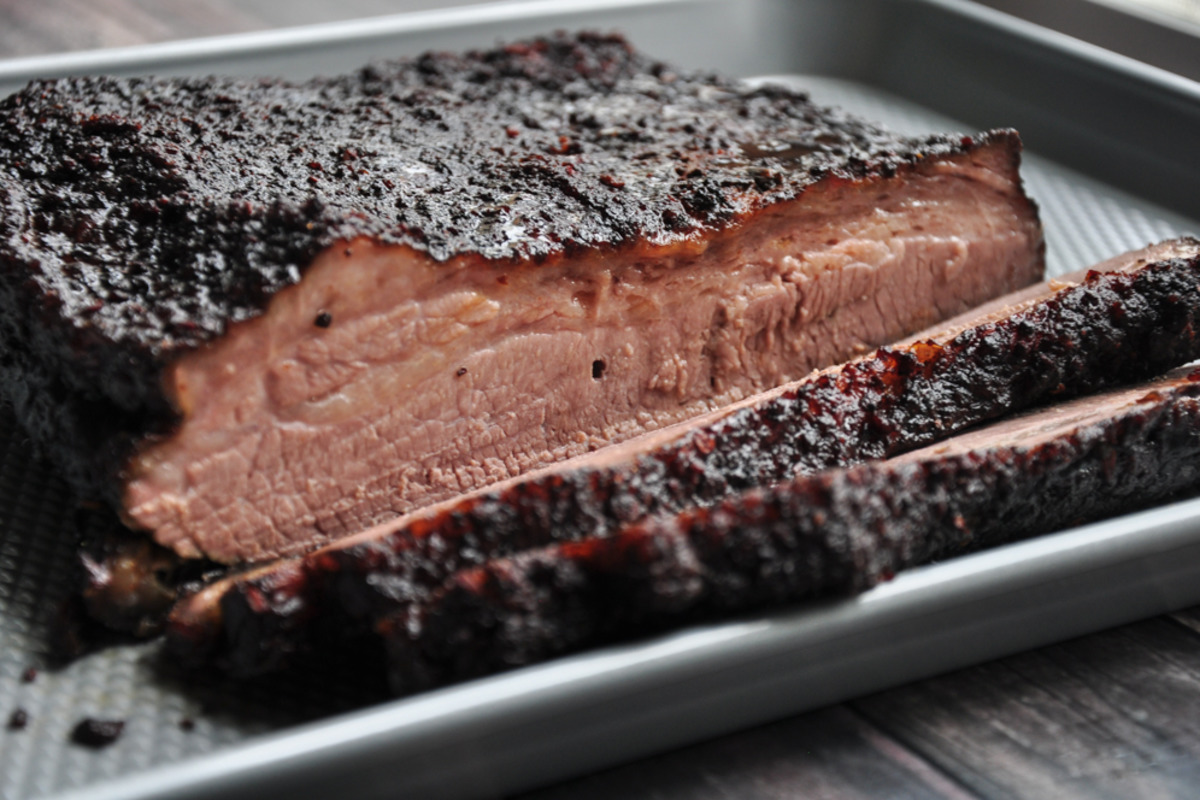
For brisket, ribs, pork shoulder, whole chickens. Indirect heat with wood chunks or pellets for smoke. Patience is the only ingredient. Plan a six-hour window for Honey-Glazed Baby Back Ribs with Smoky Chipotle BBQ Sauce or a twelve-to-fourteen-hour window for Smoky Texas-Style Smoked Brisket with Bold Barbecue Sauce. A pellet grill or kamado does this best.
25 summer grilling recipes from our catalog
This is the meat (and produce) of the guide. Recipes are grouped by course so you can build a menu in five minutes.
Proteins — 12 main events
Beef & burgers. Brown's Classic Beef Burgers — the no-fuss baseline. 80/20 chuck, salt and pepper, hot direct heat, the only seasoning your grandfather ever used and the one that still wins in blind tests. Grilled Citrus-Marinated Flank Steak — the fastest crowd-pleaser, marinades for 6 hours and grills in 8 minutes total.
Chicken. Citrus-Marinated Grilled Chicken with Texas BBQ Glaze is the technique-correct way to glaze without burning — sauce goes on in the last 4 minutes only. Redmond Salt-Rubbed Grilled Chicken Thighs with Garlic and Herbs is the cheaper, more forgiving alternative — bone-in thighs reward beginners the way breasts punish them.
Pork. Grilled Chipotle-Lime Pork Tenderloin with Avocado Cilantro Sauce is a 25-minute weeknight grill from the freezer if you marinade Sunday. Honey-Glazed Baby Back Ribs with Smoky Chipotle BBQ Sauce is the showpiece — 5 hours indirect, 30 minutes sauced. Grilled South Carolina Pulled Pork with Tangy Vinegar Slaw feeds 12 from a single pork shoulder.
Seafood. Cedar-Plank Salmon with Maple Mustard Glaze — soak the plank 60 minutes, the rest is foolproof. Grilled Cajun Shrimp Skewers cook in 4 minutes and never disappoint.
Other proteins. Smoky Texas-Style Smoked Brisket with Bold Barbecue Sauce is the all-day project worth doing once a summer. Classic Mexican Carne Asada Tacos with Fresh Salsa Verde hits the table 15 minutes after the grill is hot. Grilled Italian Hot Dogs with Peppers and Onions is the upgrade your July 4th menu has been missing.
Vegetarian & vegetable mains
Three-Cheese Stuffed Portobello Mushroom Burgers — the meatless burger your vegetarian guests actually want. Charcoal-Grilled Mediterranean Vegetable Platter — zucchini, peppers, eggplant, red onion: 15 minutes, serves 6. Grilled Zucchini and Shrimp Skewers with Lemon Dill Sauce bridges proteins and produce.
Sides — 6 essentials
Honey-Lime Grilled Corn on the Cob with Chili Butter — the upgrade over plain butter that makes guests ask for the recipe. Summer Grilled Corn and Black Bean Salad is the make-ahead corn play for when the grill is already crowded. Charlotte Watermelon and Feta Summer Salad takes 10 minutes and disappears in 5. Spiced German-Style Potato Salad with Bacon and Mustard Vinaigrette — warm, no-mayo, holds at room temp for hours. Slow-Smoked Pulled Pork Sandwiches with Tangy Coleslaw doubles as a main and a side (use the slaw on burgers too).
Desserts — 2 grilled finishers
Grilled Peach Melba with Raspberry Sauce — direct heat for 3 minutes a side, ice cream on top, done. Outdoor Patio Grilled Peach and Burrata Salad with Balsamic Reduction crosses the line between salad and dessert in the most useful way.
Build-your-own backyard BBQ menu (8, 12, or 20 guests)
The hardest part of summer entertaining is portioning. Use these as your skeleton and scale recipes up using the serving stepper on every catalog page.
Menu for 8 (about $90 in groceries, 2026 prices)
- Main: Citrus-Marinated Grilled Chicken with Texas BBQ Glaze (4 lb bone-in chicken) + Brown's Classic Beef Burgers (2 lb chuck, 8 patties)
- Sides: Honey-Lime Grilled Corn on the Cob with Chili Butter, Charlotte Watermelon and Feta Summer Salad
- Dessert: Grilled Peach Melba with Raspberry Sauce
- Grill plan: 90 minutes total. Burgers + corn go on a hot direct zone for the last 15 minutes; chicken takes the first hour on a two-zone setup.
Menu for 12 (about $160 in groceries)
- Mains (2): Honey-Glazed Baby Back Ribs with Smoky Chipotle BBQ Sauce (2 racks) + Grilled Chipotle-Lime Pork Tenderloin with Avocado Cilantro Sauce (3 lb total)
- Sides: Spiced German-Style Potato Salad with Bacon and Mustard Vinaigrette, Summer Grilled Corn and Black Bean Salad, Charcoal-Grilled Mediterranean Vegetable Platter
- Vegetarian option: Three-Cheese Stuffed Portobello Mushroom Burgers (4 portobellos)
- Grill plan: 5 hours total. Ribs go on at 11 am for a 4 pm meal. Tenderloin hits the grill at 3:30. Sides start coming together at 3.
Menu for 20 (about $280 in groceries)
- Mains (3): Smoky Texas-Style Smoked Brisket with Bold Barbecue Sauce (10–12 lb packer brisket), Grilled South Carolina Pulled Pork with Tangy Vinegar Slaw (7 lb pork shoulder), Grilled Italian Hot Dogs with Peppers and Onions (20 dogs for the kids)
- Sides: Double the potato salad + corn + watermelon salad from the menu-for-12 plan. Add coleslaw for the pulled-pork sandwiches.
- Grill plan: Day-of-event prep. Brisket goes on at midnight for a 6 pm meal (smoke 12 hours, rest 2 hours wrapped in butcher paper inside a cooler). Pork shoulder starts at 8 am for the same finish time. Hot dogs cook the last 10 minutes.
Pro tip on the 20-person menu: rent or borrow a second grill. A 4-burner gas grill plus your existing smoker is the right capacity. Trying to share one grill across smoked + grilled items always backs up the queue.
Grilling timing chart by protein and thickness
This is the chart you screenshot and tape inside the grill lid. Times assume a true 450°F direct zone unless noted; internal temps are measured at the thickest part. All temps follow USDA grilling guidelines.
| Protein | Cut / thickness | Technique | Time | Pull temp |
|---|---|---|---|---|
| Beef burger | 80/20 chuck, 1/3 lb, 3/4" | Direct 450°F | 4 min/side | 155°F (rises to 160°F) |
| Ribeye steak | 1.5" thick | Two-zone | Sear 2 min/side, indirect | 130°F med-rare, 140°F medium |
| Flank steak | 1" thick | Direct 450°F | 4–5 min/side | 130°F med-rare |
| Brisket | 10–12 lb packer | Smoke 225°F | 12–14 hr, rest 2 hr | 203°F probe-tender |
| Chicken breast | Boneless, brined 30 min | Two-zone | 5 min sear, 12–18 min indirect | 160°F (rises to 165°F) |
| Chicken thigh | Bone-in, skin-on | Two-zone | Sear skin 4 min, indirect 25–30 min | 175–180°F (forgiving) |
| Whole chicken | 3.5–4 lb spatchcocked | Indirect 375°F | 45–55 min | 160°F breast, 175°F thigh |
| Pork tenderloin | 1.5 lb, ~2" diameter | Two-zone | Sear all sides, indirect 12–15 min | 140°F (rises to 145°F) |
| Baby back ribs | 1 rack, ~2 lb | Indirect 250°F | 5 hr (3-2-1 method) | 195°F bend test |
| Pork shoulder | 6–8 lb | Smoke 250°F | 1.5 hr/lb, rest 1 hr | 203°F shreds easily |
| Hot dogs | Standard | Direct 400°F | 6–8 min total | 165°F |
| Salmon fillet | 1" thick, skin-on | Direct 425°F or cedar plank | 4 min/side or 12–15 min plank | 125°F med, 135°F well |
| Shrimp | 16/20 count, skewered | Direct 450°F | 2 min/side | Opaque + curled |
| Vegetables | 1/2" slices | Direct 425°F | 3–4 min/side | Char marks + tender |
| Corn on the cob | Husk-on | Indirect, then direct char | 15 min indirect + 5 direct | Kernels yield to a fork |
| Peaches | Halved, pit removed | Direct 425°F | 3 min/side, cut-side down first | Char marks + softened |
Three rules that make this chart work for you and not just for a recipe writer:
1. Pull early, rest mandatory. Carryover heat raises internal temp 5–10°F as the meat rests. The chart already assumes this; pull at the listed temp, not 10° higher.
2. Thickness beats weight. A 1-lb chicken breast that's 2" thick takes longer than a 1.5-lb breast that's been butterflied. Always measure by inches at the thickest part.
3. Probe in once. Every probe insertion bleeds juices. Leave-in wireless probes (Meater, Combustion Inc., FireBoard) solve this; if you're still using a manual instant-read, check once at the 80% mark and once at the pull point.
Real-world numbers: serving sizes, fuel use, and timing math
The portion math from the FAQ is correct on paper. Here's what actually happens at the table.
Cooked yield vs raw weight. Bone-in proteins lose 25–30% of raw weight after cooking. A 4-lb tray of chicken thighs serves 8 adults comfortably (raw weight ÷ 0.5 = serving count). Brisket loses about 40% (a 10-lb packer feeds 12–14 because the point yields less than the flat). Pork shoulder loses about 50% (a 7-lb shoulder = 14 sandwich servings).
Charcoal consumption. A standard 22" Weber Kettle filled to a chimney-full burns about 4 lb of lump or 5 lb of briquettes per 90 minutes at 450°F. A 5-hour rib cook on indirect heat at 250°F uses 6–8 lb of fuel. Buy a 20-lb bag — that's three big cooks of headroom.
Propane runtime. A 20-lb propane tank gives 18–20 hours of grilling at medium heat. Most home grillers refill once per season. The empty-tank check trick: lift the tank — a full tank is 38 lb, empty is 18 lb.
Grill capacity for parties. A 36" gas grill (4 burners) holds about 12 burgers or 8 chicken pieces at a time. A 22" kettle holds 8 burgers or 6 chicken pieces. For 12 guests you need 2 batches on the kettle, 1 batch on the gas. Plan timing accordingly.
Common pitfalls (and how to avoid them)
These are the failure modes we see most often. None of them are about ingredient quality — they're all about heat management.
1. Cooking cold meat. Pulling steaks straight from the fridge to a 450°F grill is why your steak comes out gray inside the band. Rest at room temp for 30 minutes before grilling — yes, even chicken, no, you're not going to get sick. The food safety window is 2 hours at room temp; 30 minutes is well inside.
2. Pressing burgers with a spatula. Stop. You're squeezing out the juice that becomes the crust. Form patties with a dimple in the middle (it prevents the bulge during cooking) and leave them alone.
3. Flipping too soon. The grate releases the meat when the crust forms. If you tug at a burger or chicken thigh and it sticks, it's not ready. Give it 60 more seconds.
4. Saucing too early. Anything with sugar (BBQ sauce, honey glazes, teriyaki) burns into bitter char if it's on the meat over direct heat for more than 4 minutes. Sauce in the last 3–4 minutes, never before.
5. Trusting time over temperature. Recipes that say "grill for 6 minutes per side" assume a grill at exactly the right temp, a piece of meat at exactly the right thickness, and a cook who keeps the lid closed. None of those are reliable. The only honest cookbook measurement is internal temp. A $20 instant-read thermometer is the difference between "I hope this is done" and "I know this is done."
6. Overcrowding the grate. If proteins touch, they steam instead of sear. Leave at least 1/2 inch between pieces. If you can't fit everything, cook in batches and tent the first batch with foil while the second cooks.
What to buy: grilling tools that punch above their weight
You don't need 12 gadgets. You need 4 that you'll actually reach for.
1. An instant-read thermometer. The single highest-ROI grilling purchase ever made. The benchmark is the ThermoWorks Thermapen ONE — 1-second reads, $109 — but if you want the best $25 alternative, the Alpha Grillers Meat Thermometer is the budget pick reviewers reach for. You will use this every cook. Spend the money.
2. Skewers that don't bend. Wooden skewers char and snap; thin metal ones bend under heat. The 3-Way Grill Skewers with Push-Off Slider are 14.7" stainless that solve the "kebab keeps rotating" problem with a release slider.
3. A wooden grill scraper. Wire-bristle brushes shed and the bristles end up in your food (this is a real, repeated ER visit — see the USDA food safety guidance). Use a wooden scraper or a stainless coil-style brush. Replace every 2 seasons.
4. A heavy spatula. A flimsy spatula folds under a half-pound burger; you need 3mm of stainless. Any commercial-kitchen spatula works. Avoid the fancy multi-tool spatulas with built-in bottle openers — they trap fat and warp.
Skip these. Grill mats reduce char and trap grease. Lighter fluid leaves a kerosene taste. "Smoking pouches" (foil bags of soaked chips on a gas grill) produce more steam than smoke; if you want smoke flavor on gas, buy a small charcoal grill or a pellet smoker. Don't buy a thermometer probe with a 4" cord — get something 36" or wireless.
For technique deep-dives, Weber's Grill Skills hub is the most thorough free reference; for recipe-craft education, Serious Eats' grilling section is unmatched.
When NOT to grill
Save yourself a frustrating cook by recognizing a wrong-tool moment.
- Wind above 20 mph. Gas grills lose 100°F at the grate to wind chill. Cook indoors.
- Hard rain. Even with a covered porch, you can't keep a chimney lit. Reschedule.
- Below 35°F outside. Propane regulators ice up; pellet grills can't hold temp; you'll waste fuel and not enjoy yourself.
- You're cooking ≤2 portions on a weeknight. Cast iron on the stove takes 3 minutes to preheat and produces a better steak than a grill on this scale. Save grilling for when you've got 4+ portions or you want the social ritual.
Real-world example: a 4-hour cook for 12
Here's exactly what the menu-for-12 looks like start to finish, the way you'd actually run it:
- 11:00 am — Start chimney for charcoal. Score brisket fat cap if smoking; trim ribs if needed.
- 11:30 am — Coals dumped, grate on, vents adjusted to 250°F.
- 11:45 am — Ribs on, indirect side, fat-side up. Close lid, walk away for 2 hours.
- 1:45 pm — Spritz ribs with apple-juice-water mix (50/50). Spritz every 30 minutes.
- 3:15 pm — Sauce on ribs. Last 30 minutes on grill.
- 3:30 pm — Pull tenderloin from marinade. Bring to room temp.
- 3:45 pm — Move ribs to cooler side, tent. Open vents, add coals if needed for direct sear zone.
- 3:55 pm — Tenderloin on direct side, sear all 4 sides 90 seconds each.
- 4:00 pm — Tenderloin to indirect side; close lid 8–12 minutes to 140°F internal.
- 4:15 pm — Tenderloin off, rest 8 minutes. Slice. Ribs already rested 30 minutes — cut and plate.
- 4:30 pm — Sit down. Eat.
The cook works because nothing competes for grate space at the same time. That's the whole game.
Related guides
If this guide hit the right notes, the following deep-dive resources cover individual techniques in more detail.
- The Charcoal-Grilled Mediterranean Vegetable Platter is the easiest way to feed vegetarian guests at any of the menus above.
- The Three-Cheese Stuffed Portobello Mushroom Burgers doubles as a vegan-friendly substitute if you skip the cheese.
- For dessert, the Outdoor Patio Grilled Peach and Burrata Salad with Balsamic Reduction is the move when the grill is already hot and someone wants something sweet.
- Shop the full Kitchen Utensils & Tools and Kitchen Gadgets categories for the rest of your grilling kit.
Now go outside. The grill won't light itself.
Frequently asked questions
Gas, charcoal, or pellet -- which grill should I buy?
How do I keep chicken from drying out on the grill?
What's the safe internal temperature for grilled meats?
How do I clean my grill grates?
How much food do I need per person for a BBQ?
Sources
Plan the whole cookout in one go.
Ask our AI for mains, sides and quantities for your headcount — one Instacart cart, no spreadsheet.
Plan my cookout →