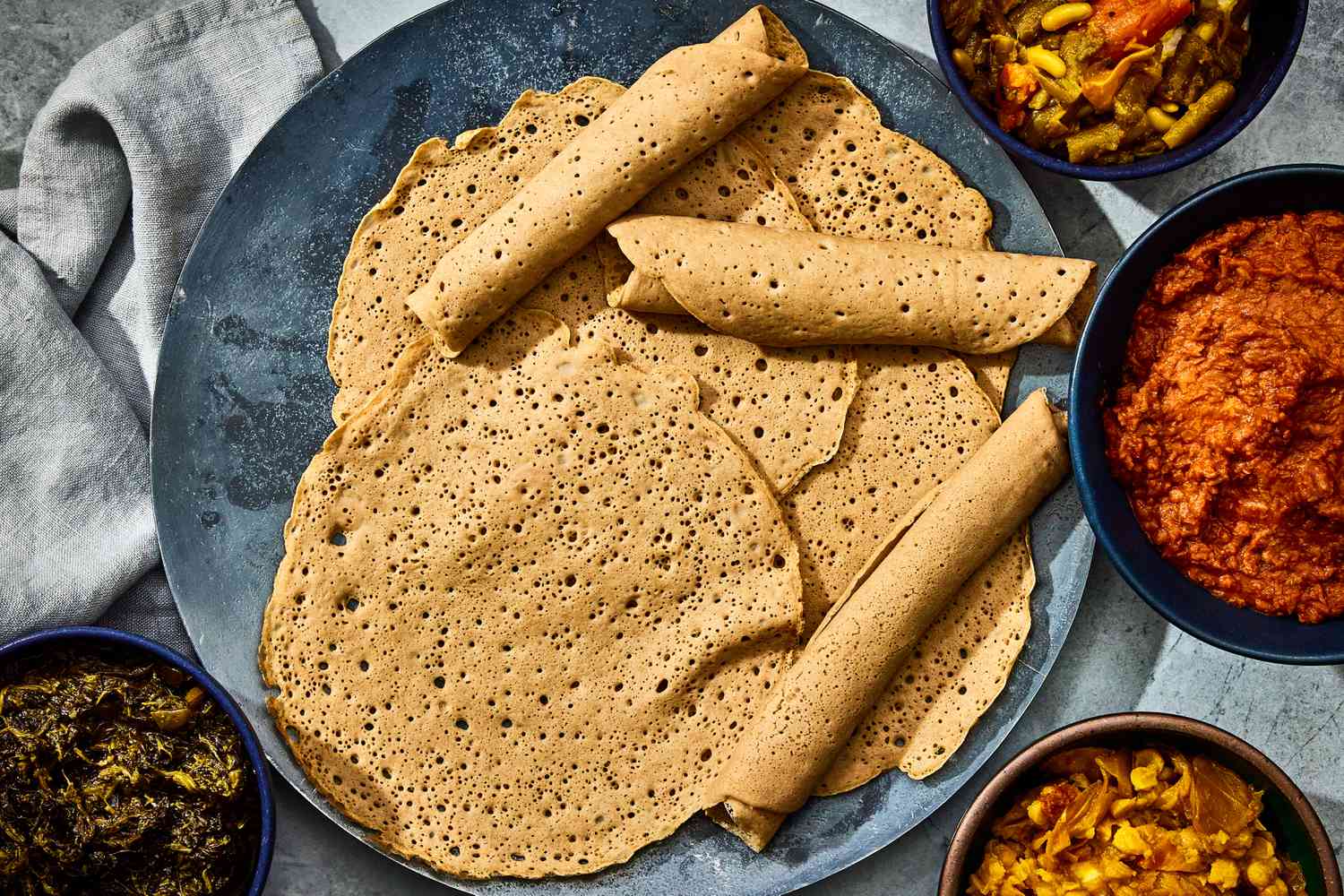
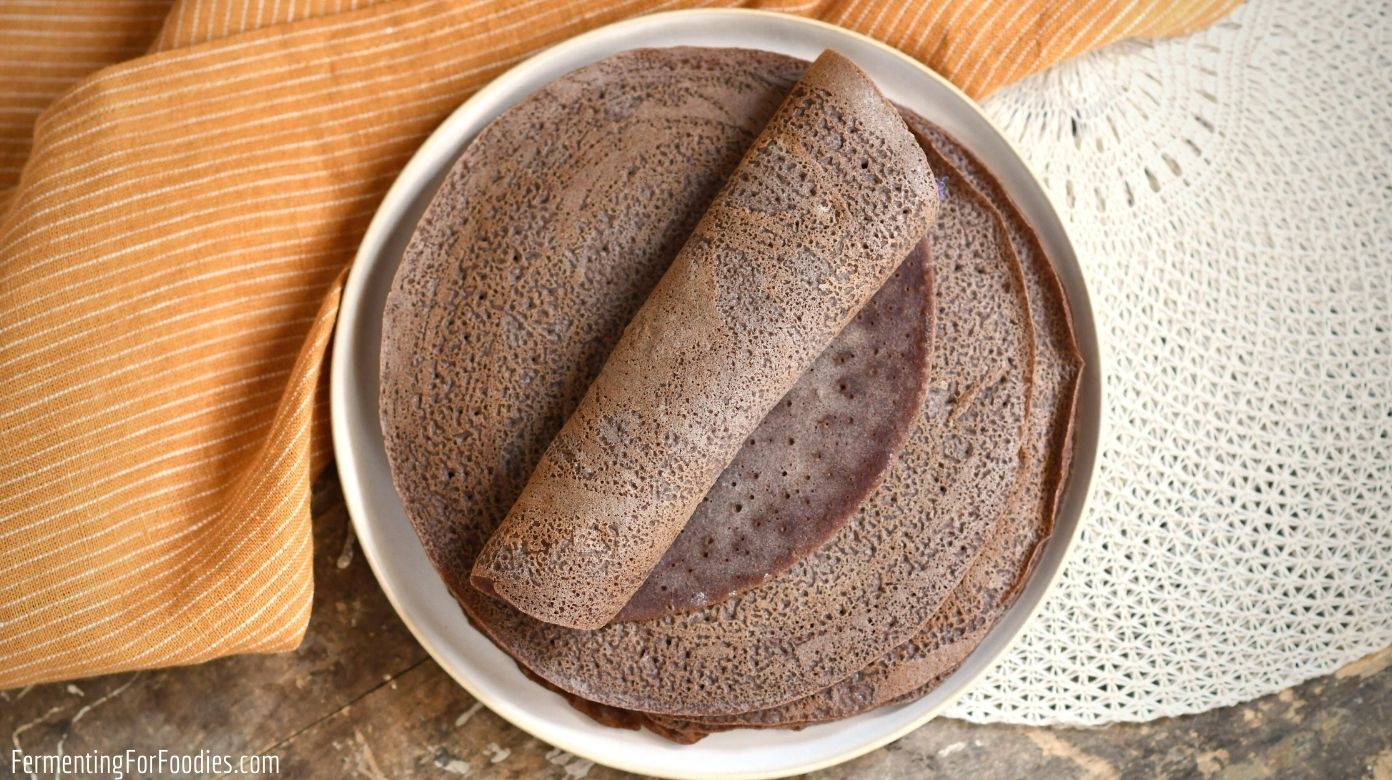
Ethiopian-Inspired Injera Flatbread from Teff Flour
Traditional Ethiopian sourdough flatbread made with teff flour, perfect for scooping up stews and salads. This Ethiopian-inspired gluten-free recipe, ready in about 15 minutes, pairs teff flour, warm water, active sourdough starter for a weeknight-friendly dinner that comes together with one pan and minimal cleanup. Each serving lands at about 120 calories and feeds 6, so it slots cleanly into a weekly meal plan and pairs well with rice, quinoa, or a quick salad. Tap "Plan a meal with the AI" below to drop this recipe into your week and send the ingredients straight to Instacart. Nutrition values are approximate, calculated from USDA FoodData Central (fdc.nal.usda.gov) — verify against ingredient labels for any health-driven dietary plan.
Ingredients
- 2 cups teff flour
- 3 cups warm water
- 1/4 cup active sourdough starter
- 1 tsp salt
- 2 tsp for cooking vegetable oil
The pizza stone or steel we’d bake this on → Best Pizza Stones and Steels for 2026: Top Picks + Buying Guide
Affiliate disclosure: AislePrompt may earn a commission on qualifying purchases made through Amazon links, at no additional cost to you. See our policy →
Equipment for this recipe
Tools this recipe's steps call for, with a link to each on Amazon.
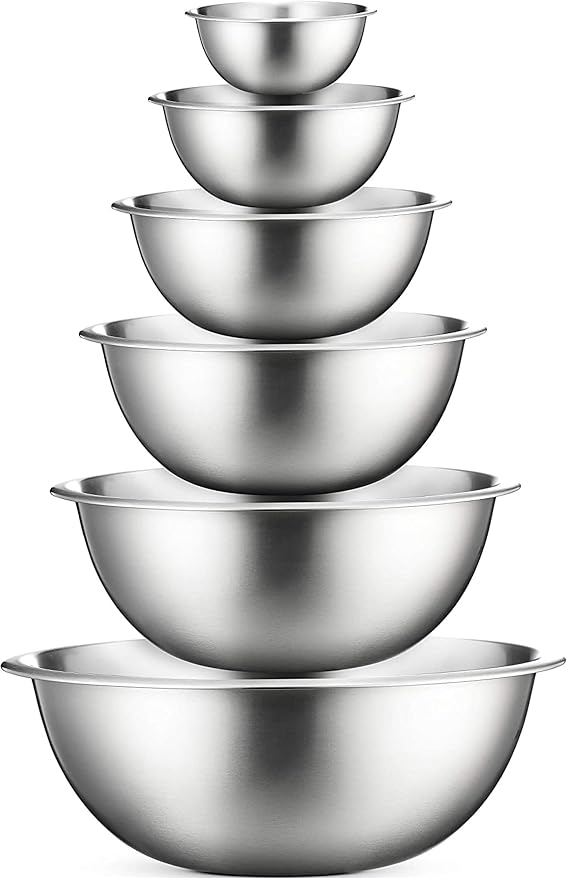
Instructions
- Step 1: In a large mixing bowl, combine 2 cups teff flour, 1/4 cup active sourdough starter, and 3 cups warm water. Stir well until you have a smooth batter with a thin pancake batter consistency.
- Step 2: Cover the bowl loosely with a cloth and let the batter ferment at room temperature for 24 to 36 hours until it bubbles and develops a slightly sour aroma.
- Step 3: After fermentation, stir in 1 tsp salt into the batter.
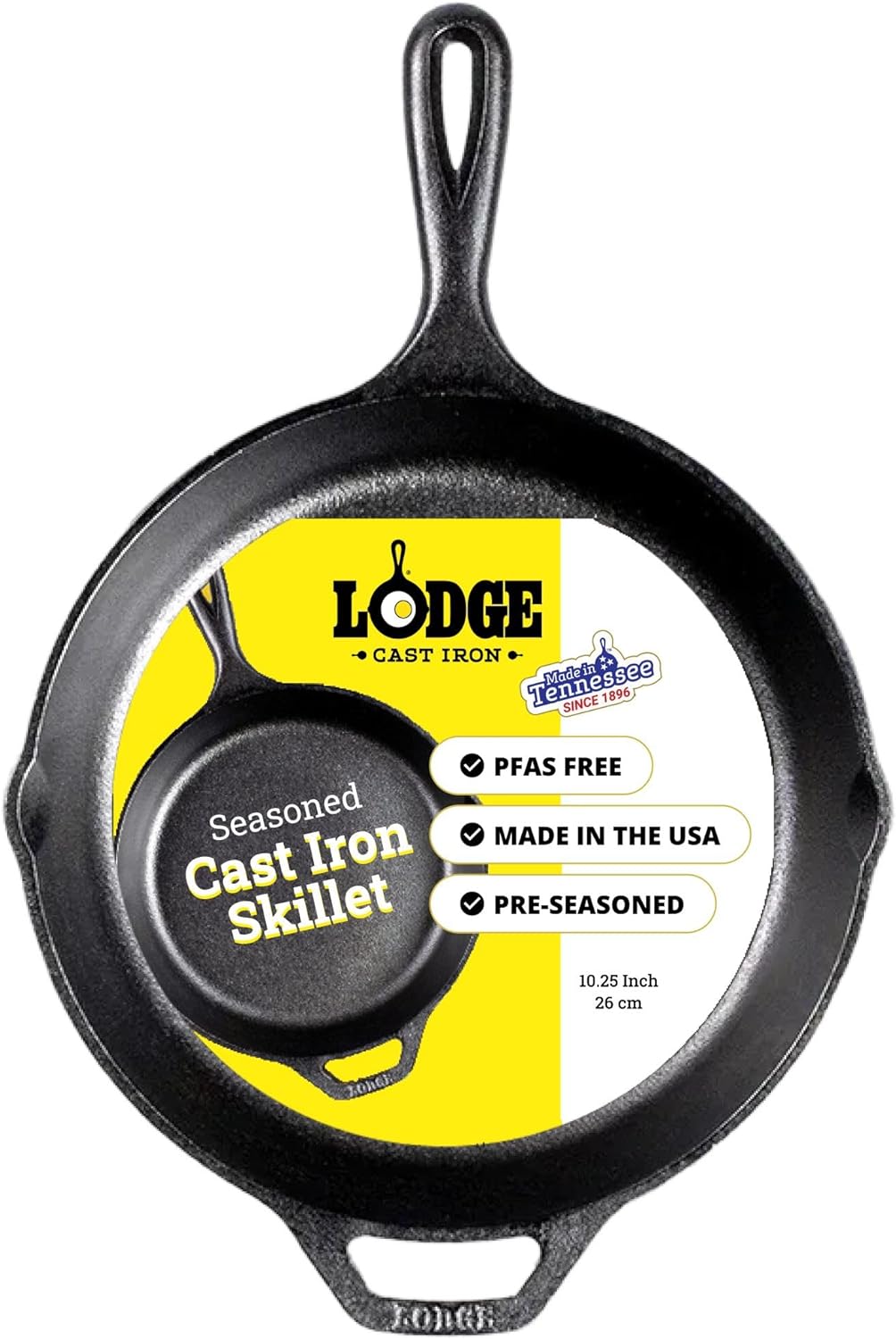
- Step 4: Heat a non-stick skillet over medium heat. Lightly brush the surface with 1/2 tsp vegetable oil.
- Step 5: Pour about 1/2 cup of batter into the skillet, quickly swirling it to cover the surface evenly in a thin layer.
- Step 6: Cook for 2-3 minutes until holes appear on the surface and the edges lift easily; do not flip. Remove the injera and repeat with remaining batter, brushing skillet with oil as needed.
- Step 7: Allow injera to cool slightly stacked under a clean towel before serving with stews or salads.