20 One-Pan Seafood Dinners Ready in 30 Minutes or Less
Sheet pan, skillet, or foil packet — every seafood dinner in this guide hits the table in half an hour with a single pan to wash.
One-pan seafood dinners hit the table faster than any other weeknight protein because fish cooks in 8 to 12 minutes, shrimp in 3 to 5, and both roast beautifully alongside vegetables on a single sheet pan. This guide runs through 20 of them — a Low Country shrimp boil, a teriyaki salmon sheet pan, a 30-minute seafood paella, a garlic-white-wine mussels pot, and 16 more — plus the substitution matrix, doneness cues, and gear that make them foolproof.
Get a free week of easy dinners
Seven weeknight dinners with the shopping list already totalled, sent Sunday. No account needed, unsubscribe in one click.
No spam, unsubscribe in one click. Recipes, shopping lists and Instacart carts all work without an account either way.
Why seafood is the fastest weeknight protein
Seafood beats chicken, beef, and pork on total cook time by a factor of two to three. A boneless chicken breast at 400°F takes 22 to 28 minutes to reach 165°F; a salmon fillet of similar thickness takes 10 to 14 to reach 125°F, which is the point at which it flakes cleanly. Shrimp are done in the time it takes to preheat a skillet — 3 minutes flat, from raw to opaque. Scallops sear in 90 seconds a side. Mussels open in 5 minutes flat once the wine boils.
The reason is structural. Fish muscle is short-fibered and low in connective tissue, so it doesn't need slow low-temp cooking to break down collagen the way beef chuck or pork shoulder does. It also carries far less internal water than red meat, so it doesn't lose the majority of its cook time to steaming itself. Direct high heat on a rimmed sheet pan or a hot skillet transforms it in one temperature transition — which is exactly what a Tuesday needs.
The other advantage is cleanup. A one-pan seafood dinner is one pan. No sauté-then-transfer, no rest-then-carve, no reduce-the-drippings-into-a-jus. Every recipe on this list uses either a single sheet pan, a single skillet, a single foil packet, or a single lidded pot. The knife you use to trim asparagus and the cutting board you use to portion the fish are the only backup dishes.
The three one-pan formats: sheet pan, skillet, foil packet
Almost every recipe on this list falls into one of three formats. Pick the format first, then the protein.
Sheet pan (oven, 400 to 425°F)
A rimmed 18x13-inch half sheet pan holds enough vegetables and fish for four people with room for airflow. The oven does the browning, you do 5 minutes of prep, and everything finishes at the same time if you stagger the additions. Sheet pan is the right format for salmon, cod, tilapia, and shrimp with hearty vegetables — herb-glazed salmon and asparagus, teriyaki salmon and sesame veggies, Cajun shrimp and sweet corn, or shrimp fajitas all work here.
Rules for sheet-pan seafood: line the pan with parchment for zero cleanup and slightly less browning, or foil for maximum browning and a fast wipe-down. Preheat the pan in the oven for 5 minutes before adding fish for extra crisp on the underside. Give vegetables a 5 to 10 minute head start so they finish at the same time as the fish; roasted broccoli, baby potatoes, and Brussels sprouts all need longer than salmon. A dedicated pan for seafood is worth it — the Pyrex half-sheet is durable, warp-resistant, and dishwasher-safe.
Skillet (stovetop, medium-high)
A 12-inch stainless or cast-iron skillet is the right tool for anything that needs a hard sear or a pan sauce. Pan-seared scallops with lemon-caper butter, Cajun-spiced cod, and Tuscan garlic shrimp all live in a skillet. So does shrimp scampi, even the sheet-pan variant — the sauce needs stovetop reduction at the end for the right consistency.
Skillet technique for seafood is one line: hot pan, dry protein, don't touch it. Pat the fish or scallops dry with paper towels — moisture on the surface makes steam, and steam prevents the Maillard browning that turns dinner into restaurant dinner. Get the pan hot enough that a drop of water skitters and evaporates in under 2 seconds. Add oil, then the protein, then leave it alone for the full sear time. A 12-inch tri-ply stainless skillet with real heat retention makes this trivially easy.
Foil packet (oven or grill, 400°F)
Foil packets are the zero-cleanup weeknight lifesaver. Fold a 12x18-inch sheet of heavy-duty foil into a pouch around a fillet, some sliced vegetables, a knob of butter, and a slice of lemon, seal the edges, and roast on a sheet pan for 12 to 15 minutes. Foil-packet lemon-dill salmon is the archetype, but the technique works for any mild whitefish or salmon fillet under 1 inch thick. The trade-off is no browning — the protein steams inside the pouch — but you get a perfectly moist result with zero cleanup and near-zero risk of overcooking, because the steam bath buffers the temperature.
The 20 recipes, split by protein
Here are the 20 one-pan seafood dinners this guide covers, sorted by protein.
Salmon (6 recipes)
Salmon is the most forgiving fish for a beginner because its high fat content buffers a minute of overcooking. Buy skin-on, roast skin-down on a hot sheet pan, and it's nearly impossible to ruin.
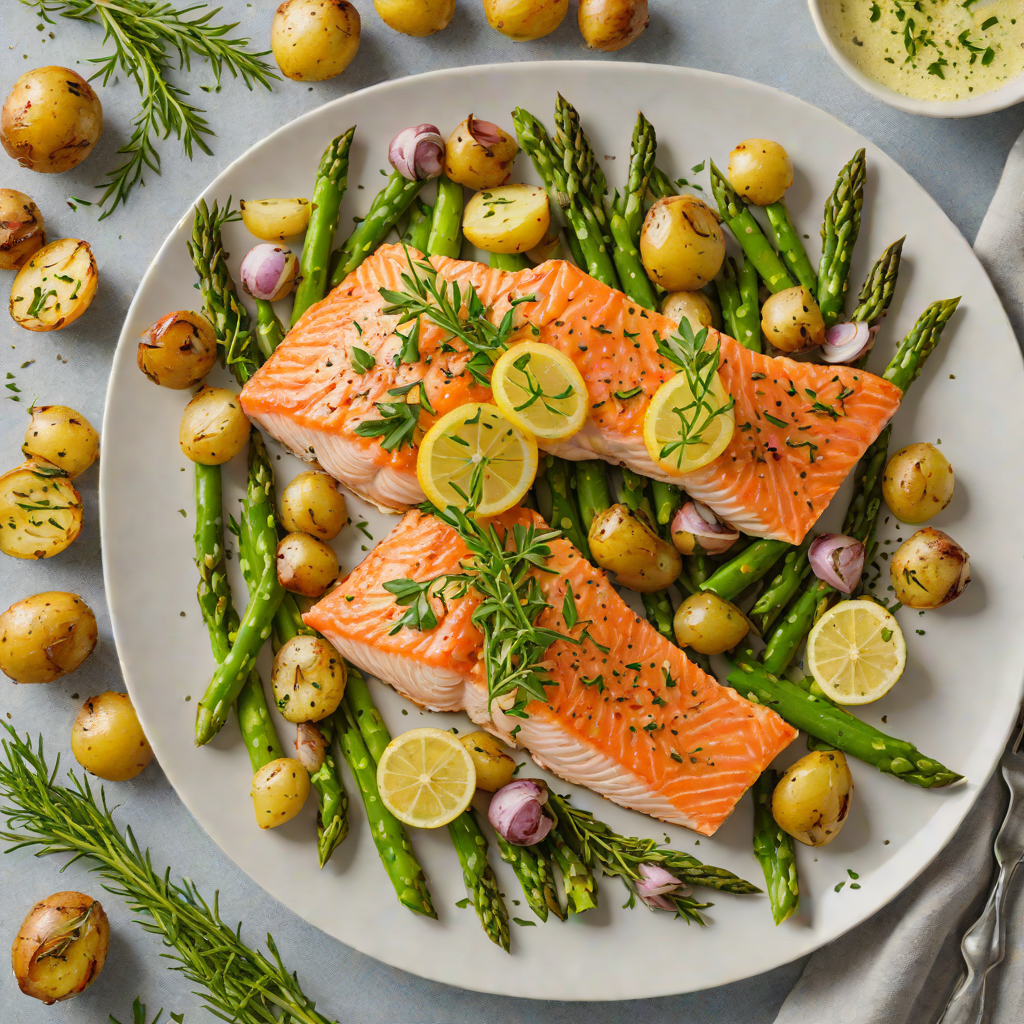
1. Sheet Pan Herb-Glazed Salmon with Asparagus — the reference version; 12 minutes at 425°F
2. Sheet Pan Teriyaki Salmon with Sesame-Ginger Veggies — sweet-salty glaze that browns hard under the broiler
3. Sheet Pan Herb-Roasted Salmon with Asparagus and Baby Potatoes — potatoes get a 12-minute head start
4. Sheet Pan Herb-Crusted Salmon with Cherry Tomatoes — panko crust adds crunch without frying
5. Foil-Packet Lemon-Dill Salmon with Asparagus — zero cleanup, camping-friendly
6. Broiled miso salmon with bok choy — a broiler-only variant; 6 minutes total under high heat
Shrimp (5 recipes)
Shrimp cook faster than any protein in a home kitchen. Buy 16/20 count (jumbo) with the shell on for maximum flavor, peel with the tail on for presentation, and never cook them longer than 3 minutes total.
7. Sheet Pan Shrimp Scampi with Garlic Bread — the whole meal on one pan including the bread
8. Spicy Low Country Shrimp Boil with Cajun Butter — corn, potatoes, andouille, shrimp in one pot
9. Sheet Pan Cajun-Spiced Shrimp with Roasted Sweet Corn — 12 minutes end-to-end
10. Sheet Pan Mexican-Style Shrimp Fajitas — with warmed tortillas in the last 2 minutes
11. Tuscan Garlic Shrimp in Spinach and Tomato Sauce — skillet-based; ready over pasta in 15
Cod and whitefish (4 recipes)
Mild, flaky whitefish is the interchangeable protein — cod, tilapia, haddock, halibut, and pollock all swap in for each other. Cook time depends only on fillet thickness (10 minutes per inch at 400°F, roughly).
12. One-Pan Baked Cod with Cherry Tomatoes and Olives — the classic Mediterranean template
13. Pan-Seared Mediterranean Cod with Lemon-Olive Tapenade — skillet-based with a bright topping
14. One-Pan Lemon-Dill Cod with New Potatoes — potatoes go in first, cod on top halfway through
15. Pan-Seared Cod with Regional Cajun Spice Blend — a 6-minute skillet weeknight
Tuna, scallops, mussels, and paella (5 recipes)
The rest of the ocean. Tuna is best treated like a steak. Scallops need a screaming-hot dry pan. Mussels are the fastest of all — done in the time it takes to open a bottle of wine.
16. Sheet Pan Spicy Tuna and Vegetable Bake — treat like a rare-medium steak; 6 to 8 minutes total
17. Pan-Seared Scallops with Lemon-Caper Butter Sauce — 90 seconds a side, no exceptions
18. Steamed Mussels with Garlic and White Wine — Dutch oven, 5 minutes from wine-to-open-shell
19. The Best Seafood Paella — one pan, one hour, feeds six, no stirring
20. High-Protein Sheet Pan Shrimp Fajitas — bonus 20th, macro-tuned for meal prep
The seafood substitution matrix
The single most useful table in this guide. If your recipe calls for one fish and the fresh case only has another, swap using this matrix. Adjust cook time only by fillet thickness — everything else stays the same.
| Recipe calls for | Best swap | Second swap | Cook-time adjustment |
|---|---|---|---|
| Salmon | Steelhead trout | Arctic char | Same time |
| Salmon | Tuna steak | Swordfish | Cook 2 min less; serve mid-rare |
| Cod | Tilapia | Haddock | Same time |
| Cod | Halibut | Pollock | Add 2 min for halibut (denser) |
| Tilapia | Cod | Flounder | Same time |
| Shrimp | Scallops | Squid rings | Scallops need 90 sec a side |
| Scallops | Shrimp | Squid rings | Cut cook time by 1 min for shrimp |
| Mussels | Clams | Cockles | Clams take 2 min longer |
| Tuna | Swordfish | Salmon | Salmon can cook longer; tuna cannot |
| Any whitefish | Any other whitefish | Salmon | Salmon takes 2 min longer |
The rule underneath the matrix: within a texture family (mild-flaky, dense-oily, shellfish), swaps are 1:1 by weight and by cook time. Across families, adjust cook time down (never up) so you don't push a delicate fillet past 130°F. According to Monterey Bay Aquarium's Seafood Watch, the most sustainable swap-ins for weeknight cooking are US Pacific cod, US Alaska salmon, US farmed shrimp, and US farmed rainbow trout — all "Best Choice" or "Good Alternative" rated as of 2026.
Sides that cook on the same pan
Half the point of one-pan cooking is that the sides go on with the protein. The trick is staggering.
| Vegetable | Roast temp | Time on pan before fish goes in |
|---|---|---|
| Baby potatoes (halved) | 425°F | 15 to 20 min |
| Sweet potato (1-inch dice) | 425°F | 15 min |
| Brussels sprouts (halved) | 425°F | 12 min |
| Broccoli (florets) | 425°F | 8 min |
| Cauliflower (florets) | 425°F | 10 min |
| Cherry tomatoes | 425°F | 0 min (add with fish) |
| Asparagus (trimmed) | 425°F | 0 min (add with fish) |
| Bell peppers (sliced) | 425°F | 5 min |
| Zucchini (½-inch rounds) | 425°F | 0 min (add with fish) |
| Green beans (whole) | 425°F | 5 min |
| Kale (torn) | 425°F | Last 3 min only |
For grains and starches, cook them on the side or use recipes that build the grain into the pan, like paella. Rice cooked on a sheet pan with fish doesn't work — the rice needs steam, the fish needs dry heat.
Doneness cues for each species (no thermometer required)
Every seafood on this list has a visual and tactile cue that beats a fixed clock. Learn these five and you don't need a probe thermometer for anything on this list, though a Thermapen ONE is what to reach for when you want certainty on something expensive like halibut or wild king salmon.
Salmon. Nudge the thickest part with a fork. If the flakes separate with almost no pressure and the interior is opaque with a still-glossy center, pull it. If you can see raw translucent flesh at the center, give it 90 more seconds. Target internal temperature is 125°F (medium) for the best texture. As Serious Eats' quick-seafood guide notes, salmon carries plenty of cooking momentum after it leaves the pan — pull it 3°F short of the target and let carryover finish the job.
Cod, tilapia, haddock, halibut. These flake with the gentlest fork pressure the moment they're done. Overcooked whitefish falls apart into dry sheets in the pan — that's the sign you missed by a minute. Aim for 130 to 135°F if you're using a thermometer.
Shrimp. Watch the curl. Raw shrimp are straight. As they cook, they curl into a loose C-shape and turn opaque pink. If they curl tighter into an O-shape, they're overcooked and rubbery. Total cook time: 2 to 3 minutes for medium shrimp, 3 to 4 for jumbos.
Scallops. They turn opaque all the way through and firm up to a gentle poke. The sear line on the bottom should be a deep amber-brown. Total cook time: 90 seconds first side, 60 seconds second side.
Mussels. They open. That's the entire cue. Discard any that don't open after 6 minutes of steaming; those were dead before they hit the pot.
Kitchen gear that makes one-pan seafood foolproof
You do not need much. Five tools cover everything on this list.
1. A rimmed half sheet pan. The one non-negotiable. A Pyrex half-sheet at 18x13 inches is the right size for four servings and fits in every standard home oven.
2. A 12-inch skillet, stainless or cast iron. A 12-inch tri-ply stainless skillet handles scallops, cod, shrimp, and every skillet recipe on this list. Cast iron works too and holds heat better, at the cost of weight.
3. A fish spatula. Slim, flexible, angled — a stainless fish turner slides under thin fillets without breaking them, which is the difference between a plated portion and a pile of flake.
4. Locking tongs. OXO's 12-inch locking tongs flip shrimp and scallops without piercing them and stay compact in the drawer.
5. A Dutch oven, for mussels and paella. A Le Creuset 7.25-quart Dutch oven is the one-generation buy — mussels, seafood stew, paella, all live here.
Skip: cast-iron griddles (too heavy for one-pan), electric skillets (uneven heat), pre-seasoned carbon-steel woks (great for stir-fry, wrong for oven roasting), and any pan with a plastic handle (won't survive 425°F).
Common pitfalls (and how to avoid them)
Every one-pan seafood dinner failure mode I have seen falls into one of these six categories. Learn the fixes and you never repeat them.
1. Watery pan sauce. You crowded the fish. Vegetables release water, water lowers the pan temperature below 300°F, and everything steams instead of roasting. Fix: bigger pan, fewer vegetables, or roast the vegetables 10 minutes solo before the fish goes in.
2. Overcooked fish. You cooked to a fixed time instead of a visual cue. Fix: pull at 90 seconds under the recipe time, poke the fillet, add 60 seconds if needed. You cannot uncook.
3. Fish stuck to the pan. You didn't preheat the pan and you didn't dry the fillet. Fix: 5-minute empty-pan preheat, thorough pat-dry with paper towels, oil the fish (not the pan) right before it goes in.
4. Rubbery shrimp. You cooked past 3 minutes. Fix: pull the pan when 80% of the shrimp show a C-curl; carryover finishes the rest.
5. Bland fish. You seasoned right before cooking. Fix: dry brine — salt the fillet 20 minutes ahead, pat it dry again before cooking. Also: taste your salt. Diamond Crystal kosher salt is half as salty by volume as Morton's.
6. Foil packet blowout. You overpacked with high-moisture vegetables. Fix: no more than 1½ cups of vegetables per fillet in a packet; give tomatoes and zucchini a quick pre-salt to draw moisture out first.
When one-pan seafood is NOT the right call
Skip the one-pan format for: (a) a whole roasted fish larger than 3 pounds — the head and tail cook at different rates and want a rack, not a bed of vegetables; (b) any recipe that needs a hard reduction, like a bouillabaisse — the pan sauce needs a separate reduction step; (c) delicate fillets under ¼-inch thick, like fresh flounder or sole — they cook too fast to stagger with vegetables; (d) any dish where the fish gets breaded or fried — a shallow-fry needs a specific oil depth that a sheet pan can't hold; (e) any seafood you're serving raw, like tuna crudo or salmon tartare, which is not a cooking format at all.
For those, use a second pan. The other 20 dinners on this list stay on one.
Food safety cheat sheet
Seafood safety is boringly simple if you follow four rules. Keep raw fish under 40°F until 30 minutes before cooking. Cook to an internal temperature that hits the FDA-recommended minimums as documented in the USDA's food-safety guidance — 145°F for whitefish and shellfish, 145°F for salmon (though texture peaks lower at 125 to 130°F, and most home cooks accept that trade-off for well-sourced fish). Refrigerate leftovers within 2 hours of cooking. Eat cooked seafood within 3 to 4 days.
Frozen shrimp thawed under cold running water take 8 minutes and are ready to cook immediately. Never thaw seafood on the counter. Never re-freeze thawed raw seafood; it re-freezes fine cooked.
Related seafood guides
- Beginner's guide to buying fish at the supermarket
- Sheet-pan cooking 101: the format that never fails
- Meal-prep guide: which seafood freezes and which doesn't
- Wine pairings for seafood, sorted by weight and richness
- Air-fryer seafood: what works and what doesn't
Bottom line
Twenty one-pan seafood dinners, three formats, and one substitution matrix cover every weeknight for a month without a repeat. Buy a half-sheet, a 12-inch skillet, a fish spatula, and a lidded Dutch oven — that's the entire toolkit — and you can pull off any recipe on this list in under 30 minutes with a single pan to wash. The herb-glazed salmon and asparagus is the reference version to start with tonight, then work through the shrimp, cod, and shellfish chapters as the week goes on.
Frequently asked questions
Can I substitute one fish for another in these recipes?
How do I know when seafood is fully cooked without a thermometer?
Is frozen seafood as good as fresh for weeknight dinners?
What's the best pan for one-pan seafood dinners?
How long does cooked seafood last in the fridge?
Sources
Plan a week of meals in two minutes.
Tell our AI what you have and what you like — it builds your plan, shopping list, and Instacart cart. No account needed.
Try free →