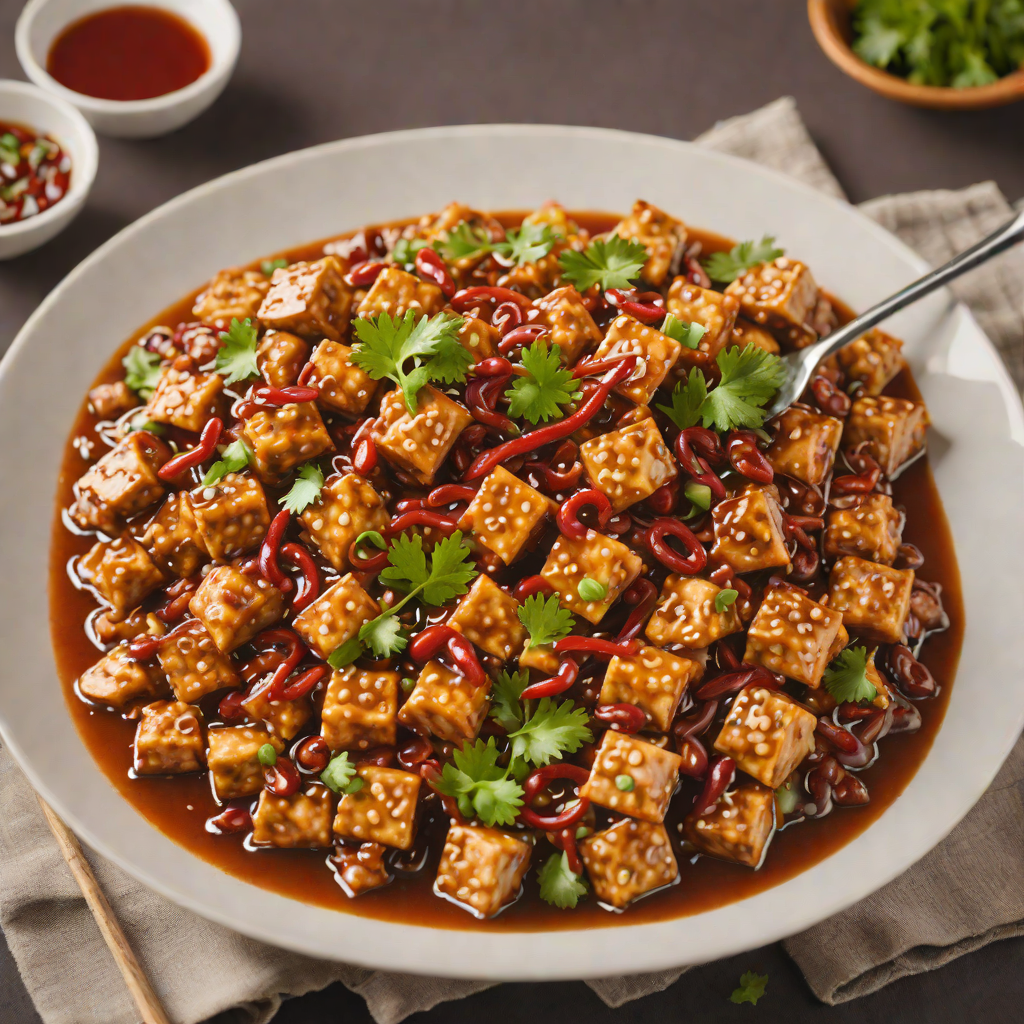
20 Sichuan Recipes: Mapo Tofu, Kung Pao Chicken & Dan Dan Noodles at Home
Mala is two dials, not one — chili heat and numbing tingle. Learn the three pantry ingredients that drive them and 20 canonical Sichuan dishes open up.
Affiliate disclosure: AislePrompt may earn a commission on qualifying purchases made through Amazon and Instacart links in this article, at no additional cost to you. See our affiliate policy →
Sichuan food is not simply spicier Chinese food. Its signature is mala — a two-part sensation combining chili heat with the tingling numbness of Sichuan peppercorn — layered over a fermented broad-bean paste called doubanjiang. Get those three ingredients and 20 of the cuisine's canonical dishes open up at home.
Introduction: What Makes Sichuan Food Different From Chinese Takeout
American Chinese takeout descends largely from Cantonese cooking, filtered through a century of adaptation. It's sweet, mildly savory, heavy on cornstarch-thickened sauces and deep-fried protein. Sichuan cooking comes from an inland province with a humid basin climate and a completely different flavor logic — one built on fermentation, chili, and an ingredient that isn't a chili at all.
The defining difference is mala (麻辣): ma is the numbing tingle of Sichuan peppercorn, la is chili heat. They're separate sensations produced by separate compounds, and Sichuan cooking treats them as two independent dials. A dish can be intensely numbing and barely hot, or blistering with almost no tingle. Takeout has neither dial — it has one, labeled "spicy," and it usually means chili flakes.
The second difference is fermentation. Doubanjiang — fermented broad beans and chili, aged anywhere from six months to eight years — is the backbone of mapo tofu, twice-cooked pork, and most of the province's braises. It contributes a deep savory funk that no amount of chili can substitute for. This is the ingredient that makes a home mapo tofu taste like the real thing rather than tofu in chili sauce.
Third: Sichuan cooking is dry-focused as often as it's saucy. Gan bian (dry-frying) cooks vegetables hard in a small amount of oil until they blister and collapse, concentrating rather than sauce-coating. It's the technique behind dry-fried green beans, and it's the opposite of the glossy cornstarch gravy that defines takeout.
If you're coming from the takeout end of the spectrum, 24 Chinese takeout recipes you can make better at home covers that repertoire; this guide is the regional deep cut.
The Sichuan Pantry: Doubanjiang, Peppercorns, Chili Oil
Four ingredients unlock essentially everything below. All are shelf-stable and all are available online in 2026 if your city has no Chinese grocery.
| Ingredient | Chinese | What it does | Substitute? |
|---|---|---|---|
| Pixian doubanjiang | 郫县豆瓣酱 | Fermented broad-bean chili paste; savory backbone | No real substitute |
| Sichuan peppercorn | 花椒 | Citrusy numbing tingle (ma) | None — nothing else does this |
| Chili oil with sediment | 红油 | Heat, color, toasted-chili aroma | Homemade in 15 min |
| Chinkiang black vinegar | 镇江香醋 | Malty acidity that cuts fat | Balsamic, poorly |
Buy Pixian doubanjiang specifically. Pixian is a county in Sichuan with protected-origin status for this paste, and the difference between Pixian doubanjiang and a generic "chili bean sauce" is roughly the difference between Parmigiano-Reggiano and pre-grated cheese product. It comes in a tub or a bag, it's dark red-brown, and it should smell fermented and slightly winey rather than just hot. Chop it before it goes in the wok — the beans stay whole otherwise.
Sichuan peppercorn must be fresh, and red is the default. The numbing compound is hydroxy-alpha-sanshool, and it degrades. A jar that's been open two years produces almost no tingle, which is why people who tried Sichuan food from an old spice jar think the numbness is a myth. Buy from a store with turnover, toast the husks in a dry pan for 60 seconds until fragrant, then grind. Discard the black seeds inside — they're gritty and add nothing. Green Sichuan peppercorn is more floral and considerably more numbing; use it as an accent.
Chili oil is worth making. Fifteen minutes: heat neutral oil to about 225°F, pour it over coarse Sichuan chili flakes mixed with a little sesame seed, star anise and a bay leaf, and let it sit overnight. The result costs a quarter of what a jar does and is dramatically better. Critically, keep the sediment — the settled chili at the bottom is where most of the flavor lives, and a dish that calls for chili oil usually wants a spoonful of both.
One more, optional but transformative: ya cai or zha cai, preserved mustard greens. It's the salty crunchy element in authentic dan dan noodles and it has no substitute. A bag lasts months.
The Mala Market's ingredient guides are the best English-language source on sourcing these specifically, including which brands to look for.
The Mala Flavor: Numbing Heat vs Spicy Heat
Worth understanding because it changes how you season.
Capsaicin (heat) binds TRPV1 receptors — the same receptors that detect actual temperature above about 109°F. That's why chili heat reads as burning and why it builds cumulatively and lingers.
Hydroxy-alpha-sanshool (numbness) does something stranger. It activates touch and vibration receptors, producing a sensation researchers have measured at roughly 50 Hz — literally a buzz. It isn't pain and it isn't temperature. It also has a mild anesthetic effect, which is why a properly mala dish lets you eat more chili than you otherwise could: the numbing partially masks the burn.
Practical consequences. First, add Sichuan peppercorn in two places — some ground into the cooking, some sprinkled at the end. The finishing sprinkle is where the tingle comes from, because the compound is volatile. Second, if a dish is too hot, adding more peppercorn genuinely helps rather than compounding it. Third, the two build on different timelines: numbness arrives in about 20 seconds and fades in two minutes; chili heat arrives slowly and lingers ten.
Calibrating for a mixed table. Serve the chili oil on the side. Cook the dish with doubanjiang and peppercorn for the savory-numbing base — which most people, including children, find interesting rather than painful — and let each person add heat. This is how it's actually done in Sichuan homes, not the fire-eating contest the cuisine's reputation suggests.
20 Sichuan Recipes for Home Cooks
All of these are in the AislePrompt catalog with complete ingredient lists.
| Dish | Time | Style | Mala level |
|---|---|---|---|
| Smacked cucumber with chili oil | 10 min | Cold dish | Mild |
| Cold sesame noodles | 16 min | Noodles | Mild |
| Hot and sour soup | 20 min | Soup | Mild |
| Fish-fragrant eggplant | 22 min | Vegetable | Medium |
| Mapo tofu | 25 min | Iconic main | Hot |
| Dry-fried green beans with beef | 25 min | Vegetable/main | Mild |
| Spicy Sichuan beef with chili oil | 25 min | Main | Hot |
| Spicy tofu with bell peppers | 25 min | Vegetarian main | Medium |
| Sichuan eggplant with chili oil | 25 min | Vegetable | Medium |
| Tofu and bok choy, ginger-garlic | 25 min | Vegetarian | Mild |
| Szechuan beef, chili garlic | 27 min | Main | Hot |
| Mapo tofu with ground pork | 30 min | Iconic main | Hot |
| Spicy chicken with peanuts and chili oil | 30 min | Main | Hot |
| Kung pao cashew chicken | 32 min | Iconic main | Medium |
| Sichuan peppercorn chicken with peanuts | 35 min | Main | Medium-numbing |
| Chen's spicy Sichuan noodles | 35 min | Noodles | Hot |
| Bamboo shoots with wood ear mushrooms | 35 min | Vegetable | Mild |
| Dan dan noodles with crispy pork | 40 min | Noodles | Hot |
| Dan dan noodles, mushroom version | 45 min | Noodles | Medium |
| Twice-cooked pork belly | 50 min | Iconic main | Medium |
Under 25 minutes. Cold Marinated Cucumbers with Garlic and Chili Oil, Cold Shanghai Soy-Sesame Noodles with Cucumber and Scallions, Hot and Sour Chinese Egg Drop Soup and Sichuan-Style Stir-Fried Eggplant with Garlic Sauce.
Twenty-five to 32 minutes. Sichuan-Style Mapo Tofu with Spicy Chili Bean Sauce, Stir-Fried Beef with Oyster Sauce and Garlic Green Beans, Spicy Sichuan Stir-Fried Beef with Chili Oil, Sichuan-Style Spicy Tofu Stir-Fry with Bell Peppers, Spicy Sichuan-Style Eggplant with Garlic and Chili Oil, Stir-Fried Tofu and Bok Choy with Ginger and Garlic, Spicy Szechuan Stir-Fried Beef with Chili Garlic Sauce, Sichuan-Style Mapo Tofu Stir Fry with Ground Pork, Sichuan-Style Spicy Chicken Stir Fry with Peanuts and Chili Oil and Stir-Fried Cashew Chicken in Kung Pao Sauce.
Thirty-five minutes and up. Sichuan Peppercorn Stir-Fried Chicken with Toasted Peanuts, Chen's Spicy Sichuan Noodles, Stir-Fried Bamboo Shoots with Wood Ear Mushrooms in Shaoxing Sauce, Stir-Fried Dan Dan Noodles with Crispy Pork and Chili Oil, Sichuan Mushroom Dan Dan Noodles with Chili Oil and Sichuan-Style Twice-Cooked Pork Belly Stir Fry.
Iconic Mains: Mapo Tofu, Kung Pao, Twice-Cooked Pork, Dry-Fried Beans
Mapo tofu is the province's signature and the fastest serious dish here. Silken or soft tofu in a doubanjiang-and-chili gravy with ground pork or beef, finished with ground Sichuan peppercorn. Three things separate a good one from a mediocre one:
First, fry the doubanjiang in oil for a full 60–90 seconds before adding liquid. The oil should turn deep red and the aroma should shift from raw-fermented to toasted. This step is non-negotiable and it's the one home cooks rush.
Second, blanch the tofu in salted water for two minutes before it goes in. It firms the surface so the cubes survive being stirred, and it seasons a bland ingredient from the inside. Then push the tofu around with the back of a spoon rather than a spatula — you're moving it, not flipping it.
Third, thicken in stages. Add cornstarch slurry in two or three small additions, letting the sauce come back to a simmer between each. One big pour gives you a gluey texture. The finished gravy should coat a spoon but still flow.
The 25-minute version is the weeknight build; the ground-pork version is more traditional.
Kung pao chicken (gong bao ji ding) is not the sweet gloopy version. The authentic dish is a lychee-flavor profile — a specific Sichuan balance where black vinegar and sugar play against each other, with the vinegar leading. It contains whole dried chilies (fried until fragrant, not eaten), Sichuan peppercorn, peanuts added at the last second so they stay crunchy, and scallion whites cut into segments the same size as the chicken cubes. Uniform dice matters — everything cooks in 90 seconds and mismatched sizes cook unevenly. See Stir-Fried Cashew Chicken in Kung Pao Sauce.
Twice-cooked pork (hui guo rou) is the technique's namesake. Pork belly is simmered whole until just cooked, cooled, sliced paper-thin, then stir-fried hard with doubanjiang and leeks. The first cook renders and firms; the second crisps the edges and curls the slices into little cups that catch sauce. It takes 50 minutes but most of it is unattended simmering. The catalog version is the full method.
Dry-fried green beans are the vegetable dish to learn. Beans go into a moderate amount of hot oil and stay there, mostly undisturbed, for six to eight minutes until the skins blister and wrinkle. They should look slightly deflated and a little scorched — that's correct, not overcooked. Then a fast toss with garlic, ginger, and preserved vegetable. Stir-Fried Beef with Oyster Sauce and Garlic Green Beans applies the technique with beef added.
Noodles: Dan Dan, Biang Biang and Cold Sesame
Dan dan noodles are a sauce at the bottom of a bowl, not a soup. The classic Chengdu version is barely wet: chili oil, sesame paste, soy, black vinegar and a spoonful of the crispy fried pork and preserved mustard greens, with noodles piled on top and mixed at the table. American versions drown it in broth. Mix it hard before the first bite — the sauce is meant to coat, and unmixed dan dan noodles taste like plain noodles with a spicy puddle.
The sesame paste matters. Chinese sesame paste is made from fully toasted seeds and is darker and more bitter than Middle Eastern tahini. Tahini works in a pinch but the dish comes out lighter and sweeter than it should. Stir-Fried Dan Dan Noodles with Crispy Pork and Chili Oil is the meat version; Sichuan Mushroom Dan Dan Noodles swaps in mushrooms and is the better vegetarian route.
Biang biang noodles are a Shaanxi dish that traveled, and they're worth knowing because the format is so simple: wide hand-pulled belt noodles, a pile of chili flakes, scallion and garlic on top, and a ladle of smoking-hot oil poured over to bloom everything at once. The oil pour is the entire cooking step for the sauce. If you're buying rather than pulling, look for frozen wide wheat noodles at a Chinese grocery.
Cold noodles are the summer default and the fastest thing in this guide. Sesame paste, soy, vinegar, sugar, chili oil, thinned with a little noodle water; noodles rinsed cold; cucumber julienne on top. Cold Shanghai Soy-Sesame Noodles with Cucumber and Scallions takes 16 minutes. Chen's Spicy Sichuan Noodles is the hot-and-heavier take at 35 minutes.
Noodle handling. Rinse under cold water for cold dishes to stop the cooking and strip surface starch. Do not rinse for hot dishes — that surface starch is what makes sauce cling.
Vegetables and Cold Dishes: Liang Ban and Smacked Cucumber
Liang ban — "cold-dressed" — is a whole category, and it's the easiest entry point to the cuisine because there's no wok technique involved.
Smacked cucumber (pai huang gua) is the canonical one. Whack the cucumber with the flat of a cleaver until it splits, then tear it into irregular pieces. The point is texture: torn, rough surfaces hold about three times as much dressing as clean knife cuts. Salt for ten minutes, squeeze out the water, then dress with garlic, black vinegar, sesame oil and chili oil. Cold Marinated Cucumbers with Garlic and Chili Oil is 10 minutes and it's the dish that convinces skeptics.
Fish-fragrant eggplant (yu xiang qie zi) contains no fish. The name refers to a seasoning profile originally used for fish — pickled chili, garlic, ginger, sugar and vinegar. Eggplant is a sponge, so the two catalog versions handle the oil problem differently: Sichuan-Style Stir-Fried Eggplant with Garlic Sauce at 22 minutes and Spicy Sichuan-Style Eggplant with Garlic and Chili Oil at 25. Salting the eggplant for 20 minutes first collapses the cell structure and cuts oil absorption noticeably.
Wood ear mushrooms are a texture ingredient, not a flavor one. They're nearly tasteless and slightly crunchy, which in Chinese cooking is the entire point. Rehydrate 20 minutes in warm water. Stir-Fried Bamboo Shoots with Wood Ear Mushrooms in Shaoxing Sauce shows the pairing.
Hot and sour soup is Sichuan, not generic Chinese. Real versions get their sour from black vinegar and their heat from white pepper rather than chili — a different, sharper burn that hits the back of the throat. Hot and Sour Chinese Egg Drop Soup is 20 minutes.
Where to Shop and What to Buy
Doubanjiang. Look for "Pixian" on the label and a listed aging period. Juan Cheng and Dan Dan are widely distributed brands. A tub is about $6–9 and lasts a year refrigerated. Avoid anything labeled "chili bean sauce" with sugar high on the ingredient list.
Sichuan peppercorn. Buy whole husks, not pre-ground, and buy in quantity small enough to use inside a year. If a pinch crushed between your fingers doesn't smell sharply citrusy, it's dead. Expect $8–14 for a few ounces of genuinely fresh peppercorn — the cheap supermarket jar is usually the stale one.
Chili flakes for oil. Sichuan er jing tiao chili flakes are the standard: fragrant, deep red, moderate heat. Korean gochugaru is a workable substitute in a pinch. Regular crushed red pepper is not — it's too seed-heavy and too purely hot.
Equipment. You do not need a wok on a home stove. A carbon-steel or cast-iron skillet with a flat 12-inch base makes better contact with a domestic burner than a round-bottomed wok does and reaches higher temperatures. A flat-bottomed wok is fine too. What you do need is a burner you can run at full output and a pan you're not afraid to overheat.
A spice grinder or mortar for the peppercorn, a heavy cleaver or a solid chef's knife for the uniform dicing these recipes depend on, and airtight storage for chili oil and ground peppercorn round out the list. Nothing else is Sichuan-specific.
Serious Eats' Sichuan coverage and Bon Appétit's Chinese recipe collection both carry sourcing notes worth reading before your first order.
Common Pitfalls
Not frying the doubanjiang. Adding it with the liquid instead of blooming it in oil first leaves a raw, muddy flavor. Sixty to ninety seconds, until the oil turns red.
Stale Sichuan peppercorn. If you get no tingle, the peppercorn is old. This is the number-one reason home mala dishes fall flat, and no amount of extra quantity fixes it.
Grinding the peppercorn seeds. The black seeds inside the husks are gritty and bitter with no numbing compound. Sift them out.
Crowding the pan. Sichuan stir-fries want 90 seconds at very high heat. A full pound of protein in a 10-inch skillet drops the temperature and steams. Cook in two batches.
Using tahini for Chinese sesame paste. They're different products — one from raw or lightly toasted seeds, one from fully toasted. It works, but the dish reads noticeably sweeter and lighter than it should.
Adding all the Sichuan peppercorn at the start. The numbing compound is volatile. Reserve a third of it as a finishing sprinkle.
When NOT to Cook Sichuan on a Weeknight
Skip hot pot. It's a two-hour communal event requiring a tabletop burner, six or eight prepped ingredients and a broth built from scratch, and it is genuinely wonderful on a Saturday with friends. The catalog carries Spicy Sichuan-Style Hot Pot Broth and a second broth version for when you plan it properly.
Skip twice-cooked pork on a night you're starting at 6:30. The simmer-cool-slice sequence is an hour, and the cooling stage is what makes the slices thin enough. Simmer the belly the night before and the second cook is a ten-minute dinner.
And skip Sichuan entirely if your only chili source is a supermarket crushed-red-pepper shaker. The cuisine's whole character is the interaction of fermented bean paste, fruity chili and numbing peppercorn. With none of those three you're making a spicy stir-fry, which is a fine dinner but isn't this. Order the pantry, cook it next week.
Related Guides
- 25 Better-Than-Takeout Chinese Recipes for Weeknight Dinners — the Cantonese-descended takeout canon
- 24 Chinese Takeout Recipes You Can Make Better at Home in 30 Minutes — faster, milder, more familiar
- 22 Spicy Dinner Recipes: Heat-Lover Meals for Weeknights — heat across other cuisines
- How to Cook Tofu: 22 Recipes + Complete Buying, Pressing & Crispy-Frying Guide — the tofu technique behind mapo
- 22 Asian Fusion Recipes: Korean Tacos, Ramen Burgers & Modern Mash-Up Dinners — Chinese-American comfort and the wider cross-cultural canon