22 Cantonese Recipes: Char Siu, Wonton Noodles & Stir-Fry Dinners at Home
Five bottles — light soy, dark soy, Shaoxing, oyster sauce, sesame oil — and 22 Cantonese dishes open up on a home stove. Here is what each one does.
Affiliate disclosure: AislePrompt may earn a commission on qualifying purchases made through Amazon and Instacart links in this article, at no additional cost to you. See our affiliate policy →
Cantonese cooking is the southern Chinese tradition that most American Chinese food descends from, and it is defined by restraint rather than heat: high-heat wok work, clean steaming, and a sauce pantry of five bottles. Here are 22 dishes — char siu, wonton noodles, steamed fish, dim sum, and weeknight stir-fries — that work in a home kitchen.
Introduction: Southern Chinese Cooking at Home
Ask most Americans to describe "Chinese food" and they will describe Cantonese food, filtered through a century of adaptation — sweet-and-sour, chow mein, egg rolls, roast pork. The Cantonese original is a different thing: subtler, less sweet, and organized around a principle the tradition calls wok hei, the seared aroma that comes off a screaming-hot carbon steel wok.
Guangdong province sits on the South China Sea with a subtropical climate and year-round produce, and that geography produced a cuisine that treats freshness as the point. The technique set follows from it: steaming to preserve texture, blanching to set color, and stir-frying fast enough that a vegetable never has time to go limp. There is very little braising and almost no chili.
That makes it unusually well suited to a home kitchen on a weeknight. Where Sichuan cooking asks you to source doubanjiang and toast peppercorns, Cantonese cooking asks for soy sauce, Shaoxing wine, oyster sauce, sesame oil, and white pepper. Five bottles, all available at any supermarket in 2026, and roughly 22 dishes open up.
The gap between what you cook at home and what a Cantonese restaurant serves comes down almost entirely to heat. A restaurant wok burner runs 100,000+ BTU; a home range runs 12,000 to 18,000. The workarounds — smaller batches, preheating longer, drying your ingredients — are covered below and they close most of the distance.
The Cantonese Pantry: Light & Dark Soy, Shaoxing, Oyster Sauce, White Pepper
The two-soy system is the thing most Western cooks miss, and it explains why home stir-fries come out both too salty and too pale.
Light soy sauce (生抽) is the seasoning soy. It is thin, salty, and does most of the flavoring. When a recipe says "soy sauce" without qualification, this is what it means.
Dark soy sauce (老抽) is aged longer with added molasses. It is thicker, much less salty, and its job is color — it is what makes char siu mahogany and braised dishes glossy. Use it by the half-teaspoon. Substituting dark for light is the most common way to wreck a Cantonese dish: you get color without seasoning and a slightly bitter edge.
Shaoxing wine (紹興酒) is a fermented rice wine used the way a French kitchen uses white wine — deglazing, marinating, cutting the raw-protein smell. Dry sherry is the standard substitute and it works. Do not substitute rice vinegar; it is a different ingredient entirely.
Oyster sauce is the umami shortcut, thick and slightly sweet. Look for one where oyster extract is high in the ingredient list.
White pepper rather than black. It is floral and slightly funky where black pepper is sharp, and it is the background note in wonton soup, congee, and salt-and-pepper anything.
| Bottle | Role | Typical amount | Substitute |
|---|---|---|---|
| Light soy sauce | Salt and savor | 1–2 tbsp per dish | Regular soy sauce |
| Dark soy sauce | Color only | 1/2–1 tsp per dish | Omit; accept paler food |
| Shaoxing wine | Aroma, deglazing | 1 tbsp per dish | Dry sherry |
| Oyster sauce | Umami, body | 1–2 tbsp per dish | Vegetarian mushroom sauce |
| Toasted sesame oil | Finishing only | 1/2 tsp off heat | None; do not cook with it |
| White pepper | Background heat | 1/4 tsp | Black pepper, different result |
Cornstarch belongs here too. Cantonese cooking uses it twice: as a velveting coat on sliced protein (1 tsp cornstarch plus 1 tsp Shaoxing per half pound, 15 minutes) and as a slurry to bind the sauce at the end. Velveting is why restaurant chicken is silky and home chicken is stringy, and it costs 15 minutes of doing nothing.
5 Iconic Mains: Char Siu, Wonton Noodle Soup, Steamed Whole Fish, Salt-and-Pepper Shrimp, Cantonese Roast Duck
These five are the load-bearing dishes of the cuisine. Learn them and you have the tradition.
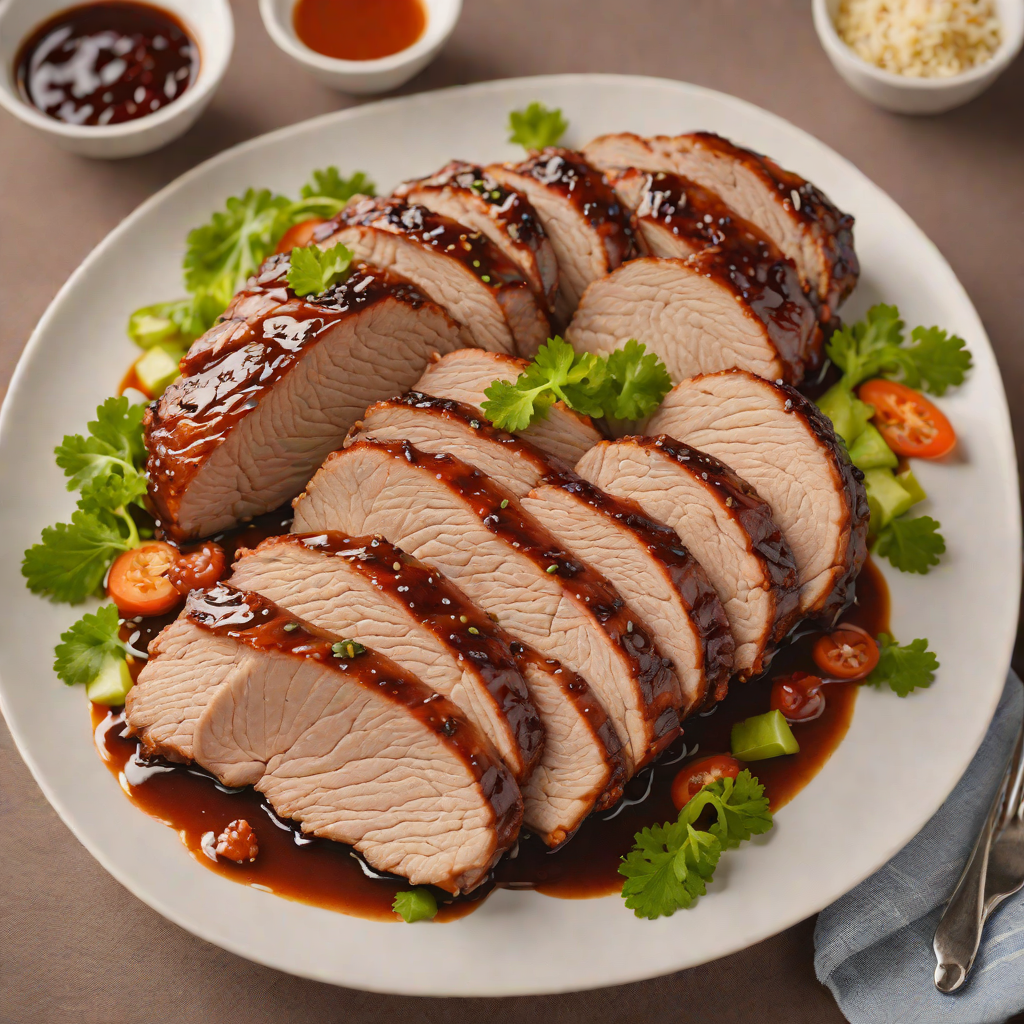
1. Cantonese-Style Char Siu Pork Shoulder Roast — the red-glazed barbecue pork hanging in every Chinatown window. Marinate overnight in hoisin, honey, soy, and five-spice; roast at 375°F, basting twice. The oven version is genuinely close to the charcoal original. Oven-Roasted Cantonese Char Siu Pork Shoulder is the lower-effort variant.
2. Steamed Wonton Soup with Pork and Shrimp Filling — the filling is a 60/40 pork-to-shrimp ratio with white pepper and sesame oil. Wrapping 40 wontons takes 20 minutes and they freeze raw on a tray for three months.
3. Steamed Cantonese Ginger-Soy Fish with Scallions — the test of a Cantonese kitchen. A whole fish steamed 8 to 10 minutes, topped with slivered ginger and scallion, then finished by pouring smoking-hot oil over the aromatics so they sizzle. Poached Cantonese-Style Whole Fish with Ginger and Scallion is the gentler poached version.
4. Wok-Fried Cantonese Salt and Pepper Shrimp — shell-on shrimp, cornstarch, hot oil, then tossed with garlic, chili, scallion, and a heavy hand of white pepper.
5. Cantonese roast duck — the one genuinely difficult dish here. It requires air-drying the bird uncovered in the refrigerator for 24 hours and a maltose glaze. If you are not committed to a full day, buy it from a barbecue shop and cook the other 21 recipes.
4 Weeknight Stir-Fries Under 20 Minutes
Stir-fry failure at home is almost always one of three things: pan not hot enough, pan too crowded, or ingredients too wet. Fix those and the technique is easy.
The rules. Preheat the wok until a bead of water vaporizes on contact, roughly two minutes on a home burner. Cook in batches no larger than half a pound of protein. Pat everything dry — surface water drops the pan temperature by hundreds of degrees and steams your food instead of searing it. Have every ingredient cut and within arm's reach before you turn the heat on, because there is no pausing once you start.
1. Wok-Fried Cantonese Egg Noodles with Shrimp and Snow Peas — 15 minutes, and the noodles crisp at the edges if you let them sit for 60 seconds before tossing.
2. Cantonese Stir-Fried Chow Mein with Char Siu Pork — the best use for leftover char siu. Sunday roast becomes Wednesday dinner.
3. Stir-Fried Pork with Ginger and Five-Spice — 18 minutes, pantry ingredients only.
4. Stir-Fried Rice Noodles with Shrimp and Garlic-Chili Sauce — flat rice noodles; soak them, do not boil them, or they turn to paste in the wok.
A flat-bottomed carbon steel wok is the single highest-value purchase for this cuisine — around $40, heats faster than any nonstick pan, and the seasoning improves for years. Skip the round-bottom version unless you have a gas ring to sit it in. A wok set with a spatula and ladle saves buying the tools separately; a standard turner is too short-handled and too flat for wok work.
4 Dim Sum You Can Make at Home (Har Gow, Siu Mai, Cheung Fun, Turnip Cake)
Dim sum is Cantonese tea-house food, and about half of it is achievable at home with a bamboo or metal steamer.
1. Har Gow with Ginger-Scallion Dipping Sauce — the translucent shrimp dumpling, and the hardest wrapper in Chinese cooking. The dough is wheat starch and tapioca starch mixed with boiling water; it must be worked while hot and it tears if it cools. Expect your first batch to be ugly and taste correct.
2. Cantonese Steamed Pork Dumplings with Shrimp — siu mai, the open-topped pork-and-shrimp dumpling. Far more forgiving than har gow because it uses store-bought round wonton wrappers. Start here. Steamed Cantonese-Style Pork Dumplings with Ginger-Soy Dipping Sauce is the same dish with a sharper dip.
3. Pan-Fried Cantonese Turnip Cake with Dried Shrimp and Chinese Sausage — lo bak go. Grated daikon and rice flour steamed into a loaf, chilled overnight, then sliced and pan-fried. The overnight chill is mandatory; warm cake falls apart in the pan.
4. Hong Kong-Style Char Siu Bao (Steamed Pork Buns) — fluffy white buns filled with diced char siu in a sweet-savory sauce. Pork and Cabbage Steamed Bao Buns is the simpler filling.
Cheung fun, the wide steamed rice-noodle rolls, needs a flat steaming tray and a very loose rice-flour batter. It is the one dim sum item where the home version rarely beats the restaurant version — order it out.
3 Rice & Noodle Bowls (Yeung Chow Fried Rice, Beef Chow Fun, Clay Pot Rice)
1. Yang Chow Fried Rice with Shrimp and Scallions — the benchmark fried rice: shrimp, char siu, egg, peas, scallion. Use day-old refrigerated rice; fresh rice has too much surface moisture and clumps.
2. Szechuan-Style Spicy Beef Chow Fun with Peppers — chow fun is the wide flat rice noodle. The Cantonese original (gon chow ngau ho) is barely sauced and relies entirely on wok hei; this version adds chili for people who want it.
3. Clay pot rice — rice cooked in a lidded clay pot with Chinese sausage and chicken until a crisp golden crust forms on the bottom. A heavy Dutch oven reproduces it acceptably: cook the rice covered on low for 15 minutes, then raise the heat for 90 seconds at the end to build the crust.
3 Cantonese Soups & Congee
Cantonese soup culture is its own discipline — lou fo tong, slow-simmered broths made daily and considered medicinal as much as culinary. Congee is the everyday version.
1. Rice Congee with Ginger, Scallions, and Poached Egg — the base recipe. A 1:8 rice-to-water ratio, simmered 60 to 90 minutes until the grains break down completely.
2. Traditional Chicken Congee with Ginseng — the restorative version, and the one to make when someone in the house is sick.
3. Miso-Infused Chicken and Ginger Congee for Cold Comfort — a cross-cultural take that adds depth without a long simmer.
Congee shortcut: freeze the raw rice for two hours before cooking. The ice crystals fracture the grains and cut the simmer time roughly in half. A multi-function pressure cooker does it in 25 minutes at pressure with no stirring at all.
Weeknight Meal Plan: 5 Cantonese Dinners for One Grocery Run
One pork shoulder, one pound of shrimp, and a shared aromatics base carry the whole week.
| Night | Dish | Active time | Shares with |
|---|---|---|---|
| Sunday | Char Siu Pork Shoulder Roast | 20 min | Pork shoulder, five-spice |
| Monday | Chow Mein with Char Siu Pork | 15 min | Sunday's leftover pork |
| Tuesday | Wok-Fried Egg Noodles with Shrimp and Snow Peas | 15 min | Shrimp, ginger, scallion |
| Wednesday | Yang Chow Fried Rice | 15 min | Leftover pork + shrimp + rice |
| Thursday | Steamed Ginger-Soy Fish | 12 min | Ginger, scallion, soy |
Total grocery cost for four people across five dinners runs roughly $84 as of August 2026 — about $4.20 per person per meal, with the pork shoulder ($16 for 4 lb) and the shrimp ($14) as the only significant line items. Cook rice on Sunday for Wednesday's fried rice; day-old rice is not a compromise here, it is the requirement.
Common pitfalls
- Crowding the wok. Half a pound of protein at a time, maximum. More than that and the temperature collapses and you steam.
- Using dark soy as the main seasoning. It is a coloring agent. One teaspoon, not one tablespoon.
- Cooking with toasted sesame oil. It burns and turns acrid. It is a finishing oil, added off the heat.
- Skipping the velvet. Cornstarch and Shaoxing on sliced protein for 15 minutes is the whole difference between restaurant and home texture.
- Boiling rice noodles for chow fun. Soak them in hot tap water until pliable. Boiling turns them into a single mass in the wok.
- Steaming fish too long. Eight to ten minutes for a 1.5-pound whole fish. Past that the flesh goes chalky and no sauce recovers it.
When NOT to cook Cantonese
If your only heat source is a low-output electric coil or an induction hob under about 1,800 watts, the high-heat stir-fries will disappoint no matter what you do — cook the steamed dishes, the congee, and the oven char siu instead, all of which are heat-independent and just as authentic. And if you want big, loud, chili-forward flavor, this is the wrong regional cuisine; Cantonese food is deliberately restrained. Go to Sichuan or Hunan for that.
Sources
- Cantonese cuisine — Wikipedia — regional scope and the freshness-over-heat principle this article is built on.
- Soy sauce — Wikipedia — the light (生抽) vs dark (老抽) distinction behind the two-soy pantry table.
- Wok hei — Wikipedia — what the high-heat stir-fry sections are actually chasing, and why burner output matters.
- Char siu — Wikipedia — the roast-pork tradition and the maltose-and-dark-soy glaze that gives it its color.
- Dim sum — Wikipedia — background on the yum cha service the four home dim sum recipes come from.
- NYT Cooking — Chinese recipes — tested home-kitchen adaptations of char siu and wonton noodle soup.
More in this cluster: 20 Sichuan recipes covers the chili-and-peppercorn end of Chinese regional cooking, 25 easy Japanese dinners shares the same wok and steamer, 24 Chinese takeout recipes covers the Americanized repertoire this cuisine gave rise to, and 25 better-than-takeout Chinese recipes rebuilds those same takeout plates for a weeknight.