25 Easy Japanese Dinners: Ramen, Teriyaki, Donburi & Katsu for Home Cooks
Soy, mirin, and dashi -- three bottles that turn a 30-minute skillet into a donburi shop.
Affiliate disclosure: AislePrompt may earn a commission on qualifying purchases made through Amazon and Instacart links in this article, at no additional cost to you. See our affiliate policy →
Easy Japanese dinner recipes share one shortcut: a soy–mirin–dashi base that builds restaurant-level umami in under 30 minutes. Start with donburi rice bowls, shortcut shoyu ramen, teriyaki, and panko katsu — four templates that cover most weeknights with the same eight pantry staples and one skillet.
Introduction: why Japanese home cooking fits weeknights
Japanese weeknight food is engineered for speed in a way most cuisines are not. A Tokyo apartment kitchen typically has two burners, no oven, and about three feet of counter. Everything a home cook makes there has to finish in one pan, on the stovetop, in the time it takes rice to steam. That constraint is exactly what a Tuesday at 6:40 p.m. in the US looks like too.
Three structural things make it work.
Umami depth arrives in minutes, not hours. Western braises build flavor through time — 90 minutes of collagen breakdown, a slow-reduced stock. Japanese cooking front-loads it with fermented and dried ingredients that already did the aging for you. Dashi granules dissolve in 30 seconds and deliver glutamate levels comparable to a four-hour chicken stock. Miso, soy sauce, and mirin each bring their own glutamate and sweetness. You are not building flavor; you are dissolving it.
The rice-and-protein template is one dish, not three. Donburi — literally "bowl" — means protein simmered in a sweet-savory sauce, poured over rice. There is no side dish to plan, no starch to time separately, no third pan. Authentic Oyakodon: Chicken and Onion Rice Bowl takes 20 minutes of prep and one 10-inch skillet, and it feeds four people a complete dinner. Compare that to any weeknight plan that involves a protein, a starch, and a vegetable cooked in three separate vessels.
Three pantry items unlock everything. Soy sauce, mirin, and dashi. Combine them in different ratios and you have teriyaki glaze, donburi simmering liquid, noodle dipping sauce, hot-pot broth, and a dressing for blanched greens. Learn the ratios once and you stop reading recipes for the sauce — you only read them for the technique.
There is a fourth reason that matters for anyone feeding a family in September: this food reheats. Katsu curry is better on day two. Cold soba is designed to be eaten cold. Onigiri were invented as portable lunch. A Sunday hour of prep genuinely produces Wednesday's dinner, which is not true of, say, a crispy-skinned roast chicken.
The Japanese weeknight pantry — 8 staples that unlock 50 dinners
Everything in this guide comes out of eight ingredients. Buy them once — roughly $35 at an H Mart, Mitsuwa, or the international aisle at Kroger, Publix, or Meijer — and you can cook for months without another specialty trip. Just One Cookbook — Japanese Pantry Essentials is the reference we check when we're unsure which brand of a given staple is the standard.
| Staple | What to buy | Typical price | Shelf life once opened | What it unlocks |
|---|---|---|---|---|
| Soy sauce (shoyu) | Kikkoman or Yamasa, Japanese-brewed | $4–6 / 15 oz | 12 months, refrigerated | Teriyaki, donburi sauce, ramen tare, dressings |
| Mirin | Hon-mirin if you can find it; aji-mirin is fine | $5–8 / 10 oz | 3 months, refrigerated | Glaze shine, sweetness without sugar grit |
| Sake (cooking) | Any dry junmai, or dry sherry as a swap | $6–10 / 750 ml | Indefinite | Deglazing, tenderizing, sukiyaki broth |
| Rice vinegar | Marukan or Mizkan, unseasoned | $3–5 / 12 oz | 12 months | Sunomono, sushi rice, quick pickles |
| Dashi granules | Hondashi, or a kombu + katsuobushi pack | $6–9 / 2.5 oz | 12 months, sealed | Miso soup, noodle broth, every simmered dish |
| White miso (shiro) | Hikari or Marukome, refrigerated tub | $5–7 / 17 oz | 12 months, refrigerated | Miso soup, glazes, ramen tare, marinades |
| Panko | Any Japanese-brand coarse panko | $3–4 / 8 oz | 6 months | Katsu, korokke, crispy toppings |
| Short-grain rice | Koshihikari, Tamanishiki, or Nishiki | $12–18 / 5 lb | 12 months | Every bowl in this guide |
Two ratios do most of the work, and both are worth writing on an index card:
- Teriyaki glaze — 1:1:1. Equal parts soy sauce, mirin, and sugar (or 1:1:1:1 with sake for a thinner, more traditional glaze). Reduce 3–4 minutes until it coats a spoon.
- Donburi simmering liquid — 3:2:2:1. Three parts dashi, two parts soy, two parts mirin, one part sugar. This is the base for oyakodon, gyudon, and katsudon, and you can scale it to any pan size.
You do not need specialty equipment. A 12-inch skillet from Cookware, a decent chef's or santoku knife from Knives & Cutting, and a 5-inch spider strainer from Utensils & Tools cover 90% of it. A rice cooker from Small Appliances is the one genuine quality-of-life upgrade — a fuzzy-logic model in the $60–85 range makes hands-off rice and holds it warm for six hours, which is what turns "I'll make donburi" into something you'll actually do on a Wednesday.
Donburi bowls — Chicken katsu-don, gyudon, oyakodon, tekka-don
Donburi is the highest-leverage category in this guide. One pan, one bowl, 20–30 minutes, and the same simmering liquid across four different dinners.
Oyakodon ("parent and child" — chicken and egg) is the entry point. Simmer sliced onion in the 3:2:2:1 liquid for 4 minutes, add bite-sized chicken thigh, cook 6 minutes until 165°F, then pour beaten egg over the top in two additions and cover for 90 seconds. The egg should be barely set and glossy, not scrambled. Authentic Oyakodon: Chicken and Onion Rice Bowl runs 480 calories and 28g protein per serving.
Gyudon is the fastest of the four. Paper-thin beef — ask the butcher for shabu-shabu slices, or freeze a chuck roast for 45 minutes and slice it yourself against the grain — cooks in 90 seconds once it hits the simmering onions. Authentic Japanese Beef Bowl with Caramelized Onions takes the slower route with a full hour of onion caramelization; it's a Sunday version worth doing once so you know what the shortcut is aiming at.
Katsudon stacks a fried cutlet into the same egg-and-onion simmer. This is the one that converts skeptics: crispy panko meeting soft egg and sweet-salty broth. Kurobuta Pork Katsudon with Soft-Boiled Egg is a 35-minute version for two; Authentic Katsudon with Yuzu Zest scales to four and adds citrus that cuts the richness.
Tekka-don and vegetable donburi cover the no-cook and meatless ends. Sushi Bar Style Shrimp and Snow Tuna Rice Bowl needs sashimi-grade fish and 25 minutes of knife work but zero stovetop time. On the vegetable side, Hidden Depths Miso-Glazed Eggplant Donburi delivers 370 calories and the same satisfaction from broiled eggplant and a miso-mirin glaze.
Doneness cues that matter
| Donburi | Protein target | Time in pan | Failure mode to avoid |
|---|---|---|---|
| Oyakodon | Chicken thigh 165°F | 6 min simmer + 90 sec egg | Overcooked egg — pull it glossy |
| Gyudon | Beef just past pink | 90 sec | Thick slices; they turn to leather |
| Katsudon | Cutlet 145°F pork / 165°F chicken | Fry 3–4 min/side, then 2 min in broth | Soggy crust — don't submerge the cutlet |
| Tekka-don | Raw, sashimi-grade | 0 | Warm fish; keep it at 34–38°F until plating |
Ramen & noodles at home — shortcut shoyu ramen, yaki udon, cold soba, chilled somen
The single biggest unlock in Japanese home cooking is accepting that you are not making tonkotsu on a Tuesday. Real tonkotsu is 12–18 hours of pork bone at a rolling boil. Shoyu ramen is 25 minutes, and it gets you most of the way there.
Shortcut shoyu ramen is a chicken-and-dashi broth plus a soy tare. Heat 3 cups of chicken stock with 1 teaspoon of dashi granules; separately whisk 2 tablespoons soy sauce, 1 tablespoon mirin, and 1 teaspoon sesame oil in the bottom of each bowl as your tare. Pour the hot broth over the tare, add fresh or frozen ramen noodles cooked separately (never in the broth — the starch turns it cloudy and gluey), and top. Bon Appétit's simple shoyu ramen uses the same architecture and is worth reading once for the tare logic. Our version: Spicy Yasakani-Inspired Shoyu Ramen, 25 minutes start to finish, 550 calories.
Miso ramen is heartier and more forgiving because the paste emulsifies the fat. Homemade Japanese Miso Ramen with Soft-Boiled Egg and Scallions is 25 minutes for two. For a fully plant-based version, Vegan Miso Ramen with Shiitake Dashi swaps katsuobushi for dried shiitake and still lands 22g of protein.
The soft-boiled egg (ajitama) is worth the extra step: 6 minutes 30 seconds in boiling water from cold-tap-temperature eggs, ice bath for 2 minutes, then peel and marinate 4+ hours in 2 parts soy to 1 part mirin to 1 part water. Make six on Sunday; they hold five days.
Yaki udon is the 25-minute stir-fry that eats like takeout. Frozen udon (the vacuum-sealed blocks, not the shelf-stable ones — texture difference is enormous) goes straight into boiling water for 60 seconds, then into a hot pan. Yaki Udon Stir Fry with Shiitake Mushrooms and Scallions is 400 calories and feeds three. Even faster: Quick Garlic and Soy Stir-Fried Udon Noodles is 15 minutes total. For a soup version, Spicy Miso and Garlic Udon Noodle Soup is 320 calories.
Yakisoba — despite the name, wheat noodles, not buckwheat — is the griddle stir-fry with a Worcestershire-adjacent sauce. Yakisoba Stir Fry with Bonito and Vegetables is 25 minutes for four.
Cold soba and somen are the September answer when it's still 88°F at dinner time. Buckwheat soba cooks in 4–6 minutes, gets rinsed under cold water until the surface starch is gone, and is served with a dipping tsuyu or a dressing. Japanese-Style Cold Soba Noodles with Sesame-Ginger Dressing takes 16 minutes total. Tokyo-Style Cold Soba Salad with Sesame and Scallion is 280 calories; Cold Soba Noodle Salad with Sesame and Ginger comes in at 220.
Noodle cooking times, by type
| Noodle | Cook time | Rinse after? | Best format |
|---|---|---|---|
| Fresh ramen | 60–90 sec | No | Hot broth |
| Dried ramen | 3–4 min | No | Hot broth |
| Frozen udon | 60 sec | Only for cold dishes | Stir-fry or soup |
| Dried soba | 4–6 min | Yes, always | Cold with tsuyu |
| Somen | 90 sec–2 min | Yes, always | Chilled with ice |
| Yakisoba (steamed) | 2 min in pan | No | Griddle stir-fry |
Teriyaki, katsu & grilled — glaze ratios, doneness, panko technique
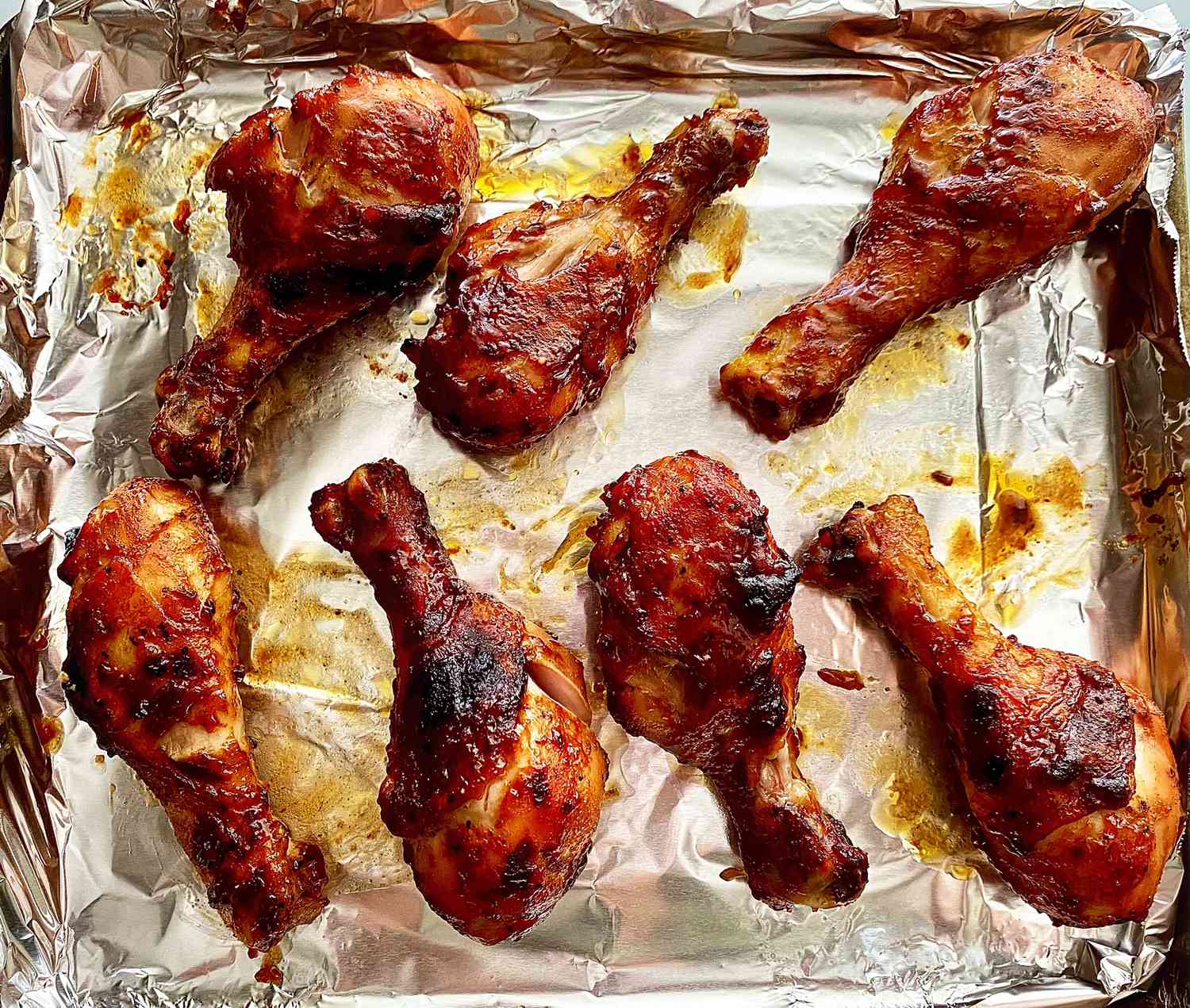
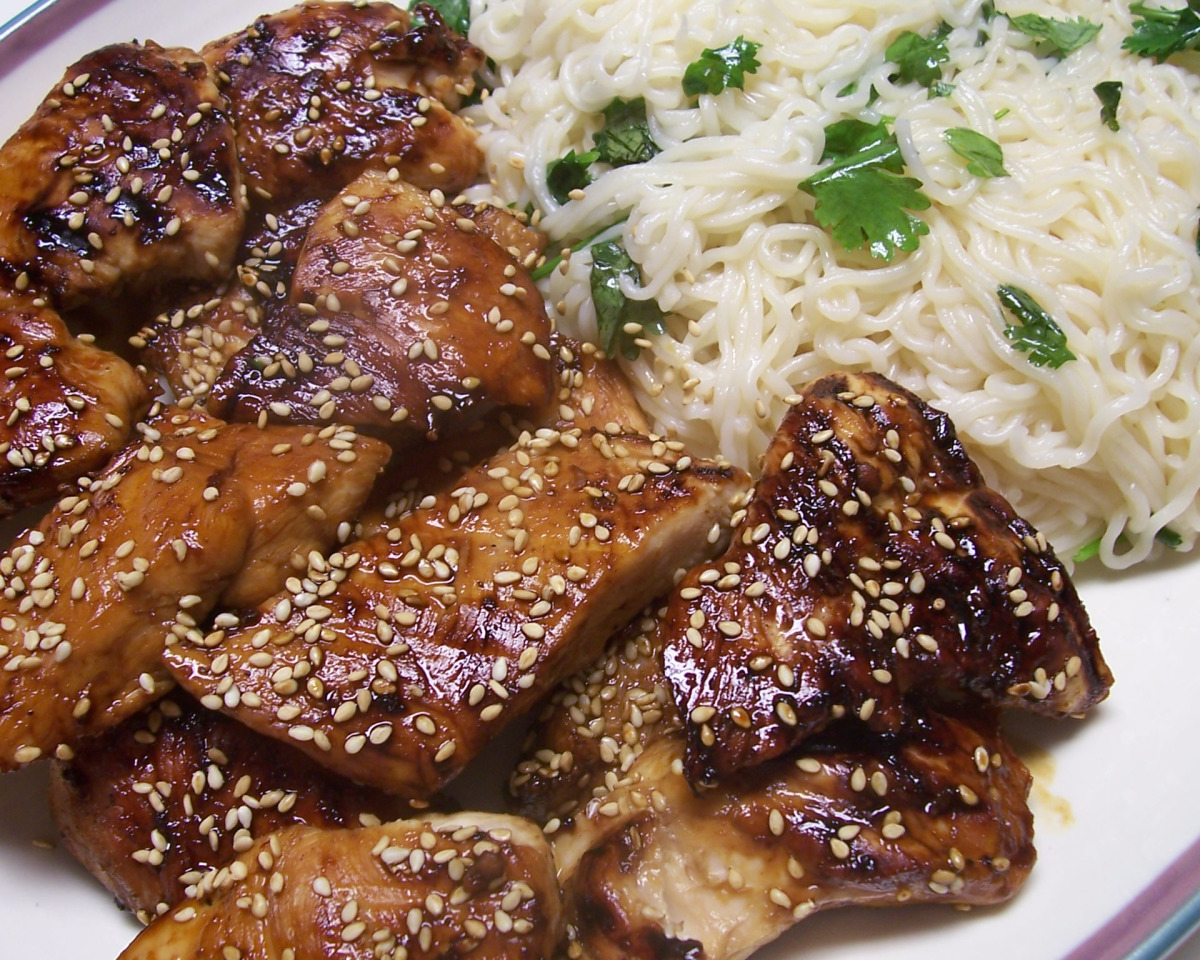
Teriyaki is a technique, not a bottled sauce. The 1:1:1 ratio — soy, mirin, sugar — reduced in the pan after the protein is seared, produces a glaze that clings. Bottled teriyaki is thickened with cornstarch and loaded with sodium; homemade takes four minutes. Honey-Soy Glazed Teriyaki Chicken with Sesame Veggies is 35 minutes for four at 420 calories and 35g protein. For a make-ahead lunch format, Layered Teriyaki Chicken Bento with Pickled Vegetables packs two portions that hold three days.
The one mistake: adding the glaze too early — it is the first thing covered in our guide to 20 glazed recipes. Sugar burns at around 320°F, well below searing temperature. Sear the protein first, pull the pan to medium-low, then add the glaze.
Katsu is about the breading order and the oil temperature. Flour, then egg, then panko — in that order, with a dry surface at the start. Pound the cutlet to an even 1/2 inch so the center hits temperature before the crust darkens. Shallow-fry in 1/2 inch of neutral oil at 350°F for 3–4 minutes a side. Serious Eats' Japanese recipe collection is a good cross-check on frying technique if you want a second opinion on oil depth.
Rest on a wire rack, never paper towels. Paper towels trap steam against the bottom crust and turn it to cardboard in 90 seconds. A stainless cooling rack from Utensils & Tools is a $20 fix for the most common katsu failure.
Try Crispy Chicken Katsu with Tonkatsu Sauce (32 minutes, 550 calories, 50g protein) or the pork version, Crispy Katsu Pork Cutlets with Tonkatsu Sauce, which feeds four in 30 minutes.
Grilled and fried extras. Spicy Chicken Yakitori Skewers with Scallion Sauce hits 40g protein at 320 calories. Japanese Chicken Karaage — ginger-soy marinated, potato-starch coated, double-fried — is the crispiest thing in this guide. Miso-Glazed Salmon with Miso-Butter Rice is 45 minutes and the easiest weeknight fish here; broil 6–8 minutes at 4 inches, pull at 125°F for medium.
Air-fryer conversions
| Dish | Stovetop | Air fryer | Notes |
|---|---|---|---|
| Chicken katsu | 350°F oil, 3–4 min/side | 400°F, 12 min, flip at 6 | Spray coated cutlet with oil first |
| Karaage | 325°F then 350°F, double fry | 380°F, 14 min, shake twice | Loses ~20% of the crunch |
| Tempura | 340°F oil, 2–3 min | Not recommended | Batter needs immersion to set |
| Teriyaki chicken thighs | Sear + glaze, 15 min | 400°F 14 min, glaze last 3 | Glaze late or it burns |
Curry, hot pot & one-pot — Japanese curry from a roux block, sukiyaki, shabu-shabu
Japanese curry (kare raisu) is closer to a British stew than an Indian curry: thick, mildly sweet, and built on a roux block. S&B Golden Curry or House Vermont Curry come in $3–4 boxes, and the honest answer is that homemade roux is not better for a weeknight. Brown the protein, simmer with onion, carrot, and potato for 20 minutes, kill the heat, dissolve the block, and simmer 5 more minutes to thicken.
Simmered Japanese Chicken Curry with Fukujinzuke Pickles is 50 minutes for four at 480 calories, and the pickles are not optional — the sweet-sour crunch is what keeps a rich curry from going flat by the third bite. Chicken Katsu Curry with Steamed Rice combines both techniques in this guide's most-requested restaurant dish.
Curry improves overnight. Make a double batch Sunday, eat it Monday and Thursday; it freezes for three months in flat quart containers from Storage & Containers.
Sukiyaki is the tabletop one-pot: thin beef, tofu, napa cabbage, shiitake, and shirataki simmered in a warishita of soy, mirin, sake, and sugar, dipped in raw beaten egg before eating. Authentic Japanese Sukiyaki is 45 minutes for four at 400 calories. If raw egg is a non-starter for your table, pasteurized shell eggs solve it.
Shabu-shabu is the lighter sibling — kombu water instead of sweet broth, ingredients swished for 10–20 seconds, dipped in ponzu or sesame sauce. For a vegetable-forward version, Kanazawa Kaga Vegetable Hot Pot with Miso Broth is 220 calories and 14g protein.
Hot pot is also the best-value entertaining format in this guide: one $20 induction burner, one donabe or Dutch oven, and the guests do the cooking.
Vegetable & side dishes — quick sunomono, spinach gomae, miso-glazed eggplant
A Japanese meal is built as ichiju-sansai — one soup, three dishes — but the weeknight version is one main plus one small vegetable. These take 10–20 minutes and most are better made ahead.
Sunomono is cucumber in a sweetened rice-vinegar dressing (3 parts vinegar, 1 part sugar, a pinch of salt). Salt the sliced cucumber for 10 minutes and squeeze out the water first, or the dressing dilutes into nothing. Sunny Day Cucumber Salad with Rice Vinegar Dressing is 15 minutes and 120 calories. A handheld mandoline from Kitchen Gadgets gets you the uniform 1/16-inch slices that make it look right.
Gomae is blanched spinach with a ground-sesame dressing — 60 seconds in boiling water, shock in ice, squeeze hard, dress with 2 tablespoons ground toasted sesame, 1 tablespoon soy, 1 teaspoon sugar. Steamed Salmon Bento with Pickled Daikon and Spinach Gomae builds it into a complete 450-calorie lunch box.
Miso-glazed eggplant (nasu dengaku) is the vegetable dish that converts eggplant skeptics. Score, oil, broil 8 minutes, brush with a 2:1:1 miso–mirin–sugar glaze, broil 3 more. Miso-Glazed Eggplant & Sesame Rice Bowls turns it into a 310-calorie main.
Miso soup takes 10 minutes and should be the default side. Critical rule: never boil miso. Dissolve it off-heat or below 175°F — boiling kills the aromatics and the live cultures. Authentic Kombu & Bonito Dashi Miso Soup is 75 calories a bowl.
Two more that punch above their prep time: Authentic Vegetable Tempura with Dipping Sauce (batter must be lumpy, ice-cold, and mixed fewer than 10 strokes) and Shrimp and Cabbage Pan-Fried Gyoza, which freeze raw on a sheet pan and go straight from freezer to skillet.
Curated recipe cards — 25 recipes from our catalog
Every recipe below is in our catalog with full ingredients, steps, and a one-tap shopping list.
Donburi & rice bowls
1. Authentic Oyakodon: Chicken and Onion Rice Bowl — 50 min · 480 cal · 28g protein
2. Authentic Japanese Beef Bowl with Caramelized Onions — 75 min · 620 cal · 32g protein
3. Kurobuta Pork Katsudon with Soft-Boiled Egg — 35 min · 580 cal · 32g protein
4. Authentic Katsudon with Yuzu Zest — 40 min · 680 cal · 42g protein
5. Hidden Depths Miso-Glazed Eggplant Donburi — 30 min · 370 cal · vegetarian
6. Sushi Bar Style Shrimp and Snow Tuna Rice Bowl — 35 min · 450 cal · 45g protein
Ramen, udon, soba & yakisoba
7. Spicy Yasakani-Inspired Shoyu Ramen — 25 min · 550 cal · 35g protein
8. Homemade Japanese Miso Ramen with Soft-Boiled Egg and Scallions — 25 min · 460 cal
9. Vegan Miso Ramen with Shiitake Dashi — 45 min · 480 cal · vegan
10. Yaki Udon Stir Fry with Shiitake Mushrooms and Scallions — 25 min · 400 cal
11. Quick Garlic and Soy Stir-Fried Udon Noodles — 15 min · 350 cal
12. Spicy Miso and Garlic Udon Noodle Soup — 30 min · 320 cal
13. Japanese-Style Cold Soba Noodles with Sesame-Ginger Dressing — 16 min · 350 cal
14. Tokyo-Style Cold Soba Salad with Sesame and Scallion — 20 min · 280 cal
15. Cold Soba Noodle Salad with Sesame and Ginger — 25 min · 220 cal
16. Yakisoba Stir Fry with Bonito and Vegetables — 25 min · 320 cal
Teriyaki, katsu & grilled
17. Honey-Soy Glazed Teriyaki Chicken with Sesame Veggies — 35 min · 420 cal · 35g protein
18. Layered Teriyaki Chicken Bento with Pickled Vegetables — 45 min · 520 cal · 38g protein
19. Crispy Chicken Katsu with Tonkatsu Sauce — 32 min · 550 cal · 50g protein
20. Crispy Katsu Pork Cutlets with Tonkatsu Sauce — 30 min · 520 cal · 40g protein
21. Japanese Chicken Karaage — 45 min · 320 cal · 28g protein
22. Spicy Chicken Yakitori Skewers with Scallion Sauce — 30 min · 320 cal · 40g protein
23. Miso-Glazed Salmon with Miso-Butter Rice — 45 min · 450 cal · 32g protein
Curry, hot pot & one-pot
24. Simmered Japanese Chicken Curry with Fukujinzuke Pickles — 50 min · 480 cal · 30g protein
25. Chicken Katsu Curry with Steamed Rice — 50 min · 650 cal · 45g protein
Bonus — sides, snacks and hot pot
- Authentic Japanese Sukiyaki — 45 min · 400 cal
- Kanazawa Kaga Vegetable Hot Pot with Miso Broth — 35 min · 220 cal
- Traditional Japanese Okonomiyaki — 30 min · 420 cal
- Crisp Tempura Shrimp with Sweet Soy Dipping Sauce — 25 min · 310 cal
- Authentic Vegetable Tempura with Dipping Sauce — 32 min · 310 cal
- Shrimp and Cabbage Pan-Fried Gyoza — 50 min · 240 cal
- Authentic Japanese Onigiri with Shrimp — 45 min · 220 cal
- Authentic Kombu & Bonito Dashi Miso Soup — 25 min · 75 cal
- Sunny Day Cucumber Salad with Rice Vinegar Dressing — 15 min · 120 cal
- Miso-Glazed Eggplant & Sesame Rice Bowls — 32 min · 310 cal
- Steamed Salmon Bento with Pickled Daikon and Spinach Gomae — 40 min · 450 cal
Meal plan snapshot — a 5-night Japanese rotation
This rotation reuses the same eight staples and never repeats a technique two nights running. Total active cooking time across five nights is about 2 hours 20 minutes.
| Night | Dinner | Active time | Side | Make-ahead move |
|---|---|---|---|---|
| Monday | Honey-Soy Glazed Teriyaki Chicken | 35 min | Steamed rice | Double the glaze; it keeps 2 weeks |
| Tuesday | Yaki Udon Stir Fry | 25 min | Miso soup | Slice vegetables Monday night |
| Wednesday | Crispy Chicken Katsu | 32 min | Sunomono | Bread cutlets in the morning |
| Thursday | Simmered Japanese Chicken Curry | 50 min | Rice | Cook a double batch; freeze half |
| Friday | Homemade Japanese Miso Ramen | 25 min | Leftover katsu on top | Marinate ajitama Sunday |
Sunday prep, 40 minutes total: marinate six soft-boiled eggs, mix a jar of 1:1:1 teriyaki glaze, make a batch of dashi and refrigerate it, and slice cabbage and scallions into containers. That's the entire week's mise en place.
Grocery-list shortcut: open any recipe above and tap the shopping list, and AislePrompt merges the ingredients across all five nights, de-duplicates the shared pantry items, and hands the whole thing to Instacart or your Kroger cart. The eight staples get bought once; weeks two and three only need protein and produce. If you're building a longer rotation, the Meal Plan tool handles the same merge across a full month.
Common pitfalls
Five failure modes account for most disappointing Japanese home cooking.
Using Chinese light soy instead of Japanese shoyu. Chinese light soy is saltier and lacks the wheat-derived sweetness of Japanese shoyu. Your teriyaki will taste harsh. Kikkoman brewed in the US is fine; the naturally-brewed label is what matters.
Boiling the miso. Above about 175°F, miso's aromatics volatilize and the texture goes gritty. Ladle a little hot broth into a bowl, dissolve the miso there, then stir it back off-heat.
Cooking noodles in the broth. Starch clouds the soup and it keeps thickening in the bowl. Cook noodles in a separate pot, drain, then combine.
Not rinsing the rice. Short-grain rice carries a lot of surface starch. Rinse in a fine-mesh strainer until the water runs nearly clear — usually four or five changes — or you get gummy clumps instead of distinct grains.
Glazing too early. Sugar in mirin and teriyaki burns at around 320°F. Sear first over high heat, then drop to medium-low before the glaze ever touches the pan.
When Japanese weeknight cooking is not the right call
Two cases. First, if you want deep, long-simmered richness — tonkotsu ramen, proper oden, a slow-braised buta no kakuni — this is a weekend project, not a Tuesday. Buy tonkotsu broth concentrate or eat out; a rushed version is worse than either. Second, if you cannot source short-grain rice, mirin, and real panko, the substitutions compound badly: long-grain rice won't hold a donburi bowl together, and Italian breadcrumbs make a dense, sandy katsu crust rather than a shattering one. In that situation, 22 One-Bowl Asian Noodle Recipes: Ramen, Pho, Pad Thai and More covers more forgiving territory with easier-to-find ingredients.
Related guides
- 22 One-Bowl Asian Noodle Recipes: Ramen, Pho, Pad Thai and More — the broader noodle-bowl cluster, if ramen is what brought you here
- 22 Korean Weeknight Dinners: Bibimbap, Bulgogi & Quick Kimchi Bowls — same rice-bowl logic, bolder heat, mostly overlapping pantry
- 24 Chinese Takeout Recipes You Can Make Better at Home in 30 Minutes — where your wok and soy sauce go next
- 20 Vietnamese Recipes: Pho, Banh Mi & 30-Minute Rice Noodle Bowls — lighter, herb-forward, same weeknight speed
- 18 Best Asian Recipes for Fast Weeknight Dinners — the cross-cuisine shortlist
- 22 Asian Fusion Recipes: Korean Tacos, Ramen Burgers & Modern Mash-Up Dinners — where ramen and teriyaki cross into burgers, burritos and tacos
Frequently asked questions
What Japanese pantry staples do I really need to start cooking at home?
Do I need a rice cooker, or can I make Japanese rice on the stove?
What's the difference between shoyu, miso, tonkotsu, and shio ramen?
How do I get crispy chicken katsu without deep-frying?
Can I make these recipes gluten-free?
Sources
Recipes to start your week with
Save any of these to My Recipes — no account needed — and send the ingredients to Instacart in one tap.