22 International Dinner Party Recipes: A Global Menu Passport for Home Cooks
Pick one country, cook three dishes from it, and stop trying to be a fusion restaurant.
The easiest way to host an international dinner party is to pick one cuisine, cook one braise or curry that improves overnight, add one salad or side and one dessert from the same region, and do 80% of the work the day before. Below are 22 mains from eleven cuisines, each tagged with how far ahead it can be made — so you can build a menu that lets you sit down at your own table.
Get a free week of easy dinners
Seven weeknight dinners with the shopping list already totalled, sent Sunday. No account needed, unsubscribe in one click.
No spam, unsubscribe in one click. Recipes, shopping lists and Instacart carts all work without an account either way.
The dinner-party framework: one culture per night
The failure mode of ambitious home entertaining is the mixed menu — Thai curry, Italian salad, French dessert — which reads as a buffet and forces you to stock three unrelated pantries. Cooking one cuisine per night solves four problems at once.
Ingredients consolidate. A Thai menu buys one bottle of fish sauce, one can of coconut milk, one bunch of Thai basil and uses all of them. A mixed menu buys nine specialty items and uses one-third of each.
Techniques stack. If you are already making a curry paste, a second dish that uses it costs almost no extra time.
Guests get a narrative. "Tonight is Peru" is a better invitation than "I'm making some stuff."
You can prep against a single timeline. Most regional menus have a natural braise-plus-fresh-side structure, and the braise is the make-ahead.
The four-slot menu
| Slot | What it does | Make-ahead |
|---|---|---|
| Opener | Something guests eat standing up | 24-48 h |
| Main | The braise, curry, roast or stew | 24-48 h (usually improves) |
| Side | Fresh contrast — acid, crunch, herbs | Cook-to-serve or 4 h |
| Dessert | Regional; often the easiest slot | 24-72 h |
Fill those four slots from one region and you have a dinner party. Saveur's culture and travel archive is a good place to read your way into a cuisine before you cook it, and Wikipedia's list of cuisines is a useful map when you want to go somewhere you have not been.
Five European menu picks
1. France — Slow-Cooked Coq au Vin (make-ahead: 48h, improves). The single most forgiving dinner-party main in existence. Braise Friday, reheat Saturday, serve with bread and a green salad. The Coq au vin entry on Wikipedia covers the regional variants if you want to swap Burgundy for Riesling.
2. France — Coq au Vin with Mushrooms and Pearl Onions (48h). The garnish-forward version; the garniture bourguignonne is what makes it look like a restaurant plate.
3. Italy — Osso Buco with Risotto (braise 48h, risotto to order). Split the timeline: braise ahead, stir the risotto while guests are in the kitchen with you.
4. Greece — The Best Greek Moussaka (24h, reheats beautifully). Assemble the day before, bake 40 minutes before service.
5. Poland — Homemade Polish Potato and Cheese Pierogi (freeze up to 3 months). The one dish here that is genuinely better as a group activity — fold them with your guests.
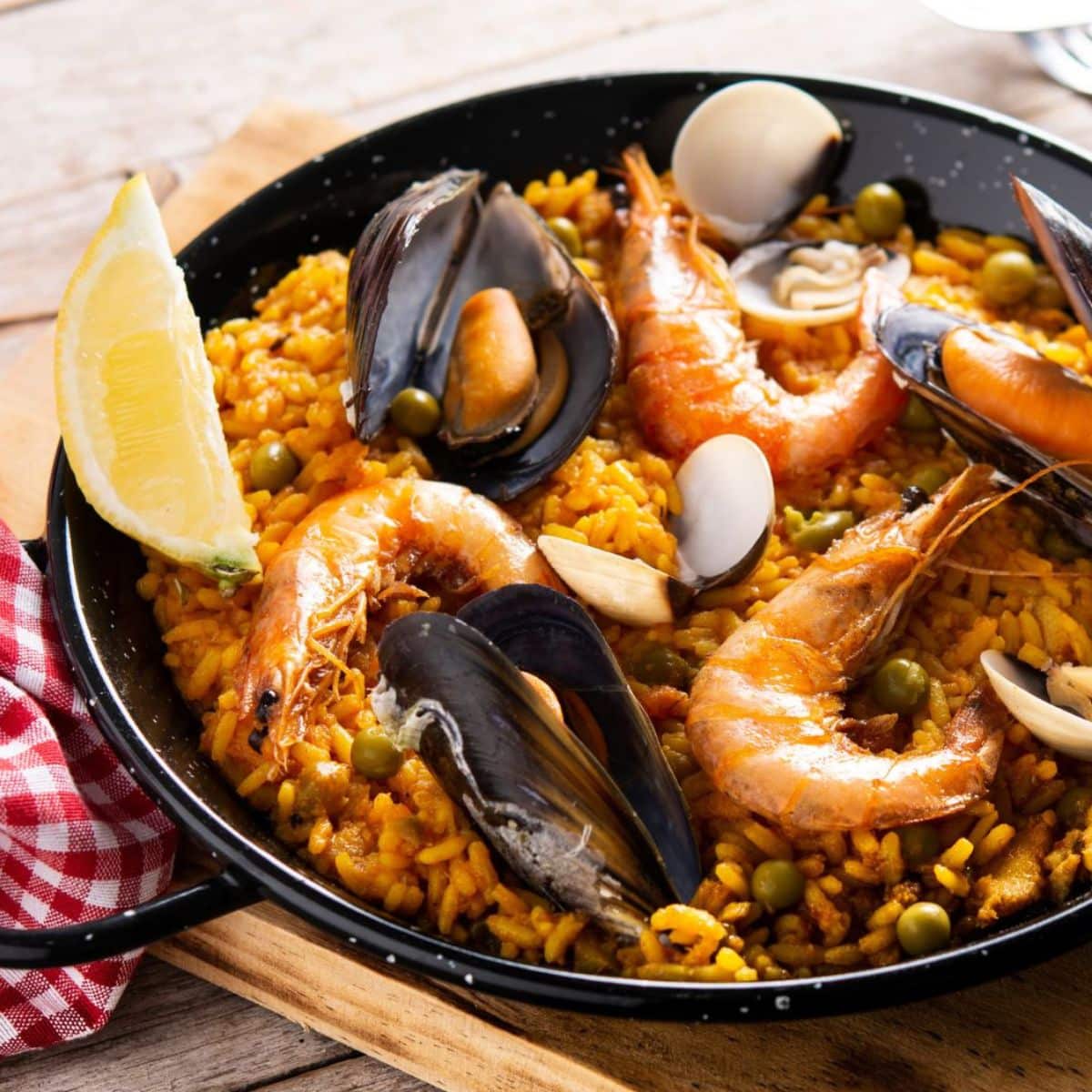
Spain deserves its own night; our 25 Regional Spanish Recipes roundup goes past the paella-and-tapas default, and Spanish Seafood Paella (cook-to-serve) is the centrepiece when you do want the classic.
Five Asian menu picks
6. India — Chicken Tikka Masala (24h, improves). The gateway. Make the sauce ahead, grill or broil the chicken to order.
7. India — Authentic Indian Chicken Tikka Masala (24h). Deeper spice, less cream; the version to cook once you have made the first one twice.
8. Korea — Korean-Style Beef Bulgogi (marinate 24h, cook to serve). Marinade Friday, 6 minutes of cooking Saturday. Serve with rice and three banchan.
9. Vietnam — Authentic Vietnamese Pho Bo (Beef Noodle Soup) (broth 72h). The broth is a two-day project and the assembly is a five-minute performance at the table.
10. Japan — Tokyo-Style Ramen with Tonkotsu Broth (broth 72h). Same shape as pho: long broth, fast assembly, guests build their own bowls.
Thailand belongs here too — Pad Thai with Shrimp and Tofu (cook-to-serve) is a showpiece you cook in front of people. See 25 Thai Dinners for the full menu, and 22 Indian Weeknight Dinners for lighter Indian options.
Four Latin American menu picks
11. Mexico — Authentic Mexican Mole Poblano with Chicken (72h, definitively improves). Mole is the most make-ahead-friendly dish on this entire page. It takes three hours the first time and tastes better on day three.
12. Peru — Spiced Peruvian Lomo Saltado Stir Fry (cook-to-serve). Beef, fries and rice in one pan — the Chinese-Peruvian chifa tradition, and a genuinely surprising main for guests who think they know South American food.
13. Brazil — Slow-Cooked Brazilian Black Bean Stew (Feijoada) (48h, improves). Feeds 10 from one pot; serve with rice, orange slices and collards.
14. Argentina — Authentic Argentine Chimichurri Steak (chimichurri 48h, steak to order). The chimichurri is the make-ahead; the steak is 8 minutes. See our Argentine asado guide for the full grill menu.
Four Middle Eastern and North African menu picks
15. Morocco — Moroccan-Spiced Lamb Tagine with Apricots (48h, improves). Sweet-savory, entirely make-ahead, and it holds at low heat indefinitely while guests linger.
16. Morocco — Slow Cooker Moroccan-Spiced Lamb Tagine with Apricots (48h). The hands-off version; start it in the morning and forget it.
17. North Africa / Levant — Authentic Moroccan Shakshuka (sauce 48h, eggs to order). Works as a brunch-party main or a light supper; the tomato base is the make-ahead.
18. Levant — Falafel and Hummus Wrap with Tahini Drizzle (hummus 72h). Deconstruct it into a mezze spread and it becomes the opener slot for any of the four menus above.
For a full mezze table, 20 Persian Recipes has the herb-stew and rice techniques that scale to a crowd.
Four African and Caribbean menu picks
19. Ethiopia — Slow-Cooked Ethiopian Doro Wat with Berbere Spice (48h, improves). Serve on injera, eat with your hands, and the table becomes communal by design.
20. Ethiopia — Stovetop Ethiopian Doro Wat Chicken Curry with Berbere (48h). A weeknight-scale version of the same dish.
21. Jamaica — Jerk Chicken with Mango Salsa (marinate 24h, grill to order). The marinade does the work; the grill takes 25 minutes.
22. Caribbean — Native Caribbean Jerk Chicken (24h). Hotter and more allspice-forward; pair it with the rum drinks in our rum cocktails roundup.
For dessert across all of these, three that travel well: Layered Walnut and Almond Baklava with Honey-Cinnamon Syrup (72h), Tiramisu with Espresso and Mascarpone (24h, must rest), and Coconut-Crusted Baklava with Honey Syrup (72h).
Drink pairings by region
Every menu below carries both an alcoholic and a non-alcoholic pairing, because a dinner party where the non-drinkers get sparkling water is a dinner party with a second-class table.
| Region | Wine / beer | Cocktail | Non-alcoholic |
|---|---|---|---|
| France | Burgundy, Beaujolais | Kir | Sparkling cassis lemonade |
| Italy | Barbera, Chianti | Negroni | Chinotto or salted lemon soda |
| Greece | Assyrtiko | Ouzo and soda | Mountain tea, iced |
| India | Off-dry Riesling, lager | Gin and tonic | Mango lassi |
| Korea | Sparkling, lager | Soju highball | Barley tea (boricha) |
| Vietnam | Riesling, pilsner | Rum and soda | Sugarcane or salted plum soda |
| Mexico | Rosé, Mexican lager | Margarita | Agua fresca, horchata |
| Peru | Sauvignon blanc | Pisco sour | Chicha morada |
| Brazil | Vinho verde | Caipirinha | Guaraná |
| Morocco | Grenache | Rum punch | Mint tea |
| Ethiopia | Pinot noir, honey wine | — | Spiced coffee (buna) |
| Jamaica | Riesling, lager | Dark and stormy | Sorrel (hibiscus) |
Shopping and pantry substitutions
Most of these menus need two to four specialty items. Here is what to substitute when the specialty store is a 40-minute drive.
| Ingredient | Substitute | Trade-off |
|---|---|---|
| Gochujang | Sriracha + white miso + 1 tsp sugar | Less fermented depth |
| Shaoxing wine | Dry sherry | Very close; do not use cooking sherry |
| Berbere | Paprika + cayenne + coriander + fenugreek | Simpler, still works |
| Ras el hanout | Garam masala + cinnamon + rose | Different but coherent |
| Aji amarillo paste | Yellow bell + habanero, puréed | Loses the fruit note |
| Tamarind paste | Lime juice + brown sugar (2:1) | Thinner, less funk |
| Fish sauce | Soy + 1 anchovy fillet mashed | Close enough in a cooked dish |
| Saffron | Turmeric for colour only | No aroma — for looks, not flavour |
| Injera | Warm flour tortillas | Wrong texture, right function |
| Preserved lemon | Lemon zest + 1 tsp salt | Lacks the fermented sourness |
Larger chains — H Mart, 99 Ranch, Patel Brothers, Sahadi's — cover roughly 90% of these outright, and Instacart delivers from most urban ethnic grocers.
A worked timeline: Morocco for eight
This is what "80% done before guests arrive" actually looks like. Serving time 7:30pm Saturday.
| When | Task | Minutes |
|---|---|---|
| Thu evening | Shop; order preserved lemon and ras el hanout if not stocked | 45 |
| Fri 6pm | Brown lamb, build and braise the tagine; cool and refrigerate | 90 |
| Fri 8pm | Make hummus and harissa for the mezze opener | 25 |
| Sat 11am | Bake baklava; it needs 6+ hours for the syrup to set | 60 |
| Sat 4pm | Prep the carrot-and-orange salad, dress it at 7 | 20 |
| Sat 6:30pm | Reheat the tagine at 300°F, covered; steam couscous | 10 active |
| Sat 7:15pm | Mint tea on, mezze out, salad dressed | 10 |
Total active time on the day: about 20 minutes. That is the entire point of the framework — the Friday braise is doing the work while you are asleep, and the dishes that must be fresh are all under 20 minutes.
The same shape works for every menu on this page. Write the timeline backwards from serving time, mark each dish with its make-ahead tag from the lists above, and any slot that lands inside the last 30 minutes before service should be something you actively want to cook in front of your guests.
Common pitfalls
- Cooking three cook-to-serve dishes. At least one slot on the menu must be finished before guests arrive. Two is better.
- Scaling a stir fry. Stir fries do not scale past four servings in a home pan; they steam. Pick a braise for eight-plus.
- Untested spice levels. Berbere, jerk marinade and Thai curry paste vary wildly by brand. Taste and adjust the day before, not at service.
- Forgetting the acid. Every menu here needs one bright, sharp element — a salad, a salsa, pickles — or the whole table reads heavy after twenty minutes.
- Buying specialty ingredients on the day. Order or shop two days out. The most common dinner-party failure is a missing $4 jar.
- No make-ahead audit. Write your timeline backwards from serving time before you shop, not after.
Scaling for 8-12 guests
Most mains here scale linearly to 8 servings by doubling. Above 8: braises move to a stockpot, skillet dishes cook in two batches, and rice, salads and desserts scale cleanly to 12+ with no adjustment. Budget 6 oz of cooked protein per adult for a multi-course menu, 8 oz if the main is the only substantial dish. Rice runs 1/2 cup dry per person; bread, 2 oz.
When NOT to do this
Skip the one-cuisine framework if you are cooking for people with hard dietary restrictions that the cuisine cannot accommodate — a strictly vegan guest at an Argentine asado will eat chimichurri and sadness. In that case pick a cuisine with a deep vegetarian tradition (Indian, Levantine, Italian, Ethiopian) rather than bolting a substitute dish onto a meat menu.
FAQ
How do I pick which cuisine? Start with dietary constraints, then equipment, then how much cooking you want to do in front of guests.
Can I make an international menu ahead? Braises, curries and stews improve overnight. Grilled and stir-fried dishes need to be cooked to order — the tags above mark each one.
Where do I find specialty ingredients? H Mart, 99 Ranch, Patel Brothers, Sahadi's or Instacart; the substitution table covers the rest.
How do I scale to 8-12? Double up to 8; above that, cook braises in a larger vessel and skillet dishes in batches.
What non-alcoholic drinks pair? See the region-by-region table above — every menu has one.
Related reading and sources
- 22 Greek Recipes: Moussaka, Souvlaki & Spanakopita
- 25 Regional Spanish Recipes Beyond Paella and Tapas
- 20 Persian Recipes: Kebabs, Tahdig & Herbed Stews
- 22 South Indian Recipes: Dosa, Sambar & Chettinad Dinners
You will want a heavy braising pot and a sharp knife more than any other equipment for these menus — browse Cookware for Dutch ovens and paella pans, Knives & Cutting for the prep blade, and Dining & Serving for the platters that make a communal table work.
Sources: Saveur — Culture & Travel, Wikipedia — List of cuisines, Wikipedia — Coq au vin, BBC Good Food — Dinner party mains.
Frequently asked questions
How do I pick which cuisine to cook when hosting friends?
Can I make an international menu ahead of time?
Where do I find specialty international ingredients?
How do I scale these recipes for 8-12 dinner guests?
What non-alcoholic drinks pair with international menus?
Sources
Plan a week of meals in two minutes.
Tell our AI what you have and what you like — it builds your plan, shopping list, and Instacart cart. No account needed.
Plan my week →