20 Classic Rum Cocktails: Mojito, Daiquiri, Piña Colada & Tiki Bar Favorites
Two bottles and a shaker cover almost every drink on this list — here is the order to buy them in.
The best rum cocktails are the daiquiri, the mojito, the mai tai, the dark and stormy and the piña colada — five drinks that between them use white rum, aged rum, lime, sugar, mint and pineapple, and that you can make with a $45 two-bottle bar and a shaker. Everything else on this list of 20 is a variation on those five templates.
Get a free bar-cart shopping list
Six drinks that share a bottle list, so one cart covers the whole night. Sent before the weekend.
No spam, unsubscribe in one click. Recipes, shopping lists and Instacart carts all work without an account either way.
Why rum is the most versatile base spirit at home
Rum covers more ground than any other spirit on your shelf. A single category runs from bone-dry Cuban-style white rum at 40% ABV through molasses-heavy Demerara at 43%, funky Jamaican pot-still at 50-63%, and sweet spiced rum around 35%. That spread means one shelf can produce a crisp three-ingredient sour, a long mint highball, a rich tiki build with five ingredients, and a creamy blended dessert drink — without buying a second base spirit.
The economics are good too. A serviceable white rum runs $18-22 for 750ml, which is about 16 cocktails at 1.5 oz per drink, or roughly $1.30 of spirit per drink. The same bar in gin or a decent bourbon costs 30-60% more. That is why rum is where most home bars should start, and why the gap in our lineup — we already have 20 Best Gin Cocktails and 20 Best Whiskey Cocktails — was worth closing.
Rum is also the most forgiving spirit for beginners. Sugar and lime cover a multitude of measuring sins. A daiquiri that is 10% off on the syrup still tastes like a daiquiri; a martini that is 10% off on the vermouth tastes wrong immediately.
The rum decision framework: white vs gold vs dark vs aged vs overproof
Buy in this order. Each bottle unlocks a whole family of drinks, so do not buy a fifth bottle before the first four are earning their shelf space.
| Style | Buy at | Price (750ml) | Unlocks | Skip if |
|---|---|---|---|---|
| White / blanco | Bottle 1 | $18-22 | Daiquiri, mojito, rum sour, highballs | Never — this is the workhorse |
| Aged / gold | Bottle 2 | $22-28 | Old fashioneds, El Presidente, stirred drinks | You only drink long, cold, citrusy things |
| Dark / blackstrap | Bottle 3 | $20-26 | Dark and stormy, floats, tiki depth | You dislike molasses sweetness |
| Jamaican pot-still | Bottle 4 | $30-36 | Mai tai, jungle bird, zombie, planter's punch | You are not building tiki drinks |
| Overproof / 151 | Bottle 5 | $22-30 | Zombie, navy grog, float garnishes | You do not want 63% ABV in the house |
Two rules save money. First, "spiced rum" is a flavored product, not an aged category — it is sweetened and vanilla-forward, and it will make a daiquiri taste like cake. Buy it only if you specifically want that profile. Second, aged-statement rum above roughly $45 is sipping rum; mixing it into a five-ingredient tiki drink wastes the barrel character you paid for. Difford's Guide — Rum Basics is the most detailed free breakdown of the production styles behind these categories if you want to go deeper than shelf labels.
Five daiquiri and sour classics
The daiquiri is 2 oz rum, 0.75 oz fresh lime, 0.75 oz simple syrup, shaken hard 12 seconds with cracked ice and double-strained. Memorize that and you can build every sour on the planet by swapping the spirit. The drink dates to Cuban iron-mining camps in the 1890s and the Wikipedia entry on the Daiquiri is unusually good on the Jennings Cox origin story and the later Hemingway variant.
1. Shaken Classic Daiquiri with Fresh Lime — the reference build. If your daiquiri is not delicious, the problem is bottled lime juice, not your technique.
2. Cuban Havana Classic Daiquiri — slightly drier, closer to the El Floridita house pour.
3. Citrus-Infused Classic Daiquiri — grapefruit-forward, which is the Hemingway move without the maraschino.
4. Classic Orange and Lime Daiquiri — the split-citrus version; useful when your limes are anemic in February.
5. Tropical Pineapple Rum Sour — egg-white texture with pineapple in place of half the lime.
Real-world numbers. A properly shaken daiquiri finishes at about 22-24% ABV and 4.5 oz total volume — roughly 1.5 oz of that is dilution from the ice. If you stir instead of shake you land nearer 27% ABV and 3.9 oz, which is why a stirred daiquiri tastes hot and thin. Shake hard.
Five mojito and highball variations
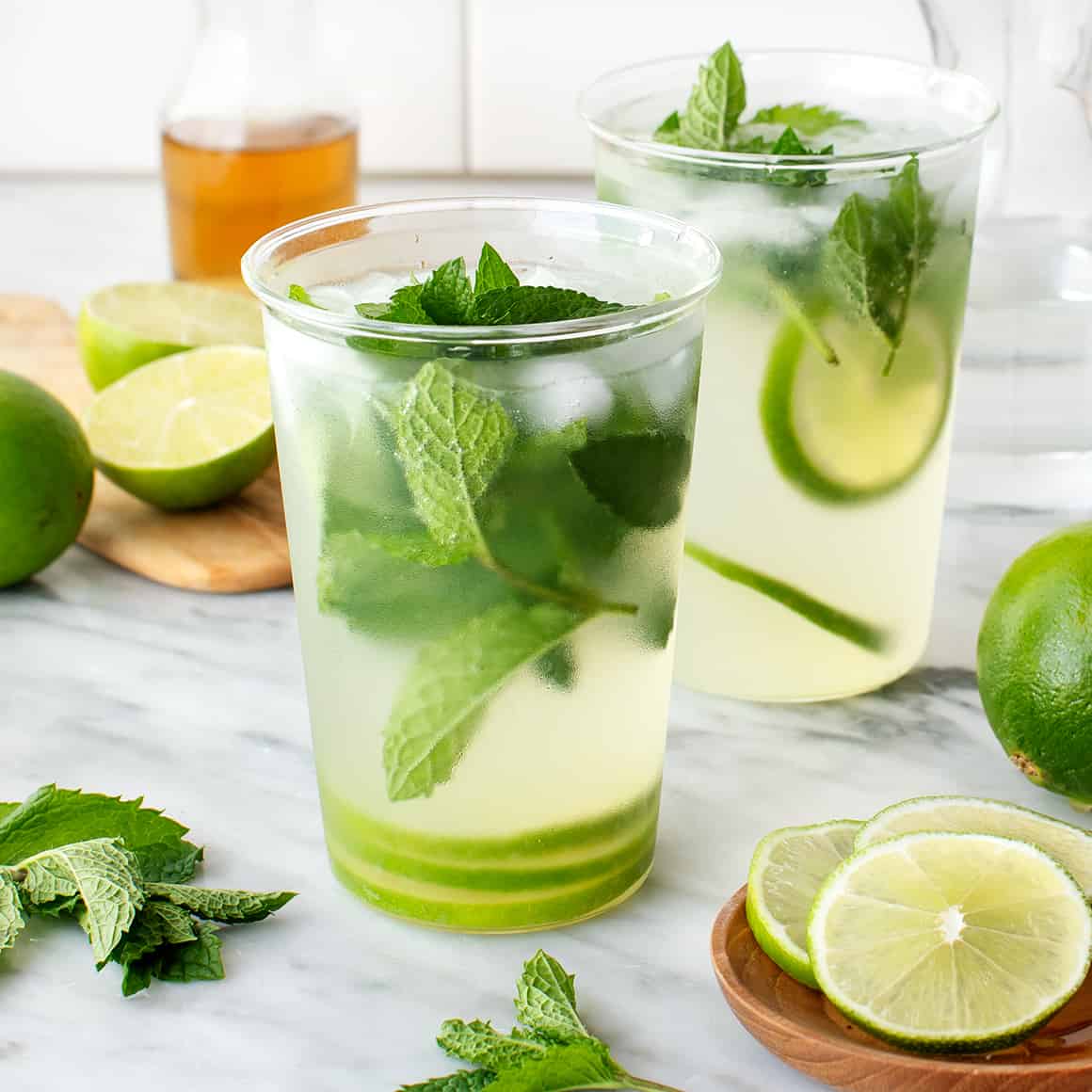
The mojito is where most home bartenders go wrong, and the fix is one word: slap, don't muddle. Mint leaves bruised against a glass release chlorophyll and taste like lawn clippings. Clap the sprig between your palms once, drop it in, and let the aroma do the work.
6. Classic White Rum Mojito with Fresh Mint and Lime — the baseline: 2 oz white rum, 1 oz lime, 2 tsp sugar, 8 mint leaves, soda.
7. Classic Cuban Mojito with Fresh Mint and Lime — built in the glass over crushed ice, Havana-style.
8. Ginger-Mint Rum Highball — the lazy weeknight version; three ingredients, no shaker.
9. Tropical Rum and Ginger Highball — pineapple juice takes the place of sugar entirely.
10. Dark Rum Espresso Tonic — the modern-café entry; genuinely good at 4pm on a Saturday.
For the technique behind the classic build, the Wikipedia article on the Mojito documents the pre-Prohibition Havana version and why sugar rather than syrup is traditional. If you want the fullest mint expression, use spearmint — see our 20 Fresh Herb Recipes guide for buying and storing a bunch that lasts two weeks.
Five tiki bar essentials
Tiki is where rum stops being a base spirit and becomes an orchestra section. A real mai tai is two rums; a zombie is three. The style was invented in California in the 1930s, not the Caribbean — Wikipedia's Tiki culture entry covers the Don the Beachcomber / Trader Vic origin fight, and the Mai Tai entry prints the 1944 Trader Vic spec that most modern bars have reverted to.
11. Tiki-Inspired Passion Fruit Mai Tai — orgeat, lime, curaçao, split rum base.
12. Tiki Spiced Dark Rum Zombie with Citrus and Cinnamon — three rums, and genuinely a two-drink-maximum cocktail at roughly 4 oz of spirit.
13. Dark Rum Jungle Bird Cocktail with Pineapple and Campari — the bitter one, and the best gateway drink for people who think they hate tiki.
14. Tiki Navy Grog with Lime and Honey Syrup — honey syrup instead of simple; a completely different mouthfeel.
15. Smoky Spiced Navy Grog with Fresh Lime — the smoke comes from the Demerara, not from any gimmick.
Gotcha: orgeat is not optional. Almond orgeat is the ingredient that makes a mai tai taste like a mai tai. A $14 bottle of Small Hand Foods or Liber & Co. orgeat lasts about 25 drinks. Substituting amaretto produces a sweeter, thinner drink that is fine but is not a mai tai.
Five tropical crowd-pleasers
These are the drinks that empty first at a party. All five batch well, and four of the five are blender-friendly.
16. Piña Colada Shaken with Creamy Coconut and Pineapple — shaken rather than blended, which keeps it from turning into a slushie.
17. Frozen Coconut-Lime Piña Colada Blend — the blender version, for when frozen is the point.
18. Planter's Spiced Rum Punch — "one of sour, two of sweet, three of strong, four of weak" in its most drinkable modern form.
19. Sparkling Tropical Rum Punch with Mango and Lime — the one to batch for 12 people.
20. Rum Hurricane with Citrus and Cherry — passion fruit forward, New Orleans by way of your kitchen.
Two more worth knowing if you want to go past twenty: the Ginger-Infused Dark and Stormy — dark rum floated over ginger beer and lime, the easiest impressive drink in the book — and the Frozen Coconut Mojito with Fresh Mint and Lime for a hot afternoon.
Batch-cocktail pitcher versions for a party
The rule for batching is simple: batch everything except the ice and the bubbles. Combine spirit, juice and sweetener in a sealed pitcher, refrigerate, and add dilution at pour time.
| Drink | Per 8 servings | Add at pour | Chill time |
|---|---|---|---|
| Daiquiri | 16 oz white rum, 6 oz lime, 6 oz simple | 5 oz cold water, shake or stir over ice | 2-24 h |
| Mojito | 16 oz white rum, 8 oz lime, 8 oz sugar syrup, 60 mint leaves | 8 oz soda, crushed ice | 2-6 h |
| Rum punch | 16 oz aged rum, 8 oz lime, 12 oz pineapple, 4 oz grenadine | Nutmeg, ice ring | 4-24 h |
| Dark and stormy | 16 oz dark rum, 6 oz lime | 24 oz ginger beer, per glass | 2-24 h |
| Piña colada | 16 oz white rum, 16 oz pineapple, 8 oz cream of coconut | Blend with 4 cups ice in 2 batches | 2-12 h |
Dilution math. A shaken cocktail picks up roughly 25% of its volume in water from the ice. When you batch, you are skipping that, so add 5 oz of cold water per 8 servings if you plan to pour over a single large cube rather than shaking each round. Skip this step and your batch tastes harsh even though the ratios are right.
Ice matters more than the rum. A 2-inch clear cube melts about four times slower than crushed ice. For a party, freeze water in a loaf pan overnight and crack it into rough cubes with the back of a spoon — you will get better dilution behavior than any bagged ice and it costs nothing.
What to stock in a rum-forward home bar
Beyond the bottles, this is the full non-spirit list. Total damage is roughly $60-80 and it covers all 20 drinks above.
| Item | Why | Approx cost |
|---|---|---|
| Boston shaker (two-tin) | Seals better and chills faster than a cobbler shaker | $18-25 |
| Hawthorne strainer + fine mesh | Double-straining is what separates home from bar texture | $12-18 |
| Jigger, 1 oz / 2 oz | Free-pouring costs you consistency, not skill points | $8-14 |
| Y-peeler | Wide citrus swaths for oils; a channel knife is optional | $6-10 |
| Orgeat, 375ml | Non-negotiable for tiki | $12-16 |
| Cream of coconut | Coco López or Real; not coconut milk | $4-6 |
| Angostura + Peychaud's | Two dashes changes a drink more than a rum upgrade | $12-16 |
Our full Best Bar Tools for 2026 guide covers which shakers actually seal and which jiggers are accurate. For the physical kit, browse Bar & Coffee — that is where the shakers, jiggers, strainers and coupes live — and pick up a decent Utensils & Tools citrus press while you are there, since hand-squeezed lime is the single largest quality variable in every drink on this page.
Common pitfalls
- Bottled lime juice. It is cooked, it is preserved, and it tastes like it. Fresh lime oxidizes noticeably after about 4 hours, so squeeze within a few hours of serving.
- Over-muddled mint. Bruising releases bitter chlorophyll. Slap, don't grind.
- Skipping the double-strain. Shards of ice and shredded mint change the texture of a shaken drink within 90 seconds of pouring.
- Warm glassware. A room-temperature coupe adds 3-4°F to a stirred drink instantly. Ten minutes in the freezer fixes it.
- Treating spiced rum as aged rum. It is a sweetened flavored spirit. Substituting it in a daiquiri produces something closer to a dessert.
When NOT to reach for rum
Rum is a poor substitute in a few specific places. A martini wants juniper or grain, not molasses. A negroni built on rum is drinkable but the botanical bridge to Campari is missing. And any drink whose entire identity is oak and rye spice — a sazerac, a Manhattan — loses its point on a rum base. If you want the stirred-and-brown category done properly, start with the whiskey cocktails roundup instead.
FAQ
What kind of rum should I buy first for a home bar? Start with a good white rum and an aged/gold rum — those two cover roughly 80% of the classic recipes on this page. See the buying table above for the full order of operations.
How do I get a real Cuban-style mojito? Slap the mint, use fresh lime, use granulated sugar rather than simple syrup, and garnish with a bouquet planted stem-down so your nose gets mint on every sip.
Can I batch these for a party? Yes — batch spirits, juice and sweetener; add dilution and bubbles at pour time. Ratios are in the pitcher table.
What tools do I actually need? Boston shaker, Hawthorne strainer, fine-mesh strainer, jigger, barspoon, Y-peeler. $40-70 total.
Are any of these lower in calories? The Hemingway daiquiri, a lean classic daiquiri, and rum-and-soda all land under 150 calories. The tiki drinks and piña colada run 300-450.
Related reading and sources
- 20 Best Gin Cocktails for Home Bartenders
- 20 Easy Cocktail Recipes for Home Bartenders
- 22 End-of-Summer Cocktails
- Best Bar Tools for 2026
Sources: Difford's Guide — Rum Basics, Wikipedia — Mojito, Wikipedia — Daiquiri, Wikipedia — Tiki culture, Wikipedia — Mai Tai.
If the piña colada sent you looking for the food side of that flavor set, 18 Tropical Recipes has the mango, pineapple and coconut dinners to serve alongside.
Frequently asked questions
What kind of rum should I buy first for a home bar?
How do I get a real Cuban-style mojito instead of a muddled mess?
Can I batch these for a party without them going flat or watery?
What tools do I actually need to make these at home?
Are any of these lower in sugar or lower in calories?
Sources
Building a bar cart for tonight?
Tell our AI who is coming and what you like — it writes the shopping list and sends the cart to Instacart. No signup.
Build my drinks list →