22 Korean Dinner Recipes: Bulgogi, Bibimbap, Kimchi Stew & Weeknight Bowls
Six pantry staples, 22 tested recipes, and a 5-day plan that reuses every ingredient.
Easy Korean dinners start with one paste and three staples: gochujang, soy sauce, toasted sesame oil and garlic. With those you can cook bulgogi in 20 minutes, kimchi fried rice in 25, and a soft tofu stew in under 30. Below are 22 tested Korean recipes, grouped by cooking method, with a 5-day weeknight plan and a single shopping list.
Get a free week of easy dinners
Seven weeknight dinners with the shopping list already totalled, sent Sunday. No account needed, unsubscribe in one click.
No spam, unsubscribe in one click. Recipes, shopping lists and Instacart carts all work without an account either way.
The Korean weeknight pantry: gochujang, gochugaru, sesame oil, soy, garlic, ginger
Korean home cooking is unusually pantry-efficient. Six shelf-stable items cover roughly 80% of the seasoning in every recipe on this page, and as of 2026 all six are stocked in mainstream US supermarkets — no specialty trip required.
| Pantry item | What it does | Typical US price | Shelf life after opening |
|---|---|---|---|
| Gochujang (fermented chili paste) | Sweet-savory heat, body, color | $6–9 / 500g tub | 12 months, refrigerated |
| Gochugaru (Korean chili flakes) | Clean bright heat, red color in stews | $8–12 / 227g | 6 months, freezer preferred |
| Toasted sesame oil | Finishing aroma, never the cooking fat | $6–10 / 250ml | 6 months, refrigerated |
| Soy sauce (regular brewed) | Salt + glutamate backbone | $4–7 / 500ml | 12 months |
| Rice vinegar | Cuts fat in marinades and banchan | $3–5 / 355ml | 24 months |
| Short-grain white rice | The plate itself | $12–18 / 5 lb | 12 months, airtight |
Add garlic, ginger, scallions, an Asian pear (or a grated Bosc pear as substitute) and a jar of cabbage kimchi from the refrigerated aisle, and the entire list below is cookable. Total pantry spend is about $45–55 the first time and roughly $12 per restock month after.
Two technique notes that matter more than any ingredient:
Toasted sesame oil is a finisher, not a frying fat. Its smoke point is around 350°F and its aroma compounds are volatile. Cook in neutral oil, then add sesame oil off the heat. Every recipe here that tastes flat when home cooks make it usually failed on this one step.
Grated pear is the reason restaurant bulgogi is tender. Asian pear contains calpain-family proteases that break down connective tissue in 20–30 minutes. It is also why you should not marinate thin-sliced beef overnight in a pear marinade — past about 4 hours the texture turns mealy. Serious Eats — Korean recipes covers the enzymatic mechanics in more depth if you want the food-science version.
When Korean home cooking works for you (and when it doesn't)
Korean food is a great fit if your weeknight constraint is time at the stove. Most of these dishes are 8–15 minutes of active cooking after a marinade that happens while you do something else. Thin-sliced protein plus high heat plus a sauce you mixed in a bowl is the entire pattern.
It's a good fit if you batch cook. Bulgogi, ground beef, japchae and kimchi fried rice all reheat well. Stews genuinely improve on day two as the kimchi acidity mellows into the pork fat.
It's a good fit if you need one dish to feed a mixed table. Rice bowls let each person build their own heat level. Serve the gochujang sauce on the side and a 6-year-old and a chili-head eat the same dinner.
It's a poor fit in three cases, and it's worth being honest about them:
- You want low-sodium. Soy sauce, doenjang and kimchi are all salt-forward. A bowl of kimchi jjigae can run 1,400–1,900mg sodium. Low-sodium soy sauce and unsalted rice help, but you're managing the number, not eliminating it.
- You want a 10-minute dinner with zero prep. The cooking is fast; the julienning is not. Bibimbap is 20 minutes of knife work for 15 minutes of cooking.
- You cook for someone with a fermented-food aversion. Kimchi, gochujang and doenjang are all funky by design. Start those cooks on bulgogi and japchae, which are sweet-savory and contain no fermented chili at all.
Grilled and pan-seared: bulgogi, kalbi, dakgalbi, Korean fried chicken
This is the category most people mean when they say "Korean food." The common thread is a sugar-bearing marinade that caramelizes hard and fast against direct heat.
Bulgogi is the entry point. Ribeye or sirloin sliced 1/8-inch against the grain, marinated in soy, sugar, pear, garlic and sesame, then seared in a screaming-hot pan in single-layer batches. Pan-Seared Korean BBQ Beef Bulgogi is the 25-minute version at 350 calories and 38g protein per serving. For a slightly richer, longer-marinated take, Authentic Korean BBQ Beef with Sesame Glaze runs 30 minutes of prep and 25 minutes of cooking for four.
The single biggest bulgogi mistake is crowding the pan. Beef at 1/8-inch releases water fast; three pounds dumped in at once drops the pan below 300°F and you get gray steamed meat instead of browned edges. Cook in three batches. It takes six extra minutes and it is the entire difference.
Chicken bulgogi uses the same marinade on thigh meat and is the cheaper weeknight default. Spicy Korean-Style Chicken Bulgogi Stir Fry is 25 minutes prep, 12 minutes cook, 32g protein.
Dakgalbi — the spicy stir-fried chicken from Chuncheon — swaps the soy-forward marinade for a gochujang base with cabbage and sweet potato. Korean-Style Spicy Chicken Stir Fry with Gochujang gets you there in 30 minutes total.
Kalbi (galbi) is flanken-cut short ribs, marinated and grilled over high heat for 3–4 minutes a side. Grilled Korean-Style Short Ribs with Sesame-Garlic Marinade is 20 minutes of total cook time and 45g protein per serving — the highest-protein recipe on this page.
Korean fried chicken is the outlier: it's the one dish here that genuinely rewards deep-frying twice. The first fry at 325°F cooks the meat; the rest at 375°F drives off surface moisture and sets the shatter-crisp shell that survives sauce. Double-Fried Korean Chicken Wings with Spicy Soy Garlic Glaze is the soy-garlic version, and Crispy Korean-Style Fried Chicken Wings with Gochujang Glaze is the sweet-spicy yangnyeom version at 580 calories per serving.
Rice bowls and one-pan meals: bibimbap, kimchi fried rice, dolsot bowls, Korean ground beef
Rice bowls are how Korean food solves the "everyone wants something different" problem. Components go out separately; each eater assembles.
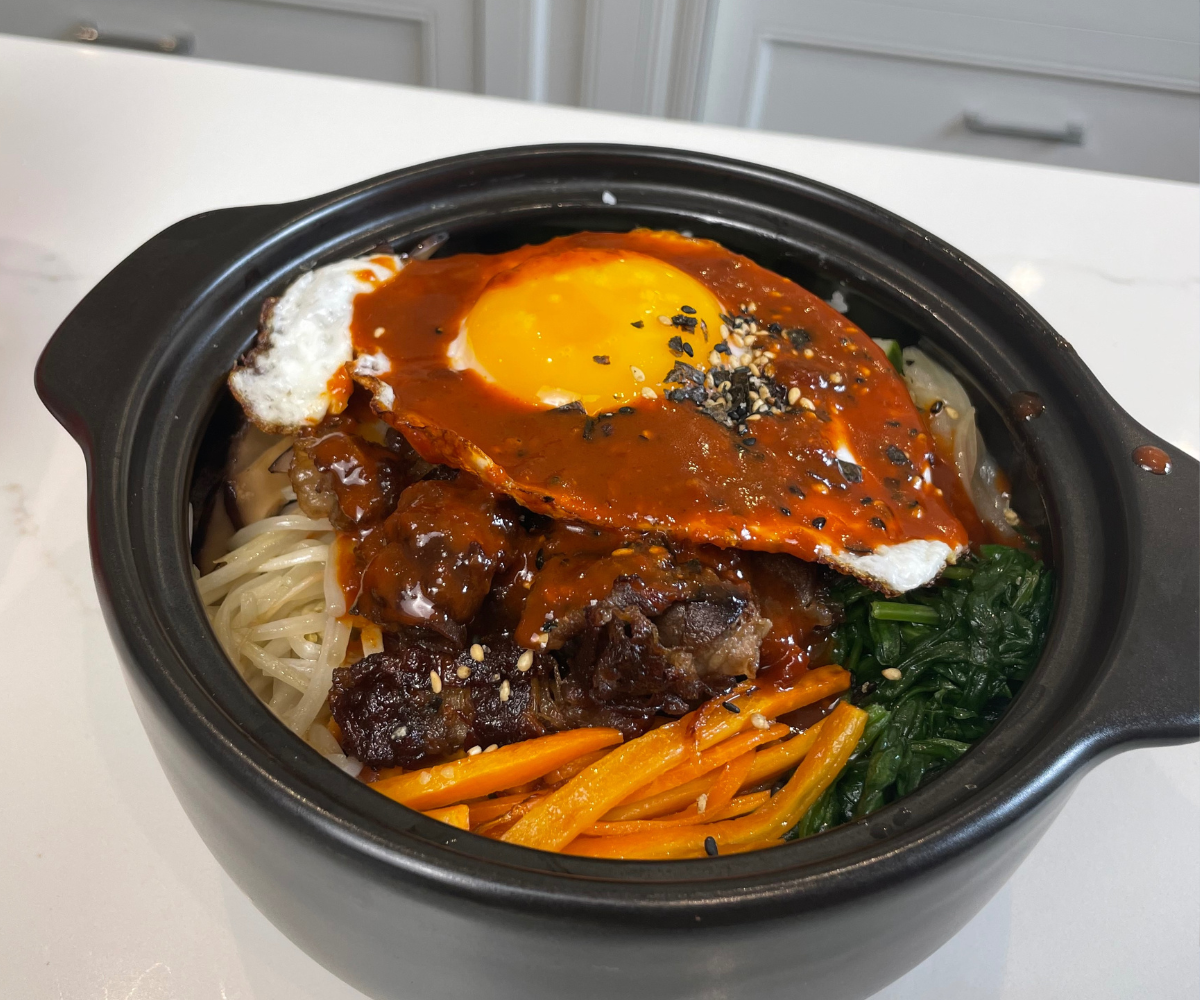
Bibimbap is seasoned rice topped with individually cooked vegetables (namul), a protein and a fried egg, bound by gochujang sauce. Genuine Korean-Style Bibimbap Bowl is the full-effort version — 25 minutes prep, 20 cook, 780 calories and 45g protein for a genuinely large bowl. For a faster weeknight build, Spicy Korean-Style Bibimbap with Mixed Vegetables and Beef trims to 35 minutes total and 520 calories.
If you own a dolsot (stone bowl) or a well-seasoned cast-iron skillet, preheat it for five minutes, brush with sesame oil and press the rice against the bottom. You'll get a crisp golden nurungji crust in about three minutes. This is the whole appeal of dolsot bibimbap and it costs you nothing but preheat time.
Kimchi fried rice (kimchi bokkeumbap) is the best use for kimchi that has gone too sour to eat straight. Most Flavorful Korean Kimchi Fried Rice is 30 minutes total; Korean-Inspired Kimchi Fried Rice with Fried Egg is the 25-minute weeknight cut at 450 calories.
Three rules make the difference: use day-old refrigerated rice (fresh rice steams instead of frying), squeeze the kimchi and reserve the juice to add at the end, and fry the kimchi in the pork or bacon fat for a full two minutes before the rice goes in.
Korean ground beef bowls are the cheapest 20-minute dinner in this roundup. Sautéed Ground Beef with Korean-Inspired Spices and Garlic is 10 minutes prep, 15 minutes cook, 28g protein per serving, and it costs roughly $9 to feed four with rice. Sauce is soy, brown sugar, garlic, ginger, sesame oil and a spoon of gochujang if you want heat.
Sesame-ginger chicken bowls round out the category. Korean-Style Sesame-Ginger Chicken Bowls is 45 minutes total and holds four days in the fridge, which makes it the best meal-prep candidate on this list. If you're building a full week around bowls, our 20 Grain Bowl Dinners guide covers the container and reheat logistics in more detail.
Stews and soups: kimchi jjigae, sundubu jjigae, doenjang jjigae, braised ribs
Jjigae are thick, salty, communal stews served bubbling in an earthenware pot with rice. They are the highest flavor-per-effort dishes here.
Kimchi jjigae is pork belly, sour kimchi, tofu and gochugaru simmered until the fat emulsifies into the broth. Authentic Korean Kimchi Jjigae runs 25 minutes prep and 40 minutes simmer for four servings at 480 calories. The kimchi must be sour — at least three weeks old, ideally two months. Fresh kimchi makes a thin, sweet stew with none of the depth.
Sundubu jjigae is the fast one. Silken tofu, chili oil, broth and an egg cracked in at the table. Spicy Korean-Style Soft Tofu Stew (Sundubu Jjigae) is 25 minutes total, 220 calories, and the single best "I have nothing in the house" dinner in Korean cooking.
Doenjang jjigae is the everyday soybean-paste stew — earthier, less spicy, closer to a Korean miso soup with body. Doenjang Jjigae (Korean Soybean Paste Stew) is 35 minutes total and 180 calories, the lightest recipe on this page.
Dakdoritang / chicken jjim braises bone-in chicken with potatoes and carrots in gochujang and soy. One-Pot Spicy Korean Chicken Stew with Gochujang is 50 minutes total, 35g protein, and it feeds four out of one pot.
Galbi jjim is the weekend project. Braised Korean-Style Beef Short Ribs with Gochujang and Soy is three hours of mostly-unattended braising and feeds six at 45g protein per serving. Make it Sunday; the leftovers shred into rice bowls Tuesday.
For more one-pot cold-weather cooking beyond Korean, our Early Fall Soup Season roundup has 22 more.
Noodles and starters: japchae, naengmyeon, mandu, Korean pancakes
Japchae — sweet potato glass noodles stir-fried with vegetables and sesame — is the dish Korean families bring to potlucks because it's good at room temperature. Stir-Fried Korean Glass Noodles with Sesame and Vegetables is 40 minutes total at 320 calories.
The technique that separates good japchae from gummy japchae: cook the dangmyeon noodles 6–7 minutes, rinse in cold water, then toss immediately with sesame oil and soy before they meet the vegetables. Naked glass noodles glue together within 90 seconds of draining.
Naengmyeon — chilled buckwheat noodles — is the summer counterpart. Chilled Korean Buckwheat Noodles with Spicy Sesame Sauce is 20 minutes total, most of it boiling water, and it is the correct answer to an 88°F August evening.
Tteokbokki is chewy rice cakes in a sweet-spicy gochujang sauce — Korea's dominant street food. Pan-Fried Korean Street Tteokbokki with Gochujang Sauce is 27 minutes total. Frozen tteok needs a 10-minute soak in warm water before it hits the sauce or the centers stay chalky.
Mandu are Korean dumplings, pan-fried until one face is lacquered brown. Half-Moon Shaped Korean Mandu with Pork and Cabbage Filling makes four servings in 35 minutes. Salt and wring the cabbage before it goes in the filling — a quarter cup of expelled water is normal and it is the difference between a sealed dumpling and a burst one.
Kimchijeon — kimchi pancakes — turn half a cup of leftover kimchi and its juice into dinner. Korean-Style Kimchi Pancakes with Gochujang Glaze is 30 minutes for two. Use more oil than feels correct; the crisp lace edge comes from shallow-frying, not from the batter.
Two vegetarian mains worth knowing: Spicy Korean-Style Stir-Fried Tofu with Gochujang Glaze at 25 minutes and 18g protein, and Korean-Style Tofu Kimchi, the classic warm-tofu-and-stir-fried-kimchi pairing, at 35 minutes for four.
The 22 recipes: prep times, difficulty and links
Every recipe below is in the AislePrompt catalog with a full ingredient list and one-tap shopping.
Fifteen of the 22 finish in 30 minutes or less of combined prep and cook time. Only #18 requires a weekend.
5-day Korean weeknight meal plan and shopping list
This plan feeds a family of four Monday through Friday, reuses every perishable, and requires one grocery run plus the pantry list above.
| Day | Dinner | Active time | Make-ahead move |
|---|---|---|---|
| Monday | Korean ground beef bowls | 25 min | Cook 6 cups rice; refrigerate half for Thursday |
| Tuesday | Chicken bulgogi stir fry | 35 min | Marinate chicken Monday night |
| Wednesday | Sundubu jjigae + rice | 25 min | Double the batch; it reheats Friday lunch |
| Thursday | Kimchi fried rice with fried egg | 25 min | Uses Monday's cold rice |
| Friday | Japchae + kimchijeon | 40 min | Julienne vegetables Thursday while rice fries |
Shopping list for the week (feeds 4, ~$78 as of August 2026):
- 1 lb ground beef (80/20)
- 1.5 lb boneless chicken thighs
- 1 package (14 oz) silken tofu, 1 block firm tofu
- 1 jar (28 oz) cabbage kimchi — buy the sourest one on the shelf
- 6 eggs
- 1 bunch scallions, 1 head garlic, 2-inch ginger
- 1 carrot, 1 zucchini, 1 onion, 4 oz shiitake or cremini
- 1 bag baby spinach (5 oz)
- 8 oz dangmyeon (sweet potato glass noodles)
- 1 lb short-grain rice
- All-purpose flour (for the pancake batter)
Nothing on that list is single-use. The kimchi jar carries Wednesday, Thursday and Friday; the scallion bunch touches all five nights. If you want the same logic applied to a whole month, our meal planning for two guide walks through the zero-waste rotation math.
Gear that earns its shelf space
You do not need Korean-specific equipment. You need three things that work hard here and everywhere else.
A 12-inch cast-iron skillet. Bulgogi, kalbi and dolsot-style crisped rice all need a surface that holds 450°F+ when cold protein hits it. Carbon steel works equally well and weighs less. Browse options in cookware. A thin nonstick pan is the second-most-common cause of gray bulgogi after crowding — it simply cannot store enough heat.
A sharp 8-inch chef's knife. Bibimbap namul, japchae julienne and 1/8-inch beef are all knife problems, not cooking problems. A dull knife adds 10 minutes to every recipe in the rice-bowl section and makes them feel like chores. See knives and cutting tools for options; anything in the $40–70 range with a full tang outperforms a $200 knife you never sharpen.
Glass containers with locking lids. Every batch-cooked dish here — bulgogi, ground beef, japchae, doubled stew — needs to survive four days. Glass doesn't hold gochujang stain or kimchi smell the way polypropylene does. Check food storage.
Two optional upgrades if you cook this cuisine often: a digital kitchen scale (marinade ratios are by weight in most Korean sources) from kitchen gadgets, and a small tabletop butane burner if you want to do stews and grilled meat at the table the way they're actually served.
Common pitfalls
1. Marinating thin beef overnight. With pear or kiwi in the marinade, four hours is the ceiling. Past that the proteases turn the surface mushy.
2. Using fresh kimchi in jjigae. Under three weeks old, there's no acidity to build the broth on. Save fresh kimchi for eating cold as banchan.
3. Sesame oil in the hot pan. It burns and turns bitter. Neutral oil to cook, sesame oil to finish.
4. Skipping the rice soak on frozen tteok. Ten minutes in warm water or the centers stay hard.
5. Buying "chili flakes" instead of gochugaru. Gochugaru is coarse, mild-to-medium, and fruity. Substituting cayenne makes a stew that's hot and one-dimensional instead of red and layered.
Frequently asked questions
What Korean pantry items do I actually need to start?
Six ingredients unlock almost every recipe in this roundup: soy sauce, toasted sesame oil, gochujang, gochugaru, rice vinegar and short-grain rice. Add garlic and ginger from the produce aisle and you can cook 18 of the 22 recipes here without another specialty run.
Can I make bulgogi and bibimbap without a Korean grocery?
Yes. Every major US supermarket now stocks gochujang and gochugaru near the soy sauce, and Amazon Fresh, Instacart and Kroger carry the CJ and Sempio brands. The one item worth a Korean market trip is fresh cabbage kimchi — jarred is fine for cooking but flat as a side dish.
Are these recipes weeknight-friendly for a family?
Fifteen of the 22 finish in under 30 minutes of active cooking. Bulgogi bowls, kimchi fried rice and Korean ground beef bowls are 20-minute staples. Save the stews and the braised short ribs for weekends.
How spicy is Korean food, and how do I dial it down for kids?
Heat lives almost entirely in gochujang and gochugaru, which you can halve or omit. Bulgogi, japchae, soy-garlic wings, bibimbap without the sauce, and mandu are naturally mild. Serve chili sauce on the side.
Can I meal prep these Korean recipes for the week?
Bulgogi keeps four days refrigerated and freezes two months. Ground beef bowls, japchae and kimchi fried rice hold well in glass. Store rice, protein and vegetables separately and assemble at lunch. Stews taste better on day two.
Do I need a Korean BBQ grill or tabletop burner for these recipes?
No. A heavy 12-inch cast-iron skillet hits the searing temperature bulgogi and kalbi need, and a stove-top griddle handles a tabletop-style cook for four. Every recipe in this roundup is written for a standard home range first. If you want the full tabletop experience later, a portable butane burner and a domed Korean BBQ pan run about $60 combined — a nice-to-have, not a prerequisite.
How do I turn this roundup into one grocery order?
Open any recipe on AislePrompt and tap the Instacart cart icon on its shopping list — every ingredient, including gochujang, gochugaru and short-grain rice, routes to your local Instacart retailer with automatic substitutions for anything out of stock. You can stack several recipes from this roundup into a single cart, which is the fastest way to shop a full week of Korean dinners at once.
Where to go next
If Korean clicks for you, the neighboring cuisines share most of the pantry: our 25 easy Japanese dinners reuse soy, mirin and sesame, and the 22 easy Thai dinner recipes share the fish-sauce-and-lime axis. For more heat across every cuisine, see 22 spicy dinner recipes. If you want the wider spread rather than the weeknight rotation — Korean street food like tteokbokki and kimbap, a banchan side-dish table, and noodle dishes such as jjajangmyeon and cold naengmyeon — see our 22 Korean weeknight dinners guide, which covers the same core recipes plus the street-food and banchan chapters this planner leaves out.
Sources
- Serious Eats — Korean recipes — technique-first coverage of bulgogi marinades, jjigae building and Korean fried chicken double-fry ratios.
- Bon Appétit — Best Korean recipes — modern home-cook adaptations and banchan pairings.
- NYT Cooking — Korean recipes — tested versions of japchae, tteokbokki and kimchi jjigae with US ingredient substitutions.
Frequently asked questions
What Korean pantry items do I actually need to start?
Can I make bulgogi and bibimbap without a Korean grocery?
Are these recipes weeknight-friendly for a family?
How spicy is Korean food, and how do I dial it down for kids?
Can I meal prep these Korean recipes for the week?
Do I need a Korean BBQ grill or tabletop burner for these recipes?
How do I turn this roundup into one grocery order?
Sources
Plan a week of meals in two minutes.
Tell our AI what you have and what you like — it builds your plan, shopping list, and Instacart cart. No account needed.
Try free →