Meal Planning for Two: 4-Week Dinner Rotation + Shopping List (Zero Waste)
Cook-for-two recipes get halved badly and the other half rots — here's a 28-dinner rotation built around two-person package math instead.
Affiliate disclosure: AislePrompt may earn a commission on qualifying purchases made through Amazon and Instacart links in this article, at no additional cost to you. See our affiliate policy →
Plan 28 dinners on a 4-week rotation, each scaled to two servings — roughly 4–6 oz of protein, 1 cup of cooked starch and 1.5–2 cups of vegetables per plate. Shop it as four small weekly lists instead of one bulk haul, and deliberately repurpose the three recipes a week that refuse to shrink. That combination kills leftover fatigue and cuts a two-person grocery bill by 20–30%.
The Cook-For-Two Problem: portion creep, leftover fatigue, ingredient waste
Cooking for two is the hardest household size in American home cooking, and it has nothing to do with skill. It's an arithmetic problem the entire recipe industry declines to solve.
Almost every recipe published in the last fifty years is written for four to six servings. Sheet-pan dinners assume a half-sheet's worth of vegetables. Braises assume a 5-quart Dutch oven. A "family pack" of chicken thighs at Costco is 4.5 lbs; a standard supermarket tray is 1.5–2 lbs when you need 12 oz. Canned tomatoes come in 28 oz when the recipe wants 14. Fresh herbs come in bunches sized for a restaurant line.
Three specific failures follow from that mismatch:
Portion creep. When you halve a recipe for four, you rarely halve it honestly. You keep the whole onion because half an onion will rot. You keep the full can of coconut milk. Within a few weeks your "two servings" is quietly 2.6 servings, and you're eating 700-calorie dinners while thinking you're eating 500-calorie dinners. USDA's MyPlate Plan puts most adults between 1,800 and 2,400 calories a day; dinner should be 500–650 of that, not 800.
Leftover fatigue. The standard workaround — "just cook for four and eat it twice" — works exactly once per week. Do it four nights running and you're eating the same six meals on a two-day lag forever. People don't quit meal planning because it's hard. They quit because week three tastes like week two.
Ingredient waste. This is the expensive one. The EPA's wasted-food research consistently finds households are the largest single source of food waste in the US food system, and small households waste the highest percentage of what they buy, because package sizes don't scale down. A four-person household that buys a 28 oz can of tomatoes uses it. A two-person household throws half of it away 40% of the time.
The fix isn't discipline. It's a rotation designed around two-person package math from the start.
The 4-Week Rotation: 28 dinners scaled properly for two
The rotation below is built on three rules.
Rule 1 — Seven slots, same shape every week. Each week gets one sheet pan, one stir-fry or skillet, one fish or shrimp night, one pasta or grain night, one soup/stew/braise, one steak-or-chop night, and one flex night. Fixed shape means the shopping list has a fixed shape, which is what makes it fast.
Rule 2 — Four nights truly scale to two; three don't. Sear-based recipes (steak, chops, salmon fillets, shrimp) scale down perfectly — you're cooking discrete pieces. Braises, risottos and soups do not; below about 3 servings they scorch, over-reduce, or never develop. So we cook those three at their native size and plan the repurpose.
Rule 3 — Every carryover has a named second life. Not "leftovers." A different dinner. Roast chicken becomes tacos. Risotto becomes arancini or a lunch bowl. Lentil soup becomes a grain-bowl base. You'll see the repurpose partner named in each week's table.
| Week | Sheet pan | Skillet / stir-fry | Fish or shrimp | Pasta / grain | Soup / braise | Steak or chop | Flex |
|---|---|---|---|---|---|---|---|
| 1 | Lemon-glazed chicken | Soy-glazed chicken stir-fry | Salmon, brown butter capers | Cacio e pepe | Tomato-spinach tortellini soup | Steak bites, garlic asparagus | Sheet-pan gnocchi |
| 2 | Citrus-garlic salmon | Chicken & mushroom skillet | Garlic butter shrimp scampi | Carbonara | Creamy mushroom risotto | Herb-crusted pork chops | Baja fish tacos |
| 3 | Sheet-pan shrimp & quinoa | Beef & broccoli stir-fry | Pan-seared chicken thighs | Aglio e olio | Coconut turmeric chickpea curry | Steak, garlic herb butter | Mushroom-spinach frittata |
| 4 | Pork tenderloin & apples | Chicken sausage tortellini skillet | Shrimp tacos | Shakshuka | Cumin-spiced lentil soup | Garlic butter roast chicken | Zucchini-noodle shrimp |
Every recipe below is linked to its AislePrompt page, where the serving stepper rescales the ingredient quantities to exactly two before you shop.
Ingredient Efficiency: buying half a chicken, splitting cans, freezing extras
This is the section that actually saves the money. Six habits, in descending order of payoff.
Buy proteins by weight, not by package. The single highest-leverage change for a two-person household is using the butcher counter instead of the pre-wrapped case. Ask for 12 oz of chicken thighs, two 5 oz salmon fillets, or a 10 oz sirloin. You'll pay $0.30–$0.80/lb more and waste 40% less, which is net positive at two-person volumes. For whole birds, ask for a spatchcocked half — most counters will do it — and roast that instead of a 4.5 lb whole chicken you'll eat for six days.
Split the can, freeze the rest — on day one. Half a 28 oz can of tomatoes goes into a freezer bag flat, labeled, the night you open it. Not "in the fridge, we'll use it." Flat-frozen tomato, coconut milk, chipotle in adobo and stock all keep 3 months and thaw in a bowl of warm water in 10 minutes.
Buy the smallest onion in the bin. Sounds trivial; it isn't. Recipes say "1 onion" and onions range from 4 oz to 14 oz. A small yellow onion is the correct unit for two people. If you only need half, store the cut half flat-side-down in a sealed glass container — it holds 5 days.
Freeze herbs in oil. Chopped parsley, cilantro, chives, or basil packed into an ice-cube tray with olive oil, frozen, then bagged. Three months of shelf life, and the cube goes straight into a hot pan. This alone eliminates the most common two-person waste item.
Shop twice a week, small. Counterintuitive against bulk-buying advice, but the USDA's own Save More, Shop Smart guidance points the same direction: buy what you'll use in the window you'll use it. Two-person produce spoils before a weekly haul is exhausted. Buy shelf-stable and frozen on the big trip; buy produce and fish in a five-minute mid-week stop.
Use one anchor sauce per week. Gochujang, curry paste, harissa, or pesto — one jar, used in three of the seven dinners, is the difference between "we finished the jar" and "we found it, opened, in April." Pick your anchor when you build the week, not at the store.
The two-person cost baseline
Real numbers from the four weeks below, at 2026 national-average supermarket prices, cooking all seven dinners at home:
| Category | Weekly spend (2 people) | Per-dinner share |
|---|---|---|
| Proteins (chicken, beef, pork, salmon, shrimp) | $38–46 | $2.70–3.30 |
| Produce | $18–24 | $1.30–1.70 |
| Pantry + dairy replenishment | $12–16 | $0.85–1.15 |
| Total | $68–86 | $4.85–6.15 per plate |
For comparison, two mid-tier delivery entrees run $45–60 for one night. The rotation pays for a decent chef's knife in about three weeks.
Sample Week 1 Dinner Plan (Monday-Sunday) with Full Shopping List
Monday — Sheet Pan Lemon-Glazed Chicken with Roasted Asparagus and Potatoes (40 min). Set servings to 2; use a quarter-sheet pan so the vegetables still crowd correctly. A half-sheet with two portions on it steams instead of roasts — the single most common cook-for-two mistake.
Tuesday — Soy-Glazed Chicken Stir-Fry with Broccoli and Snow Peas (25 min). Already written for two. Uses the second half of Monday's chicken purchase, so you buy one 1 lb tray and it's gone in 48 hours.
Wednesday — Pan-Seared Salmon with Brown Butter Capers (17 min). Two 5–6 oz fillets from the counter. Scales perfectly; nothing left over by design.
Thursday — One-Pot Creamy Tomato and Spinach Tortellini Soup (30 min, cooks 4). This is the planned-repurpose night. Eat two, refrigerate two. Saturday it becomes the base for a fast tortellini bake with mozzarella on top — different dish, zero extra shopping.
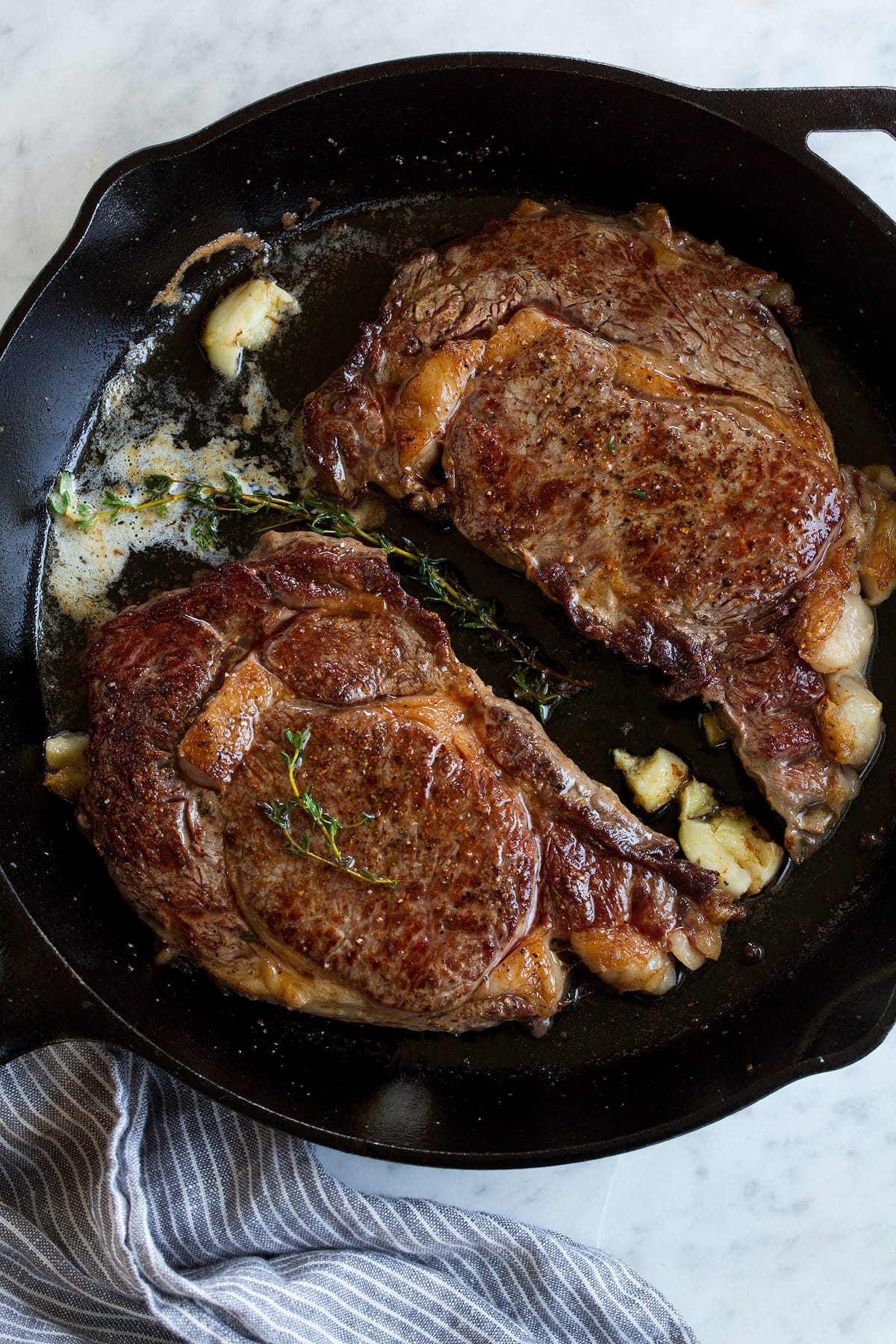
Friday — Pan-Seared Steak Bites with Garlic Asparagus (25 min). Written for two. One 10 oz sirloin, cubed. Cast iron, screaming hot, two batches.
Saturday — Spaghetti Cacio e Pepe with Black Pepper and Pecorino (15 min) alongside Thursday's repurposed soup base. Cacio e pepe is the cheapest genuinely excellent dinner in this entire guide: about $3.10 for two.
Sunday — Sheet Pan Gnocchi with Cherry Tomatoes and Basil (35 min). Shelf-stable gnocchi means this is your "we didn't shop" insurance night. Keep two packs in the pantry permanently.
Week 1 shopping list
| Aisle | Items | Notes |
|---|---|---|
| Butcher / seafood | 1 lb chicken thighs, two 5 oz salmon fillets, 10 oz sirloin | Ask for exact weights |
| Produce | 1 bunch asparagus, 12 oz baby potatoes, 1 head broccoli, 6 oz snow peas, 1 pint cherry tomatoes, 5 oz baby spinach, 1 lemon, 1 small yellow onion, 1 head garlic, 1 bunch basil | Buy the small onion |
| Refrigerated | 9 oz cheese tortellini, heavy cream (half pint), pecorino romano wedge, butter | Pecorino carries 3 dinners |
| Pantry | Spaghetti, 1 lb shelf-stable gnocchi, 14 oz canned tomatoes, capers, olive oil, chicken stock (1 qt), black peppercorns | Buy the 14 oz can, not 28 |
Seven dinners for two, one mid-week produce top-up, and nothing in the crisper drawer on Sunday night.
Sample Week 2 Dinner Plan
Week 2 rotates the proteins and swaps the anchor: this week's jar is garlic-chili paste.
Monday — Sheet Pan Citrus-Garlic Salmon with Roasted Asparagus (25 min). Quarter sheet again.
Tuesday — Skillet Chicken and Mushroom with Bacon (20 min). Written for two. Buy an 8 oz package of cremini; the leftover 4 oz goes into Friday's risotto — no waste, no second mushroom purchase.
Wednesday — Golden Garlic Butter Shrimp Scampi (20 min). Frozen shrimp is the two-person cook's best friend: buy a 1 lb bag, thaw 8 oz under cold water in 10 minutes, refreeze nothing. Portion control is built into the bag.
Thursday — Herb-Crusted Pork Chops with Apple Sauté (30 min). Two bone-in chops, ~10 oz each.
Friday — One-Pot Creamy Mushroom Risotto with Parmesan Rind (40 min, cooks 4). Planned-repurpose night. Risotto genuinely does not work below 3 servings — the rice needs the mass to release starch evenly. Eat two, chill two; Sunday it becomes crisped risotto cakes with a fried egg.
Saturday — Pasta alla Carbonara with Guanciale and Black Pepper (35 min). Uses the parmesan and eggs already in the fridge.
Sunday — Crispy Baja-Style Fish Tacos (35 min) plus Friday's risotto cakes.
Week 2's whole produce list is one bunch of asparagus, 8 oz cremini, two apples, a cabbage wedge, limes, garlic, parsley. That's it — because five of the seven dinners share a protein-and-allium spine.
Sample Weeks 3 & 4 Snapshot
Weeks 3 and 4 exist to break flavor monotony without expanding the pantry. Week 3's anchor is coconut milk and turmeric; week 4's is smoked paprika.
Week 3
| Night | Recipe | Time | Scales to 2? |
|---|---|---|---|
| Mon | Lemon-Garlic Sheet Pan Shrimp with Broccoli and Quinoa | 35 min | Written for 2 |
| Tue | Beef and Broccoli Stir-Fry with Ginger Soy Glaze | 25 min | Halve cleanly |
| Wed | The Best Pan-Seared Chicken Thighs with Lemon-Herb Butter | 40 min | Halve cleanly |
| Thu | Spaghetti Aglio e Olio | 25 min | Written for 2 |
| Fri | Coconut Turmeric Chickpea Curry | 40 min | Cook 4 → repurpose |
| Sat | Pan-Seared Steak with Garlic Herb Butter | 20 min | Written for 2 |
| Sun | Nonstick Pan Mushroom and Spinach Frittata | 25 min | Halve cleanly |
Friday's curry repurpose: the extra two portions become Sunday lunch over rice, or thin them with stock into a soup. Chickpea curry is the most forgiving carryover in the rotation — it improves for three days.
Week 4
| Night | Recipe | Time | Scales to 2? |
|---|---|---|---|
| Mon | Half-Sheet Pan Pork Tenderloin with Apples and Rosemary | 40 min | Cook 3 → 1 lunch |
| Tue | Three-Ingredient Chicken Sausage Tortellini Skillet | 15 min | Halve cleanly |
| Wed | Sautéed Shrimp Tacos with Cabbage Slaw and Avocado Crema | 25 min | Halve cleanly |
| Thu | Sautéed Spinach and Cilantro Shakshuka with Feta Crumbles | 17 min | Written for 2 |
| Fri | Cumin-Spiced Lentil Soup | 60 min | Cook 4 → repurpose |
| Sat | One-Pan Garlic Butter Roast Chicken with Baby Potatoes | 50 min | Cook 4 → repurpose |
| Sun | Quick Sautéed Garlic Butter Shrimp with Zucchini Noodles | 18 min | Halve cleanly |
Week 4 deliberately stacks its two big-batch nights on Friday and Saturday, so the carryover lands on Sunday and Monday — the two nights a two-person household is most likely to order delivery. That placement is not incidental; it's the whole point of running a rotation instead of a list.
Common pitfalls when you scale a recipe down
Five failure modes, all fixable:
1. The pan is too big. Halving the food without halving the pan is the #1 reason scaled-down roasting goes wrong. Two chicken thighs on a half-sheet sit in their own steam. Use a quarter-sheet (13"×9") or a 10" skillet.
2. You halved the liquid but not the evaporation. A braise loses moisture from surface area, not volume. Half the stew in the same pot reduces roughly twice as fast. Use a narrower pot, or add back 25% of the liquid you removed.
3. You halved the aromatics. Don't. Half an onion and one clove of garlic in a two-portion dish reads flat. Keep aromatics at 70–75% of the original, not 50%.
4. You halved the salt by measurement instead of by taste. Seasoning tracks the food's mass, but two-portion dishes cook faster and concentrate less. Salt at 60% up front and correct at the end.
5. You bought "family pack" to save $1.20/lb. Only a saving if you freeze the surplus the day you get home, portioned into 8–12 oz packets. Unportioned family packs become a 3 lb frozen brick nobody defrosts.
When NOT to run a fixed rotation
A 4-week rotation is the wrong tool if any of these apply. Be honest about it rather than fighting the system:
- You eat out 4+ nights a week. Below three cooked dinners, rotation overhead exceeds its benefit — cook opportunistically from what's on sale instead.
- Your two people eat on wildly different schedules. Shift workers and split schedules do better with a batch-cook-and-portion model than a nightly cook model. Start with freezer-friendly batch cooking instead.
- One of you has a medically-restricted diet. Build the plan from the restricted side outward, not from a general rotation you then amend.
- You're feeding two adults with a very large appetite gap. Scale the shared components (starch, vegetables) to 2 and vary only the protein portion — two 4 oz and 8 oz portions off one 12 oz purchase.
Kitchen Setup for Two: right-sized pans, storage, and portioning tools
Two-person cooking has a genuinely different equipment profile, and the difference is mostly about smaller, not fewer. Browse cookware for the pieces below.
Quarter-sheet pan (13"×9"). The most-used item in a two-person kitchen and the one most people don't own. Anything you'd roast on a half-sheet for four, roast here for two — same browning, correct crowding. Buy two; they nest.
10-inch skillet, not 12. A 12" skillet with two portions in it has too much exposed surface: the fond burns before the food cooks. Cast iron or stainless at 10" is the correct default. Our best cast iron skillet picks cover the sizing tradeoffs in detail.
3-quart saucier or 3.5-quart Dutch oven. A 5-quart Dutch oven is the standard recommendation and it's wrong for two — soups and braises spread thin and over-reduce. Half the volume, correct depth.
One 8-inch chef's knife. Not a block. A single well-maintained 8" chef's knife plus a paring knife handles everything in this guide — see our chef's knife guide and browse knives.
Two-cup and four-cup storage containers. Two-person carryover is one or two portions, and putting one portion in a 6-cup container means it's mostly air, which is how food dries out and gets thrown away. Right-sized storage containers are a waste-reduction tool, not an organization tool. Our meal prep container picks list the sizes that matter.
A digital scale. $12, and it converts "half a pound-ish" into 8 oz. It's the only way portion creep stays fixed rather than drifting back. Find one in kitchen gadgets.
A fish spatula and tongs. For a rotation this sear-heavy, two utensils do 90% of the work.
Skip, for now: a stand mixer, a 6-quart slow cooker, a 12-cup food processor, and a knife block. All are sized for a household you don't have.
How to Use AislePrompt to Auto-Plan for Two
The rotation above is the manual version. Here's how to make the app do the arithmetic.
1. Set servings to 2 on every recipe page. Every recipe in the recipe catalog has a serving stepper. Tap it to 2 and every ingredient quantity recalculates immediately — including the awkward ones (0.75 lb becomes 6 oz, not "0.375 lb").
2. Build the week in Meal Plan. Drop seven recipes into the week at 2 servings each. The generated shopping list aggregates across recipes — half an onion Monday plus one onion Thursday becomes "2 yellow onions," one line, not two. That aggregation is where two-person over-buying actually gets eliminated.
3. Ask the chat assistant for substitutions in-place. "Swap Wednesday for something with the shrimp I already have" or "make week 3 dairy-free" rewrites the plan and the shopping list together. This is the step that keeps a rotation alive past week three — the structure stays fixed, the contents flex.
4. Send the list to Instacart. One tap from the meal plan. Quantities carry over as scaled, not as the recipe's original four-serving amounts.
5. Re-run the same four weeks. The point of a rotation is that week 5 is week 1 again, with two swaps. Your shopping is faster every cycle because you already know what's in the pantry. For a fuller treatment of the planning method itself, see how to plan meals with AI and the 5-day family dinner rotation, which uses the same skeleton at four-person scale.
For nutrition numbers behind any ingredient in this plan — protein per ounce, calories per cup — USDA's FoodData Central is the primary source we check against.
Related guides
- The 5-Day Family Dinner Rotation: Plan Once, Cook All Week
- How to Plan Meals with AI: A Complete Guide to Smart Weekly Meal Planning
- Freezer-Friendly Meal Prep: 20 Recipes You Can Batch-Cook and Freeze for a Month
- Best Meal Prep Containers in 2026: Top Picks + Buying Guide
- What to Cook When You Don't Know What to Cook: The AI Meal Planning Playbook
- Easy Dinner Ideas for a Crowd: 20 Recipes + Menu Plan for 10–12 People
Frequently asked questions
How much food should I plan per person for dinner?
How do I avoid leftover fatigue when cooking for two?
What's the smallest pantry stock I need for a two-person kitchen?
How do I stop wasting fresh herbs and half-onions when I only need a little?
Will AislePrompt scale any recipe from the catalog to serve exactly two?
Sources
Recipes to start your week with
Save any of these to My Recipes — no account needed — and send the ingredients to Instacart in one tap.