22 Korean Weeknight Dinners: Bibimbap, Bulgogi & Quick Kimchi Bowls
Twenty-two real Korean weeknight recipes — 15-minute bibimbap bowls, 25-minute bulgogi, 30-minute kimchi jjigae — with pantry primer, gochujang how-to, and Instacart export.
Introduction: Korean Flavors Are Big, Fast, and Forgiving
Get a free week of easy dinners
Seven weeknight dinners with the shopping list already totalled, sent Sunday. No account needed, unsubscribe in one click.
No spam, unsubscribe in one click. Recipes, shopping lists and Instacart carts all work without an account either way.
Easy Korean weeknight dinners work because the flavor system is designed around fermented pantry staples (kimchi, gochujang, doenjang) that do the slow work for you — a jar of two-year-aged gochujang gives you a depth of umami that a from-scratch French sauce would need two hours to build. This roundup is twenty-two real Korean weeknight recipes you can plate in 15 to 45 minutes, sorted into bulgogi and BBQ-style mains, rice bowls, one-pot stews, noodle dishes, and quick banchan sides. Every recipe below links to a full ingredient list with home-tested timings and a shopping-list export that routes to Instacart with H-Mart fallback for the Korean-only items.
Korean home cooking is unusually forgiving. Marinades run overnight without over-salting the meat, stews reheat brilliantly (better on day two, in many cases), and the gochujang-sesame-soy triangle is nearly impossible to mess up. Learn six dishes from this cluster and you have a full month of dinners; learn twenty-two and Korean food becomes the fastest-cost-per-flavor cuisine you cook. The single biggest unlock is a $6 tub of gochujang and a $4 bottle of toasted sesame oil.
How to Decide: BBQ, Bowl, Stew, or Stir-Fry?
Pick your Korean weeknight path in ninety seconds based on what's in the fridge and how much heat you want.
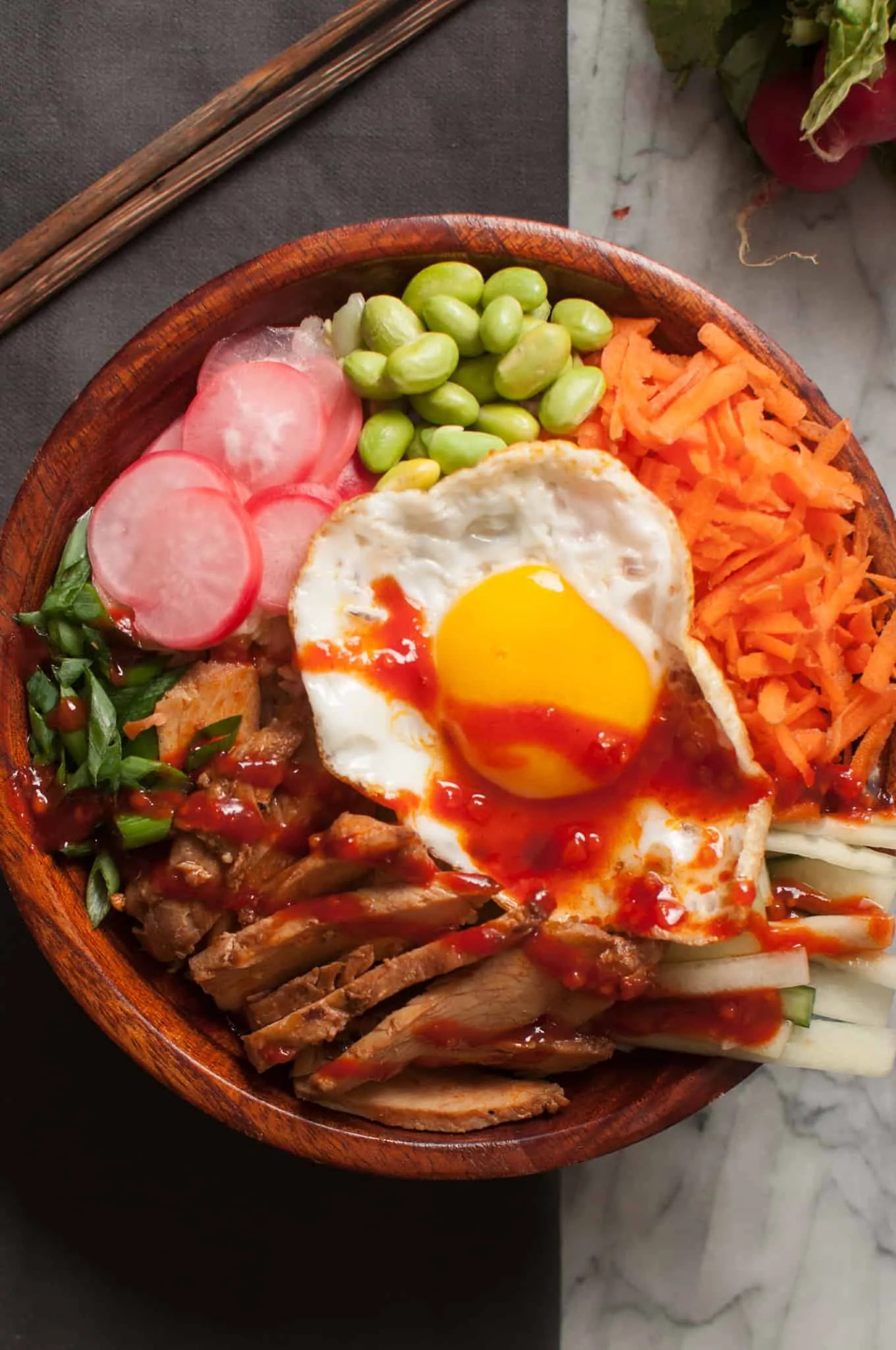
Bowl (bibimbap and kimchi-fried-rice) — 15 to 25 minutes. Choose bowl when you have leftover rice, a few odds of vegetables, and 20 minutes. Bibimbap is the most flexible dinner in the entire Korean canon — any vegetable, any protein, one fried egg, one big spoon of gochujang, done. Kimchi fried rice is the highest-value leftover-rescue dinner and reheats overnight.
BBQ-style stir-fry (bulgogi and dak galbi) — 20 to 35 minutes. Choose BBQ when you have thin-sliced meat marinated at least 30 minutes ahead. Beef bulgogi cooks in 4 minutes total if the pan is screaming hot; pork bulgogi takes 6-7 minutes. Both are weeknight-perfect if you can prep the marinade the night before or the morning of.
One-pot stew (jjigae) — 25 to 40 minutes. Choose stew when the weather is cold or you want to feed 4 from one pot. Kimchi jjigae, sundubu jjigae, and doenjang jjigae all simmer 20-25 minutes and improve as leftovers.
Noodle (japchae, jjajangmyeon, ramyeon) — 15 to 30 minutes. Choose noodle when you want something fast and slurpy. Ramyeon (Korean instant ramen) upgraded with an egg, kimchi, and scallion is the 8-minute weeknight rescue every Korean kid grew up with.
The Korean Pantry Starter Kit (Gochujang, Gochugaru, Sesame Oil, Soy)
The full Korean pantry costs about $30 to build and unlocks roughly twenty-two dinners across this roundup plus every fusion recipe you'll want to try. Shelf-stable items keep 12+ months at room temp; open jars go in the fridge and hold their flavor for at least six months.
Gochujang is the foundation — a fermented chili paste made from red chili powder, glutinous rice, soybean, and salt, aged 6 months to 2 years. Sunchang or Chung Jung One brands both sell 500g tubs for about $6 at any Korean grocery or the international aisle of a well-stocked supermarket. Do not substitute sriracha or sambal (they lack the fermented depth) — the workaround only works in emergencies. Once opened, gochujang keeps in the fridge for a year.
Gochugaru (Korean chili flakes) — coarse, bright red, medium-hot, and the primary color-and-heat ingredient in kimchi and every gochujang-adjacent sauce. Not the same as generic red pepper flakes, which are dried and dusty. Chung Jung One or Wang Korea brands, $8 for a 1 lb bag that lasts 6 months.
Toasted sesame oil — Kadoya (Japanese) or Ottogi (Korean), $6-8 for a 6-oz bottle. Sesame oil is a finishing oil for Korean cooking, not a frying oil — 1 teaspoon drizzled at the end of a stir-fry or stew adds nutty depth that raw sesame can't match. Do not use it as a high-heat cooking oil (the smoke point is too low and the flavor turns bitter).
Soy sauce — regular Kikkoman or a Korean brand like Sempio or Ottogi. Both work fine. A 20-oz bottle lasts 3 months in an active Korean-cooking kitchen.
Sugar and rice syrup (jocheong) — most Korean marinades pair salty (soy sauce) with sweet (sugar, rice syrup, or a pear puree). A cheap bag of Asian pear or a bottle of jocheong ($5, keeps 6 months) is the secret behind restaurant-quality bulgogi.
Nice-to-haves you'll use often: dried anchovies (for jjigae broth), sea salt for kimchi, toasted sesame seeds, roasted seaweed (gim), and doenjang (fermented soybean paste — think Korean miso, deeper and funkier). Most keep months in the fridge once opened.
6 Bulgogi and BBQ-Style Mains (Beef Bulgogi, Dak Galbi, Spicy Pork)
Bulgogi is thin-sliced marinated meat cooked fast over high heat. Every Korean cook has their own marinade ratio, but the classic starts with a 1:1:1 mix of soy sauce, brown sugar, and grated Asian pear (or apple, in a pinch), plus sesame oil, garlic, ginger, and scallion. Marinate at least 30 minutes; overnight is better.
1. Beef Bulgogi (Classic) — 25 minutes plus marinade. Ribeye or sirloin sliced paper-thin (freeze meat 20 min first to make slicing easy), marinated 30 min to overnight, seared 3-4 minutes total in a screaming-hot cast iron. Serve with rice and kimchi.
2. Spicy Pork Bulgogi (Jeyuk Bokkeum) — 25 minutes plus marinade. Same technique with sliced pork shoulder and a marinade that swaps in 2-3 tablespoons of gochujang for extra heat. Cooks 6-7 minutes.
3. Dak Galbi (Spicy Stir-Fried Chicken with Cabbage) — 35 minutes. Boneless thighs cubed, tossed with gochujang-gochugaru-soy marinade, stir-fried in one pan with cabbage, sweet potato cubes, and rice cakes (tteok). Cooks 20 minutes uncovered — the vegetables release enough liquid to steam the chicken through.
4. Korean Fried Chicken (Gochujang-Glazed) — 35 minutes. For weeknight-fast Korean fried chicken, use the "pan-fry then toss" method: pan-fry chicken pieces until golden, then toss in a gochujang-soy-honey glaze warmed in a separate pan. Not as crispy as double-fried KFC (Korean Fried Chicken) but way faster.
5. Bo Ssam (Steamed Pork Belly with Lettuce Wraps) — 45 minutes weeknight variant. The traditional bossam simmers pork belly for 90 minutes; a weeknight version uses pre-cooked pork belly (Trader Joe's has good ready-cooked belly) reheated and sliced, wrapped in lettuce leaves with rice, ssamjang (dipping sauce), and pickled radish.
6. Galbi (Grilled Short Ribs) — weekend project, but worth naming. LA-style flanken-cut short ribs marinated in soy-brown sugar-pear-sesame overnight, grilled 3 minutes per side over high heat. Save this for a Saturday.
5 Rice Bowls (Bibimbap, Kimchi Fried Rice, Chapchae Over Rice)
Rice bowls are the Korean answer to "I have leftovers and 20 minutes." The bowl format lets everyone customize heat and toppings, and every leftover in the fridge finds a home.
7. Bibimbap (Mixed Rice Bowl) — 30 minutes. The archetypal Korean bowl: hot rice topped with 4-6 seasoned vegetable toppings (spinach, carrots, bean sprouts, mushrooms, zucchini), a fried egg, a spoon of gochujang, and a drizzle of sesame oil. Everyone mixes their own bowl at the table.
8. Dolsot Bibimbap (Stone Bowl Bibimbap) — 30 minutes. Same recipe, served in a screaming-hot ceramic stone bowl that crisps the bottom layer of rice into a delicious golden crust (nurungji). Buy a dolsot for $18 at any Korean grocery.
9. Kimchi Fried Rice (Kimchi Bokkeumbap) — 20 minutes. Cold day-old rice, chopped kimchi (older kimchi is BETTER for fried rice — the sourness balances the sweetness of the rice), diced pork or Spam, sesame oil, fried egg on top. Weeknight rescue at its best.
10. Korean Beef Rice Bowl — 25 minutes. Ground beef browned with a soy-brown-sugar-sesame glaze, served over rice with sautéed vegetables and kimchi. The fastest bulgogi-adjacent dinner in the roundup — no marinating, no thin-slicing.
11. Chapchae Over Rice — 25 minutes. Sweet potato glass noodles (dangmyeon) tossed with beef, spinach, carrots, mushrooms, and a soy-sesame dressing, served over or alongside rice. Traditionally a party dish, but a weeknight-portioned version comes together in 25 minutes flat.
Real-World Numbers: Bibimbap Bowl Costs
Bibimbap looks fancy but is genuinely one of the cheapest per-serving Korean dinners you can make at home. Here's an approximate cost per serving from a US supermarket in mid-2026:
| Ingredient | Amount per bowl | Cost |
|---|---|---|
| Short-grain rice, cooked | 1 cup | $0.30 |
| Bean sprouts, blanched | 1/4 cup | $0.40 |
| Spinach, wilted with sesame | 1/4 cup | $0.60 |
| Carrot, julienned and sautéed | 1/4 cup | $0.25 |
| Shiitake mushrooms, sautéed | 1/4 cup | $0.80 |
| Zucchini, sautéed | 1/4 cup | $0.30 |
| Egg, fried sunny-side-up | 1 | $0.35 |
| Ground beef with sesame-soy glaze | 3 oz | $1.80 |
| Gochujang, kimchi, sesame seeds | to taste | $0.20 |
| Total per bowl | ||
| $5.00 |
Feeds 4 for about $20 in ingredients, and every topping keeps in the fridge for 4 days for meal-prep bowls all week.
4 One-Pot Stews (Kimchi Jjigae, Sundubu, Budae Jjigae, Doenjang)
Korean stews (jjigae) are the ultimate one-pot weeknight dinner. Simmer everything in a single earthenware pot (a ttukbaegi if you have one, otherwise any small dutch oven), serve straight from the pot with a bowl of rice on the side, done.
12. Kimchi Jjigae (Sour Kimchi Stew) — 30 minutes. The definitive Korean stew. Well-fermented sour kimchi (the older, the better — this is where old kimchi finds a home), pork belly or Spam, tofu, gochugaru, and dashi or anchovy stock. Simmer 20 minutes.
13. Sundubu Jjigae (Silken Tofu Stew) — 25 minutes. Silken (extra-soft) tofu, gochugaru, dashi, clams or shrimp, an egg cracked in at the end. Bubbling-hot and eaten straight from the pot with rice on the side.
14. Budae Jjigae (Army Base Stew) — 30 minutes. Post-Korean-War invention using US Army surplus ingredients — sliced hot dogs, Spam, American cheese, baked beans, ramen noodles, all simmered in a spicy gochujang broth. Absurd, delicious, addictive, and a legitimately great weeknight dinner for kids.
15. Doenjang Jjigae (Fermented Soybean Stew) — 30 minutes. Milder than kimchi jjigae, based on fermented soybean paste (doenjang) rather than kimchi. Tofu, zucchini, potato, mushrooms, and clams or beef. The umami depth is intense; a lifelong staple in Korean homes.
4 Noodle Dishes (Japchae, Jjajangmyeon, Spicy Cold Noodles, Ramyeon Upgrade)
16. Japchae (Sweet Potato Glass Noodles) — 30 minutes. Dangmyeon noodles boiled 6 minutes, drained, tossed with beef bulgogi, spinach, carrots, shiitakes, and a soy-sesame dressing. Serve hot or room temp.
17. Jjajangmyeon (Black Bean Noodles) — 35 minutes. Fresh wheat noodles topped with a black bean sauce (chunjang, fermented soybean paste dark and roasted) stir-fried with pork, onions, and zucchini. Delivery-food staple in Seoul, easy to make at home once you own a jar of chunjang.
18. Spicy Cold Noodles (Bibim Guksu) — 15 minutes. Somyeon (thin wheat noodles) boiled 3 minutes, shocked in ice water, tossed with a gochujang-sesame-vinegar sauce, and topped with julienned cucumber, boiled egg, and toasted sesame. Summer weeknight winner.
19. Ramyeon Upgrade — 12 minutes. Take any Shin ramyeon or Nongshim packet, add: 1 egg cracked in the last minute, 1/4 cup chopped kimchi, 2 slices American cheese melted on top, and 1 scallion. Not a "real" recipe but a cornerstone of Korean student and salaryman weeknight cooking, and genuinely excellent.
3 Weeknight Vegetable Sides (Banchan) That Stretch a Meal
Korean meals aren't complete without a spread of small vegetable dishes (banchan). Prep two or three on Sunday and they'll cover a week of dinners.
20. Sigeumchi Namul (Sesame Spinach) — 8 minutes. Blanch 1 lb spinach in salted boiling water for 30 seconds, shock in ice water, squeeze dry, toss with 1 tsp sesame oil, 1 tsp soy sauce, 1 tsp toasted sesame seeds, minced garlic. Keeps 4 days.
21. Oi Muchim (Spicy Cucumber Salad) — 5 minutes. Sliced Persian cucumbers, gochugaru, garlic, sesame oil, rice vinegar, salt. Better after 30 minutes in the fridge. Best banchan for any BBQ or bowl dinner.
22. Gochujang-Glazed Salmon — 20 minutes. Not technically a banchan but functions like one when sliced thin over rice: salmon fillets brushed with gochujang-honey-soy glaze, broiled 8 minutes. Bonus main + big-flavor side rolled into one.
Korean Street Food at Home: Tteokbokki, Kimbap, and Corn Dogs
Bonus round. None of these are dinner-table mains in Korea — they're market-stall
and after-school food — but four of them make a genuinely good weeknight dinner,
and all four are the dishes people actually search for after a trip to Seoul or a
K-drama binge. Budget 25 to 35 minutes each.
Tteokbokki (Spicy Stir-Fried Rice Cakes) — 25 minutes.
Garaetteok (cylindrical rice cakes) simmered in a gochujang-gochugaru-sugar sauce
built on anchovy stock until the sauce thickens enough to coat each piece, about
10-12 minutes. Vacuum-packed tteok runs about $4 per pound and keeps three months
in the freezer — soak frozen cakes in warm water for 10 minutes before they hit
the pan or the centers stay chalky. The classic upgrade is a jammy boiled egg and
a fistful of shredded mozzarella melted over the top in the last minute.
Tteokbokki with Fish Cakes (Eomuk) — 21 minutes.
The street-stall version. Sheets of eomuk (Korean fish cake) cut into triangles go
in with the rice cakes and soak up the sauce; they add protein and cut the sweetness.
This is the fastest dish in the entire roundup at 10 minutes prep and 11 minutes
cook, and it feeds two for about $6.
Kimbap (Seaweed Rice Rolls) — 30 minutes, no cooking required if you have leftovers.
The single best use for leftover bulgogi. Season warm short-grain rice with 1
tablespoon toasted sesame oil and 1 teaspoon salt per 2 cups — sesame oil and salt,
not rice vinegar, which is what separates kimbap from sushi. Lay a sheet of gim
on a bamboo mat, spread rice over two-thirds of it, and line up julienned carrot,
sesame spinach (the sigeumchi namul from the banchan section above), danmuji (yellow
pickled radish), a strip of omelet, and either imitation crab or leftover
Roll tight, brush the outside with sesame oil, and slice into 8 pieces with a wet
knife. Two rolls is a full lunch; a batch of six takes half an hour and packs for
three days.
Korean Corn Dogs (Gamja Hotdog) — 30 minutes.
Hot dog and a batons of low-moisture mozzarella on a skewer, dipped in a yeasted
batter, rolled in panko or in cubed par-cooked potato, deep-fried 3-4 minutes at
350°F, then rolled in granulated sugar and striped with ketchup and mustard. The
sugar is not optional and it is not weird — it is the entire point. One warning
from experience: the air fryer does not work here. The wet batter drips off the
skewer before it sets, and you end up with a bare hot dog and a scorched basket.
Use two inches of neutral oil in a small saucepan and fry two at a time.
Haemul Pajeon (Seafood Scallion Pancake) — 55 minutes.
The rainy-day dish. A thin batter of flour, egg, and ice-cold water poured over a
raft of whole scallions and mixed seafood, pan-fried in a generous slick of oil
until the edges are lacy and shattering-crisp. Cut into squares with kitchen shears
and eat with a soy-vinegar-gochugaru dipping sauce. Longer than a weeknight dinner
should be, but it's the best thing on this list with a beer.
Korean BBQ Tacos — 60 minutes, feeds 8.
The Korean-American street-truck crossover that started in Los Angeles in 2008 and
never left. Bulgogi-marinated beef in a corn tortilla with kimchi slaw, cilantro,
and a gochujang crema. Genuinely one of the highest-value ways to feed a crowd from
this roundup — a single batch covers eight people for roughly $30.
Sample 4-Day Korean Weeknight Meal Plan
The plan below is built around one Sunday prep session and one pound of thin-sliced
ribeye. Each night reuses something from the night before, so total active cooking
across four dinners is about 95 minutes.
Sunday prep (35 minutes): cook 6 cups of short-grain rice; blanch and season a
pound of spinach for sigeumchi namul; slice and marinate the ribeye for bulgogi;
make a jar of banchan cucumber salad.
Everything holds four days refrigerated.
| Night | Dinner | Active time | Uses up |
|---|---|---|---|
| Monday | Beef bulgogi with rice, cucumber banchan | 15 min | Sunday's marinated ribeye |
| Tuesday | Bibimbap bowls | 20 min | Leftover bulgogi, spinach namul, Sunday rice |
| Wednesday | Kimchi jjigae with rice | 30 min | The sour end of the kimchi jar |
| Thursday | Japchae | 30 min | Remaining spinach, carrots, mushrooms |
Two swaps worth knowing. If Wednesday runs late, drop in
instead — it's 25 minutes start to finish and needs nothing from the prep session
but the pantry. If you'd rather cook once and eat twice, replace Thursday with
the 135-minute braise is hands-off, feeds six, and reheats better on Friday than it
tastes on Thursday.
Total grocery spend for the four dinners runs about $52 for four servings a night,
or roughly $3.25 per plate. Build the whole week in one pass from the
meal plan tool and export it as a single Instacart cart — the
Korean-specific items route to H-Mart when one is in your delivery zone. A set of
stackable glass containers makes the bibimbap-component prep worth
doing; without them the seasoned vegetables end up in four mismatched bowls with
plastic wrap and half of them get forgotten.
Building a Weeknight Korean Shopping List
Build this cart once per month and every dinner in this roundup is 20 minutes from plate. Approximate US supermarket prices in mid-2026 (H-Mart or 99 Ranch prices are typically 15-25% lower on the Korean-only items):
Pantry (buy once, keeps months):
| Item | Brand | Approx. cost |
|---|---|---|
| Gochujang (500g tub) | Sunchang | $6 |
| Gochugaru (1 lb) | Chung Jung One | $8 |
| Toasted sesame oil (6 oz) | Ottogi | $7 |
| Doenjang (500g) | Sempio | $8 |
| Rice syrup (jocheong) | Chung Jung One | $5 |
| Dangmyeon (sweet potato noodles) | Assi | $4 |
| Sesame seeds, toasted | any | $3 |
| Soy sauce (20 oz) | Kikkoman | $4 |
| Short-grain sushi rice (10 lb) | Nishiki | $22 |
Fresh (weekly, per dinner):
| Item | Approx. cost |
|---|---|
| Kimchi (jar, 32 oz) | $8 |
| Ribeye or sirloin (1 lb, sliced) | $18 |
| Ground beef or pork (1 lb) | $8 |
| Silken tofu (14 oz) | $3 |
| Napa cabbage | $3 |
| Bean sprouts | $2 |
| Baby spinach (5 oz) | $3 |
| Scallions (bunch) | $1 |
Total one-time pantry investment is about $65; per-dinner fresh spend averages $10-15 for 4 servings. Aisleprompt's shopping-list export at the bottom of each recipe builds the cart directly and routes the Korean-only items (gochujang, gochugaru, doenjang, dangmyeon) to H-Mart when there's one in your delivery zone, otherwise falls back to Whole Foods or Amazon.
The Mistake Home Cooks Make: Skipping the Marinade Time, Over-Salting Gochujang
Two errors kill 70% of home Korean dinners.
Bulgogi marinade needs 30 minutes minimum. The bulgogi marinade's grated pear (or apple) contains natural enzymes that tenderize the thin-sliced meat — but the enzymatic action needs at least 30 minutes at room temperature or 2+ hours in the fridge to work. Slice the meat, mix the marinade, and go do something else for half an hour; do not shortcut to a 5-minute marinade or the meat comes out tough and one-note. Maangchi's bulgogi breakdown is the definitive reference — she's the Julia Child of Korean home cooking and every one of her recipes is battle-tested.
Gochujang is already salted — do not add extra soy sauce blindly. A 3-tablespoon dollop of gochujang carries about 900mg of sodium (as much as 1.5 teaspoons of soy sauce). Bibimbap, jjigae, and any gochujang-based sauce need a proportional soy sauce reduction from what a similar Chinese or Japanese recipe would use. If a bibimbap sauce recipe calls for 2 tbsp gochujang + 2 tbsp soy, taste before serving — you may want to dial the soy back to 1 tablespoon. Serious Eats has an in-depth Korean sauces guide that breaks down the salt-heat balance for the major sauce categories.
Common pitfalls beyond the two big ones:
- Cold pan for bulgogi. The pan must smoke before the meat goes in — otherwise it steams instead of sears.
- Old spinach for banchan. Sigeumchi namul needs fresh, tender spinach; the pre-washed baby spinach in a plastic clamshell works fine for weeknights.
- New kimchi in jjigae. Young kimchi (less than 3 weeks old) is too crunchy for stew. Save the fresh jar for banchan and use 6+ week-old kimchi (or store-bought sour kimchi) for jjigae.
- Under-toasted sesame seeds. Store-bought "toasted" sesame is often not toasted enough. Toast an extra 60 seconds in a dry skillet until they're a shade darker and smell nutty — the flavor difference is huge.
Kitchen tools that pay for themselves: a small cast-iron pan (essential for bulgogi and stone-bowl bibimbap — see the cookware collection for a ttukbaegi recommendation), a sharp chef's knife for slicing meat thin (put the meat in the freezer for 20 minutes first — it slices like butter), and basic utensils — silicone tongs, a bench scraper for mise-en-place, and heat-safe wooden chopsticks for stir-frying and plating.
FAQ
What is gochujang and can I substitute for it in Korean recipes?
Gochujang is a fermented Korean chili paste with mild sweetness and deep umami — think miso plus chili. There is no perfect substitute, but a workable emergency mix is 2 parts sriracha, 1 part white miso, and 1 part maple syrup or honey. Real gochujang keeps in the fridge for a year and shows up in half the recipes in this roundup, so it's worth the $6 tub.
How do I make Korean recipes less spicy for kids or spice-sensitive eaters?
Cut gochujang and gochugaru by half in any recipe, and add a spoonful of honey or brown sugar to balance heat. Bibimbap and japchae are naturally mild — the heat comes from the gochujang served on the side, so let each person add their own. Bulgogi, kimchi fried rice made with young/mild kimchi, and Korean corn cheese are all crowd-pleasers with kids.
Do I need a Korean grocery store to cook these recipes at home?
For the freshest kimchi, banchan, and rice cakes yes, but most staples (gochujang, gochugaru, sesame oil, roasted seaweed, dried anchovies) are stocked in mainstream grocery Asian aisles. AislePrompt's Instacart cart will route hard-to-find items to Whole Foods or an H Mart if there's one within delivery range — check when you build the shopping list.
What's the difference between bulgogi, galbi, and dak galbi?
Bulgogi is thin-sliced marinated beef (usually ribeye or sirloin) cooked fast over high heat; galbi is short rib, bone-in or boneless, marinated longer for grill or broiler. Dak galbi is a completely different dish despite the name — spicy stir-fried chicken with cabbage, sweet potato, and rice cakes cooked in a single pan. Bulgogi is the fastest and most weeknight-friendly of the three.
Can I make bibimbap ahead of time for meal prep?
Yes — cook the rice, seasoned vegetable toppings (spinach, carrots, mushrooms, bean sprouts), and protein in bulk on Sunday and store separately in the fridge for up to 4 days. Assemble bowls each morning; fry the egg fresh, add gochujang sauce, and warm the whole bowl 60 seconds in the microwave. This is one of the highest-value meal-prep dinners in the roundup.
Sources
- Maangchi's Recipe Index — the definitive Korean home-cooking reference in English, and the source we lean on for the bulgogi marinade technique.
- Serious Eats — Korean Recipes — technique-first coverage of gochujang balance, jjigae reduction, and stone-bowl rice.
- NYT Cooking — Korean Recipes — modern weeknight-friendly Korean dinners with home-tested timings.
Related Guides
- 25 Easy Japanese Dinners — the umami-and-dashi cousin to Korean weeknight cooking.
- 20 Vietnamese Recipes: Pho, Banh Mi & Rice Noodle Bowls — the herb-forward Southeast Asian companion.
- 22 Mexican Dinner Recipes — a different heat vocabulary (dried chili vs fermented chili) with equally fast weeknight formats.
- 22 Korean Dinner Recipes: Bulgogi, Bibimbap & Kimchi Stew — the companion planner to this guide: the same 22 dinners reorganized into a 5-day rotation with prep times, difficulty ratings, and one consolidated shopping list. Start here for the recipes and technique; go there when you want the week mapped out.
Frequently asked questions
What is gochujang and can I substitute for it in Korean recipes?
How do I make Korean recipes less spicy for kids or spice-sensitive eaters?
Do I need a Korean grocery store to cook these recipes at home?
What's the difference between bulgogi, galbi, and dak galbi?
Can I make bibimbap ahead of time for meal prep?
Sources
Recipes to start your week with
Save any of these to My Recipes — no account needed — and send the ingredients to Instacart in one tap.


Cook Korean at home this week.
Ask our AI for a week of Korean dinners — it writes the recipes, builds the shopping list, and sends the cart to Instacart. No account needed.
Plan my Korean week →