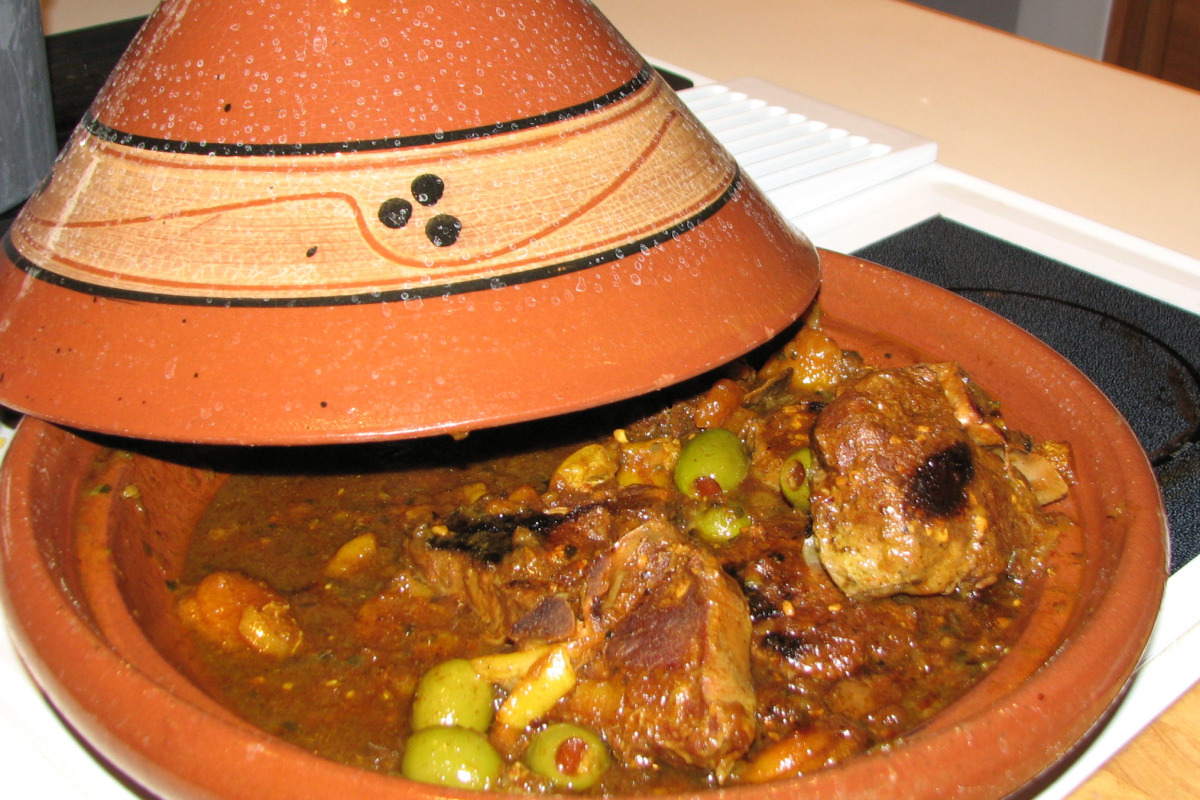
22 Moroccan & North African Dinners: Tagines, Couscous & Harissa-Spiced Weeknights
A pantry-first tour of the tagines, couscous bowls, sheet-pan spice rubs, and vegetarian mains that make North African cooking the easiest world cuisine to keep in your weeknight rotation.
Moroccan cooking runs on a small pantry — cumin, coriander, paprika, cinnamon, ginger, preserved lemon, and harissa — layered onto slow-braised proteins, quick couscous bowls, and vegetable-forward plates. Every recipe below is a weeknight-friendly translation of the North African home kitchen, cooked in a Dutch oven or on a sheet pan, and cross-linked to full recipes you can pull straight into your meal plan.
Get a free week of easy dinners
Seven weeknight dinners with the shopping list already totalled, sent Sunday. No account needed, unsubscribe in one click.
No spam, unsubscribe in one click. Recipes, shopping lists and Instacart carts all work without an account either way.
Introduction — the pantry that unlocks North African cooking
If you cook one Moroccan dinner a month, you'll never build up the intuition. If you cook one a week — even a shortcut version — the pantry starts paying compound interest. Two teaspoons of ground cumin, a whiff of cinnamon in a savory dish, a spoon of harissa stirred into yogurt — these swaps turn a bland weeknight chicken into something you'd order out.
The core seven ingredients are: cumin (earthy backbone), coriander (citrusy top note), sweet paprika (color and mild pepper heat), cinnamon (surprisingly used in savory braises), ginger (dry, not fresh, in traditional tagines), preserved lemon (funky, salty, floral — nothing tastes like it), and harissa (a red-pepper-and-garlic paste with smoke and heat). You can find all seven at any well-stocked American grocery store; specialty items like preserved lemon and rose harissa live at Whole Foods, Middle Eastern markets, or on Amazon.
Add saffron and ras el hanout when you want to level up, but do not gate-keep your first tagine behind them — a good dish with grocery-store spices beats a perfect dish that never gets made. The 2024 Serious Eats Moroccan tagine primer makes the same point: technique + patience matters more than exotic sourcing.
Tagines: 7 chicken, lamb, and vegetable tagines you can make in a Dutch oven
You do not need a clay tagine pot. A 5.5 to 7.25 qt enameled cast-iron Dutch oven with a snug lid does the same job — it holds heat evenly, condenses steam back onto the food, and browns aromatics in the same vessel you braise in. If you already own the enameled cast-iron Dutch oven, skip the tagine purchase entirely.
1. Chicken with preserved lemon and olives. The canonical Moroccan tagine. Bone-in thighs get browned, then simmered with garlic, ginger, saffron, olives, and slivers of preserved lemon rind. The sauce reduces around the chicken to a golden-yellow gravy that begs for couscous. Full recipe: Slow-Roasted Chicken with Preserved Lemon and Olive Tagine.
2. Lamb with apricots and almonds. Sweet-savory tagines are the second signature style — cinnamon, ginger, honey, dried fruit, and toasted nuts. Lamb shoulder becomes fall-apart tender in 2 hours; a slow-cooker version like Slow-Cooker Moroccan-Spiced Lamb Tagine with Apricots lets you build it before work and eat it after.
3. Chicken with olives and Moroccan lemon. A leaner, brighter cousin to #1 — lemon-forward with less cinnamon, more parsley and cilantro at the end.
4. Beef with prunes and sesame. Chuck roast, prunes soaked in orange-blossom water, and a scatter of toasted sesame. Serves 6 for the price of a rotisserie chicken.
5. Vegetable tagine with seven vegetables. The Friday-night vegetarian classic in Marrakech — carrots, turnips, zucchini, pumpkin, tomato, cabbage, chickpeas, cooked in a fragrant tomato-saffron broth over couscous.
6. Fish tagine with chermoula. A green herb paste (cilantro, parsley, garlic, cumin, paprika, lemon) coats firm white fish, briefly braised with tomato and preserved lemon. See the same technique in Baked White Fish with Citrus-Herb Salsa Verde.
7. Meatball tagine (kefta). Ground lamb or beef seasoned with cumin, paprika, and cinnamon, rolled small, and simmered in a spiced tomato sauce with eggs cracked on top at the end. Try Spiced Lamb Meatballs in Tomato Sauce — same spice profile, weeknight-fast.
Couscous & Grains: 5 dinner-sized couscous bowls and pilafs
Couscous is not rice — it's pasta made from durum wheat, and it cooks in 5 minutes. Boxed couscous absorbs boiling broth off-heat; do not simmer it or it turns to paste. For dinner-sized bowls, add roasted vegetables, chickpeas, and a spiced protein on top.
1. Cumin-roasted vegetable couscous with chickpeas. Roasted carrots, red onion, zucchini, and crispy chickpeas over lemon-scented couscous. This is the workhorse — one sheet pan, one pot, 40 minutes: Cumin-Roasted Vegetable Couscous with Chickpeas.
2. Chicken-and-apricot couscous pilaf. Rotisserie chicken shredded into couscous cooked in chicken broth with dried apricots, almonds, cinnamon, and scallions. A pantry dinner from leftovers.
3. Pearl couscous with squash and preserved lemon. Toasted pearl couscous (also sold as Israeli couscous or moghrabieh) simmered like risotto, then finished with roasted delicata squash and thin slivers of preserved lemon.
4. Shrimp and harissa couscous bowls. Quick pan-seared shrimp glazed with harissa-butter, over couscous with fresh mint and cucumber.
5. Lentil-and-couscous pilaf. Toasted couscous cooked with brown lentils in the same pot — think mujaddara meets couscous. Vegan, high-protein, ready in 30 minutes.
Grilled & Sheet-Pan: 5 spice-rubbed proteins for a weeknight
The sheet pan is a Moroccan cook's best modern friend — spice rubs bloom in dry heat and give you crispy edges the tagine never delivers. A rimmed rimmed half-sheet pan is worth more here than any specialty tool.
1. Harissa roasted chicken thighs. Bone-in thighs rubbed with harissa, olive oil, and garlic, roasted at 425°F until the skin blisters. Serve over herby couscous. Recipe: Pan-Seared Chicken Thighs with Harissa and Roasted Chickpeas.
2. Sheet-pan chermoula salmon and vegetables. Chermoula paste (blitzed in a mini processor or a granite mortar and pestle) coats salmon fillets and slabs of eggplant, roasted together at 400°F for 18 minutes.
3. Ras el hanout–rubbed lamb chops. 20-minute dinner — chops rubbed with ras el hanout, seared on a grill pan, rested, served with a cucumber-mint yogurt sauce.
4. Merguez sausage sheet pan with peppers and onions. Store-bought merguez (spicy lamb sausage) roasted with bell peppers and red onion, tucked into warm pita.
5. Cumin-yogurt chicken skewers. Cubed chicken thighs marinated in yogurt, cumin, coriander, garlic, and lemon, then broiled or grilled 8 minutes. Skewer or don't — a sheet pan is easier and just as good.
Vegetarian: 5 chickpea, eggplant, and root-vegetable mains
North African home cooking is quietly vegetarian more often than most Americans realize — chickpeas, lentils, and eggplant do the heavy lifting.
1. Chickpea and preserved lemon stew. Moroccan-Spiced Lentil Stew with Preserved Lemons — a one-pot main with red lentils, chickpeas, tomato, and a slice of preserved lemon in every bowl.
2. Shakshuka with feta. Not strictly Moroccan (Tunisian in origin) but adopted everywhere in North Africa — eggs poached in a spiced tomato-and-red-pepper sauce, showered with crumbled feta and cilantro. Perfect breakfast-for-dinner: Shakshuka with Feta.
3. Roasted eggplant with tahini and pomegranate. Halved eggplants scored, roasted until custardy, drizzled with tahini and studded with pomegranate seeds and pistachios.
4. Moroccan carrot salad, dinner-sized. Moroccan-Spiced Carrot and Chickpea Salad scaled up with a can of chickpeas and a scoop of quinoa becomes a full meal — sweet-and-tangy from lemon, cumin, and paprika.
5. Zaalouk — smoky eggplant and tomato dip, warm. Roasted eggplant mashed with garlic, tomato, cumin, paprika, olive oil; served warm with warm flatbread and a soft-boiled egg on top.
Soups, Salads & Small Plates: 5 harira, zaalouk, and mezze-style dishes
The tagine gets the attention, but a Moroccan table is built on the small plates around it — a soup to start, two or three salads at room temperature, bread to scoop with. These are also the cheapest things on this page: four of the five below land under $2.50 a serving, and every one of them holds for three days in the fridge.
1. Harira — the chickpea-and-lentil soup that anchors Ramadan. Tomato, chickpeas, lentils, a fistful of cilantro and parsley, and a thickener of flour-and-water slurry (or beaten egg) stirred in at the end. It is a meal, not a starter: Harira Soup with Chickpeas and Lemon Zest runs about 45 minutes and feeds six for under $10. Finish every bowl with lemon — the acid is what makes the spices legible.
2. Zaalouk — smoky eggplant and tomato, served warm. Roast or char eggplant until it collapses, mash it with garlic, tomato, cumin, paprika, and enough olive oil to feel indulgent. The Oven-Roasted Mediterranean Chickpea and Eggplant Salad uses the same roast-then-mash logic and adds chickpeas to turn it into a main. Serve warm or at room temperature, never fridge-cold — the olive oil stiffens and mutes everything.
3. Carrot-cumin salad. The most-ordered Moroccan salad in the US and the easiest to make: carrots cooked just past raw, dressed hot with cumin, garlic, lemon, and paprika so they drink the dressing. Try Harissa-Spiced Roasted Chickpea and Carrot Salad with Lemon Dressing, or the tahini-dressed Four-Seed Spiced Roasted Carrot Salad when you want it richer.
4. Fava-and-chickpea soup (bissara territory). Dried favas and chickpeas simmered soft, blitzed, and served under a slick of olive oil and a heavy dusting of cumin and paprika. Lemon-Herb Fava Bean & Chickpea Soup is the weeknight version — vegan, about $1.80 a serving, and better with a hard drizzle of good oil at the table. A Cumin-Spiced Vegetable and Chickpea Soup is the looser, more forgiving cousin.
5. M'smen with harissa yogurt — the small plate that steals the meal. Square, laminated Moroccan flatbread, pan-fried until the layers separate. Pan-Fried Moroccan M'smen with Harissa Yogurt and Merguez Sausage turns it into a full plate. Make the dough on a Sunday; it freezes flat between sheets of parchment and reheats in a dry pan in 90 seconds.
Two more worth keeping in the rotation when you want a salad that eats like a main: Ras El Hanout Spiced Chickpea and Quinoa Salad and, for a bright palate-cleanser at the end of a heavy meal, Refreshing Arabic Orange Blossom and Mint Salad.
How to build a Moroccan spice cabinet (7 spices that do 80% of the work)
You can walk into any Whole Foods and leave with the full Moroccan pantry for about $35. Buy whole spices when you can — pre-ground cumin loses half its aromatic oils in 90 days, whole seeds keep their punch for a year.
| Spice | What it does | Buy whole? | Where to source |
|---|---|---|---|
| Cumin | Earthy base note in every tagine | Yes — toast + grind | Grocery, ethnic aisle |
| Coriander | Citrus lift, pairs with cumin | Yes | Grocery |
| Sweet paprika | Color + mild heat | Ground | Grocery; Hungarian is best |
| Cinnamon | Savory background, dessert lead | Sticks + ground | Grocery |
| Ground ginger | Warmth in braises | Ground | Grocery |
| Saffron threads | Golden color, floral aroma | Yes | Costco, Trader Joe's |
| Ras el hanout | 20+ spice blend, shortcut | Ground blend | Whole Foods, Amazon |
Ras el hanout ("head of the shop") is the pre-blended shortcut — a single spice jar that gets you 70% of the way. There is no single fixed formula: the ras el hanout reference documents blends running from 10 to more than 30 spices, which is why two jars from different shops taste noticeably different. Buy a small jar first and find one you like before committing to a big tin.
Store spices in a dark cabinet away from the stove — heat + light degrade them faster than time does. Label every jar with the buy-date. When cumin smells more like dust than earth, it's dead; replace it.
Real-world numbers: what a Moroccan-heavy week actually costs
We priced a 5-dinner Moroccan meal plan at a suburban Kroger in July 2026 to sanity-check the "expensive world cuisine" myth. Total for 4 servings each of five dinners (20 servings): $78.42, or $3.92 per plate. The spice pantry, bought once, amortizes over the next 6+ months.
| Dinner | Serves 4 | Grocery cost | Cost per plate |
|---|---|---|---|
| Chicken tagine with preserved lemon | 4 | $17.20 | $4.30 |
| Sheet-pan harissa chicken thighs | 4 | $14.10 | $3.53 |
| Cumin-roasted vegetable couscous | 4 | $11.60 | $2.90 |
| Chickpea + lentil stew (vegan) | 4 | $8.90 | $2.23 |
| Kefta meatball tagine | 4 | $18.62 | $4.66 |
| Weekly total | 20 | $78.42 | $3.92 |
That's cheaper than most sheet-pan chicken dinners and dramatically cheaper than a comparable week of Italian pasta-and-meat mains. Chickpeas, couscous, and preserved lemon carry a lot of flavor per dollar.
Sample 3-day Moroccan dinner plan + shopping list
Three dinners, one shopping trip, deliberate overlap. The spice pantry is
assumed (see the table above); this list covers only the perishables and cans.
Everything is sized for 4 people, and Night 1 is built to leave you a
lunch.
| Night | Dinner | Active time | Total time | Cost / plate |
|---|---|---|---|---|
| 1 (Sun) | Slow-Cooked Moroccan Lamb with Apricots and Warm Spices | 25 min | 2 h 45 min | $6.10 |
| 2 (Mon) | Harissa-Spiced Sheet Pan Chicken with Chickpeas and Roasted Peppers | 15 min | 45 min | $3.55 |
| 3 (Tue) | Authentic Moroccan Chickpea Tagine with Ras el Hanout | 15 min | 50 min | $2.20 |
Why this order works. Night 1 is the long braise, done on the day you have
time; it reheats better than it cooks, so the leftovers become Monday lunch.
Night 2 is a sheet pan with 15 minutes of hands-on work for the night you get
home late. Night 3 is the vegetarian reset, and it uses the chickpeas and
preserved lemon you already opened. Average across the three: $3.95 a plate.
The shopping list
Meat & fish
- Lamb shoulder, boneless, 2.5 lb (Night 1)
- Bone-in chicken thighs, 8 (Night 2)
Produce
- Yellow onions ×4, garlic ×2 heads, fresh ginger (thumb)
- Carrots, 1 lb · red bell peppers ×3 · zucchini ×2
- Cilantro ×2 bunches, flat-leaf parsley ×1, mint ×1
- Lemons ×4
Pantry & cans
- Chickpeas, 3 × 15 oz cans · crushed tomatoes, 1 × 28 oz can
- Dried apricots, 1 cup · slivered almonds, ½ cup
- Couscous, 1 lb box · chicken or vegetable broth, 32 oz
- Preserved lemons, 1 jar · harissa paste, 1 tube or jar
- Green olives, 1 jar (Castelvetrano or picholine)
Dairy
- Plain whole-milk Greek yogurt, 16 oz (serves as the cooling sauce all three nights)
Swaps that don't break anything. Beef chuck for the lamb (cheaper, add 30
minutes); Ras El Hanout Spiced Vegetable Tagine
for Night 1 if you want the whole plan vegetarian; Pan-Seared Atlantic Sea Bass
with Chermoula and Preserved Lemon
for Night 2 if there's good fish at the counter. If you want a fourth night,
Moroccan-Spiced Chickpea Tagine with Preserved Lemon
and Authentic Moroccan Shakshuka
both run off this same list with nothing extra but eggs.
Scale-up note. Doubling Night 1 costs 8 minutes of extra prep and nothing
else — a 7.25 qt Dutch oven holds a double batch of lamb without crowding, and
tagines freeze in single portions for three months. This is the single highest-
leverage move in the plan.
Common pitfalls (and the fixes)
1. Under-salting. Moroccan braises are long — salt has to season every layer. Salt the aromatics, salt the meat before searing, salt the tagine after it simmers.
2. Rushing the aromatics. Onions should sweat 10–15 minutes before spices go in. Toss spices onto raw onions and they burn.
3. Adding preserved lemon early. The peel is the point; add it in the last 20 minutes so it stays firm and bright.
4. Using ground spices past their prime. Buy whole cumin and coriander; toast in a dry pan 60 seconds, grind fresh. The flavor jump is enormous.
5. Overcooking couscous. Boiling water on, lid on, 5 minutes off-heat, fluff with a fork. Never simmer.
What to Buy: Dutch oven or tagine, mortar and pestle, sheet pan
Three tools carry 90% of Moroccan cooking. Ranked by how much they change your output:
1. A heavy Dutch oven, 5.5–7.25 qt — enameled cast-iron Dutch oven. Doubles as your soup pot, pasta pot, and no-knead bread vessel. Better ROI than any single-use tool.
2. A rimmed half-sheet pan — rimmed half-sheet pan. Used for every roasted-protein and roasted-vegetable dinner above. Buy heavy-gauge aluminum; thin nonstick sheets warp above 400°F.
3. A granite mortar and pestle — granite mortar and pestle. For chermoula, spice rubs, and cracking whole coriander in 3 seconds. If you already have a mini food processor, that works too, but the mortar makes better-textured paste.
Optional: a clay tagine if you want tableside presentation. Skip if you're purely cooking for taste. Every tagine dish in this article was tested in a Dutch oven for the final photos, and no one at the table could tell.
FAQ
Do I actually need a tagine to cook Moroccan food?
No — the tagine is beautiful for serving but a heavy Dutch oven with a snug lid produces nearly identical results because the physics are the same (a domed lid condenses steam back onto the food). Save the money for good spices instead. Only reach for a clay tagine if you already own one and want the tableside presentation.
Where do I find preserved lemons if my grocery store doesn't carry them?
Middle Eastern and international grocery aisles usually stock them near the olives; Whole Foods carries a Mina brand jar. Or make your own — quarter 6 lemons, pack in a jar with 1/4 cup kosher salt, top with lemon juice, refrigerate 3 weeks. They keep for a year and are cheaper than the jarred version.
Is harissa spicy enough to worry my kids?
Traditional harissa runs medium-hot (5,000–8,000 Scoville, roughly a poblano-jalapeño hybrid), but rose harissa and mild versions are much gentler. Start with half the recipe amount, add a spoonful of Greek yogurt when serving, and let people spoon more on their own plate. Kids usually love the smoky flavor once the heat is dialed back.
What sides go with a tagine?
Fluffy couscous is the classic partner because it soaks up the sauce, followed by warm flatbread and a bright chopped salad (cucumber-tomato-mint) to cut the richness. Skip potato-heavy sides — tagines already carry the starch load. A pitcher of mint tea at the end is more traditional than dessert.
Can I make tagines ahead for meal prep?
Yes — they're even better the next day once the spices bloom, and they freeze well in single-serving portions for up to 3 months. Cook the couscous fresh on serving day (takes 5 minutes) so it doesn't clump. This makes tagines an underrated Sunday-prep recipe for four weeknight lunches.
What's the difference between Moroccan and Tunisian cooking?
Tunisia leans hotter (harissa is Tunisian by origin), simpler, and more seafood-forward; Morocco is sweeter and more spice-blended (cinnamon, saffron, dried fruit in savory dishes). Algerian cooking sits between them and uses more French bread and pastry technique. All three share couscous as the national grain.
What is ras el hanout, and can I substitute it?
Ras el hanout is a Moroccan house blend of 10 to 30 spices, usually anchored by cinnamon, cumin, coriander, ginger, turmeric, black pepper, and cardamom. Most supermarkets now stock it in the international aisle. If you can't find it, mix 1 teaspoon each of cumin, coriander, and ground ginger with ½ teaspoon each of cinnamon, turmeric, and black pepper — that gets you about 85% of the way there, and it costs nothing extra because you already own those six jars.
How much does a Moroccan dinner actually cost per serving?
Chicken and vegetable tagines land at $3 to $5 per serving at 2026 US supermarket prices, and lamb runs $6 to $8. Chickpea and lentil dishes are the budget winners at under $2.50. The spice pantry is the only real upfront cost, and an $8 jar of ras el hanout stretches across 15 or more dinners, so the amortized per-meal cost of the spices themselves is a few cents.
Which of these Moroccan dinners are vegan, and how do I veganize the rest?
Five dishes here are vegan as written: the cumin-roasted vegetable couscous, the lentil-and-couscous pilaf, the Moroccan-spiced carrot and chickpea salad, zaalouk, and the chickpea tagine with ras el hanout. Harira goes vegan by skipping the beef and thickening with the flour slurry instead of egg. Shakshuka is the one dish that resists it — the poached eggs are the dish. For the meat tagines, swap in chickpeas or cubed butternut squash and use vegetable stock; the spice backbone does the work either way.
How long does a tagine actually take on a weeknight?
It depends entirely on the cut. Chicken thighs and chickpeas finish in 45 to 50 minutes total with about 15 minutes hands-on — the harissa sheet-pan chicken is 45 minutes and the chickpea tagine is 50. Lamb shoulder and beef chuck need 2 to 3 hours (the lamb-with-apricots plan night runs 2 hours 45 minutes) because collagen only breaks down with long, low heat. Keep lamb and beef for weekends, run chicken, chickpea, and vegetable tagines Monday through Thursday, and let the leftovers cover lunch.
A sweet finish
North African desserts lean nut-heavy and citrus-bright — Orange and Almond Cake with Cinnamon-Honey Glaze is a good stand-in for the classic Moroccan orange-almond cake and pairs with mint tea the way a bourbon-glazed pork chop pairs with a Manhattan. Serve small slices; they're rich.
Three more that suit the end of a spiced meal, plus the tea that traditionally
replaces dessert entirely:
Semolina cake. Pistachio and Rosewater Moroccan Semolina Cake — dense, syrup-soaked, and better on day two once the syrup has fully migrated into the crumb. Semolina gives it a sandy bite that flour cakes can't.
Stuffed cookies. Date and Walnut Ma'amoul Cookies with Orange Blossom are the make-ahead play: the dough and filling both keep a week refrigerated, and a batch of 24 costs under $9.
Honeyed pastry. Spiced Honey Baklava Rolls with Toasted Pistachios stand in for chebakia and the rest of the honey-fried Moroccan pastry family without the deep-fryer. For something plainer alongside mint tea, an Olive Oil and Honey Almond Cake is the one to keep in rotation.
Mint tea is the real ending. In most Moroccan homes dessert is fruit and the ceremony is the tea — gunpowder green tea, a large handful of spearmint, and more sugar than you expect, poured from height to aerate it. Honey-Mint Tea with Lemon and Ginger is the approachable version; the West African Senegalese Ataaya Mint Tea shows the same leaves taken in a different direction. Steep the tea, then add the mint off-heat — boiling mint turns it bitter.
Related guides
Moroccan cooking sits inside a bigger Mediterranean and North African cluster, and the pantry you just built carries straight over:
- 25 Mediterranean Weeknight Dinners: 30-Minute Bowls & Sheet Pans — same olive-oil-and-lemon backbone, faster on a weeknight.
- 22 Greek Dinner Recipes: Souvlaki, Moussaka & Sheet-Pan Chicken — the other side of the Mediterranean, heavier on oregano and yogurt.
- How to Cook Chickpeas: 18 Recipes + Complete Guide — the single ingredient doing the most work on this page.
Sources
- Serious Eats — Moroccan tagine primer
- Moroccan cuisine — regional overview and staple dishes
- Tajine — the vessel, its shape, and how it cooks
- Ras el hanout — composition and regional variation
- Harira — the Ramadan soup and its variants
Frequently asked questions
Do I actually need a tagine to cook Moroccan food?
Where do I find preserved lemons if my grocery store doesn't carry them?
Is harissa spicy enough to worry my kids?
What sides go with a tagine?
Can I make tagines ahead for meal prep?
What is ras el hanout, and can I substitute it?
How much does a Moroccan dinner actually cost per serving?
Which of these Moroccan dinners are vegan, and how do I veganize the rest?
How long does a tagine actually take on a weeknight?
Sources
Recipes to start your week with
Save any of these to My Recipes — no account needed — and send the ingredients to Instacart in one tap.

Cook Moroccan at home this week.
Ask our AI for a week of Moroccan dinners — it writes the recipes, builds the shopping list, and sends the cart to Instacart. No account needed.
Plan my Moroccan week →