How to Cook Chickpeas: 18 Recipes + Complete Guide (Dried & Canned)
Three ways to cook dried chickpeas, the baking-soda trick that makes them creamy every time, 18 curated recipes across five cuisines, and a Sunday batch that feeds you all week.
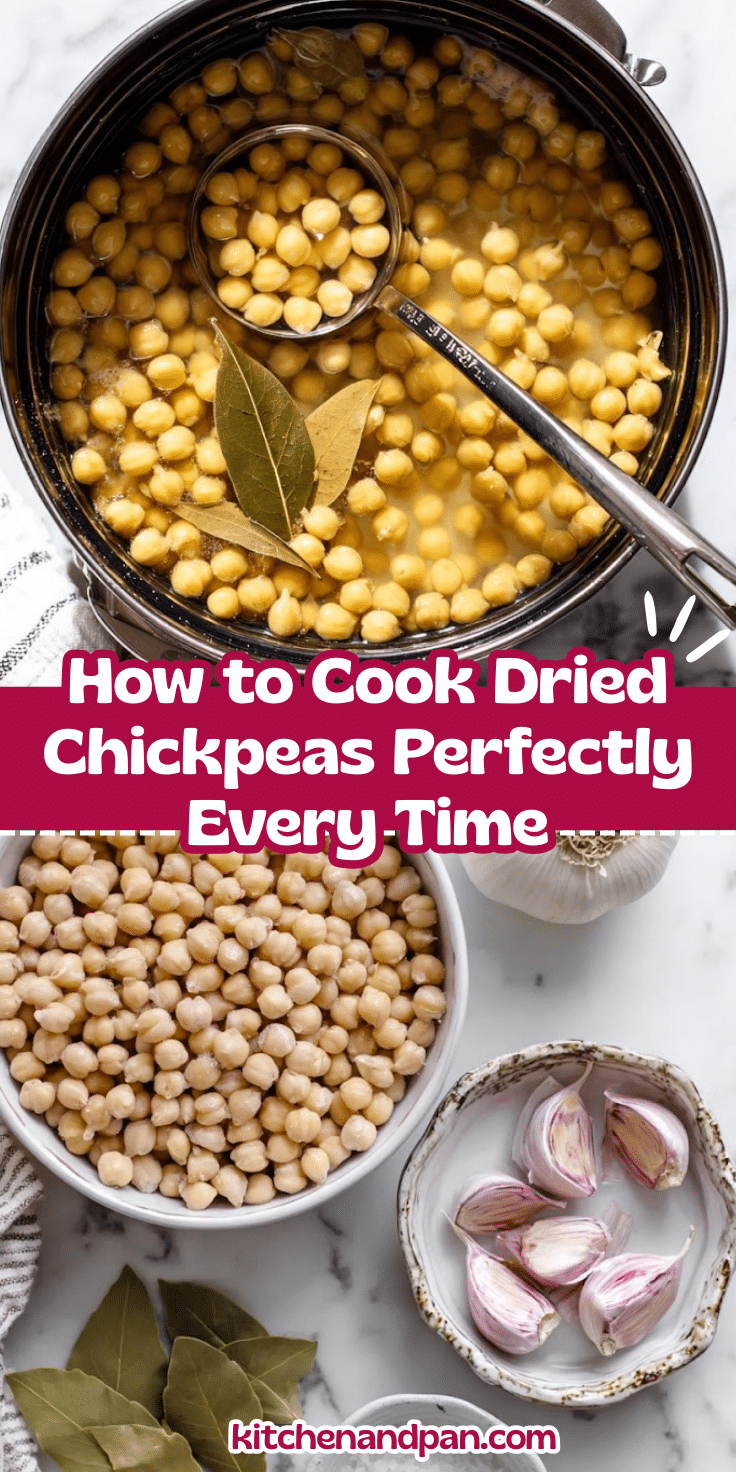
Cooking chickpeas from scratch takes about 45 minutes of active kitchen time across an entire week's worth of meals — soak Sunday night, simmer Monday morning while the coffee brews, and you have 6 cups of creamy, nutty chickpeas ready for chana masala, Moroccan stew, hummus from scratch, a crispy snack, and Thursday's lunch salad. The chickpea is the most versatile pantry staple in a plant-forward kitchen and easily the cheapest complete protein — about $0.35 per cooked cup from dried, roughly a quarter what you'd pay for canned. This guide walks through three cooking methods (stovetop, pressure cooker, slow cooker), the baking-soda trick that makes them creamy every time, 18 curated recipes across five cuisines, and a Sunday batch-cook that feeds you all week.
Get a free week of easy dinners
Seven weeknight dinners with the shopping list already totalled, sent Sunday. No account needed, unsubscribe in one click.
No spam, unsubscribe in one click. Recipes, shopping lists and Instacart carts all work without an account either way.
The Chickpea Is Underrated
Cup for cup, chickpeas deliver about 15 g of protein, 13 g of fiber, and negligible saturated fat — a nutrition profile so strong that Harvard's T.H. Chan School of Public Health — Legumes and Pulses treats them as a staple in their Healthy Eating Plate framework alongside whole grains and leafy greens. They're gluten-free, low glycemic, shelf-stable for years dried, and cheap enough that a single $2 bag of dried chickpeas from the bulk aisle stretches across five family dinners. And unlike a lot of "healthy protein" alternatives (looking at you, dry chicken breast), they actually taste like something — nutty, buttery, satisfying, and eager to soak up whatever seasoning you throw at them.
The catch is that most Americans only know chickpeas one way: from a can, drained, straight into a Cobb salad. That's a shame, because canned chickpeas are the worst version of the ingredient. Home-cooked dried chickpeas are creamier, hold their shape better in stews, and have a nuttier flavor that canned chickpeas simply can't match. Learn to cook them from dried — even once a month — and everything downstream (hummus, stews, roasted-chickpea snacks, meal-prep bowls) gets noticeably better. This guide covers that.
Dried vs Canned: When Each Makes Sense
Both belong in your pantry. The right one depends on what you're cooking and how much time you have.
| Factor | Dried chickpeas | Canned chickpeas |
|---|---|---|
| Cost per cooked cup | ~$0.30–0.40 | ~$1.20–1.60 |
| Active cook time | 45–55 min (pressure) / 90 min (stovetop) | 30 seconds (open, drain) |
| Texture | Creamy interior, firm skin, holds shape | Softer, more uniform, some mush |
| Flavor | Nuttier, richer, absorbs seasoning | Neutral, sometimes tinny |
| Shelf life (unopened) | 2–3 years dry | 3–5 years canned |
| Sodium | 0 mg (you salt to taste) | 300–400 mg per ½ cup (drained) |
| Best use | Stews, hummus, roasted, meal prep | Weeknight rescue, blended dips, cold salads |
| Aquafaba yield | None (make from cooking liquid instead) | ¾ cup per 15 oz can — save it! |
The rule of thumb we use: dried on Sunday, canned on Wednesday. Batch-cook 2 lb of dried chickpeas on the weekend for use in stews, roasted snacks, and hummus. Keep four 15-oz cans in the pantry for weeknight dinners where you decided on chickpeas at 5:47 pm.
For depth on the dried-chickpea case, Serious Eats — How to Cook Dried Chickpeas walks through the pressure-cooker method with side-by-side texture comparisons — worth a read if you want to understand why the pressure cooker beats stovetop for creaminess.
How to Cook Dried Chickpeas — Three Methods
Every method below starts with 1 lb dried chickpeas (about 2¼ cups), which yields ~6 cups cooked (roughly the same as 4 fifteen-ounce cans). Rinse and pick over the chickpeas first — a stray small stone in a bag is not uncommon, and biting one is memorable. Then pick your method.
Method 1 — Stovetop (classic, hands-off, best texture)
Total time: 90 minutes cooking + 8-hour soak. Active work: 10 minutes.
1. Soak the chickpeas in cold water with 1 teaspoon of salt for 8–12 hours. Water should cover by at least 2 inches — they'll double in size.
2. Drain, rinse, transfer to a heavy pot. Cover with fresh water by 3 inches. Add ½ teaspoon baking soda and ½ teaspoon salt.
3. Bring to a boil, skim the foam, then reduce to a bare simmer. Cover partially and cook 60–90 minutes, stirring every 20 minutes to prevent sticking.
4. Start checking at 60 minutes. They're done when you can smash one against the roof of your mouth with your tongue with no resistance. Underdone chickpeas taste starchy and chalky; a few extra minutes fixes it.
5. Cool in the cooking liquid (this is the pro move for creamy chickpeas). Once cool, drain and store — or leave submerged if you'll use them within 3 days.
Do this while you're making Sunday breakfast; the pot needs almost no attention.
Method 2 — Pressure cooker (fastest, no soak required)
Total time: 55 minutes. Active work: 5 minutes. My default.
1. Rinse 1 lb dried chickpeas. No soaking needed.
2. Add to a 6-qt or 8-qt pressure cooker with 8 cups of water, ½ teaspoon baking soda, 1 teaspoon salt, and a bay leaf if you have one.
3. Seal, high pressure, 45 minutes. Natural pressure release (about 20 minutes) — do not quick-release or the skins will split.
4. Test one against the roof of your mouth. If they need more, reseal and pressure-cook 5 minutes more, natural release.
An Instant Pot Duo 8-quart or COSORI 6-QT multi-cooker is a legitimate life-changer for legume cooking — you can go from raw dried chickpeas to hummus in the food processor in under 90 minutes total, most of it hands-off. If you cook legumes more than twice a month, this is one of the highest-ROI kitchen purchases you can make. Browse the full small-appliances category for more multi-cooker options.
Method 3 — Slow cooker (set it and forget it)
Total time: 6–8 hours. Active work: 3 minutes.
1. Rinse 1 lb dried chickpeas. Soak 8 hours or use the quick-soak method (boil 1 min, off heat 1 hour).
2. Drain, transfer to a 6-qt slow cooker with 8 cups fresh water, ½ teaspoon baking soda, 1 teaspoon salt.
3. Low, 6–8 hours. Check at 6 — some slow cookers run hot, some run cool. They should be creamy but intact.
4. Cool in the cooking liquid.
A Presto 8-quart Nomad slow cooker or any equivalent 6-qt+ model is ideal — smaller cookers overflow with the expanding chickpeas.
The baking-soda trick, explained
Every method above uses ½ teaspoon of baking soda per pound of chickpeas. Here's why: chickpea skins are held together by pectin molecules that are stubbornly stable in acidic water and dissolve fast in alkaline water. Hard tap water is slightly acidic and calcium-rich, which is why some regions produce "unyieldingly hard" chickpeas no matter how long you cook them. Adding baking soda raises the pH, dissolves the skins, and gets you from tough to creamy in about 30% less cooking time. The tiny amount is undetectable in the final flavor.
How to Store, Freeze, and Rescue Chalky Chickpeas
Once you've batch-cooked 6 cups, storing them right is the difference between "leftovers that hang out for 3 days" and "meals for the next 2 months."
Fridge (4–5 days): Store submerged in their cooking liquid in a lidded Pyrex 3-piece glass storage set or any airtight container. Cooking liquid keeps them plump and creamy; if you drain them dry they dry out at the edges within a day.
Freezer (3–4 months): Drain chickpeas, pat dry, spread on a sheet tray, and freeze uncovered for 1 hour. Once frozen individually, transfer to a zip-top freezer bag. Now you can grab a handful for a salad, ½ cup for a soup, or 2 cups for a curry — no thawing the whole block. Portion-freezing is the trick that makes chickpea batching actually pay off.
Rescuing chalky chickpeas: If your first batch came out grainy or the skins were tough, don't throw them out. Return them to the pot, cover with fresh water, add another ¼ teaspoon of baking soda, bring to a low simmer for 15–25 minutes. The extra alkaline cook usually finishes them. If they're still hard after that, your dried chickpeas were probably old — bag them up for hummus (the food processor hides all sins) or roasted-chickpea snacks (where crunch is a feature).
18 Curated Chickpea Recipes
Grouped by cuisine and cook time. Every recipe in this list is in the AislePrompt catalog with a serving stepper — bump it to your family size and export the shopping list to Instacart directly from the meal plan builder.
Indian and South Asian (4 recipes)
Chickpeas are the backbone of North Indian vegetarian cooking. All four scale beautifully and taste better on day two.
1. Authentic Indian Chana Masala — the classic. Tomato-onion base, garam masala, kasuri methi. 40 minutes stovetop from canned chickpeas.
2. One-Pot Spicy Coconut Chickpea Curry — coconut milk, ginger, mustard seeds. Weeknight-easy, serve over basmati.
3. Golden Chickpea & Cashew Coconut Curry with Turmeric — Sri-Lankan-influenced. Cashew for creaminess, turmeric for color, mustard oil for depth.
4. Harissa-Spiced Chickpea and Lentil Stew — North African-Indian crossover. Two-legume, one-pot, plant-based iron powerhouse.
Mediterranean and Middle Eastern (5 recipes)
The homeland cuisine of the chickpea. Everything here reads as light and bright even in winter.
5. Authentic Lebanese Hummus with Pita and Grilled Vegetables — the reference hummus. Peel the skins (yes, really — it's the difference between good and great) or use the baking-soda trick to soften them.
6. Herbed Chickpea Falafel with Lemon-Tahini Drizzle — soaked-not-cooked chickpeas ground raw with herbs, pan-fried into crisp patties.
7. Sheet Pan Chickpea Shawarma with Roasted Vegetables — vegetarian shawarma spice blend, one pan, 35 minutes.
8. Mediterranean Grain Bowls with Roasted Chickpeas — farro, roasted vegetables, feta, olives, lemon-tahini. Classic meal-prep container.
9. Sun-Drenched Chickpea & Herb Salad with Lemon Vinaigrette — cold, fresh, 15 minutes. The default lunch when the fridge is empty.
North African (2 recipes)
Long-simmered, warmly spiced, and forgiving of substitutions — the exact right recipes for a first-time home cook.
10. One-Pan Moroccan-Spiced Chickpea and Sweet Potato Stew — ras el hanout, apricot, preserved lemon. Serve over couscous.
11. Moroccan-Spiced Chickpea Tagine with Preserved Lemon — deeper, richer, holds beautifully overnight. Use a Le Creuset 7.25-qt Dutch oven or any heavy 6-qt+ pot.
Italian and European (3 recipes)
Chickpeas do the same job as cannellini beans here — creamy, filling, works with tomato and greens.
12. One-Pot Tuscan Chickpea and Spinach Stew — 30 minutes, Parmesan rind if you have one, olive oil finish.
13. Mediterranean Chickpea and Spinach Pasta with Pesto — protein-dense pasta night; chickpeas add 15 g protein per serving.
14. Serious Roasted Eggplant & Chickpea Stew with Tahini Swirl — Ottolenghi-adjacent, showpiece for a dinner party.
Quick canned-chickpea dinners under 25 minutes (4 recipes)
For when it's 5:45 pm and dinner is at 6:15.
15. Bitter Herbed Roasted Chickpeas — 25 minutes, sheet pan, snack all week. Pat them very dry first; wet chickpeas steam instead of crisping.
16. Herbed Chickpea 'Tuna' Salad Sandwiches — mashed chickpeas + mayo + celery + dill. 10 minutes; readers pretend it's tuna.
17. Lemon-Dill Chickpea Salad Sandwich — brighter, herbier variant. Great cold from the fridge on day 2.
18. Sheet Pan Harissa-Spiced Cauliflower with Chickpeas and Tahini Drizzle — vegetables plus protein plus fat on one pan. Weeknight optimal.
Sunday Chickpea Meal Prep — One Batch, Five Weekday Meals
Here's the plan we actually use: cook 2 lb of dried chickpeas Sunday morning (12 cups cooked, ~$1.50 in ingredients), then break the batch into five specific meals for the week. Roughly 30 minutes of active kitchen time on Sunday, another 15 minutes per weeknight.
Sunday, 9:00 am. Soak 2 lb chickpeas (or skip and pressure-cook — see method 2 above). Also make a big batch of hummus with 3 cups of chickpeas while everything else is going.
Sunday, 11:00 am. Chickpeas done. Divide into 5 containers:
- 2 cups → hummus (already made, refrigerate)
- 2 cups → tomorrow's curry (refrigerate in cooking liquid)
- 2 cups → Wednesday's Moroccan stew (freeze if you want to prep further out)
- 2 cups → Thursday's roasted-chickpea snacks (pat dry, tossed with olive oil + salt in a container ready for the sheet pan)
- 2 cups → Friday's grain bowl (drain, refrigerate)
- 2 cups leftover for weekend hummus refills or an emergency salad
Monday dinner (15 min active): One-Pot Spicy Coconut Chickpea Curry — dump cooked chickpeas, coconut milk, ginger, garlic, curry powder into a pan. Serve over rice.
Tuesday lunch: Hummus + pita + cucumbers + Mediterranean grain bowl leftovers.
Wednesday dinner (25 min active): Moroccan-Spiced Chickpea Tagine with Preserved Lemon. Sauté onions and spices, add chickpeas, tomato, apricot, simmer 20 minutes. Couscous cooks in 5 minutes on the side.
Thursday snack + dinner: Bitter Herbed Roasted Chickpeas — 25 minutes in a 400°F oven. Snack on 1 cup while making Sheet Pan Chickpea Shawarma for dinner.
Friday lunch or dinner: Sun-Drenched Chickpea & Herb Salad with leftover chickpeas, cucumber, red onion, feta, lemon juice, olive oil. Cold, 5 minutes, done.
Total active kitchen time across the week: ~90 minutes. Total food cost: about $18–24 (for a family of 4) since chickpeas provide most of the protein. Compare with the equivalent chicken-and-rice meal prep at roughly $45–55, and the ROI on learning to cook dried chickpeas becomes obvious.
Real-World Numbers: Chickpea Nutrition per Cooked Cup
The USDA's dietary guidance covers legumes in depth at USDA — Food and Nutrition; the numbers below are per 1 cup cooked chickpeas (about 165 g), no added salt.
| Nutrient | Per cup cooked | % Daily Value (2,000-cal adult) |
|---|---|---|
| Calories | 269 | 13% |
| Protein | 14.5 g | 29% |
| Carbohydrates | 45 g | 16% |
| Fiber | 12.5 g | 45% |
| Fat | 4.2 g | 5% |
| Iron | 4.7 mg | 26% |
| Folate | 282 mcg | 71% |
| Magnesium | 79 mg | 19% |
| Potassium | 477 mg | 10% |
| Sodium | 11 mg | <1% |
For comparison: 1 cup cooked chickpeas has more protein than 2 large eggs, more fiber than a cup of oatmeal, and about a third of your daily iron. Pair with a squeeze of lemon or a slice of tomato at the meal and the vitamin C bumps iron absorption by 2–3x — this is why Mediterranean hummus (chickpeas + lemon) and Indian chana masala (chickpeas + tomato) both accidentally optimize iron uptake.
Common Pitfalls (and How to Avoid Them)
- Salting the soak water too aggressively. A teaspoon per pound is right; a tablespoon toughens the skins so they never soften. If you inherited a "no salt in the soak" rule, ignore it — a modest amount of salt actually helps.
- Quick-releasing the pressure. Fast pressure release ruptures the skins and gives you split chickpeas swimming in cloudy liquid. Always natural-release chickpeas.
- Skipping the baking soda. It's the single biggest lever for creaminess and one of the reasons restaurant hummus tastes better than yours. Half a teaspoon per pound; you won't taste it.
- Storing them dry. Chickpeas held submerged in cooking liquid last twice as long and stay creamy; drained-dry chickpeas dry out at the edges within 24 hours.
- Throwing out the aquafaba. The liquid from a can (or reduced from your cooking pot) whips like egg whites — the backbone of vegan meringue, mousse, and mayo. Save it every time.
- Buying old dried chickpeas. If a bag has been on a shelf for two years, it may never soften. Buy from a store with high bulk-bin turnover, and use dried chickpeas within a year of purchase.
When to Skip Dried Entirely
Canned chickpeas are the right choice when:
- You need dinner in 25 minutes flat and forgot to soak on Sunday.
- You're blending them (hummus, patties, sauces) — the softer texture is a feature, not a bug.
- You're serving them cold in a salad and want uniform texture.
- You're a two-person household that can't work through 6 cups of cooked chickpeas before they go off.
Nothing about a good canned chickpea is shameful. But if you cook them at least three times a month, batching from dried on Sundays saves real money and gives you a demonstrably better ingredient. This is the plant-forward version of "buy chicken thighs whole" — a small effort upgrade with an outsized quality bump.
Equipment That Makes Chickpea Cooking Painless
Nothing exotic; if you already have a decent pot and a chef's knife you're 90% of the way there. Two upgrades are worth it if you cook legumes regularly:
- A 6-qt+ heavy pot or Dutch oven. The Le Creuset 7.25-qt Signature Dutch oven is the classic — enameled cast iron keeps the simmer low and even, and the wide base gives good surface area for browning aromatics before the liquid goes in. A budget cast-iron round works nearly as well. Browse the full cookware category if you're building a kit.
- A multi-cooker or slow cooker. Instant Pot Duo 8-qt is our default recommendation — it collapses stovetop, pressure, slow-cooker, and rice-cooker duties into one device that lives on the counter. The COSORI 6-QT pressure cooker is a cheaper alternative if you already have a rice cooker. If you're a set-it-and-forget-it cook, an 8-qt slow cooker like the Presto Nomad 8-qt shines.
- Airtight glass storage. Pyrex 3-piece glass mixing bowls with lids let you cool chickpeas in the fridge in their cooking liquid and see what you've got without opening. Browse the full storage & containers selection for airtight options.
- A half-sheet pan for roasted chickpeas. Any solid half-sheet works; if you're rebuilding your kit, the bakeware category has heavy-gauge options that don't warp.
FAQ
Are dried chickpeas really better than canned?
Dried chickpeas cost about a quarter of canned per cooked cup and have a nuttier, firmer texture that holds up in stews and salads without turning to mush. Canned wins on speed (open a can, drain, done in 30 seconds) and is fine for hummus, mashed dishes, and quick weeknight dinners. Most cooks stock both: dried for Sunday batch-cooking, canned for weeknight rescues.
Do I really need to soak dried chickpeas overnight?
A traditional 8–12 hour soak cuts cook time in half and improves digestibility by leaching some of the oligosaccharides that cause bloating. A quick soak (boil 1 minute, off heat 1 hour) works in a pinch. If you have a pressure cooker, you can skip soaking entirely and cook unsoaked chickpeas in 45–55 minutes at high pressure with a natural release — the texture is nearly identical to the overnight-soak version.
How long do cooked chickpeas last in the fridge and freezer?
Cooked chickpeas keep 4–5 days in an airtight container in the fridge (submerged in their cooking liquid stays freshest) and 3–4 months in the freezer. Freeze on a sheet tray for 1 hour first so they don't clump, then transfer to a bag — you can grab a handful at a time for salads or a full 2 cups for a curry. Never freeze in the metal can.
Why are my chickpeas still hard after cooking for hours?
Two culprits: hard water (calcium in tap water toughens the skin) and old chickpeas (a bag more than a year past its harvest date resists softening no matter how long you cook it). Add ½ teaspoon of baking soda per pound of chickpeas to the soak water — the alkaline environment breaks down the skin and cooks them to creamy in a fraction of the time. Buy chickpeas from a store with high turnover.
Is chickpea flour or aquafaba worth learning about?
Chickpea flour makes gluten-free flatbreads, socca, and pakoras that taste like real chickpeas rather than a gluten-free approximation — worth stocking if you cook Indian or French. Aquafaba (the liquid from a can of chickpeas) whips like egg whites and is the workhorse of vegan meringue, mousse, and mayo — save it any time you drain a can. Both are 'free' bonuses that come with the ingredient.
Related Guides
- 22 chickpea recipes — curries, salads, one-pot pastas, crispy snacks and socca, once you have the method down
- Meal Plan builder — pick recipes, set servings, one-tap Instacart order
- AI chat — rebuild any menu around dietary restrictions or budget
Sources
- Harvard T.H. Chan School of Public Health — Legumes and Pulses — nutrition profile and role in the Healthy Eating Plate framework
- Serious Eats — How to Cook Dried Chickpeas — pressure-cooker vs stovetop texture comparison
- USDA — Food and Nutrition — dietary guidance and per-cup nutrient data
Frequently asked questions
Are dried chickpeas really better than canned?
Do I really need to soak dried chickpeas overnight?
How long do cooked chickpeas last in the fridge and freezer?
Why are my chickpeas still hard after cooking for hours?
Is chickpea flour or aquafaba worth learning about?
Sources
You know how to cook chickpeas. Now what do you make with it?
Ask our AI what to make with chickpeas tonight — it writes the recipe, the shopping list, and sends the cart to Instacart. No account needed.
Get chickpeas dinner ideas →