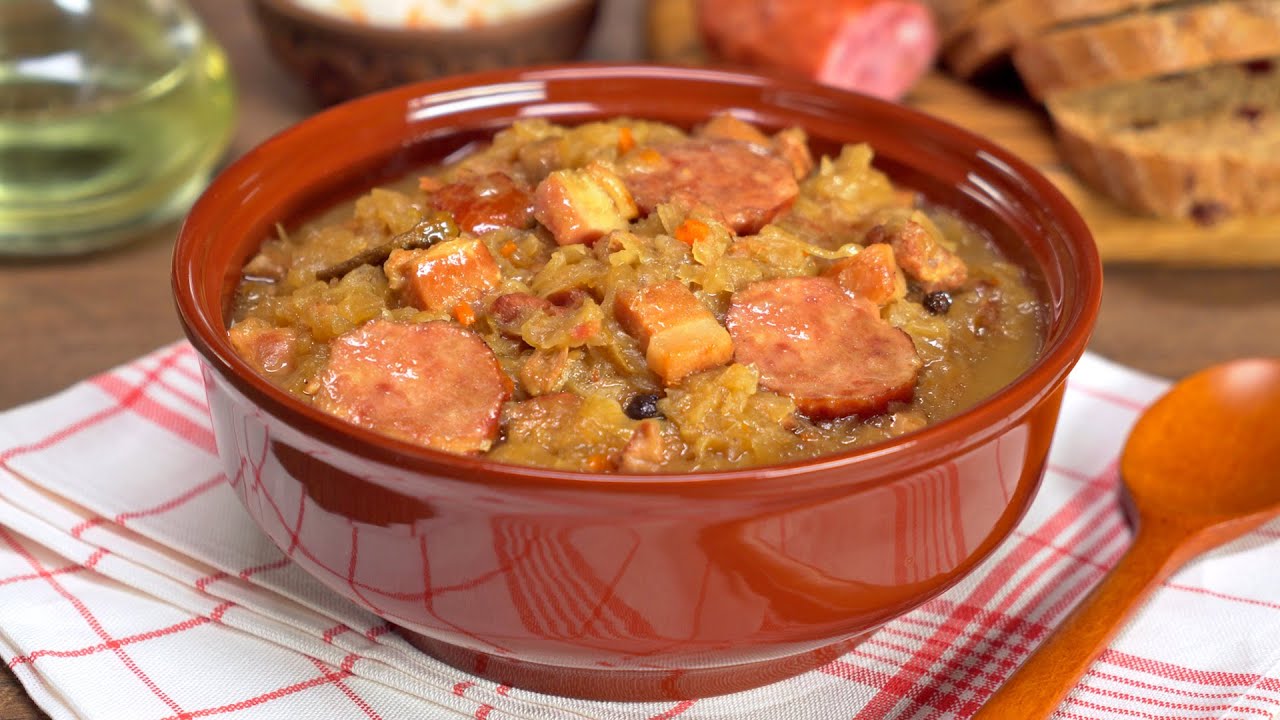
22 Polish Recipes: Pierogi, Kielbasa, Borscht & Bigos Comfort Classics
Pierogi, bigos, barszcz and kotlet schabowy - 22 recipes built on four supermarket staples: cabbage, potatoes, pork, and something sour.
Polish home cooking is built on four cheap, widely available things: cabbage, potatoes, pork, and something sour. Master those and you can cook most of the canon — pierogi, bigos, barszcz, kotlet schabowy — from a normal American supermarket, no specialty shop required. This guide covers 22 recipes, the pantry that supports them, and a Sunday feast plan for six.
Get a free week of easy dinners
Seven weeknight dinners with the shopping list already totalled, sent Sunday. No account needed, unsubscribe in one click.
No spam, unsubscribe in one click. Recipes, shopping lists and Instacart carts all work without an account either way.
Why Polish home cooking travels so well
Most cuisines lose something in translation because a key ingredient doesn't cross the ocean. Polish food mostly doesn't have that problem. The building blocks — russet potatoes, green cabbage, sauerkraut, smoked sausage, sour cream, dill, caraway, dried mushrooms, onions — are stocked in every US grocery chain, usually in the same three aisles. A Classic Bigos with Sausage and Cabbage needs a jar of kraut, a ring of kielbasa, and a head of cabbage. That's a $14 pot of food that feeds six and tastes better on day three.
The second reason is timing. Polish cooking splits cleanly into 25-minute skillet food and three-hour Sunday food, with very little in between. On a Tuesday you make Pan-Seared Kielbasa with Caramelized Onions and Mustard Sauce and eat in half an hour. On a Sunday you spend the afternoon on pierogi and freeze four dozen. The same pantry serves both modes, which is exactly what a working household needs heading into the cold half of the year.
The third reason is that it forgives. Braises, stews, and cabbage dishes have wide windows — an extra 20 minutes in the pot improves bigos rather than ruining it. That's the opposite of, say, a seared scallop. If you are new to cooking a whole cuisine from scratch, this is a good one to start with.
The Polish flavor foundation: sour, smoked, dill, and cabbage
Nearly every dish here pulls from one of four flavor levers. Learn what each one does and you can improvise.
Sour. Polish food is deliberately acidic in a way American home cooking usually isn't. The sourness comes from sauerkraut brine, soured rye starter (żur), sour cream, vinegar, lemon, and dill pickles — not from tomatoes. In Polish Dill Pickle and Beef Stew, the pickle brine is the seasoning; it replaces most of the salt you'd otherwise add. When a Polish dish tastes flat to you, it almost always needs acid, not salt.
Smoked. Smoked pork drives depth: kielbasa, smoked bacon (boczek), smoked ribs, and smoked pork shoulder. A single 12-ounce ring of good smoked kielbasa will season a whole pot of soup. That's why Sauerkraut and Polish Sausage Soup tastes like it simmered all day after 45 minutes.
Dill and caraway. Fresh dill goes on potatoes, cucumbers, soups, and anything with sour cream. Caraway goes into cabbage and rye bread. Use both more aggressively than you think — a quarter-cup of chopped dill for four servings of potatoes is normal, not a typo.
Cabbage, in three states. Fresh (shredded and braised), fermented (sauerkraut), and stuffed (gołąbki). Vinegar-Braised Cabbage with Apples and Caraway is the cheapest side dish in this entire guide and works next to any pork on the list.
One note on sauerkraut: buy the refrigerated kind in a bag or jar, not the shelf-stable canned kind. Canned kraut has been heat-pasteurized into mush and carries a metallic edge. Rinse it once if it's aggressively sour, squeeze it dry, and taste before you add salt.
Pierogi 101: dough, fillings, and the boil-then-crisp method
Pierogi are the dish everyone wants to make and the one people most often get wrong. Three things matter.
The dough. Flour, hot water, a little sour cream or an egg, salt. That's it. The hot water is the trick — it partially hydrates the starch and gives you a dough that rolls thin without snapping back. Roll to about 1/16 inch (you should be able to see the shadow of your hand through it) and cut 3-inch rounds. Keep unrolled dough under a damp towel; it dries out in about four minutes on a dry counter.
The filling. It must be dry and it must be cool. Warm mashed potato steams inside the wrapper and blows the seam open in the pot. The classic ruskie filling is potato and farmer's cheese with a lot of fried onion — see Homemade Polish Potato and Cheese Pierogi. A caramelized-onion version like Polish-Style Pierogi with Caramelized Onion and Potato Filling is sweeter and better with sour cream. If you want a dill-forward take, Potato and Dill Pierogi with Sour Cream Dip leans that direction.
Boil, then crisp. This is the step home cooks skip. Boil in well-salted water until they float plus 90 seconds — roughly 3 to 4 minutes fresh, 5 to 6 from frozen. Drain, then finish in butter over medium heat, 2 to 3 minutes per side, with sliced onions in the pan. Boiling alone gives you a soft, slightly gummy dumpling. The butter finish is what makes them worth the afternoon.
If the whole project sounds like too much on a weeknight, Baked Pierogi Casserole with Potato, Cheese, and Caramelized Onions delivers the same flavors from store-bought frozen pierogi in about 40 minutes. Nobody in Poland will be offended.
Freezing. Lay shaped raw pierogi on a parchment-lined sheet pan, freeze solid (about 90 minutes), then bag them. They keep three months and cook from frozen — do not thaw. A single afternoon making 60 pierogi buys you four weeknight dinners. A rimmed sheet pan from bakeware and a set of freezer containers turn this into a routine rather than an event.
Sausage, cutlets, and cabbage rolls
Kielbasa. Polish sausage in the US comes in two useful forms: smoked (fully cooked, sliced and seared) and fresh white (biała, must be cooked through). Smoked is what you want for weeknights. Slice it on a bias — more surface area, better browning. Beyond the mustard-sauce version above, Braised Kielbasa with Mushrooms and Barley turns it into a one-pot dinner, and One-Pot Sauerkraut and Kielbasa Pasta is a 30-minute cheat that hits the same sour-smoked note. For a hands-off version, Crockpot Polish Sausage Stew with Sweet Potato and Cabbage runs six hours on low.
Kotlet schabowy. A pounded pork loin cutlet, breaded in flour-egg-breadcrumb and fried in a shallow pan of fat. Pound to about 1/4 inch, season the flour rather than the meat, and fry at 340–350°F. Hotter and the crumb burns before the pork sets; cooler and it absorbs oil. Crisp Pan-Fried Pork Cutlets with Lemon Garlic Butter uses the same technique with a brighter finish, and Spiced German-Style Pork Schnitzel with Mustard Cream Sauce is the Central European cousin — the method is identical, the sauce is the difference. See the kotlet schabowy background for how the dish sits in the Sunday-dinner rotation.
Gołąbki. Cabbage leaves wrapped around pork, beef, and rice, baked in tomato or mushroom sauce. The whole difficulty is getting leaves off the head intact: core the cabbage, drop the whole head into boiling water for 3 minutes, peel off the softened outer leaves, and repeat. Cabbage Rolls Stuffed with Mushroom-Beef Mixture is the standard build; Baked Lentil and Rice Cabbage Rolls is the meatless Wigilia-style version and freezes just as well.
Soups and stews: barszcz, żurek, bigos
These three are the heart of the cuisine, and all three are better the next day.
Barszcz (beet soup). Clear Christmas Eve barszcz is a strained consommé; the everyday version is a hearty beet-and-cabbage soup. Vibrant Garden Beetroot Borscht is the lighter one; Hearty Russian Beet and Cabbage Borscht Soup is the meal-in-a-bowl version. Two rules: add the acid (vinegar or lemon) at the end, off the heat, or the soup turns brown instead of magenta; and don't boil it hard after the beets go in. For a cold-weather-adjacent chłodnik feel, Cold Beetroot and Apple Salad with Dill Vinaigrette uses the same flavors at room temperature. Background on the family of soups is at Barszcz.
Żurek. Sour rye soup, traditionally built on a fermented rye starter (żur) you make over 4–5 days with rye flour, water, and garlic. Smoked pork and a halved hard-boiled egg go in the bowl. Żurek Soup with Smoked Pork Shoulder is the full version. No time to ferment? Bottled żur is sold in Polish delis, and a mix of sauerkraut brine plus a splash of buttermilk gets you 80% of the way. See Żurek for the Easter-table context.
Bigos. Hunter's stew: sauerkraut, fresh cabbage, several kinds of pork, dried mushrooms, prunes, and time. It is explicitly a leftovers dish — bigos was built to absorb whatever meat the household had. Cook it Saturday, reheat Sunday and Monday; it improves each time. Bon Appétit's bigos hunter's stew is a good reference build if you want to see the meat ratios spelled out.
Two more soups worth the pot: Rustic Mushroom and Barley Soup with Thyme, which is essentially krupnik, and the sauerkraut-sausage soup listed above. Both cost under $10 for six servings.
Potato sides and grains
Potatoes are the default starch, and there are three shapes worth knowing.
Placki ziemniaczane (potato pancakes). Grated raw potato and onion, egg, a spoon of flour, fried until the edges are lace. The critical step is wringing the grated potato in a towel — every ounce of water you remove is crispness you get back. Crispy Potato Pancakes with Chive Sour Cream is the plain version; Cheddar-Stuffed Potato Pancakes with Sour Cream and Chive Dip is the indulgent one.
Kluski and kopytka (potato dumplings). Mashed potato, flour, egg, cut into pillows and boiled, then pan-fried in butter. Pan-Fried Potato Dumplings with Sauteed Sauerkraut is exactly the kopytka-with-kraut plate you'd get in a milk bar. When you want the easiest possible starch under a stew, Classic Buttered Noodles with Crispy Onion Topping takes 12 minutes.
Kasza. Buckwheat groats — nutty, fast, and criminally under-used in American kitchens. Toast dry, add 2 parts water to 1 part groats, simmer 12 minutes, rest 5. Siberian Buckwheat Kasha with Mushrooms and Caramelized Onions shows the standard treatment; Kasza covers the regional variants.
Two cold sides round out any plate: Lemon-Dill Cucumber Salad (mizeria) and Pickled Beet and Horseradish Salad with Sour Cream Dressing (ćwikła, the condiment that goes next to every piece of Easter ham in Poland).
Sweets: makowiec, sernik, and pączki
Polish baking is less sweet than American baking and leans on cheese, poppy seed, and fruit.
Makowiec is a yeasted roll spiralled with a thick poppy-seed paste — ground poppy seed cooked with milk, honey, butter, and dried fruit. Buying canned poppy-seed filling is standard practice, even in Poland. Lemon Ricotta Poppy Seed Cake with Glaze is a much faster route to the same flavor if you're not ready for a yeasted roll; the traditional article is at Makowiec.
Sernik is Polish cheesecake, made with twaróg (farmer's cheese) rather than cream cheese. It bakes drier and denser than a New York cheesecake and is usually served plain or with a thin fruit layer. American farmer's cheese or dry-curd cottage cheese, pressed and blended smooth, is the closest sub — see Sernik for the regional styles.
Szarlotka, the apple cake, is the everyday one. A thick layer of tart apples between shortcrust or streusel, cut into squares. One-Bowl Cinnamon Apple Cake with Streusel Topping is the same idea with an easier crumb. And for the sweet-cheese-filled crepe (naleśniki z serem) that ends a lot of Polish Sundays, Sweet Cheese Blintzes with Citrus Honey Drizzle is a direct match.
Pączki — the filled doughnuts eaten by the ton on Fat Thursday — need a rich, slow-rising dough and a fry thermometer. If you attempt them, hold the oil at 335–345°F and turn once when the light band around the equator is set.
22 Polish recipes to cook this month
Also worth queuing: Lemon-Dill Cucumber Salad, Vinegar-Braised Cabbage with Apples and Caraway, Cheddar-Stuffed Potato Pancakes with Sour Cream and Chive Dip, and One-Bowl Cinnamon Apple Cake with Streusel Topping.
What to buy: the Polish pantry starter list
Everything below is stocked at a standard US supermarket. Total for the full list runs about $55–70 as of 2026, and it covers roughly a dozen of the recipes above.
| Item | Aisle | Notes |
|---|---|---|
| Refrigerated sauerkraut, 2 lb | Deli / refrigerated | Not canned. Rinse if very sour, squeeze dry. |
| Smoked kielbasa, 2 rings | Meat case | ~12 oz each; one ring seasons a whole pot |
| Slab or thick-cut bacon | Meat case | Boczek stand-in for bigos and soups |
| Pork loin, 2 lb | Meat case | Cut into cutlets for schabowy |
| Dried porcini or mixed wild mushrooms, 1 oz | Produce / international | Soak 20 min; the soaking liquid is the stock |
| Whole caraway seed | Spices | Cabbage, rye bread, braises |
| Sweet Hungarian paprika | Spices | Stews and sausage |
| Dried marjoram | Spices | The signature herb of żurek and sausage |
| Fresh dill, 2 bunches | Produce | Buy more than feels reasonable |
| Beets, 3 lb | Produce | Roast whole, then peel — far less mess |
| Green cabbage, 2 heads | Produce | One for braising, one for gołąbki |
| Russet potatoes, 5 lb | Produce | Starchy is correct here, not waxy |
| Full-fat sour cream, 24 oz | Dairy | Low-fat splits when heated |
| Farmer's cheese or dry-curd cottage cheese | Dairy | For ruskie filling and sernik |
| Prepared white horseradish | Condiments | For ćwikła and cold pork |
| Buckwheat groats, 1 lb | Grains / international | Kasza |
Equipment matters less than you'd think, but four things do real work: a heavy 10–12 inch skillet and a 6-quart Dutch oven from cookware, a sharp 8-inch chef's knife from knives, a box grater and rolling pin from utensils, and sheet pans from bakeware for freezing pierogi. Freezer bags and lidded containers from storage close the loop on batch cooking.
A Sunday Polish feast for six
This is a real schedule, tested against a 4 p.m. dinner. Total active time is about 2.5 hours spread across the day.
| Time | Task |
|---|---|
| Saturday PM | Start bigos; cool and refrigerate overnight |
| 10:00 | Make pierogi dough, rest 30 min; boil potatoes for filling |
| 10:30 | Fill and shape pierogi; freeze half, refrigerate half |
| 11:30 | Roast beets for ćwikła; slice cucumbers for mizeria |
| 12:30 | Pound and bread pork cutlets; refrigerate on a rack |
| 14:00 | Bake the apple cake |
| 15:15 | Reheat bigos low and slow |
| 15:30 | Boil pierogi, then crisp in butter with onions |
| 15:45 | Fry cutlets in batches; hold in a 200°F oven |
| 16:00 | Serve |
Menu: bigos and rye bread to start, then kotlet schabowy with buttered pierogi, mizeria, and ćwikła, finishing with apple cake and tea. Budget lands around $9–11 per person at 2026 grocery prices, and you'll have bigos and frozen pierogi left for two more meals.
Build the shopping side of this with the Meal Plan tool and push the pantry list straight to a shopping list so nothing gets missed on the Saturday run.
Common pitfalls
- Boiling pierogi and stopping there. Skipping the butter finish is the single most common reason homemade pierogi disappoint. Two minutes per side in a hot pan changes the dish.
- Watery potato pancakes. If you don't wring the grated potato, the batter steams instead of frying and you get a pale, floppy disc. Wring it twice.
- Adding acid to barszcz too early. Vinegar or lemon at the end, off the heat. Add it during the simmer and the color turns muddy brown.
- Using canned sauerkraut. Pasteurized-to-death kraut brings a tinny flavor no amount of bacon fixes. Refrigerated only.
- Under-seasoning the breading, not the meat. For schabowy, salt and pepper go in the flour. Salting the pork directly pulls moisture out and loosens the crumb.
- Frying cutlets too hot. Above about 360°F the breadcrumb browns before the pork reaches temperature. Aim for 340–350°F and check with an instant-read.
When Polish cooking isn't the right call
If you need dinner in 15 minutes flat, this isn't the cuisine — the fastest dishes here land around 25–30 minutes. If you're cooking low-sodium, be careful: sauerkraut, smoked sausage, and pickle brine are the flavor engine, and stripping them out leaves the food hollow rather than merely plainer. And if you're feeding people who avoid pork and dairy simultaneously, most of the canon needs rebuilding rather than substituting. In those cases the 22 German Recipes for Oktoberfest collection overlaps on technique with more chicken and beef options, and Early Fall Soup Season has lighter one-pot alternatives.
Where to start
If you cook exactly three things from this list, make them the kielbasa skillet on a Tuesday, bigos on a Saturday, and pierogi on a Sunday when you have company to help fill them. That sequence teaches the sour-smoked base, the long braise, and the dough all in one week — and leaves you with a freezer that solves the next four weeknights. A Dutch oven and a bag of frozen pierogi will carry you through the rest of the winter.
Sources
- Pierogi — dough ratios, regional fillings, and the ruskie naming history
- Polish cuisine — overview of the regional canon and holiday tables
- Bigos hunter's stew (Bon Appétit) — a reference build with meat ratios
- Barszcz — clear vs. hearty beet soup traditions
- Kielbasa — sausage types and what the US labels actually mean
- Kotlet schabowy — the breaded cutlet's place in Sunday dinner
Frequently asked questions
What's the easiest Polish recipe for a beginner to start with?
Can I make pierogi ahead and freeze them?
What kitchen equipment do I really need for Polish cooking?
How do I substitute the pork in Polish recipes if I don't eat it?
Is Polish food gluten-free friendly?
Sources
Plan a week of meals in two minutes.
Tell our AI what you have and what you like — it builds your plan, shopping list, and Instacart cart. No account needed.
Try free →