22 Vodka Cocktails: Martinis, Moscow Mules & Modern Vodka Drinks
One bottle of vodka, 22 drinks: the five classics worth memorizing, four mule variations, the modern martini family, and what actually belongs in the tool drawer.
The best vodka cocktails are the ones where vodka gets out of the way: a Moscow mule, a cosmopolitan, an espresso martini, a bloody mary, and a properly stirred vodka martini. Vodka carries citrus, ginger, coffee, and tomato better than any other spirit because it adds alcohol and texture without adding a competing flavor. That neutrality is the whole point.
Get a free bar-cart shopping list
Six drinks that share a bottle list, so one cart covers the whole night. Sent before the weekend.
No spam, unsubscribe in one click. Recipes, shopping lists and Instacart carts all work without an account either way.
Introduction — why vodka is the most flexible spirit at home
Every other spirit brings an argument. Whiskey brings oak and vanilla. Gin brings juniper. Tequila brings agave and pepper. Vodka brings almost nothing — by U.S. regulation it is distilled to be "without distinctive character, aroma, taste, or color," which is exactly why it disappears into a drink and lets the fresh ingredients lead. The TTB's distilled spirits standards codify that neutrality; Wikipedia's vodka entry covers the grain-versus-potato production differences that produce the small texture variations you can still taste at 80 proof.
Practically, that means one bottle of vodka covers more ground than any other bottle on your shelf. A 750ml bottle at 40% ABV yields about 12 two-ounce pours. With the same bottle you can build a hot-morning Cajun-Spiced Bloody Mary, an after-dinner Espresso Martini, and a porch-sitting Ginger-Lime Vodka Spritz without buying anything else. Try that with mezcal.
The 22 drinks below are organized the way a home bar actually gets used: the five classics you should be able to make from memory, four mule variations, the modern martini family, warm-weather fruit and citrus builds, and three dessert drinks. Every one is a single-serving recipe, most take under 8 minutes, and all of them are in the AislePrompt recipe catalog with full measurements.
What "good" means here
Three things separate a good vodka cocktail from a bad one, and none of them is the price of the bottle:
- Dilution. A shaken drink picks up 20–25% of its final volume as water from the ice. A stirred drink picks up 15–20%. That water is an ingredient, not a mistake — under-diluted cocktails taste hot and thin.
- Acid. Almost every drink here has fresh lemon or lime in it, usually 0.75–1 oz. Bottled juice is oxidized and flat; it is the single most common reason a home cocktail tastes worse than a bar one.
- Temperature. Serve everything between 25°F and 30°F. Chill the glass, not just the liquid.
The 5 classic vodka cocktails every home bar should have
These five cover roughly 80% of what anyone will ask you to make. Learn the ratios and you can improvise the rest.
1. Vodka martini. The Lemon-Twist Vodka Martini with White Vermouth runs 2.5 oz vodka to 0.5 oz bianco vermouth — a 5:1 ratio, which is drier than a gin martini usually goes but right for vodka's lighter body. Stir 30 seconds over cracked ice, strain into a chilled coupe, express a lemon peel over the surface and drop it in. Wikipedia's vodka martini entry traces the drink's split from the gin original in the 1950s.
2. Moscow mule. The Citrus-Spiced Moscow Mule with Fresh Ginger is the reference build: 2 oz vodka, 1 oz fresh lime, 4 oz ginger beer, a teaspoon of grated fresh ginger. The IBA's official mule specification uses a slightly leaner lime pour; the extra half-ounce here is the right call when your ginger beer is on the sweet side. The teaspoon of grated fresh ginger is what separates a mule from a vodka-and-ginger-beer, so start with a firm, heavy knob — wrinkled skin means it has dried out. Our fresh ginger recipe guide covers picking and grating it.
3. Cosmopolitan. The Citrus Vodka Cosmopolitan is 1.5 oz vodka, 1 oz triple sec, 0.75 oz fresh lime, 1.5 oz cranberry. Shake hard for 12 seconds, double-strain, garnish with a lime twist rather than an orange one — the lime echoes the acid. Wikipedia's cosmopolitan entry covers the competing 1980s origin claims if you want the bar-trivia version.
4. Bloody mary. The Cajun-Spiced Bloody Mary uses 2 oz vodka to 4 oz tomato juice with Worcestershire, hot sauce, and a quarter-teaspoon of Cajun seasoning. Roll it between two tins instead of shaking — hard shaking aerates tomato juice into foam.
5. Vodka tonic. The Herbal Citrus Vodka Tonic fixes the boring version by adding 1 oz fresh grapefruit juice and a rosemary sprig to 2 oz vodka and 3 oz tonic. Total build time: four minutes.
| Classic | Vodka | Mixer | Acid | Method | Glass |
|---|---|---|---|---|---|
| Vodka martini | 2.5 oz | 0.5 oz vermouth | none | Stir 30s | Coupe |
| Moscow mule | 2 oz | 4 oz ginger beer | 1 oz lime | Build | Copper mug |
| Cosmopolitan | 1.5 oz | 1 oz triple sec + 1.5 oz cranberry | 0.75 oz lime | Shake 12s | Coupe |
| Bloody mary | 2 oz | 4 oz tomato juice | 0.5 oz lemon | Roll | Highball |
| Vodka tonic | 2 oz | 3 oz tonic | 1 oz grapefruit | Build | Highball |
Stock the glassware once and you are done: a set of coupes and a set of highballs covers all five. AislePrompt's dining and serving category carries both.
Moscow Mule and 4 mule variations by fruit
The mule template is durable because it is three things: 2 oz spirit, 1 oz fresh citrus, 4 oz ginger beer. Swap the fruit and it becomes a different drink without becoming a worse one.
Ginger-mint. The Ginger-Mint Moscow Mule adds six mint leaves to the mug before the crushed ice. Do not muddle them — bruised mint goes vegetal and bitter. Slap the leaves once between your palms to release the oils and drop them in whole.
Citrus-forward. The Citrus-Ginger Moscow Mule adds 0.5 oz simple syrup and a thin slice of fresh ginger. Use this build when your ginger beer is a dry style (Fever-Tree, Q) rather than a sweet one (Gosling's).
Sea breeze mule. The Baltic Sea Breeze Vodka Mule muddles a ginger slice and finishes with mint and a lime wheel over a full cup of crushed ice. The crushed ice matters: it dilutes about 40% faster than cubes, which is what makes this one drinkable in August heat.
Cardamom. The Ginger-Spiced Moscow Mule with Cardamom trades ginger beer for 1 oz ginger syrup plus 2 oz club soda, then floats a pinch of ground cardamom. It builds in three minutes and reads as a fall drink without any pumpkin nonsense.
Lower-ABV mule. The Ginger-Mint Vodka Soda is the same flavor profile at roughly two-thirds the alcohol — 1.5 oz vodka, ginger syrup, club soda. Make this one when you are on drink number three.
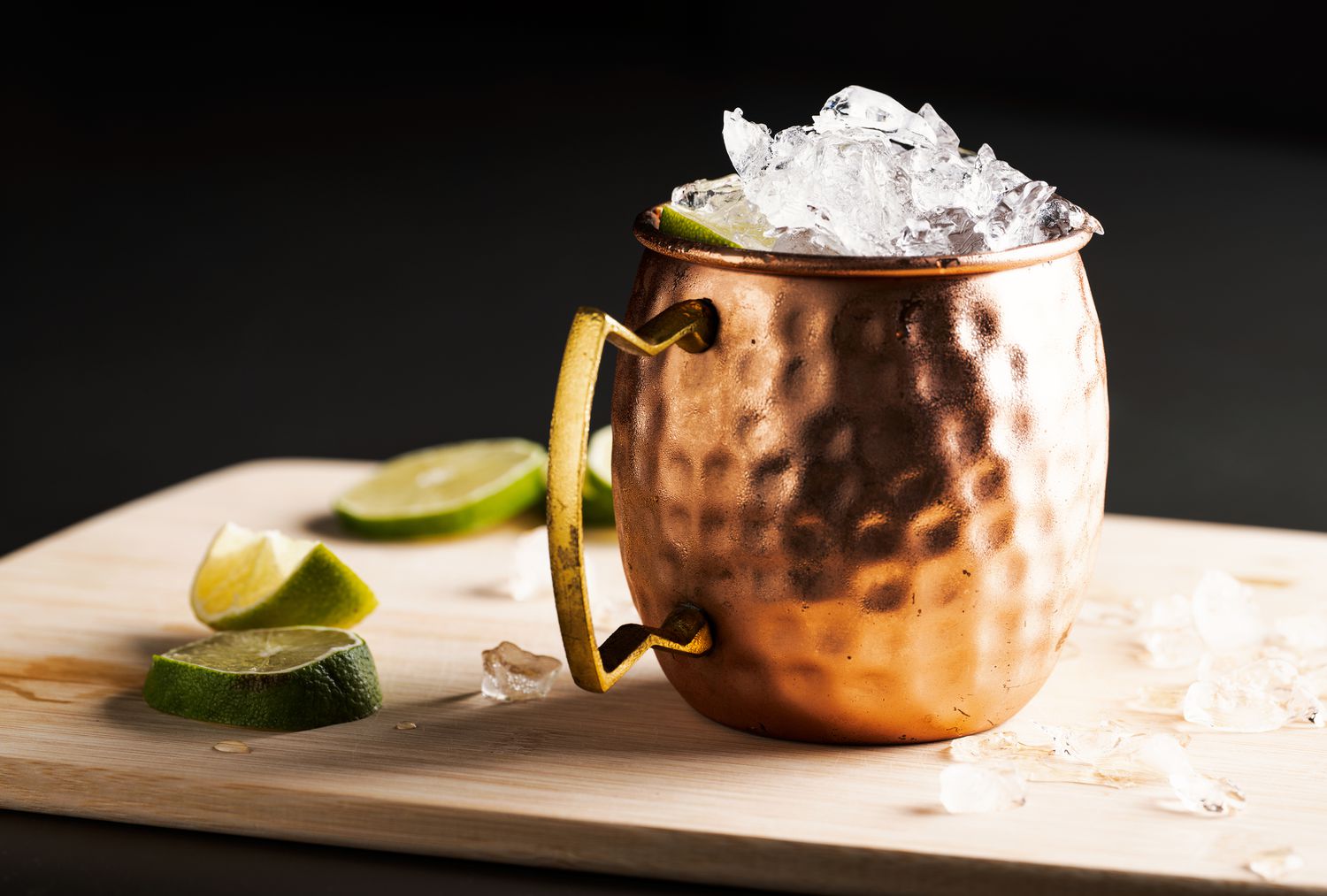
A note on the copper mug: it is not required, but it is not pure theater either. Copper conducts heat about 20× faster than glass, so the mug chills to ice temperature almost instantly and stays frosted. If you want them, they live in the bar and coffee category.
Modern martini variations — espresso, dirty, French
The martini template has been the most productive cocktail chassis of the last decade. Three variations are worth knowing.
Espresso martini. The Espresso Martini is 1.5 oz vodka, 1 oz fresh espresso, 1 oz coffee liqueur, 0.5 oz vanilla syrup, shaken hard and strained. The three-bean garnish is traditional. The single most important detail: the espresso must be freshly pulled and still hot when it hits the shaker — that is what generates the crema layer on top. Cold-brew concentrate will not foam. Wikipedia's espresso martini entry credits Dick Bradsell's late-1980s London original.
The Vanilla Espresso Martini is the same build with a longer vanilla note and a five-minute prep — the version to make when you are pouring for four people and want consistency over drama.
Dirty martini. The Smoked Vodka Dirty Martini with Olive Brine runs 2 oz vodka, 0.5 oz smoked olive brine, 0.25 oz dry vermouth. That is a 4:1 vodka-to-brine ratio, which is "dirty" but not "muddy." Go past 1 oz of brine and the salt flattens everything. Use brine from a jar of good olives, not the neon-green cocktail-olive jar.
French martini. The catalog does not carry a French martini yet, so here is the build: 1.5 oz vodka, 1.5 oz pineapple juice, 0.5 oz Chambord (black raspberry liqueur). Shake hard — the pineapple juice is what produces the signature foam cap, and it only foams if it is not-from-concentrate and shaken aggressively for a full 15 seconds. Wikipedia's French martini entry has the 1980s Keith McNally origin.
Fruit martini. For a red one, the Cardamom-Spiced Pomegranate Martini uses pomegranate juice, fresh lemon, and cardamom syrup. It reads as festive without being sweet.
| Martini variation | Vodka | Modifier | Shake or stir | Foam? |
|---|---|---|---|---|
| Classic vodka martini | 2.5 oz | 0.5 oz vermouth | Stir 30s | No |
| Espresso martini | 1.5 oz | 1 oz espresso + 1 oz coffee liqueur | Shake 15s | Yes — crema |
| Dirty martini | 2 oz | 0.5 oz olive brine | Stir 30s | No |
| French martini | 1.5 oz | 1.5 oz pineapple + 0.5 oz Chambord | Shake 15s | Yes — pineapple |
| Pomegranate martini | 2 oz | 1 oz pomegranate + cardamom syrup | Shake 12s | Light |
Fresh fruit and citrus vodka drinks for warm weather
These are the long drinks — bigger volume, lower ABV per sip, built to last on a porch.
The Cucumber-Basil Vodka Smash is the best entry point: 2 oz vodka, 0.75 oz lemon, 0.5 oz simple syrup, four thin cucumber slices and five basil leaves, muddled gently and served over crushed ice. Six minutes. Muddle the cucumber first, add the basil after — basil bruises in about a quarter of the presses cucumber needs.
The Strawberry Basil Vodka Smash swaps in three medium strawberries and lime. Use berries that are actually ripe; underripe strawberries contribute acid but no aroma, and you end up compensating with syrup.
The Cucumber-Mint Vodka Collins with Elderflower is the most refined drink in this section — 1.5 oz vodka, 0.75 oz elderflower liqueur, cucumber, mint, lemon, and club soda. The elderflower does a lot of work here; it is worth the bottle if you make Collins-style drinks more than twice a summer.
The Honey Grapefruit Vodka Collins uses honey syrup (1:1 honey to warm water — never straight honey, it seizes in cold liquid) with grapefruit and thyme. The Honey-Ginger Vodka Lemonade uses the same honey syrup with fresh ginger juice, and it scales to a pitcher better than anything else here: multiply by six, leave out the sparkling water, and top each glass at serving time.
The Ginger-Lime Vodka Spritz is the lowest-effort drink on the list at 1.5 oz vodka and five minutes, and the one to make when someone shows up unannounced.
Pitcher math for a crowd
Scaling cocktails is where home bartenders get burned. The rule: multiply the spirits, acid, and syrup by the number of servings, then cut the total by 15% and add that volume back as cold water to simulate shaking dilution. Add all carbonated ingredients at the glass, never to the pitcher.
| Servings | Vodka | Fresh citrus | Syrup | Water (dilution) |
|---|---|---|---|---|
| 4 | 8 oz | 4 oz | 2 oz | 2.5 oz |
| 6 | 12 oz | 6 oz | 3 oz | 3.75 oz |
| 8 | 16 oz | 8 oz | 4 oz | 5 oz |
| 12 | 24 oz | 12 oz | 6 oz | 7.5 oz |
A 750ml bottle is 25.4 oz, so a 12-serving batch consumes almost exactly one bottle. Plan accordingly.
Everyday vodka highballs — soda, tonic, greyhound, cape cod
Everything above is a drink you build on purpose. This section covers the other 80% of what a bottle of vodka actually gets used for at home: two ingredients, no shaker, under sixty seconds. A highball is spirit plus a long mixer over ice, and the only things separating a good one from a watery one are ratio and ice discipline.
The three builds every vodka drink fits into
Once you can see the three templates, you stop needing recipes at all — every drink in this article is one of them.
| Build | Method | Working ratio | Glass | Example |
|---|---|---|---|---|
| Shaken sour | Shake 12–15 sec on hard ice, double-strain | 2 oz vodka : 0.75 oz citrus : 0.75 oz syrup | Coupe | Cosmopolitan, lemon drop |
| Stirred spirituous | Stir 30 sec, strain, no citrus | 2.5 oz vodka : 0.5 oz vermouth | Nick & Nora | Vodka martini |
| Built highball | Pour over ice in the glass, top, one gentle lift | 1.5 oz vodka : 4–5 oz mixer | Collins / highball | Vodka soda, vodka tonic, mule |
The copper mug is not a fourth category. A Moscow mule is a built highball with ginger beer instead of soda and lime instead of a twist — the method is identical, which is why the mule section above and this one use the same build order.
The five highballs worth knowing
Vodka soda. 1.5 oz vodka, 5 oz club soda, one lime wedge squeezed and dropped in. The Vodka Soda Lime Highball is the reference build and the lowest-calorie real drink you can pour — about 97 calories, zero sugar, roughly 8% ABV in the glass after dilution. Squeeze the lime over the surface before dropping it; the oil in the peel is doing more work than the juice.
Vodka tonic. Same build, but tonic is not a diet mixer. Five ounces of standard tonic adds about 52 calories and 13 g of sugar, which puts the Vodka Tonic Water Highball at roughly 150 calories — a 50% jump over the soda for one swapped ingredient. Use a dry tonic and a grapefruit peel instead of lime if you want the bitterness without the syrup. The Herbal Citrus Vodka Tonic is the version to make when you want it to taste deliberate.
Greyhound. 1.5 oz vodka and 4 oz fresh grapefruit juice, built, no soda. The Vodka Grapefruit Highball is the classic two-ingredient version; the Grapefruit Greyhound with Vodka adds a salted rim, at which point it is a salty dog. Bottled grapefruit juice is pasteurized and reads flat and slightly bitter — one ruby grapefruit yields about 6 oz, enough for a drink and a half, and the difference is not subtle.
Cape cod. Vodka and cranberry, which is where most home bars quietly go wrong. Cranberry juice cocktail is roughly 15 g of sugar per 4 oz pour; 100% unsweetened cranberry is about 6 g and needs a bar spoon of simple syrup and 2 oz of soda to be drinkable. The Vodka Cranberry Lime Fizz splits the difference correctly — real juice, lime, soda to lengthen.
The madras family. Add orange juice to a cape cod and it becomes a madras; drop the cranberry entirely and it is a screwdriver. The Cranberry-Orange Vodka Fizz is the version worth making, because the orange covers cranberry's tannic edge without more sugar. For the ginger end of the spectrum, the Vodka Ginger Fizz with Lime and Fresh Ginger is a mule you can build in a Collins glass with fresh ginger and soda instead of a bottle of ginger beer.
What each highball actually costs you
Every drink below is built on the same 1.5 oz of 80-proof vodka — which is exactly 0.6 oz of pure alcohol, or one standard drink by the NIAAA definition. The mixer is the only variable, so this table is really a table of mixers.
| Highball | Vodka | Mixer (4–5 oz) | Calories | Sugar | ABV in glass |
|---|---|---|---|---|---|
| Vodka soda | 1.5 oz | Club soda | ~97 | 0 g | ~8% |
| Vodka tonic | 1.5 oz | Tonic water | ~149 | 13 g | ~8% |
| Greyhound | 1.5 oz | Fresh grapefruit | ~145 | 11 g | ~9% |
| Cape cod | 1.5 oz | Cranberry cocktail | ~165 | 15 g | ~9% |
| Madras | 1.5 oz | Cranberry + orange | ~160 | 13 g | ~9% |
| Moscow mule | 1.5 oz | Ginger beer | ~152 | 14 g | ~8% |
Two useful conclusions. First, the calorie spread across every highball here is about 70 calories — the mixer, not the vodka, is the entire difference, so switching to a lighter vodka accomplishes nothing. Second, none of these is meaningfully stronger than another; the ABV column moves by one point because juice mixers are poured shorter than soda mixers, not because the pour changed.
Ice and build order — the part people skip
Fill the glass completely with ice before anything else. A half-filled glass melts faster than a full one, because the ice has more warm surface area per cube to fight; a packed glass of large cubes is the single cheapest upgrade to a highball. Then vodka first, mixer second, and exactly one lift with a bar spoon — slide it to the bottom and raise it once. Stirring a carbonated drink knocks the CO2 out in about four seconds, and flat tonic tastes sweeter than fresh tonic because carbonic acid is part of what you read as "dry."
Never pre-batch a highball with the carbonation already in it. Pre-mix the vodka and any juice in a pitcher, keep it cold, and top each glass with soda, tonic or ginger beer at serving time — the same rule as the pitcher math above, and the reason a party pitcher of vodka tonics is always disappointing by the second round.
Dessert-style vodka cocktails for after dinner
Three drinks, all of which work better than actual dessert on a warm night.
The Coffee Cream White Russian is 1.5 oz vodka, 1 oz coffee liqueur, 1 oz heavy cream, built over ice in three minutes. Pour the cream last and pour it slowly over the back of a bar spoon so it layers before you stir. Wikipedia's White Russian entry covers how a 1998 film turned a fading 1960s drink into a permanent fixture.
The Velvety Chocolate Espresso Martini adds 1 oz dark chocolate liqueur to the espresso martini template. Seven minutes and it eats like a flourless chocolate cake. The Cocoa Mint Espresso Martini takes it further with crème de cacao and fresh mint — a ten-minute build, the most involved drink on this list, and the one most likely to get requested twice.
The Saffron-Honey Lemon Drop Martini is the outlier: bright rather than rich, 2 oz vodka with 1 oz fresh lemon and saffron-infused honey syrup. Infuse the saffron in warm syrup for 20 minutes before you build; a cold infusion extracts almost nothing.
Bar tools you actually need — jigger, shaker, strainer
Six tools. Under $80 total. They fit in one drawer.
| Tool | Why | Typical cost | Skip it if |
|---|---|---|---|
| Jigger (0.75/1.5 oz) | Cocktails are ratios; eyeballing breaks them | $10–15 | Never — this is the one non-negotiable |
| Boston shaker (tin + tin) | Seals better than cobbler shakers, chills faster | $15–25 | You only make stirred and built drinks |
| Hawthorne strainer | Holds back ice and muddled solids | $8–12 | Your shaker has a built-in strainer |
| Fine-mesh strainer | Double-strains citrus pulp and mint shards | $6–10 | You never muddle or use fresh citrus |
| Bar spoon (long, twisted) | 30-second stirs; layering cream | $6–10 | You own a chopstick and low standards |
| Channel knife or Y-peeler | Expressed citrus peels | $8–12 | You garnish with wheels only |
Two things people buy that they do not need: a muddler (most vodka drinks do not want one, and a wooden spoon handle works for the few that do) and a copper mug set (nice, not necessary). Two things people skip that they should not: the jigger and fresh citrus.
Everything above lives in the bar and coffee category, and the peelers, juicers, and channel knives are in kitchen gadgets. If you are juicing more than two limes at a time, a hand press is the single best $15 you can spend — the utensils and tools category has both the press and the citrus reamers.
Real numbers — ABV, calories, and cost per drink
Numbers as of 2026, using 80-proof vodka at roughly $22 per 750ml bottle (about $0.87 per ounce).
| Drink | ABV (finished) | Calories | Spirit cost | Total cost |
|---|---|---|---|---|
| Vodka martini | ~30% | 185 | $2.18 | $2.60 |
| Moscow mule | ~11% | 195 | $1.74 | $2.45 |
| Cosmopolitan | ~22% | 215 | $1.31 | $2.55 |
| Bloody mary | ~12% | 145 | $1.74 | $2.40 |
| Espresso martini | ~24% | 240 | $1.31 | $2.90 |
| White Russian | ~22% | 320 | $1.31 | $2.75 |
| Vodka spritz | ~13% | 135 | $1.31 | $1.85 |
A 2 oz pour of 80-proof vodka is about 22 grams of alcohol — roughly 1.5 standard drinks by the NIAAA's standard-drink definition, which puts a U.S. standard drink at 14 grams. Two espresso martinis is three standard drinks, not two. The cheapest bar-quality drink on this list costs about $1.85 to make and about $16 to order.
Common mistakes that ruin a vodka cocktail
Five failure modes, in order of how often they show up:
1. Bottled lime juice. Preserved citrus juice tastes cooked. It is the difference between a mule that tastes like a bar mule and one that tastes like a mixer. One lime yields about 1 oz — exactly one drink.
2. Warm glassware. A room-temperature coupe adds 8–10°F to a martini within a minute of pouring. Put the glass in the freezer when you start building, not after.
3. Shaking a stirred drink. Shaking an all-spirit martini clouds it with ice shards and over-dilutes it by roughly 5 percentage points of volume. Stir spirits-only; shake anything with citrus, dairy, egg, or purée.
4. Cold-brew in an espresso martini. No crema, no foam cap, flat texture. Pull a real shot or skip the drink.
5. Over-muddling herbs. Basil and mint release bitter chlorophyll compounds when torn. Press three times, not fifteen.
A sixth, less obvious one: over-icing a built drink. Filling a highball to the brim with ice then adding 2 oz of vodka and 3 oz of tonic leaves almost no liquid volume — you are drinking a heavily diluted third of a cocktail by the halfway point. Fill the glass two-thirds with ice, not to the rim.
When NOT to reach for vodka
Vodka is the wrong choice more often than the internet admits. Skip it when:
- The drink is spirit-forward and built on the spirit's flavor. An old fashioned, a negroni, or a manhattan needs something to taste like. A vodka old fashioned is sugar water with bitters.
- You want smoke, oak, or funk. Mezcal, rye, and rhum agricole all bring a base note vodka structurally cannot.
- The mixer is already neutral. Vodka and soda with no citrus is not a cocktail, it is a delivery mechanism. Either add acid or switch to gin.
- You are making a hot drink. Vodka's neutrality reads as thin when warm. Use dark rum, bourbon, or brandy.
For those cases, the site's whiskey cocktails roundup and classic rum cocktails cover the alternatives, and the mocktail collection handles the no-alcohol version of every drink above.
Frequently asked questions
The five questions below are the ones that come up every time someone starts building a home bar around a single bottle of vodka — which bottle to buy, when to shake versus stir, how strong these drinks actually are, what to keep stocked, and which tools earn their drawer space. If yours is not answered here, the classic cocktails primer covers technique across all five base spirits.
Once you have picked three or four to make, drop them into an AislePrompt shopping list — it consolidates the limes, lemons, ginger beer, and pantry items across every recipe into one aisle-ordered order, which matters when four drinks each want "1 oz fresh lime juice" and you need to know whether that is two limes or six.
Frequently asked questions
What is the best vodka to use for cocktails at home?
Do I need to shake or stir a vodka martini?
How strong is a standard vodka cocktail and can I lower the ABV?
What ingredients belong in a well-stocked vodka home bar?
Which bar tools do I actually need to make these cocktails?
How many calories are in a vodka soda versus a vodka tonic?
What is the correct vodka-to-mixer ratio for a highball?
Sources
Building a bar cart for tonight?
Tell our AI who is coming and what you like — it writes the shopping list and sends the cart to Instacart. No signup.
Build my drinks list →