Back-to-School Family Dinners: 20 Fast Weeknight Meals After Practice & Homework
Twenty dinners built for the 30-minute window between practice and homework, plus the Sunday hour that makes all of them work.
The school-night dinner problem is a scheduling problem, not a cooking problem: practice ends at 6:15, homework starts at 7:00, and you have about 30 minutes in between. These 20 fast weeknight meals are built for that window — sheet-pan dinners, 20-minute skillets, slow-cooker meals that finish themselves, and freezer backups for the nights that fall apart.
Get a free 7-day kid-approved dinner plan
Seven school-night dinners picky eaters actually finish, delivered Sunday, with one shopping list for the week.
No spam, unsubscribe in one click. Recipes, shopping lists and Instacart carts all work without an account either way.
Why the first six weeks of school break your dinner rhythm
Summer dinners are flexible. School dinners are not. Within two weeks of the first bell, most families are absorbing three to five fixed evening commitments — practices, lessons, meetings, homework — that land squarely on the hours when dinner used to happen. The meals that worked in July, which assumed an hour of unstructured cooking time, simply stop fitting.
What breaks first is usually the shopping rhythm rather than the cooking. You stop planning a week ahead, start shopping for tonight, and the resulting decision fatigue at 5:45 p.m. is what drives the drive-through. Regular family meals are worth defending: the NHLBI's family meals guidance links them to better diet quality and more vegetables eaten, and the Harvard Kids Healthy Eating Plate gives a plate-composition target simple enough to hit on a Tuesday.
The fix isn't cooking faster. It's shifting the work to a time when you have it — which is what the whole system below is built around.
The four rules of a school-night dinner
Every recipe on this page satisfies all four:
1. 30 minutes or less of active time. Not "30 minutes if the rice is already made." Thirty minutes from opening the fridge to sitting down.
2. One-pan cleanup. A sheet pan, a skillet, or a pot. If dinner generates four dirty pans, it will not survive October.
3. Kid-approved by default. Familiar shapes and flavors, with the adventurous parts served on the side rather than mixed in.
4. Protein-forward. 25-30 grams per adult portion — roughly a 5-ounce chicken thigh portion or a cup and a half of cooked beans by USDA FoodData Central figures. A carb-heavy dinner at 7 p.m. produces a hungry kid at 8:30 and a second round of kitchen work.
A useful reality check: most "20-minute" recipes online exclude prep and cleanup. Add 8 minutes for chopping and 6 for the dishes, and a real 20-minute dinner is a 35-minute commitment. The recipes below are honest about that, and the sheet-pan and slow-cooker categories are the two that genuinely compress it.
Sunday building blocks that turn weeknights into assembly
Two hours on Sunday converts four weeknight dinners into 20-minute assembly jobs. The highest-value four:
| Building block | Time | Covers | Keeps |
|---|---|---|---|
| 3 lbs shredded chicken | 25 min | Tacos, bowls, quesadillas, soup | 4 days fridge / 3 mo freezer |
| 6 cups cooked rice or grain | 25 min | Any bowl or stir-fry | 5 days fridge |
| Washed + chopped vegetables | 20 min | Sheet pans, salads, stir-fries | 5 days in glass |
| 1 batch pan sauce or vinaigrette | 10 min | Everything | 2 weeks |
Nothing on that list is a recipe — it's inventory, which is the core idea behind batch cooking and meal preparation generally. The point is that on Wednesday at 6:20 you're not cooking, you're combining. Our Sunday meal prep guide covers the full routine, and the freezer-friendly school lunch prep collection handles the other end of the school day.
Storage is the part people underinvest in. Flat, stackable containers in one or two sizes fit a fridge shelf far better than a mismatched pile, and glass survives the microwave-to-dishwasher cycle for years — the storage category has the sets worth owning.
Sheet-pan dinners: one tray, 25 minutes, almost no cleanup
Sheet-pan cooking is the single best format for a school night. Everything roasts at once, the pan is the only dish, and the oven does the work while you handle homework.
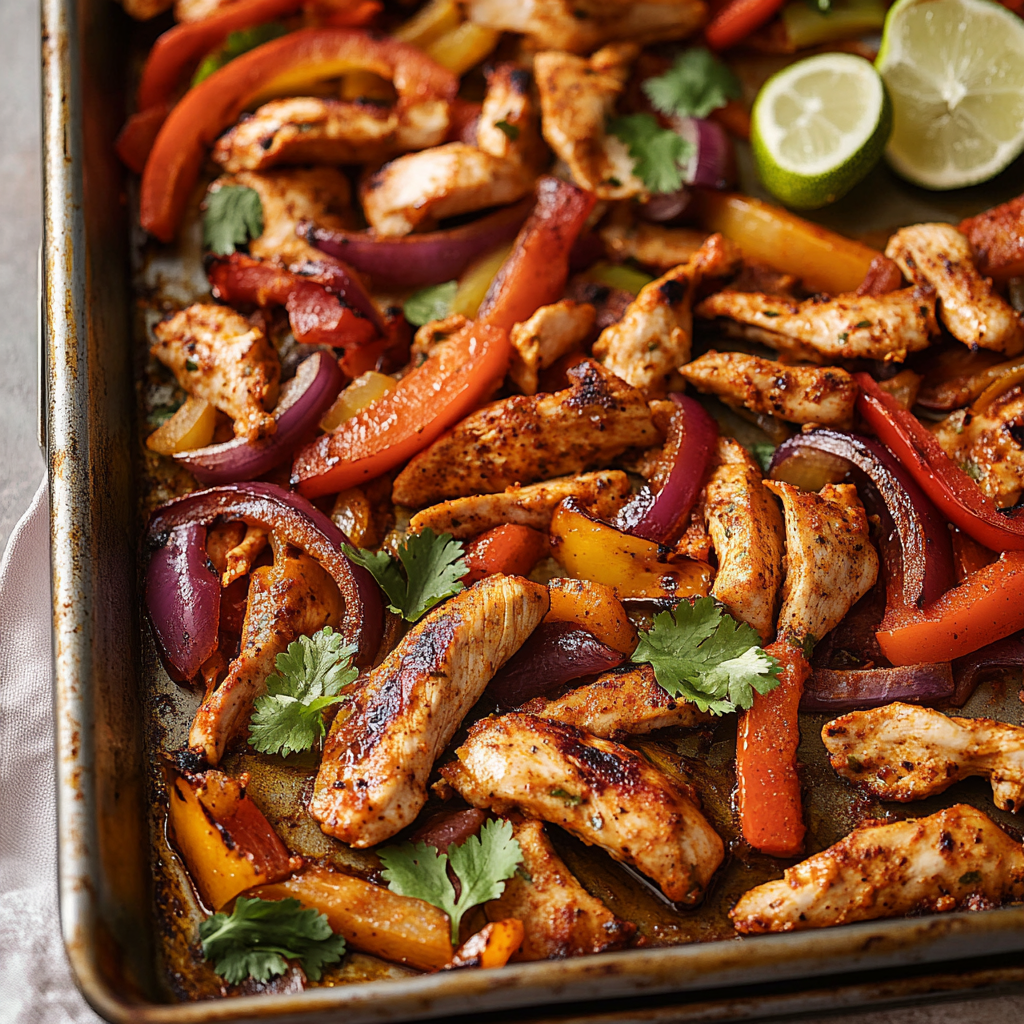
- Sheet pan chicken fajitas with black beans — 25 minutes, and the kids build their own tortillas.
- Sheet pan herb-rubbed chicken with vegetables — the baseline template; swap the vegetables to whatever's in the drawer.
- Sheet pan lemon-glazed chicken with asparagus and potatoes — a complete plate on one tray.
- Sheet pan smoky sausage and pepper medley — smoked sausage needs no prep and browns fast.
- Sheet pan Cajun-spiced sausage and peppers — same idea, more seasoning.
- Sheet pan Tex-Mex chicken and black bean bake — protein and beans together.
- Sheet pan teriyaki salmon with sesame-ginger veggies — salmon needs 12 minutes, so this is the fastest tray here.
- Sheet pan citrus-garlic salmon with roasted asparagus — bright and light.
Two rules make sheet-pan dinners work. Cut for equal cooking time, not equal size — potatoes go in ¾-inch dice while chicken goes in 1½-inch chunks, because the potatoes need longer. And preheat the pan itself for 10 minutes; food hitting hot metal browns instead of steaming. Line with parchment for cleanup, but not foil under acidic marinades.
Twenty-minute skillets and rice bowls
- 20-minute one-pan Marry Me chicken with herbs — creamy, fast, and a reliable crowd-pleaser.
- 20-minute ginger-soy coconut chicken skillet — pantry sauce, no chopping beyond an onion.
- Quick beef stir-fry with snow peas and ginger — 15 minutes if the rice is already made.
- Quick beef stir-fry with broccoli and garlic sauce — the takeout replacement.
- 30-minute stir-fried beef and broccoli with garlic sauce — a slightly saucier version.
- One-pan beef and cheese taco skillet — taco night without the assembly line.
- One-pot lemon zest chicken and orzo with asparagus — pasta cooks in the sauce; one pot total.
- 15-minute shrimp and garlic lemon orzo — the fastest dinner on this page.
- 30-minute creamy tomato pasta with spinach — meatless, and kids eat it.
The stir-fry rule that matters most on a school night: have everything cut before the pan gets hot. Stir-frying is four minutes of cooking preceded by ten of prep, and if you start chopping mid-cook, the garlic burns. A hot, heavy skillet and a bowl of pre-cut ingredients is the whole technique — decent cookware that holds heat is worth more here than any gadget, and one sharp 8-inch chef's knife cuts prep time more than any other tool in the drawer.
Slow cooker and pressure cooker: walk in the door and eat
These two categories solve the hardest nights — the ones where you're not home until 6:30 — by moving the cooking to the morning or compressing it to 30 unattended minutes. A 6-quart slow cooker and a 6-quart electric pressure cooker are the only two small appliances this system actually needs; both cover a family of four with leftovers.
- Lemon-herb slow cooker chicken thighs with spring vegetables — six hours on low, done when you walk in.
- Slow cooker apple-infused chicken thighs — sweet enough for cautious eaters.
- Herb-roasted chicken and root veggie slow cooker feast — a full dinner in one crock.
- Slow cooker cider-braised chicken with root vegetables — fall-appropriate and forgiving.
- Instant Pot Caribbean chicken with mango-pineapple salsa — 25 minutes, shreds for two more meals.
- Instant Pot ground beef and vegetable chili — dinner plus lunches from one pot.
The slow-cooker mistake worth avoiding: chicken breast on low for eight hours turns to sawdust. Use thighs, which have enough fat and collagen to survive a long cook, and add dairy or fresh herbs at the end rather than the beginning.
Breakfast-for-dinner rescue meals
Breakfast for dinner is not a defeat. It's fast, cheap, protein-heavy, and it has the highest kid-approval rate of anything in this guide.
- Make-ahead breakfast burritos with scrambled eggs and veggies — make a dozen, freeze, microwave in 90 seconds.
- Scrambled egg and sausage breakfast burrito with pico de gallo — assembled fresh in 15 minutes.
- Tex-Mex breakfast burrito with spiced potatoes and cheese — heartier, potato-based.
- Quick breakfast burrito with scrambled eggs and avocado — the five-ingredient version.
Eggs are the cheapest complete protein in the store and cook in three minutes. Pair them with a starch you already have and a vegetable you need to use, and dinner is done before the oven would have preheated.
Freezer-to-oven backups for the worst nights
Every family needs three meals that require zero decisions. Build them once a month and keep them frozen.
- Chicken parmesan meatball bake with mozzarella — assembles ahead, bakes from frozen.
- One-pot cheesy kid-friendly pasta bake — the reliable "everyone eats it" option.
- Kid-friendly mini chicken quesadillas with cheddar — freeze flat, reheat in a dry skillet.
- Kid-friendly mini chicken and veggie stir fry — vegetables in a shape kids accept.
- Kid-friendly mini turkey meatball skewers with hidden veggies — batch-cook and freeze the meatballs.
Freeze unbaked casseroles in the dish, wrapped tightly, and bake from frozen at 350°F — add about 50% to the stated time and keep it covered for the first two-thirds. Freeze meatballs and burritos individually on a sheet pan first, then bag them, so they don't fuse into a block.
The 30-second pivot when practice runs late
Have one pre-decided answer for the nights that collapse, because deciding at 7:10 p.m. is how takeout happens. The three that work:
Quesadilla and fruit. Tortilla, cheese, whatever protein is in the fridge, four minutes in a dry skillet. Add apple slices. It's a real dinner.
Loaded eggs. Scramble six eggs, fold in the leftover roasted vegetables and cheese, toast whatever bread you have. Eight minutes.
Frozen backup, oven only. The casserole you froze in September. Turn the oven on when you text that practice is running late, and it's ready when you get home.
Decide which of the three is yours now and keep the ingredients permanently stocked. A pivot you have to plan is not a pivot.
The grocery routine that holds the whole system together
Pick one shopping day and one 15-minute planning slot before it. Choose four dinners — not seven, because leftovers and one collapse night will fill the rest — and let the list build itself from those four. Add the Sunday building blocks. That's the entire process, and it takes less time than one drive-through run.
Buy proteins in family packs and portion them into freezer bags the day you get home, flat so they thaw in 20 minutes. Buy vegetables that survive a full week (carrots, cabbage, broccoli, peppers, sweet potatoes) rather than the ones that die by Wednesday, and keep two bags of frozen vegetables as insurance.
AislePrompt merges the ingredients from any set of recipes into a single consolidated list, which is where the real time saving lives — pick four dinners and get one list organized by store aisle rather than four lists you reconcile in the parking lot. For families managing a mix of school lunches and dinners, the college and dorm meal prep collection shares the same batch-and-assemble logic at a smaller scale. A basic set of bakeware — two rimmed sheet pans and one 9x13 dish — covers every recipe on this page.
Your first week: a rotation you can copy
If you'd rather not design anything, run this. It uses four cooking nights, one assembly night, and one deliberate leftovers lunch, and every recipe is linked above.
| Night | Dinner | Active time | Why it's there |
|---|---|---|---|
| Monday | Sheet pan chicken fajitas with black beans | 12 min | Monday is the least chaotic night; build-your-own plates ease everyone in |
| Tuesday | 20-minute ginger-soy coconut chicken skillet | 20 min | Sunday's cooked rice turns this into a 20-minute night |
| Wednesday | Lemon-herb slow cooker chicken thighs with spring vegetables | 10 min a.m. | Put Wednesday's meal in the crock before school; midweek is usually the latest night |
| Thursday | Scrambled egg and sausage breakfast burrito with pico de gallo | 15 min | Breakfast-for-dinner absorbs a night that's already over budget |
| Friday | One-pot cheesy kid-friendly pasta bake | 15 min | The frozen backup, or a fresh bake if the week went well |
Wednesday's slow cooker makes roughly double what four people eat, which covers Thursday's lunches. That's the point of the rotation — one deliberate surplus, not five separately planned meals. Run the same five nights for two weeks before you change anything; the routine is what's doing the work, not the novelty.
What a week of school-night dinners actually costs
Rough US grocery figures as of August 2026, for a family of four, mid-tier store, no coupons:
| Category | Cost per serving | Active time | Total door-to-table |
|---|---|---|---|
| Sheet-pan chicken and vegetables | $2.60 | 12 min | 40 min |
| 20-minute skillet with pre-cooked rice | $3.10 | 20 min | 25 min |
| Slow cooker chicken thighs | $2.25 | 10 min | 6 hr unattended |
| Breakfast for dinner (eggs, tortillas) | $1.40 | 15 min | 20 min |
| Freezer casserole, baked from frozen | $2.80 | 5 min | 65 min |
Five dinners for four people lands near $145 to $175 a week including the Sunday building blocks, versus roughly $60 to $80 for a single family drive-through run. The economics only work if the food gets eaten, which is why the kid-approval rule is a budget rule and not a parenting one — a $2.60 dinner nobody finishes costs more than a $9 one that disappears.
Time is the other currency. Chicken thighs are cheaper than breasts per pound, forgive a long cook, and are the reason the slow-cooker row is the lowest number in both columns. If you change one thing about how you shop this month, buy thighs in family packs.
When this system doesn't work
Three honest no-fit cases, because a plan that claims to fit everyone fits nobody:
You cook for one or two. Sheet-pan and slow-cooker formats produce four to six servings and the leftovers logic falls apart fast. Scale down to the skillet recipes and treat batch cooking as lunches rather than dinners.
Your evenings are genuinely unpredictable, not merely busy. If you don't know until 5 p.m. whether you'll be home at 6:00 or 8:30, the Sunday-building-block model is a better fit than any specific dinner plan — cook components, not meals, and assemble whatever the night allows.
Someone has a restrictive medical diet. Multi-allergen or therapeutic diets need recipe-level control that a general weeknight rotation can't provide. Use the same structure — one prep session, four cook nights, one pivot meal — but build the recipe list against the diet first.
Feeding a picky eater on this rotation
The rotation above assumes everyone eats what lands on the table. If one child
doesn't, the fix isn't a different set of recipes — it's three rules layered on
top of the same meals.
Rule 1 — familiar shape. Whatever the ingredients, the plate has to look
like something the child has eaten before. Ground turkey inside a taco shell is
a taco. Ground turkey in a bowl with a fork is a fight. Shape does more work
than flavor at this age.
Rule 2 — one new ingredient, not required. Exactly one unfamiliar item per
meal, in a small portion, with no expectation attached. NHS guidance on
and the wider research on repeated neutral exposure agree that acceptance often
takes 10 to 15 exposures. "No thank you" on exposure four is not failure; it's
exposure four.
Rule 3 — kid-portioned. Serve less than you think they'll eat and let them
ask for more. A heaped plate reads as a demand. A small plate with seconds
available reads as a choice, and the child who asks for seconds has just decided
they like dinner.
The corollary: never cook a separate meal. A short-order kitchen teaches a child
that refusal produces a better option, and the rotation stops working within a
week.
The exposure ladder
Acceptance is not a single event, which is why most parents decide a food
"doesn't work" after two tries. A rejected food climbs through stages, and each
stage is a win worth counting even when nothing gets swallowed. If the child
moved up one rung, the meal succeeded.
| Rung | What it looks like | What you do |
|---|---|---|
| 1 | Tolerates it on the plate without complaint | Nothing. Serve it again in three days. |
| 2 | Touches it, moves it, pushes it around | Nothing. This is real progress. |
| 3 | Sniffs or licks it, then puts it down | Nothing. Do not comment. |
| 4 | Takes a bite and spits it out | Hand over a napkin, no reaction. |
| 5 | Eats one bite | Serve the same small amount next time, not more. |
| 6 | Asks for it | Move it to the safe list and pick a new target. |
Two rules make the ladder work: only one target food per meal, and never
announce which one it is — a child who knows they're being worked on will refuse
on principle. Rotate the target every few nights so no single vegetable becomes
the site of a standing argument. Rungs one through three usually take a
fortnight, and rung five tends to arrive in week three.
Common pitfalls
1. Planning seven dinners. You'll cook four. Plan four, and stop feeling behind.
2. Chicken breast in the slow cooker. Use thighs. Breast dries out over a long cook, every time.
3. Crowding the sheet pan. Two pans, not one deep pile. Crowded food steams and never browns.
4. No pivot meal. Every family needs a pre-decided 8-minute fallback with permanently stocked ingredients.
5. Skipping the Sunday hour. It's the difference between cooking on a school night and assembling on one.
Every recipe above has a full ingredient list and one-tap shopping on AislePrompt. Last reviewed August 2026.
Frequently asked questions
How do I feed a family right after practice when everyone is starving?
How many nights per week should I actually cook?
How do I handle kids who won't eat the family dinner?
Can these meals actually be made in 30 minutes when I include cleanup?
How does AislePrompt help with school-year meal planning?
Sources
Dinners the kids will actually eat.
Ask our AI to plan the week around your picky eater — one shopping list, one Instacart cart.
Plan the kids’ week →