Best Canning Supplies and Mason Jars 2026: Top Picks + Buying Guide
Water bath or pressure, pint or quart, starter kit or full pressure setup — the pH of what you are putting up decides the whole kit, and late September is when it pays for itself.
Where to buy these picks
Affiliate links: we may earn a commission on qualifying Amazon purchases. Policy. Prices show only when checked in the last 24 hours.
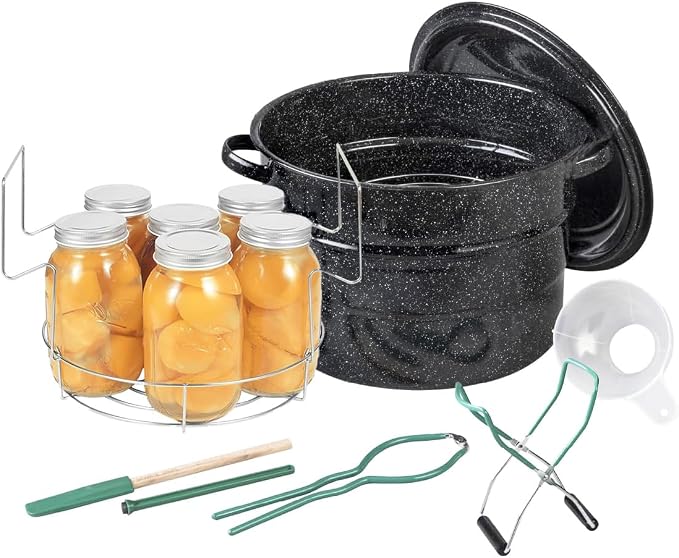
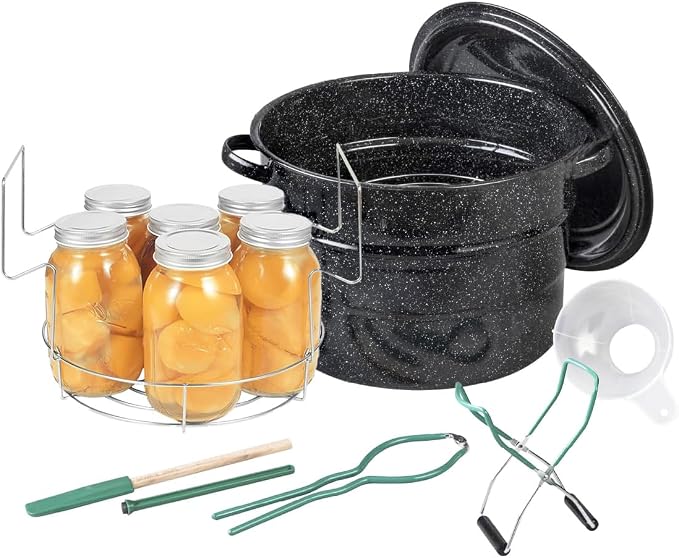
- Granite Ware 8-Piece Enamelware Water Bath Canning Pot with Canning Kit and RackCheck price on Amazon →
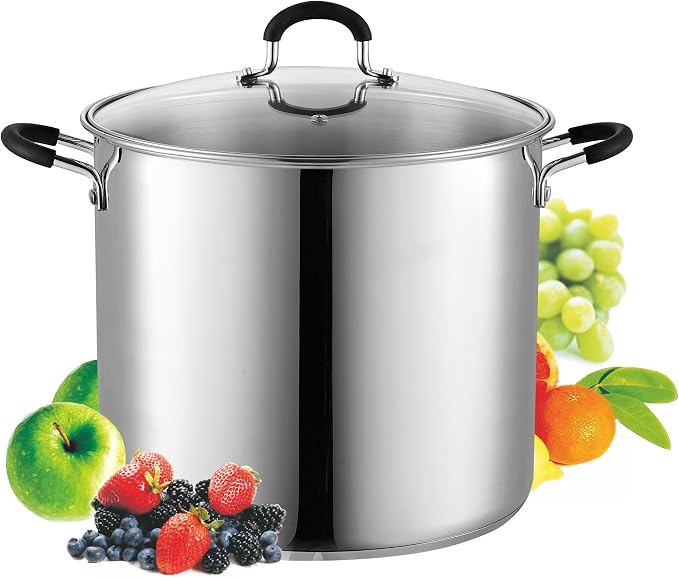
- Cook N Home Professional 12-Quart Stainless Steel Stock PotCheck price on Amazon →
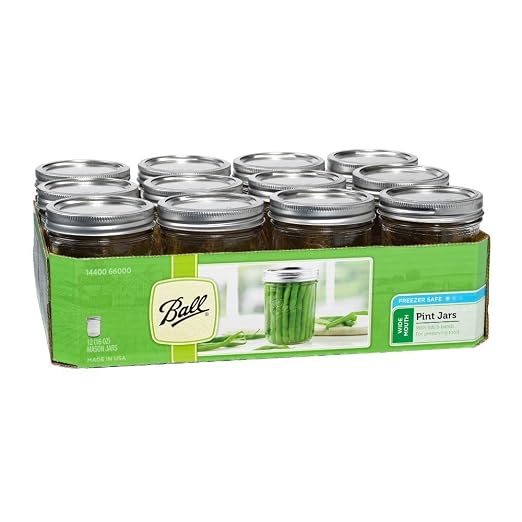
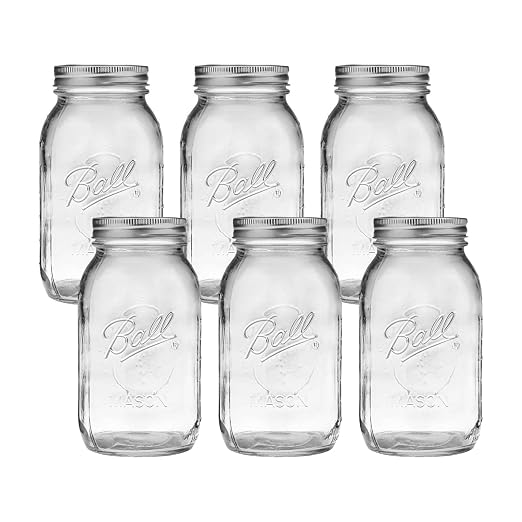
- Ball Wide Mouth Pint 16-Ounce Glass Mason Jars, 12-CountCheck price on Amazon →
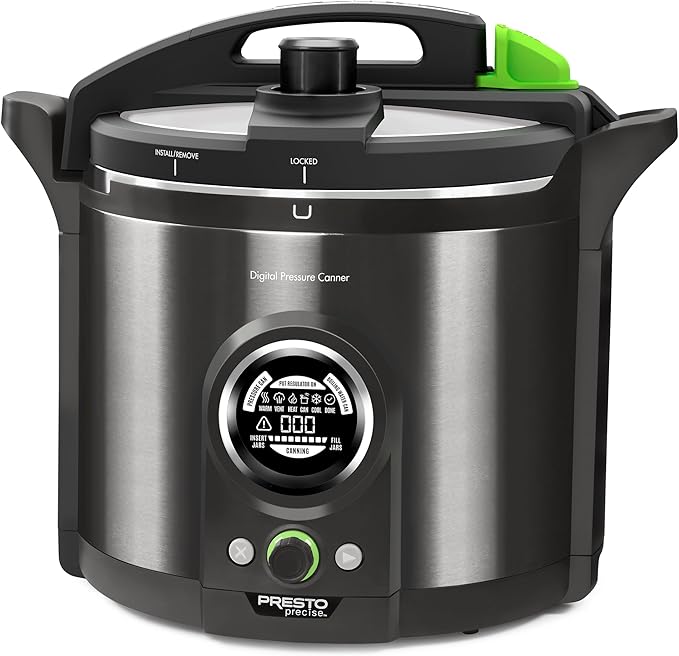
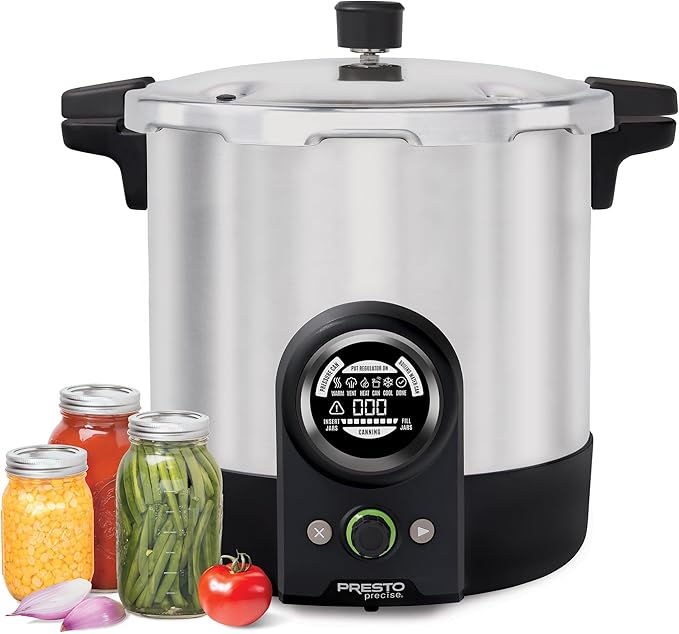
- Presto 02144 12-Quart Digital Pressure CannerCheck price on Amazon →
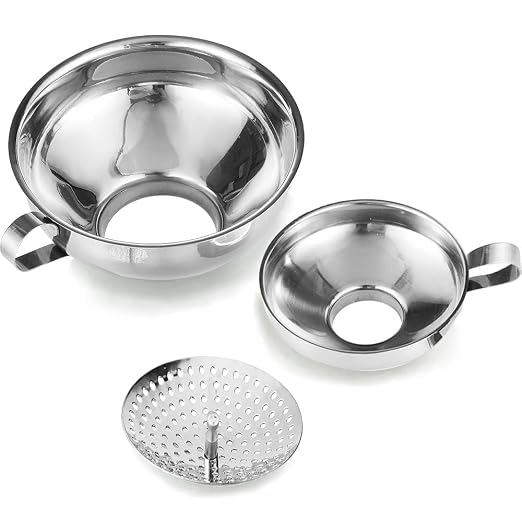
- Delove Canning Funnel with Strainer, 3-PackCheck price on Amazon →
If you are starting from nothing, buy the Granite Ware 8-Piece Enamelware Water Bath Canning Pot with rack and kit at $89.99 and a 12-count case of Ball Wide Mouth Pint Jars at $24.96. That $115 covers everything a first season of jams, pickles and tomatoes needs. Add a pressure canner only when you start putting up green beans, broth or meat.
Get a free week of easy dinners
Seven weeknight dinners with the shopping list already totalled, sent Sunday. No account needed, unsubscribe in one click.
No spam, unsubscribe in one click. Recipes, shopping lists and Instacart carts all work without an account either way.
Why late September through October is the biggest canning window of the year
Canning demand is not evenly spread across the year — it spikes hard in a six-week band that opens in mid-September. Three harvests land on top of each other in that window: the last flush of field tomatoes before first frost, the apple and pear drop, and whatever your garden dumped on you in the final two weeks of warm weather. Farmstands discount seconds — bruised, split or oversized fruit that is perfect for sauce and terrible for a display table — at 40 to 60 percent off retail in late September because the alternative is compost.
That is the arbitrage. A 25-pound box of canning tomatoes runs $18 to $28 at a farmstand in the last week of September versus $2.49 to $3.99 a pound for the same fruit in a grocery store in February. Twenty-five pounds of paste tomatoes cooks down to roughly seven quarts of sauce. At $24 for the box plus about $4 in jars and lids, you are producing sauce at $4 a quart against a $5.50 to $7.00 store price for a comparable jarred sauce with a shorter ingredient list. The equipment pays for itself somewhere in the second or third season, and the jars — which are the only part you buy repeatedly — last decades.
The other reason to start now rather than in July: cool weather. A water bath canner holds 21 quarts of boiling water for 45 minutes at a rolling boil. In an 85°F kitchen that is miserable. In a 62°F October kitchen it is pleasant, which is a bigger factor in whether you actually finish the batch than any piece of gear on this page.
If your bottleneck is produce rather than equipment, our late-summer tomato guide and apple season recipes cover what to do with a glut that exceeds your jar count.
Top picks
#1: Granite Ware 8-Piece Enamelware Water Bath Canning Pot with Canning Kit and Rack
Verdict: Best overall — $89.99, and the only pick here that is a complete first-season setup in one box.
This is the one to buy if you own nothing. The set is the 21-quart enamel-on-steel canning pot, the wire jar rack that keeps jars off the bottom, a jar lifter, a wide-mouth funnel, a magnetic lid wand, a bubble remover and headspace gauge, and tongs. Buying those six tools individually runs $35 to $45, so the pot effectively costs you $45 to $55.
Twenty-one quarts is the size that matters. It fits seven quart jars or nine pint jars in a single load with the two inches of water above the lids that every USDA process requires. A 12-quart pot — the size most people already own — only clears the water-cover requirement with pints, and only four of them. Doing 25 pounds of tomatoes four jars at a time is how a Saturday turns into a Sunday.
The enamel-on-steel body is the compromise: it is light (about 5 pounds empty, versus 11 for a comparable stainless pot), it heats fast, and it costs a third of stainless. The tradeoff is that chips in the enamel will rust, so it wants a dish-rack dry rather than a cabinet drip-dry. It is also not induction-compatible unless your enamel has a steel core — check your cooktop before ordering.
#2: Cook N Home Professional 12-Quart Stainless Steel Stock Pot
Verdict: A dual-purpose pot that water-bath cans pints and does everything else the other 50 weeks of the year.
A water bath canner is, mechanically, a tall pot with a rack in it. If you are only canning half-pints and pints — jams, jellies, pickles, salsa, relish — a 12-quart stainless stock pot does the job and then goes back to being a stock pot. That is a real argument for anyone with a small kitchen: the Granite Ware is a single-purpose object that lives in a basement for 46 weeks a year.
The Cook N Home 12-quart is induction-ready with an encapsulated tri-ply base, which the enamel canners usually are not, and 12 quarts is enough headroom for pints with two inches of water cover. You will need to add a rack — a round cake-cooling rack or a folded dish towel works, and the point is only to keep glass off direct heat so jars do not crack from thermal shock. It cannot do quarts, and it cannot do a full seven-jar load. If your plan is tomatoes by the bushel, buy the 21-quart. If your plan is jam and pickles, this is the smarter $45.
Compare against the rest of the field in our stock pot buying guide.
#3: Ball Wide Mouth Pint 16-Ounce Glass Mason Jars, 12-Count
Verdict: Best for beginners — $24.96. The default jar, and the one to buy first.
Pint jars are the correct starting size and wide mouth is the correct starting neck. A pint is roughly what a two-person household opens and finishes inside a week, which is the actual constraint on a home-canned jar: once the vacuum is broken you are on refrigerator time, not shelf time. Quarts are for households of four-plus or for sauce you will use in a single cook.
Wide mouth costs about $2 a dozen more than regular mouth and is worth it for anything with structure — pickle spears, peach halves, whole tomatoes, green beans. Food goes in and comes out without being mangled, and the jars are far easier to clean by hand. Regular mouth is better for jam and jelly (the narrower opening loses less to evaporation and headspace error) and the Ball Regular Mouth Quart 6-Pack at $25.99 covers that side.
Every case ships with lids and bands. The bands are reusable for years; the flat lids are one-use only, which is the single most important line in this article and gets its own section below.
#4: Presto 02144 12-Quart Digital Pressure Canner
Verdict: The only electric appliance in this guide you should trust with low-acid food.
Water bath canning is unsafe for low-acid food, full stop. Green beans, corn, carrots, plain vegetables, soups, broth, meat and fish all sit above pH 4.6, and Clostridium botulinum spores survive 212°F indefinitely. They do not survive 240°F, and 240°F requires 10 to 11 PSI of steam pressure, which requires a pressure canner. There is no workaround, no vinegar trick, and no "my grandmother did it this way" exemption — see Wikipedia's summary of botulism for why home-canned low-acid vegetables remain the leading US source.
The Presto 02144 is notable because it is a digital pressure canner that Presto validated against USDA-tested processes, holding the required temperature and compensating for altitude automatically. That distinction matters: the National Center for Home Food Preservation's standing home-canning guidance is that ordinary electric multicookers — Instant Pots and their clones, including models with a "canning" button — are not recommended for pressure canning, because they do not hold a verified temperature and their pressure sensors are not calibrated to canning tolerances. The cheaper electric "canners" you will find at $148 to $164 fall in that same unvalidated bucket. Spending $366 here is not a luxury upgrade, it is the difference between a process you can document and one you cannot.
At 12 quarts it takes four quart jars or five pints per load, and it also runs water-bath cycles, so it can replace the stovetop canner entirely if counter space is the constraint. If you need seven quarts a load, the Presto 02153 23-Quart is the same architecture at $459.99.
#5: Delove Canning Funnel with Strainer, 3-Pack
Verdict: The cheapest thing on this list and the one you will use most.
A canning funnel is a stainless cone sized to drop inside both regular and wide-mouth jar necks, with a shoulder that rests on the rim. Without one you will get syrup, brine and tomato on the sealing surface of roughly every third jar, and any residue on that rim is a failed seal — which means a jar you have to either reprocess or refrigerate and eat this week. This 3-pack includes both neck sizes plus a strainer insert for pulling solids out of brine.
The rest of the small-tools list is genuinely cheap. Buy them together and skip the $5 shipping thresholds:
| Tool | Price | Why it earns the drawer space |
|---|---|---|
| Delove canning funnel, 3-pack | Check price | Keeps rims clean; both neck sizes |
| Morton canning & pickling salt, 4 lb | Check price | No anti-caking agents — table salt clouds brine |
| McCormick pickling spice, 12 oz | Check price | 11-spice blend; one jar covers a season |
| Pomona's Universal Pectin, 3-pack | Check price | Calcium-set pectin — gels with little or no sugar |
| Lemi Shine food-grade citric acid, 8 oz | Check price | Acidifies tomatoes to a safe pH without vinegar flavor |
| RSVP Endurance canning ladle, 13.5 in | Check price | Non-reactive 18/8; the length clears a 21-qt pot |
| Mrs. Wages pickling lime, 1 lb | Check price | Firms cucumber pickles; must be rinsed thoroughly |
| Mrs. Wages medium salsa canning mix | Check price | A tested-ratio shortcut for a first salsa batch |
| Mason jar opener | Check price | Breaks a vacuum seal without denting the lid |
Where to buy the picks in this guide
Prices are shown only when checked in the last 24 hours; otherwise check the current price on Amazon.
Water bath vs pressure canning: the pH 4.6 line
Every decision in home canning descends from one number. Foods at or below pH 4.6 are acidic enough that botulinum spores cannot germinate, so 212°F boiling water is sufficient. Foods above pH 4.6 are not, and require 240°F under pressure.
| Food | Typical pH | Safe method | Why |
|---|---|---|---|
| Jams, jellies, fruit preserves | 3.0–3.6 | Water bath | Fruit acid plus sugar; among the most forgiving |
| Pickles in vinegar brine | 3.2–3.8 | Water bath | 5% vinegar drives pH well below the line |
| Tomatoes, acidified | 4.2–4.6 | Water bath | Modern cultivars hover at the line — acid is mandatory |
| Tomatoes, unacidified | 4.3–4.9 | Pressure | Some varieties test above 4.6 |
| Salsa (tested recipe) | 3.8–4.2 | Water bath | Only with a tested vegetable-to-acid ratio |
| Green beans, corn, carrots | 5.1–6.5 | Pressure | Well above the line; no acid workaround |
| Broth, stock, soup | 6.0–7.0 | Pressure | Near neutral |
| Meat, poultry, fish | 5.5–6.5 | Pressure | Near neutral, high protein |
The tomato row is the one that catches experienced cooks. Tomato cultivars bred since the 1970s are measurably less acidic than heirlooms, and a ripe or overripe fruit drifts further up. This is why every current tested tomato process calls for added acid — 2 tablespoons of bottled lemon juice or ½ teaspoon of citric acid per quart, added to the jar, not to the pot. Bottled lemon juice, not fresh: fresh lemons vary by 0.3 pH between fruit, and bottled is standardized. Penn State Extension's basics of home canning walks the same logic with the processing times attached.
Fermentation is the third path and it is not canning at all. A ginger-cucumber kimchi or a ginger-fermented cabbage slaw produces its own acid from lactic bacteria and lives in the refrigerator, not on a shelf. It needs jars and salt and nothing else — no canner, no processing time. A fermented beet and carrot salad is a reasonable weekend-one project while you decide whether you want to buy a canner at all.
What to look for
Canner capacity, measured in jars not quarts. The spec that matters is how many quart jars sit on the rack with two inches of water cover. 21 quarts = 7 quart jars. 16 quarts = 5. 12 quarts = 4 quarts or 5 pints. Ignore the marketing capacity and count jars.
Rack quality. The rack has one job: keep glass off the pot floor, where direct conduction cracks jars. Wire racks with a folding handle are the good version — you lift all seven jars out at once instead of fishing them individually with a lifter. Racks that are just a flat disc are worse but functional. A rack that rusts through in one season is a $12 replacement, not a reason to return the pot.
Seal reliability is a lid question, not a pot question. No canner "seals better." The vacuum forms during cooling as the headspace air contracts. What ruins it is residue on the rim, a dented lid, an over-tightened band, or reused lids. All four are free to avoid.
Headspace tooling. A $3 plastic headspace-and-bubble tool does two things: it measures the gap from food to rim, and its notched edge slides down the inside of the jar to release trapped air pockets. Both included in the Granite Ware kit.
Thermometer accuracy — for altitude, mostly. Water boils at 212°F at sea level and about 198°F at 7,000 feet, which is why processing times increase with elevation (add 5 minutes per 1,000 feet for water bath; increase to 15 PSI above 1,000 feet for weighted-gauge pressure canning). If you live above 1,000 feet and are not adjusting, your process is under-cooked regardless of what the recipe says. Utah State Extension's food preservation program exists largely because of this and publishes altitude-corrected tables.
Induction compatibility. Enamel-on-steel canners usually work on induction; enamel-on-aluminum does not. Check before you order if you have a glass induction top — and note that many induction hobs also have a maximum pot diameter and a maximum weight, and a full 21-quart canner runs 40+ pounds.
Mason jar selection
Regular mouth vs wide mouth. Regular mouth necks are 2.75 inches, wide mouth 3.38 inches. Use wide for anything chunky or anything you will scoop from; use regular for jam, jelly, syrup and anything pourable. The lids are not interchangeable — buying a case of the wrong neck means buying the wrong lids all season too.
Sizing by how fast you eat it. Half-pints (8 oz) for jam, jelly, and anything you use a spoonful at a time — the Betrome 8 oz 24-pack at $24.99 works out to about $1.04 a jar. Quarter-pints (4 oz) for hot pepper jelly and gifts; the ComSaf 4 oz 8-pack is $9.99. Pints for pickles, salsa and most vegetables. Quarts — regular mouth at $25.99 or wide mouth at $27.99 for six — for sauce, whole tomatoes and broth.
Two-piece vs one-piece lids. Canning requires the two-piece system: a flat lid with a sealing compound around its underside, plus a screw band that holds it in place only during processing. One-piece lids — the solid metal or plastic caps sold for storage — cannot vent air during processing and will not form a vacuum. They are for dry goods, leftovers, and the jars you are using as drinking glasses.
Do not can in jars that are not canning jars. Commercial mayonnaise and pasta-sauce jars are annealed for a single hot fill, not for repeated thermal cycling, and they break in the canner at a far higher rate. The rims are also frequently a non-standard diameter that will not seal with Ball lids. The Wikipedia entry on the mason jar has the manufacturing history if you want the reason rather than the rule.
Storage, once they are full. Bands come off after 24 hours. Jars go on a shelf, not in a box in an attic. If you want to also keep dry pantry goods organized around them, our pantry organization guide covers the canister and shelving side.
Real-world numbers: what a first season actually costs
Prices below are current as of September 2026 for the exact products linked in this guide.
| Setup | Items | Total | What it does |
|---|---|---|---|
| Minimum viable | 12-qt stock pot + 12 pint jars + funnel | $82.94 | Jam, pickles, salsa in pint loads |
| Recommended starter | Granite Ware 8-pc kit + 12 pint jars + pickling salt | $124.17 | Everything high-acid, 9 pints or 7 quarts a load |
| Starter + tomatoes | Above + citric acid + 6 quart jars | $156.35 | Adds acidified whole tomatoes and sauce |
| Full high + low acid | Above + Presto 02144 | $522.66 | Green beans, broth, soup, meat |
Consumables per season run $25 to $60: replacement flat lids, salt, pectin and acid. Jars themselves are effectively capital — a jar bought in 2026 is still in service in 2046 barring a chip on the rim.
Throughput matters as much as cost. A 21-quart water bath canner processes seven quarts per 45-minute cycle plus roughly 20 minutes to bring 4 gallons of water back to a rolling boil between loads. That is about 6.5 quarts an hour sustained. A 25-pound box of tomatoes — call it seven quarts of sauce — is therefore a one-cycle afternoon once the fruit is peeled, and the peeling is the long pole, not the processing.
Common pitfalls
Reusing flat lids. The sealing compound is a single-cycle plastisol. It flows under heat to conform to the rim, then sets. A second heating does not reflow it correctly and the seal either fails outright or fails silently weeks later. Bands are reusable forever; lids never are.
Over-tightening the band. "Fingertip tight" is literal — thumb and one finger, stop at first resistance. A cranked-down band prevents air from venting during processing, which either buckles the lid or produces a false seal that releases on the shelf. This is the single most common first-season failure.
Skipping the acid in tomatoes. Covered above, and worth repeating because it is the one unsafe shortcut that produces a normal-looking jar. Acid goes in the jar, per jar, measured.
Inverting jars instead of processing them. The "flip the jar upside down and let the heat seal it" method circulating on recipe blogs produces a seal that looks identical to a processed one and sterilizes nothing. It is not a tested process for any food.
Cooling too fast. Jars come out of the canner onto a towel or rack, spaced an inch apart, and sit undisturbed for 12 to 24 hours. Moving them to a cold counter, a draft, or the refrigerator cracks glass and breaks forming seals.
Doubling a tested recipe. Canning recipes are ratio-validated, not scaled. Doubling a batch of jam changes the evaporation rate and the set; doubling a pickle brine changes the acid ratio if the vegetable volume does not scale identically. Run two batches.
Buying an unvalidated electric "canner." Covered in pick #4. A pressure indicator is not the same as a validated process.
Care and storage
Between uses. Jars do not need to be pre-sterilized for processes running 10 minutes or longer — the process itself sterilizes. For shorter processes, run them through a dishwasher sterilize cycle or hold them at 180°F in the canner. Either way jars go into the canner hot; a cold jar into boiling water cracks.
Checking seals. At 12 to 24 hours, remove the band and lift the jar by the edges of the lid alone. If the lid holds the jar's weight, the seal is good. A lid that flexes or pops when pressed in the center has not sealed — refrigerate that jar and eat it within a week, or reprocess it within 24 hours with a new lid.
Labeling and rotation. Contents and month-year, on the lid, in permanent marker. Oldest forward. The NCHFP's jam and jelly processing page notes the same one-year quality window that applies across the board — safe longer, best inside twelve months.
Storage conditions. Cool, dark, dry, and not the garage. Temperature swings above 95°F degrade quality and can compromise seals; light fades color and destroys vitamin content. Under-stair closets and basement shelving are ideal.
The pot itself. Enamel canners get dried, not drip-dried. Any chip exposes steel and will rust from there. Racks get dried too. Pressure canners need an annual gauge check (county extension offices do this free for dial-gauge models) and a gasket replacement every two to three seasons.
When canning is the wrong answer
When you have fewer than 6 quarts of anything. Below that volume, freezing is faster, safer and cheaper. There is no processing time, no acidity math, and no failure mode worse than freezer burn. A warm mixed-berry compote or a batch of cranberry sauce with sea salt freezes perfectly in a deli container. Our freezer meal-prep guide and the meal-prep container picks cover that route.
When you will not eat it. Twelve quarts of pickled beets that nobody in the house likes is twelve quarts of shelf space and $30 of jars. Can what you actually reach for — a spiced orange cranberry sauce that goes on sandwiches all winter beats a novelty you make once.
When the produce is already expensive. The math only works on seconds and gluts. Canning $4.99-a-pound out-of-season fruit produces a jar that costs more than the store version.
When you want a condiment, not a pantry item. A pineapple-mango salsa, a quick pickled cabbage and onion relish or a jar of giardiniera is better fresh and refrigerated. Refrigerator pickles take 20 minutes, need no processing, and taste better than the canned version because they never got cooked to 212°F.
When you have not read a tested process for the specific food. Not a recipe blog — a tested process, with a jar size, a headspace, a processing time and an altitude adjustment. If one does not exist for what you are trying to preserve, that is information, not an obstacle to route around.
Once the shelf is full, the payoff is what you cook from it: a canned tomato basil soup in January, pork chops with apple-onion compote from the October apple drop, or a warm peach and almond crisp made from fruit you put up at $1.10 a pound.
FAQ
Do I need a pressure canner or is a water bath canner enough?
It depends entirely on what you are canning. Water bath is USDA-safe only for high-acid foods (pH 4.6 or below): jams, pickles, tomatoes with added acid, fruit preserves, and salsas made with a tested recipe. Low-acid foods — green beans, corn, meat, soups, plain vegetables — must be pressure canned at 240°F to kill Clostridium botulinum spores, which survive boiling water. Start with a water bath canner for jams and pickles, and add a pressure canner if you preserve garden vegetables or make broth in bulk.
Can I reuse canning lids?
No, and this is the single most common home-canning safety mistake. The rubber sealing compound on the flat lid is designed for one heat-and-cool cycle and will not form a reliable vacuum seal on a second use, which means the food inside is unsafe within days. Bands (the screw rings) are reusable indefinitely as long as they are not rusted or warped. Buy new lids every canning season; a box of 12 Ball dome lids costs about $4 and is cheap insurance against botulism.
How long do home-canned foods actually last?
The USDA recommends consuming home-canned foods within one year for best quality, but a properly sealed jar stored in a cool dark place remains safe indefinitely. Quality degrades after 12-18 months — colors fade, textures soften, and flavors flatten — but a jar that still has a tight vacuum seal, no rust on the lid, no leaking, and no off odor when opened is safe to eat regardless of age. Always inspect before use: if the lid pops up when pressed or the jar contents look off, discard without tasting.
What is headspace and why does it matter?
Headspace is the empty air gap between the top of the food and the underside of the lid, and every canning recipe specifies an exact amount (usually 1/4 inch for jams, 1/2 inch for pickles, 1 inch for pressure-canned vegetables). Too little headspace and food forces its way past the seal during processing, breaking the vacuum; too much and there is not enough vapor to push out the extra air, so a proper seal never forms. A plastic headspace tool removes the guesswork and pays for itself in the first batch.
Is home canning safe if I follow a recipe from the internet?
Only if the recipe comes from a USDA-tested source: the National Center for Home Food Preservation (nchfp.uga.edu), the Ball Blue Book, or your state's cooperative extension. Blog recipes that skip the acid step, shorten processing times, or invert jars instead of processing them are the reason botulism cases still happen every year in the US. When in doubt, freeze instead of can — freezing is forgiving in ways canning is not, and modern deep freezers hold food safely for a year or more.
Sources
- National Center for Home Food Preservation — Home Canning — the USDA-partnered reference for every tested process, including the guidance against electric multicookers for pressure canning.
- NCHFP — Canning Jams and Jellies — processing times, headspace and the one-year quality window.
- Penn State Extension — Let's Preserve: Basics of Home Canning — acidity, method selection and altitude adjustment in one page.
- Utah State University Extension — Preserve the Harvest — altitude-corrected processing tables.
- Wikipedia — Botulism — why low-acid home canning is the leading US source and what the spores actually survive.
- Wikipedia — Mason jar — the two-piece lid system and why commercial jars are not substitutes.
Frequently asked questions
Do I need a pressure canner or is a water bath canner enough?
Can I reuse canning lids?
How long do home-canned foods actually last?
What is headspace and why does it matter?
Is home canning safe if I follow a recipe from the internet?
How we picked
This guide is researched, not bench-tested. We shortlisted products from the AislePrompt kitchen catalog and compared them on published manufacturer specifications (materials, size, capacity, warranty), on what owners report in published reviews, and on any third-party sources linked in this guide. The guide was drafted with AI assistance. We did not run lab or hands-on tests of these products, so any measurement quoted here comes from the manufacturer or a cited source. Prices change often: use the “Check price on Amazon” buttons for today’s price.
Sources
Recipes to try with these tools
Put your gear to work — save any recipe to My Recipes (no account needed) and send its ingredients to Instacart in one tap.
Shop kitchen tools on AislePrompt →Browse the full kitchen shop →
Plan a week of meals in two minutes.
Tell our AI what you have and what you like — it builds your plan, shopping list, and Instacart cart. No account needed.
Plan my week →