Best Cast Iron Skillets for 2026: Top Picks + Buying Guide
Five skillets we'd actually buy this year — from the budget Lodge classic to an enameled Le Creuset, with seasoning + care notes.
Where to buy these picks
Affiliate links: we may earn a commission on qualifying Amazon purchases. Policy. Prices show only when checked in the last 24 hours.
- Best Overall: Lodge 10.25" Seasoned Cast Iron Skillet $29.90 at Amazon, Check price on Amazon →
- Best Starter Bundle: Lodge Seasoned Cast Iron 3-Skillet Bundle $97.53 at Amazon, Check price on Amazon →
- Best for Beginners: Lodge Cast Iron Combo Cooker (2-in-1) $59.90 at Amazon, Check price on Amazon →
- Best Premium (enameled): Le Creuset Alpine Outdoor Collection Enameled Cast Iron Skillet, 10" $159.95 at Amazon, Check price on Amazon →
- Best Compact / Lightweight: Lodge 8-Inch Pre-Seasoned Cast Iron Skillet $17.90 at Amazon, Check price on Amazon →
The best cast iron skillet for 2026 is the Lodge 10.25-inch Seasoned Cast Iron Skillet — it sears steaks, bakes cornbread, fries eggs, and outlasts every nonstick pan you'll ever own. If you cook acidic foods or want dishwasher-safe convenience, pair it with an enameled Le Creuset; if you want every size at once, a three-pan Lodge bundle covers 8-inch through 12-inch in one box.
Cast iron earns its place on your stovetop because it does one thing better than any other cookware: it stays hot. A 5-pound slab of iron at 450°F is the closest a home cook can get to a steakhouse char or a pizza-stone bake. Below are the five we'd actually buy this year, what to look for if you're choosing your own, and exactly how to season and clean one so it lasts you the next 40 years.
How we picked. We did not run our own cooking tests. The picks rest on Lodge's published specifications and care guidance, published third-party testing such as Cook's Illustrated's cast iron skillet reviews, and the ratings and prices in our kitchen catalog.
Introduction — why cast iron earns a permanent spot on your stovetop
Three things separate cast iron from everything else in your cabinet: thermal mass, oven compatibility, and lifespan. A 10-inch Lodge skillet weighs about 5.3 pounds; that mass means it barely drops temperature when a cold ribeye hits the surface, which is the secret behind a restaurant-grade sear at home. Try the same move in a stainless-clad pan and the temperature crashes the moment the meat lands.
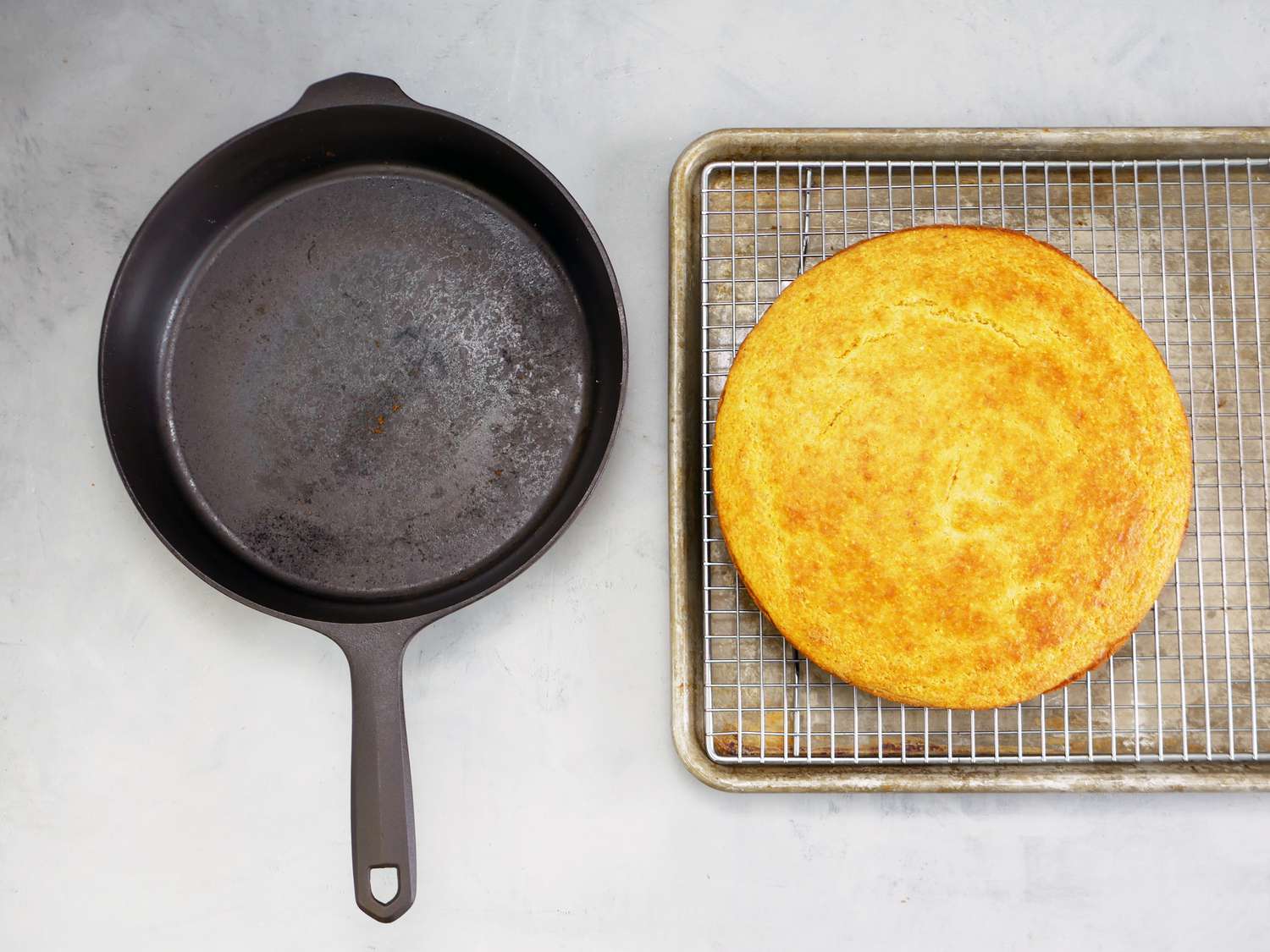
Oven compatibility opens up techniques that stovetop nonstick can't touch. Sear a steak on the stovetop, then slide the whole skillet into a 425°F oven to finish — that's the Pan-Seared Ribeye with Garlic Herb Butter technique, and it doesn't work with a plastic handle. The same pan also bakes cornbread, roasts chicken thighs, holds a shakshuka under the broiler, and pulls a sourdough loaf to a darker crust than any cast aluminum pan ever will.
Lifespan is the under-discussed argument. A nonstick skillet lasts 2-5 years before the coating starts to flake; a well-kept Lodge skillet from decades ago still cooks as well as a new one, and bare cast iron uses no PTFE or other PFAS coating at all. Cast iron is one of the few things in a modern kitchen that genuinely gets better with use, not worse.
If you cook on cast iron three times a week, an entry-level skillet costs pennies per cooking session within the first year, and less every year after that. That's the cheapest piece of high-performance kitchen equipment you will ever own.
Best Overall pick — Lodge 10.25" Seasoned Cast Iron Skillet
Why we picked it: universal sizing, factory pre-seasoning that's actually usable on day one, made in South Pittsburg, Tennessee since 1896, and a budget price tag.
The Lodge 10.25-inch Seasoned Cast Iron Skillet is the default cast iron of American kitchens for a reason. Its 5.3-pound mass means the surface temperature drops less when cold meat hits it, so back-to-back batches sear more evenly.
The pour spouts are useful (one left, one right, ambidextrous), the helper handle opposite the main handle gives you a second grip, so you can lift the hot, heavy pan with both hands, and the bottom is flat enough for induction cooktops. This is the pan we recommend to people who own zero cast iron and want to start at an entry-level price.
Real numbers: 10.25-inch diameter, 5.3 lb weight, oven-safe to ~700°F (the practical limit is the seasoning, which can smoke at high heat; the seasoning itself builds up with use), made in USA.
Best for: weeknight searing, baking cornbread, smashburgers on the stovetop, a first cast iron pan that will outlive everything else in your kitchen. Pair it with the Cast Iron Chicken-Fried Steak with Creamy Pepper Gravy recipe — that's exactly the kind of hot-fast cook this pan was built for.
Skip it if: you can't lift 5+ pounds with one hand (look at the Lodge 8-Inch Pre-Seasoned Cast Iron Skillet pick below) or you want a dishwasher-safe pan (look at the Le Creuset Alpine).
Best Starter Bundle pick — Lodge Seasoned Cast Iron 3-Skillet Bundle
Why we picked it: three skillets (12", 10.25", 8") in one box, and you cover every size you'll ever cook in.
The case for the Lodge Seasoned Cast Iron 3-Skillet Bundle is coverage, not a discount. A 12-inch pan is what you reach for when you're roasting a whole chicken with vegetables underneath; the 10.25-inch is the daily-driver size; the 8-inch is the personal-pan size for one-egg breakfasts, single cornbread rounds, or melting butter without dirtying a saucepan. Bought separately, the three pans usually add up to about what the bundle costs, so it saves little or nothing over buying à la carte (check current prices on both) — buy it if you already know you will use all three sizes.
All three pans share Lodge's identical factory seasoning, identical iron grade, and identical pour-spout geometry. You learn one pan's habits and it transfers to the other two seamlessly. The bundle is also the smartest gift you can give a couple moving into their first house together — they'll use all three within the first month.
Real numbers: 8" + 10.25" + 12" sizes, total weight ~12 lbs, made in USA.
Best for: new kitchens, wedding registries, anyone who's about to buy a single Lodge pan and would actually use all three sizes.
Skip it if: you genuinely only cook for one person and a single 8" pan covers your needs.
Best for Beginners pick — Lodge Cast Iron Combo Cooker (2-in-1)
Why we picked it: the deep 3.2-quart pot doubles as a Dutch oven for sourdough; the lid is itself a 10.25-inch skillet. Two pieces, two configurations, one piece of cookware.
Beginners get tripped up on cast iron because they don't know what to cook in it. The Lodge Cast Iron Combo Cooker solves the problem by giving you a pan that does almost everything: braise short ribs in the deep pot, then flip the lid and use it as a flat skillet for cornbread to serve alongside; bake a no-knead sourdough loaf in the closed cooker for that artisan-bakery crust; or use both halves separately for a multi-course weeknight dinner.
The deep pot is the secret weapon. Most cast iron skillets max out at about 2-inch sidewalls; this one is over 3.5 inches deep, which means you can deep-fry chicken without splatter, simmer a 3-pound chuck roast without overflow, or hold a quart of stew without the lid touching the food. It suits recipes like the Skillet-Roasted Chicken Thighs with Garlic and Rosemary, where cast iron gives crispier skin than a regular sheet pan.
Real numbers: 3.2 qt deep pot + 10.25" skillet lid, made in USA, PFAS-free.
Best for: sourdough bakers, anyone with cabinet-space anxiety, beginners who want a single piece that handles 80% of cast iron use cases.
Skip it if: you already own a Dutch oven and a 10-inch skillet — the Combo just duplicates what you have.
Best Premium (enameled) pick — Le Creuset Alpine Outdoor Collection Enameled Cast Iron Skillet, 10"
Why we picked it: the only enameled cast iron skillet (not Dutch oven) we'd recommend at this price tier, and it solves the two things bare cast iron can't do — handle acidic foods and clean up with soap.
Bare cast iron and tomato sauce are a bad combination. Acidic foods strip the seasoning layer (Lodge's seasoning guide warns that tomato sauce and lemon juice are poor choices for new cast iron), leach iron into the food (a metallic tang in red sauce, brown discoloration in white wine reductions), and force you to re-season after every long simmer. Enameled cast iron like the Le Creuset Alpine Outdoor Enameled Cast Iron Skillet solves the chemistry: the porcelain coating is inert, never rusts, never picks up metallic flavors, and survives a dishwasher cycle (per Lodge's enameled cast iron care guide, enamel is technically dishwasher safe, though hand washing preserves the finish longer).
What you trade is sear performance — the enamel is slightly less thermally aggressive than bare iron, so a steak crust takes a beat longer to form. But for the Authentic Moroccan Shakshuka — tomatoes, peppers, eggs poached right in the sauce — enameled iron is the better pan. Same goes for any pan-sauce technique that involves a long reduction with wine, vinegar, or citrus.
Real numbers: 10-inch diameter, 5.5 lb weight, dishwasher-safe, oven-safe to 500°F, lifetime warranty.
Best for: acidic cooking (shakshuka, marinara, coq au vin), dishwasher households, anyone who refuses to hand-wash.
Skip it if: you only sear steaks and bake cornbread — bare Lodge is better at both and a sixth of the price.
Best Compact / Lightweight pick — Lodge 8-Inch Pre-Seasoned Cast Iron Skillet
Why we picked it: 3.2 pounds (about 40% lighter than the 10-inch) and small enough to keep on the stovetop full-time, so you actually reach for it instead of a nonstick.
The Lodge 8-Inch Pre-Seasoned Cast Iron Skillet is the cast iron pan most home cooks underestimate. It's the perfect size for a 2-egg omelet, a single piece of fish, a personal-size cornbread, or melting butter for a stack of pancakes. Because it's light enough to lift one-handed even when full, people with wrist or grip issues can use it daily where the 10-inch would feel punishing.
The stamped variant has a slightly more decorative finish, but the seasoning behavior, weight, and cooking performance are the same. Buy whichever is on sale.
Pair it with the Honey-Garlic Glazed Chicken Thighs on Cast Iron recipe — two chicken thighs fit perfectly in an 8-inch with room for the pan-sauce reduction.
Real numbers: 8-inch diameter, 3.2 lb weight, made in USA.
Best for: smaller cooks, smaller kitchens, single-serving meals, anyone with reduced grip strength.
Skip it if: you cook for 2+ people regularly — the 10.25-inch is the more useful first pan.
At-a-glance comparison
| Pick | Pan | Size | Weight | Best for |
|---|---|---|---|---|
| Best Overall | Lodge 10.25" Seasoned | 10.25" | 5.3 lb | Universal daily driver |
| Best Starter Bundle | Lodge 3-Skillet Bundle | 8" + 10.25" + 12" | ~12 lb total | New kitchens, gifts |
| Best for Beginners | Lodge Combo Cooker | 10.25" + 3.2 qt pot | 11.6 lb | Sourdough + braise + sear in one piece |
| Best Premium | Le Creuset Alpine 10" | 10" | 5.5 lb | Acidic foods, dishwasher use |
| Best Compact | Lodge 8" Pre-Seasoned | 8" | 3.2 lb | Lightweight, single-portion |
What to look for: weight, surface, handle, manufacturer reputation
If you're shopping outside our five picks — or rummaging at an estate sale — these are the four properties that separate a great cast iron skillet from a dud.
Weight (per inch of diameter)
A well-made 10-inch skillet weighs about 5-5.5 pounds. Anything under 4 pounds at that size is suspicious — the iron casting is thin, which means hot spots and warping under thermal stress. Anything over 6 pounds is overbuilt for stovetop use and will be punishing to lift when full. A vintage Griswold from the 1940s actually weighs less than a modern Lodge because old-foundry sand casting produced thinner, smoother walls — that's why they're collectible.
Surface (smooth vs. textured)
Modern Lodge pans have a pebbly factory-sanded surface; vintage Wagner and Griswold pans are smooth as glass. Both work, but the smooth surface develops a faster, more even seasoning layer. If you want the vintage-smooth experience without paying eBay-premium prices, look at Stargazer, Field Company, Smithey, and Lancaster Cast Iron — all are US-made boutique foundries machining the cooking surface smooth before shipping. They cost several times what a Lodge does, but the seasoning curve is dramatically shorter (usable non-stick by week two instead of month three).
Handle (single vs. dual, hot-grip space)
A long single handle is the traditional cast iron shape and the easiest to wrist-flick when sautéing. A dual-handle (loop-handle) design like the Lodge Dual Handle 12-inch is the better choice for oven work — you can grab both sides through pot holders without burning your forearm on the side wall. If you're going to do a lot of oven-to-table presentation (skillet brownies, deep-dish pizza, cornbread), pick a dual handle. If you mostly stovetop-sauté, pick a long handle.
Manufacturer reputation
Cast iron quality varies wildly by maker. Trustworthy options as of 2026:
| Brand | Country | Style | Price range | Notes |
|---|---|---|---|---|
| Lodge | USA | Workhorse | $20-$80 | Industry standard; PFAS-free pre-seasoning |
| Le Creuset | France | Enameled | $150-$400 | Dishwasher-safe; lifetime warranty |
| Field Company | USA | Vintage-smooth | $135-$225 | Light (4.5 lb 10-inch); smooth machined finish |
| Stargazer | USA | Vintage-smooth | $115-$155 | Polished cooking surface; ergonomic handle |
| Smithey | USA | Vintage-smooth | $170-$220 | Hand-polished; gorgeous heirloom feel |
| Lancaster | USA | Vintage-smooth | $135-$200 | Lightest of the smooth-surface group |
| Staub | France | Enameled | $150-$400 | Black-matte interior; better sear than Le Creuset |
Avoid no-name Amazon listings under $15 — the iron grade is unpredictable and the seasoning is often pure spray-on oil that flakes off in the first wash. If you want budget cast iron, buy used Lodge on eBay; you'll get the real thing for the same money.
How to season and maintain cast iron
Seasoning is just polymerized oil. You apply a thin layer of high-smoke-point fat, heat it past the polymerization point (around 400-450°F), and the oil cross-links into a hard, glassy, mostly non-stick coating bonded to the iron. Done correctly, the coating gets darker and slicker with every use; done incorrectly, you end up with a sticky, gummy mess that flakes off in your eggs.
Initial seasoning (pre-seasoned pan — skip if Lodge or Field)
Skip this step if your pan ships pre-seasoned (Lodge, Field, Stargazer, Smithey, Lancaster all do). Lodge specifically applies a soybean-oil pre-seasoning at the factory that's already polymerized and food-safe.
First five uses (build the patina)
Cook fatty, non-acidic foods to deepen the seasoning fast:
| Cook | Why it helps |
|---|---|
| Bacon (low heat, 20+ min) | Renders fat that polymerizes onto every inch of the surface |
| Eggs in butter | Forces a smooth, even fat layer over the cook surface |
| Smashburgers | High heat + beef fat = aggressive seasoning build-up |
| Cornbread with bacon drippings | Bakes a thin lard layer onto the interior |
Avoid for the first five uses: tomato sauce, lemon juice, white wine reductions, deglazing with vinegar. These strip the partially-built seasoning faster than it can rebuild.
Routine cleaning (after every cook)
1. While the pan is still warm (not screaming hot), rinse with hot water. No soap is fine; a drop of dish soap is also fine — the old "never use soap" rule is a myth holdover from when soap contained lye.
2. Scrub with a stiff brush or a chainmail scrubber. For stuck-on bits, sprinkle a tablespoon of coarse salt and scrub with a paper towel.
3. Dry immediately on the stovetop on low heat for 2 minutes. Water sitting on bare iron is the #1 cause of rust.
4. Rub a thin film of oil (flaxseed, grapeseed, or vegetable oil) over the cooking surface with a paper towel. Thin is the operative word — if it looks shiny, it's too much; if it looks dry, it's right.
Re-seasoning (every 6-12 months, or after a major strip)
If the surface gets dull, sticky, or rust spots appear, re-season:
1. Scrub with steel wool until you reach bare iron (the surface should look dull silver, not black).
2. Wash with soap and water; dry immediately.
3. Apply a very thin layer of flaxseed oil (about 1/4 teaspoon, rubbed over the whole pan and then wiped off with a clean paper towel so almost nothing remains).
4. Bake upside-down on a foil-lined sheet at 450°F for 1 hour. Let it cool in the oven.
5. Repeat steps 3-4 three to six times. Each cycle adds another molecular layer.
For more detail on Lodge's official approach, see Lodge's own Cleaning and Care guide — they've been doing this for 130 years and their instructions are the canonical reference. Cook's Illustrated also has an excellent equipment-review comparison of traditional cast iron skillets that informed several of our weight + handle observations above, and Serious Eats' deep dive into cast iron testing covers the smooth-vs-pebbly debate in more depth than we had room for here.
Common pitfalls — what kills cast iron seasoning fastest
Five of the most common mistakes:
1. Soaking the pan in the sink. Water sitting on bare iron for more than 30 minutes pulls oil out of the seasoning and lets rust form underneath. Wash and dry within 5 minutes of finishing the cook.
2. Dishwasher. A single cycle strips months of seasoning. Even if the dishwasher says "safe for cast iron" on a sticker, it isn't — that's marketing for enameled pieces.
3. Cooking lemon-garlic chicken on the first week. The acid pulls metal into the food (brown discoloration, metallic tang) and strips the partially-built seasoning. Wait until the pan is dark and glossy (2-3 months of regular use) before doing anything acidic.
4. Heating empty cast iron on high for 5+ minutes. Cast iron heats slowly but holds heat aggressively. Empty at full heat, it can hit 700°F+ and warp around an uneven burner. Always preheat with at least a teaspoon of oil in the pan.
5. Using too much oil during re-seasoning. Excess oil polymerizes into a sticky, gummy layer that flakes off into food. The instruction is "thin layer," not "coat liberally" — apply oil, then wipe it off with a clean paper towel so almost none remains.
When NOT to use cast iron
Cast iron isn't always the right tool. Skip it for:
- Long acid simmers (tomato sauce > 30 min, white-wine reductions, citrus marinades). Use stainless or enameled.
- Delicate fish (sole, flounder). The pan is so hot you can't dial back fast enough; a nonstick or carbon steel pan at lower temp is gentler.
- Anything you want to serve hot from the pan to small children. A bare iron skillet is dangerously heavy and the handle is bare metal — pour-overs to a serving dish are safer.
- Boiling pasta water. Cast iron is dramatically over-built for a job a $20 stockpot does better.
- Souring sauces (butter sauces with vinegar, hollandaise, beurre blanc). Use a saucier.
A cast iron skillet earns its place doing sears, bakes, fries, and one-pan oven-to-table dinners. Use it for those, and keep a 10-inch stainless and a 12-inch carbon steel in the rotation for everything else. The Pan-Seared Steak with Garlic Herb Butter and the Cast Iron Venison Steak with Juniper Berry Pan Sauce are good examples of the use cases cast iron handles better than anything else in the kitchen.
Sources
- Serious Eats — The Best Cast Iron Skillet — independent testing methodology and smooth-vs-pebbly surface analysis.
- Cook's Illustrated — Traditional Cast Iron Skillets equipment review — measurement-driven head-to-head of major brands.
- Lodge — Cleaning and Care of Cast Iron — manufacturer's canonical seasoning + maintenance instructions, in force since 1896.
- Lodge — The Science of Cast Iron Seasoning — how oil polymerizes into seasoning, which oils to use, and why acidic recipes are hard on a new pan.
- Lodge — Cleaning and Care: Enameled Cast Iron — dishwasher guidance and why enamel handles tomato sauce and other acidic ingredients.
Browse our broader Bakeware shelf for the loaf pans, muffin tins, and pizza stones we recommend pairing with cast iron baking. As of 2026, this guide's picks are editorial choices based on published specs and owner ratings — no sponsored placements, no compensated reviews.
Frequently asked questions
Lodge vs Le Creuset — which is right for me?
Do I need to season a pre-seasoned cast iron?
Can I use cast iron on a glass-top stove?
What size cast iron should I buy first?
How do I clean cast iron without ruining the seasoning?
How we picked
This guide is researched, not bench-tested. We shortlisted products from the AislePrompt kitchen catalog and compared them on published manufacturer specifications (such as materials, size and capacity), on what owners report in published reviews, and on any third-party sources linked in this guide. The guide was drafted with AI assistance. We did not run lab or hands-on tests of these products, so any measurement quoted here comes from the manufacturer or a cited source. Prices change often: use the “Check price on Amazon” buttons for today’s price.
Recipes to try with cast iron
Put your gear to work — save any recipe to My Recipes (no account needed) and send its ingredients to Instacart in one tap.
Shop cookware on AislePrompt →Browse the full kitchen shop →