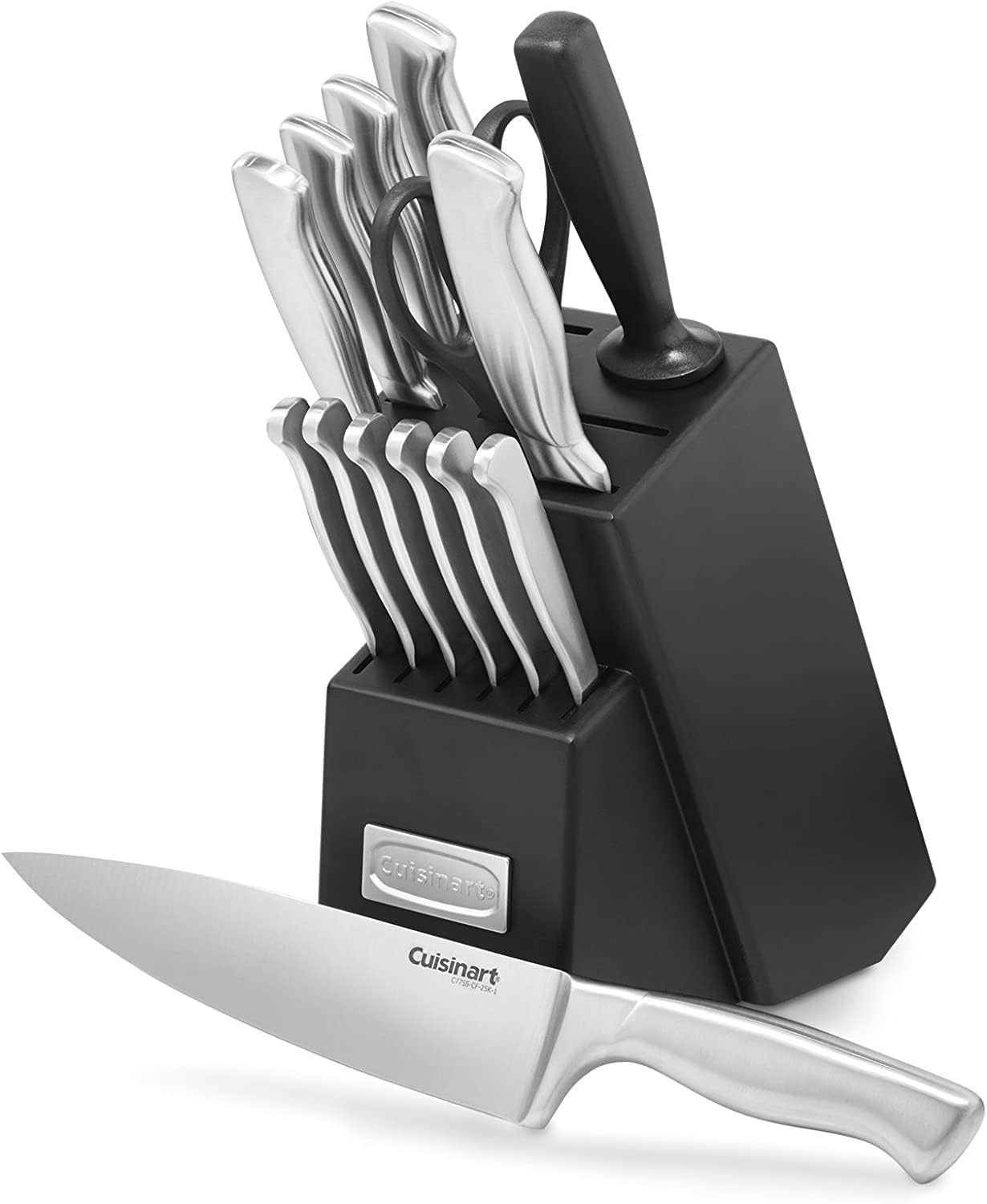
Best Kitchen Knife Sets in 2026: Top Picks + Buying Guide
Five knife sets we'd actually buy, from a $20 starter to a $222 German block — plus the steel, tang, and edge-angle rules that decide which one lasts.
The best kitchen knife set for most people in 2026 is the Cuisinart Stainless Steel Hollow Handle 15-Piece Cutlery Block Set at $99.95 — it covers every cut a home kitchen makes, includes the block and shears, and holds a 4.7-star average across 20,467 ratings. Below it: a $19.96 value pick, a $221.76 premium block, and a compact 3-piece for small kitchens.
Get a free week of prep-forward dinners
Seven weeknight dinners that earn the knife work, with the shopping list built. Sent Sunday.
No spam, unsubscribe in one click. Recipes, shopping lists and Instacart carts all work without an account either way.
A knife set is a different purchase from a knife. When you buy one chef's knife you're optimizing a single tool; when you buy a set you're buying a system — the block, the shears, the steak knives, the honing rod — and accepting that some pieces will be mediocre in exchange for never having a gap. This guide picks the sets where that trade-off lands well.
If you'd rather build a kit knife-by-knife, we make that case in Best Kitchen Knives in 2026, which argues three good knives beat a seventeen-piece block. Both approaches are defensible. Read the "set vs. build-your-own" section below and pick the one that matches how you actually shop.
Introduction: why a good knife set is the highest-impact kitchen upgrade
A dull knife makes you slower, makes your cuts uneven, and — counterintuitively — makes you more likely to cut yourself, because a blade that won't bite requires force, and force is what slips. Sharpness is the single variable that changes how cooking feels.
The set format solves a second problem: the gap. You have a great 8-inch chef's knife and then you need to break down a chicken, or slice a loaf of sourdough, or segment a lemon, and you're using the wrong tool. A set closes those gaps in one purchase, usually at a lower per-knife price than buying the equivalents separately.
Here's the honest arithmetic. A 15-piece block set at $99.95 works out to roughly $6.66 per piece. Four of those pieces (chef's, paring, serrated utility, shears) do 95% of the work. The steak knives are a bonus, the block is real furniture, and the sharpener that ships with most sets is worth exactly what it costs, which is nothing.
Then put those knives to work: the cuts you make on Sheet Pan Chicken Fajitas with Black Beans — thin, even pepper and onion strips that cook at the same rate — are the difference between a good sheet-pan dinner and a pan of half-burnt, half-raw vegetables.
Our Top 5 Picks
Prices reflect the AislePrompt catalog as of August 2026 and move with retailer promotions. Ratings are the live Amazon averages at the same date.
#1 Best Overall: Cuisinart C77SS-15PK 15-Piece Cutlery Block Set — $99.95
Verdict: The set that covers a whole kitchen without a weak knife in the group. 4.7 stars across 20,467 ratings.
Buy the Cuisinart C77SS-15PK →
Fifteen pieces: 8-inch chef's, 8-inch slicing, 7-inch santoku, 5.5-inch serrated utility, 3.5-inch paring, six steak knives, all-purpose shears, sharpening steel, and the block. The blades are stamped high-carbon stainless with hollow stainless handles, which puts the balance point right at the bolster — the grip position most people actually use.
What makes it the overall pick is the absence of a bad piece. Cheaper sets pad the count with knives you'll never touch; this one's slicer is genuinely useful for a pork loin or a roast chicken, and the shears separate for cleaning, which sounds trivial until you've spatchcocked a chicken with shears that don't.
Where it gives ground: hollow handles feel lighter than a forged, full-tang knife. If you've used a Wüsthof, this will feel insubstantial for the first week. Stamped blades also won't hold an edge as long as forged ones — plan on honing weekly.
Best for: a first real set, a kitchen upgrade from a mismatched drawer, a wedding gift under $100.
#2 Best Value: Amazon Basics Color-Coded 12-Piece Knife Set — $19.96
Verdict: Twenty dollars for six knives and six blade guards, 4.7 stars across 26,070 ratings. The single best dollar-per-cut in the catalog.
Buy the Amazon Basics 12-piece →
Six knives — 8-inch chef's, 8-inch bread, 8-inch slicing, 5-inch santoku, 5-inch utility, 3.5-inch paring — each with a matching plastic guard, in six colors. The non-stick coating is what keeps the price at twenty dollars and it's also the piece that will wear; expect the coating to scuff within a year of daily use.
The color-coding is not a gimmick. Assigning red to raw meat and green to produce is the cheapest cross-contamination control a home kitchen can implement, and it works better than "I'll remember to wash it."
Where it gives ground: the coating scratches, the edge won't take a fine sharpening, and the handles are molded plastic. This is a two-to-three year knife set, not a decade one.
Best for: a first apartment, a dorm kitchen, an RV or vacation rental, a second set for the garage or the camp kitchen.
#3 Best for Beginners: Cuisinart 12-Piece Ceramic-Coated Knife Set — $24.99
Verdict: 4.8 stars across 25,269 ratings — the highest-rated set in this guide. Dishwasher-safe, blade guards included, no block to find counter space for.
Buy the Cuisinart 12pc ceramic-coated set →
Six lightweight stainless blades with a ceramic non-stick coating, six matching guards. The reason this is the beginner pick over the Amazon Basics set at a similar price is the handle geometry — the Cuisinart handles are noticeably more comfortable in a pinch grip, which is the grip you should learn, and lightweight blades are more forgiving while you're still building knife control.
Dishwasher-safe is listed on the box. We'd still hand-wash. Every dishwasher cycle bangs the edge against the rack and cooks the handle adhesive, and thirty seconds at the sink is not a real burden.
Where it gives ground: ceramic coating flakes on hard contact — don't use these on frozen food or bone. No block, so you need a drawer organizer or a magnetic strip.
Best for: someone learning to cook, a teenager's first kitchen, a small kitchen with no counter to spare.
#4 Best Premium: HENCKELS Statement Razor-Sharp 20-Piece Knife Set with Block — $221.76
Verdict: German-engineered, 4.6 stars across 24,494 ratings, twenty pieces including a full steak-knife service and a natural-wood block.
Buy the HENCKELS Statement 20-piece →
This is the set for the kitchen that's the center of the house. Twenty pieces, a substantial block, and the Henckels Statement line's stamped-but-heavy construction that sits between the budget sets and true forged Wüsthof territory. The chef's knife and bread knife are the standouts; the bread knife in particular is a genuinely good serrated blade, which is rare at any price in a set.
The 20-degree German edge angle is the right default for a home kitchen. It's more durable than a Japanese 15-degree edge, tolerates a glass cutting board better than it should, and doesn't chip when someone else in the house uses it on a squash. If you want to understand why that number matters, Zwilling's knife reference walks through the geometry from the manufacturer's side.
Where it gives ground: $221.76 buys you two excellent individual knives instead of twenty adequate ones. Twenty pieces also means a large block — measure your counter.
Best for: a household that cooks daily, a big kitchen, a set you want to still own in 2036.
#5 Best Compact 3-Piece: imarku 3-Piece Japanese High-Carbon Knife Set — $73.99
Verdict: Three knives, no block, 4.7 stars across 6,455 ratings. Japanese high-carbon steel with pakkawood handles.
An 8-inch chef's, a santoku, and a utility knife — the three shapes that cover roughly 90% of home cutting. High-carbon Japanese stainless takes and holds a finer edge than the stamped steel in the budget sets, and the pakkawood handles are a real material rather than molded plastic.
Three knives is the correct count for a small kitchen. You don't need a slicer if you don't roast whole birds; you don't need six steak knives if you don't serve steak. Buying three good ones instead of fifteen adequate ones is the argument our chef's knife guide makes at length.
Where it gives ground: no bread knife (a serrated blade is genuinely non-substitutable — budget $25 separately), no shears, no block or storage.
Best for: apartments, small kitchens, cooks who already own a bread knife, anyone who finds a 20-piece block absurd.
Honorable mentions
| Set | Price | Rating | Ratings | Why it's here |
|---|---|---|---|---|
| Rada Cutlery Cooking Essentials 3-Piece (S49) | $32.50 | 4.9 | 1,638 | Highest-rated set in the catalog; US-made; tiny but excellent |
| ZWILLING TWIN Signature 3-pc Starter Set | $143.39 | 4.7 | 1,677 | Forged German steel in a 3-piece format |
| HENCKELS Classic Razor-Sharp 3-Piece | $122.00 | 4.6 | 2,587 | Chef's, paring, utility — the classic trio, forged |
| Farberware 15-Piece with Wood Block | $35.18 | 4.3 | 14,582 | Cheapest full block set; the 4.3 rating is the honest catch |
Set vs. build-your-own: which is actually right for you
Buy the set if: you're starting from nothing or from a drawer of mismatched hand-me-downs; you want one decision instead of five; you want the block, shears, and steak knives included; your budget is under $120 total.
Build your own if: you already own one good chef's knife; you cook enough that edge retention matters more than piece count; you're willing to spend $250+ over a year; you have a magnetic strip or drawer insert already.
The build-your-own kit that beats every set in this guide, piece by piece:
| Role | Knife | Price |
|---|---|---|
| Workhorse | Victorinox Fibrox Pro 8-inch Chef's Knife | $44.00 |
| Budget backup | Mercer Culinary Millennia 8-inch Chef's Knife | $21.00 |
| German premium | WÜSTHOF Classic 8-inch Chef's Knife | $129.20 |
| Japanese premium | Shun Classic 8-inch Chef's Knife | $186.99 |
That's not a shopping list — it's four ways to fill one slot. Pick one, add a serrated bread knife and a paring knife, and you're done for a decade.
What to look for: steel type, tang, edge angle, handle material
Blade steel and hardness
Kitchen knife steel is a trade between hardness (holds an edge) and toughness (doesn't chip). Hardness is measured on the Rockwell C scale — the Rockwell scale is the standard reference.
| Steel class | Typical HRC | Edge retention | Chip resistance | Found in |
|---|---|---|---|---|
| Budget stamped stainless | 52–55 | Low | High | Amazon Basics, Farberware |
| German high-carbon stainless (X50CrMoV15) | 56–58 | Medium | High | Henckels, Wüsthof, Cuisinart |
| Japanese AUS-10 / VG-10 | 60–62 | High | Medium | imarku, Shun, Misen |
| Powder / super steels | 63–66 | Very high | Low | Specialty single knives |
For a set, 56–58 HRC is the sweet spot. Above 60, a knife a guest uses on a frozen bagel chips, and re-profiling a chipped Japanese edge is a $30 professional job.
Tang
Full tang means the steel runs the entire length of the handle. Partial tang means it stops partway. Full tang is more durable and better balanced; it's also heavier and more expensive. Every knife in the premium picks above is full tang. The value picks are partial tang or hollow-handle, which is precisely where their price comes from.
You can usually see the tang: if a dark line of steel runs along the top and bottom edges of the handle and the rivets pass through visible metal, it's full tang.
Edge angle
German knives are ground at roughly 20 degrees per side; Japanese knives at 15 degrees or less. The Japanese edge is sharper and cuts with less force; the German edge lasts longer between sharpenings and survives abuse. A survey of kitchen knife geometry covers the shapes in more detail.
For a household set — where multiple people with different technique will use these knives — 20 degrees is the safer default.
Handle material
- Pakkawood (resin-impregnated laminate): warm, grippy, dishwasher-hostile. Best feel, most maintenance.
- Polypropylene / Fibrox (Victorinox, Mercer): textured, grippy even when wet, NSF-certified for commercial kitchens, ugly. The professional's choice.
- Hollow stainless (Cuisinart C77SS): seamless, easy to clean, lighter than it looks, cold in the hand.
- Molded plastic (budget sets): fine, until the adhesive fails and the blade wobbles in the handle.
Care basics: honing, sharpening, storage
Hone weekly, sharpen twice a year. These are different operations and confusing them is the most common knife mistake.
Honing realigns an edge that's rolled over microscopically. It removes almost no metal. Ten passes per side on a steel rod, at roughly the angle the knife was ground to, takes thirty seconds and restores most of the "sharp" feeling. Do it before you start cooking, not after.
Sharpening removes metal to create a new edge. Options, cheapest first:
- Pull-through sharpener ($10–$25). The Zwilling 4-Stage Pull Through Sharpener at $24.98 (4.5 stars, 2,344 ratings) is the least-bad version. Fast, foolproof, removes more steel than necessary.
- Whetstone ($40–$60). The KING 1000/6000 Whetstone Starter Set at $54.00 gives the best edge and takes practice. A 1000-grit side for sharpening, 6000 for polishing.
- Professional service ($5–$10/knife). Worth it once a year for premium knives, and mandatory for repairing a chipped edge.
The Shun knife care guide is a solid manufacturer reference on angle and stone technique, and Wikipedia's knife sharpening entry covers the underlying geometry.
Storage, best to worst: magnetic wall strip (no edge contact, visible, saves drawer space) → in-drawer knife tray → block (the slots dull edges slightly on insertion) → loose in a drawer (ruins edges and cuts fingers). Browse knives and cutting for strips and trays, and storage for drawer organizers.
Cutting board matters as much as the knife. End-grain wood and soft plastic preserve edges. Glass, stone, granite, and ceramic destroy them — a single session on a glass board undoes a sharpening. Never leave a knife in the sink, never put it in the dishwasher, and dry it immediately after washing.
Common pitfalls: 5 ways knife sets disappoint
1. Buying on piece count. A 21-piece set is usually a 15-piece set plus six steak knives you'll use twice a year. Count the useful pieces: chef's, paring, serrated bread, utility, shears. Everything else is filler.
2. Never honing. A set that felt razor-sharp on day one feels blunt by month three, and the owner concludes the knives were bad. They weren't — the edge rolled. Thirty seconds a week fixes it.
3. The dishwasher. Heat, detergent, and rack contact together are the fastest way to kill a knife. This applies even to knives marketed as dishwasher-safe.
4. Glass and stone cutting boards. They look clean and they're murder on an edge. Use wood or soft polypropylene. Wood or soft polypropylene only.
5. Storing loose in a drawer. Blades bang into each other and into the drawer, and reaching blind into a drawer of loose knives is how people get cut. A $12 in-drawer tray solves both.
When NOT to buy a knife set
- You already own a good chef's knife. Then you don't have a set problem, you have a gap problem. Buy the specific missing knife — usually serrated bread — for $25 instead of $100.
- You cook once a week. A 3-piece is plenty. The 20-piece block will be a dust collector.
- You have no counter space. A block is a permanent 8×10-inch footprint. Buy a block-free set and a magnetic strip.
- You want one heirloom knife. Sets don't work that way. Buy one forged knife and take care of it.
- The set is under $15. Below that price the steel isn't heat-treated well enough to hold any edge at all, and you'll be sawing at a tomato within a month.
Putting them to work
A knife set is only worth what you cut with it. Three recipes that exercise different knives in the block:
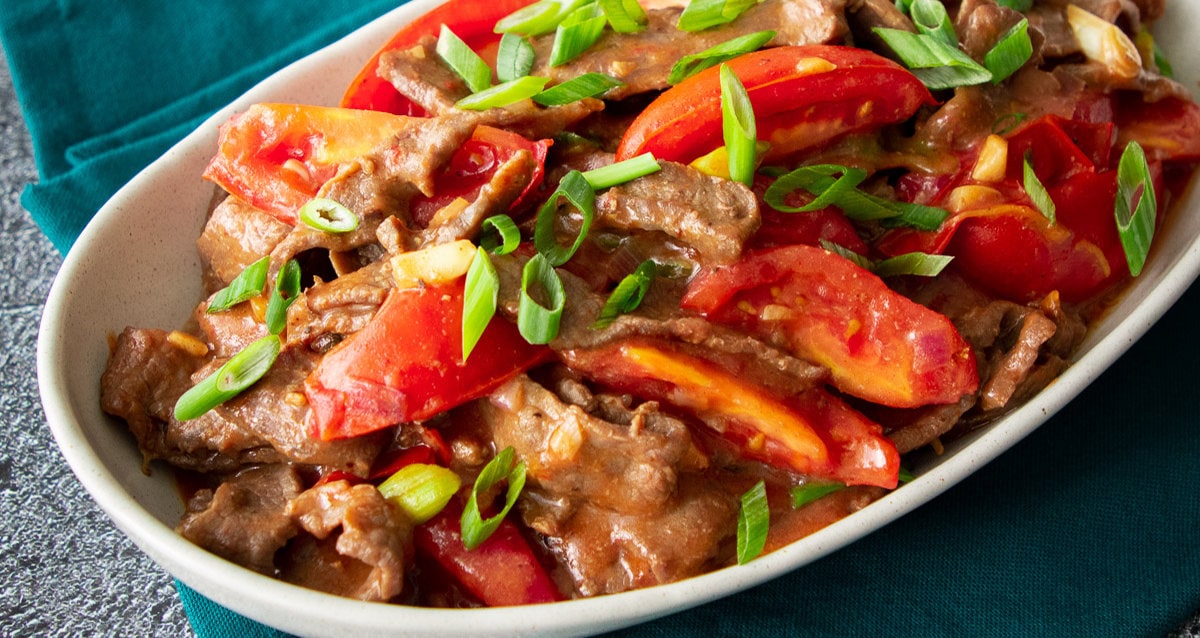
- Beef and Onion Stir-Fry with Fresh Tomato Salsa — thin, uniform slicing against the grain; the chef's knife's core job
- Light Spring Vegetable Soup with Parsley — small-dice practice across five vegetables
- Sheet Pan Chicken Fajitas with Black Beans — even pepper and onion strips so everything roasts at the same rate
- Slow-Cooker Butternut Squash Soup with Thyme — the hard-squash test that separates a sharp knife from a dull one
- BBQ Pulled Pork Sliders with Tangy Coleslaw — cabbage chiffonade, where a santoku earns its place
- Cold Sesame Soba Noodle Salad with Julienned Vegetables — julienne work that's tedious with a bad blade and pleasant with a good one
FAQ
The five questions we get most about buying a knife set, answered below.
Sources
- Kitchen knife — geometry, shapes, and steel
- Rockwell scale — how blade hardness is measured
- Knife sharpening — angles, stones, and technique
- Shun (Kai USA) — manufacturer knife-care guidance
- Zwilling — German knife construction and edge geometry
Related guides
- Best Kitchen Knives in 2026: Top Picks + Buying Guide — the build-your-own case, three knives instead of a block
- Best Chef's Knife in 2026: Top 5 Picks — if you're buying exactly one knife
- Best Bakeware for 2026
- Best Cast Iron Skillet 2026
- Best Meal Prep Containers 2026
Shop the categories this guide covers: knives and cutting, cookware, utensils and tools, and kitchen gadgets.
Frequently asked questions
Do I really need a whole knife set, or will a single chef's knife do?
What's the difference between German and Japanese knives?
How often should I sharpen my knives and can I do it at home?
Are knife blocks or magnetic strips better for storage?
Is a knife set worth spending $300+ or does the $80 set do the same job?
Sources
Recipes to try with sharp knives
Put your gear to work — save any recipe to My Recipes (no account needed) and send its ingredients to Instacart in one tap.


Shop knives & cutting on AislePrompt →Browse the full kitchen shop →
A sharp knife wants something to cut.
Ask our AI for prep-forward weeknight dinners — shopping list built, cart ready for Instacart.
Get knife-work recipes →