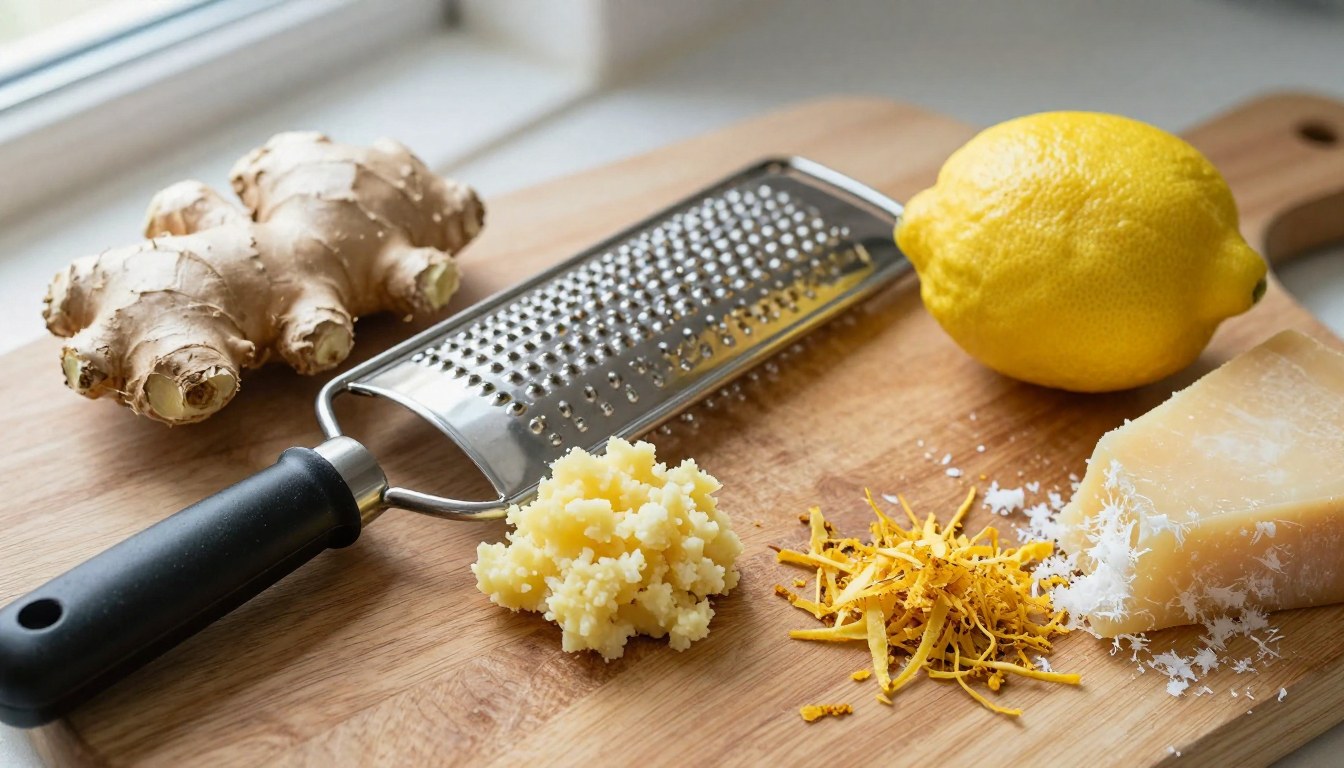
Best Microplane Graters and Zesters for 2026: Ginger, Citrus & Cheese
Five rasp, box and citrus zesters, plus the freeze-and-grate ginger trick and 12 recipes to use them on.
Where to buy these picks
Affiliate links: we may earn a commission on qualifying Amazon purchases. Policy. Prices show only when checked in the last 24 hours.
- Best Value: OXO Good Grips Etched Zester $12.97 at AmazonCheck price on Amazon →
- Best for Beginners: Spring Chef Professional XL Box Grater $13.99 at AmazonCheck price on Amazon →
- Best Premium: Microplane Gourmet Series Fine GraterCheck price on Amazon →
- Best Compact: OXO Good Grips Citrus Zester with Channel KnifeCheck price on Amazon →
The best grater for ginger and citrus zest in 2026 is the Microplane Premium Classic Zester at about $18. What sets it apart is its photo-etched stainless teeth. They sit low and cut food instead of tearing it, so ginger turns to paste and lemon peel comes off without the bitter pith. For a cheaper zester, get the OXO Good Grips Etched Zester at about $11. If you're new to cooking and want one tool that also shreds cheddar, get the Spring Chef XL box grater at about $14.
Get a free week of easy dinners
Seven weeknight dinners and one shopping list. One tap, no account. The AI chat builds it now, with no email to wait for.
Get it now →Introduction: The $10–$30 Tool That Beats Jarred Ginger and Bottled Zest
Jarred minced ginger and dried lemon peel are fine in a pinch, but they taste flat. Fresh ginger has a sharp, citrusy heat that fades within hours of cutting. The flavor in citrus zest comes from oils in the colored outer skin. Both are best grated seconds before they go into the pan, and the tool that does that well costs less than a takeout lunch.
That tool is a rasp grater. It's a long, thin strip of stainless steel covered in hundreds of tiny, razor-sharp teeth. It started as a woodworking tool. Brothers Richard and Jeff Grace set out to make a better wood-carving rasp and in 1991 ended up with what they called the Microplane (Wikipedia: Microplane). Cooks soon found the same blade turned Parmesan into fluffy snow and lemon peel into fine zest. The name "Microplane" is now used for the whole style, a bit like "Kleenex."
The trick is how the teeth are made. Instead of stamping holes into steel, which leaves ragged burrs, the grater's makers print a pattern of holes onto flat steel photographically. Acid then eats away the exposed metal, and a machine pushes the teeth up at a low angle (America's Test Kitchen describes the process; see also Wikipedia: Photochemical machining). The result is a blade that shaves food rather than shredding it. Grace's patent expired in 2011, which is why there are now dozens of lookalikes on Amazon, and why they aren't all equally good.
This guide covers:
- Five picks at $11–$21, chosen from the graters we stock and checked against independent test results
- Rasp vs ceramic vs box grater, and which one handles ginger, zest, hard cheese, nutmeg and garlic best
- What to look for so you can judge any grater, including the ones not listed here
- Ginger 101: peeling with a spoon, grating from frozen, and 12 recipes that use it
Our Top 5 Picks
Prices are the typical Amazon price in AislePrompt's catalog as of September 2026. Ratings are Amazon star averages. Where America's Test Kitchen's rasp-grater test rated a model, we say so, because star ratings don't tell you whether a grater stays sharp after a year of nutmeg.
| Pick | Model | Style | Grating surface | Best at |
|---|---|---|---|---|
| Best Overall | Microplane Premium Classic Zester | Rasp (zester) | 7.25 × 1 in | Zest, ginger, Parmesan, nutmeg |
| Best Value | OXO Good Grips Etched Zester | Rasp (zester) | 5.63 × 1.13 in | Citrus zest with no pith |
| Best for Beginners | Spring Chef XL Box Grater | 4-sided box | 4 sides | Cheddar, carrots, potatoes |
| Best Premium | Microplane Gourmet Series Fine Grater | Rasp (paddle) | 4.25 × 2 in | Ginger and garlic in volume |
| Best Compact | OXO Good Grips Citrus Zester with Channel Knife | Hole zester | n/a | Cocktail twists, zest strips |
#1 Best Overall: Microplane Premium Classic Zester
Verdict: The grater to buy if you only buy one. It won America's Test Kitchen's zester-style category, and it's the one most cooks already recognize.
The Premium Classic has a 7.25 × 1-inch blade and a 4.5-inch soft-touch handle. It's the same length ATK found ideal for hands of different sizes. The teeth are staggered like bricks in a wall, so every pass covers fresh peel instead of retracing the same groove. That's why a lemon zests evenly without bald stripes. In ATK's testing it "shredded cheese; zested lemons; and grated nutmeg, garlic, and ginger with ease" and looked new at the end. A plastic foot at the tip grips a cutting board, and the long blade rests across a mixing bowl so zest falls right into your batter.
It's our Best Overall because it does every rasp job well. It zests a lemon cleanly, turns a thumb of ginger into paste without stringy fibers, and grates Parmesan fine enough to melt into one-pot chicken alfredo. It comes in many colors at the same price. The plain Microplane Classic Red has the same blade with a harder, less grippy handle. ATK rated the Classic "Recommended," one step below the Premium.
Skip it if: you mostly grate ginger and garlic in bulk. The paddle-style #4 is faster for that.
Shop on AislePrompt: Kitchen Gadgets
#2 Best Value: OXO Good Grips Etched Zester
Verdict: The best cheap zester for citrus. It's slower on hard cheese and nutmeg.
OXO's etched zester has smaller, flatter teeth than the Microplane. ATK found it shone at zesting lemons, where its teeth "shaved off delicate ribbons of lemon peel without even a hint of pith." The handle is soft rubber with springy fins that ease grip pressure, which helps if you zest a lot or have sore hands. It comes with a blade cover.
The trade-off is speed on hard foods. Those flat teeth took about 1.5 minutes to grate half a nutmeg seed in ATK's test, against 24 seconds for the Microplane winner. Parmesan is slow too. The blade is also bent at an angle to the handle, which makes it awkward to rest across a bowl. If you mainly grate citrus for lemon-bar cheesecake cups, salad dressings and marinades, it's the best $11 you can spend. If you want one grater for everything, spend $7 more on #1.
Skip it if: you grate Parmesan most nights.
Shop on AislePrompt: Utensils & Tools
#3 Best for Beginners: Spring Chef Professional XL Box Grater
Verdict: One tool for shredding and zesting, which makes it the best first grater for a new kitchen.
A box grater gives you four surfaces: coarse shred for cheddar and hash browns, medium shred for carrots and zucchini, a slicing blade for cucumber and potatoes, and a fine side for zest and hard cheese. Spring Chef's XL version is wider than its original model, so a full block of cheese fits.
Be clear about what it can't do. A box grater's fine side has punched holes, not photo-etched teeth. It grates ginger, but fibers catch and some of the juice ends up on the board instead of in your food. Zesting a lemon on a box grater also takes more pith. For a beginner who shreds cheese weekly and zests only now and then, it's the right first buy. Most people add a rasp within a year.
Skip it if: you already own a box grater. Buy #1 instead.
Shop on AislePrompt: Utensils & Tools
#4 Best Premium: Microplane Gourmet Series Fine Grater
Verdict: The fastest grater for ginger and garlic, and ATK's overall favorite paddle.
This is the same etched Microplane blade in a wider, shorter shape: a 4.25 × 2-inch surface (8.5 sq in) with a 4.75-inch handle. ATK rated it "Highly Recommended" and named it the best paddle-style rasp grater. Testers found the wider surface "especially adept at efficiently grating ginger and garlic with swift, short, repetitive strokes." It also stayed "good as new" after grating whole nutmeg. The wider blade is easier to scrub, since the underside is flat and open.
Pay the extra $3 over #1 if you cook a lot of Asian food and go through a whole knob of ginger a week. It's great for sesame-ginger beef stir fry, carrot-ginger soup and a Burmese coconut and ginger fish curry. The downside is storage. The paddle is too wide for most utensil crocks, and it's less nimble around the curve of a lime.
Skip it if: citrus is your main use. The narrow #1 gets into tight curves more easily.
Shop on AislePrompt: Kitchen Gadgets
#5 Best Compact: OXO Good Grips Citrus Zester with Channel Knife
Verdict: The small drawer tool for strips and twists, which a rasp can't make.
This is the "other" zester. It's a traditional citrus tool with a row of small round holes that pull long, thin threads of peel, plus a channel knife on the side that cuts the thick spiral twist you see on an Old Fashioned. It's small enough for any drawer. Use it for garnish: candied orange strips, lemon threads on a tart, or a twist for a fall cocktail.
It is not a grater. The strips are too coarse to melt into a batter or a dressing, and it does nothing for ginger or cheese. Buy it as a second tool if you make cocktails or care how desserts look, not as your only zester.
Skip it if: you want zest that disappears into the dish.
Shop on AislePrompt: Kitchen Gadgets
Worth knowing: two more options, and one we don't recommend
- For whole nutmeg and cinnamon: the Microplane Manual Spice Mill puts the same etched blade inside a twist mill with a storage chamber on top. It's faster and safer than rubbing a nutmeg seed against a rasp, and your knuckles stay clear of the teeth.
- For a premium box grater: the KitchenAid Gourmet 4-Sided Box Grater adds a 3-cup container with measurement markings that clips underneath, so shreds land in a measured cup instead of on the counter.
- Not recommended: Deiss PRO. Testers found its teeth "pitched upward," so they "bit deeply into food, ripping out oversized shreds," and the blade dulled during testing. Spend the few extra dollars on the Microplane.
Rasp vs Ceramic Dish vs Box Grater
Three grater styles come up when you search for "ginger grater." Each has a job.
Rasp (Microplane-style). Photo-etched teeth on a flat stainless blade. It cuts ginger fibers cleanly, takes only the colored layer of citrus peel, and turns hard cheese into airy shreds. It's the most versatile of the three, and most cooks only need this.
Ceramic ginger dish. A shallow ceramic plate with raised nubs, common in Japanese kitchens. You rub peeled ginger in circles, the nubs pulp the flesh and hold back the long fibers, and the juice pools in a rim. It makes the smoothest, wettest ginger paste of the three, which is ideal for dipping sauces. It can't zest citrus or grate cheese, though. It's a specialist tool, and we don't currently stock one we'd recommend. A rasp with frozen ginger (see Ginger 101) gets you 90% of the way there.
Box grater. Four sides of stamped holes. It's unbeatable for shredding soft and semi-hard foods in volume, like cheddar, carrots, zucchini and potatoes. Its fine side works for zest and hard cheese in a pinch, but the punched holes tear instead of shaving.
| Task | Rasp grater | Ceramic dish | Box grater |
|---|---|---|---|
| Fresh ginger | Excellent: fine paste, fibers cut short | Excellent: smoothest paste, fibers stay behind | Fair: fibers clog the fine side |
| Citrus zest | Excellent: colored layer only | Can't | Fair: picks up pith |
| Parmesan / Pecorino | Excellent: fluffy, melts instantly | Can't | Good: denser shreds |
| Whole nutmeg | Very good | Can't | Poor: seed too small to hold |
| Garlic paste | Excellent | Good | Poor |
| Cheddar, carrots, potatoes | Poor: too fine | Can't | Excellent |
| Typical price | $11–$23 | $10–$20 | $14–$25 |
Our take: Start with a rasp. Add a box grater if you shred cheese or vegetables every week. Buy a ceramic dish only if you make a lot of Japanese dipping sauces.
What to Look For
These six things separate a grater that lasts a decade from one that goes dull in a month.
1. Blade type: etched, not stamped. Look for "photo-etched" or "chemically etched" on the listing. Stamped graters are cheaper to make, but the teeth are thick and burred and tear food. If the listing doesn't say how the teeth are made, assume they're stamped.
2. Tooth angle and count. ATK found the best graters had more than 400 teeth that lay fairly flat, with a slight lift. Teeth that stick up steeply (like the Deiss) dig too deep, grabbing pith and making coarse cheese shreds. Teeth that lie too flat (like the OXO etched model) are gentle on citrus but slow on everything else.
3. Blade width and surface area. A narrow zester (about 1 inch wide) is nimble around lemons and limes. A wide paddle (about 2 inches) grates more ginger and garlic per stroke. ATK preferred at least 7.25 square inches of grating surface. Both of our Microplane picks clear that.
4. Handle grip. You'll grate with wet hands. Look for a rounded handle 4.5–4.75 inches long in soft, textured plastic or rubber. Hard, flat handles get uncomfortable after a whole lemon and slip when wet.
5. Cover or guard. A rasp's teeth dull when they rattle against other tools in a drawer, and they will cut your knuckles when you reach in. Get one that comes with a snap-on cover and use it, or buy a cover separately.
6. Dishwasher safety and how long it stays sharp. Most etched stainless rasps are labeled dishwasher safe. The dishwasher won't ruin them, but hot, harsh cycles and banging against other items dull the edges faster. We rinse ours straight after use, brush against the grain of the teeth (from the tip toward the handle) so the brush doesn't get shredded, and let it air dry. With that care a good rasp stays sharp for years. When zesting a lemon starts taking real pressure, replace it. At $18, it's not worth trying to sharpen.
A note on cutting boards: a rasp's plastic foot grips best on a wooden or rubber board. If yours slides, set a damp towel underneath. Our cutting boards guide covers which surfaces hold steady, or browse cutting boards.
Ginger 101: Peel, Freeze, Grate, Cook
Ginger is a rhizome, an underground stem, and not a root (Wikipedia: Ginger). Its fibers run the length of the knob. That matters for grating. Grate across the fibers and they snag. Grate along them and you get stringy strands. The fix is simpler than either.
Step 1: Peel with a spoon
Ginger skin is paper-thin. Hold the knob in one hand and scrape the skin off with the edge of a teaspoon. The spoon gets into the bumps and knuckles, and it takes only the skin. A peeler or knife takes a thick layer of flesh with it, which is where much of the flavor is. Fresh, young ginger with shiny, taut skin barely needs peeling at all. Just scrub it.
Step 2: Freeze whole knobs
This is the best ginger trick there is. Put peeled or unpeeled knobs in a freezer bag and freeze them. Frozen ginger:
- grates into a fluffy, snow-like paste with no stringy fibers wrapping around the teeth, because the ice crystals break the fibers apart
- keeps for months instead of going soft and moldy in the crisper drawer in two weeks
- doesn't need thawing. Grate it straight from the freezer and put the rest back
One inch of ginger gives about 1 tablespoon of grated ginger. That's the amount most stir fries and marinades call for.
Step 3: Grate with the knob at an angle
Hold your rasp at 45° with the foot braced on a cutting board. Push the ginger down the blade in short strokes. Grating works on the push stroke, so there's no need to scrub back and forth. Scrape the paste off the underside of the blade with a finger or a spoon. That's where half of it collects.
Step 4: Cook with it
Ginger scorches fast, so add it to hot oil with garlic for 30 seconds before the other ingredients go in, or stir it into a sauce off the heat. Here are twelve recipes from our catalog that use freshly grated ginger:
Stir fries and weeknight mains
- Stir-Fried Garlic Ginger Chicken with Bok Choy: the classic ginger-garlic combination, done in one wok
- Sesame-Ginger Beef Stir Fry with Snow Peas: grate a full tablespoon into the sauce
- Stovetop Ginger-Soy Glazed Salmon with Baby Bok Choy: ginger soy glaze that reduces in the pan
- Pan-Seared Salmon with Ginger-Scallion Rice: grated ginger in the rice as well as the fish
- Turmeric-Ginger Baked Salmon with Lemon Dill: ginger and lemon zest from the same rasp
Soups, curries and dumplings
- Carrot-Ginger Soup with Coconut and Turmeric: blended smooth, so grated ginger vanishes into it
- Burmese Coconut and Ginger Fish Curry: ginger paste as the curry base
- Steamed Pork and Cabbage Dumplings with Sesame-Ginger Dipping Sauce: the dipping sauce is where a very fine grate pays off
Drinks
- Honey-Lemon Ginger Iced Tea: grate ginger and lemon zest straight into the pitcher
Beyond ginger: zest, cheese and garlic on the same rasp
- No-Bake Lemon Bar Cheesecake Cups: fine zest folds into the filling without chewy bits
- One-Pot Chicken Alfredo Pasta with Spinach and Parmesan: rasp-grated Parmesan melts smoothly instead of clumping
- Roasted Asparagus Caesar Salad with Parmesan Dressing: grate the garlic into a paste for the dressing
For more, see our roundup of 20 fresh ginger recipes and the 20 lemon-forward recipes collection. Both are good places to put a new grater to work.
Zesting citrus without the pith
The colored outer layer of citrus peel (the flavedo) holds the aromatic oils. The white layer underneath (the pith) is bitter (Wikipedia: Zest). To get one without the other:
1. Wash and dry the fruit first. Most supermarket citrus is waxed, and you'll be eating the surface.
2. Zest before you juice. A squeezed lemon half is floppy and impossible to zest.
3. Use light pressure and one or two strokes per spot, then rotate the fruit. When you see white, move on.
4. Hold the grater upside down over the fruit if you want to see exactly how deep you're cutting. ATK testers noted many cooks prefer this for citrus.
5. Measure by weight when baking. Grater teeth vary, so a "tablespoon of zest" from one grater can hold noticeably more than from another.
One medium lemon gives about 1 tablespoon of zest, and one lime about 2 teaspoons.
Common grating mistakes
- Pressing too hard. A sharp rasp needs almost no pressure. Heavy pressure means pith in your zest and a sore wrist, and it's a sign the blade is dull.
- Grating soft cheese on a rasp. Mozzarella and young cheddar smear and clog the teeth. Use the box grater.
- Losing the paste on the underside. Tap the grater on the bowl rim and scrape the back. Up to half the ginger or zest collects there.
- Leaving garlic or ginger to dry on the blade. Dried starch and fiber set like glue. Rinse within a minute.
- Grating toward your knuckles to the last nub. Stop with a half-inch left. Chop it, freeze it for next time, or drop it into stock. A cut-resistant glove is cheap insurance if you grate a lot.
When NOT to use a rasp grater
- Shredding a pound of cheddar for mac and cheese. Too slow, and the shreds are too fine to melt evenly. Use a box grater.
- Garnish strips for cocktails. You need the hole zester or channel knife (#5).
- Minced (not pasted) garlic for a stir fry. Grated garlic burns faster in hot oil than knife-minced garlic. Mince it with a chef's knife for high-heat cooking and save the rasp for raw uses like dressings and aioli.
Frequently Asked Questions
What is the easiest way to grate fresh ginger?
Freeze the peeled knob, then grate it straight from frozen on a fine rasp grater. Frozen ginger grates into a fluffy paste without stringy fibers wrapping around the teeth, and it keeps for months in the freezer. Scrape off the peel with the edge of a spoon rather than a knife.
Is a Microplane the same as a zester?
A Microplane is a brand of rasp grater, and people use the name for the whole style. A traditional citrus zester has a few round holes and pulls long, thin strips for garnish. A rasp shaves fine zest that disappears into batters and dressings. Most cooks get more use from the rasp.
How do I zest citrus without getting bitter pith?
Use light pressure and turn the fruit after each one or two strokes, so you only take the colored outer layer. When you see white, move on. With a sharp rasp you rarely need to press hard; if you do, the blade is dull and should be replaced.
Can I grate garlic and hard cheese on the same grater?
Yes. A fine rasp turns garlic into a smooth paste for dressings and marinades, and grates Parmesan into airy snow that melts straight into pasta. Rinse straight after garlic so the smell doesn't carry over, and brush against the grain of the teeth to clear fibers.
How long does a rasp grater stay sharp?
A quality photo-etched stainless rasp stays sharp for years with normal home use. Dishwashers and grating hard things like whole nutmeg wear it faster. Store it with its cover on so the teeth aren't knocked around in a drawer, and replace it when zesting starts taking real effort.
Sources
Prices, star ratings and review counts come from AislePrompt's kitchen catalog listings as of September 2026 and change often.
- America's Test Kitchen: The Best Rasp Graters: hands-on testing of the Microplane Premium Classic, Gourmet Series Fine and Classic, the OXO Good Grips Etched Zester and the Deiss PRO, including blade measurements, tooth counts and the nutmeg timing test.
- Microplane official site: the manufacturer's range of zesters, graters and spice mills with photo-etched stainless blades.
- Wikipedia: Microplane: the origin of the rasp grater at Grace Manufacturing as a woodworking tool.
- Wikipedia: Photochemical machining: how photo-etching creates burr-free cutting edges.
- Wikipedia: Grater: the history and types of kitchen graters, including box and rasp styles.
- Wikipedia: Zest (ingredient): flavedo vs pith and why the white layer tastes bitter.
- Wikipedia: Ginger and Wikipedia: Nutmeg: botany and culinary use of the two foods rasp graters handle best.
Outfitting the rest of your prep station? See our guides to the best kitchen gadgets, spice grinders and mortar and pestle sets and kitchen utensil sets, or browse all kitchen gadgets and utensils.
Frequently asked questions
What is the easiest way to grate fresh ginger?
Is a Microplane the same as a zester?
How do I zest citrus without getting bitter pith?
Can I grate garlic and hard cheese on the same grater?
How long does a rasp grater stay sharp?
How we picked
This guide is researched, not bench-tested. We shortlisted products from the AislePrompt kitchen catalog and compared them on published manufacturer specifications (materials, size, capacity, warranty), on what owners report in published reviews, and on any third-party sources linked in this guide. The guide was drafted with AI assistance. We did not run lab or hands-on tests of these products, so any measurement quoted here comes from the manufacturer or a cited source. Prices change often: use the “Check price on Amazon” buttons for today’s price.
Sources
- en.wikipedia.org
- americastestkitchen.com
- en.wikipedia.org
- en.wikipedia.org
- en.wikipedia.org
- microplane.com
- en.wikipedia.org
- en.wikipedia.org
Recipes to try with these tools
Put your gear to work — save any recipe to My Recipes (no account needed) and send its ingredients to Instacart in one tap.






Shop kitchen gadgets on AislePrompt →Browse the full kitchen shop →
Plan a week of meals in two minutes.
Tell our AI what you have and what you like — it builds your plan, shopping list, and Instacart cart. No account needed.
Plan my week →