Best Rolling Pins and Pie Crust Tools in 2026: French Pins, Pie Weights and Crust Shields for Holiday Baking
Affiliate link: we may earn a commission on qualifying Amazon purchases. Policy
Buy on AmazonA tapered French pin for pie rounds, a handled pin for cookie sheets, and the three cheap crust tools that stop shrunken shells and burnt edges.
Where to buy these picks
Affiliate links: we may earn a commission on qualifying Amazon purchases. Policy. Prices show only when checked in the last 24 hours.
- Best Overall: Fox Run 48759 Black Marble French Rolling Pin $31.99 at Amazon, *Check price on Amazon →
- Best Value: Fox Run Polished Marble Rolling Pin with Wooden Cradle $23.99 at Amazon, *Check price on Amazon →
- Best for Beginners: Zulay Kitchen 17-Inch Marble Rolling Pin $24.99 at Amazon, *Check price on Amazon →
- Best Premium: Fox Run French Marble Rolling Pin with Base $33.77 at Amazon, *Check price on Amazon →
- Budget Pick: KARRYOUNG Marble Rolling Pin with Wooden Handles $22.99 at Amazon, *Check price on Amazon →
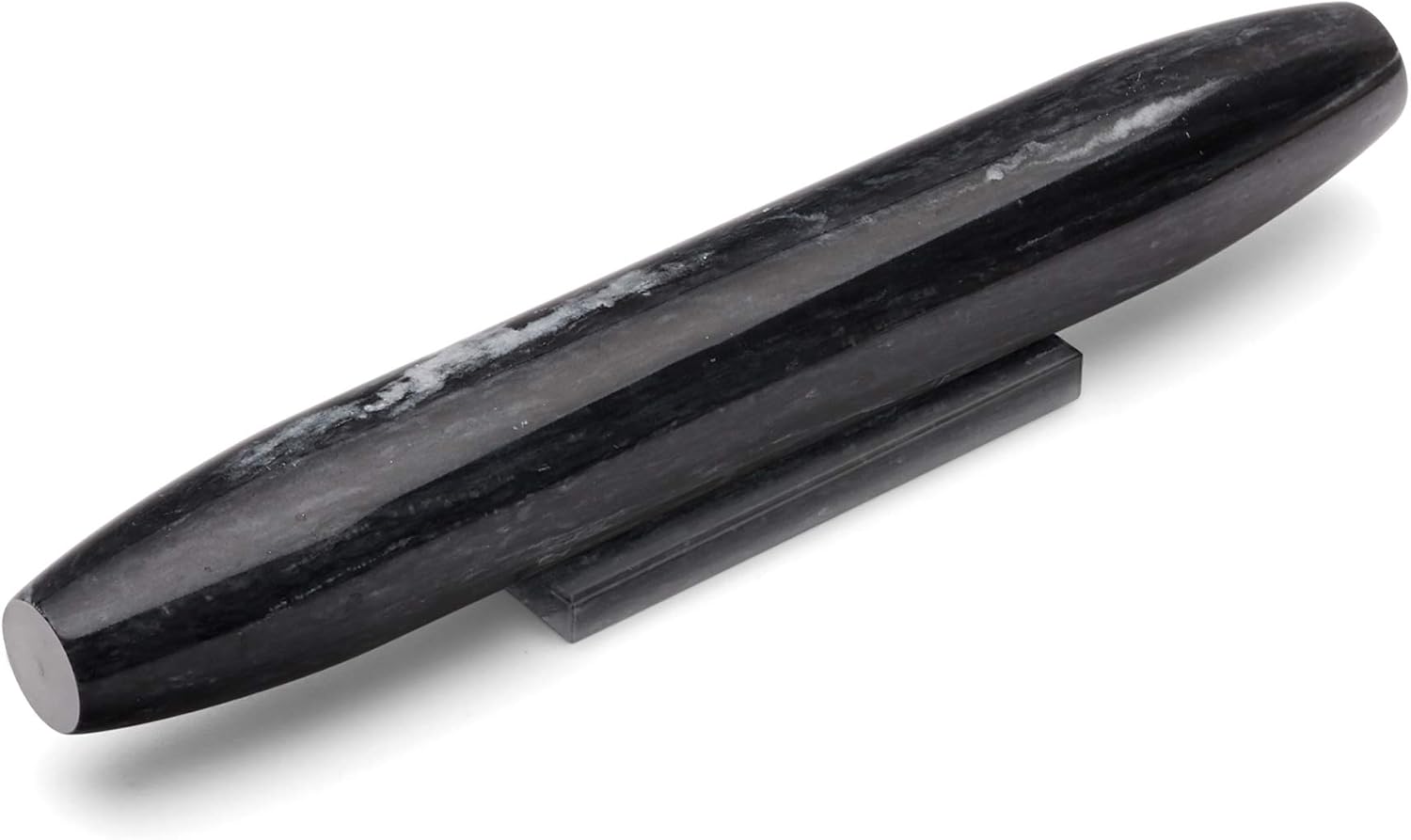
The best rolling pin for pie crust and holiday cookies in 2026 is a tapered French pin, and our Best Overall pick is the Fox Run Black Marble French Rolling Pin (Check price), in the $30–$35 tier. Its tapered ends let you feel the dough's thickness and pivot the round as you roll. For big sheets of cookie dough, a handled pin like the Zulay Kitchen 17-Inch Marble Rolling Pin is easier. Three cheap crust tools fix the commonest failures: pie weights, a crust shield and a pastry blender.
Holiday baking season runs hardest from December 1 to 20, and almost every project on the list starts the same way: a disc of cold dough, a floured surface and a pin. Whether you are rolling a double crust for an Cinnamon-Spiced Apple Pie or cutting stars for Baked Snowflake Sugar Cookies with Royal Icing, the pin and a few crust tools decide whether the job is pleasant or a fight. This guide covers which pin to buy, which crust tools are worth a drawer slot, and when to skip a purchase entirely.
Picks at a glance
| Award | Model | Material / Length | Price tier |
|---|---|---|---|
| Best Overall | Fox Run 48759 Black Marble French Rolling Pin | Black marble, tapered, 12-inch barrel, 2-inch diameter | $30–$35 |
| Best Value | Fox Run Polished Marble Rolling Pin with Wooden Cradle | White marble barrel, wooden handles, 10-inch barrel | $20–$25 |
| Best for Beginners | Zulay Kitchen 17-Inch Marble Rolling Pin | White marble barrel, beechwood handles, 17-inch listed length | $25–$30 |
| Best Premium | Fox Run French Marble Rolling Pin with Base | White marble, French style, 12-inch barrel, 3-inch diameter | $25–$30 |
| Budget Pick | KARRYOUNG Marble Rolling Pin with Wooden Handles | White marble barrel, wooden handles | Under $20 |
A note on the price column: nothing in this category runs much past $35, so "premium" here means the heaviest build, not the highest price. Prices move, especially in December, so check the live price on each product page. Every pin above is in our bakeware section; the crust tools further down live under utensils and tools.
Our #1 pick in this guide
Prices are shown only when checked in the last 24 hours; otherwise check the current price on Amazon.
The rolling pin picks
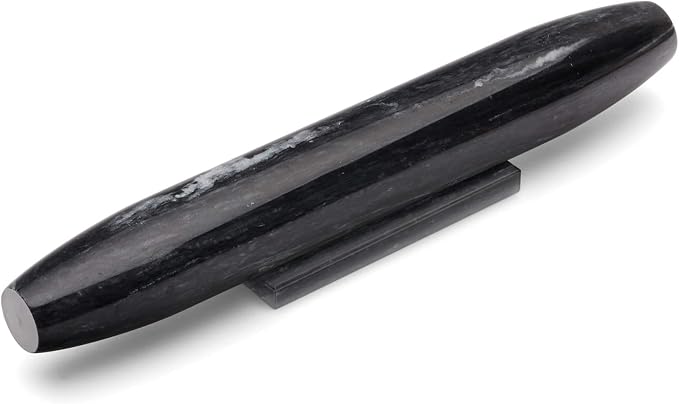
Best Overall: Fox Run 48759 Black Marble French Rolling Pin
- Material: solid black marble, one piece, no handles
- Size: 12-inch barrel, 2 inches across at its thickest point, tapering toward both ends
- Weight: not listed by the maker; it is solid stone, so expect it to feel noticeably heavier than a wooden pin of the same size
A French pin has no handles, so your palms sit on the barrel and you can feel where the dough is thick or thin. The taper is what makes it the pie pick. Press harder on one end and the pin pivots, which lets you steer a round back into a circle instead of rolling it into an oval. The marble stays cooler than wood, which helps keep butter firm in an all-butter crust like the King Arthur Baking — Classic Double Pie Crust recipe.
Pros: tapered for steering a round; cool surface; nothing to come loose; comes with a small stand so it does not roll off the counter.
Cons: at 12 inches it takes more passes than a long wooden French pin to roll a big sheet; stone chips if it is dropped on tile.
Shop on AislePrompt · See the Fox Run French pin · Check price
Best Value: Fox Run Polished Marble Rolling Pin with Wooden Cradle
- Material: polished white marble barrel with wooden handles
- Size: 10-inch barrel
- Extras: wooden cradle for storage on the counter
This is the classic handled marble pin, and it is the easiest way to get a cool, heavy barrel for not much money. The 10-inch barrel is short, which suits a small board or a narrow counter but means more strokes on a full cookie sheet. The handles spin on an axle, so the barrel does the work and your wrists stay level.
Pros: low price tier; weight does most of the pressing; the cradle keeps it off the counter.
Cons: short barrel; no taper, so steering a pie round is harder; handles on an axle are one more part to keep dry.
Shop on AislePrompt · See the Fox Run pin with cradle · Check price
Best for Beginners: Zulay Kitchen 17-Inch Marble Rolling Pin
- Material: polished marble barrel with beechwood handles
- Size: 17-inch listed length (handles included)
- Extras: stand included
If you are rolling a batch of Baked Gingerbread Cookies with Royal Icing or a full sheet of sugar cookie dough, a handled pin keeps your palms off the dough and the barrel rolls straight with even pressure. That is exactly what you want for a sheet that needs to be one thickness from edge to edge so the cookies bake at the same rate. It is the easiest pin in this guide for someone who has never rolled dough before.
Pros: straight, even pressure for cookie sheets; long handles give you leverage; stand included.
Cons: you cannot feel the dough through the handles; no taper for steering pie rounds; long, so it needs drawer or counter space.
Shop on AislePrompt · See the Zulay pin · Check price
Best Premium: Fox Run French Marble Rolling Pin with Base
- Material: white marble, French style, with matching base
- Size: 12-inch roller, 3 inches across
- Weight: not listed; the 3-inch diameter makes it the heaviest build of the French-style pins here
This is the same idea as our Best Overall pick in a thicker barrel. The extra mass does more of the pressing for you, which helps with stiff, cold dough straight from the fridge, such as a double crust for Spiced Apple Lattice Pie. The trade-off is less sensitivity: a heavier pin is harder to lighten up on when the edge of the round gets thin.
Pros: heaviest pin in the guide; cool marble surface; base keeps it stable on the counter.
Cons: the weight that helps with cold dough can over-thin warm dough; the 12-inch length means more passes on big sheets.
Shop on AislePrompt · See the white Fox Run French pin · Check price
Budget Pick: KARRYOUNG Marble Rolling Pin with Wooden Handles
- Material: white marble barrel, wooden handles
- Size: length not stated in the listing; check the product page before you order if your drawer is tight
- Use: general home baking
The lowest price tier in this guide still gets you a marble barrel and handles. If you bake a pie or two a year and want something better than a wine bottle, this is enough. If you want a longer handled pin for wide sheets, the Koville 18-Inch Marble Rolling Pin is the step up in the same style.
Pros: lowest price tier; marble barrel; handles for easy, even pressure.
Cons: the listing gives few specs; no stand mentioned; no taper.
Shop on AislePrompt · See the KARRYOUNG pin · Check price
Pie crust tools that fix the three commonest failures
Most pie crust problems are not about the recipe. They come from three moments: blind baking, the last 20 minutes in the oven and cutting the butter in. One cheap tool fixes each.
Failure 1: a shrunken, puffed shell when you blind bake
When you bake a crust empty, for a pumpkin or cream pie, the fat melts before the flour sets. The sides slump down the dish and the bottom puffs up. Blind baking solves this by weighing the dough down while it sets; see Wikipedia — Blind baking for the basic method.
Our pick: R&M International Ceramic Pie Weights, 1 lb (Check price), under $10. The listing describes reusable, non-porous ceramic beads that spread heat evenly, with a mesh storage bag, and says one pound is enough for two pie shells. Line the crust with parchment, pour the beads all the way up the sides, and bake.
If you blind bake a lot, or use a deep-dish plate, two alternatives are in the catalog:
- Webake 10mm Ceramic Pie Weights (Check price) — 1.6 lb of beads, rated by the maker to 480°F.
- Fabled Goods Borosilicate Glass Pie Weights (Check price) — 2.5 lb, which the maker says fills a 9- or 10-inch pan, and is heat-safe to 600°F.
Use this for the shell of a Homemade Pumpkin Pie with Spiced Pecan Crust so the custard sits on a crisp base instead of a pale, damp one.
Failure 2: edges that burn before the filling sets
The fluted rim of a pie is thin and sits right in the oven's heat, so it browns long before the middle of a pecan or apple pie is done. The usual fix is a ring of foil, which is fiddly to fold on a hot pie.
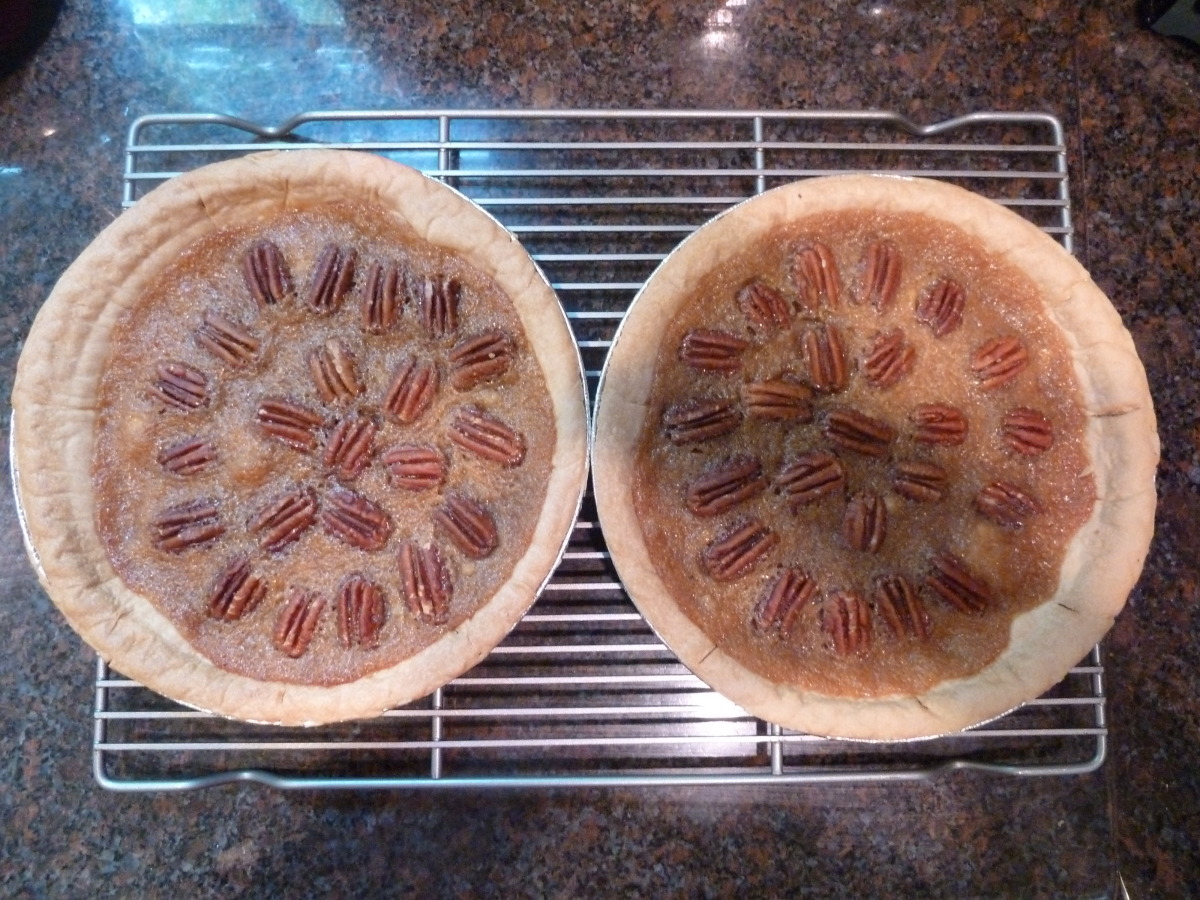
Our pick: Mrs. Anderson's Baking Pie Crust Protector Shield (Check price), under $10. Per the listing, it is an aluminum ring that measures 11.5 by 11.5 inches, fits 9.5- and 10-inch pie plates and is dishwasher safe. Set it on when the edges reach the color you want, usually partway through the bake. It is the tool you will reach for every time you make a Best of the South Pecan Pie, because that filling needs a long bake to set.
A fixed ring fits a narrow range of plates. If you own dishes in several sizes, an adjustable silicone shield is the alternative. Check your plate's rim diameter before you buy either.
Failure 3: butter that melts while you cut it in
Flaky crust depends on cold butter staying in visible pieces. A pastry blender is a handle with curved wires or blades that cuts butter into flour fast, without the heat of your fingers; see Wikipedia — Pastry blender.
Our pick: none yet. Our catalog does not carry a pastry blender as of November 2026, so we will not point you at a random one. Until it does, two methods work well: cut the butter in with two table knives, or pulse it into the flour in a food processor in short bursts. Freezing the butter and grating it on a box grater is a third option for very warm kitchens. The King Arthur Baking — Classic Double Pie Crust recipe walks through how small the butter pieces should be.
A useful extra: a measured pastry mat
A silicone mat with printed circles tells you when your round is big enough for the plate, which removes most of the guesswork for beginners. The Folksy Super Kitchen Silicone Pastry Mat, 28 by 20 inches (Check price) is large enough for a full pie round or a sheet of cookie dough, and the measurements are printed on it.
French pin or handled pin? When each is right
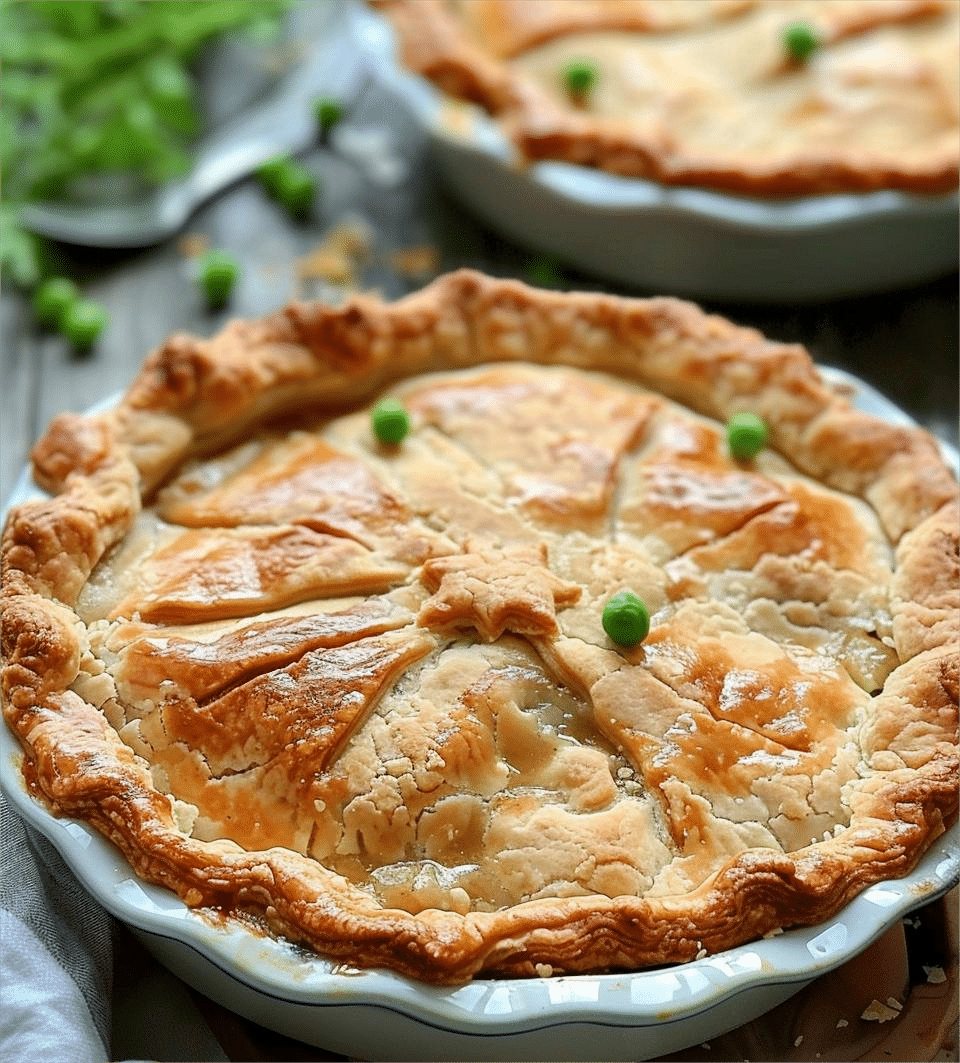
Choose a French pin for pie and tart rounds. Pie dough is rolled from the center outward in short strokes, turning the disc a quarter turn as you go. A tapered pin lets you put pressure exactly where the round is thick and pivot to keep it circular. You also feel cracks and thin spots through your palms before they tear. For a double-crust pie like the Chicken Pot Pie with Flaky Pie Crust, that control is worth more than speed.
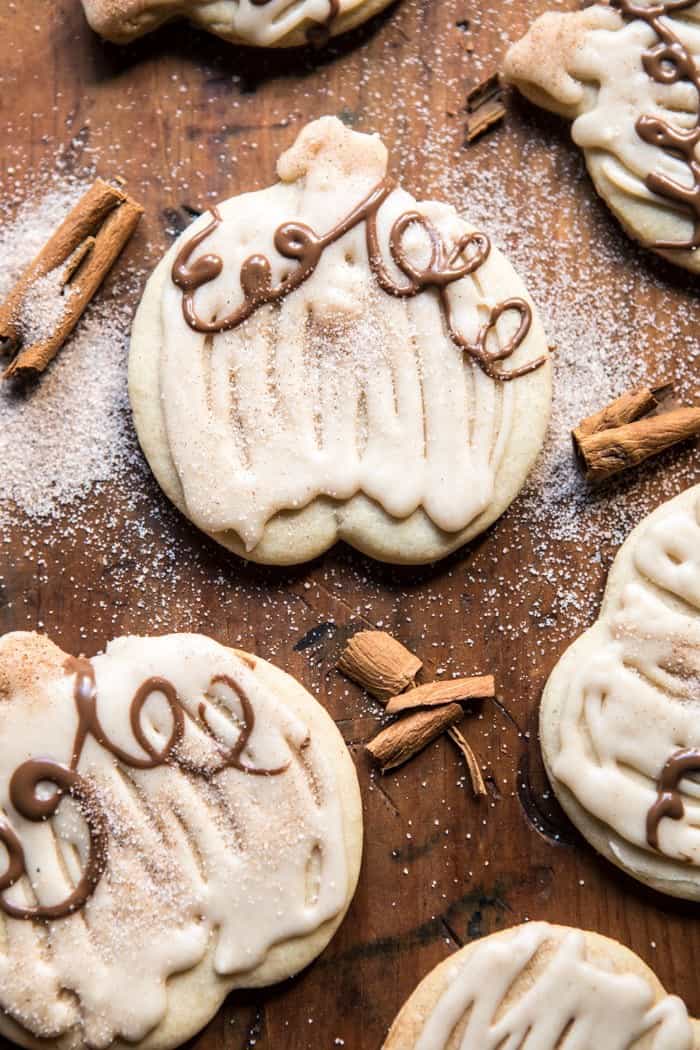
Choose a handled pin for sugar cookie and gingerbread sheets. Cut-out cookies need a sheet of one even thickness so the thin ones do not burn while the thick ones stay raw. A straight barrel on handles rolls flat and level, and the handles let you push with your body weight rather than your fingertips. That is easier for big batches of Buttery Holiday Sugar Cookies with Spiced Cinnamon Icing.
When a handled pin is the wrong buy:
- Small hands or weak wrists. A heavy marble barrel on handles can be tiring to lift and reposition. A light French pin is easier to manage.
- Small board or narrow counter. A 17- or 18-inch handled pin needs room to swing. On a small board, the handles hit the edge before the stroke ends.
- You mostly bake pies. If you make three pies a year and no cut-out cookies, the French pin covers everything.
What to look for in a rolling pin
Material.
- Maple and beech are the traditional choices for wooden French pins. They hold a light coat of flour well and are light enough to control.
- Marble stays cool, which helps with butter-heavy doughs, and its weight does more of the pressing. It is heavy and can chip. Every pin in our catalog today is marble.
- Stainless steel also stays cool and can be chilled in the fridge, but dough sticks to it more readily than to wood.
Length vs your counter. Measure the space you roll in. Long pins cover a big sheet in fewer passes, but only if you have room to swing them through a full stroke. A short pin on a small board is better than a long one that keeps hitting the backsplash.
Tapered vs straight. Tapered pins steer; straight pins roll evenly. Pie bakers lean tapered, cookie bakers lean straight.
Weight. A heavier pin presses for you, which suits cold, stiff dough. A lighter pin gives you more feel and is easier on the wrists.
Care. Wash wood by hand, dry it right away and oil it occasionally with food-grade mineral oil. Never soak it or put it in the dishwasher. Wash marble by hand too, dry it and keep it off hard floors; handled marble pins also need their axle kept dry. You can chill a marble pin in the fridge for 15 to 20 minutes before rolling a very buttery dough.
Common pitfalls when rolling holiday dough
1. Rolling dough straight from a long chill. Rock-hard dough cracks at the edges. Let it sit 5 to 10 minutes until it gives slightly when pressed.
2. Rolling back and forth over the same line. This stretches the gluten in one direction, and the crust shrinks back in the oven. Roll from the center out and turn the dough a quarter turn often.
3. Using too much flour on the counter. Extra flour toughens the dough and leaves a dusty crust. Use a light dusting and lift the dough often to check it is not sticking.
4. Skipping the chill after shaping. A crust that goes straight from the plate to the oven slumps. Chill it in the dish for at least 30 minutes, then blind bake with weights.
5. Uneven cookie thickness. If some cookies brown while others stay pale, the sheet was uneven. A straight handled pin, or rolling guides, fixes this.
When NOT to buy a new rolling pin
If you already own a straight wooden pin that has not cracked or warped, you probably do not need another one. A worn but smooth wooden pin rolls just as well as a new one. Spend the money on pie weights and a crust shield instead, which fix problems a pin cannot. And if you only bake from store-bought crusts, skip the pin entirely and buy the crust shield, which still saves the edges of a frozen pie.
How we picked
We did not run bench tests for this guide. We started from the rolling pins and crust tools in the AislePrompt kitchen catalog, kept only active US listings, and read each maker's listing for material, size, heat rating and care instructions. We grouped the pins by style (tapered French, handled, short, long) and picked one for each job a home baker has in December. For background on pin styles and blind baking, we relied on the sources listed at the end, including Wikipedia — Rolling pin and the King Arthur Baking crust method. Where a listing did not state a spec, such as weight or overall length, we say so instead of guessing.
Holiday baking, December 1–20, 2026: putting the tools to work
Here is how the tools fit into a typical December baking run.
Roll-and-cut cookie day. Pick recipes from our Christmas cookie roundup, then roll the dough with a handled pin at the roll-and-cut step. Roll between two sheets of parchment to skip the extra flour. When the trays come out, the cookies need air underneath, which is where the cooling racks guide comes in. Bake on a heavy half-sheet like the Nordic Ware Naturals Half Sheet Set (Check price), which spreads heat evenly so the edges of a tray of Baked Gingerbread Cookies with Royal Icing do not scorch before the center sets.
Pie day. Choose the dish first with our pie dishes guide, because glass, ceramic and metal plates bake differently. Roll the crust with a French pin, chill it in the dish, then blind bake with pie weights for custard pies like pumpkin. For fruit pies such as an Cinnamon-Spiced Apple Pie, put on the crust shield when the rim is golden.
The day before a party. Pie dough can be made ahead and refrigerated, and rolled-out shells can be frozen in the dish. That splits the work so the oven is free for the main course.
Sources
- King Arthur Baking — Classic Double Pie Crust
- Wikipedia — Blind baking
- Wikipedia — Rolling pin
- Wikipedia — Pastry blender
Frequently asked questions
Is a French rolling pin better than a handled rolling pin?
Do I really need pie weights to blind bake a crust?
What does a pie crust shield do?
What size rolling pin should I buy?
How do I keep a wooden rolling pin from cracking?
Recipes from this guide
Put your gear to work — save any recipe to My Recipes (no account needed) and send its ingredients to Instacart in one tap.


Shop kitchen tools on AislePrompt →Browse the full kitchen shop →