Best Sheet Pans in 2026: Top Picks + Buying Guide
Eight pans we'd actually buy in 2026, the gauge-and-rim vocabulary that explains why, and the twelve sheet-pan dinners that pay a good pan off in a week.
The best sheet pan for most kitchens in 2026 is the Nordic Ware Naturals Half Sheet (on Amazon, a set of two plus a ⅛ sheet), an uncoated heavy-gauge aluminum half sheet (17.9 × 12.9 inches) with an encapsulated steel rim and no coating to fail.
Where to buy these picks
Affiliate links: we may earn a commission on qualifying Amazon purchases. Policy. Prices show only when checked in the last 24 hours.
- Best Overall: Nordic Ware Naturals Half Sheet $35.00 at Amazon, Check price on Amazon →
- Best Value: USA Pan Half Sheet, Set of 2 $24.99 at Amazon, Check price on Amazon →
- Best Commercial Workhorse: Vollrath Wear-Ever 5314 Half Sheet, Set of 2 $114.30 at Amazon, Check price on Amazon →
- Best for Beginners: GoodCook Everyday Nonstick Baking Sheet Set, 3-Pack $17.99 at Amazon, Check price on Amazon →
- Best Nonstick: Caraway Non-Stick Ceramic Baking Sheet $65.00 at Amazon, Check price on Amazon →
- Best Stainless: TeamFar Stainless Steel Baking Sheet $16.99 at Amazon, Check price on Amazon →
- Budget Pick: Fat Daddio's Natural Aluminum Half Sheet, 2-Pack $27.49 at Amazon, Check price on Amazon →
- Best Compact (Quarter Sheet): Nordic Ware Naturals Quarter Sheet $22.50 at Amazon, Check price on Amazon →
Which sheet pan fits you
| Your situation | Buy | Why | Buy link |
|---|---|---|---|
| One pan for everything | Nordic Ware Naturals Half Sheet $35.00 | Uncoated heavy-gauge aluminum half sheet, 17.9 × 12.9 in, encapsulated steel rim; no coating to fail | Amazon → |
| Baking cookies and focaccia as often as roasting | USA Pan Half Sheet, Set of 2 $24.99 | Set of 2; 13-gauge aluminized steel, stiffer and harder to warp, corrugated surface so food releases | Amazon → |
| Cooking for one or two, or a toaster oven | Nordic Ware Naturals Quarter Sheet $22.50 | Same uncoated aluminum at 13 × 9.5 in; clears nearly every countertop oven | Amazon → |
| Hate parchment, worried about burned-on cookies | Caraway Non-Stick Ceramic Baking Sheet $65.00 | PTFE-free ceramic nonstick on aluminized steel, 18 × 13 in; expect the coating to lose its release within a few years of hard use | Amazon → |
| Acidic roasts, or a pan that survives the dishwasher | TeamFar Stainless Steel Baking Sheet $16.99 | Single-ply stainless, 17.6 × 13 in with a 1-in rim; lemon and tomato won't strip it, but it browns more slowly than aluminum | Amazon → |
| Starter kitchen or a backup pan | Fat Daddio's Natural Aluminum Half Sheet, 2-Pack $27.49 | 2-pack of uncoated aluminum half sheets; lighter than the 13-gauge pans, so preheat with the oven | Amazon → |
Quick answer
Which sheet pan fits how you cook?
The best value is the USA Pan Half Sheet, Set of 2: 13-gauge aluminized steel, stiffer and harder to warp, with a corrugated surface for cooks who bake cookies and focaccia as often as they roast. The Vollrath Wear-Ever 5314 Half Sheet, Set of 2 is the commercial workhorse, 13-gauge uncoated aluminum at 18 × 13 inches. For beginners, the GoodCook Everyday Nonstick Baking Sheet Set, 3-Pack is three nonstick-coated steel sheets in three sizes; the Caraway Non-Stick Ceramic Baking Sheet is the PTFE-free nonstick pick, and the TeamFar Stainless Steel Baking Sheet is the stainless pick for acidic roasts and the dishwasher. For one or two people or a toaster oven, buy the Nordic Ware Naturals Quarter Sheet, the same construction at 13 × 9.5 inches.
The best sheet pan in 2026 is a heavy-gauge, uncoated aluminum half-sheet — about 18 × 13 inches, reinforced rim, no coating — and the Nordic Ware Naturals Half Sheet is the right buy for almost everyone. If you still bake on a warped, blackened cookie sheet from the 1990s that flexes every time it hits 425°F, replace it. (If you want a number: Vollrath lists its commercial Wear-Ever 5314 half-sheet as 13-gauge aluminum; Nordic Ware calls the Naturals heavy-gauge but does not publish a gauge.) Below: eight pans we'd actually own, the vocabulary that explains why, and the dinners that pay the pan off inside a week.
What you'll use with it
A scooped cup of flour weighs anywhere from about 113 to 156 grams, which is why bakers weigh it. The scale guide's top pick weighs up to 11 pounds in 1-gram steps and has a pull-out display you can still read under a wide mixing bowl. Read the kitchen scale guide →
Kitchen scale guide’s top pick: OXO Good Grips 11-Pound Stainless Steel Kitchen Scale with Pull-Out Display $56.27 at Amazon, Check price on Amazon →Scraping batter out of a bowl and off a pan is a silicone spatula’s job. The spatula guide compares sets by heat rating and core stiffness. Read the silicone spatula guide →
Silicone spatula guide’s top pick: OXO Good Grips 3-Piece Silicone Spatula Set $23.95 at Amazon, Check price on Amazon →
Introduction: why sheet pans are the most-used pan in your kitchen
If you tracked which pan came out of your cabinet most often, it would be the half-sheet. Sheet-pan dinners, roasted vegetables, granola, croutons, oven bacon, salt-baked fish, cookies, biscuits, focaccia, sheet-pan pizzas, and the cooling rack underneath your resting roast all live on the same 18×13-inch piece of metal. A standard home oven holds two of them on a single rack, and a serious home cook should own four — two pre-staged with whatever's next in the queue while two are working in the oven.
The sheet pan is also the most-abused pan in a typical kitchen because it gets bought wrong. Most people pick up whatever's stocked at the grocery store endcap — usually a thin "cookie sheet" without a rim, with a darkened nonstick coating, and stamped from 22-gauge metal that warps the first time it sees high heat. That pan was built to a low price, not for serious cooking. A proper uncoated half sheet has no coating to fail, and you will pass it to your kids.
The fix is also one of the cheapest upgrades you can make to your kitchen. On published specs, aluminum conducts heat roughly fifteen times faster than stainless steel (about 237 vs 16 W/m·K), which is why one aluminum half-sheet covers almost every weeknight roasting job, and the same pan that bakes your sheet-pan dinner can roll out cookies on Sunday — see Sheet Pan Citrus-Garlic Salmon with Roasted Asparagus for the canonical 25-minute weeknight workflow, then Sheet Pan Lemon-Dill Chicken with Potatoes and Asparagus for the variant most home cooks rotate in once a week. Both depend on the same pan: a half-sheet that runs flat at 425°F.
Our Top 8 Picks
Eight pans, five price tiers. If you don't want to read the rest: buy the Nordic Ware, buy two of them, and stop thinking about sheet pans for twenty years.
| Pick | Pan | Material | Gauge | Size |
|---|---|---|---|---|
| Best Overall | Nordic Ware Naturals Half Sheet | Uncoated aluminum | Heavy (not published) | 17.9 × 12.9 in |
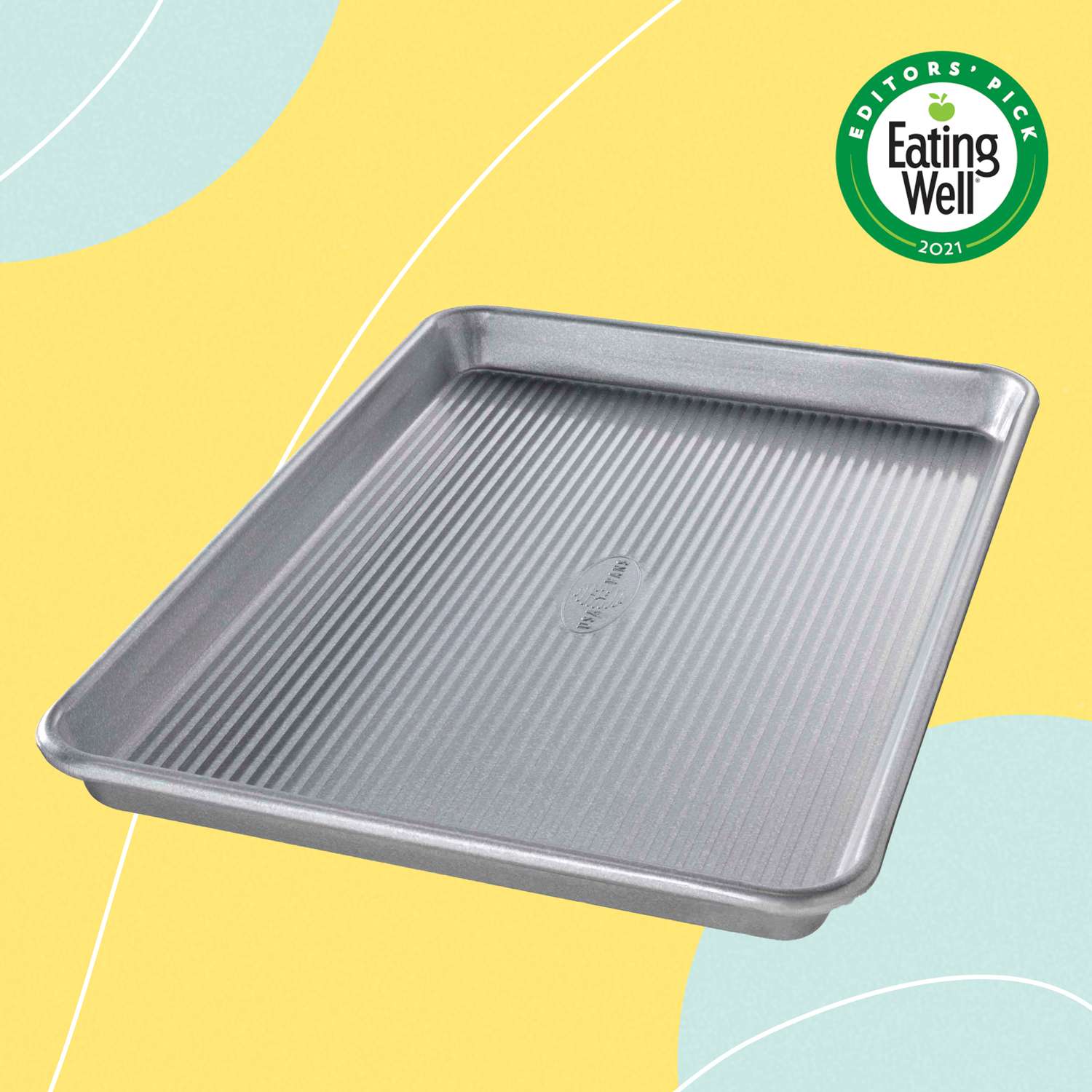
| Best Value | USA Pan Half Sheet, Set of 2 | Aluminized steel, corrugated | 13 | 17.9 × 12.9 in |
| Best Commercial Workhorse | Vollrath Wear-Ever 5314 Half Sheet, Set of 2 | Uncoated aluminum | 13 | 18 × 13 in |
| Best for Beginners | GoodCook Everyday Nonstick Baking Sheet Set, 3-Pack | Nonstick-coated carbon steel | Not published | 13 × 9, 15 × 10 and 17 × 11 in |
| Best Nonstick | Caraway Non-Stick Ceramic Baking Sheet | Ceramic-coated aluminized steel | Not published | 18 × 13 in |
| Best Stainless | TeamFar Stainless Steel Baking Sheet | Single-ply stainless steel | Not published | 17.6 × 13 in |
| Budget Pick | Fat Daddio's Natural Aluminum Half Sheet, 2-Pack | Uncoated aluminum | Not published | Half sheet |
| Best Compact | Nordic Ware Naturals Quarter Sheet | Uncoated aluminum | Heavy (not published) | 13 × 9.5 in |
Best Overall: Nordic Ware Naturals Half Sheet
This is the default answer. Pure aluminum with an encapsulated galvanized-steel rim, no coating, made in Minnesota — the manufacturer's own Naturals Baker's Half Sheet listing is the primary spec source, and it calls the body heavy-gauge without publishing a gauge number. It heats evenly because aluminum conducts heat at roughly 237 W/m·K near room temperature and still holds about 232 W/m·K at 327°C, versus stainless steel's ~16 W/m·K (Engineering ToolBox thermal-conductivity tables) — a factor of roughly fifteen, which is why an aluminum pan browns evenly and a stainless one leaves pale patches. The rolled rim resists the diagonal warp that ruins thinner pans. Every serious recipe-developer we read — Kenji López-Alt, Stella Parks, Samin Nosrat, Bryan Ford — uses this pan or its commercial twin. Bare aluminum darkens to a tan patina with use; that is normal and does not hurt browning. Cost-per-use is rounding to free.
The single pan keeps selling out on Amazon, so our Amazon button goes to Nordic Ware's Naturals Half Sheet Set: two of this same half sheet plus a ⅛ sheet. Two is the number to own anyway, so one tray bakes while the next is loaded.
Best Value: USA Pan Half Sheet, Set of 2
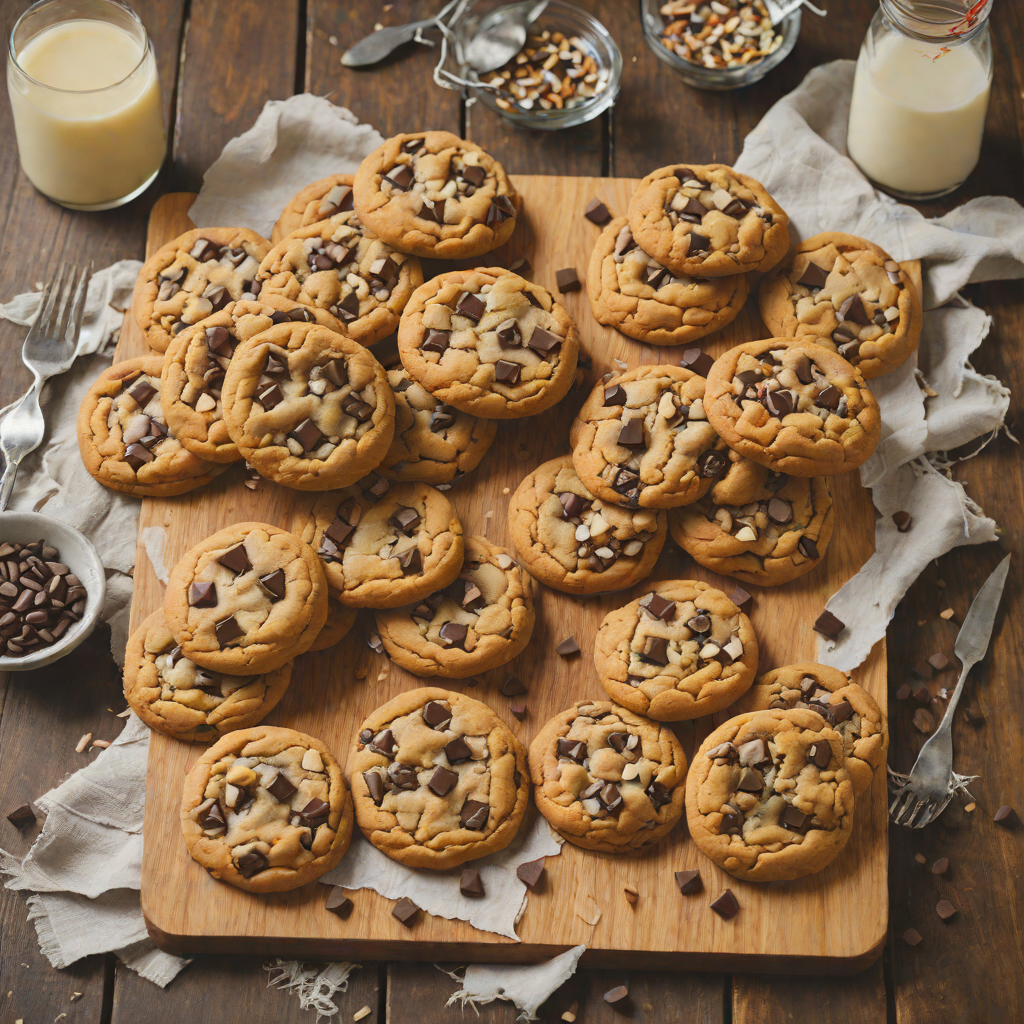
The one to buy if you bake as much as you roast. USA Pan builds these from aluminized steel — steel with an aluminum-silicon coating bonded to it — which is stiffer than pure aluminum and noticeably harder to warp, and finishes them with a corrugated surface that lifts the food a fraction of a millimeter off the pan. That corrugation is the point: it breaks the suction that makes cookies and roasted potatoes weld themselves down, and it gives steam somewhere to go, so the bottom of a focaccia crisps instead of steaming. It's made in Pennsylvania and carries a lifetime warranty. The tradeoff versus the Nordic Ware is that the silicone-based non-stick finish is a coating — a very durable one, but still a coating — so it will not develop the twenty-year patina an uncoated pan does, and you should keep it off metal spatulas. For a little more than the Nordic Ware it is the better cookie pan and the slightly worse 500°F roasting pan. Own both if you can; own this one if you bake more than you roast, and pair it with Potluck-Style Classic Chocolate Chip Cookies to see the difference on your first tray.
Best Commercial Workhorse: Vollrath Wear-Ever 5314 Half Sheet, Set of 2
The restaurant-supply pan. Vollrath builds these for commercial kitchens; the 5314 is the exact pan running under your croissant at every good bakery. Slightly heavier than the Nordic Ware (about 1.3 lb vs 1.1 lb) and the rim is a touch more aggressive — better for a packed sheet-pan dinner that needs a tall edge to keep juices contained, slightly worse for cookie pans where you want easy spatula access. The linked listing is a set of two, and two is the right number: one pan roasts while the other holds the next batch.
Best for Beginners: GoodCook Everyday Nonstick Baking Sheet Set, 3-Pack
The set to buy for a first apartment, a kid learning to bake, or a second-string tray you won't cry over. It's three nonstick-coated carbon-steel sheets — 13 × 9, 15 × 10 and 17 × 11 inches — for roughly the price of one good half sheet, so a new cook gets a cookie sheet, a roasting tray and a small pan for reheating in one box. GoodCook doesn't publish a gauge: these are lighter than the pro pans, and the coating is the part that wears out first. The large sheet is 17 × 11 inches, a little under a true half-sheet, so check your cooling racks before assuming they'll nest. Treat them as three-to-five-year pans, keep them under 425°F, and they will do everything a beginner needs. Sheet Pan Mediterranean Herb-Roasted Vegetables at 400°F is exactly the workload these pans are happy with.
Best Nonstick: Caraway Non-Stick Ceramic Baking Sheet
The honest answer for someone whose biggest fear is "I burned the cookies and ruined the pan." Caraway coats an aluminized-steel sheet in a ceramic nonstick finish made without PTFE or PFOA, at a full 18 × 13 inches, so it takes the same racks and parchment as the half sheets above. It's not what we'd buy for ourselves — a ceramic coating loses its release long before the pan wears out, usually within a few years of hard use, versus forever for the Nordic Ware — but for cookie-baking and someone who hates parchment, it's the right pan. Hand-wash it and keep metal spatulas off it. If you bake Sheet Pan High Protein Pancakes with Mixed Berries on a Sunday and don't want to deal with a sticky pan, this is the upgrade.
Best Stainless: TeamFar Stainless Steel Baking Sheet
The all-stainless pick, for the jobs aluminum handles badly. TeamFar's sheet is one piece of stainless steel with a mirror finish, 17.6 × 13 inches with a 1-inch rim, so it takes half-sheet racks and parchment. It's the wrong pan for cookies: stainless conducts heat at about a fifteenth the rate of aluminum, so it heats slowly and unevenly, and the bright finish reflects heat away from the bottom of the food, so expect browning to take longer than on the aluminum picks, with paler patches. Where it earns its place is the dishwasher, the salt-encrusted fish, the lemon-juice-and-tomato dinners that strip aluminum, and the years of dishwasher cycles that pit a soft aluminum pan. It costs less than most pans on this list, so buy it as the second pan for acidic and dishwasher jobs, not the first pan you own. It's also the right pan for acidic all-day roasts like Sheet Pan Carnitas-Style Pork with Citrus and Cumin, where three hours of citrus on bare aluminum will dull the finish.
Budget Pick: Fat Daddio's Natural Aluminum Half Sheet, 2-Pack
Two uncoated aluminum half sheets at roughly the per-pan price of the Nordic Ware. Fat Daddio's makes bakeware for bakers and cake decorators, and these are plain natural aluminum with no coating, so they brown like the pro pans and darken to the same patina. The listing doesn't publish a gauge, so don't expect the stiffness of the 13-gauge Vollrath: for a college student, a starter kitchen, or a backup-pan-for-when-the-good-pan-is-dirty, they do the job. Preheat them with the oven and keep cold liquid off a hot pan, which is what warps lighter sheets. For the price of brunch you have two functional pans this weekend.
Best Compact (Quarter Sheet): Nordic Ware Naturals Quarter Sheet
Every pick above is a half-sheet, because a half-sheet is what you reach for six nights a week. The quarter sheet is the eighth pan you buy, not the first — but if you cook for one or two, or if your counter toaster oven does most of your weeknight work, it is the pan that actually gets used. Same Naturals construction as our top pick: uncoated heavy-gauge aluminum, reinforced rim, made in Minnesota, no coating to fail. At 13 × 9.5 in it clears the interior of nearly every countertop oven, where an 18 × 13 in half-sheet simply will not go.
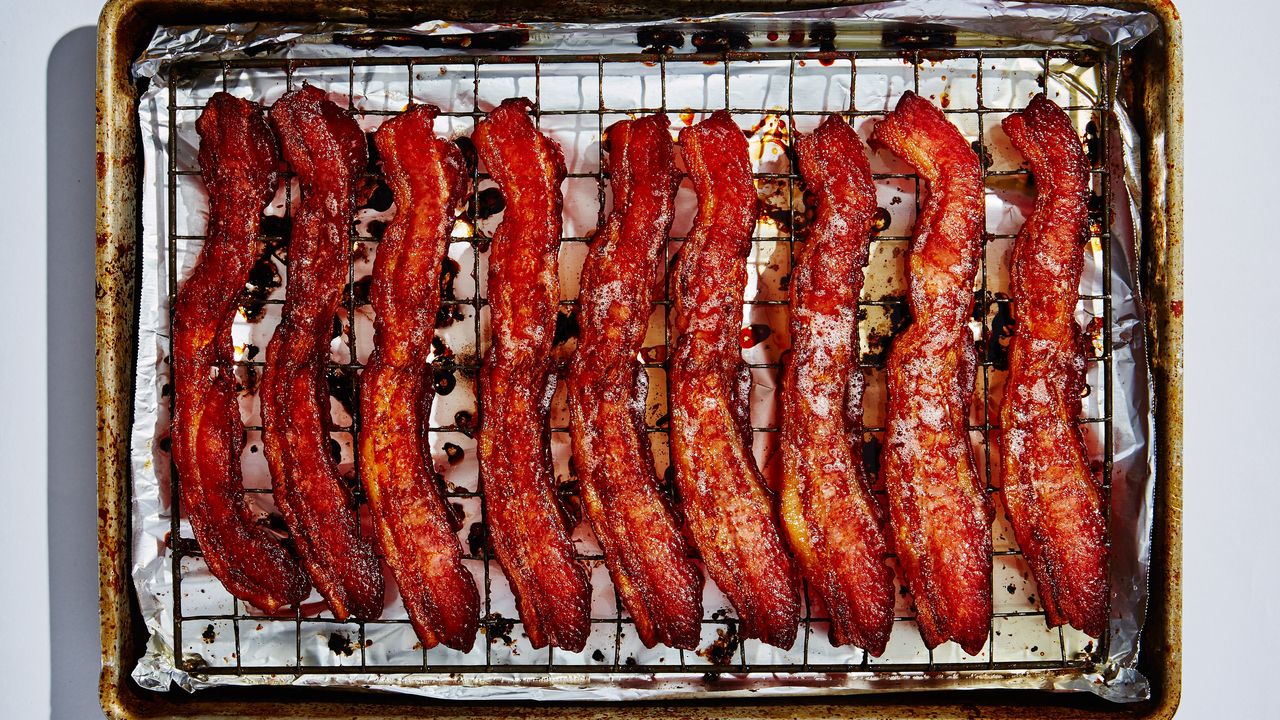
The numbers that matter for a small household: a quarter sheet holds about 6 strips of bacon, one to two chicken thighs with vegetables, or 6–8 cookies — roughly half the load of a half-sheet at a third of the price and a quarter of the wash-up. It also preheats faster, which matters more than it sounds: less mass reaching 425°F means a toaster oven hits temperature in 4–6 minutes instead of 12–15 for a full-size oven, so a Tuesday tray of Sheet Pan Harissa-Rubbed Chicken with Roasted Vegetables scaled to two portions is genuinely faster than a skillet.
One buying note on lids. Nordic Ware and several competitors sell the quarter sheet bundled with a snap-on plastic storage lid for a few dollars more, and for meal-prep cooks that is the version to buy — bake, cool, cap, refrigerate, no transfer to a container and no second thing to wash. Do not put the lid in the oven; it is a storage lid, not a bakeware lid, and it will deform well below the 450°F this pan is happy at. If you want a lid you can actually cook under, you want foil, not plastic.
Skip the quarter sheet if you regularly cook for four or more. Two of them do not equal one half-sheet — you lose the continuous surface, you crowd the food, and crowded food steams instead of browning, which is the whole reason you bought an aluminum pan. Buy the third half-sheet instead.
Which One Should You Buy If…
Most kitchens need one of these, not all of them. Pick by how you cook:
- If you want one pan for everything: Nordic Ware Naturals Half Sheet. Uncoated heavy-gauge aluminum with an encapsulated steel rim and no coating to fail.
- If you bake cookies and focaccia as often as you roast: USA Pan Half Sheet, Set of 2. Aluminized steel is stiffer and harder to warp, and the corrugated surface stops food welding itself down.
- If you cook for one or two, or use a toaster oven: Nordic Ware Naturals Quarter Sheet. The same construction as the half sheet at 13 × 9.5 inches.
- If burned-on cookies are your biggest fear and you hate parchment: Caraway Non-Stick Ceramic Baking Sheet. The nonstick pick, PTFE-free ceramic at a full 18 × 13 inches, though expect the coating to lose its release within a few years of hard use.
- If you roast acidic food or want a pan that survives the dishwasher: TeamFar Stainless Steel Baking Sheet. Lemon juice and tomato won't strip it, though it browns more slowly than aluminum.
- If you are not sure it will fit your oven: a half sheet (18 × 13 in). This is the standard home-oven size. A full sheet (26 × 18 in) is commercial and won't fit a residential oven.
What to Look For: gauge, material, rim height, warp resistance, finish
There are five variables that matter and roughly nothing else. Brand, color, marketing language about "professional grade" — all irrelevant. Get these five right and the pan is right.
Gauge (the single most important number)
Gauge is metal thickness, inverted: lower number = thicker metal. The pro standard is 13-gauge (about 1.8 mm of aluminum) — Vollrath's commercial Wear-Ever half-sheet is specified at 13-gauge, while Nordic Ware calls its Naturals line heavy-gauge without publishing a number. Most consumer "cookie sheets" are 18-gauge (about 1.0 mm) or worse — half the thickness of a pro pan, which means double the warp at the same oven temperature. Anything thinner than 16-gauge will warp at 425°F. If the listing doesn't tell you the gauge, assume the worst and walk away.
Material (aluminum, aluminized steel, stainless)
Uncoated aluminum is the default for a reason: it heats evenly, browns beautifully, and develops a useful patina. Aluminized steel is steel coated with an aluminum-silicon alloy — slightly more rigid than pure aluminum, slightly less even, equivalent in practice, and the reason the USA Pan resists warping better than its weight suggests. Stainless is heavy, slow to preheat, but indestructible and dishwasher-safe forever. Carbon steel is unusual in sheet-pan format (it's mostly cookware) but a 13-gauge carbon-steel sheet exists and is great for naan and pizza if you can find one.
Rim height (rolled bead vs. flared edge)
A rolled-bead rim is a tube of metal that wraps the pan's edge — it adds rigidity (key for warp resistance), gives you a grip surface, and keeps juices contained at the same time. Avoid flared rims (the edge tapers outward), which look elegant but trap dirt and burn-on residue in the seam. The "jelly roll pan" is a confusingly-named subset of rimmed sheet pans where the rim is intentionally taller (1.25 in instead of 0.75 in) — useful for sheet cakes and pavlovas, optional for everything else.
Warp resistance (gauge × rim × finish)
Warp is what happens when one face of the pan heats faster than the other; the hot face expands, the cool face doesn't, and the pan bows. The fix is mechanical: thicker metal flexes less, a rolled rim holds the shape, and a dull finish absorbs heat evenly. Most warp complaints we read trace back to (a) a thin pan being asked to roast at 450°F, (b) someone running a cold pan into a hot oven and dropping ice-cold marinade on the surface at the same time, or (c) a flared-edge pan with no structural rim. Buy 13-gauge with a rolled bead and warp becomes a non-issue.
Finish (dull > shiny > anodized dark)
Dull, mill-finish aluminum is the standard for home baking. It reflects heat enough to prevent scorching but absorbs enough to brown evenly. Mirror-finish aluminum (sometimes sold as "premium") browns worse than the dull version because it reflects more energy — looks great in the catalog photo, performs worse. Hard-anodized dark aluminum is the inverse: it absorbs more heat and browns aggressively, which is great for roasted potatoes and bad for cookies (drop the oven 25°F to compensate). Pick dull unless you have a specific reason.
Half Sheet vs Quarter Sheet vs Full Sheet
American sheet-pan sizing is a fixed standard, not a per-brand guess — the reference dimensions are the same numbers every restaurant supplier works from.
| Size | Dimensions | Fits in | Best for |
|---|---|---|---|
| Full sheet | 26 × 18 in | Commercial oven only | Bakery, catering |
| Two-thirds sheet | 21 × 15 in | Some wall ovens | Large-format roasting |
| Half sheet | 18 × 13 in | Standard home oven (two per rack) | Almost everything |
| Quarter sheet | 13 × 9.5 in | Toaster oven, side-dish for one | Bacon for 1–2, small-batch cookies |
| Eighth sheet | 9.5 × 6.5 in | Toaster oven | Single-portion roast veg, sheet-pan side |
If you only own one sheet pan, make it a half-sheet. If you own four, make them all half-sheets. Quarter sheets are useful for a small household — one quarter sheet of Sheet Pan Baked Bacon and Avocado is enough for two people's breakfast, and a quarter fits perfectly in most counter toaster ovens. Full sheets are for commercial work; they won't fit a residential oven. The "jumbo cookie sheet" you see in big-box stores is usually a half-sheet equivalent with a non-standard rim — measure before you buy.
A working home kitchen has two half-sheets in the oven at any moment and one quarter-sheet on the counter staging the next thing. For meal-prep cooks, four half-sheets and two cooling racks is the right floor. You can stage Three-Cheese Sheet Pan Lasagna with Italian Sausage and Sheet Pan Smoky Sausage and Pepper Medley on the second rack simultaneously and feed eight people in under 40 minutes.
Sheet pan dinners: the recipes that pay the pan off
A sheet pan justifies itself in about a week of dinners. The pattern is always the same — protein and vegetables in a single layer, 400–425°F, one tray, one wash-up — and it is the single highest-leverage weeknight technique there is. The pans above all handle it; the difference shows up in browning evenness and whether the tray still sits flat in year three.
These are the twelve we cook most, with real prep and cook times from our recipe database, sorted by total time.
| # | Recipe | Prep | Cook | Total | Serves | What it tests |
|---|---|---|---|---|---|---|
| 1 | Sheet Pan Herb-Glazed Salmon with Asparagus | 10 min | 14 min | 24 min | 4 | High-heat sear without sticking |
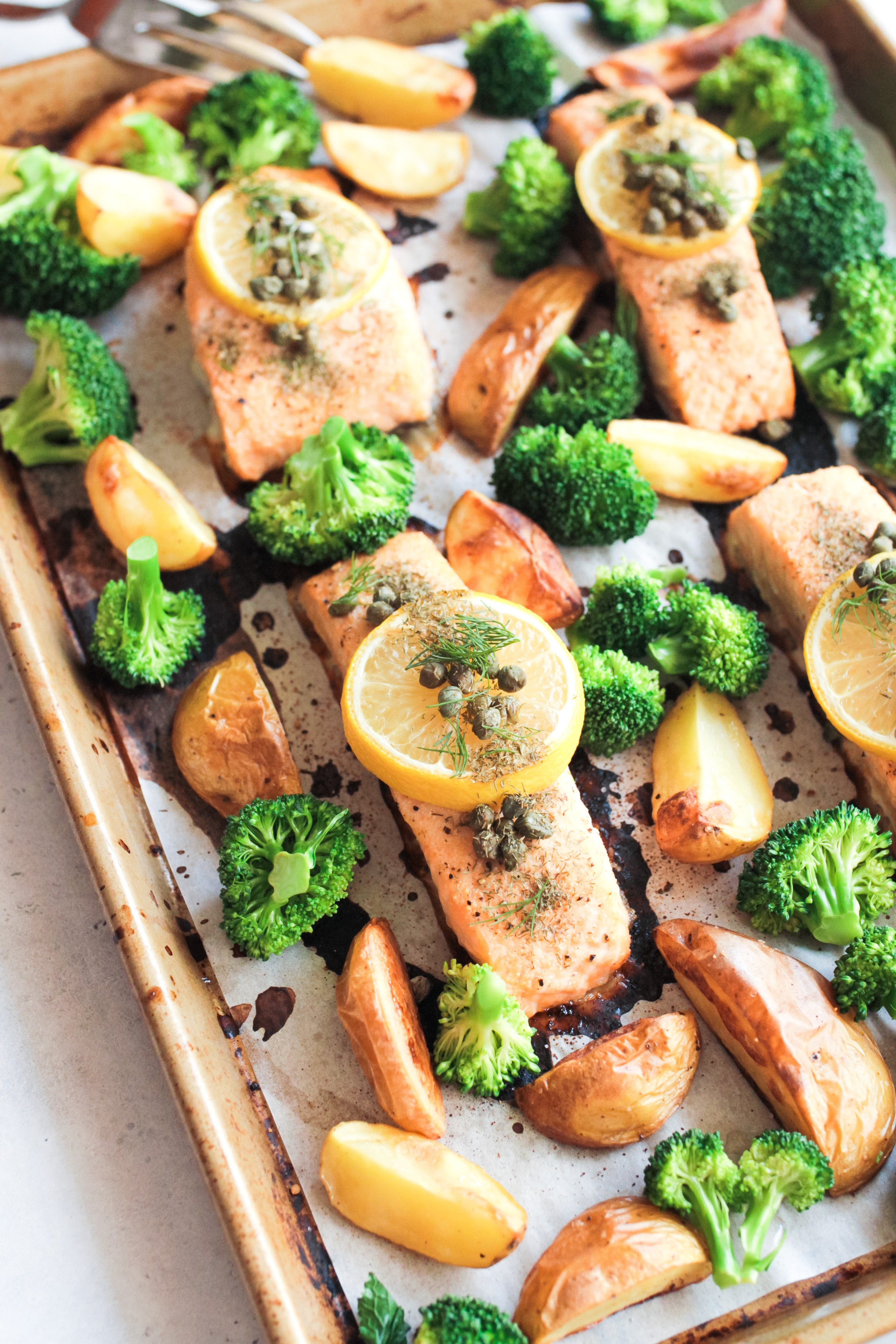
| 2 | Lemon-Dill Sheet Pan Salmon with Capers | 10 min | 14 min | 24 min | 2 | Acid tolerance (capers + lemon) |
| 3 | Sheet Pan Citrus-Garlic Salmon with Roasted Asparagus | 10 min | 15 min | 25 min | 4 | Even browning across the tray |
| 4 | Sheet Pan Mediterranean Herb-Roasted Vegetables | 10 min | 25 min | 35 min | 4 | Crowding and steam management |
| 5 | Sheet Pan Lemon-Dill Chicken with Potatoes and Asparagus | 15 min | 25 min | 40 min | 4 | Mixed-density staging |
| 6 | Sheet Pan Smoky Sausage and Pepper Medley | 15 min | 25 min | 40 min | 4 | Rendered fat pooling at the rim |
| 7 | Sheet Pan Garlic Paprika Chicken with Zucchini and Broccoli | 10 min | 30 min | 40 min | 4 | Sugar-in-spice scorch resistance |
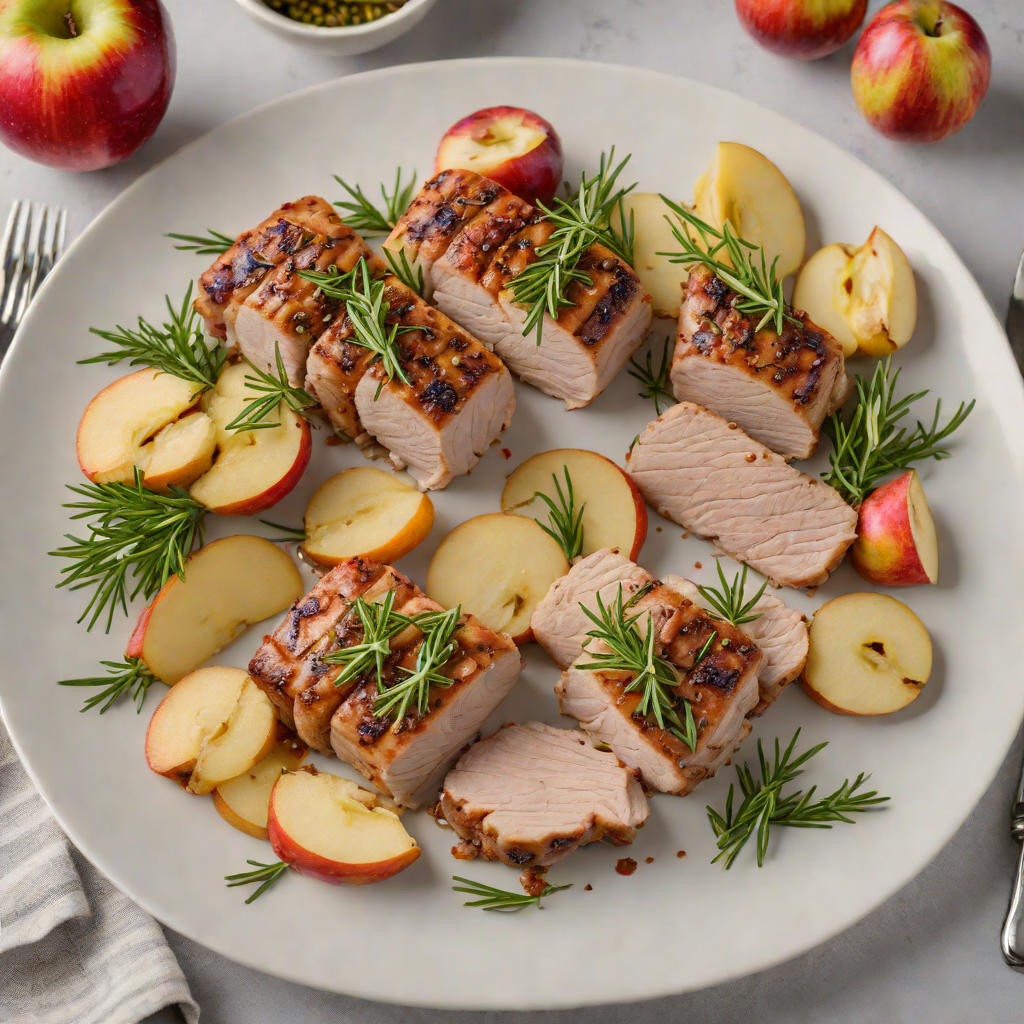
| 8 | Half-Sheet Pan Pork Tenderloin with Apples and Rosemary | 10 min | 30 min | 40 min | 3 | Fruit sugars caramelizing on metal |
| 9 | Sheet Pan German-Style Beer Bratwurst with Sauerkraut and Mustard | 10 min | 30 min | 40 min | 4 | Liquid containment (rim height) |
| 10 | Sheet Pan Crispy Tofu with Maple Dijon Glaze | 20 min | 25 min | 45 min | 4 | Worst-case sticking scenario |
| 11 | Sheet Pan Chicken Fajitas with Black Beans | 15 min | 30 min | 45 min | 4 | Full-tray capacity at 425°F |
| 12 | Sheet Pan Tex-Mex Chicken with Roasted Bell Peppers | 15 min | 35 min | 50 min | 4 | Long roast, no warp |
Two of these are the pan-stress tests worth running on any new sheet pan in the first week. Sheet Pan Crispy Tofu with Maple Dijon Glaze is the hardest sticking case in the list — maple syrup plus protein is a glue — and tells you immediately whether you need parchment on this pan or not. Sheet Pan Tex-Mex Chicken with Roasted Bell Peppers sits at 425°F for 35 minutes, which is long enough that a thin pan will announce itself with the warp bang.
For bigger rotations, the sheet-pan cluster on this site goes deeper than one guide can: 25 Sheet Pan Dinners: One-Tray Weeknight Meals Under 45 Minutes is the current master list, 25 Sheet Pan Dinners for Busy Weeknights covers the chicken/salmon/veg split, and 25 Roasted Vegetable Dinner Recipes is the vegetarian end. By cuisine, the sheet pan carries Mediterranean weeknight dinners, Mexican sheet-pan fajitas, and Greek sheet-pan chicken.
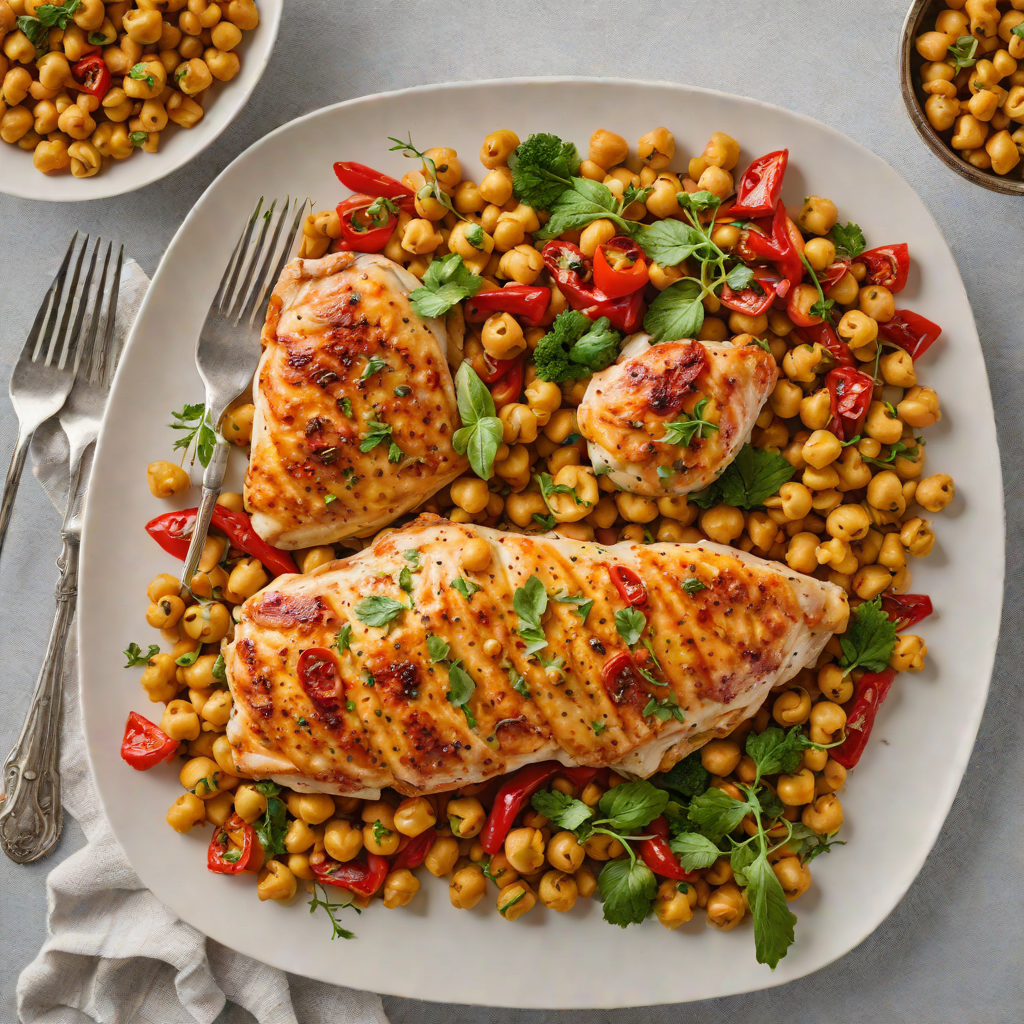
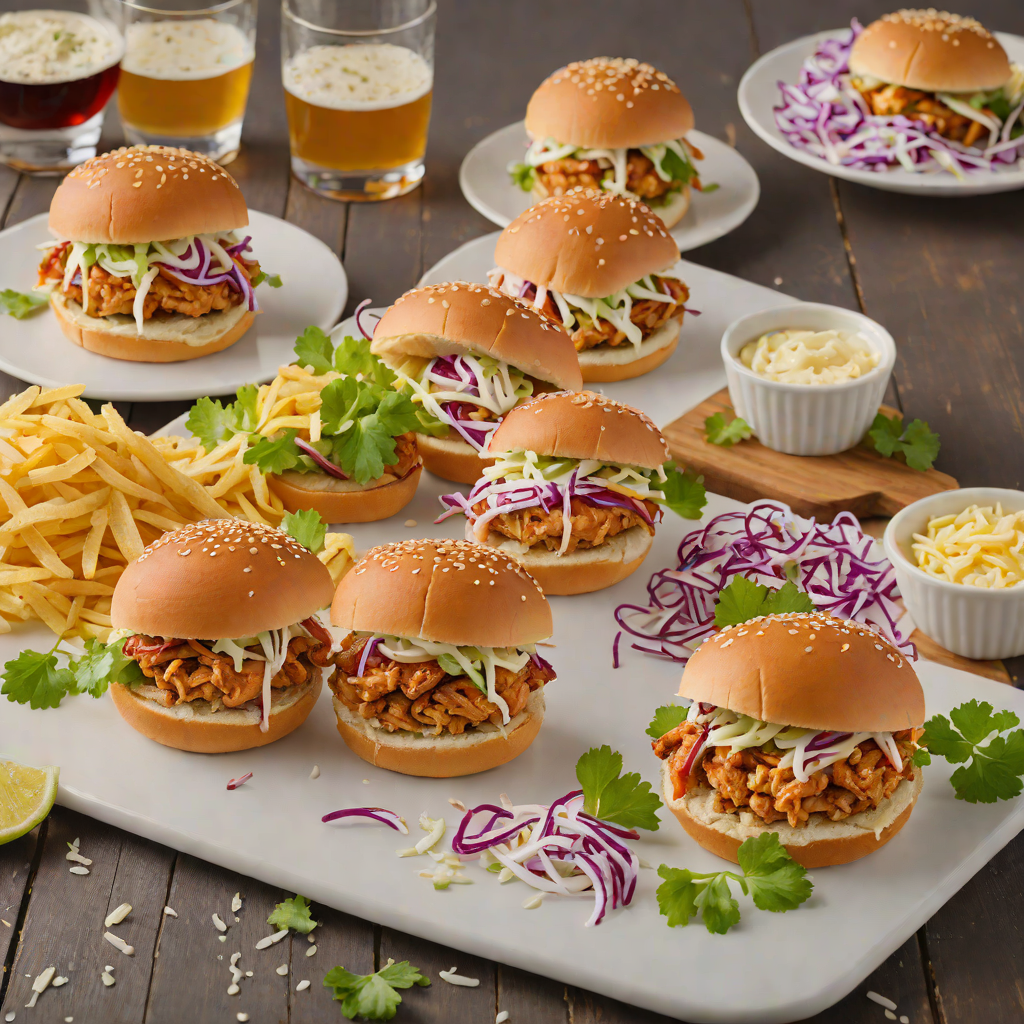
Beyond dinner, the same pan does the rest of the week: Harissa-Spiced Sheet Pan Chicken with Chickpeas and Roasted Peppers and Sheet Pan Za'atar Chicken with Preserved Lemon and Chickpeas are the batch-cook end, Sheet Pan BBQ Chicken Sliders with Tangy Coleslaw feeds eight off one tray, Sheet Pan Fennel and Tomato Pasta proves you can build a pasta sauce on a flat pan, and Sheet Pan Zucchini Rings with Lemon Thyme is the side dish that goes on the second rack while the main roasts. If you batch-cook on Sundays, four half-sheets and the workflow in Freezer-Friendly Meal Prep will produce a month of dinners from one afternoon.
Real-world numbers: what a sheet pan actually costs to own
Buying advice gets abstract fast, so here is the arithmetic that settles the uncoated-versus-coated argument. Assume a household that roasts or bakes four times a week — 208 uses a year, which is a normal number for anyone who cooks dinner most nights.
| Pan | Realistic lifespan | Total uses | Cost per use |
|---|---|---|---|
| Nordic Ware Naturals (13-ga aluminum) | 20 years | 4,160 | $0.005 |
| USA Pan half sheet (aluminized steel, per pan) | 15 years | 3,120 | $0.009 |
| Vollrath 5314 (commercial aluminum, per pan) | 20 years | 4,160 | $0.006 |
| TeamFar (single-ply stainless) | 20 years | 4,160 | $0.004 |
| Caraway (ceramic nonstick) | 4 years | 832 | $0.078 |
| GoodCook 3-pack (nonstick steel, per pan) | 4 years | 832 | $0.007 |
| Fat Daddio's 2-pack (aluminum, per pan) | 10 years | 2,080 | $0.007 |
The nonstick pan is the most expensive pan on the list per use — roughly fifteen times the Nordic Ware — despite costing about four times as much up front. That gap is entirely the coating's lifespan. It is the clearest argument in the whole category, and it is why professional kitchens, which are ruthless about cost-per-use, run bare aluminum.
Two more numbers worth knowing. A half-sheet holds about 1.5 to 2 lb of cubed vegetables in a genuine single layer; past that you are steaming, not roasting, and the browning stops regardless of which pan you bought. And a 13-gauge aluminum half-sheet weighs about 1.1 lb empty versus roughly 2.9 lb for a tri-ply stainless sheet — which matters more than it sounds like when you are pulling a loaded tray out of a 450°F oven one-handed.
Common pitfalls
Five failure modes account for nearly every complaint we see about sheet pans, and four of them are technique rather than the pan.
Crowding the tray. The single most common one. Vegetables piled two deep release water faster than the oven can drive it off, and the pan turns into a steamer. Use two pans on two racks instead of one overloaded pan; rotate them top-to-bottom halfway through. Sheet Pan Mediterranean Herb-Roasted Vegetables is a good calibration recipe for learning what a true single layer looks like.
Same-tray staging of different densities. Potatoes need 35–40 minutes; asparagus needs 12. Putting them in together at minute zero guarantees one of them is wrong. Stage in waves, or cut the dense ingredient smaller — half-inch dice on potatoes brings them into asparagus range.
Cold liquid into a hot pan. Deglazing a 450°F aluminum pan with cold stock is the fastest way to warp it permanently. Let the pan drop below about 300°F first, or deglaze in a saucepan and pour the finished sauce over.
Parchment above 450°F. Most parchment is rated to 425–450°F. Above that it browns, gets brittle, and can scorch at the edges where it curls above the food line. For 475–500°F potato roasting, skip the parchment and oil the bare pan instead.
Oven cleaner on aluminum. The lye in oven cleaner attacks aluminum aggressively and will leave a permanently etched, chalky grey surface. It is the one cleaning product that can genuinely destroy a good pan in a single application.
Why Nonstick Sheet Pans Don't Last
Nonstick fails on sheet pans for three reasons stacked on top of each other, and none of them are about quality.
First, the temperature. PTFE-based nonstick coatings (Teflon and most generics) begin to deteriorate at about 260°C / 500°F, decompose above 350°C / 662°F, and undergo pyrolysis above 400°C / 752°F, per the material data on PTFE. The sweet spot for roasting vegetables is 425–450°F and for hard-roasted potatoes is 475–500°F — which puts a nonstick sheet pan right at the bottom edge of its degradation range every single time you use it for the thing sheet pans are best at. (PFOA, the compound most people are actually worried about, was phased out of US non-stick manufacturing years ago; the American Cancer Society's overview of Teflon and PFOA is the level-headed summary. The practical problem with nonstick on a sheet pan isn't toxicity — it's that the coating wears out.) Ceramic-reinforced nonstick (Goldtouch, GreenPan-style) handles heat better but eventually crazes around the same temperatures.
Second, the utensils. Sheet pans get scraped. Roasted potatoes stick, granola welds itself to the rim, sheet-pan cookies leave a sugar trail. Every scrape with a metal spatula puts a micro-scratch in the coating, and the coating fails in patches well before the pan does. The friendly-sounding "metal-utensil-safe" rating you see in marketing is real for the spatula but not for the wire whisk you'll eventually drag across the bottom.
Third, the dishwasher. Modern dishwasher detergents are alkaline enough to attack nonstick bonding agents. A nonstick sheet pan that survives 200 hand washes might last 50 dishwasher cycles before the coating starts lifting.
The single common case where nonstick wins is the daily cookie baker who hates parchment. For everyone else: buy uncoated aluminum, line with a sheet of parchment or a silicone mat (standard bakery practice), and the pan never sticks because the food never touches the metal. If you do want coated pans elsewhere in the kitchen, our non-stick cookware guide covers where the coating actually earns its keep — and it isn't the sheet pan.
Insulated (Double-Wall) Sheet Pans: What the Air Gap Actually Does
An insulated sheet pan — sold as "air-bake", "double-wall", or "cushioned" — is two thin aluminum sheets crimped together with a sealed air gap of roughly 1–2 mm between them. Air conducts heat at about 0.026 W/m·K against aluminum's ~237 W/m·K, per the same thermal conductivity data behind the material argument above. That gap is a deliberate thermal brake on the pan's underside, and it is the whole product.
What it does well. The brake slows bottom-heat transfer, so cookie bottoms stop setting before the tops do. If you bake drop cookies, shortbread, or anything with a high sugar content that scorches on contact, an insulated pan buys you three to five minutes of margin and produces a pale, even bottom instead of a dark ring. Honey-Lavender Infused Shortbread Cookies is the archetype: high butter, high sugar, long bake, and it burns on the bottom on a dark anodized pan long before the center is done. Half-Baked Chocolate and Almond Sheet Pan Cookies benefits for the same reason.
What it does badly. Everything else. Roasting needs bottom contact — that is where the browning comes from — and an insulated pan actively prevents it. Vegetables steam instead of crisping, chicken skin stays flabby, and potatoes never form a crust. Bake times run 10–20% longer across the board because you are heating two sheets of metal and the air between them.
The failure modes nobody mentions. The seam is a water trap: wash an insulated pan and moisture wicks into the crimped edge, where it cannot dry, and eventually steams back out mid-bake or corrodes the interior faces. They are hand-wash-and-air-dry-only in practice. They are also almost always thin-gauge — the double-wall construction is what provides the rigidity, so manufacturers use lighter metal on each face — which means a warped insulated pan cannot be flattened and the air gap can pop and delaminate under thermal shock.
| Pan type | Bottom browning | Best for | Bake time vs. bare aluminum | Broiler-safe |
|---|---|---|---|---|
| Uncoated 13-gauge aluminum | Excellent | Roasting, everything | Baseline | Yes |
| Dark anodized aluminum | Aggressive | Hard-roasted potatoes | 5–10% faster | Yes |
| Insulated / double-wall | Minimal | Drop cookies, shortbread | 10–20% slower | No |
| Nonstick-coated | Moderate | Sticky glazes, caramel | Baseline | No |
| Tri-ply stainless | Moderate, slow to start | Acidic foods, dishwasher use | 10% slower | Yes |
Our verdict: skip it, and buy a second uncoated half-sheet instead. A bare 13-gauge pan with a sheet of parchment gets you most of the insulating benefit for cookies, costs less, roasts properly, and survives the broiler. The one case where an insulated pan earns its place is the household that bakes cookies weekly and roasts nothing — and even then, America's Test Kitchen's rimmed-baking-sheet testing reaches the same conclusion we do: the heavy uncoated half-sheet wins on versatility by a margin no specialty pan closes. If you already own one, keep it in the cookie rotation and keep it away from the roasting rack.
Temperature Limits: The Broiler, 500°F Roasts, and What Each Pan Survives
Most sheet-pan damage we hear about is a temperature mismatch, not a quality problem. The limits are not close to each other, so it is worth knowing which pan you are reaching for before you turn the broiler on.
Uncoated aluminum has no practical ceiling. Aluminum melts at 660°C / 1,220°F. A residential broiler element runs 500–550°F at the food surface and a self-clean cycle hits about 900°F, so a bare 13-gauge half-sheet is safe under any burner your oven has. Broil Miso-Glazed Broiled Salmon with Sesame-Ginger Greens on a bare pan on the top rack and the only limit is your attention span. The same is true of a 500°F hard roast — Best Crispy Smashed Potatoes wants exactly that heat and an uncoated pan gives it to you without complaint.
Nonstick stops at about 450°F. PTFE coatings begin degrading around 500°F, as covered in the nonstick section above, and a broiler element puts the pan surface well past that within two minutes. Treat 450°F as the working ceiling and never put a coated pan under the broiler — this is the single most common way people ruin one.
Insulated pans should never see a broiler at all. The failure is mechanical, not chemical: the sealed air gap expands faster than the two aluminum faces can accommodate, which pops the crimped seam and permanently delaminates the pan. Keep them at 350–400°F, where they were designed to work.
Silicone mats and parchment are the real limit in practice. Most parchment is rated to 425–450°F and most silicone mats to about 480°F. Both scorch or smoke under a broiler even when the pan underneath is fine, so pull the liner before you broil.
| Situation | Uncoated aluminum | Nonstick | Insulated | Stainless |
|---|---|---|---|---|
| 350–400°F baking | Yes | Yes | Yes | Yes |
| 425–450°F roasting | Yes | At the limit | Not recommended | Yes |
| 475–500°F hard roast | Yes | No | No | Yes |
| Broiler (500–550°F+) | Yes | No | No | Yes |
| Self-clean cycle (~900°F) | Yes | No | No | Yes |
Two habits prevent nearly every warp complaint at these temperatures. Preheat the pan with the oven rather than sliding a cold pan into a hot one, and never pour cold marinade, stock, or ice-cold vegetables onto a pan that has been under the broiler — the thermal shock of a 400°F differential across one face is what bows the metal. Both rules matter most on thin pans; a 13-gauge pan with a rolled bead tolerates abuse that destroys an 18-gauge one.
Companion gear: rack, mat, parchment, and the rest
The pan is 60% of the system. These five items are the rest of it, and together they cost less than the Caraway.
A half-sheet wire cooling rack ($12–18). The single highest-value accessory. It nests inside the half-sheet's rim and turns one pan into three tools: an elevated roasting rack that lets air circulate under bacon and chicken skin, a proper cooling rack for cookies and bread, and a drip catcher under a resting roast. Buy the oven-safe stainless version, not the chrome-plated one — chrome flakes above 400°F. Check the fit before you buy: a rack sized for a true 18×13 half-sheet will not sit correctly in the 17-inch GoodCook large sheet. Browse bakeware for the sizes that match the pans above.
Parchment paper, in pre-cut half-sheets ($15 for 100). Rolls curl and fight you; pre-cut sheets lie flat in one motion. Rated to 425–450°F for most brands. This is what makes an uncoated pan behave like a nonstick one without any of the coating's downsides.
A silicone baking mat ($10–20). Reusable parchment, essentially, with better bottom-browning control for cookies and a non-negotiable advantage for anything sticky like caramel or candied nuts. Lower temperature ceiling than parchment on most brands (typically 480°F), so it's a baking tool rather than a high-heat roasting tool.
A thin metal offset spatula and a bench scraper ($10–20 the pair). The offset gets under cookies and roasted vegetables without tearing them; the bench scraper clears a whole tray into a bowl in one pass and lifts stuck-on fond without gouging. Both live in the utensils drawer and both outlast every pan on this page. Keep the metal ones away from your coated pans.
A vertical pan organizer ($15–25). Sheet pans stacked flat scratch each other and require unstacking the whole pile to get the one you want. A vertical divider in a base cabinet solves both. This is the same problem storage solves everywhere else in the kitchen, and the solution is equally boring and equally effective.
If you're building the bakeware drawer from scratch rather than replacing one pan, best bakeware sets in 2026 covers the full-kit route, mixing bowls covers prep, and meal prep containers covers what happens to the leftovers. For the stovetop half of the kitchen, start with the cast iron skillet guide and the broader cookware category.
Care, Cleaning, and Seasoning
Hand-wash. Warm water, a non-abrasive sponge, a drop of dish soap. Avoid steel wool — it scores the surface and trips the warp resistance over time. Avoid the dishwasher unless you bought stainless or anodized aluminum; standard aluminum will pit and discolor.
Dry immediately. Aluminum that sits wet develops oxidation spots that look ugly and create flavor-carrying nooks (you'll taste yesterday's salmon on tomorrow's brownies if you don't dry). A clean dish towel and 10 seconds of attention solves this forever.
Embrace the patina. A new aluminum sheet pan is bright silver. A well-loved one is mottled tan-to-bronze with darker rings where the highest-heat zones live. That patina is the pan telling you it has earned its place — and it browns food better than the new pan, because the darker surface absorbs heat more evenly. You cannot scrub it off without damaging the metal. Don't try.
For everyday stuck-on stains: Sprinkle baking soda on the pan, add a tablespoon of water to make a paste, scrub with a soft sponge. For burned-on sugar (sheet-pan cookies, sheet-pan crumble), fill the pan with 1/2 inch of hot water and let it sit for 30 minutes; the sugar dissolves.
For a pan that's gone black with polymerized grease: Make a 1:1 paste of baking soda and hydrogen peroxide, spread it over the blackened areas, and leave it for two hours before scrubbing with a stiff nylon brush. Bar Keepers Friend works on the same problem more slowly and with less mess. Never use steel wool on aluminum and never use oven cleaner — the lye in oven cleaner aggressively attacks aluminum and the steel wool strips the patina, creating the exact stick spots you were trying to remove.
Storage. Sheet pans nest if they're the same brand and gauge. Mixed brands often don't nest cleanly because rim profiles differ. A vertical pan organizer (the kind that sits in a base cabinet) is the right answer for any kitchen with more than two pans. Stacking sheet pans flat on top of each other in a drawer scratches the working surfaces over time.
When to retire a pan. A sheet pan is done when (a) the warp is severe enough that the pan rocks on a flat counter — this disrupts even baking — (b) the metal has worn through somewhere along the rim or developed a sharp burr, or (c) the surface pitting has gone deep enough that food consistently sticks even on a freshly-oiled or parchment-lined surface. For 13-gauge aluminum pans, this is typically 15–25 years. For 18-gauge budget pans, often 2–4 years. For nonstick, the coating fails first, usually within 5–7 years.
A pro tip from professional bakeries: keep your "good" sheet pans (Vollrath, Nordic Ware) for high-stakes work — sheet-pan dinners for company, holiday baking, the cookie swap — and demote retiring pans to "second-string" tasks (toasting nuts, oven-drying tomatoes, catching drips under a roasting rack). The second-string job sets up a long, useful retirement before the pan finally goes to the recycle bin.
When NOT to buy a new sheet pan
Three honest cases where the answer is "keep what you have."
Your current pan is dark, ugly, and flat. Discoloration is not damage. A blackened 13-gauge aluminum pan that still sits flat on the counter is at peak performance, not the end of its life — the patina browns better than bare metal. Buy a second pan if you need capacity, but don't replace a working one because it looks used.
You only bake cookies, twice a year. A budget GoodCook set or the pan you already own is fine. The case for a 13-gauge commercial pan is built on daily high-heat roasting; if the oven runs at 350°F for twenty minutes twice a year, none of the failure modes in this guide will ever reach you.
You're about to buy a fourth nonstick pan. If you've replaced a coated sheet pan more than once, the pan isn't the problem — the format is. Spend the same money on one uncoated pan plus a box of pre-cut parchment and the replacement cycle ends.
Related reading: if you want the cookie-and-pastry-first version of this guide rather than the roasting-first one, best baking sheets in 2026 approaches the same category from the baking side.
Related Buying Guides
- Best instant-read thermometers: five picks under $100 compared on speed and accuracy, with target temps for every protein.
- Best silicone spatula sets: sets compared on heat rating and core stiffness, so they won't melt or scratch.
Sources and further reading
- Sheet pan — standard US and European dimensions — the reference table for full, two-thirds, half, quarter and eighth sheet sizing used throughout this guide.
- Nordic Ware — Naturals Baker's Half Sheet — manufacturer specifications for our Best Overall pick, including material and dimensions.
- Engineering ToolBox — Thermal Conductivity of Metals — the aluminum-versus-stainless conductivity figures behind the browning-evenness argument.
- Polytetrafluoroethylene — thermal decomposition data — the 260°C / 350°C / 400°C degradation thresholds cited in the nonstick section.
- American Cancer Society — Teflon and Perfluorooctanoic Acid (PFOA) — the level-headed overview of what PFOA is, and why it is no longer the relevant concern for modern cookware.
- America's Test Kitchen — Best Rimmed Baking Sheets — independent equipment testing behind the insulated-versus-bare-aluminum verdict, and corroboration for the heavy uncoated half-sheet as the versatility winner.
Pair your new pan with Sheet Pan Herb-Glazed Salmon with Asparagus for the simplest 24-minute test of how a properly-heating sheet pan performs in your own oven — if the salmon skin crisps and the asparagus tips brown without burning, the pan is doing its job.
Frequently asked questions
What size sheet pan should I buy first?
What's the difference between a half sheet, quarter sheet, and full sheet?
Why do cheap sheet pans warp in the oven?
Should I buy nonstick or uncoated sheet pans?
Is aluminum safe to cook on directly?
Are dark or light sheet pans better?
Can sheet pans go in the dishwasher?
How do I clean a sheet pan that's blackened with baked-on grease?
Can I put a sheet pan under the broiler or in a 500°F oven?
Are insulated sheet pans worth buying?
How we picked
This guide is researched, not bench-tested. We shortlisted products from the AislePrompt kitchen catalog and compared them on published manufacturer specifications (such as materials, size and capacity), on what owners report in published reviews, and on any third-party sources linked in this guide. The guide was drafted with AI assistance. We did not run lab or hands-on tests of these products, so any measurement quoted here comes from the manufacturer or a cited source. Prices change often: use the “Check price on Amazon” buttons for today’s price.
Recipes to try with sheet pans
Put your gear to work — save any recipe to My Recipes (no account needed) and send its ingredients to Instacart in one tap.
Shop bakeware on AislePrompt →Browse the full kitchen shop →